(Jeff Abbott is a regular contributor at The Pen Addict. You can find more from Jeff online at Draft Evolution and Twitter.)
In all of the different reviews and discussions about the various types of pens that we talk about in the community, there's one type that doesn't get much attention. It's probably because there aren't many of them out there, but that doesn't make them unworthy. Amidst all the talk of gold- and steel-nibbed fountain pens, gel pens, pigment markers, brush pens, and pencils, there's a small, delightful category of glass pens.
Glass dip pens are works of art in the own right, hand-crafted by someone trained in working with glass. Have you ever watched someone craft handmade glass ornaments? It's really something to behold. Obviously, a straight pen isn't as impressive as an intricate ornament, but it's still a thing of beauty.
But when it comes to the writing aspect of these instruments, they have a unique advantage: they're extremely easy to clean. Yes, metal nibs are also easy to clean, but I'm arguing that the glass dip pen is still easier.
I'll be the first to admit that I have absolutely no skills when it comes to lettering and calligraphy. Practice makes perfect, and I haven't put in the hours to become skilled at this art. That being said, I like to think my hand-writing is fairly legible if I want it to be. I'm sure there are more artistic uses for glass dip pens, and that's wonderful. But, my main enjoyment comes from the ease of use and cleaning that come with this pen.
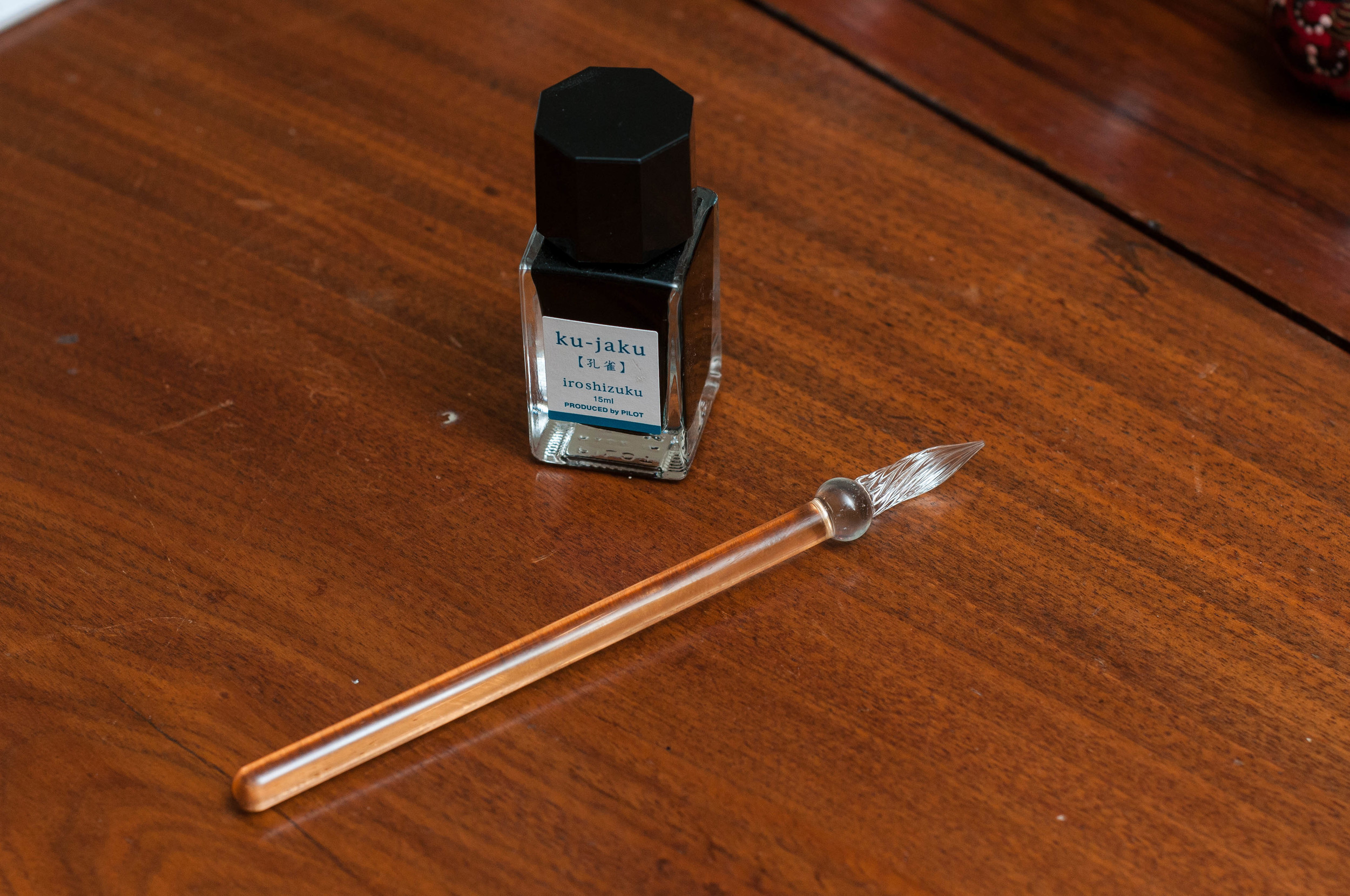
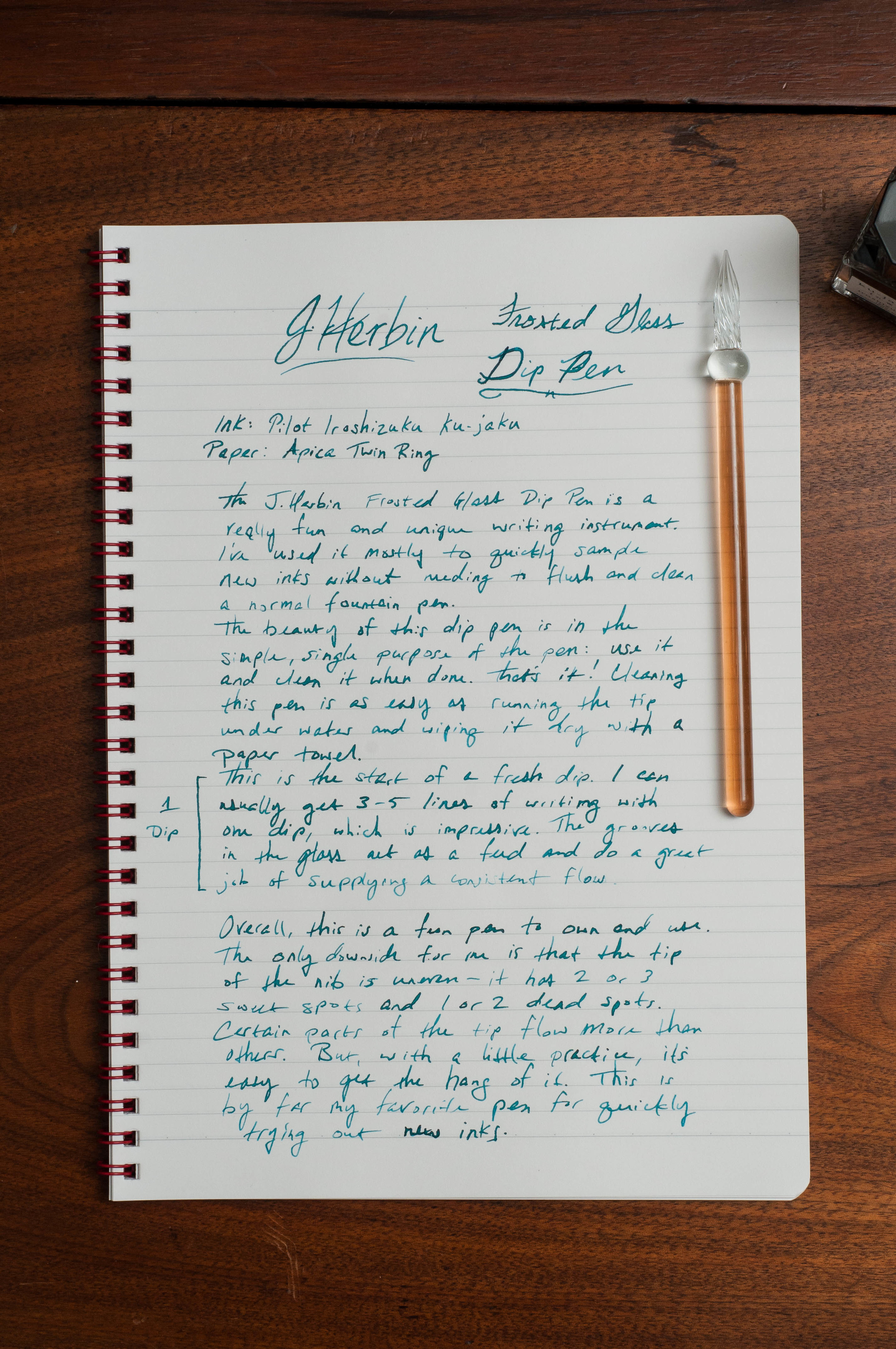
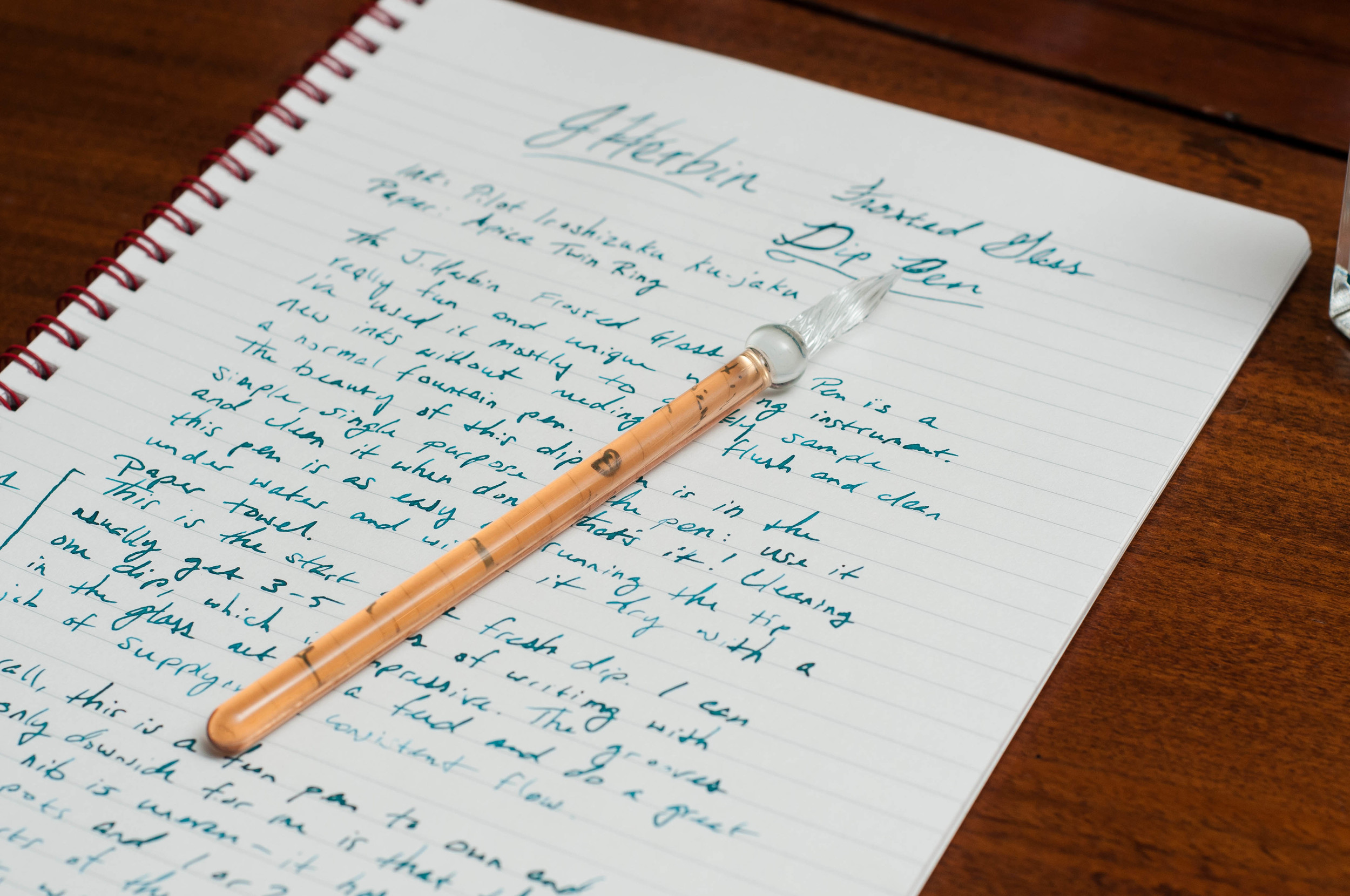
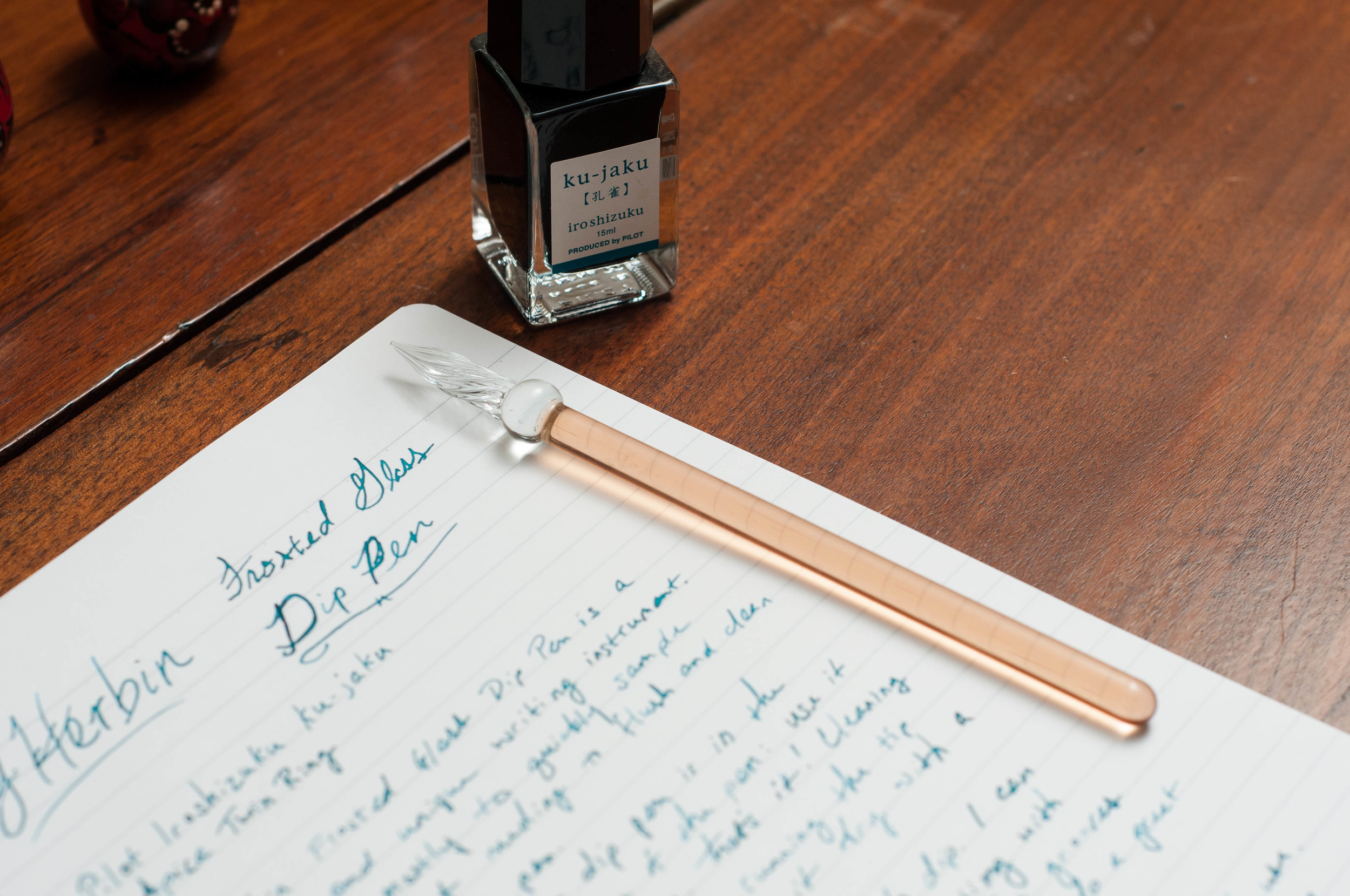
The J. Herbin (get ready for this incredibly long name) Straight Body Frosted Glass Dip Pen, Small is an affordable way to enter this market. It's a simple pen — a smooth, 5 inch body attached to a spiraled tip. In between the two, a small bulb to rest your fingers. The color I chose is the amber tint, which is great because it's mostly see-through.
At $16, this is a great choice for anyone wanting to try out dip pens without having to choose nibs and nib holders. Those have their merits and advantages, but you can't beat the simplicity of the glass dip pen. It's one piece, and each one is unique.
Yes, it's a thing of beauty and each one should be admired and appreciated. But, how does it write?
Let's break this down into pros and cons, starting with the pros.

Pros
Open the package, grab the pen and a bottle of ink, and you're ready to go. It couldn't be simpler. There's no filling, no cartridges to fuss with, and no cleaning of the nib and section after dunking it into a bottle to suck up the ink. You dip the nib into the ink, dab it on the edge of the bottle to prevent drops, and start writing.
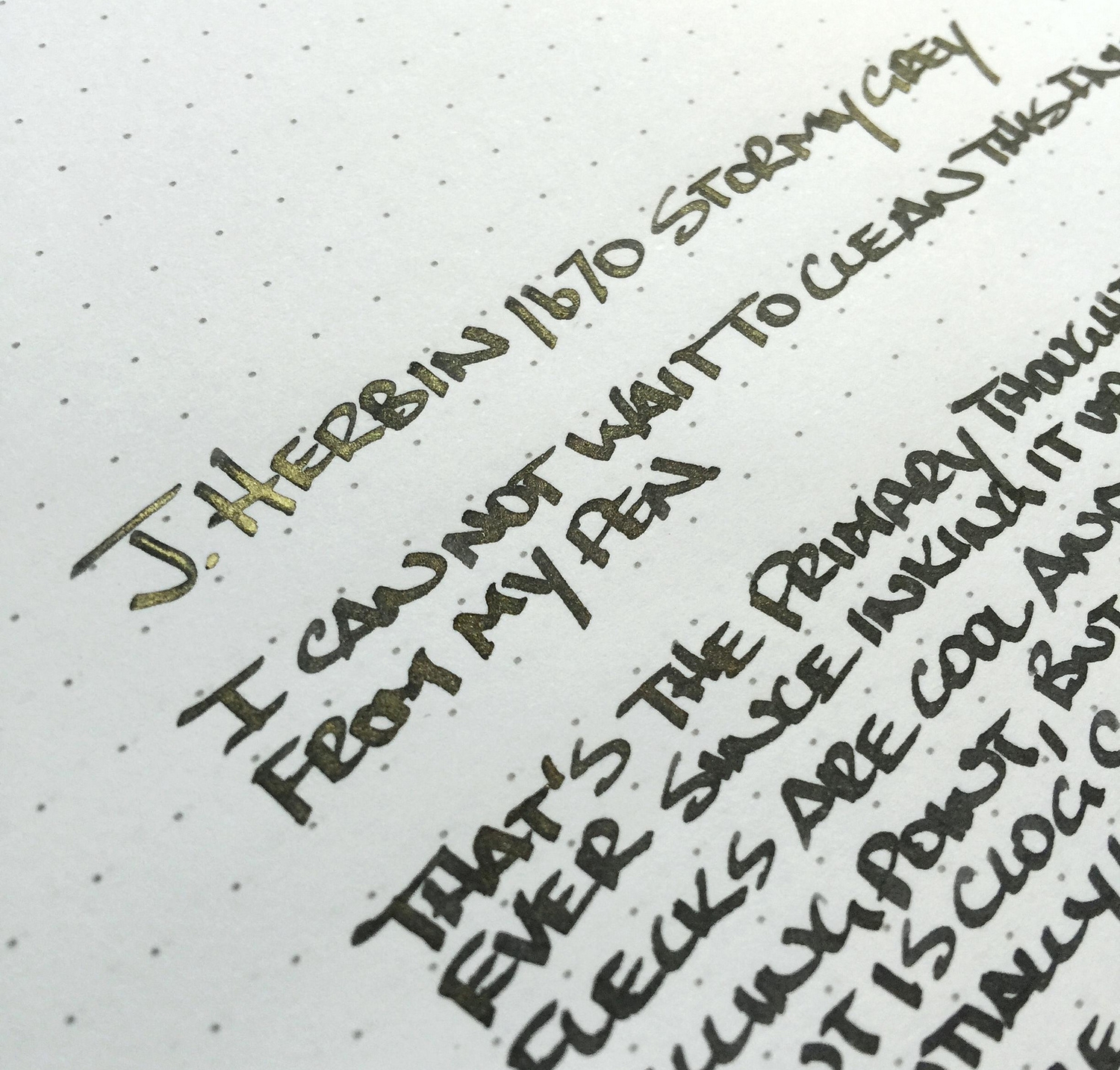
In my experience, I usually get 3-5 lines of writing before I need to re-dip. I'm never able to write for this long when using metal nibbed dip pens. The spiral grooves on the tip of this pen do an amazing job of storing ink, and they do an even more amazing job of feeding the tip consistently. The only time I notice any heavy flow issues is when I've dipped the nib too deep or done a poor job of dabbing before starting to write.
The pen takes some practice before you can write with your normal hand, but that doesn't take long. As for the shape and grip, I enjoy the way the pen fits in my hand. I imagine that plenty of people will discover that it doesn't fit their hand at all, though. It has the shape of something that will polarize users. Either you'll do well with it, or you'll loathe it. For me, it's delightful.
Writing with the pen is a fun experience. The thoughfulness behind periodic breaks to dip the pen back into the ink bottle forces you to slow down and focus on what you're writing. Take your time, form the words, and dip for some more ink. It's pleasant.
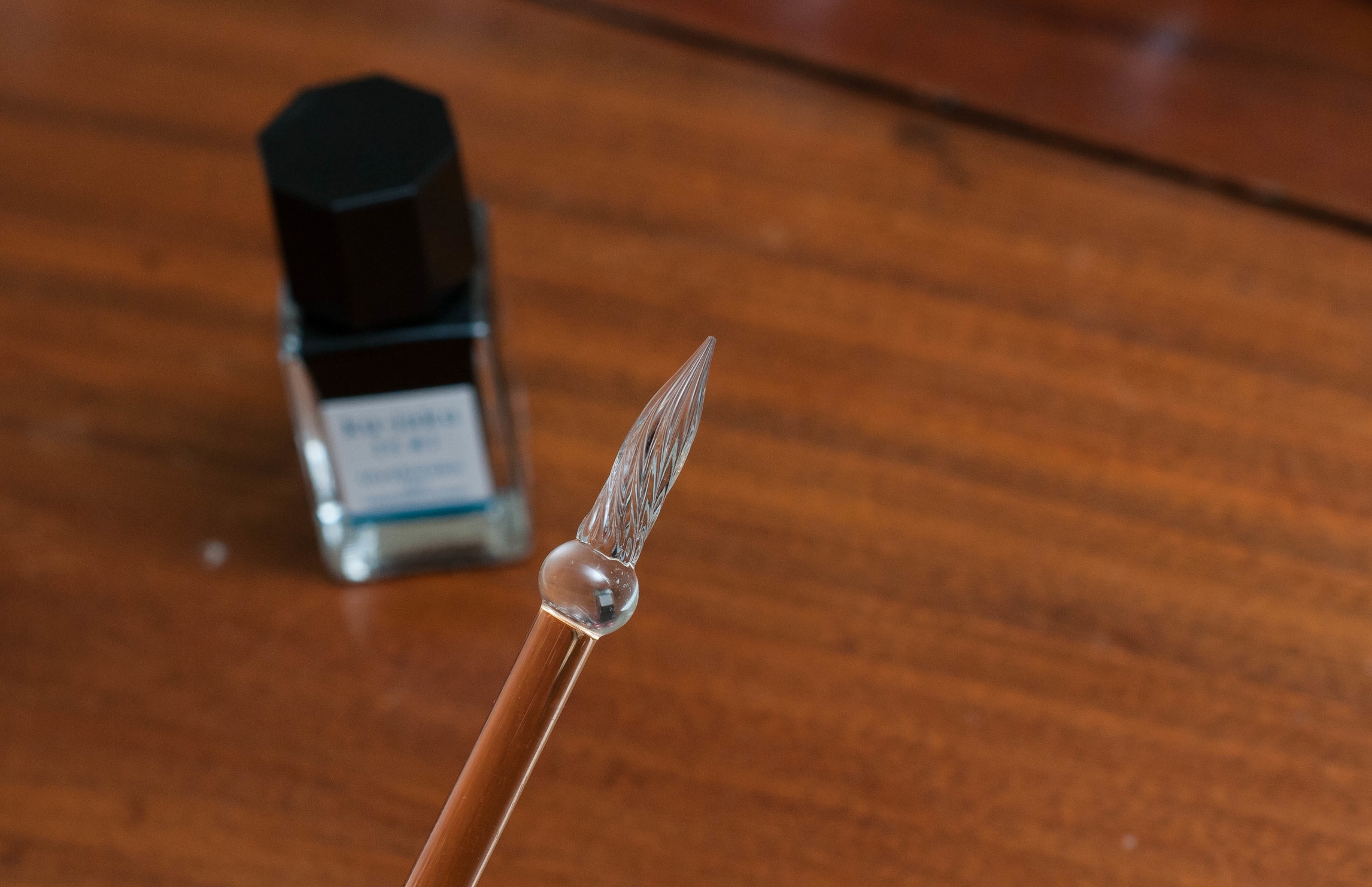
The writing feel is slightly scratchy at times depending on how much ink is stored in the nib, but it's generally pretty nice and smooth. Since this isn't a standard nib with two tines, it has several "sweet spots" that work better than other spots on the tip. One of the sweet spots on this pen writes like a medium fountain pen, while another writes like an EF. If you can remember where these spots are, it can be quite handy.
Finally, did I mention how easy it is to clean? When you're done using it, simply run the tip under water for a few seconds, and wipe it dry with a paper towel. Done! No flushing, no rinsing — just rinse it, dry it, and start using it with a new ink. That is the #1 attraction of this pen for me. When I want to do some ink testing and sampling, this is my go-to pen. I can fly through different inks because of how quickly I can "reset" the pen to a clean state.
Cons
As much as I love the pen for its character and easy cleaning, it has some downsides. For one, it feels fragile. For normal use, it feels great. But, I worry that if I drop it on the desk or into the sink while cleaning it, it might chip or shatter. This is to be expected for anything made of glass, but most glass objects are decorative and not meant to be handled.
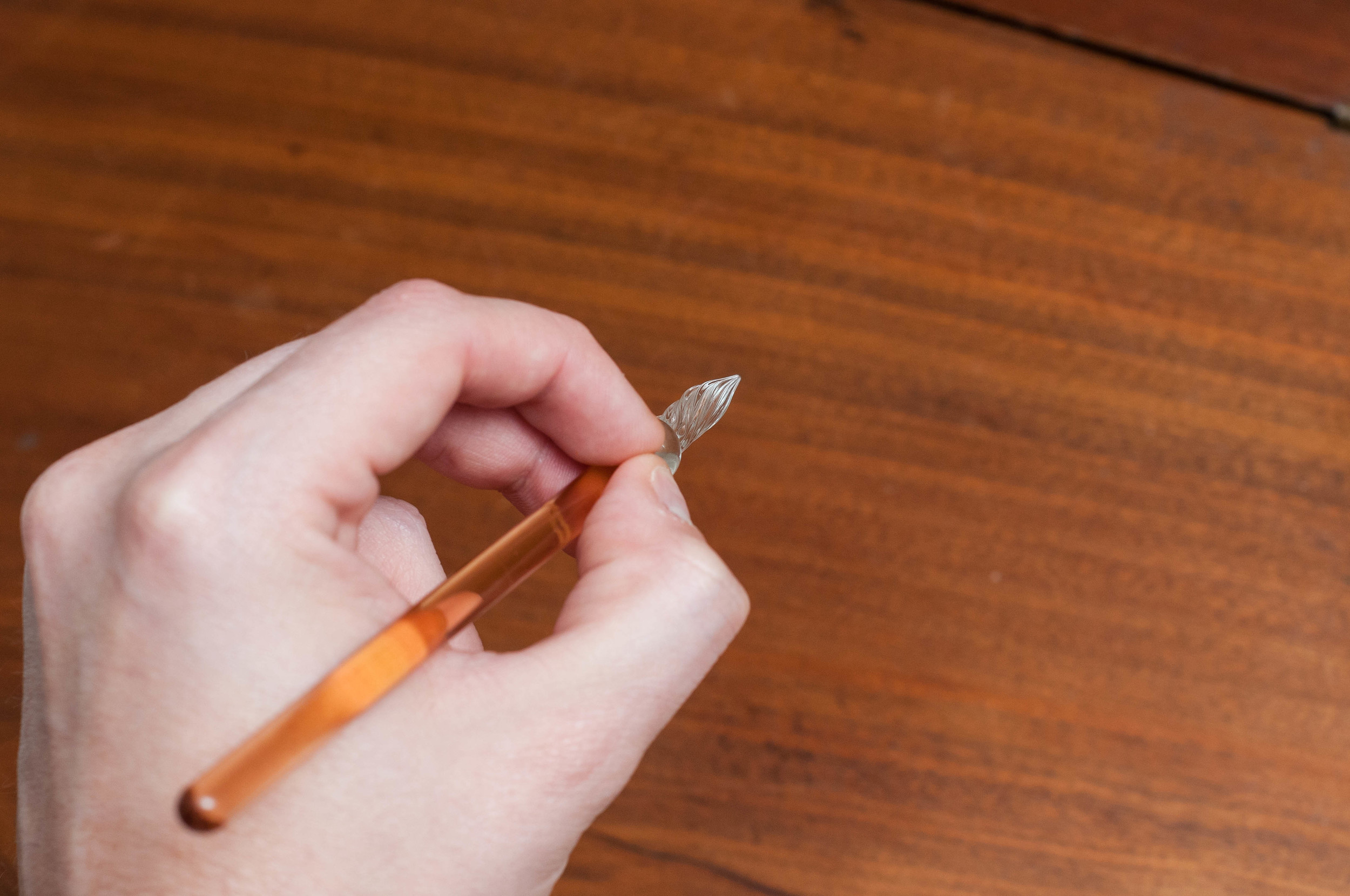
Remember those "sweet spots" I mentioned? Yeah, it also has a couple of dead spots that write like an EF fountain pen that's running out of ink. These are dead spots no matter what usable angle you hold the pen. Luckily, the dead spots are very few and easy to avoid once you learn the pen. Keep in mind, the tip on this pen is very small, so every millimeter gives you a different feel.
Along with the dead spots, there are some scratchy angles to the pen. Luckily, you can smooth out the tip just like you would a fountain pen nib. Grab some micromesh and draw a couple dozen figure-eights and infinity signs, and you will notice an improvement. Just don't get too carried away.
My final complaint is that the pen loves to roll on a flat surface. There's no clip or flat side, so it obviously will have issues staying still on its own. Minor issue, but worth noting.
Conclusion
This definitely isn't an every day carry pen, but it's been so fun to use for testing inks and playing with lettering over the past several weeks. This isn't a pen that I use all the time, but it has a few specific purposes that I wouldn't trade it for. Next time you want to get out that box of inks and play, try using one of these to maximize your fun.
You can grab these on JetPens in several colors, as well as a larger size.