Posts filed under Pen Reviews

Uni Style Fit Meister Multi Pen Review

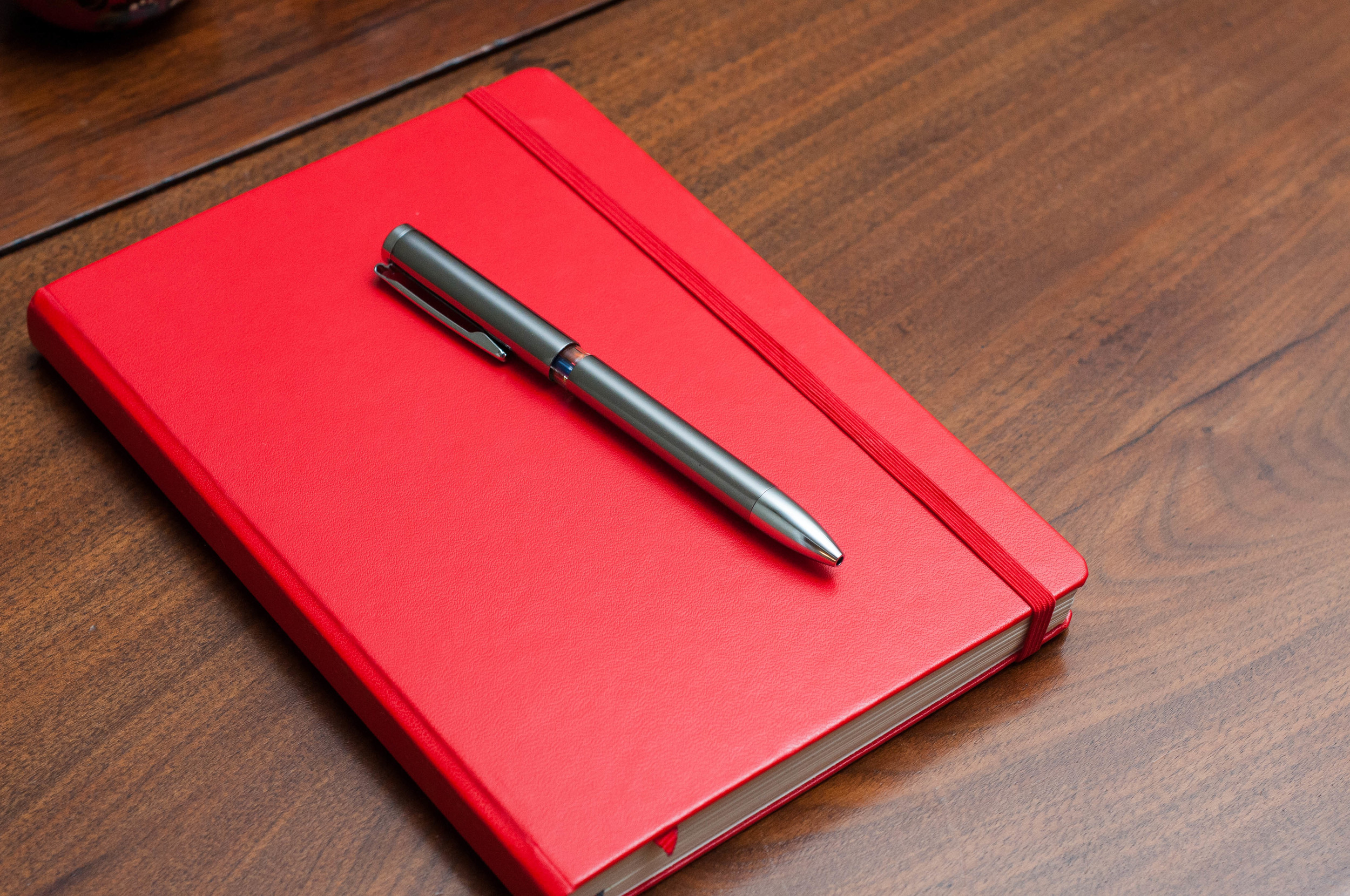
Earlier this year, I started using a Uni Style Fit multi-pen to plan and track my work for different projects in a Leuchtturm notebook. I wrote a review of the multi-pen shortly after, stating that the gel refills were some of my favorites. While that was certainly true, I wasn't a huge fan of the standard plastic barrel that I chose to house the refills. Luckily, there's a more "premium" barrel option that features metal materials and a twist mechanism as opposed to the three knock switches that make a lot of noise.

And just like that, the Uni Style Fit Meister became the perfect work log solution for me. The refills are top-notch, and I finally have a barrel to match.
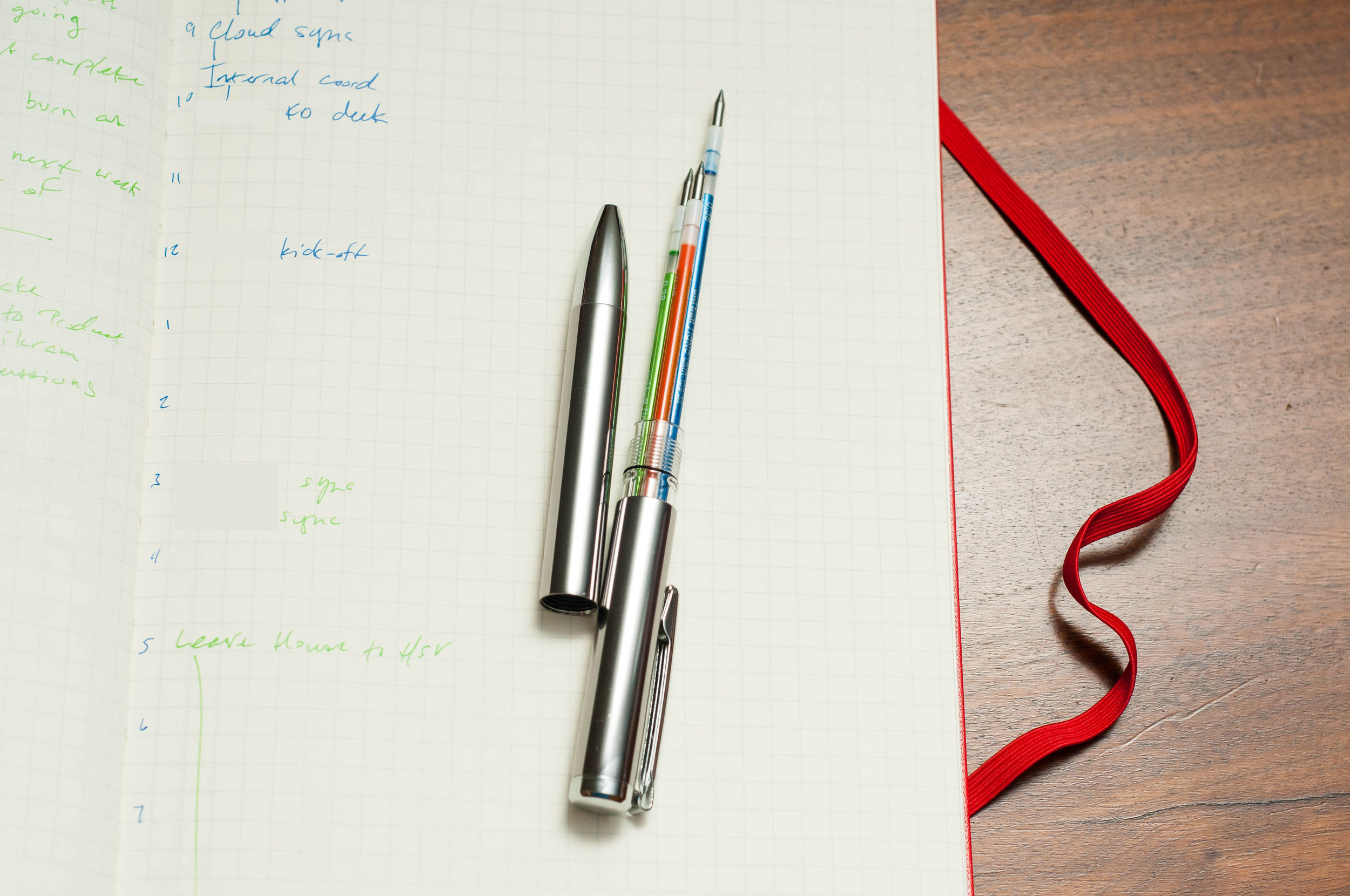
Everything about the original review still holds true when it comes to the refills. These are probably my favorite multi-pen refills. They're incredibly smooth and reliable even at the 0.38mm size. And, surprisingly, they last a long time. I'm getting about 3-4 months of daily use out of these refills. I'm a big fan of them, and I hope you check them out sometime.

The new member of this multi-pen family, however, is the Meister body. This classes up the format from "art tool" to "business pen" for me. The metal adds some weight in all the right places to improve the feeling in the hand while writing, and it looks great in the process. The metal is shiny and catches fingerprints like nobody's business, but it's easy enough to clean. If there were more color options in the lineup, I certainly wouldn't complain.
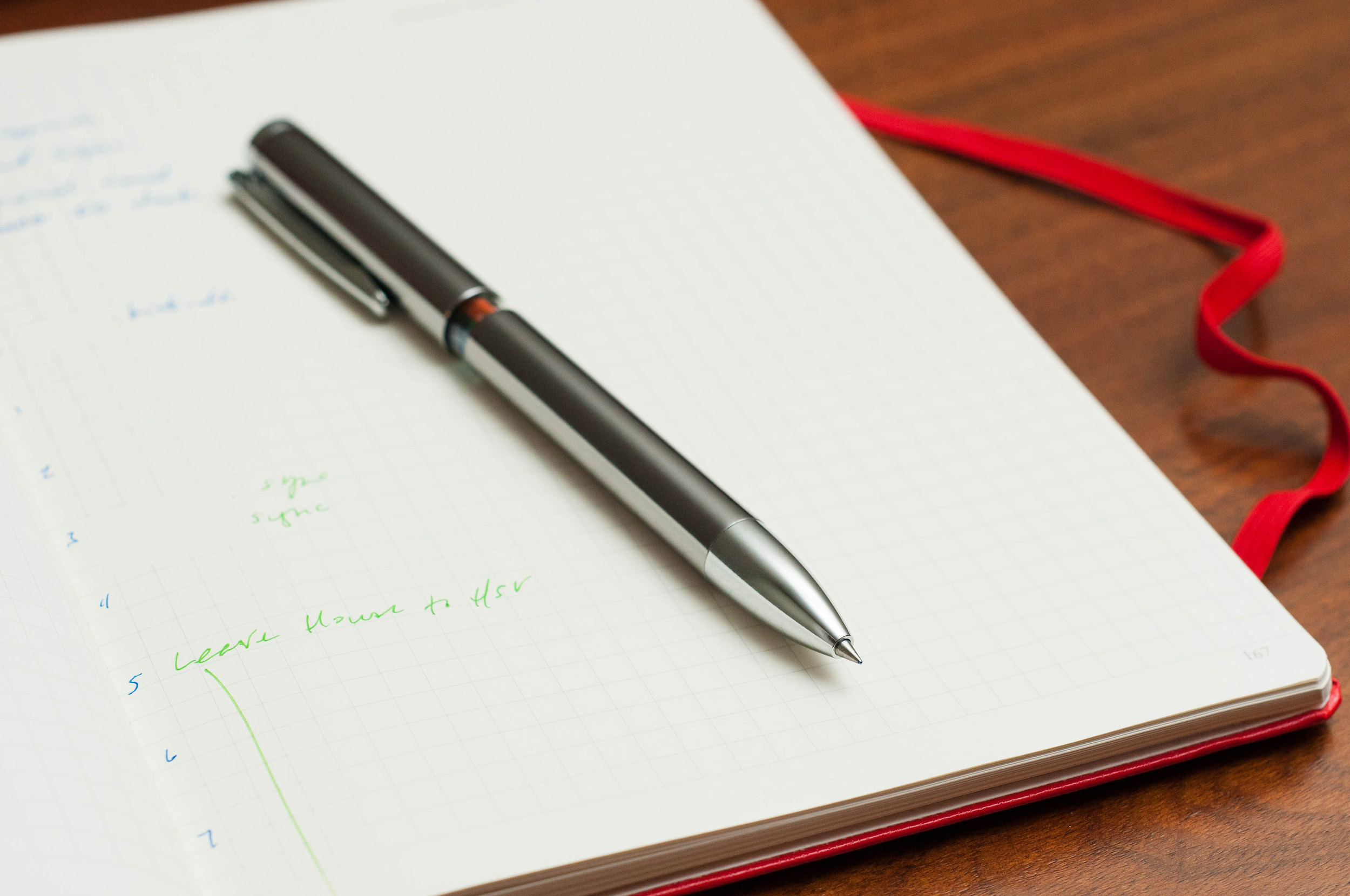
That being said, I really love the gunmetal color I chose. It looks great and feels nice when writing.

Another improvement over the cheaper body is the refill selector method. In the plastic model, there are three knock-like switches that you can depress to use a certain color refill. On the Meister, you twist the body to roll through the 3 refills. For me, this is a huge improvement. I love how smooth the movement is, and I also like that it's quieter than the plastic model. The mechanism feels great for the price, which is saying a lot.
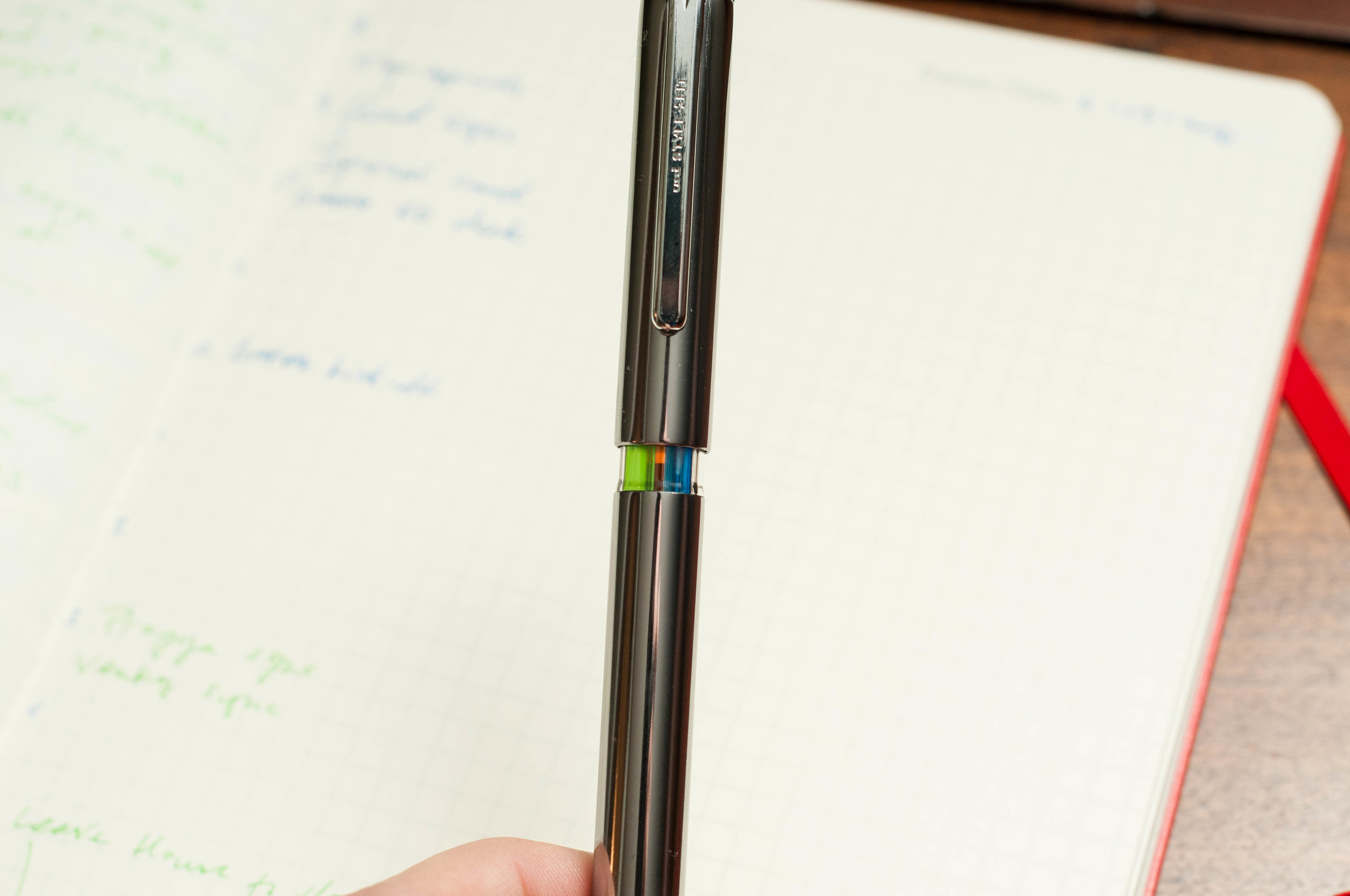
Even though the body is metal, there's a clear window midway up the pen that allows you to see the refill colors. The "active" color lines up directly with the clip, which makes it easy to see what color you can expect when you start writing. It also makes it easy to rotate and select the color you want. The window is a bit small, so you might have some trouble seeing the colors clearly if you're using similar colors. For me, it's really easy to differentiate between blue, green, and orange.

The clip isn't exceptionally strong, but it gets the job done. It's designed to be slim to match the overall aesthetic of the pen, so that might explain why it isn't overly strong. Still, I've never had any issues with it coming undone once it's clipped to something.
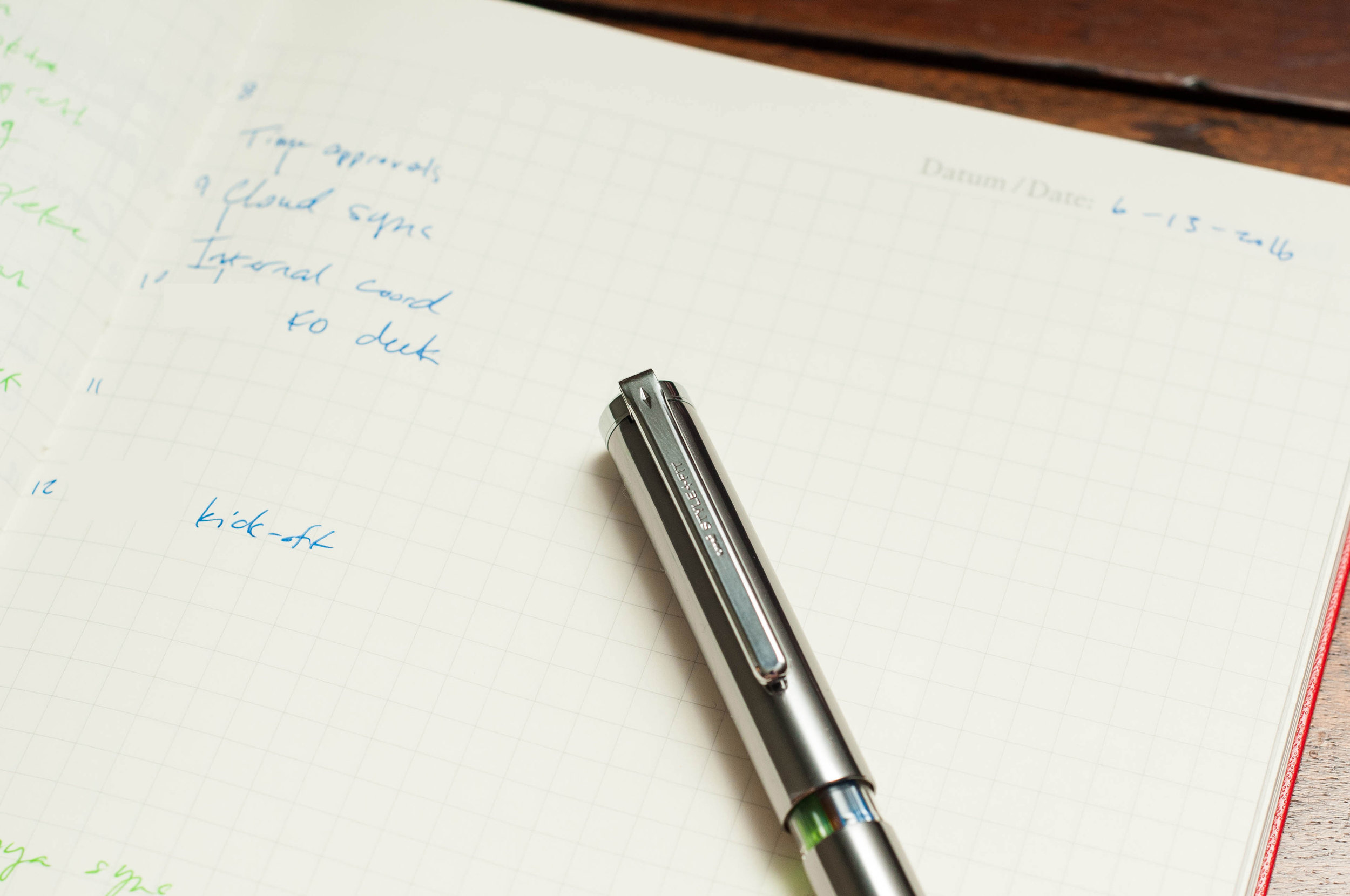
One of the things I haven't taken advantage of with this pen is the ability to add a mechanical pencil unit. This isn't possible with the cheaper plastic model, but the Meister incorporates a click mechanism to advance the lead. You only have the option of 0.5mm lead size for this unit, so keep that in mind if the mechanical pencil is something you'd use in this pen.

I have no problem saying that this is my favorite multi-pen to date, and it gets used every day to plan and track my work day. The Meister body improved the experience by adding a better design and feel to an already useful instrument. Definitely try out the refills, and also keep in mind that the Uni Style bodies also work with the Pilot Acroball multi-pen refills (if you prefer those to the Uni refills).

The Uni Style Fit Meister is available from JetPens in a variety of colors, and keep in mind that they don't come with any refills — you need to buy those separately!

(JetPens provided this product at no charge to The Pen Addict for review purposes.)


Enjoy reading The Pen Addict? Then consider becoming a member to receive additional weekly content, giveaways, and discounts in The Pen Addict shop. Plus, you support me and the site directly, which I am very grateful for.

Membership starts at just $5/month, with a discounted annual option available. To find out more about membership click here and join us!
Posted on June 15, 2016 and filed under Uni, Style Fit, Multi Pen, Pen Reviews.

Pelikan Special Edition M120 Green/Black: A Review

(Susan M. Pigott is a fountain pen collector, pen and paperholic, photographer, and professor. You can find more from Susan on her blog Scribalishess.)

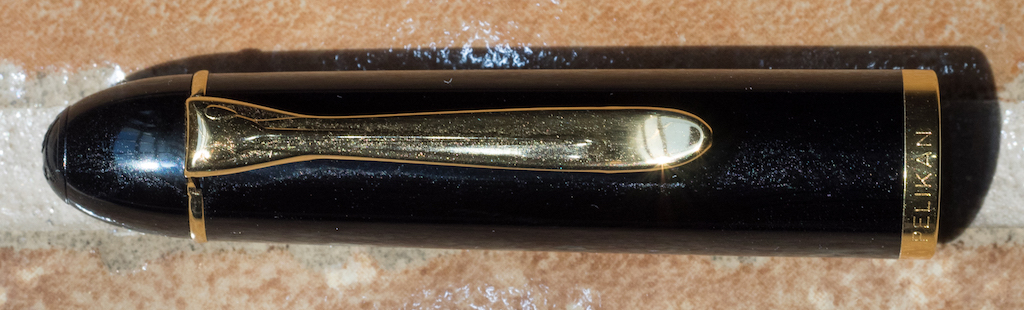
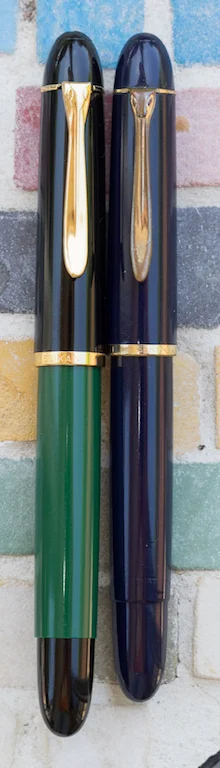
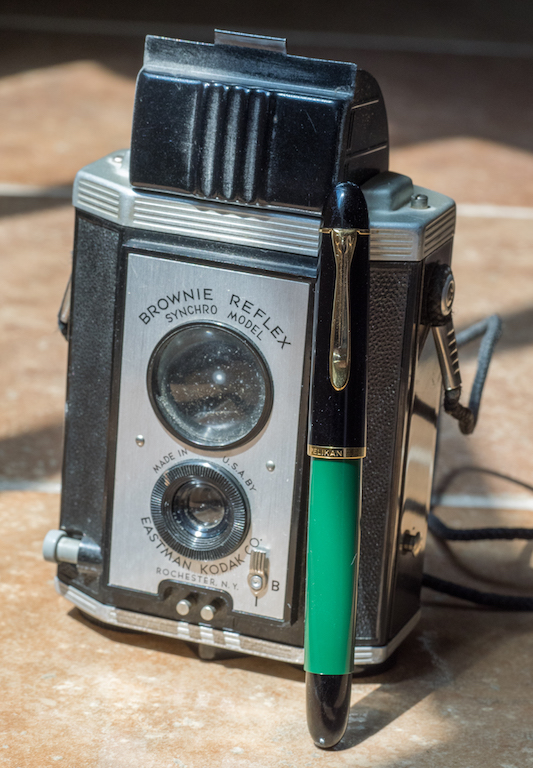
The Pelikan Special Edition M120 in green and black is a tribute to the vintage version from the 1950s. Like its predecessor, the pen is cigar shaped with a black cap and piston knob, green barrel, and Pelikan-beak clip.

My pen came in a cardboard presentation box with a drawer. The pen is nestled inside a leatherette Pelikan pen envelope tied with brown ribbon.

The cap top is engraved with the Pelikan logo, but it's hard to see except in direct light.

The Pelikan-beak clip is gold plated. And the cap ring is engraved with the words "Pelikan Germany."

The barrel is solid green plastic with an ink window and a black grip.

The M120 nib is gold-plated stainless steel engraved with a retro design.

I am quite impressed with the nib on my review pen. Even though it is an extra-fine, it is not scratchy at all. It writes smoothly and even has a bit of spring.

I inked the M120 with Pelikan's new 4001 Dark Green ink. It's a perfect match for the pen and is a beautiful shade of green. The piston on the M120 works smoothly and draws in about 0.9 ml of ink.

The M120 is a small pen at only 4.75 inches unposted and 6.1 posted. It is bigger than its vintage predecessors (the M140 and M120) which measure 4.5 inches unposted and 5.5 inches posted. The pen weighs only 14.5 grams.

You can purchase the Special Edition M120 in green and black at Goldspot for $211.95 (retail is $265!). For such a simple plastic pen with a steel nib, that's a pretty steep price. I think Pelikan should have priced this around $100 or less, making it more competitive with other EDC pens like TWSBI, because the M120 could be a wonderful every-day writer.

Pros

  • The simple design of the M120 and piston filling system make this a great EDC pen.
  • The gold-plated, stainless steel nib writes beautifully. Pelikan nibs are consistently good (in my experience) though the size of the nibs can vary (i.e. one fine Pelikan nib might write more like a medium, whereas another fine might write like a true fine). The EF on this review pen is a true EF.
  • The pen is light and well balanced posted or unposted. It won't weigh down a shirt pocket and will fit easily in a small notebook.
  • The M120 comes in a nice presentation box and would make a great graduation gift or Father's Day present.

Cons

  • I honestly think this pen is overpriced. It is a piston-filler, which may add a bit to the cost, but it's plastic with a steel nib. It really shouldn't be over $100.
  • Because the pen is small, people with larger hands may find it too light even when posted.

Thanks to Goldspot Pens for lending Pen Addict the M120 for review.

Posted on June 10, 2016 and filed under Pelikan, Fountain Pens, Pen Reviews.

J. Herbin Straight Body Frosted Glass Dip Pen (or, my favorite ink testing pen)

(Jeff Abbott is a regular contributor at The Pen Addict. You can find more from Jeff online at Draft Evolution and Twitter.)

In all of the different reviews and discussions about the various types of pens that we talk about in the community, there's one type that doesn't get much attention. It's probably because there aren't many of them out there, but that doesn't make them unworthy. Amidst all the talk of gold- and steel-nibbed fountain pens, gel pens, pigment markers, brush pens, and pencils, there's a small, delightful category of glass pens.

Glass dip pens are works of art in the own right, hand-crafted by someone trained in working with glass. Have you ever watched someone craft handmade glass ornaments? It's really something to behold. Obviously, a straight pen isn't as impressive as an intricate ornament, but it's still a thing of beauty.

But when it comes to the writing aspect of these instruments, they have a unique advantage: they're extremely easy to clean. Yes, metal nibs are also easy to clean, but I'm arguing that the glass dip pen is still easier.

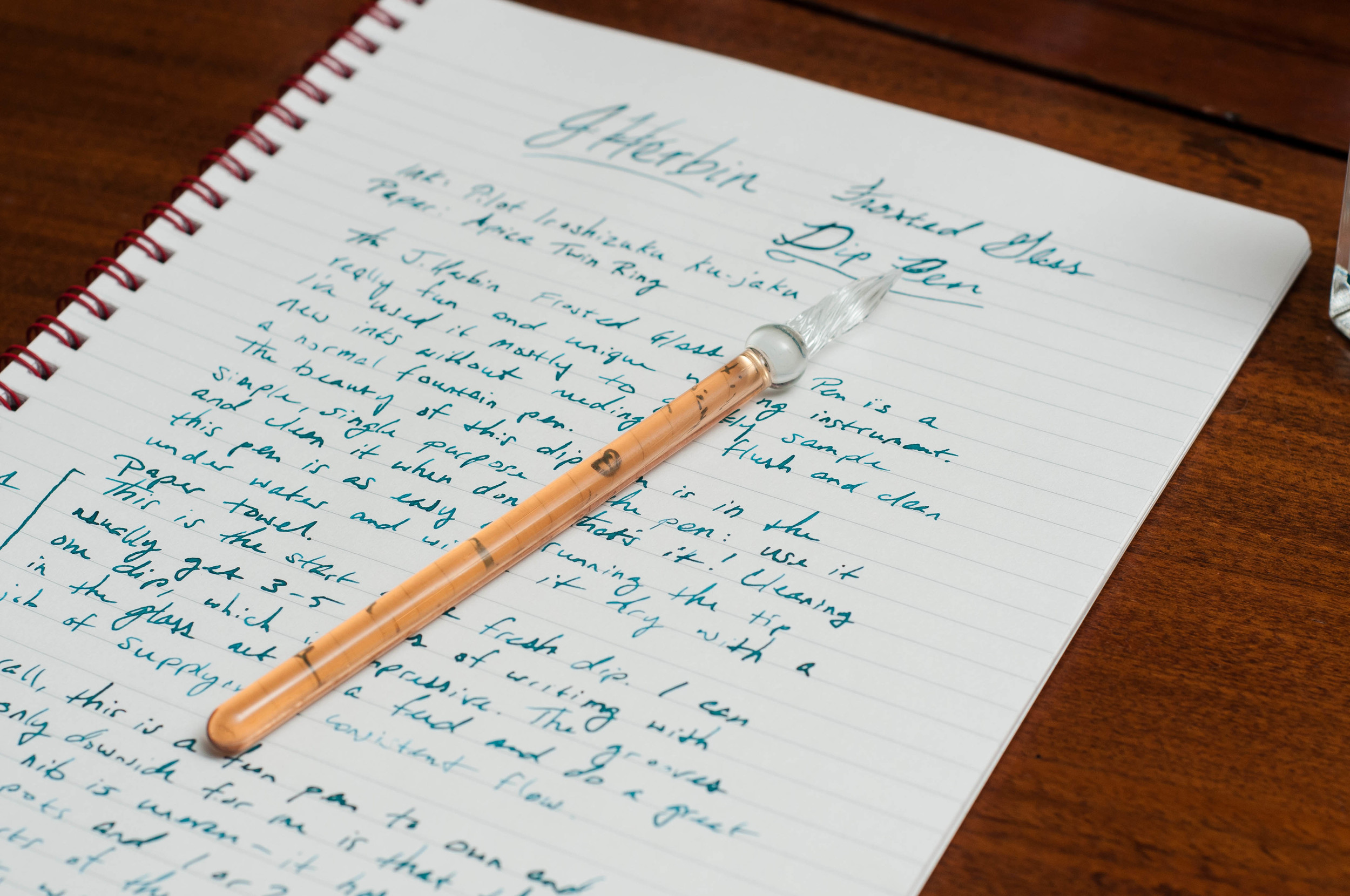
I'll be the first to admit that I have absolutely no skills when it comes to lettering and calligraphy. Practice makes perfect, and I haven't put in the hours to become skilled at this art. That being said, I like to think my hand-writing is fairly legible if I want it to be. I'm sure there are more artistic uses for glass dip pens, and that's wonderful. But, my main enjoyment comes from the ease of use and cleaning that come with this pen.

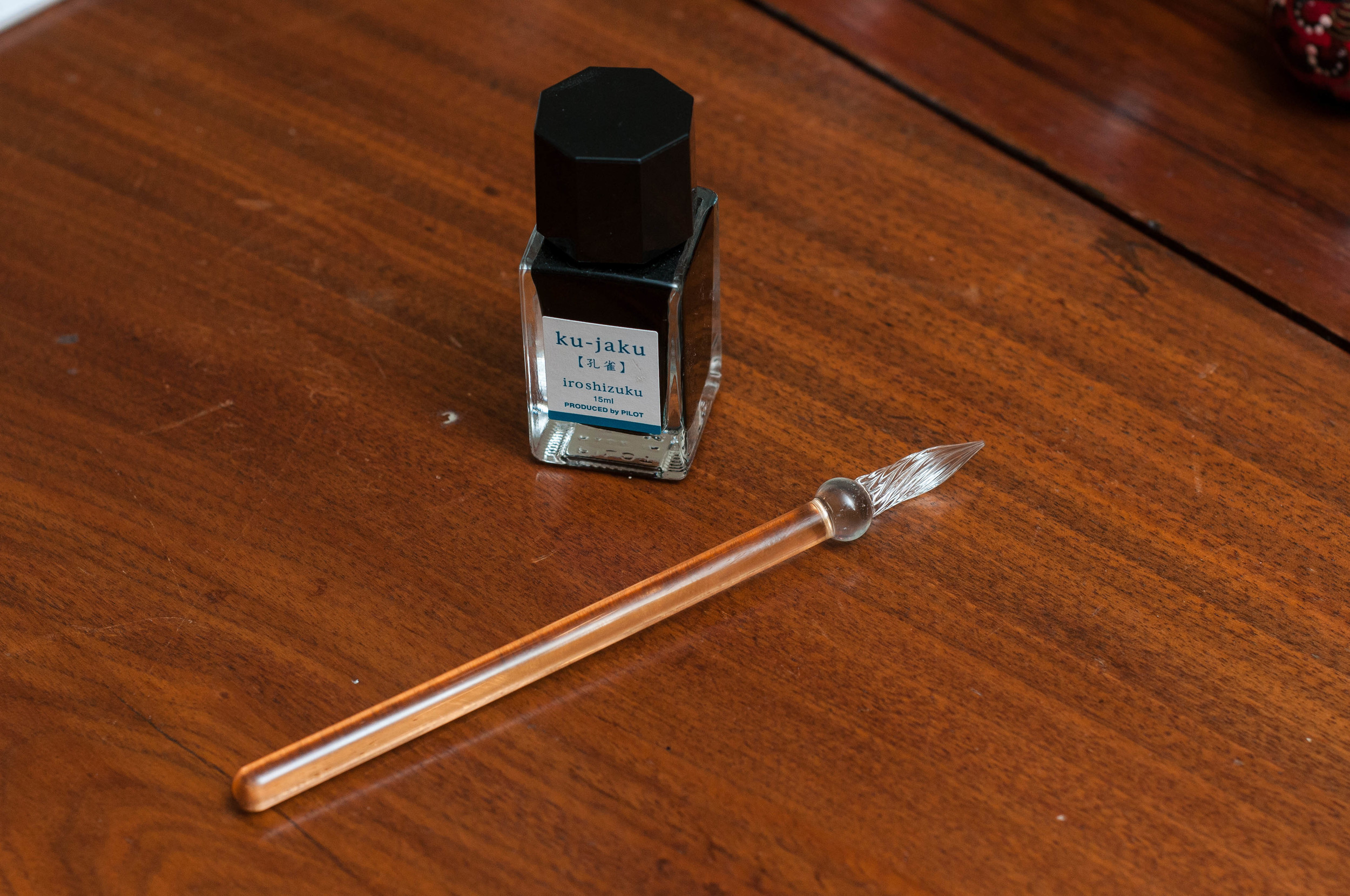
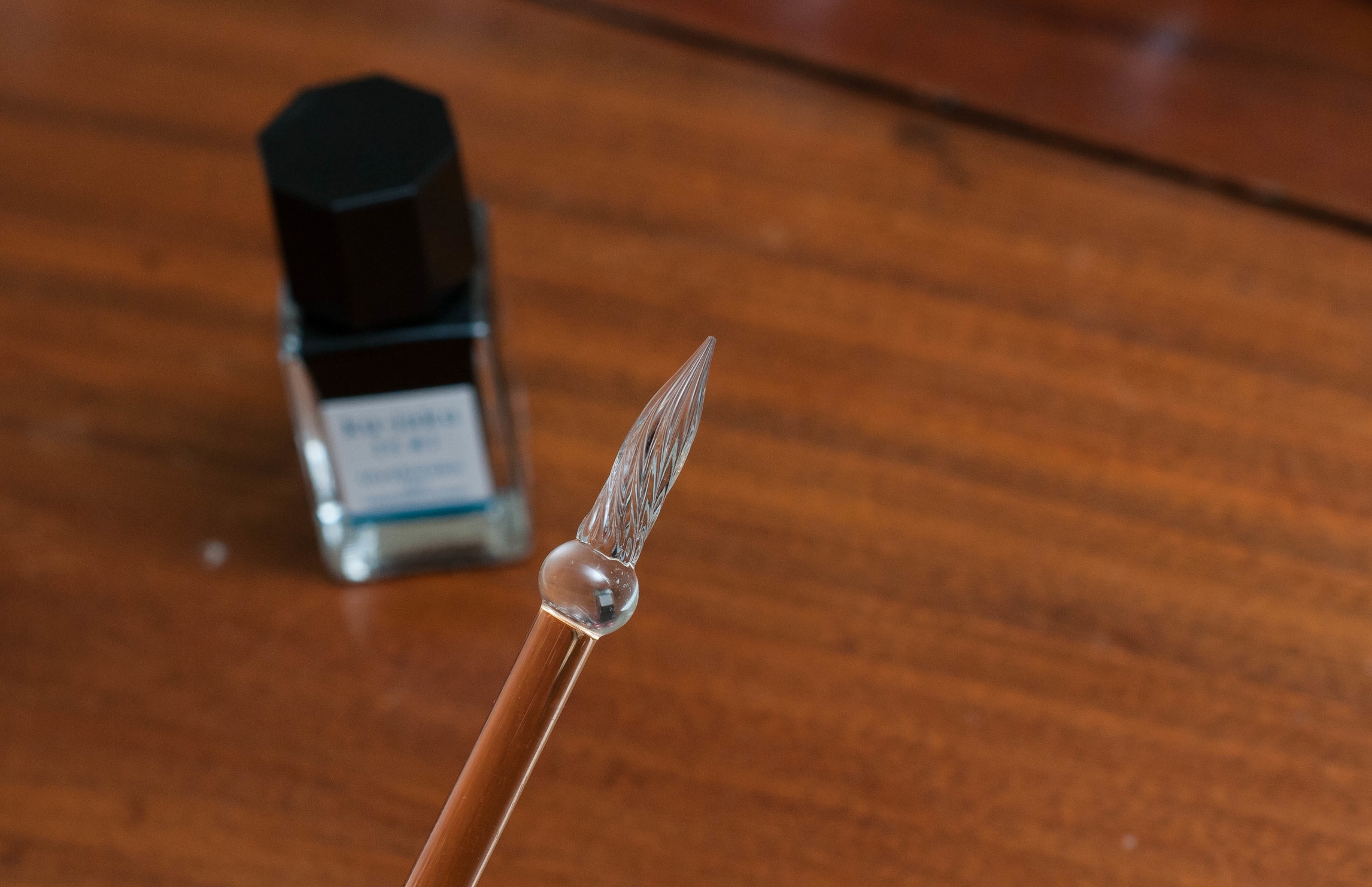
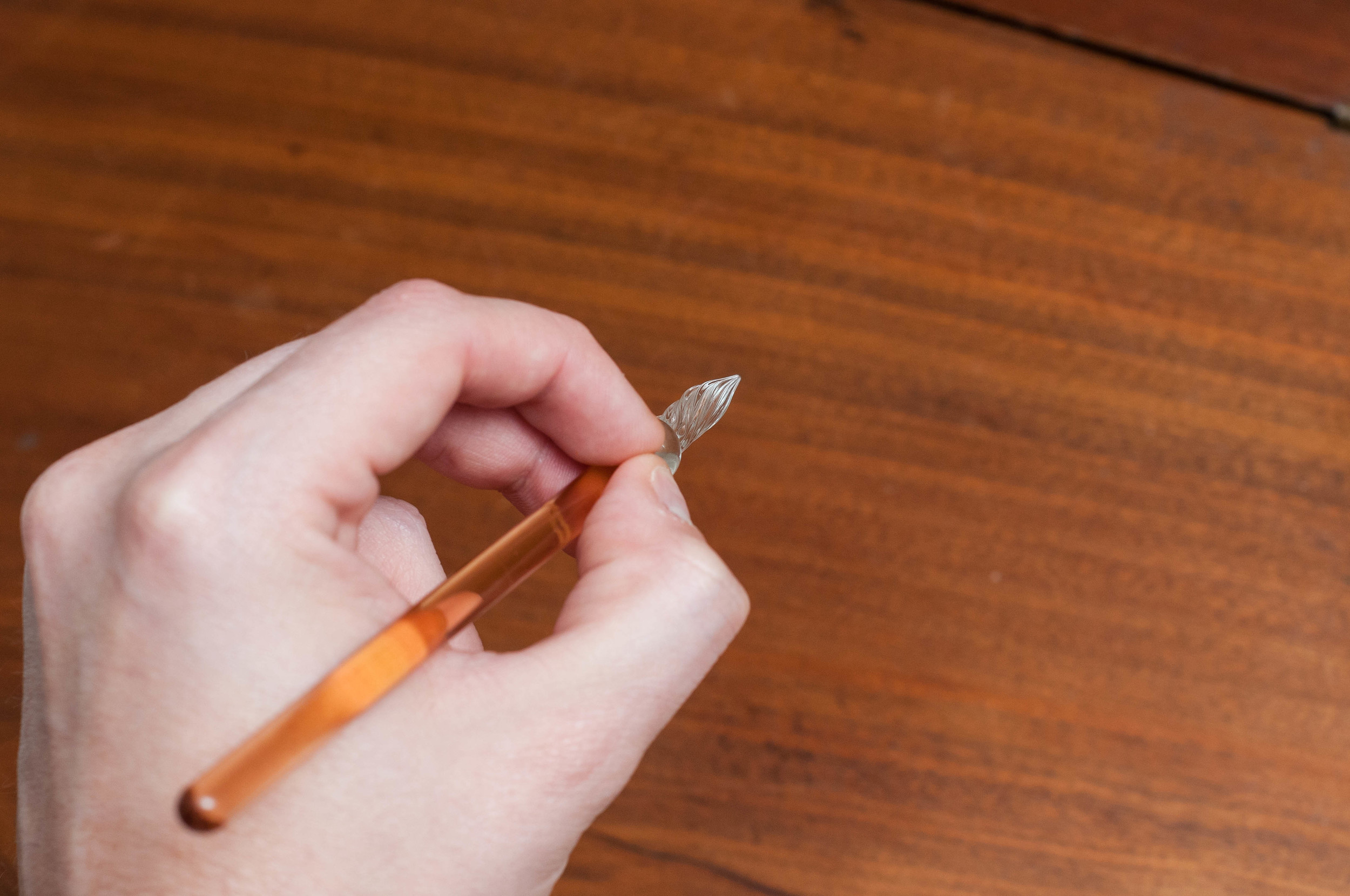
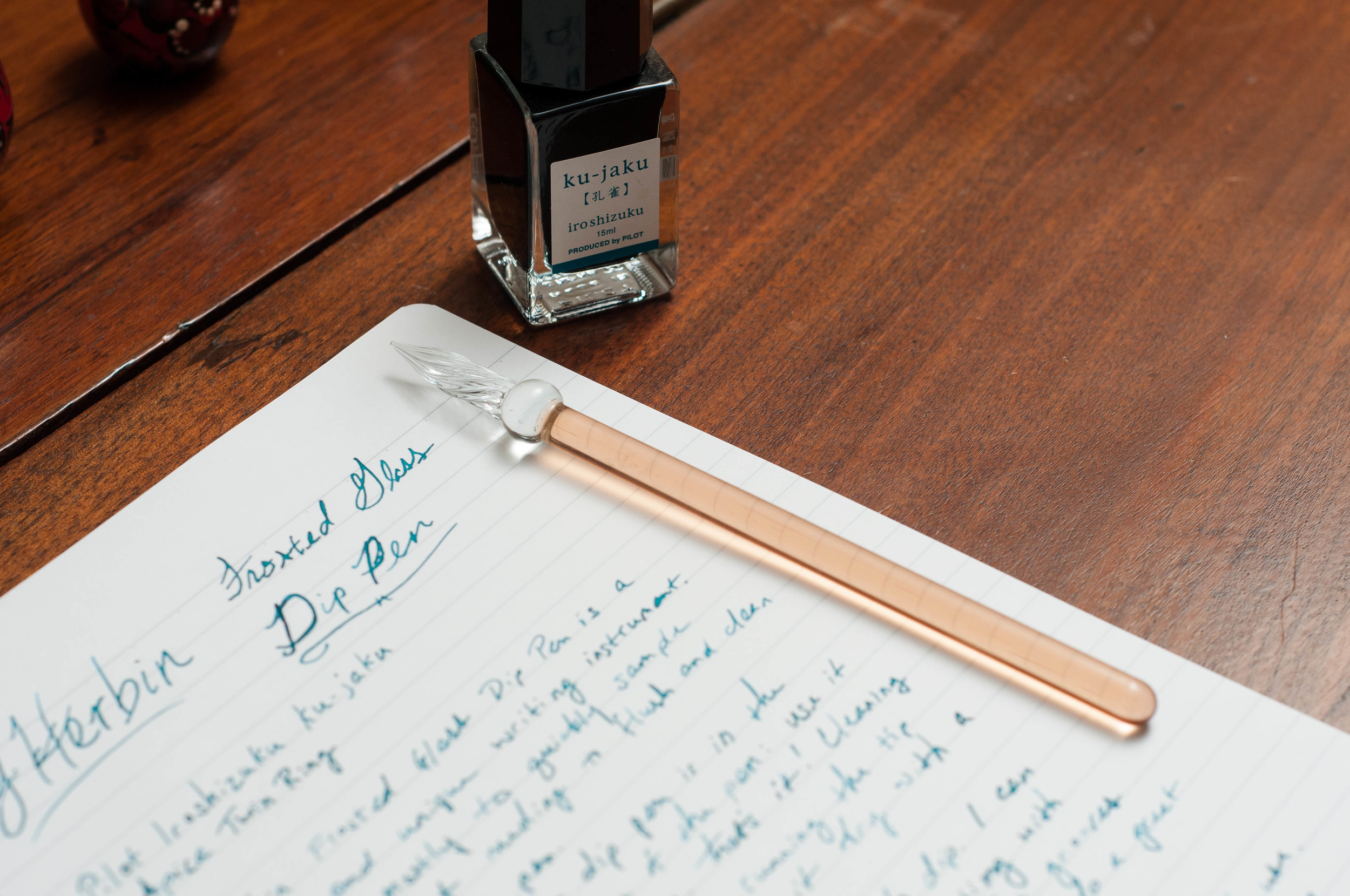
The J. Herbin (get ready for this incredibly long name) Straight Body Frosted Glass Dip Pen, Small is an affordable way to enter this market. It's a simple pen — a smooth, 5 inch body attached to a spiraled tip. In between the two, a small bulb to rest your fingers. The color I chose is the amber tint, which is great because it's mostly see-through.

At $16, this is a great choice for anyone wanting to try out dip pens without having to choose nibs and nib holders. Those have their merits and advantages, but you can't beat the simplicity of the glass dip pen. It's one piece, and each one is unique.

Yes, it's a thing of beauty and each one should be admired and appreciated. But, how does it write?

Let's break this down into pros and cons, starting with the pros.

Pros

Open the package, grab the pen and a bottle of ink, and you're ready to go. It couldn't be simpler. There's no filling, no cartridges to fuss with, and no cleaning of the nib and section after dunking it into a bottle to suck up the ink. You dip the nib into the ink, dab it on the edge of the bottle to prevent drops, and start writing.

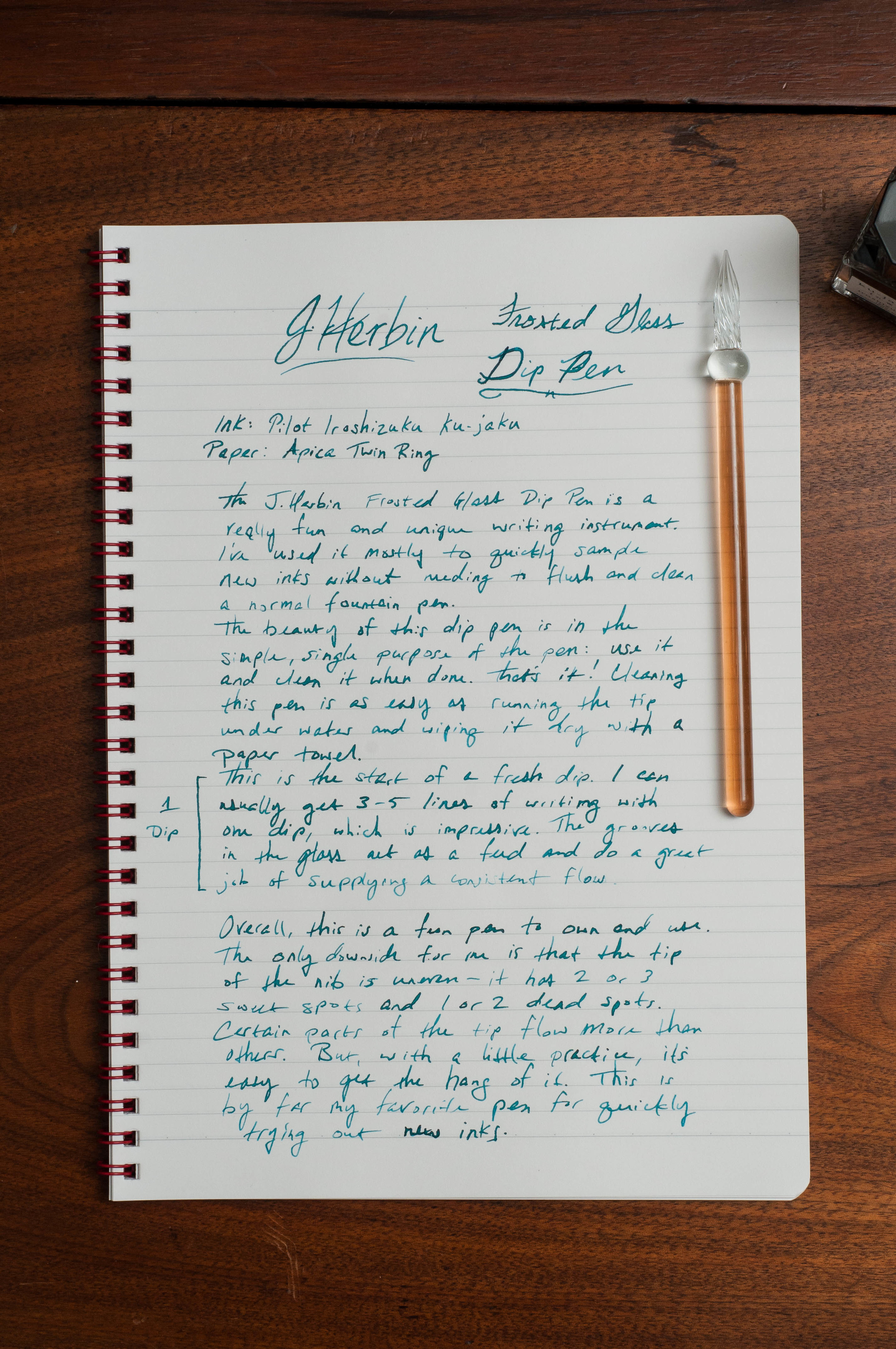
In my experience, I usually get 3-5 lines of writing before I need to re-dip. I'm never able to write for this long when using metal nibbed dip pens. The spiral grooves on the tip of this pen do an amazing job of storing ink, and they do an even more amazing job of feeding the tip consistently. The only time I notice any heavy flow issues is when I've dipped the nib too deep or done a poor job of dabbing before starting to write.

The pen takes some practice before you can write with your normal hand, but that doesn't take long. As for the shape and grip, I enjoy the way the pen fits in my hand. I imagine that plenty of people will discover that it doesn't fit their hand at all, though. It has the shape of something that will polarize users. Either you'll do well with it, or you'll loathe it. For me, it's delightful.

Writing with the pen is a fun experience. The thoughfulness behind periodic breaks to dip the pen back into the ink bottle forces you to slow down and focus on what you're writing. Take your time, form the words, and dip for some more ink. It's pleasant.

The writing feel is slightly scratchy at times depending on how much ink is stored in the nib, but it's generally pretty nice and smooth. Since this isn't a standard nib with two tines, it has several "sweet spots" that work better than other spots on the tip. One of the sweet spots on this pen writes like a medium fountain pen, while another writes like an EF. If you can remember where these spots are, it can be quite handy.

Finally, did I mention how easy it is to clean? When you're done using it, simply run the tip under water for a few seconds, and wipe it dry with a paper towel. Done! No flushing, no rinsing — just rinse it, dry it, and start using it with a new ink. That is the #1 attraction of this pen for me. When I want to do some ink testing and sampling, this is my go-to pen. I can fly through different inks because of how quickly I can "reset" the pen to a clean state.

Cons

As much as I love the pen for its character and easy cleaning, it has some downsides. For one, it feels fragile. For normal use, it feels great. But, I worry that if I drop it on the desk or into the sink while cleaning it, it might chip or shatter. This is to be expected for anything made of glass, but most glass objects are decorative and not meant to be handled.

Remember those "sweet spots" I mentioned? Yeah, it also has a couple of dead spots that write like an EF fountain pen that's running out of ink. These are dead spots no matter what usable angle you hold the pen. Luckily, the dead spots are very few and easy to avoid once you learn the pen. Keep in mind, the tip on this pen is very small, so every millimeter gives you a different feel.

Along with the dead spots, there are some scratchy angles to the pen. Luckily, you can smooth out the tip just like you would a fountain pen nib. Grab some micromesh and draw a couple dozen figure-eights and infinity signs, and you will notice an improvement. Just don't get too carried away.

My final complaint is that the pen loves to roll on a flat surface. There's no clip or flat side, so it obviously will have issues staying still on its own. Minor issue, but worth noting.

Conclusion

This definitely isn't an every day carry pen, but it's been so fun to use for testing inks and playing with lettering over the past several weeks. This isn't a pen that I use all the time, but it has a few specific purposes that I wouldn't trade it for. Next time you want to get out that box of inks and play, try using one of these to maximize your fun.

You can grab these on JetPens in several colors, as well as a larger size.

Posted on June 8, 2016 and filed under Pen Reviews, J. Herbin.