Posts filed under Pen Reviews

Kaweco Liliput Brass Ballpoint Review

If there were ever a pen in need of a built in tracking device it would be the Kaweco Liliput Ballpoint.

I love pocket pens about as much as any other subset of pens or pencils I can think of. Manufacturers these days build durable, functional, and great performing pocket pens. The only catch is the obvious one: They are easy to misplace, or even lose.

That's where I was a week ago with the Brass Liliput Ballpoint. I had been carrying and using it in preparation for this review, and took it on a trip with me to an out of town baseball tournament. I keep score for my sons team in a traditional scorebook, and was planning on using this pen for the task.

Fisher Space Pen, top.

As it turns out, I left it back in the hotel room before the first game. I keep my Brass Fisher Space Pen in the car for situations just like this, and it became my scoring pen for the weekend. (I use pen in the scorebook instead of pencil. When it's 90+ degrees outside my hand and arm sweat smear pencil marks, which drives me insane.)

I went on about my fun-filled weekend and forgot all about the Liliput. This came into play the following week when I wanted to continue using it in preparation for this review. It had left my mind so completely I didn't remember where I had put it, or that I had even taken it with me.

I looked for it around the house for a couple of days, then gave up. I only stumbled back on it because I was looking for a power cord in the backpack I took. There was the Liliput, tucked neatly inside the Field Notes Campfire Edition that I had brought. I felt like a big dummy, but I was happy my pen was found.

You'd think stories like this would turn me off pocket pens completely, but that's not going to happen. I love this pen, and others like it.

Kaweco Liliput Fountain Pen, top.

I prefer the brass Liliput over its aluminum counterpart, mainly due to the weight of the pen. The aluminum model has an airy feel, while the brass has some density to it. It's not a weighty pen by any stretch, but you can feel it unlike the aluminum model. You think the brass model is easy to lose? The aluminum model laughs at your silliness.

Two areas where the Liliput beats the competition in my mind are it's retractable deployment and the use of D1 refills. Most pocket pens are capped - like the Fisher Space Pen - and therefore take more time to start writing. Those with a knock - like the Lamy Pico - are two to three times the size of the Liliput. I love both of those pens too, but it goes to show you how different the Liliput is in this category.

The use of a D1 refill gives this pen flexibility its competition can't offer either. Kaweco's stock blue ballpoint is fantastic, but you can upgrade it to a Uni-ball Jetstream or Zebra Sarasa Gel - two of my favorite D1 options. There are a myriad of other choices as well.

If there is any downside to this pen it is the price. At $70 it is very expensive relative to its competition. Add in the fact of how easy it is to lose or misplace, well, that’s a lot of money down the drain. People have given up the Fisher Space Pen for the same reason, and it is less than a third of the cost.

Decisions, decisions. I love this pen. I’m glad I have it. I recommend it wholeheartedly. But there is a price to be paid for ownership, and after as well.

(Pen Chalet provided this product at no charge to The Pen Addict for review purposes.)


Enjoy reading The Pen Addict? Then consider becoming a member to receive additional weekly content, giveaways, and discounts in The Pen Addict shop. Plus, you support me and the site directly, which I am very grateful for.

Membership starts at just $5/month, with a discounted annual option available. To find out more about membership click here and join us!

Posted on July 24, 2017 and filed under Kaweco, Liliput, Ballpoint, Pen Reviews.

Copic Multiliner Pen Review

(Sarah Read is an author, editor, yarn artist, and pen/paper/ink addict. You can find more about her at her website and on Twitter.)

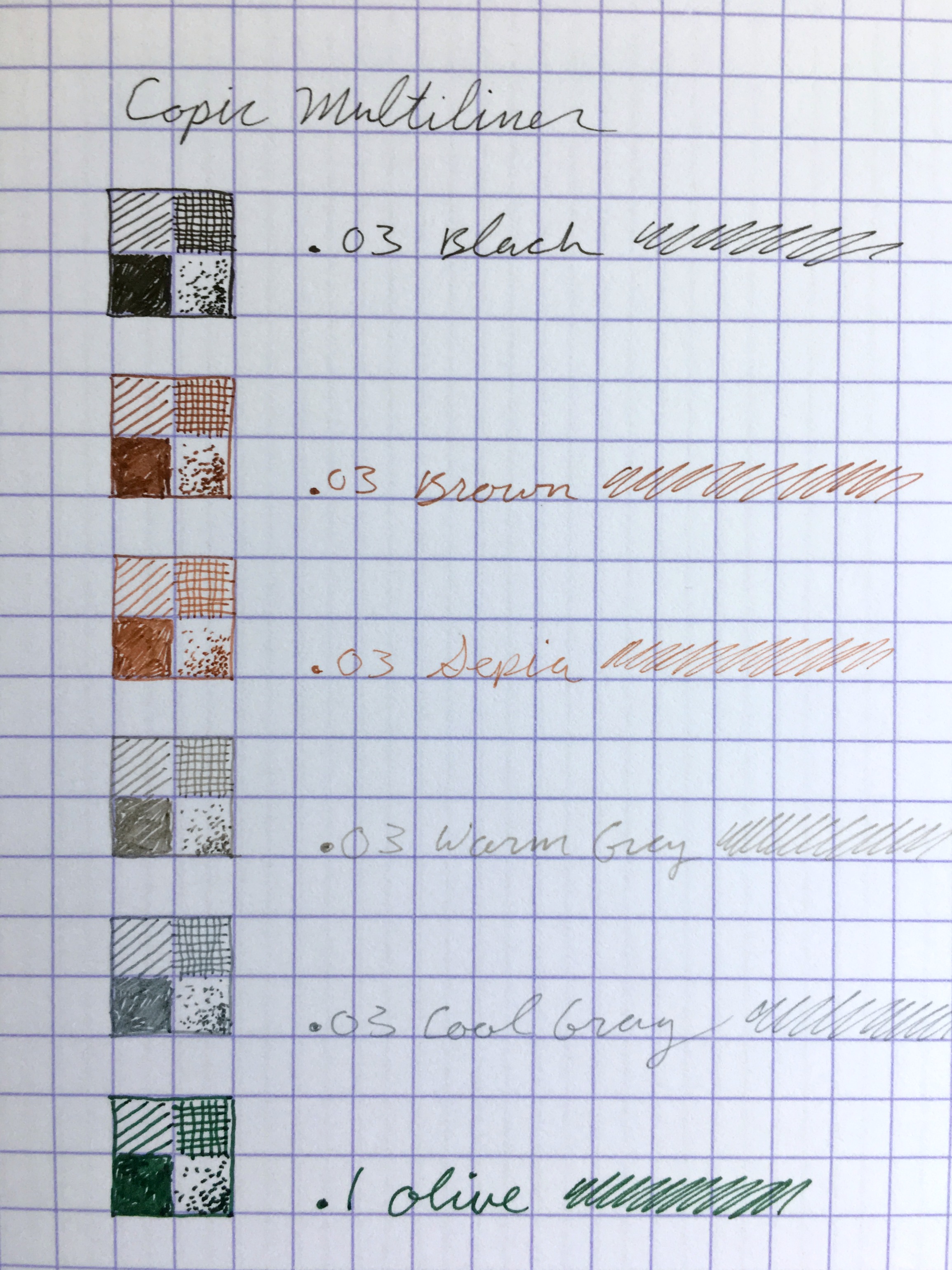
With the Copic Multiliner, this is the first time that I have used a fineliner in a color other than black, and I'm totally in love with that, now. These have planted themselves squarely into the "things I didn't know I needed in my life" category. Unfortunately, while the ink makes these a fantastic product, the build of these pens makes me less likely to meet their price point unless I have a specific project in mind for them.

The strength of these pens lies completely in their pigment-based ink. It's waterproof, acid-free, bleed-proof, archival, and works with alcohol markers. It doesn't dissolve toner, so it's safe to use on printouts or photocopies. The colors are well-pigmented and leave solid lines. There's a range of ten colors available in neutral and natural tones that are perfect for sketching.

The tips are available in a huge range of sizes from .03 up to 1.0 in the felt-tips, and several sizes of sponge-tip brush tips. The long needle-point makes it easy to see your work as you sketch, and the tip runs over the paper with a good bit of feedback. The tips do wear out quite quickly on textured paper. Even on smooth paper, it feels like the .03 size, which is particularly fragile, wears out before the life expectancy of the pen. Because these are the disposable model of pen (unlike the refillable SP version), that life expectancy is more important, especially considering that these pens run $3.60 a pop.

These disposable models cost only a little more than a cartridge for the refillable version, and less than a refill and new tip for the SP model--which makes them, in general, a better investment than the refillable pen. That seems a bit backwards to me. But I think the issue here is that the ink and tip are really all you are paying for in the disposable version. It doesn't feel like much has been invested into the pen body at all.

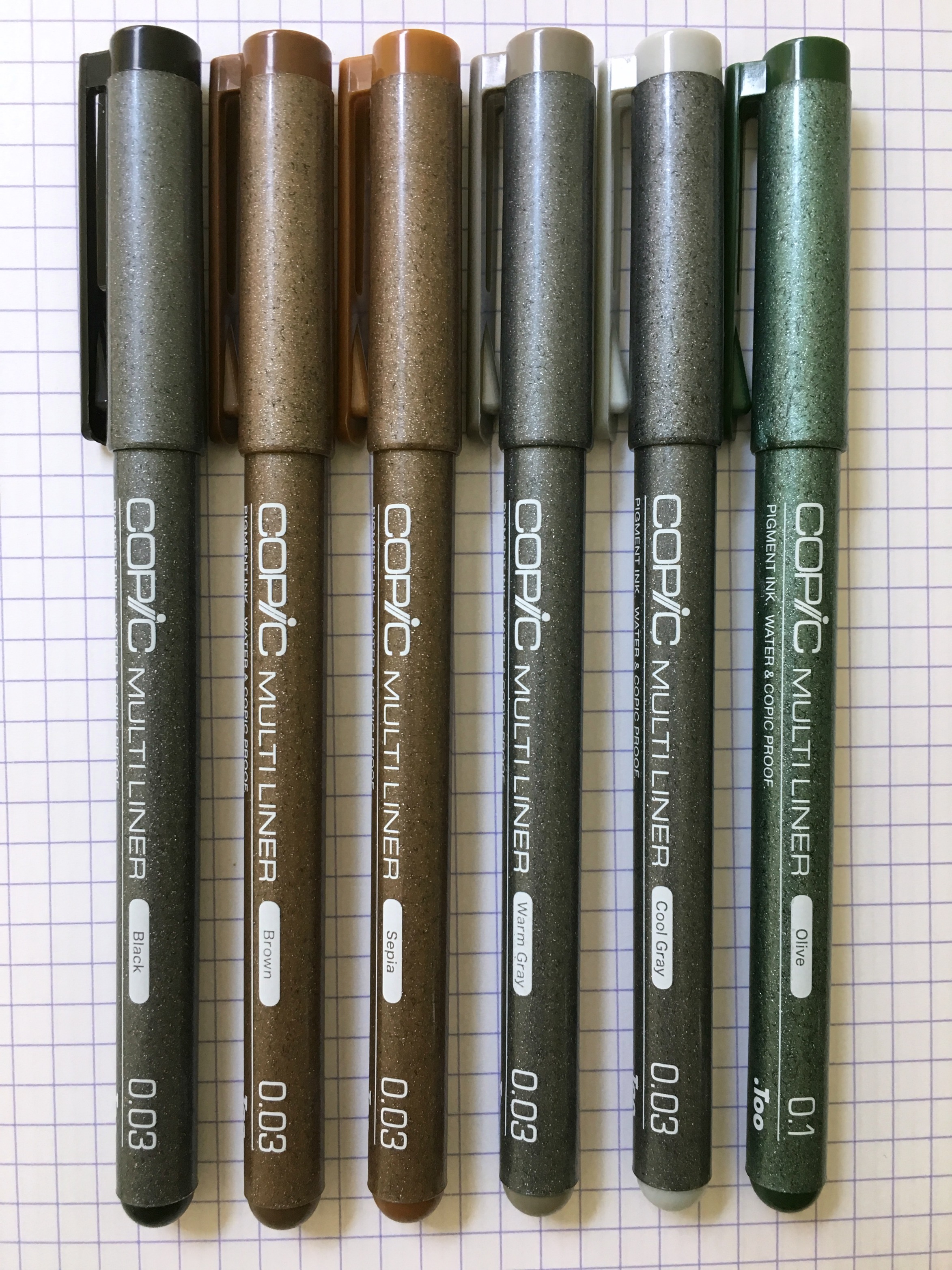
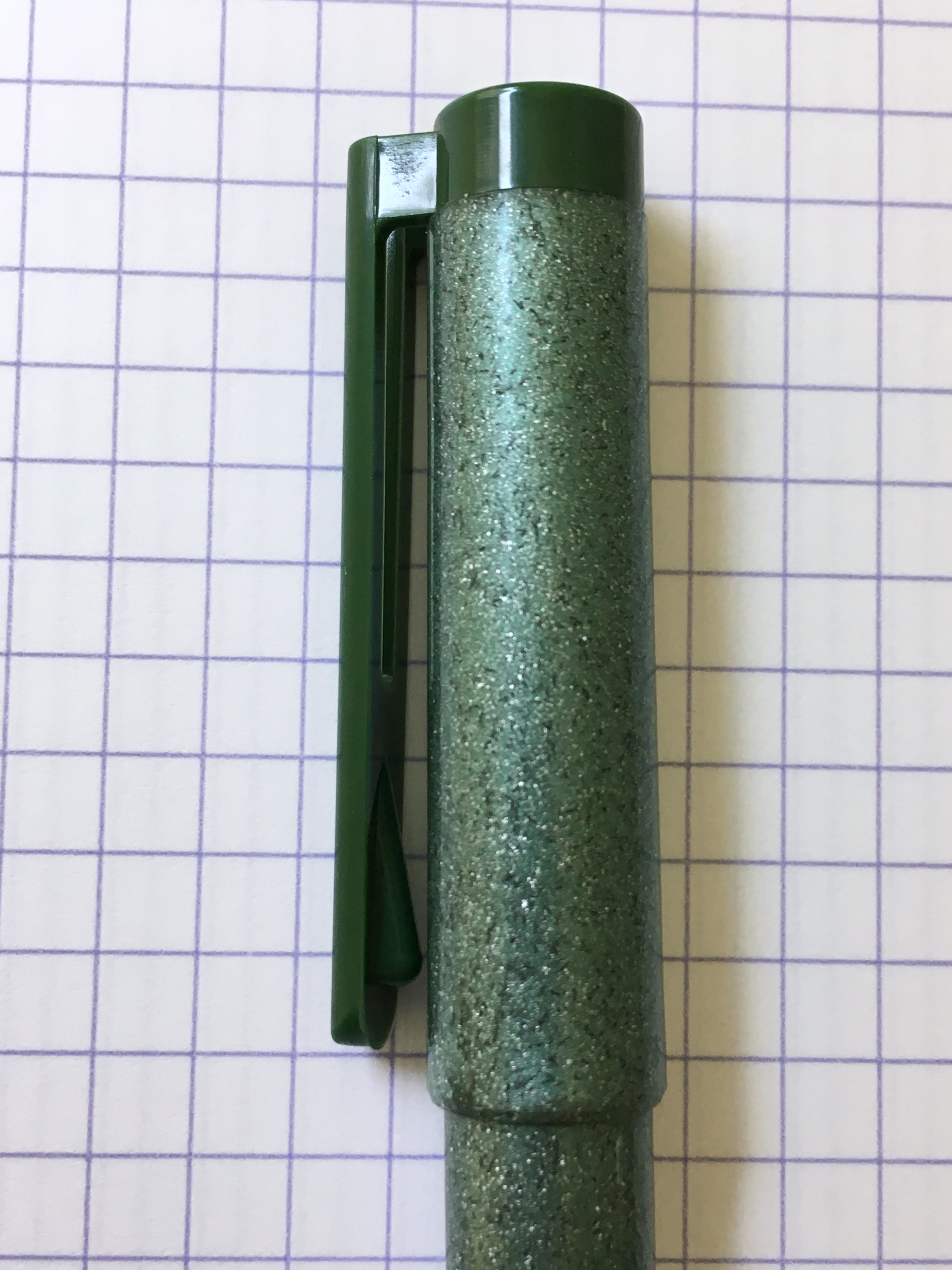
The body is made of a slightly sparkly, almost granite-looking plastic. I think that's a bit misleading. When I first saw them, I assumed they were glitter gel pens. When I realized they were serious business copic liners, I was surprised. I certainly don't see an architect carryiCg these into an important meeting. The quality of the plastic feels fairly cheap. If they weren't branded, I'd be guessing these came from a line that costs pennies per unit. The molded plastic has rough seams and edges, and the clip is so flimsy I can bend it way back with barely any pressure at all. The cap does post, but with a friction that feels ill-fitted and unreliable.

Basically, I think these pens are unicorns in mule clothing. I'm not likely to spend this much for a disposable pen that might wear out before it runs dry. But I am very likely going to need to outline something in olive green or lavender on occasion--and for that, I am very glad these exist.

(JetPens provided this product at no charge to The Pen Addict for review purposes.)


Enjoy reading The Pen Addict? Then consider becoming a member to receive additional weekly content, giveaways, and discounts in The Pen Addict shop. Plus, you support me and the site directly, which I am very grateful for.

Membership starts at just $5/month, with a discounted annual option available. To find out more about membership click here and join us!

Posted on July 20, 2017 and filed under Copic, Multiliner, Pen Reviews.

Aurora 88 Minerali Azurite Pen Review

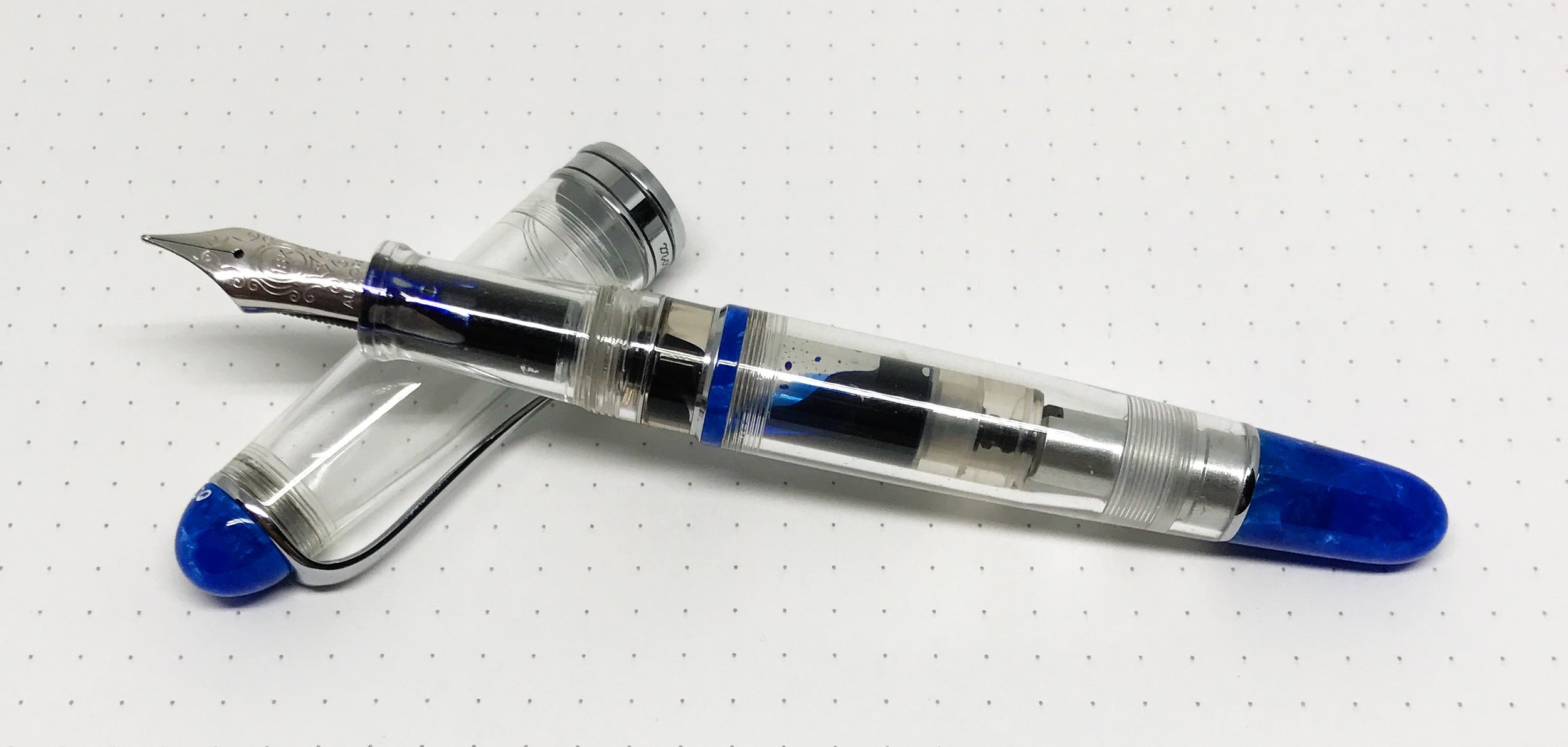
I fell in love with the Aurora 88 Minerali Azurite the moment I saw it at the Chicago Pen Show. It was a very early preview, and I wasn’t able to share it at the time. I got the go ahead a few weeks back and shared it on Instagram, and now the same pen has returned to my hands for this review thanks to Kenro Industries.

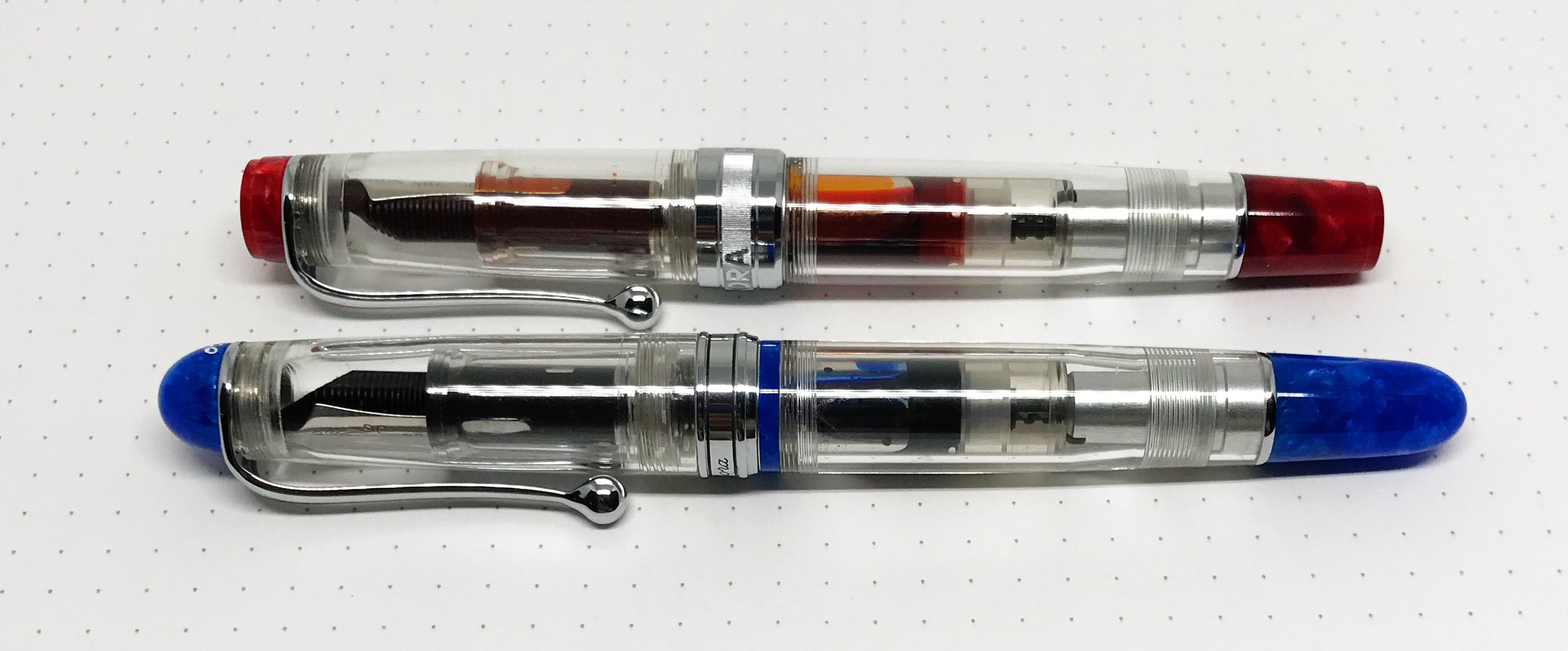
When talking about this pen on the podcast I mentioned how if I were designing a pen for me that it would look a lot like the Minerali lineup. All five of the upcoming models have a clear demonstrator barrel with one of five color accents - Azurite, Diopside, Amber, Cinnabar, Amethyst - and each are limited to 388 units.

Azurite is up first, and the blue accents are wonderful. The acrylic has great depth and brightness, taking after the mineral it was named for. Each end of the pen is adorned with the color, along with a thin belly band around the middle of the pen.

Aurora’s nibs are what made me fall in love with them initially, and the medium nib on this 88 is perfect. Even as someone who loves finer nibs, I find the medium to have a narrower line than comparable European medium nibs. It was perfect out the box and is smoother than my two extra fine Aurora nibs that I love so much.

As perfect as this pen is for me, I do have one big hangup with it: The price. Street price from retailers that have it up for pre-order (available July 31st) is $716. That is a steep price to pay - too much for me in fact. I didn’t blink when I saw the Aurora 88 Nebulosa launch at the same price, but it is a much more impressive pen design in my mind. The purple acrylic and rose gold trim are breathtaking.

The Minerali pens don’t offer that wow factor with the price factored in. My Optima is nearly identical, with flat ends swapped out for round ends, and I was able to pick one up in the secondary market for under $500. As much as I want one of these, I’ll be waiting to see if I can pick one up down the line at a better price.

The want is there, but waiting is the right thing to do. If you can't wait, Vanness Pens has them available for $795.

(Kenro Industries loaned this product to The Pen Addict for review purposes.)


Enjoy reading The Pen Addict? Then consider becoming a member to receive additional weekly content, giveaways, and discounts in The Pen Addict shop. Plus, you support me and the site directly, which I am very grateful for.

Membership starts at just $5/month, with a discounted annual option available. To find out more about membership click here and join us!
Posted on July 17, 2017 and filed under Aurora, Fountain Pens, Pen Reviews.