Posts filed under Pen Reviews

Conklin Herringbone Burgundy Fountain Pen: A Review

(Susan M. Pigott is a fountain pen collector, pen and paperholic, photographer, and professor. You can find more from Susan on her blog Scribalishess.)

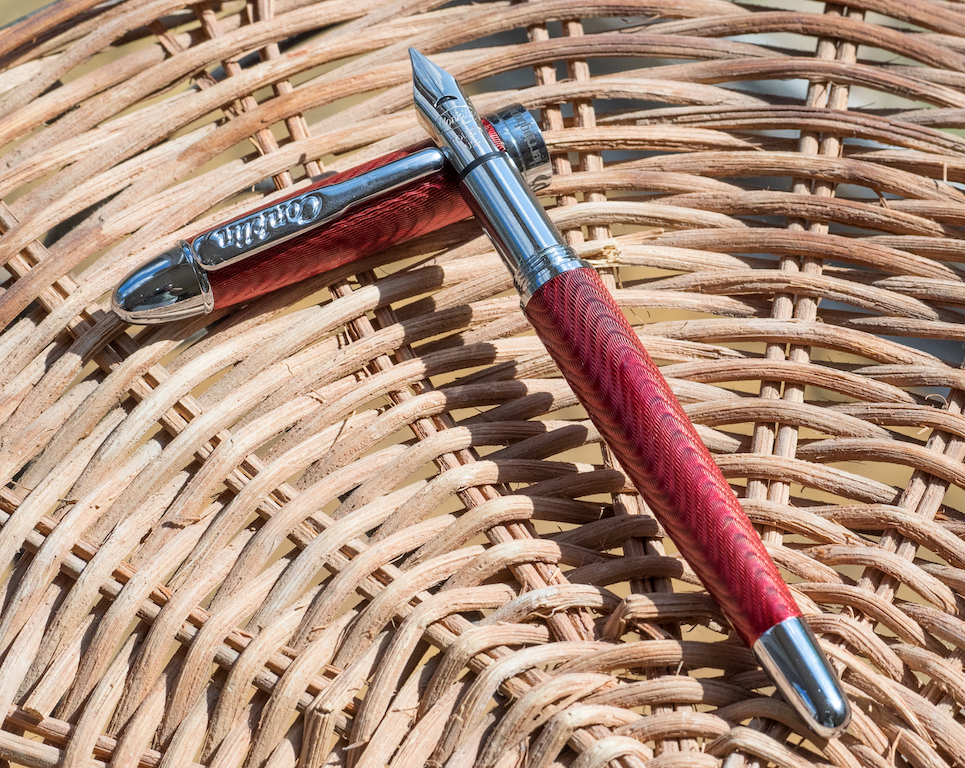
The Conklin Herringbone is a metal fountain pen etched with the herringbone pattern, then coated with lacquer and epoxy for a shiny finish. The herringbone pattern gives the pen a nice tactile feel, plus it is absolutely gorgeous in sunlight. Although this pen is called “burgundy red” it’s really more of a cherry red, in my opinion. Regardless of what you call the color, it’s quite striking.

The pen comes packaged in a blue clamshell box with a soft, cream interior.

Stainless steel, conical finials adorn the cap and the bottom of the pen’s barrel. Because it is made of metal, it’s a fairly heavy pen for its size, weighing 42 grams. It is 146mm capped, 125mm uncapped, and 160mm posted.

The screw-on cap comes with a solid clip engraved with the Conklin name. This clip will hold the pen firmly to a shirt pocket or a tablet.

The cap is also adorned with a stainless steel ring engraved with the word “Herringbone” and crescents on either side.

The Conklin Herringbone is a cartridge/converter fountain pen, and the converter holds about 1ml of ink.

This pen came with a 1.1mm stainless steel stub nib. It has Conklin’s signature crescent-shaped breather hole and is engraved with the Conklin name, Toledo, USA, and the nib size.
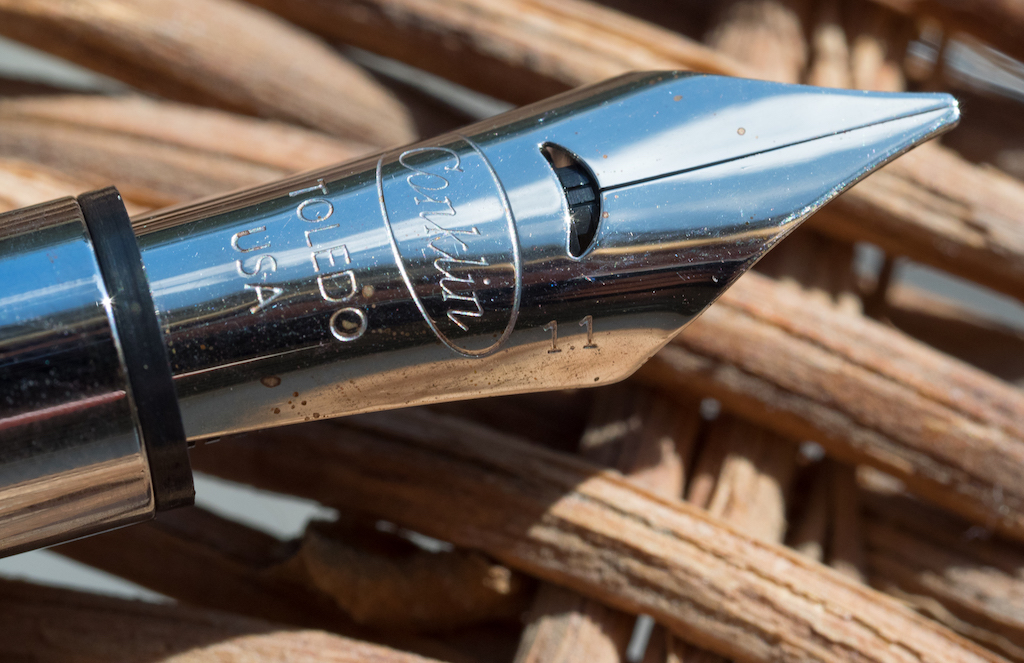
Unfortunately (for me, at least), the grip is also stainless steel. I’ve discovered I’m not a fan of metal grips because they can become slippery if you have sweaty fingers (which I often do). The grip on the Conklin Herringbone is also pretty slim (9.1mm). I prefer wider grips because they prevent hand cramping, which is becoming more of a problem for me as I get older.

Aside from being a bit too narrow, the pen is comfortable in the hand. I’ve been using it at school for the last two weeks inked with Robert Oster Astorquiza Rot, and it has performed well in my Hobonichi notebook. I also tested it on a page of Baron Fig Mastermind paper which I keep at my desk to write notes. I spent some time writing out the alphabet and a quote from the current Harry Potter book my First Year Seminar is reading.

The pen writes well—I didn’t experience any hard starts or blobs while writing. However, I did notice that sometimes the pen skipped a little bit on the downstrokes of letters like “l” and “f.”

The Conklin Herringbone retails for $70.00, but you can purchase it on sale from Goldspot Pens for $55.95. It comes in burgundy red, gun metal gray, and navy blue, and you have a choice of fine, medium, and 1.1mm stub nibs.

Pros

  • I really like the look of the Conklin Herringbone. The pattern is eye-catching, and the lacquer and epoxy make it shine.
  • The pen is a reasonable size for most writers, though some may find it a little heavy since it’s made of metal. Others, like me, will find the grip to be too narrow for comfort.
  • The 1.1mm stub nib wrote well. On Tomoe River paper (in my Hobonichi) the nib produced a generously wet line. On the Baron Fig paper, the ink soaked in a bit more and the nib seemed less wet. Regardless, I found it wrote pretty consistently aside from a few skips on downstrokes.
  • This pen is reasonably priced, especially on sale.

Cons

  • Although I like hefty pens, I don’t care for thin, hefty pens. The Conklin Herringbone is too thin for my aging hands. I need a wider grip to write for long periods without hand cramps.
  • If you struggle using pens with metal grips, like I do, then you probably will not like this pen.
  • As stated above, the nib performed well, but skipped occasionally on downstrokes.

(Goldspot Pens loaned Pen Addict this Conklin Herringbone fountain pen for review purposes.)

Posted on September 22, 2017 and filed under Conklin, Fountain Pens, Pen Reviews.

Iconic 2 Way Marker Pen Review

(Sarah Read is an author, editor, yarn artist, and pen/paper/ink addict. You can find more about her at her website and on Twitter.)

I love markers, so I guess it makes sense that I double-love twice the marker in one pen. I feel like the Iconic 2 Way Marker Pens were designed with the planner nerd in mind. Like they sat down and anticipated our needs. At first glance, they seem pretty plain--like something I've seen before. But the more I use them, the more I like them.

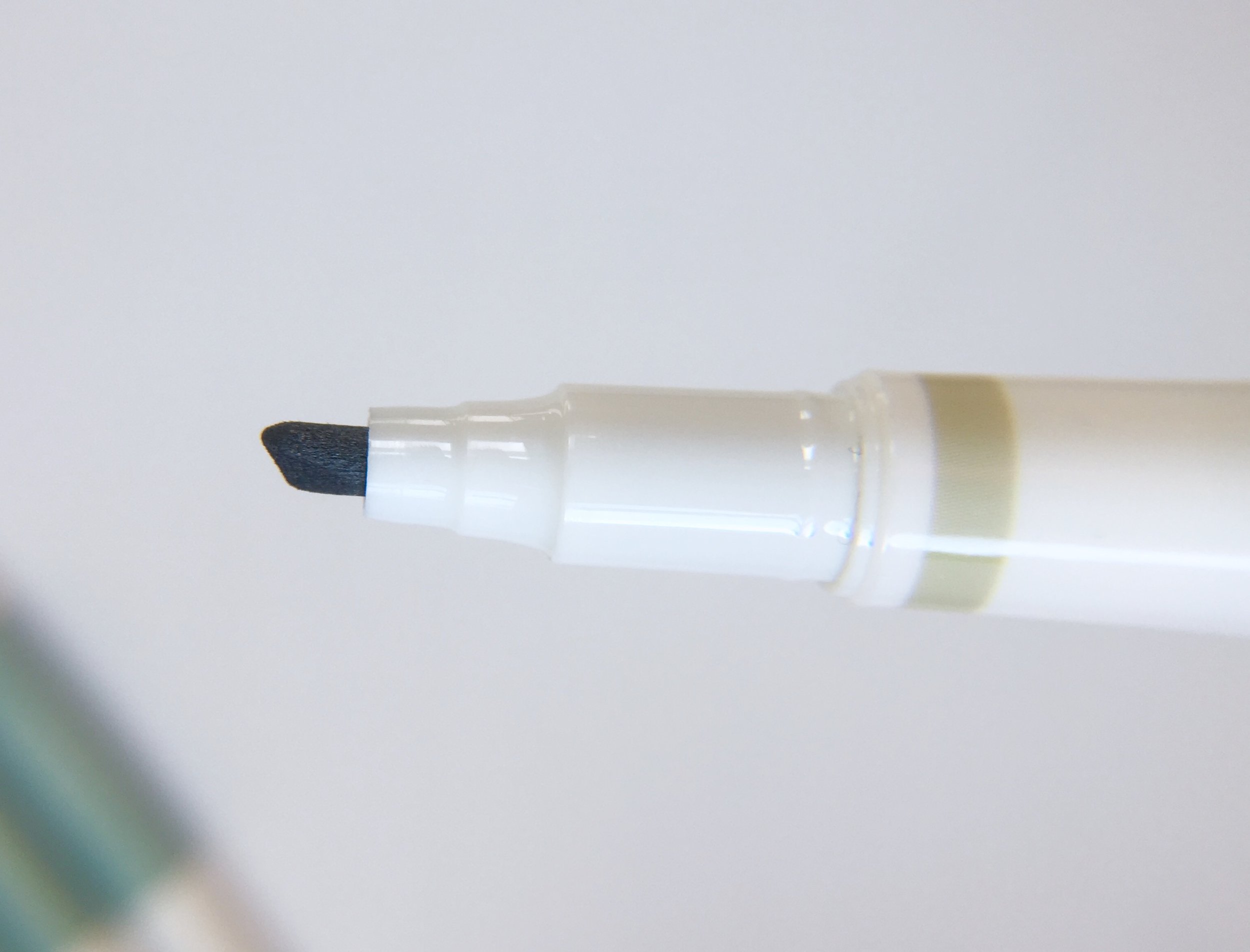
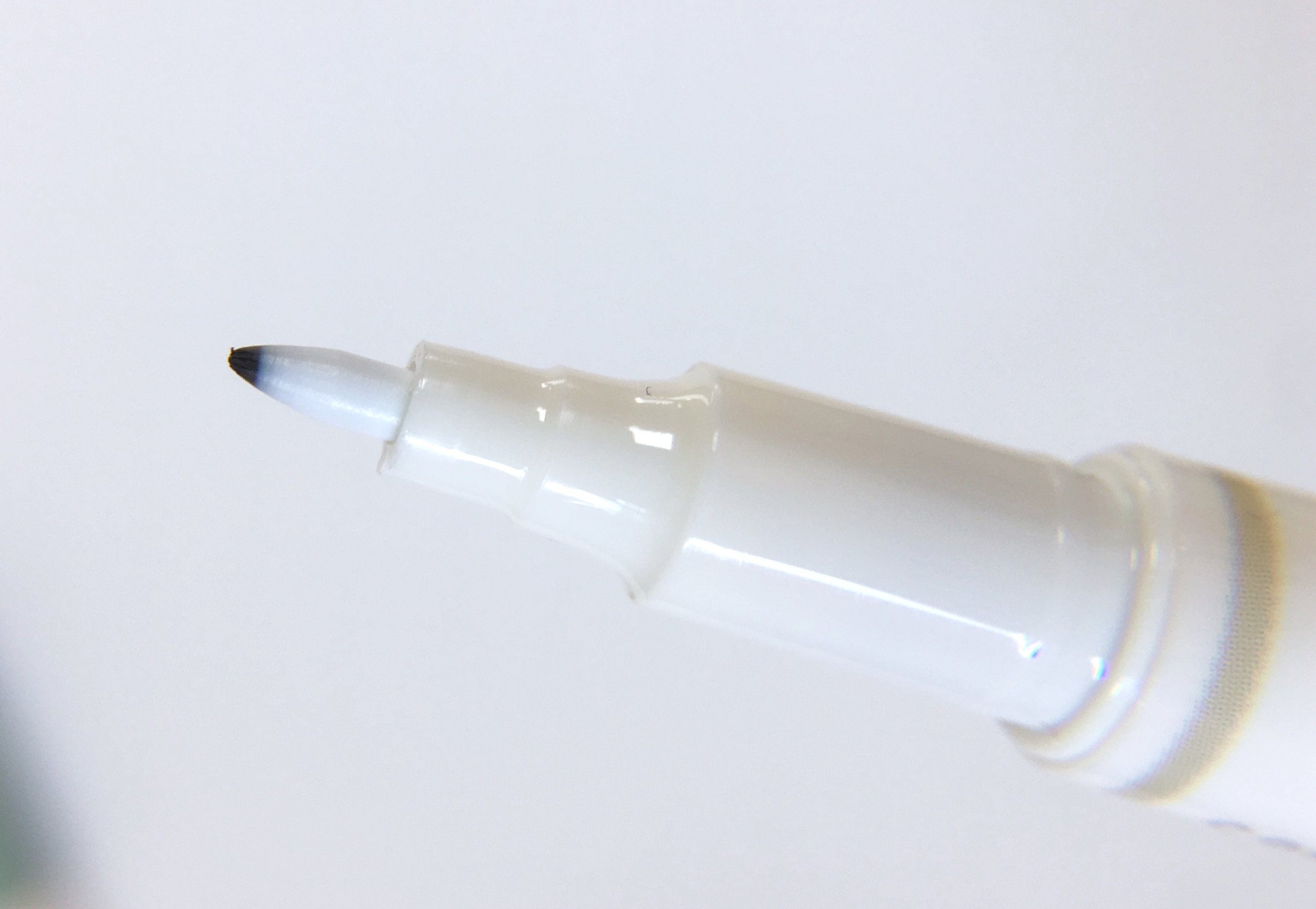
These double-ended markers have a chisel felt tip at one end, and a fine-point bullet felt tip at the other. The chisel is narrow enough that it can be used as either a regular marker or as a highlighter (though the darker colors might not work as well for this function). The fine tip is surprisingly fine and is great for making notes, even in small spaces (though the paler colors are more difficult to read in fine lines). Highlighting/color-coding events and making notes in small spaces is a huge part of my day--so a tool that can do both is instantly my friend.

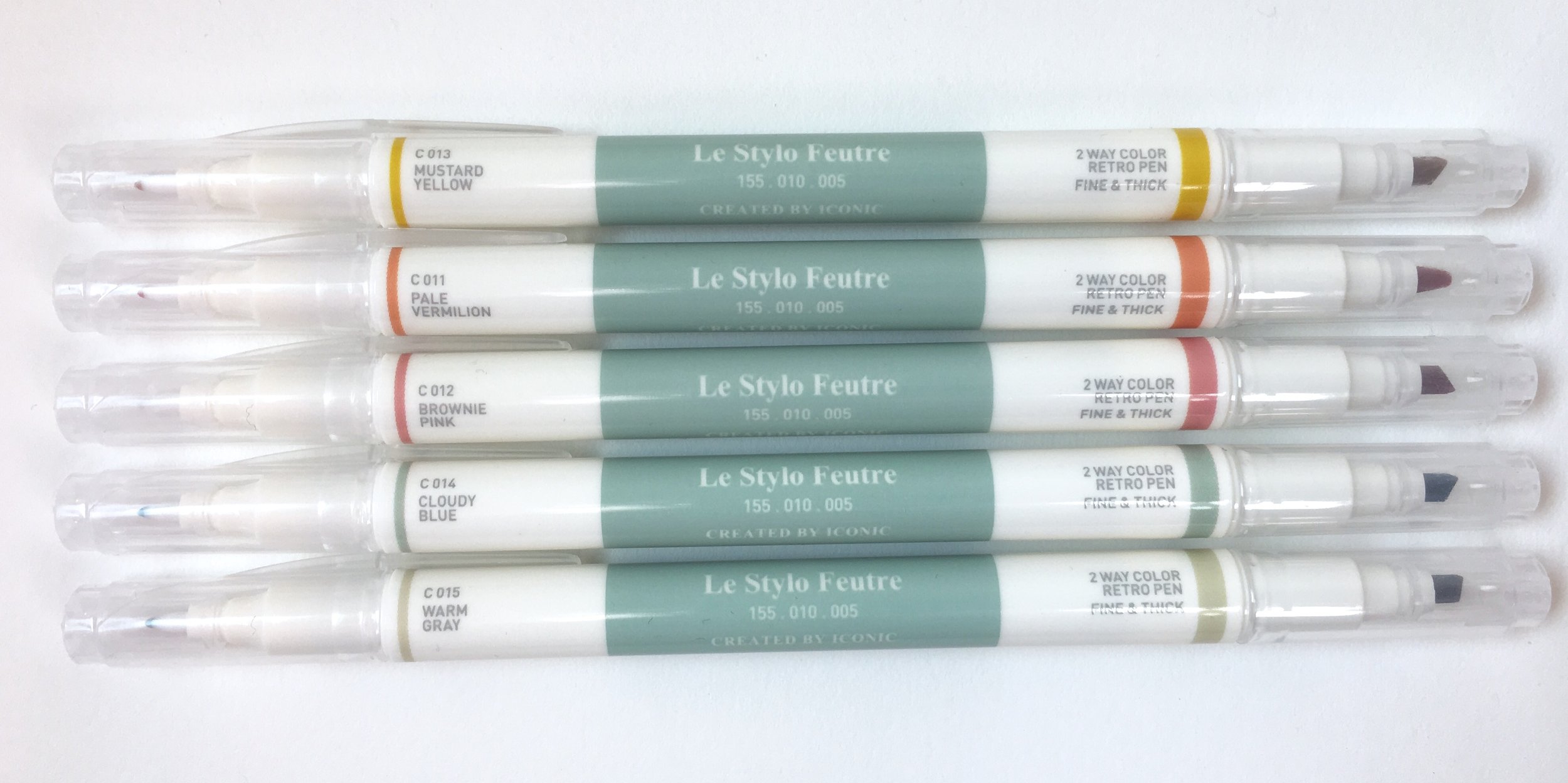
The colors in this Retro Set are Brownie Pink, Cloudy Blue, Mustard Yellow, Pale Vermillion, and Warm Gray. I'm totally in love with these colors. I feel like the set needs a green, though. But it's an excellent palette.

For the most part, these pens are well designed. The white plastic body has a band of pale green with the brand info on it. Other color sets have different colored bands, so you can instantly tell what color family you're using. The color name is written on the barrel, and there are colored bands at both ends that indicate what color you're using and (by width) whether that end is fine or chisel. The caps are also clear--so it's easy to tell what end you're uncapping. Every visual cue is accounted for, so there's no frustration in the use. I never once had to search or double-check what color or width I was using. I really like it when I use a product and I can actually feel the thought that went into it--when I can tell that people came together and pooled their good ideas.

If I'm going to nitpick (and of course I am), the caps are a little difficult to get off. They stick pretty hard, and they're small and tricky to grip. And, being clear, they're hard to find when you drop them. But a good seal is important for a marker cap, and the clear caps help you see what end of the marker you're about to use...so I can't even fault those things. All I'm saying, really, is that they've failed to reinvent the cap. I can fault the clip, though. This is a silly clip. It's so thin, I doubt it will last long. And it's SO snug against the body of the pen that you might be able to get one sheet of paper in there, but you're going to wrinkle the paper if you do. It's really more of a roll-stopper than a functional clip.

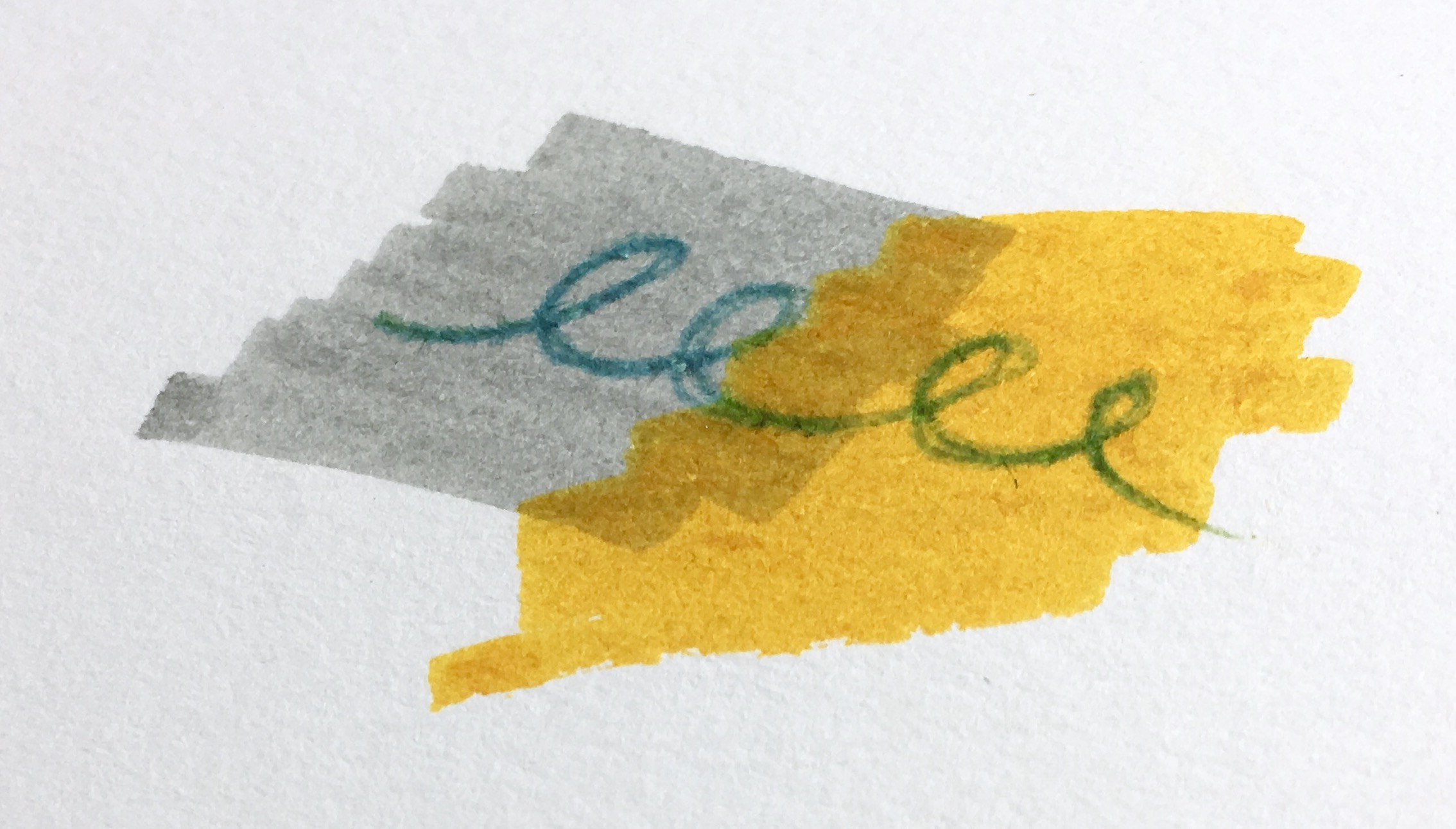
I'll also note that these aren't really artist's markers. They don't do any neat layering, and they begin to damage the paper if you put down too much ink. I could see using them for coloring books, but not for any original masterpieces. Though with these colors, it would still look cool--and if you do some art with these, I want to see it! I feel these are better suited to notes and doodling--which are every bit as essential to life as art.

These are also at a pretty good price point, for all of the above. $8 for a set of five that acts like ten is a very decent deal. At that price, I'll happily snap up the other sets, and backup sets, and my planner will be so gorgeous. I feel more organized already.

(JetPens provided this product at no charge to The Pen Addict for review purposes.)


Enjoy reading The Pen Addict? Then consider becoming a member to receive additional weekly content, giveaways, and discounts in The Pen Addict shop. Plus, you support me and the site directly, which I am very grateful for.

Membership starts at just $5/month, with a discounted annual option available. To find out more about membership click here and join us!

Posted on September 20, 2017 and filed under Iconic, Marker, Pen Reviews.

Tuff Writer Mini-Click Tumbled Brass Pen Review

I had the pleasure of meeting Jack Roman, the owner, founder, designer, and machinist of Tuff Writer Pens at the recent San Francisco Pen Show. We talked pens and design, writing balance and tactical needs, and the differences that all of these topics make when designing a pen.

Jack has always been open to feedback on his products. From me, he wants to know how to make a great writing pen that can take a beating. From those in the tactical community, writing is sometimes secondary to the protection aspects of the pen, and he needs to know how those features work. (I witnessed this second feature in action as Jack spun the pen in his hand from writing end to business end like a magic trick while we talked. I was jealous!)

I expressed to Jack that with Tuff Writer pens it all comes down to balance when writing. These are metal pens, ranging from lightweight aluminum and titanium, to heavy copper, brass, and stainless steel. With different metals, the balance changes. From a pure writing experience, if the weight is centered too far to the end of the pen it will be uncomfortable to write with.

As we talked, it was very clear that Jack was working on the balance of his pens constantly. With the Mini-Click, it is of the utmost importance, because it is the most standard, least tactical pen of the bunch.

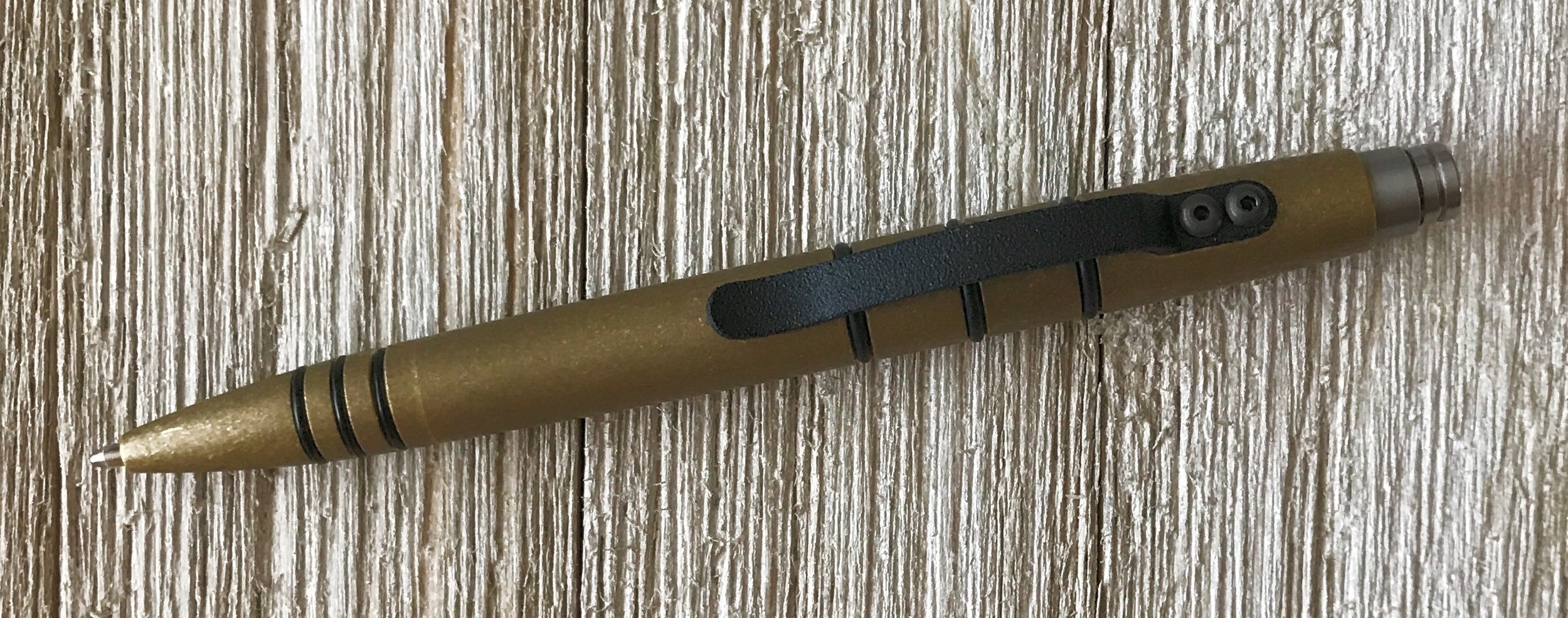
Jack sent me home with the Tumbled Brass model from San Francisco to play around with, and I have been enjoying it. I chose it because brass pens can be very heavy and uncomfortable to write with, but that hasn’t been the case with this pen. Yes, it has some weight to it, but it is balanced to where it doesn’t feel like it is going to flip off the back of your hand when writing.

Style wise, I’m generally anti-o-ring. I’ve always felt they were one additional failure point/annoyance that I may have to deal with. That doesn’t seem to be the case with the way Jack manufactures these pens. His main customers need the added grip for how and where they use the pen. Me, I’m sitting at my desk half the time, of in a coffee shop. But these o-rings are integrated into the barrel and are stronger than any I’ve used. They are no different in feel to me than if a manufacturer cut grooves into the barrel in the grip section. I don’t see how I could pop one of these out if I tried.

The pen is of course built around the Fisher Space Pen refill, but with the provided Parker refill spacer added. That means any Parker refill will be able to be added right in. I haven’t swapped it yet, but I’ll do what I always do - change it to the fine Fisher Space Pen refill in blue. It’s my favorite for this type of pen.

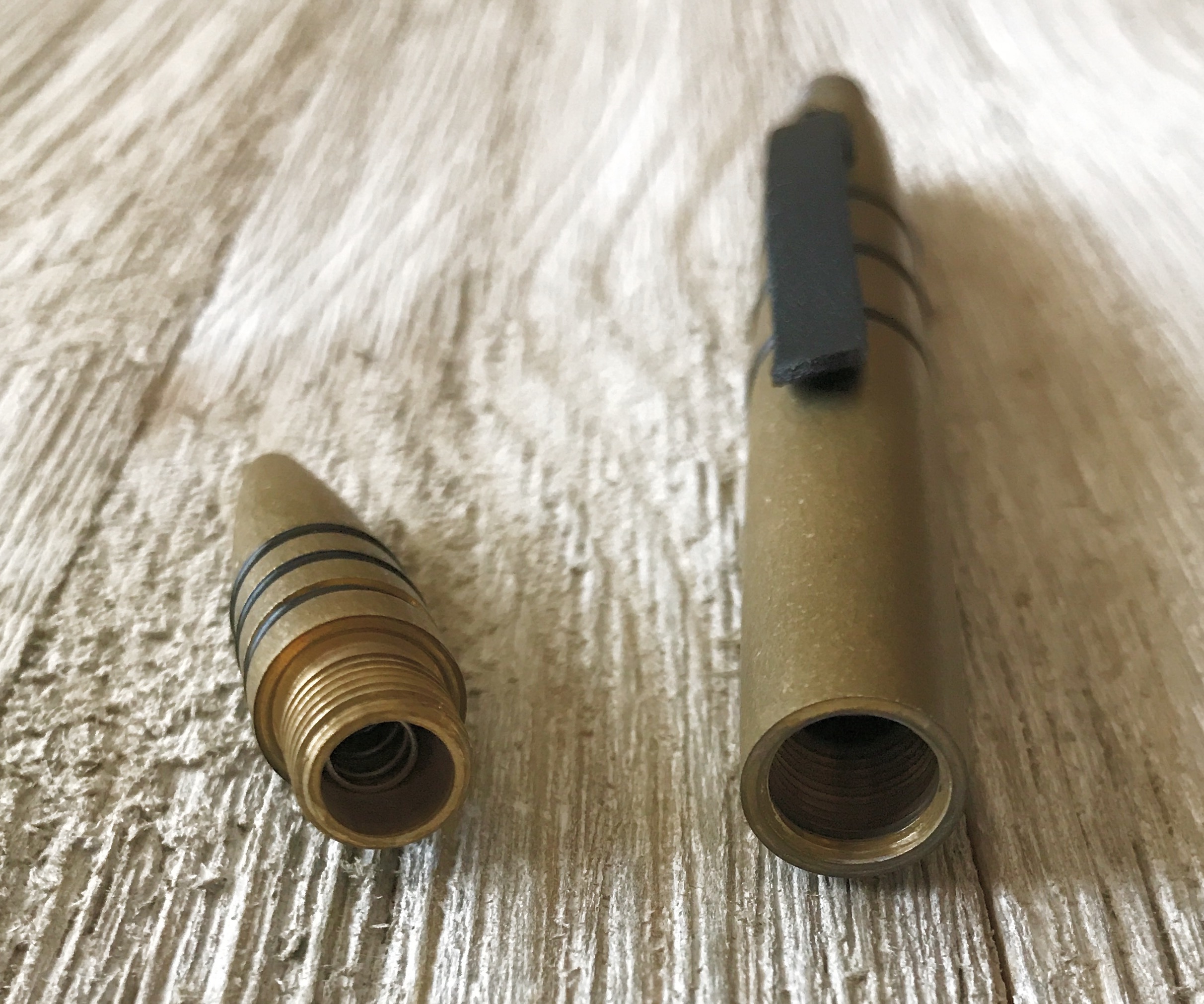
Jack recently began manufacturing his own retractable mechanisms for his pens, and it works well. His last Kickstarter campaign lists the details and specs so you can see the work that went into designing and creating it. The stamped clip is crazy strong, too. It takes some work to slide it on and off, but for this style of pen that is appreciated.

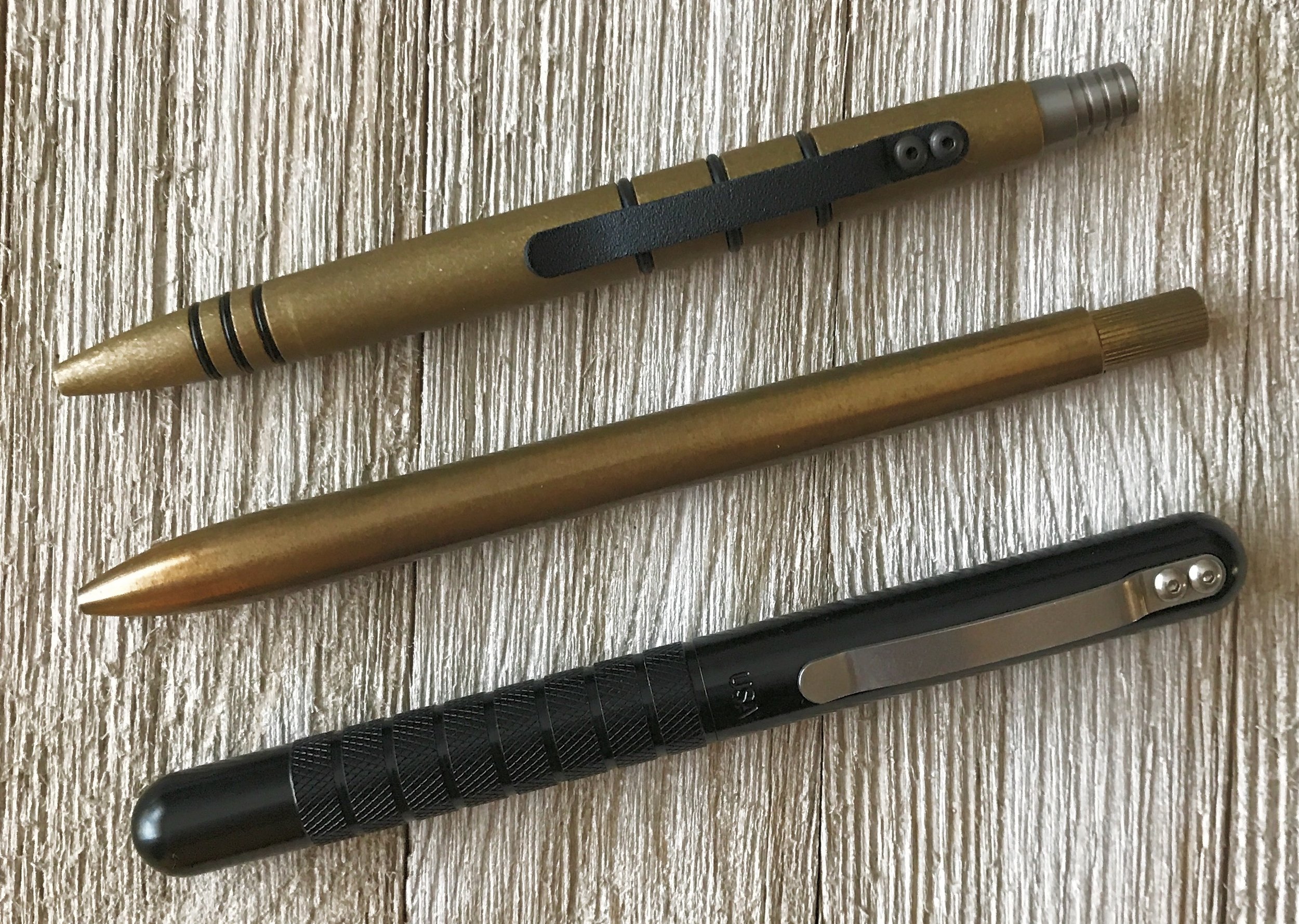
Top to bottom: Tuff Writer, Ajoto, County Comm

Overall, I’m a fan of what Jack has done with Tuff Writer Pens. He is always tweaking his designs to make them better for his customers and their varying uses. I also like how he is adding a range of colors, and even flame torching some of the pen models. While I don’t have the need for the larger, more tactical models, I like what he has done with the Mini-Click and I’ll certainly be paying attention to his work in the future.

You can purchase Tuff Writer Pens directly from their site, and several models are available at Vanness Pens.

(I traded some Nock Co. pen cases for this pen at the San Francisco Pen show.)


Enjoy reading The Pen Addict? Then consider becoming a member to receive additional weekly content, giveaways, and discounts in The Pen Addict shop. Plus, you support me and the site directly, which I am very grateful for.

Membership starts at just $5/month, with a discounted annual option available. To find out more about membership click here and join us!

Posted on September 18, 2017 and filed under Tuff-Writer, Pen Reviews.