Posts filed under Pencil Reviews

Uni Mitsubishi 9800 Pencil Review

(Jeff Abbott is a regular contributor at The Pen Addict. You can find more from Jeff online at Draft Evolution and Twitter.)

When I started using pencils in school, they were all yellow cases with pink erasers and a "#2" stamped on the side. Later on, I was introduced to lead grades outside of the standard grade school pencils, and a whole new world opened up. The first time I became aware of anything besides a "#2" pencil was in high school art class. The graphite pencils we used during a semester to try our sketching skills were available in a dozen or so different grades. It was so much fun to use each different grade and see and feel the slight differences between each one.
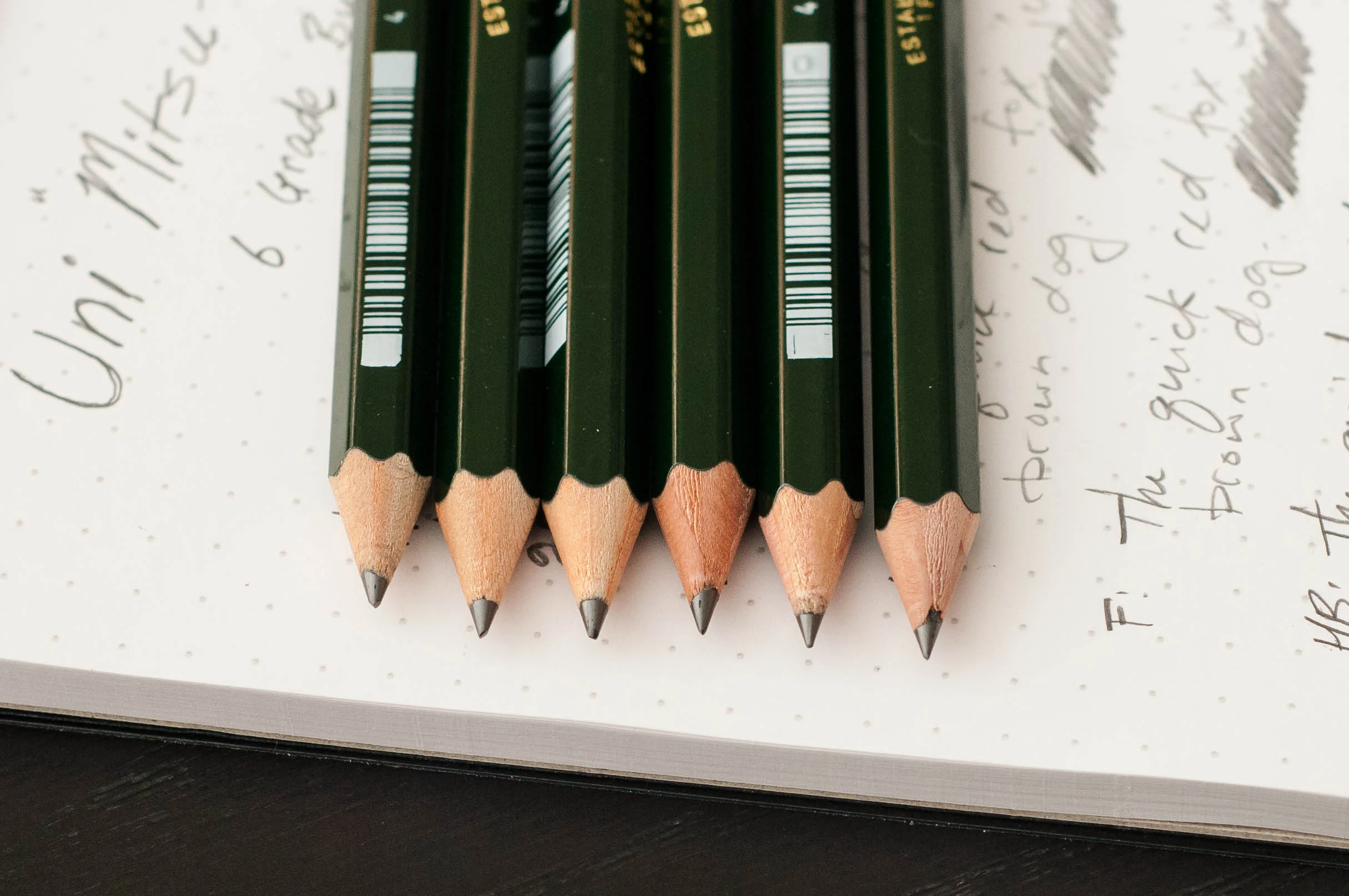
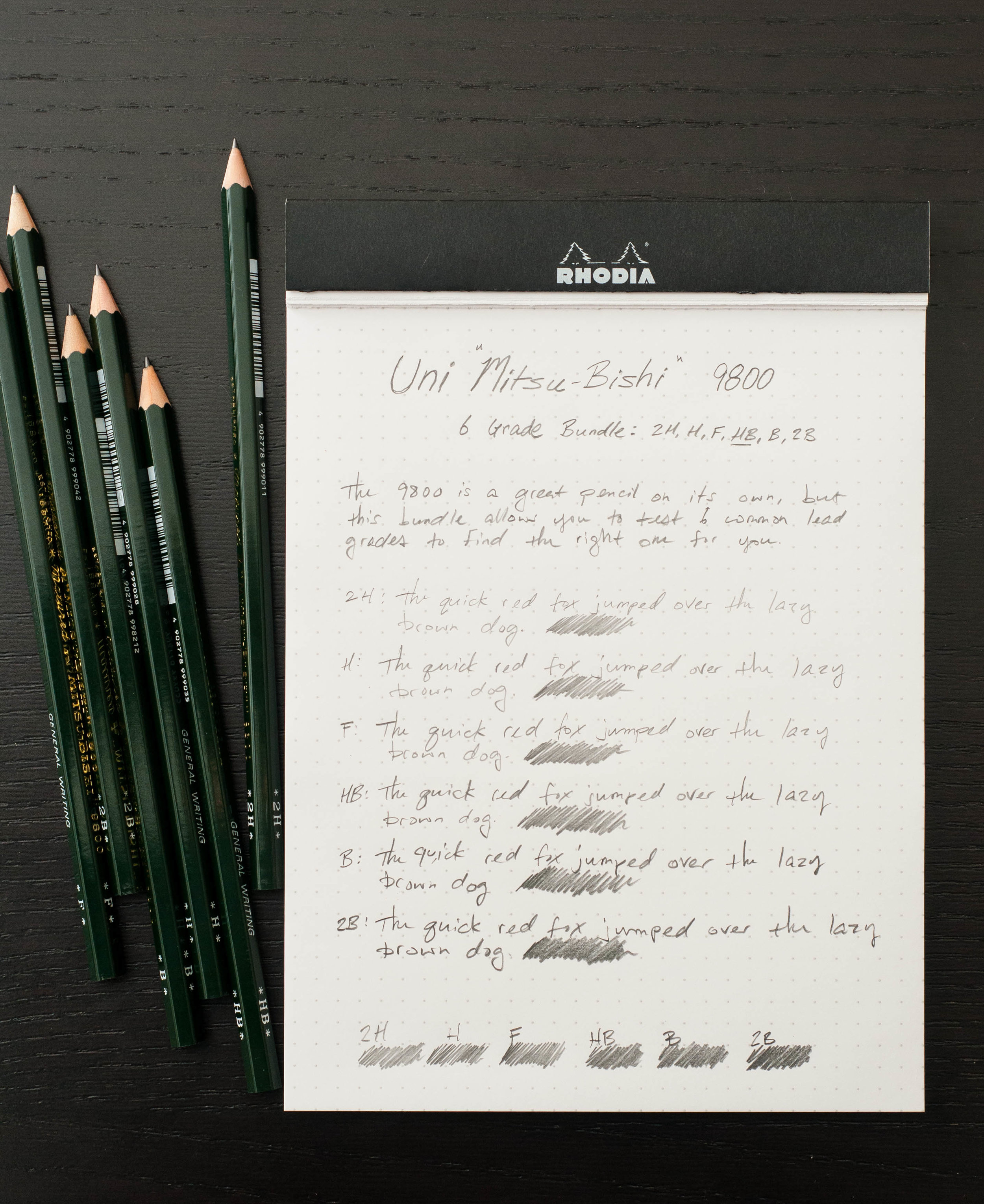
Today, it's a little easier to find all kinds of pencils at different lead grades. But, if you're new to the concept of hard and soft lead grades, you probably don't know where to begin. Lead grades are a personal preference based on what you like for general writing, sketching, etc. Some grades work well for certain tasks, while other grades work better for others. One of the best ways to try out the different grades is to purchase a bundle of the same pencil in several grades. JetPens offers a bundle with the Uni Mitsubishi 9800 pencils. While the 9800 isn't my favorite pencil to use, it's still a very capable and high-quality pencil. The important thing is that you buy a bundle within the same pencil line. Even though there wouldn't be a huge difference between the lines or brands, it's best to stick to one line for testing.
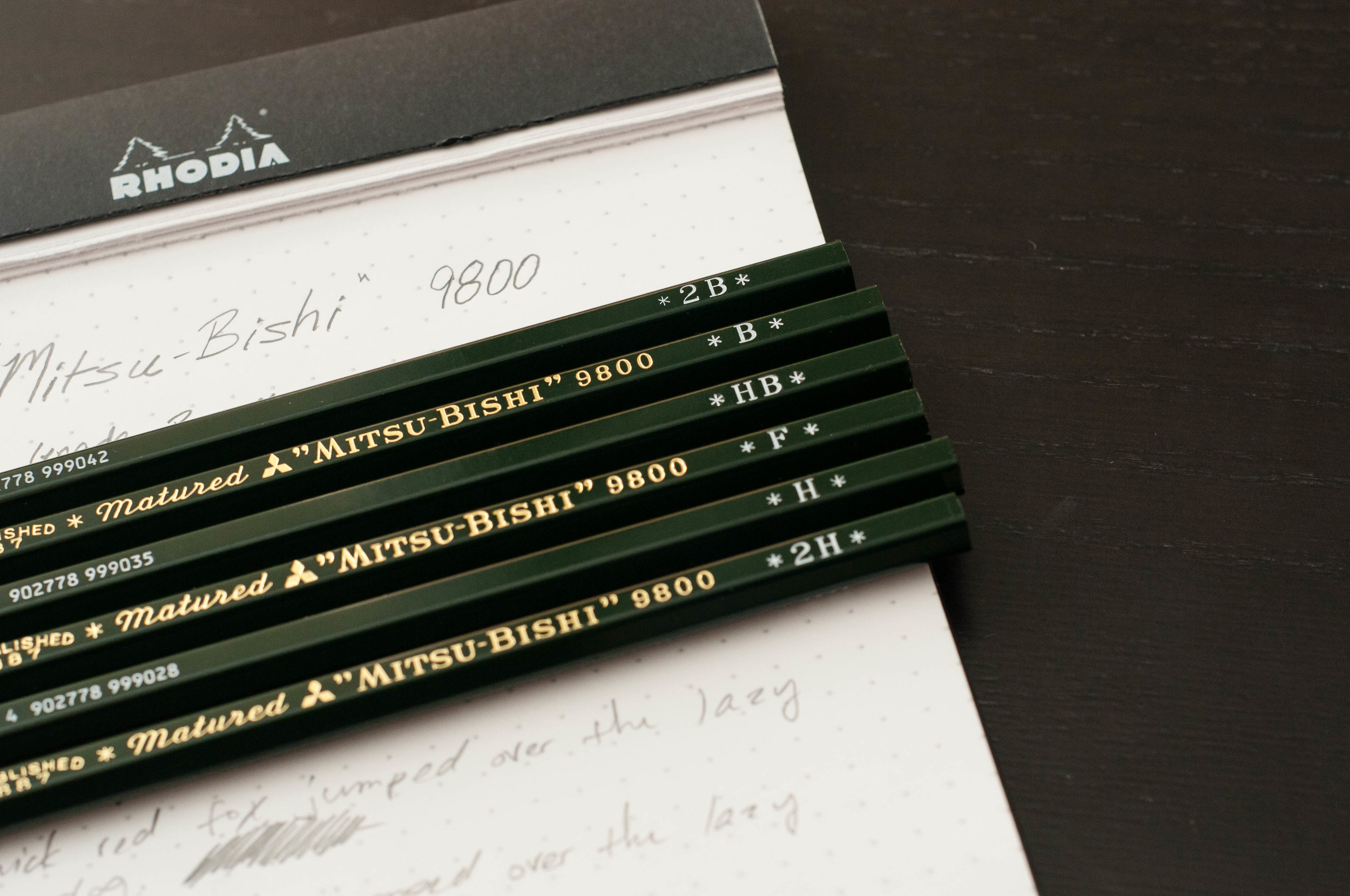
This particular bundle includes six pencils with a lead range of 2H, H, F, HB, B, and 2B. There are many, many more lead grades available, but this is a great place to start. Once you use these for a while, you'll have a much better idea of how a 8B or 6H might behave.
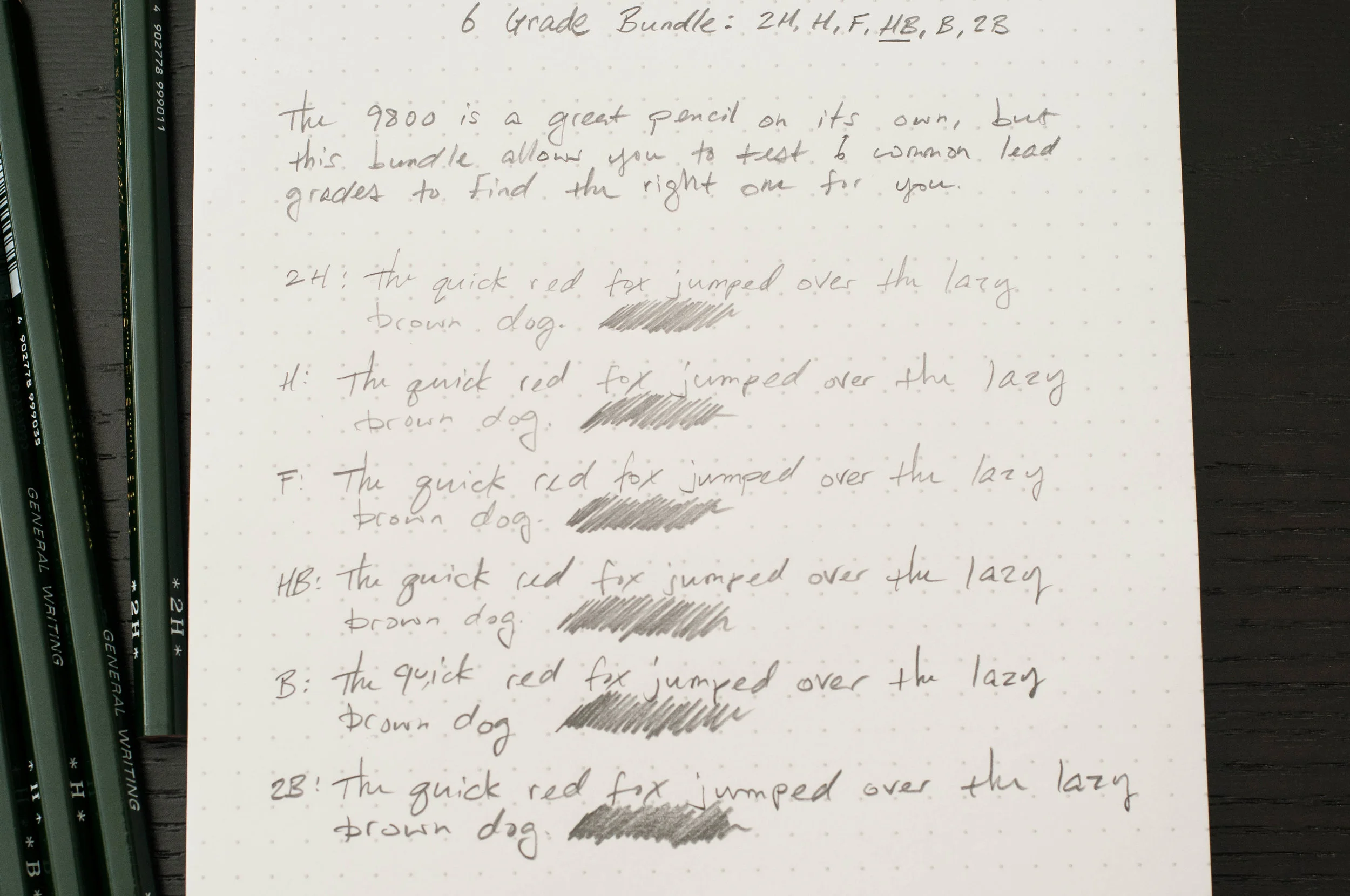
For $5, you get a bundle of pencils that can cover the vast majority of graphite needs. The 9800 pencils are normally $0.85 a piece, so you're getting a small discount by purchasing the bundle. If the bundle happens to be out of stock, you can always spend the extra $0.10 and purchase them all separately.

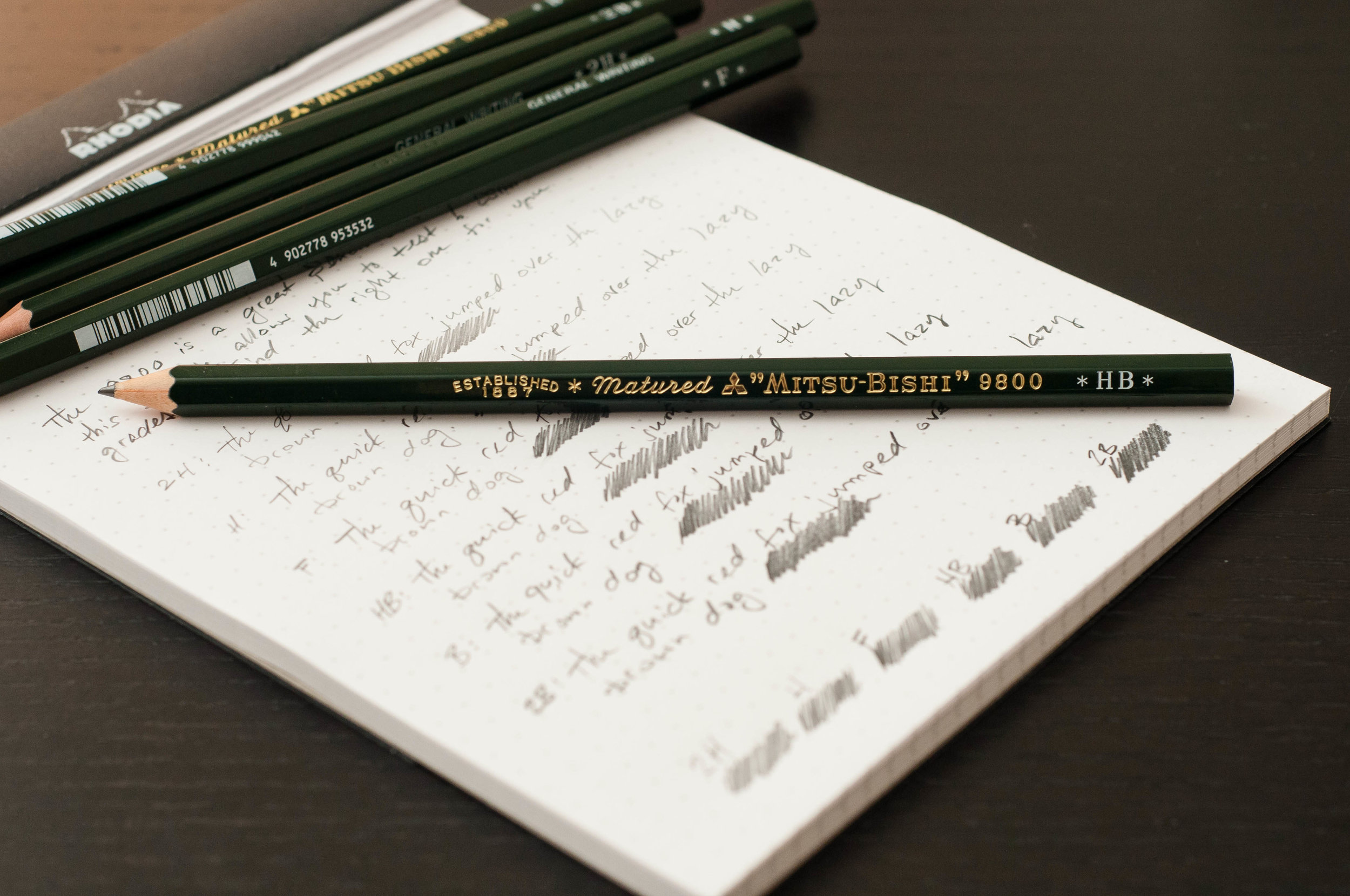
On the outside, the 9800 is a standard pencil. It has a black finish with a mix of white and gold lettering on the hexagonal case. The end isn't capped and there isn't an eraser. This really is a no-frills pencil, but it does an excellent job. No matter which grade you use, the lead is smooth and strong. They're a pleasure to write and doodle with.
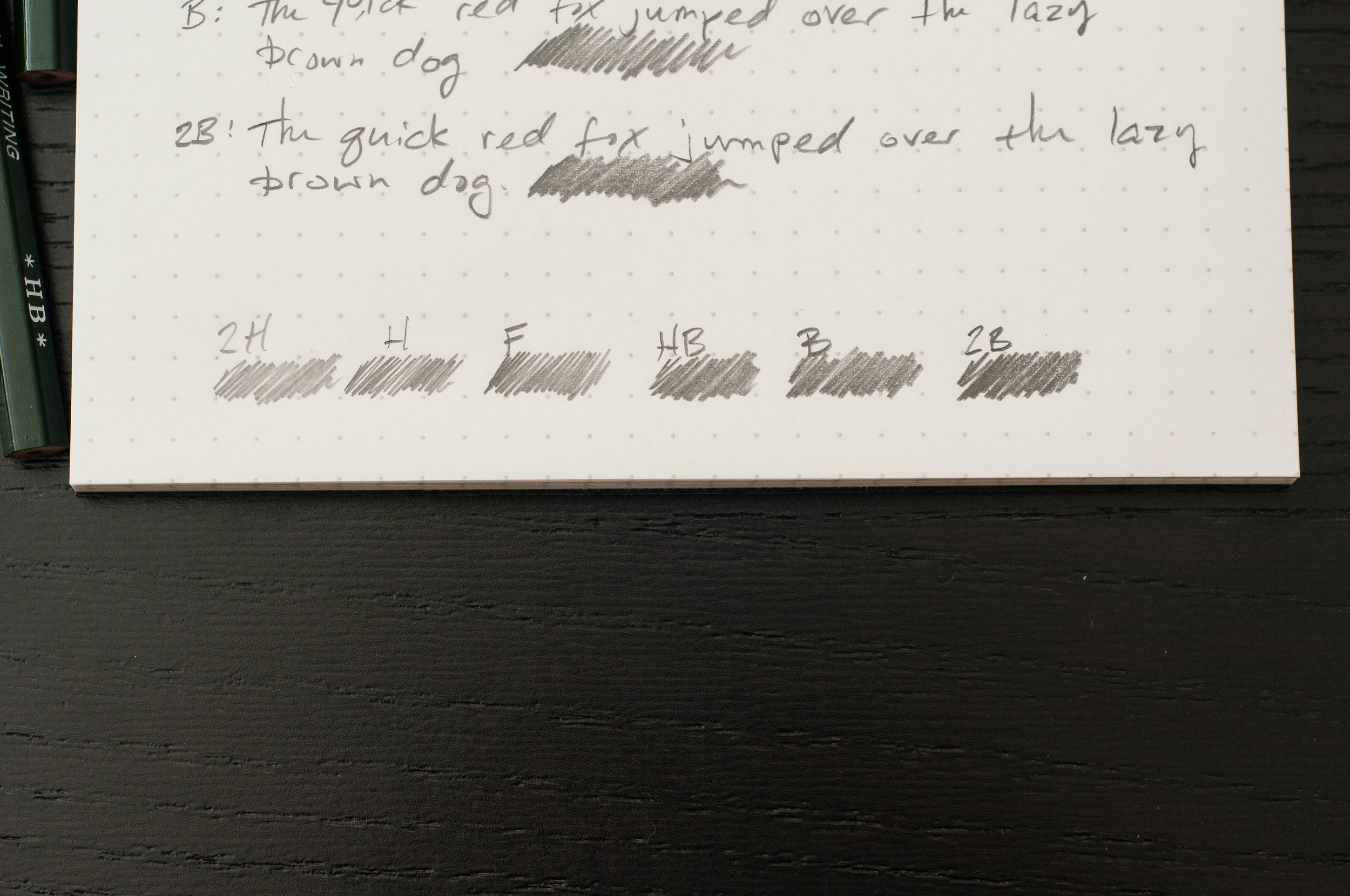
Personally, I enjoy the Uni Mitsubishi Hi-Uni pencils more, but they're almost three times as expensive as the 9800 line. Like I mentioned earlier, this is a great starter bundle for figuring out which lead grades suit you and your different needs. Pick up a bundle today and have fun experimenting on a blank sheet of paper!

(JetPens provided this product at no charge to The Pen Addict for review purposes.)


Enjoy reading The Pen Addict? Then consider becoming a member to receive additional weekly content, giveaways, and discounts in The Pen Addict shop. Plus, you support me and the site directly, which I am very grateful for.

Membership starts at just $5/month, with a discounted annual option available. To find out more about membership click here and join us!
Posted on January 4, 2017 and filed under Uni, Mitsubishi, Pencil Reviews.

Stabilo Woody 3-in-1 Watercolor Pencils Review

(Sarah Read is an author, editor, yarn artist, and pen/paper/ink addict. You can find more about her at her website and on Twitter.)

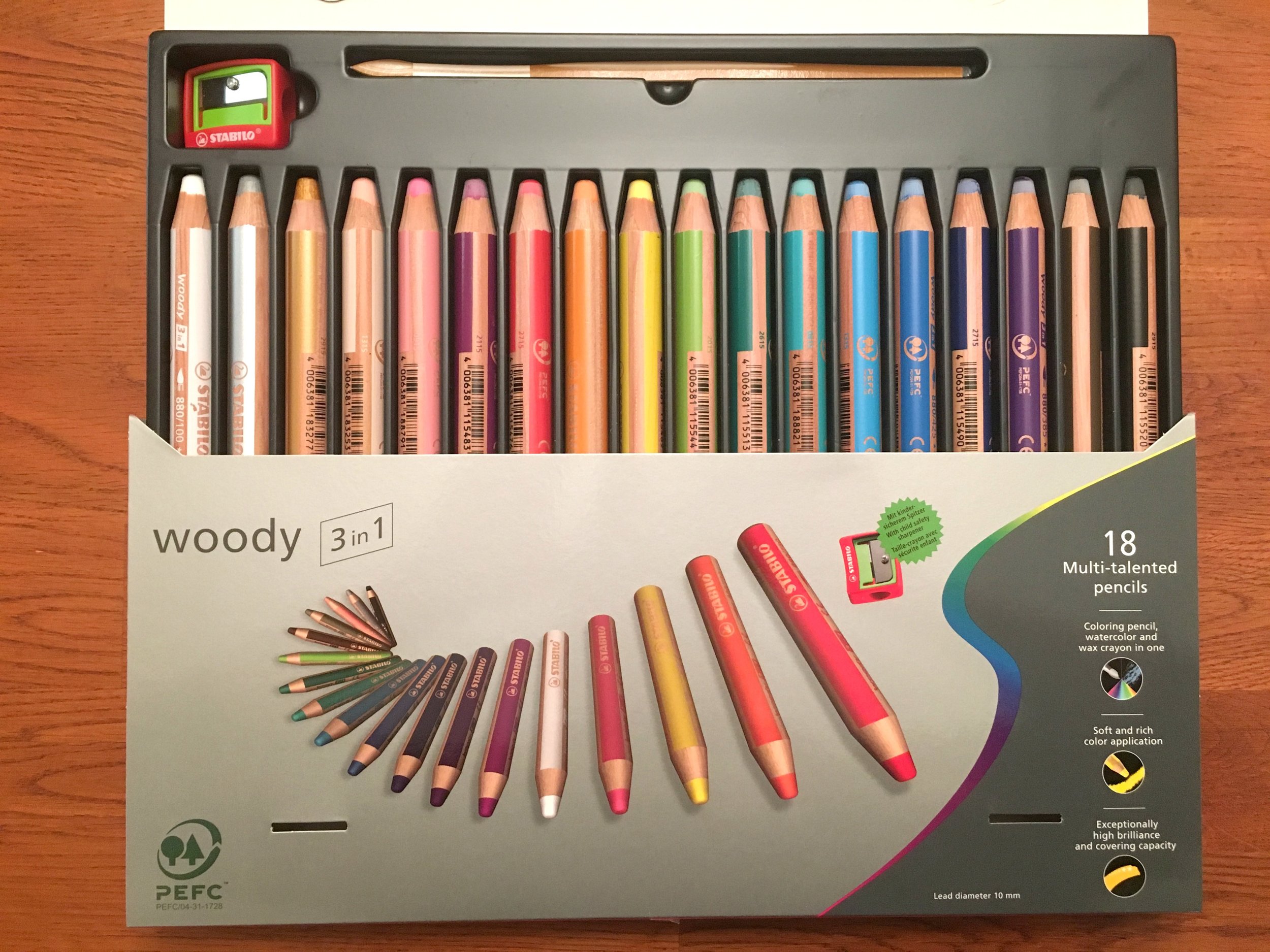
There's an element of "jack of all trades, master of none" to these...pencils? Crayons? Paints? But that doesn't stop the Stabilo Woody 3-in-1 Watercolor Pencils from being a fun family activity. They're designed for kids and they passed my rigorous kid-test with flying colors.

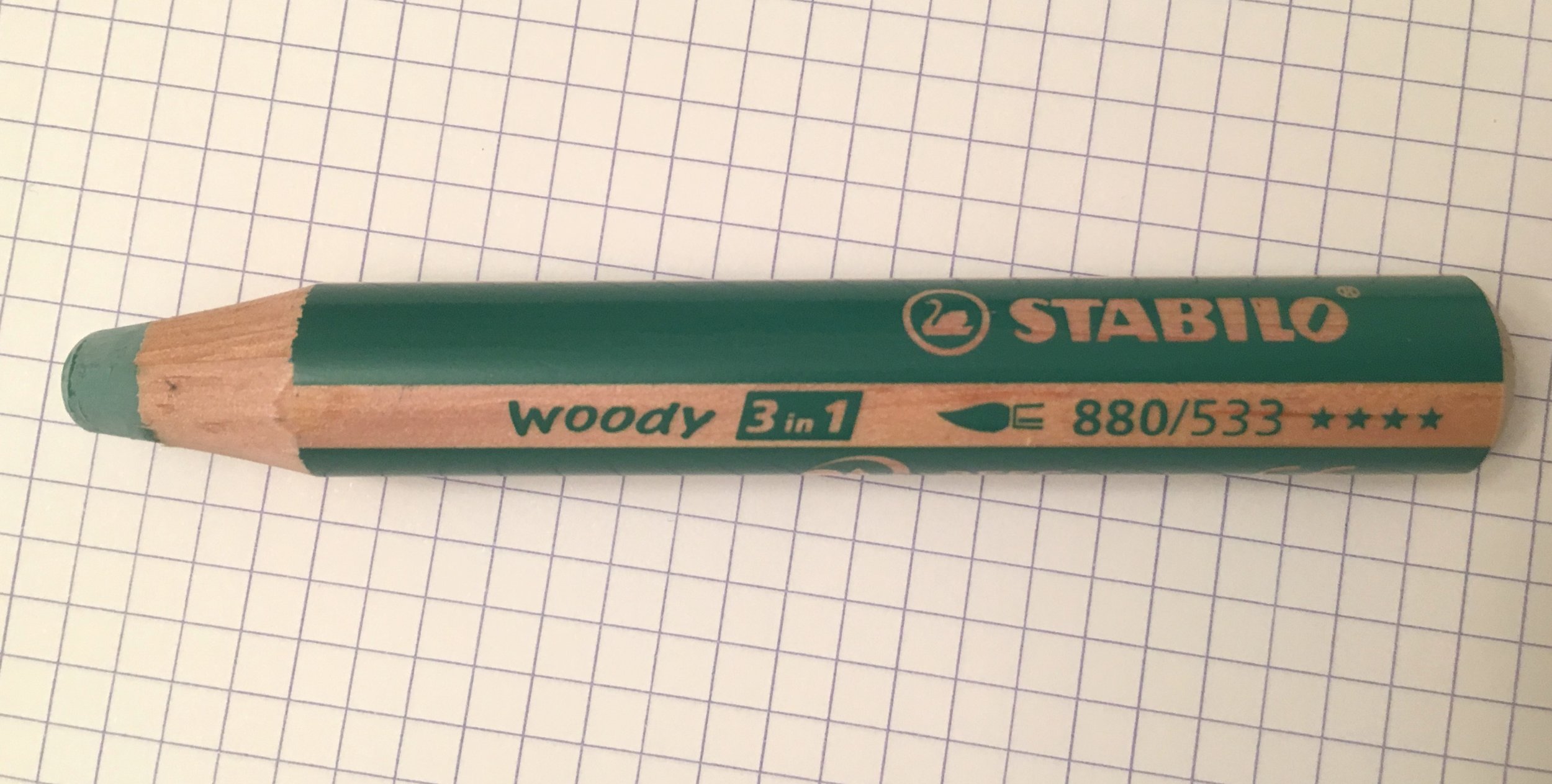
The wood case is made from sustainable wood, with a break-resistant core. They're short and bulky, like the jumbo crayons marketed for preschoolers. They're a bit uncomfortable to hold, I felt, and the thick core only allows for the boldest of bold lines.

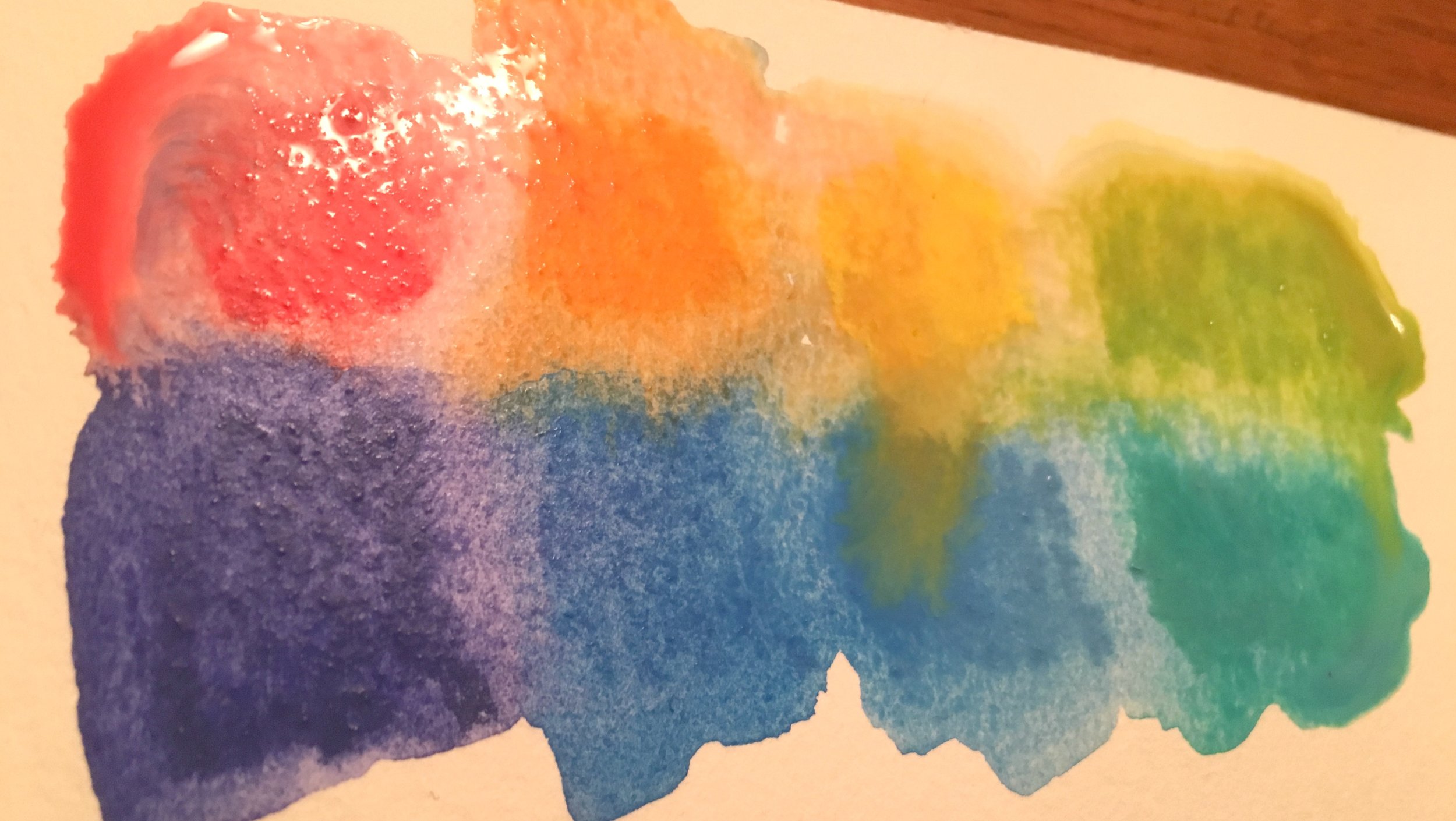
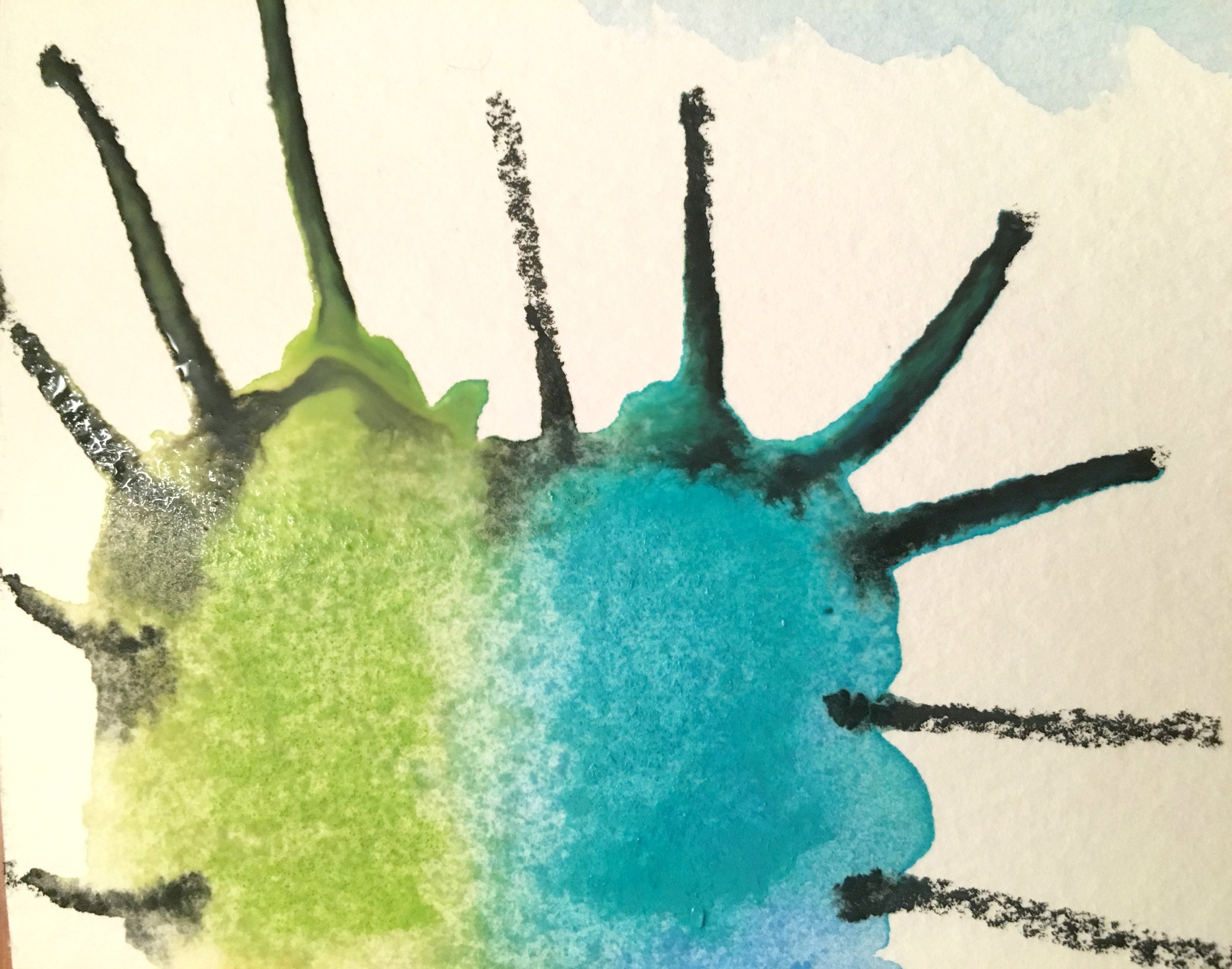
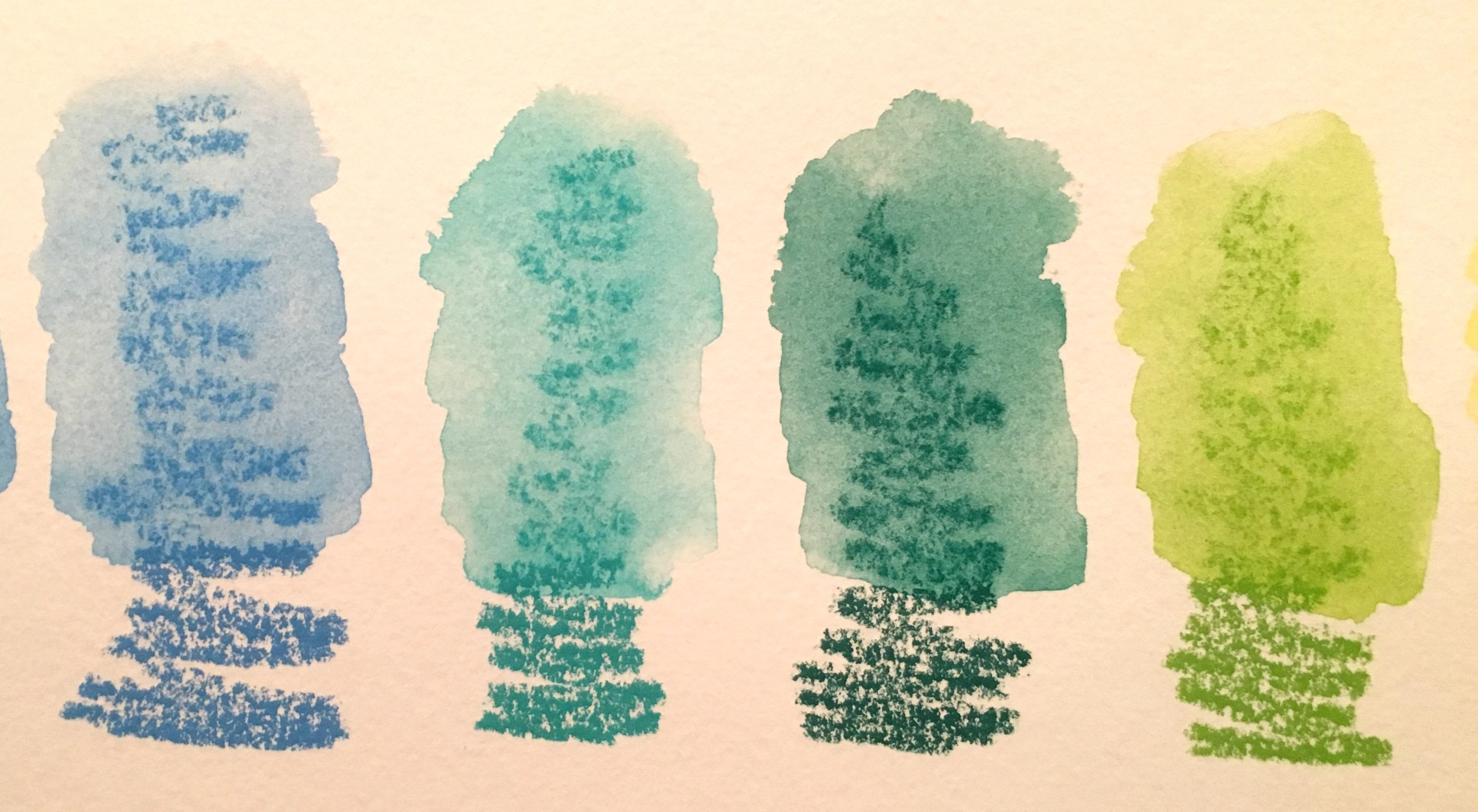
The core is very soft and lays down a smooth thick layer of color. It could easily achieve solid coverage on smooth paper. When you add water to the applied color, the results vary somewhat. Some colors are more soluble than others--black dissolves almost completely and spreads nicely, but silver doesn't appear to be soluble at all. Most colors are somewhere in-between, with at least a little of the original crayon line still visible after painting. I also tried dipping the crayon in water and drawing, but the core is too waxy to work well that way. It repels water rather than absorbing it, so I'd get maybe two strokes of painted line, and then it would return to a normal dry crayon line. Wetting the paper first and applying the color to the wet page created a neat feathering effect as some of the pigment ran, but the crayon line is still clearly visible. This could make for some really fun blending techniques.

Despite the heavy line put down by these, it doesn't take much color to get a rich puddle of watercolor. I think a wonderful use for these (for those of us who aren't inclined toward thick crayon art-making) is in creating washes or backgrounds for journals or other media. A fine layer blends into a lovely background with enough remaining texture to add some nice depth. Once the wash is dry, you can write or draw over it. The crayons even write well over themselves, creating some fun layered effects. They also work on different colored paper--and, because they are water-soluble, on chalkboards and glass. I haven't tested them on glass yet, but I'm envisioning some festive holiday window art.

After asking my eldest to test these, he has officially claimed them. He's never been the type to sit and color (or sit at all, for that matter), so he only reluctantly agreed to try these, and promised only a small, quick sketch. Instead, he patiently covered every inch of the large A3 watercolor paper. And then he liked them so much just as crayons, he resisted my suggestion to add water. And then when I convinced him to at least try adding water, he enjoyed that so much, he painted over the whole thing. Y'all, I got a good half-hour of peace and quiet out of it. And a lovely piece of art.

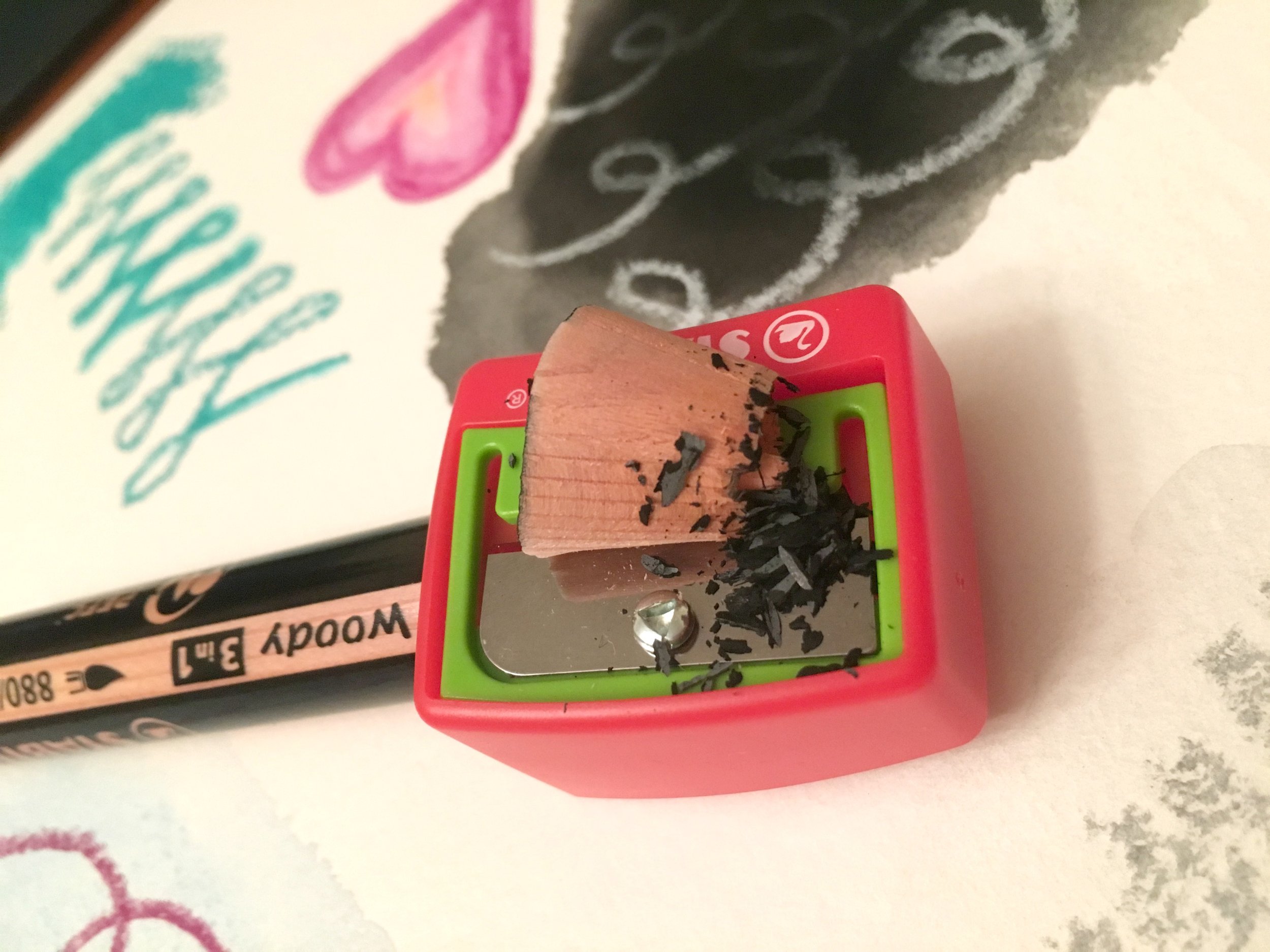
The crayons/pencils/paints come in sets of 6, 10, or 18. They're also available as open stock--but as far as I can tell, you need to buy a set to get the custom-sized sharpener. I'm not sure what other sharpener might fit these beasts. One thing the sets do not come with is a paintbrush. Instead, the 18-color set comes with a perplexing cardstock-cutout of a paintbrush in a compartment where you're clearly meant to place your own brush. I imagine it's there to indicate that "no, we didn't forget to add your brush--you just don't get one". These sets aren't cheap, and I feel like they really ought to come with a brush. Even a skimpy plastic one. If you plan to order these, be sure to have a brush on hand, or order one at the same time.

As for offering my recommendation, if you have an aspiring young artist in your life, I think these would be a big hit. But if your resident artist is old enough to take care of their art supplies, I'd actually recommend the Derwent Inktense Pencils instead. They create a better watercolor effect, are fine enough to color smaller details, and are considerably less expensive. They can't tackle as many surfaces as the Woodys though. If you want to color on the windows (and I had no idea how much I really do want to color on the windows until today), you want these. They'd also be great for drawing strategically-placed mustaches on the bathroom mirror. Art is art.

(JetPens provided this product at no charge to The Pen Addict for review purposes.)


Enjoy reading The Pen Addict? Then consider becoming a member to receive additional weekly content, giveaways, and discounts in The Pen Addict shop. Plus, you support me and the site directly, which I am very grateful for.

Membership starts at just $5/month, with a discounted annual option available. To find out more about membership click here and join us!
Posted on December 8, 2016 and filed under Stabilo, Pencil Reviews, Watercolor.

Ohto Conception Mechanical Pencil Review

(Jeff Abbott is a regular contributor at The Pen Addict. You can find more from Jeff online at Draft Evolution and Twitter.)

The genre of mechanical drafting pencils has always been fascinating to me. They tend to look like industrial tools meant for a precise purpose compared to the grade school pencils I was accustomed to when growing up. It's a great genre, and there's a lot of interesting nuances between the different designs. Some of these pencils have special features that set them apart from the rest, but are those features always welcome? Well, it's likely a matter of preference.

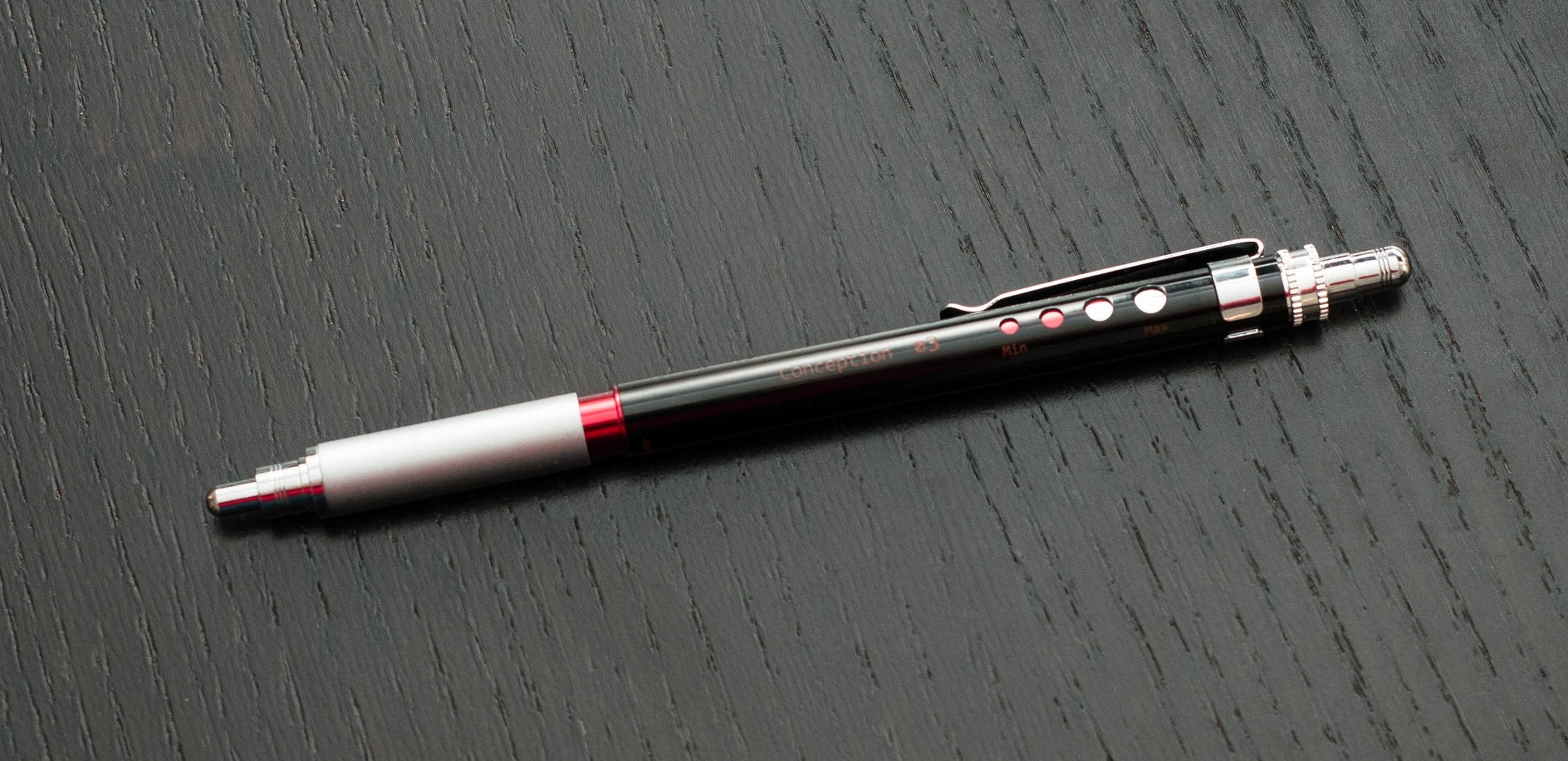
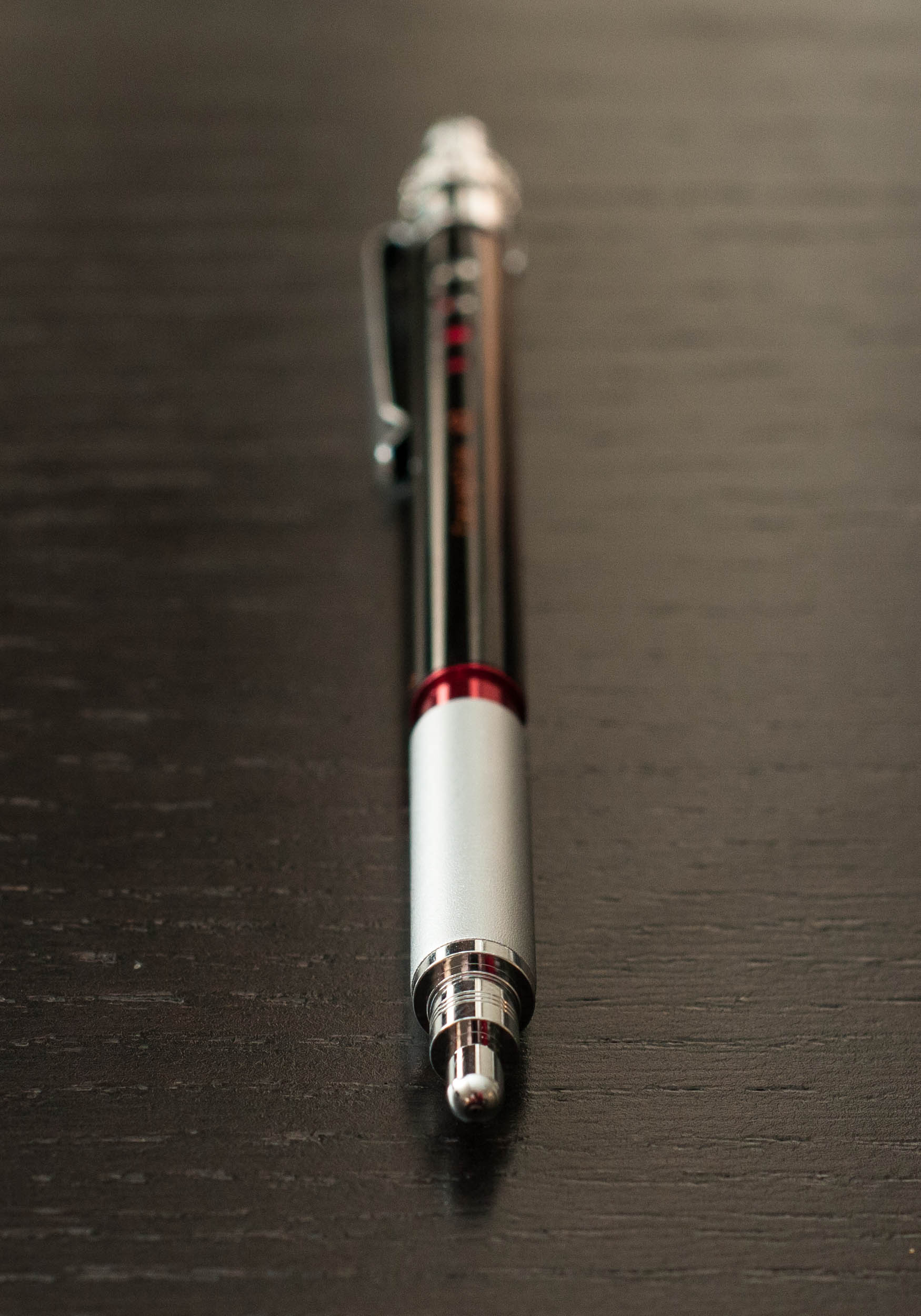
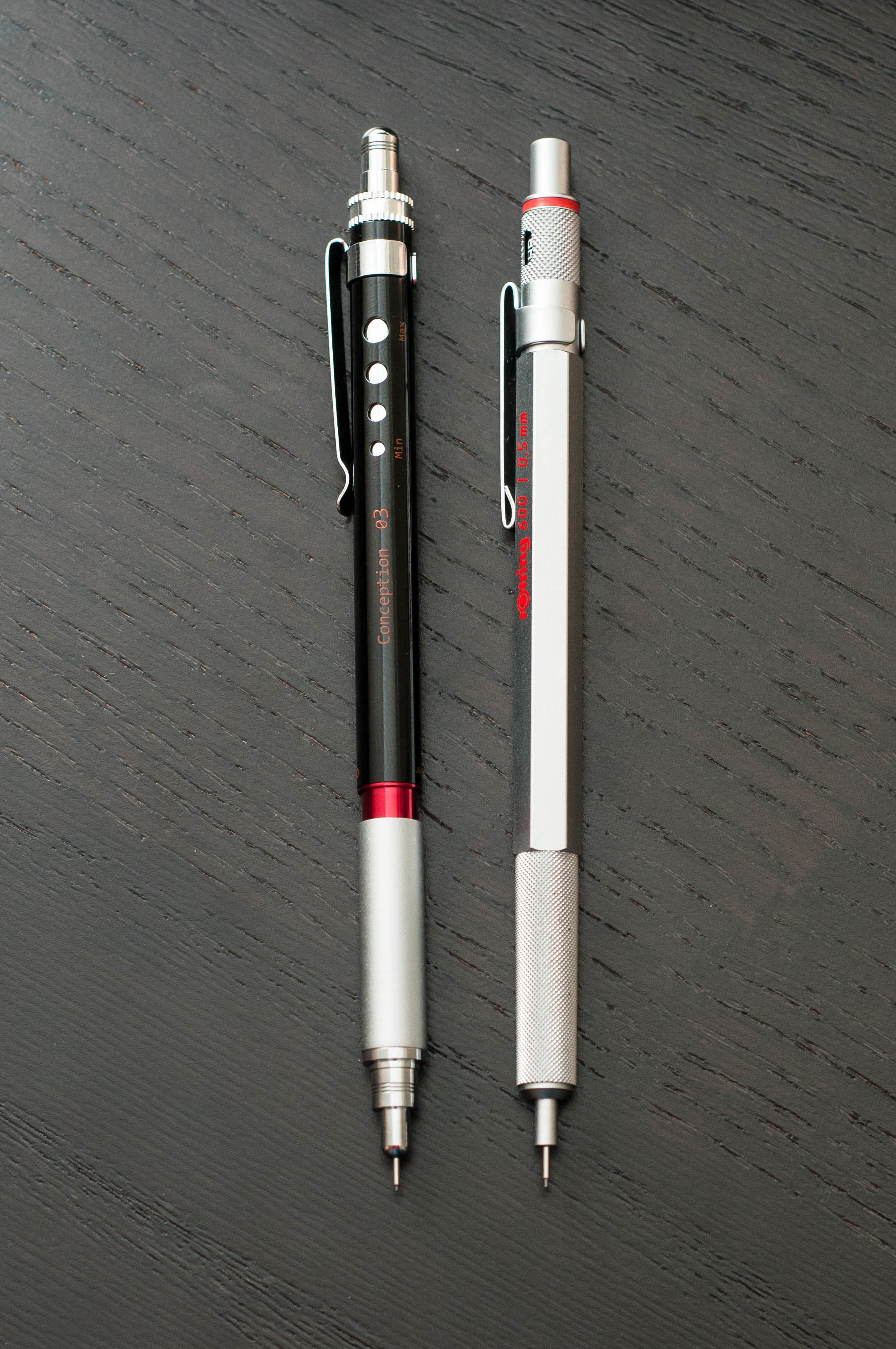
The Ohto Conception Mechanical Pencil is one of these drafting pencils that has a couple of tricks up its sleeve. At $23, it doesn't break the bank compared to other higher-end drafting pencils. It's roughly the same size as a Rotring 600, although the Rotring has more heft due to the materials and better build quality. But, the Rotring 600 doesn't cost $23, either.

Straight from the JetPens product description, here's what the Ohto Conception sets out to do:

This ingenious mechanical pencil features two modes: drafting pencil mode and lead guard mode.

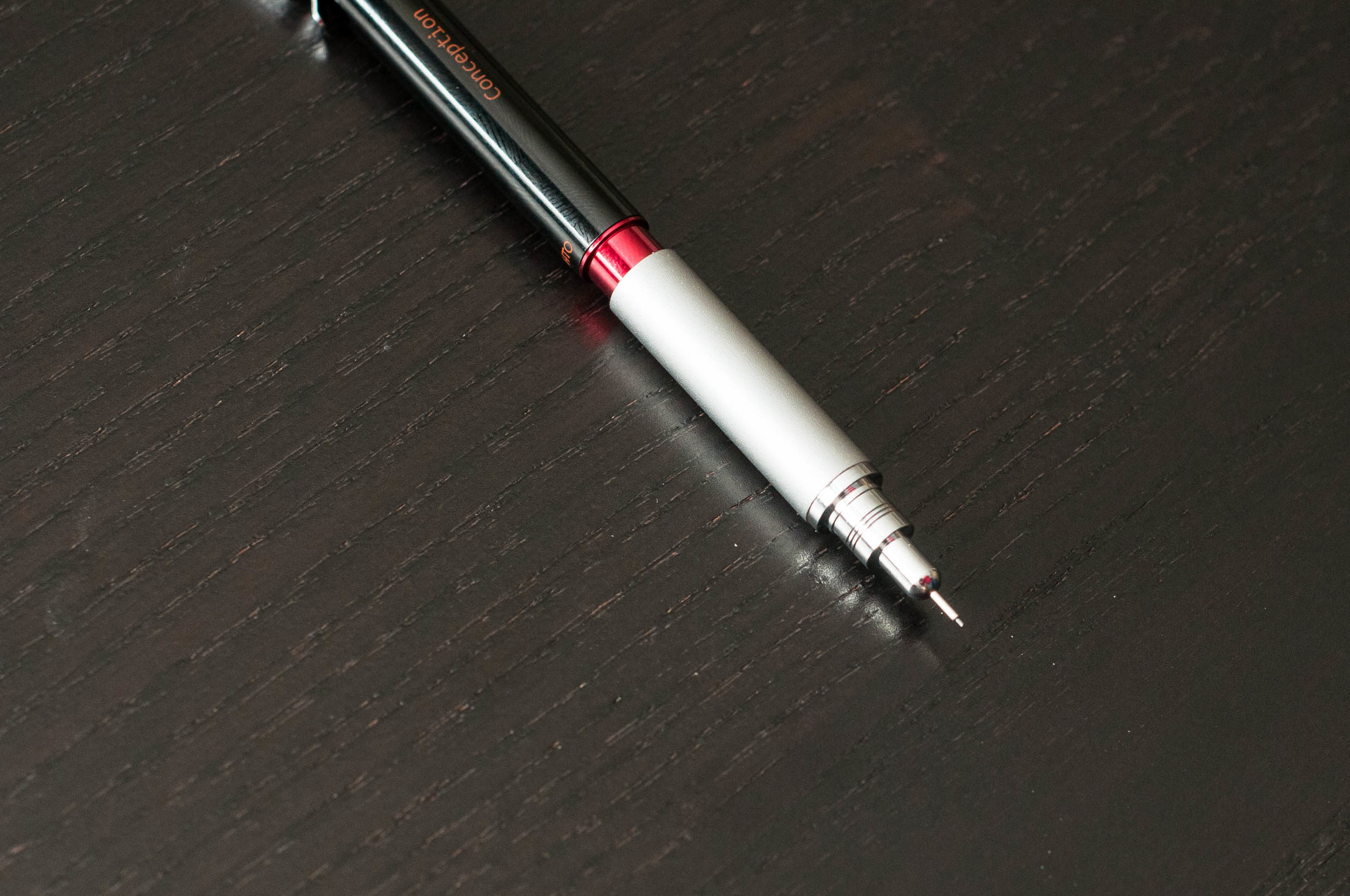
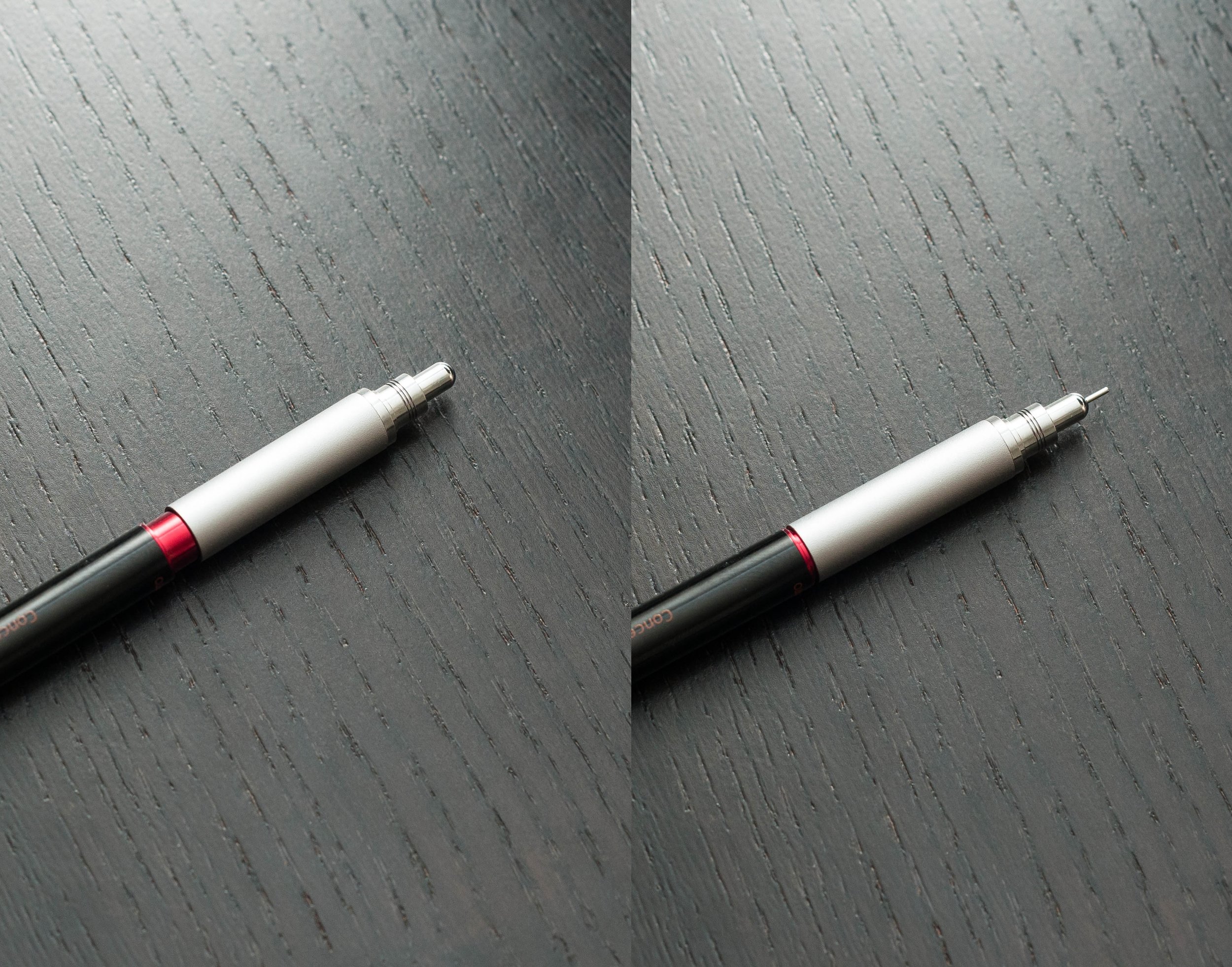
What this really comes down to is the ability to use or retract a guide pipe. In "drafting" mode, the pencil utilizes a 4mm lead guard for use with straightedges and other tools that the drafting trade requires. This is something we're all used to, and something that most drafting pencils have built in.

However, you can also retract the guide pipe, which allows the pipe to protect the lead as it wears down. As you write, the lead becomes shorter and the sleeve continues to retract as needed so you can continue writing. In practice, this means that there is a smaller chance of breaking the lead when writing because it never sticks out far enough to be brittle. The metal guide pipe keeps it stable and protected, but doesn't require you to advance the lead as often.

So, how do you switch between these two modes? Easy: just twist the pencil grip section to enable/disable drafting mode. There's a red section under the grip that is exposed when in "lead guard" mode, and that red section is barely visible in drafting mode.

Pretty neat trick, right? In practice, it works great. And, another great benefit of being able to retract the lead pipe is that the pencil can't poke holes in fabric or get caught on bags. This has happened to me a few times. The tiny lead pipe will either poke a hole in a shirt, or jab my leg through a pants pocket. Needless to say, that's not pleasant. Simple twist the grip section to retract the lead pipe, push the lead back in, and you're ready to go. The tip of the pen is now a round tip that won't cause any problems with clothing or bags.

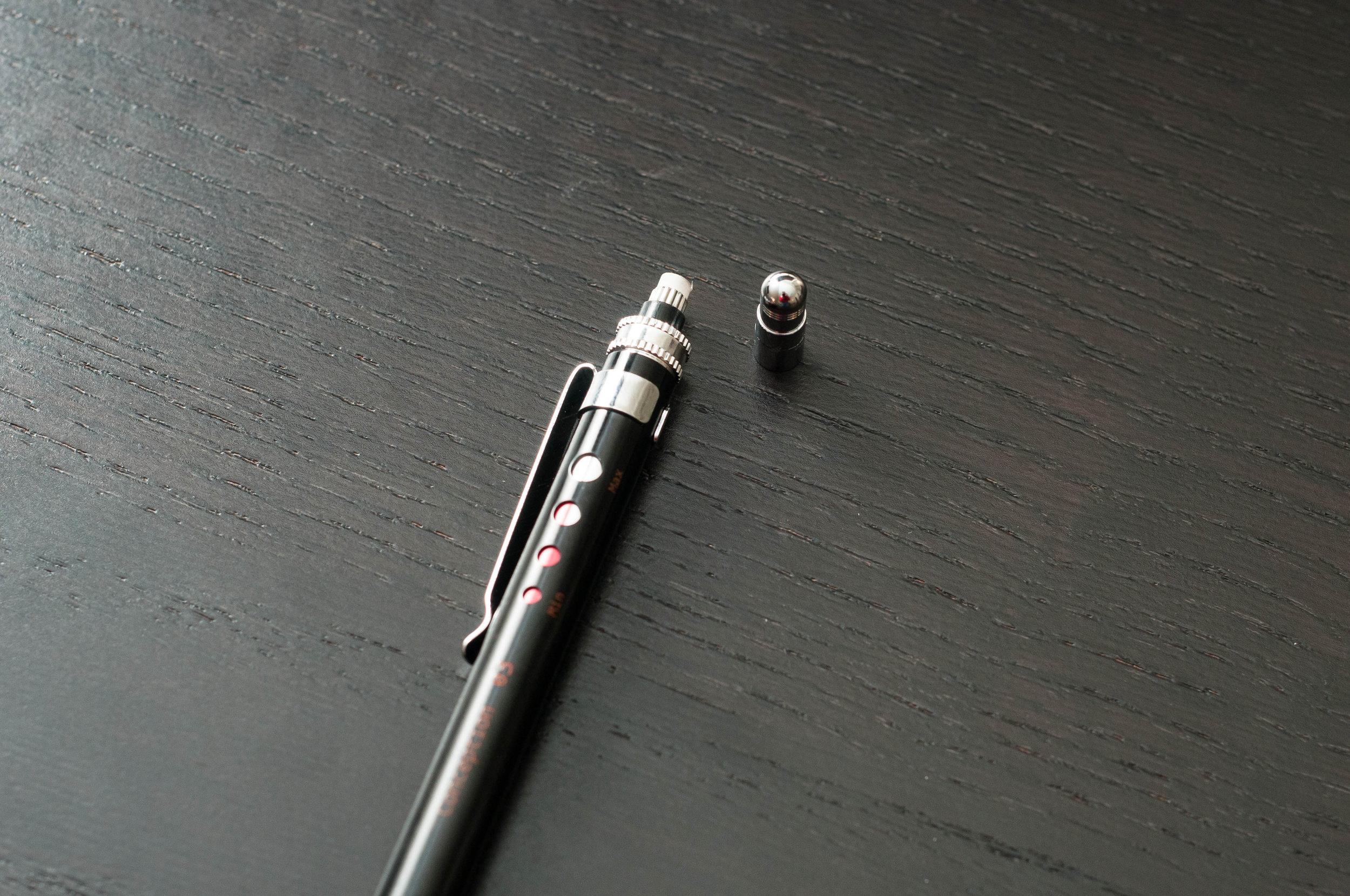
But wait, there's more! The Conception has another trick. You can dial in the amount of lead is advanced when you click the cap. It ranges from 0.2mm to 2.0mm. Crazy, right? I didn't find myself adjusting this very often, but it was nice to dial it in and find my "sweet spot" for lead advancement so that it only took one click to get my ideal amount of lead out for writing. Very nifty feature.

My main complaint with this feature is that the click mechanism feels cheap and weak. The pencil works great, and I've never had any problems with it. This is purely a complaint about the way it feels. Also, if the lead guard is retracted, there is more distance in the click mechanism, and it makes a little more noise than when the pencil is in drafting mode. Again, this doesn't affect the performance of the pencil, but does detract from the experience.

Apart from that, the pencil works exactly as you'd expect. There's a tiny eraser hidden under the click mechanism, and that's also where you refill the lead.

This model uses 0.3mm lead, which is my favorite mechanical pencil lead size. You can also find the Conception with 0.5mm lead size, though.

The pencil is made up of aluminum, and the grip section is made of brass. This combination of metals give the pencil a great balance and feel.

The grip section is another area of major contention for me. It's way too smooth for me. There's a small amount of texture on the grip, but it's microscopic and offers no real texture for gripping and writing. Practically, it's smooth metal. If there is any moisture on your fingers at all, this pencil starts slipping. This was frustrating, and something to consider if you're looking at this pencil. If you'll be using it outside in the heat, you might want to look for another option that has a better grip!

Apart from those couple of gripes, this is a really cool pencil. It's a hard sell for me because I lean heavily toward the Rotring drafting pencils. At $23, the Conception doesn't make sense when compared to the Rotring 600 or Rapid Pro because they are only 10 or 17 dollars more, respectively. If the ability to retract the lead guard is important, then the Conception is a good choice. The added option to control the amount of lead that advances with each click is also nifty, but I think the Rotring is still a better pencil.

If black isn't your game, then the Ohto Conception also comes in a few other colors.

(JetPens provided this product at no charge to The Pen Addict for review purposes.)


Enjoy reading The Pen Addict? Then consider becoming a member to receive additional weekly content, giveaways, and discounts in The Pen Addict shop. Plus, you support me and the site directly, which I am very grateful for.

Membership starts at just $5/month, with a discounted annual option available. To find out more about membership click here and join us!
Posted on December 7, 2016 and filed under Ohto, Mechanical Pencil, Pencil Reviews.