Posts filed under Pencil Reviews

Palomino Blackwing Volumes Vol 205 Review

(Sarah Read is an author, editor, yarn artist, and pen/paper/ink addict. You can find more about her at her website and on Twitter.)

It's funny how widely stationery opinions can range. I've heard several people (Brad included!) say that Volume 205 of the Palomino Blackwing Volumes is their least favorite so far, but for me it was the first one where I said, "Okay, fine, I will spend $25 on a box of pencils because I have to have those". And I have not been disappointed at all.

Like all the Blackwing Volumes, these are made from sustainable, responsibly-sourced California cedar. They smell delightful. This edition is designed to resemble the stone jade, both white and green--with six of each color in the box. The number 205 is the molecular weight of Jadeite, the most valuable variety of jade. The swirling colors remind me of the marbled papers inside old books, and I find the colors light and relaxing. I've found myself staring at the pencil when I should be writing with it. The brand is printed in gold, and there is a gold ferule with a black replaceable eraser.

This edition uses the firm lead core, the same as the one used in the 602. While it is definitely firm, it feels buttery smooth to write with, and I found it created a solid dark line, and shaded nicely. I scribbled for quite some time trying to see how long it would retain its point, and was very impressed. I'm certainly going to get my money's worth from this box of pencils, because they may outlast me. It will be a while before I have to sharpen this pencil.
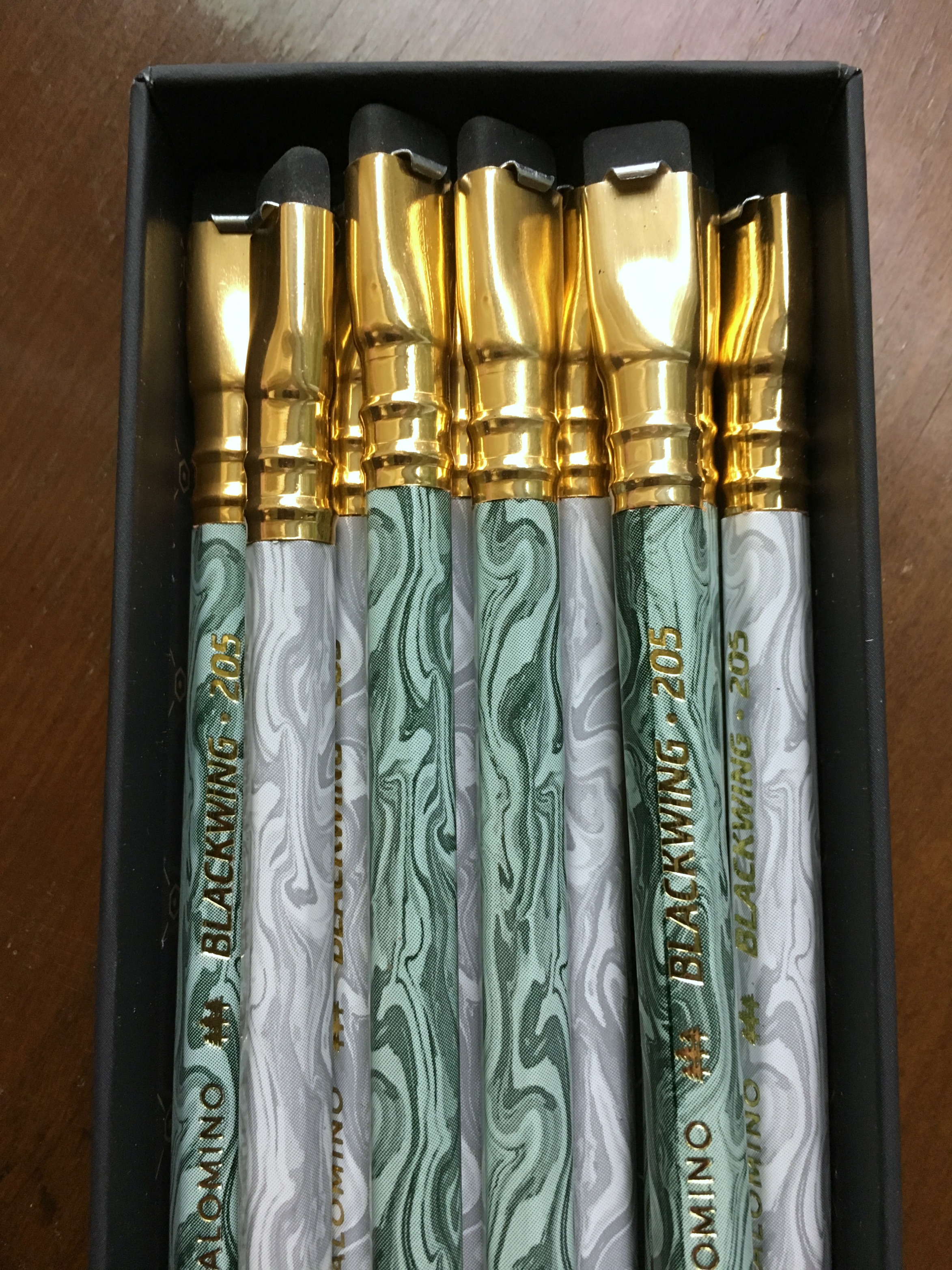
The eraser worked okay--it took up most of the graphite, though it did leave a bit of shadow behind. If I were using these for sketching, I'd use a different eraser. But for writing, which I think the firm point is well-suited to, the eraser works well enough.

I confess, I am not a pencil expert--I have not tried all of the Blackwing editions, so I can't even say for sure if I have a favorite. So it's rather likely that those who don't care for this edition have a reason that is beyond my understanding. But if that's the case, ignorance is bliss, and I am very happy with these lovely pencils. If I didn't think that the ones I have were going to last me forever, I'd stock up on backup boxes.

I'd love to hear what your favorite Volumes edition has been, and why. This one has me wanting to dabble more in the graphite world.


Enjoy reading The Pen Addict? Then consider becoming a member to receive additional weekly content, giveaways, and discounts in The Pen Addict shop. Plus, you support me and the site directly, which I am very grateful for.

Membership starts at just $5/month, with a discounted annual option available. To find out more about membership click here and join us!

Posted on June 29, 2017 and filed under Palomino, Blackwing, Pencil Reviews.

Faber-Castell Polychromos Colored Pencil Review

(Sarah Read is an author, editor, yarn artist, and pen/paper/ink addict. You can find more about her at her website and on Twitter.)

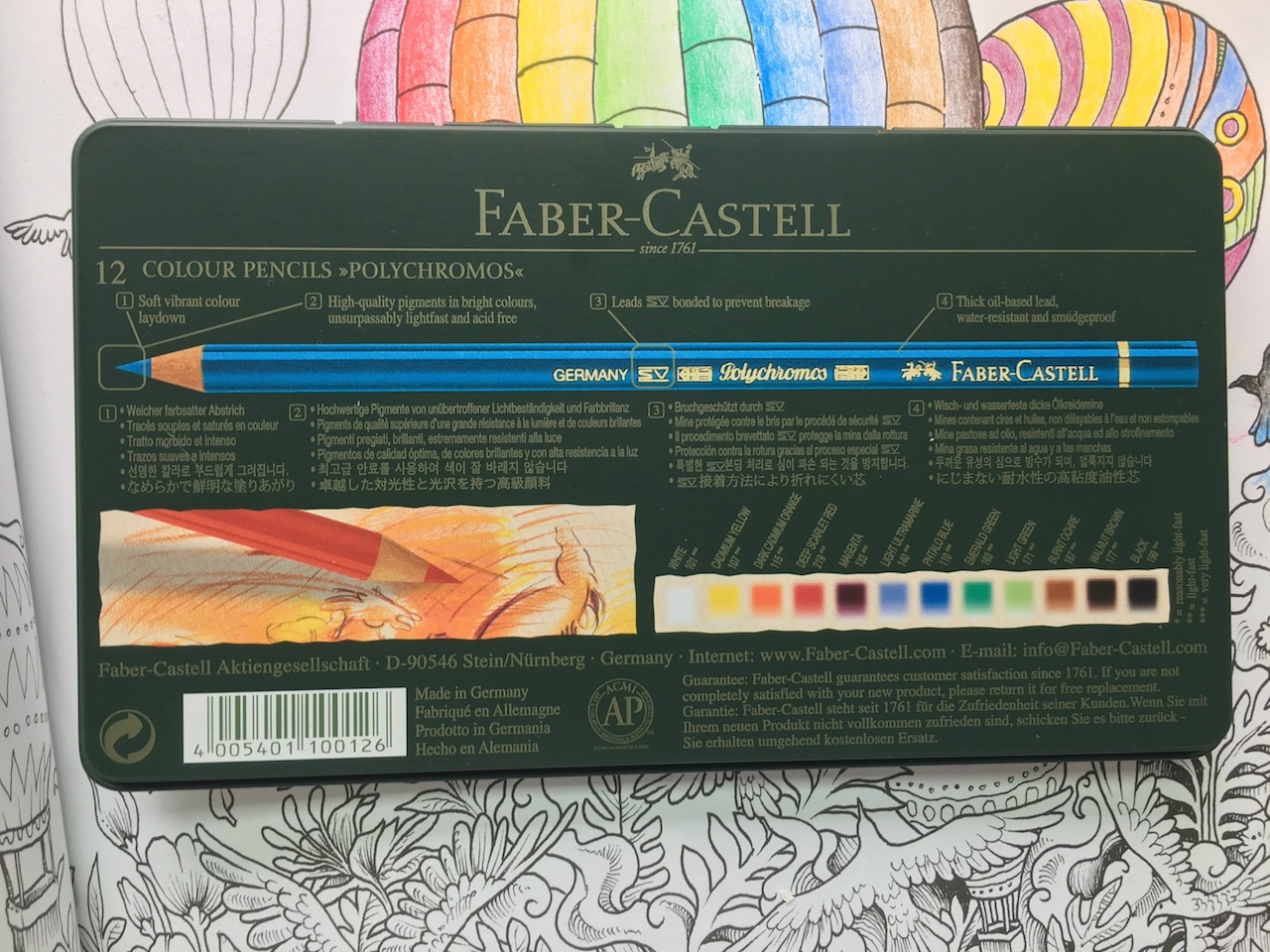
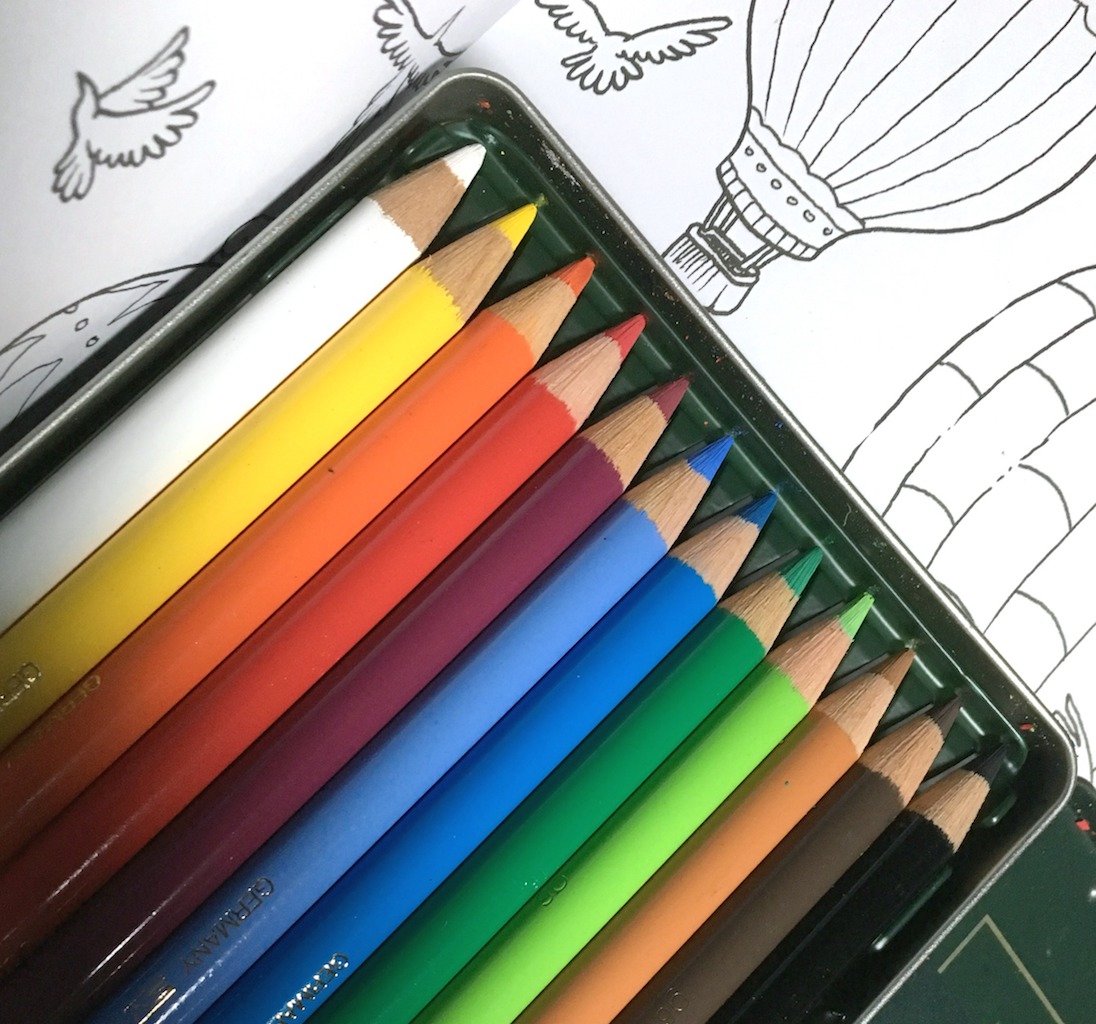
Colored pencils are my favorite coloring tool, though I'm more of a casual colorer than an artist. While I have a few sets of Derwent and Prismacolor pencils, this was my first time working with Faber-Castell Polychromos. This set of 12 pencils comes in a nice tin. They're constructed of sustainable California cedar that smells amazing. The cores are bonded to the wood to prevent breaking, so these pencils tend to last a lot longer than other brands. The round barrels are comfortable to hold, though there is nothing to stop them from rolling off the desk.

The cores are oil-based, water-resistant, and acid-free. They have a thick 3.8mm diameter that helps with their break-resistance. They feel buttery soft when coloring, but hold their points well. I didn't have to sharpen them at all during the coloring session I did with my oldest son, and he insisted on covering every inch of his page. I did experience some crumbling when heavier pressure was applied, but it was minimal, and I was being a little hard on them on purpose. There was some smudging if I rested my hand on the work, but this trait also works well for blending and shading. The pigment is even somewhat erasable, though it does leave some color behind. The coverage of the soft lead is pretty amazing. With medium pressure, it only takes two layers to fully cover the paper, and because the lead is oil-based instead of wax-based, the color won't become cloudy. The colors are all incredibly vibrant.

One of the unique traits of these pencils is their lightfastness. The level varies by pigment and each pencil is marked by its degree of lightfastness so artists can be sure their work will last.

These are definitely top-quality artist's pencils, and you can tell when you use them. I can easily say these are the nicest pencils I've played with. They're also the most expensive pencils I've played with. The sets are a good deal when compared to the open stock colors, but the set of 12 is missing a few key colors. There's no grey, and no shade of purple. But these are nice enough to invest in a few supplemental open stock pieces.

And while these may be fancy artist pencils, they're still great for coloring books. My nine-year-old also granted them his seal of coloring approval. I might say that I wouldn't invest in this high of a price-point just for coloring books and doodles--but that would be a lie because I totally would. Because these are so pleasant to use that they amplify the joy of the experience. And when you think about how they're engineered to prevent lead breakage, you do get your money's worth out of them for sure. I'm looking forward to many rainy-day coloring afternoons with these.

(JetPens provided this product at no charge to The Pen Addict for review purposes.)


Posted on June 15, 2017 and filed under Faber-Castell, Pencil Reviews.

Franklin-Christoph 1901 Pencil Review

My recent pencil fascination has me on the lookout for new products at every turn, but this one caught me off guard. I keep up with everything Franklin-Christoph does on the pen side of the ledger, but the launch of their 1901 Pencils was a surprise.

I was behind the Nock table at the Triangle Pen Show when a friend walked up and asked if I had gotten the new F-C pencils yet. I’m pretty sure my facial reaction was some version of the side-eye are you crazy look. “Franklin-Christoph makes pencils?”

I told my daughter to watch the table while I walked across the room to see for myself, and sure enough, there they were. I asked Scott Franklin about them and he said “Oh yeah, I meant to give you some!” and here we are.

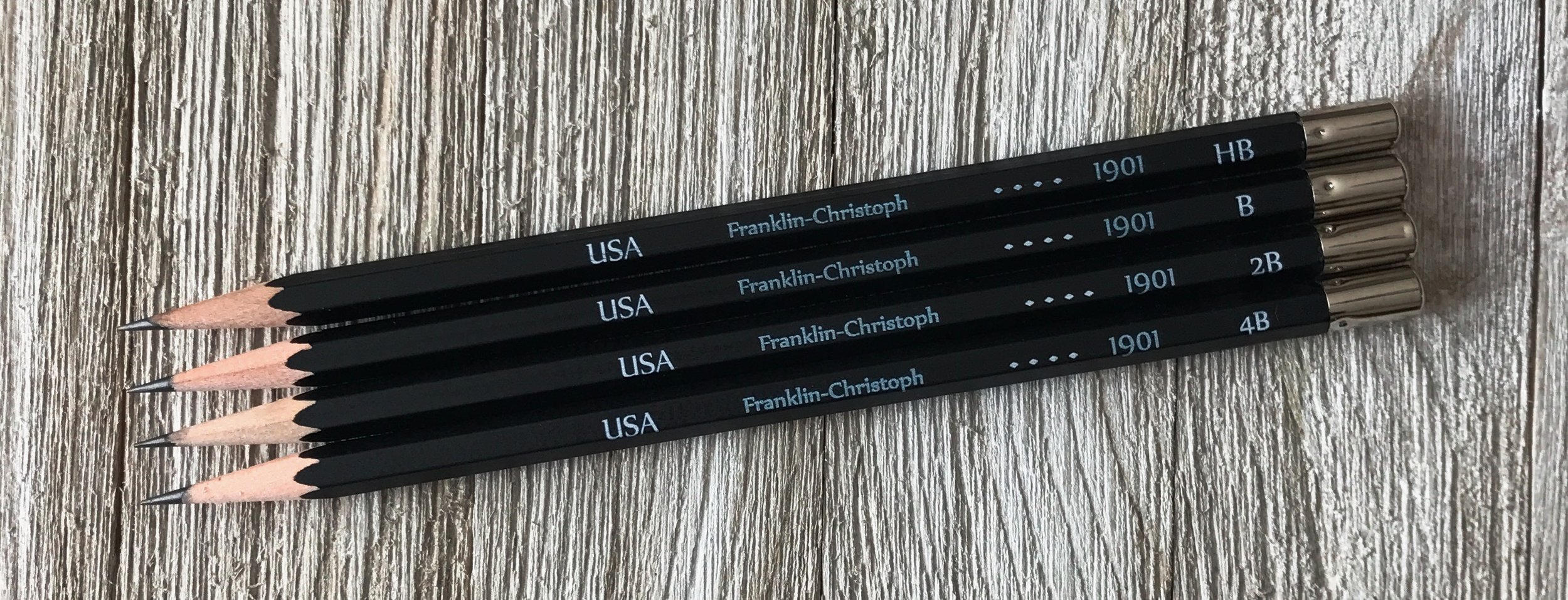
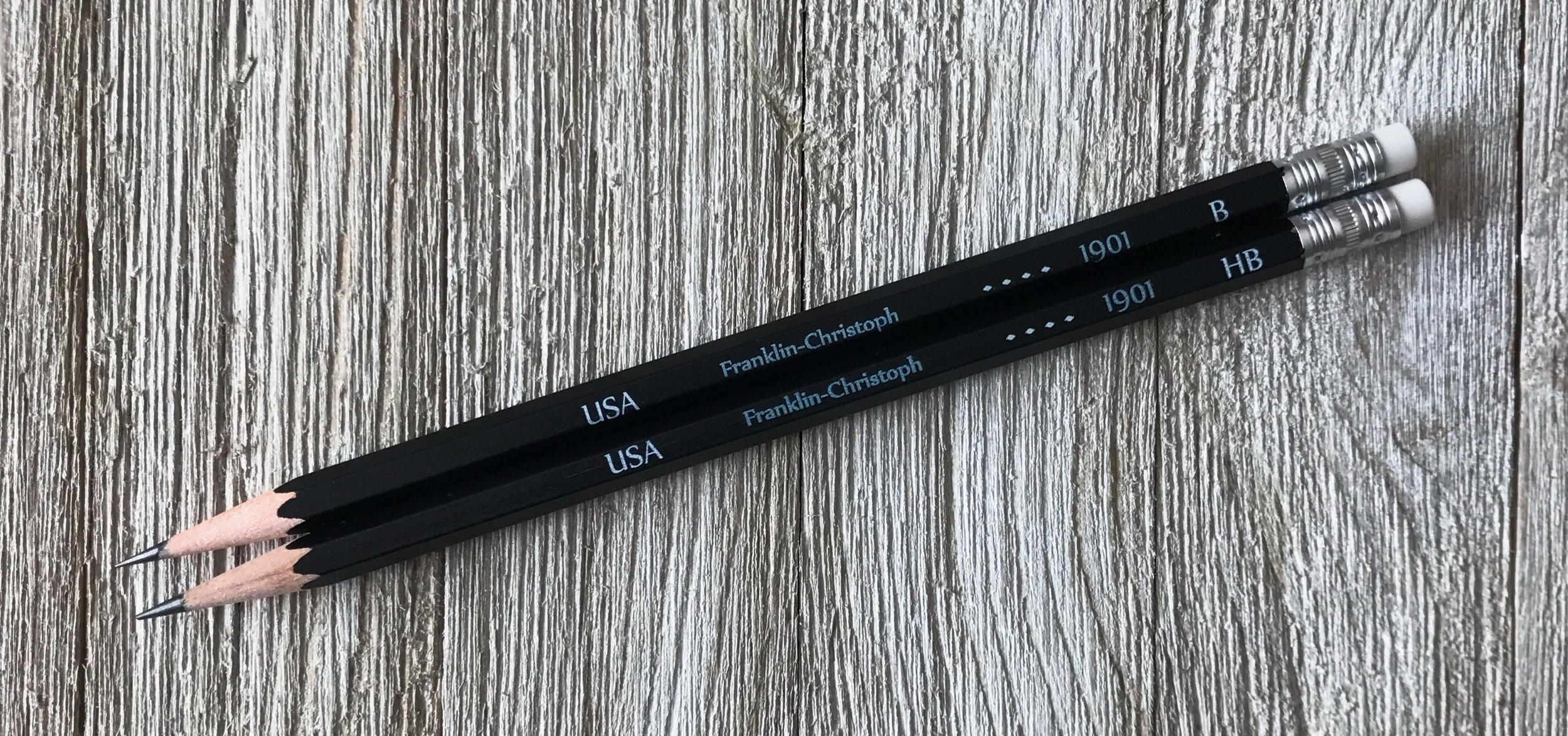
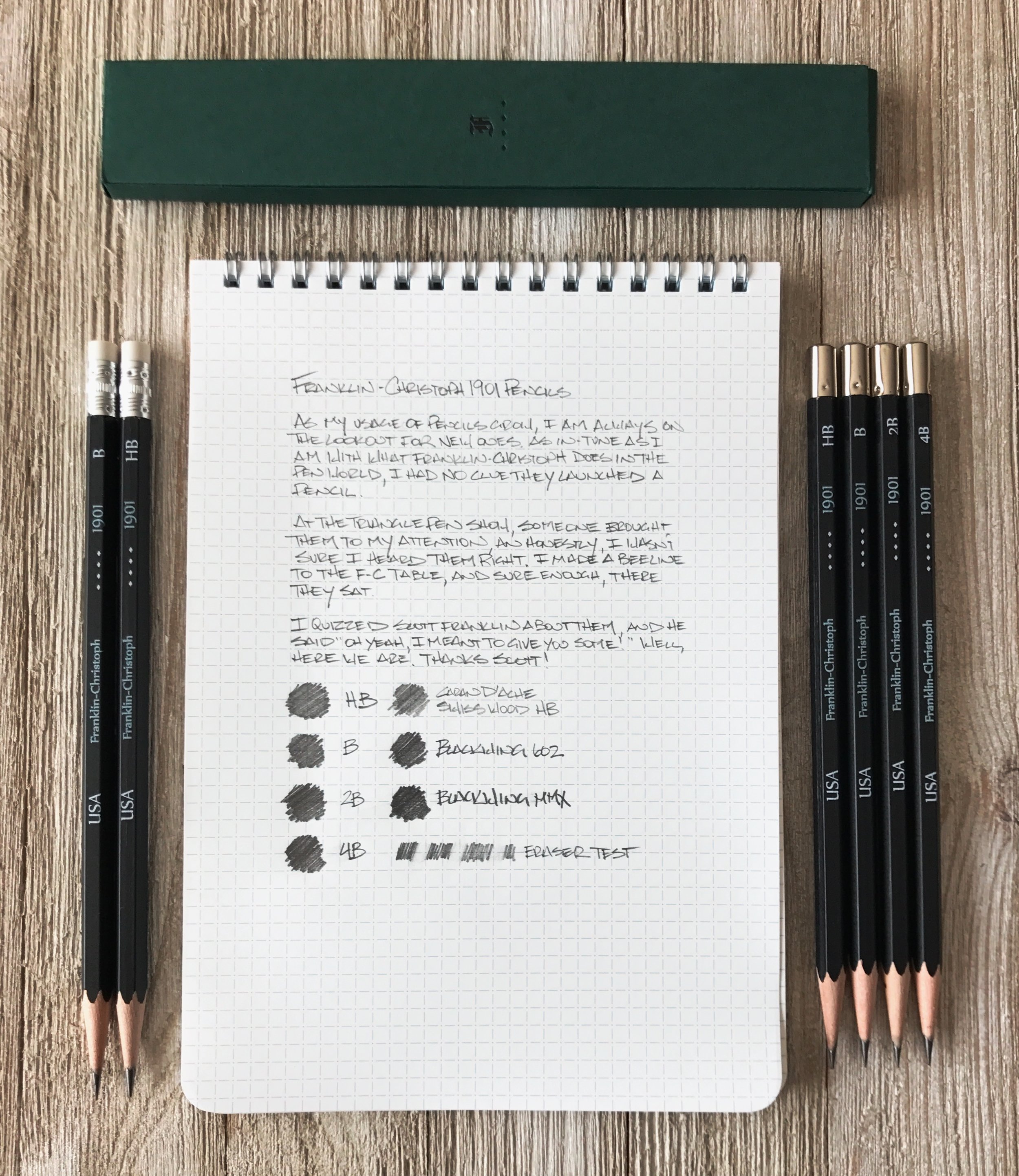
What intrigued me immediately with the 1901 Pencils were the availability of different lead grades right out the gate. There’s only four - HB, B, 2B, and 4B - but that’s three more than many pencil lines start out with. As a group, these four grades are available with a metal cap in place of an eraser as the art series of 1901 pencils. The standard eraser version is available in HB and B.

I also like the size of the packs they come in. The eraser pencils come in dozens, or a split box of six HB and six B. The art pencils come in four-packs of individual grades, or a four pack with one of each. I came home with that mixed pack, plus one of each of the eraser models, to test out.

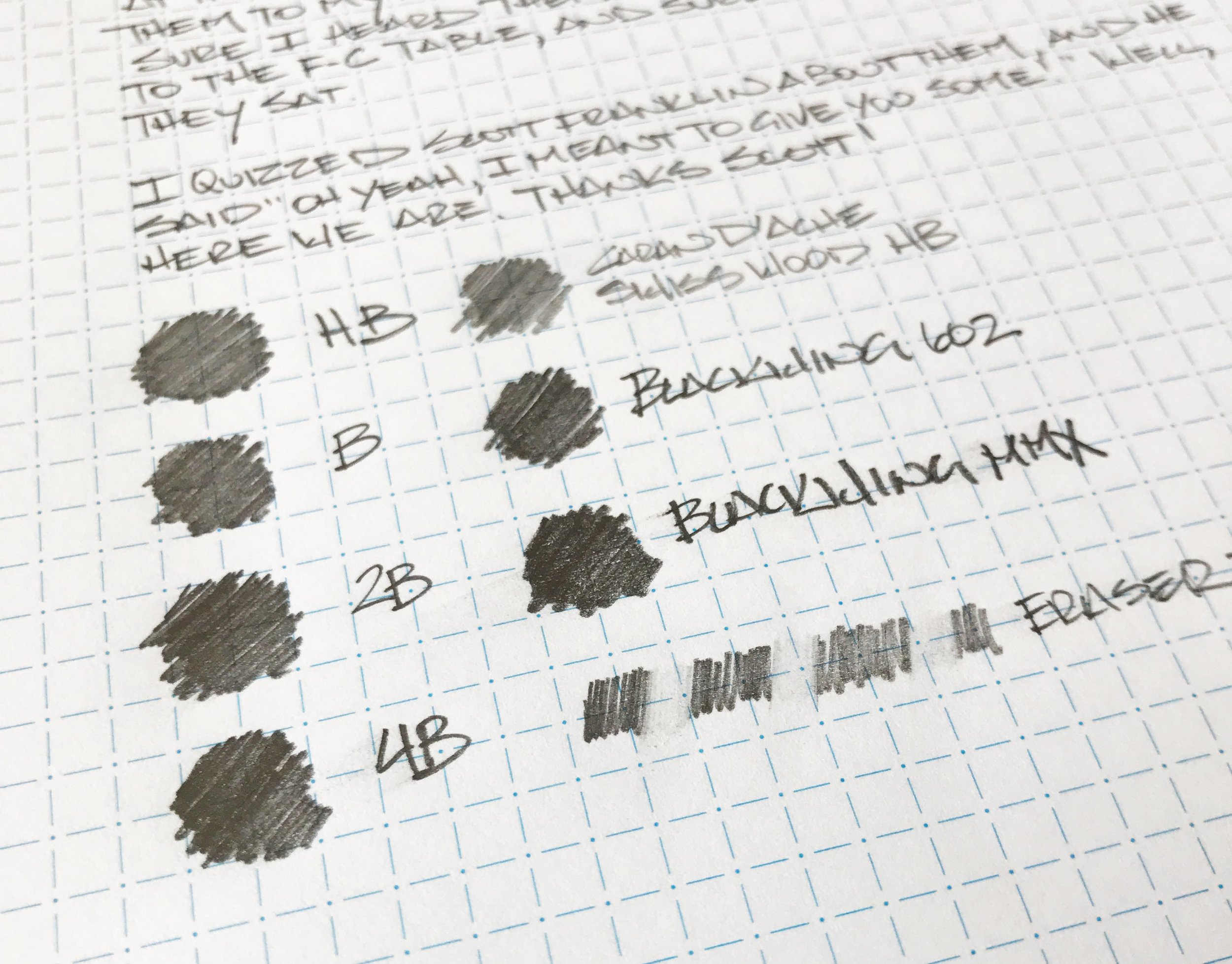
I went for the HB first, and it felt right on the money. The point felt smooth, with a bit of normal pencil feedback, and the shade had nice darkness. I picked up the B next, working my way up the softness scale. It felt and looked the same. I double checked, and yep, it was the B, not the HB. Ok, maybe not a lot of variation should be expected seeing as they are adjacent on the scale. I maybe noticed a slightly softer core, but the color was very close.

When I picked up the 2B there was a definite core softness difference, yet was only slightly darker than the previous two. The 4B felt and looked nearly the same as the 2B. This made me wonder.

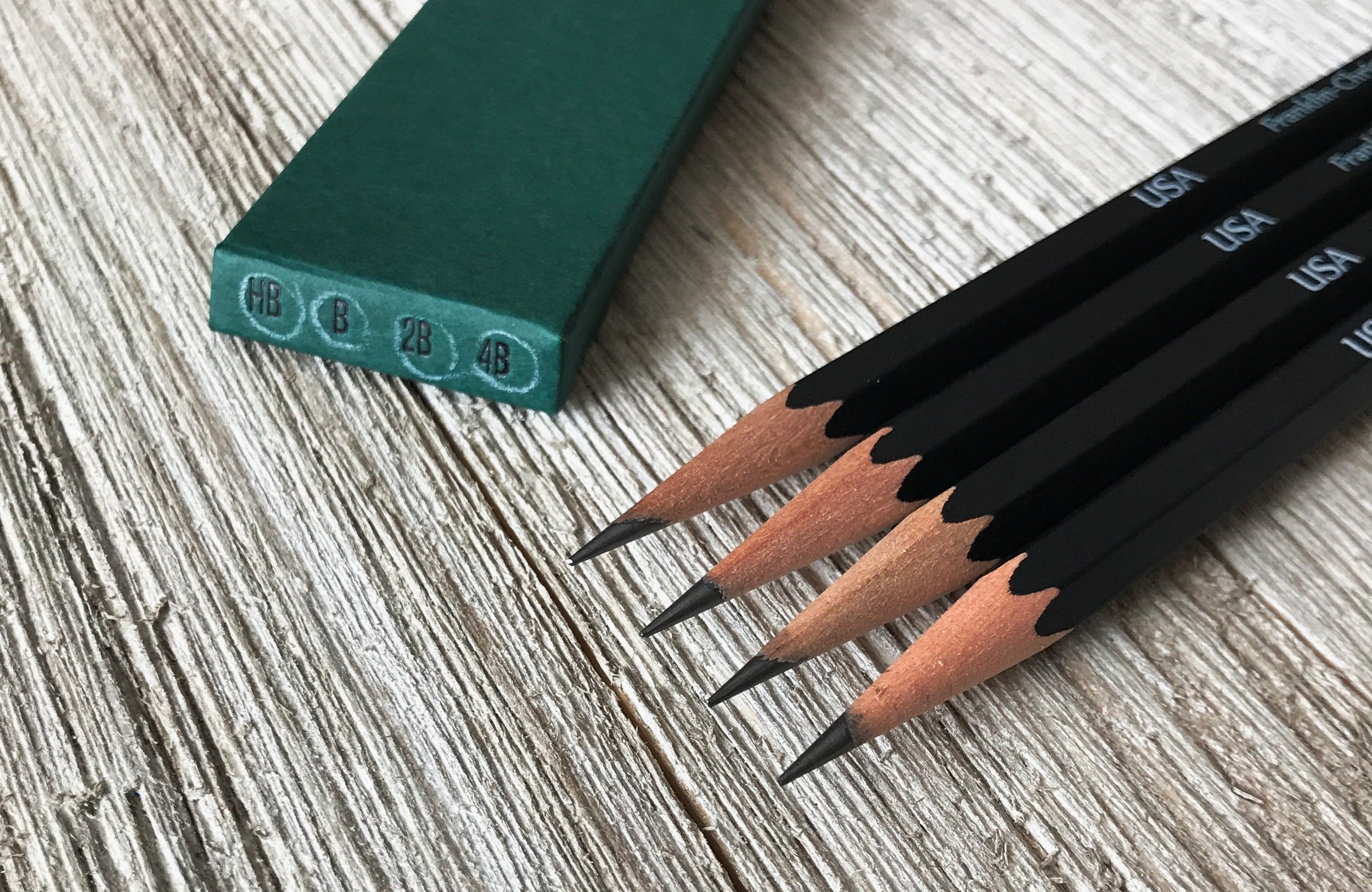
Is a two grade difference between graphite grades enough to tell an immediate difference? I’ve always though so, but maybe I haven’t tested enough pencils to understand this completely. Looking at the closeup below you can see slight differences in darkness between all four, but when I was writing with them it wasn’t as noticeable to me.

The second thing I wonder is if this is a feature of the manufacturer. These are Musgrave pencils, and I have used very few Musgraves in my short time with pencils in the rotation. Are some manufacturers known for slighter grade differences, and others greater?

This is why I love reviewing stationery products so much. A simple pencil leads me down this thought path. And I care about the answers. Hopefully I will find them out.

In the end, I love the look and feel of the Franklin-Christoph 1901 Pencils. That said, I only need one grade our of the four since I find them all so similar. And if I had to pick, I’d pick the HB. It’s dark enough and smooth enough to suit my every day writing needs.

(Franklin-Christoph provided this product at no charge to The Pen Addict for review purposes.)


Enjoy reading The Pen Addict? Then consider becoming a member to receive additional weekly content, giveaways, and discounts in The Pen Addict shop. Plus, you support me and the site directly, which I am very grateful for.

Membership starts at just $5/month, with a discounted annual option available. To find out more about membership click here and join us!

Posted on June 12, 2017 and filed under Franklin-Christoph, Pencil Reviews.