Posts filed under Pencil Reviews

Uni NanoDia Low-Wear Pencil Lead H 0.7 mm Review

And you thought pen names were long?

Mechanical pencil leads get after it too, like this Uni NanoDia Low-Wear Pencil Lead. I’m surprised they didn’t spell out Dia-mond in the name, because that is the selling point: Nano-diamond pieces that strengthen the lead. Hashtag Marketing!

Before we get to that, I wanted to spend a minute on a graphite I eliminated from testing without a full review. I found the Rotring Tikky Hi-Polymer HB 0.5 mm lead not good. One of the “features” of most mechanical pencil lead is that they are mixed with plastic (polymer) because pure graphite would be too brittle to function in the tiny diameters needed for mechanical pencils. As it turns out, hi-polymer leads may not be for me.

I want my mechanical pencil leads to have a bit of feedback. They don’t have to feel like a traditional wooden pencil, but I don’t want them to feel alien either. The Tikky Hi-Polymer felt fake to me, and I didn’t enjoy it from the moment I loaded it up. On top of that, it is one of the most expensive per piece leads on the market. Those things in combination make it a hard pass for me.

The Uni NanoDia H 0.7 mm, on the other hand, is good. It’s not great, which we will get to in a minute, but it is good.

For testing, I loaded it up in the Uni Shift Pipe Lock 0.7 mm Drafting Pencil, and got to writing. First off, there was some feedback in the line. Not a lot mind you, but after the plastic feeling of the Tikky, this one felt more normal. It was durable too, without feeling like a rock. Maybe nano diamonds are for real! The tip held its point consistently, and for long writing sessions. I didn’t extend the lead once on the handwritten page for this review, and no one side of the lead became overly sharp or angled in the process. My normal hand rotation when writing kept it even.

But I didn’t love it. Part of this test is to figure out what I am looking for in a mechanical pencil lead, and smoothness at the cost of natural feel is not it. Also, 0.7 mm is a tough size for me. Like with fountain pen nibs, I enjoy the opposite ends of the tip size spectrum - EF and 1.1 mm stub for example - not the center. 0.7 mm is the medium nib of the mechanical pencil world.

I think the Uni NanoDia lead is perfect for students who are writing page after page with their mechanical pencils. It will thrive in that environment, and I think that is the reason why it is so popular. I need something more from my leads, and this project is helping me sort out what exactly it is that I am looking for.

I have a huge batch of testing to complete, but if you have found your perfect mechanical pencil lead please let me know in the comments so I can check it out.


Enjoy reading The Pen Addict? Then consider becoming a member to receive additional weekly content, giveaways, and discounts in The Pen Addict shop. Plus, you support me and the site directly, for which I am very grateful.

Membership starts at just $5/month, with a discounted annual option available. To find out more about membership click here and join us!

Posted on January 28, 2019 and filed under Uni, NanoDia, Mechanical Pencil Lead, Pencil Reviews.

Pilot Neox 2H 0.5 mm Graphite Review

The first time I touched the page with the Pilot Neox 2H I thought “Wow, I can write firm and fast with this lead.” Then I realized “Oh yeah, it’s a 2H lead, dummy!” Decades of stock HB mechanical pencil lead usage will poison your brain apparently.

Out of approximately two dozen packs of lead sitting on my desk right now, I chose a 2H first. Why? With wooden pencils, I enjoy the H side of the scale more than the B side. They are very firm, which results in two things: Great point retention and light color. Those may or may not be positives in your book. Finding the perfect combination of all of these things is the eternal search.

The Neox is marketed very specifically by Pilot. The short description on JetPens says it all:

“Enjoy a luxuriously smooth, clean writing experience with these Pilot Neox leads. They are made from high-quality graphite with very few impurities, allowing the carbon atoms to be more strongly bonded than in conventional leads. This results in strong leads that produce clean, sharp lines. It also lets the natural lubricating properties of graphite crystal shine, resulting in leads that glide effortlessly across the page."

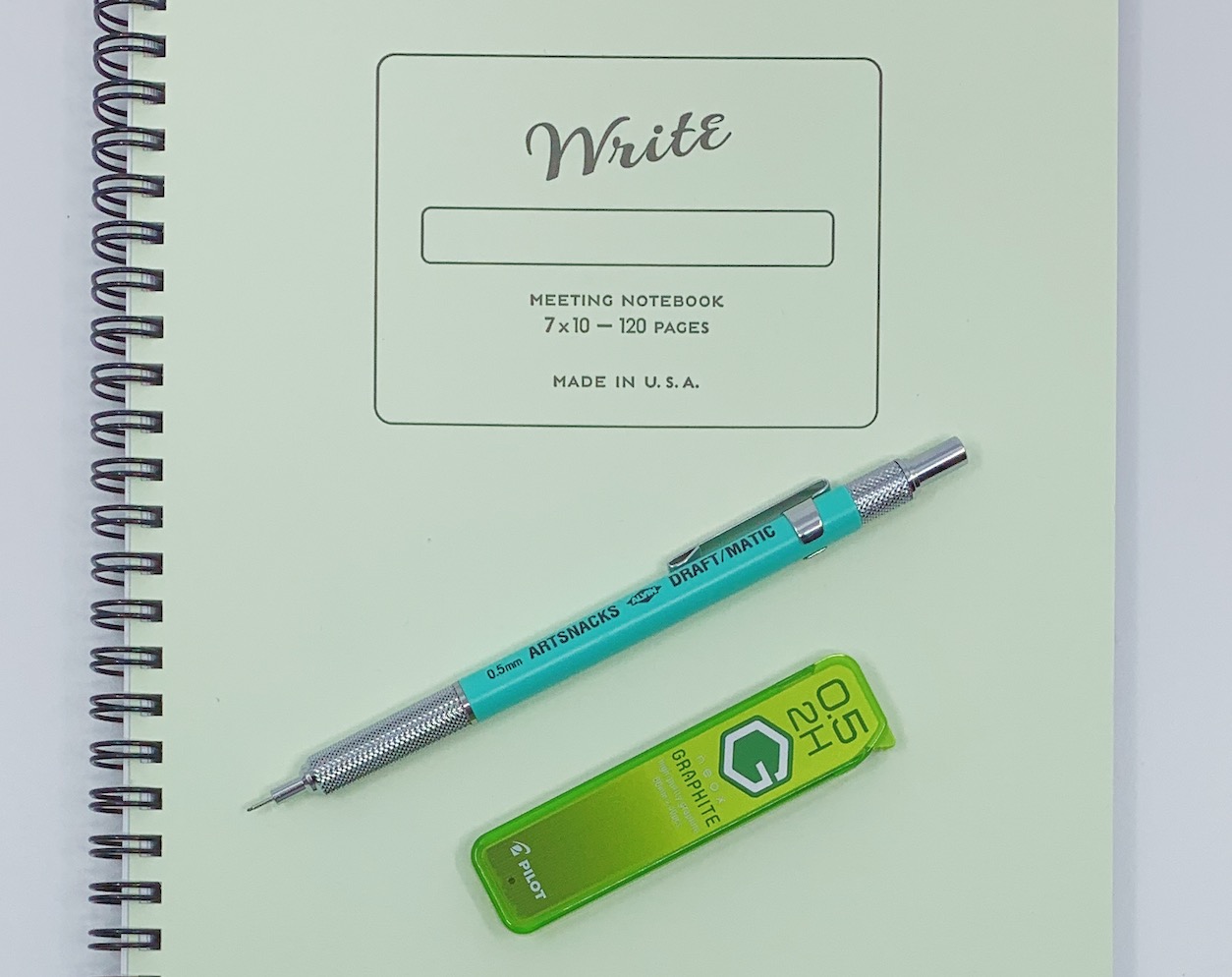
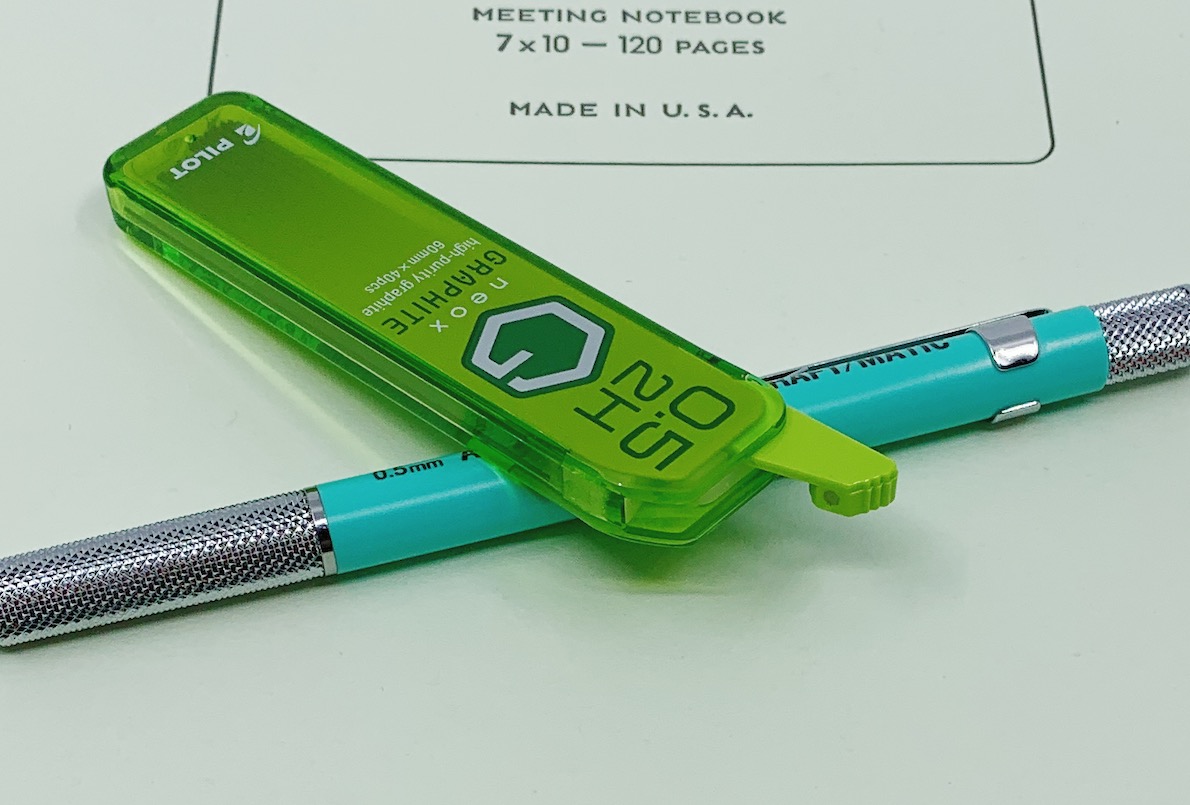
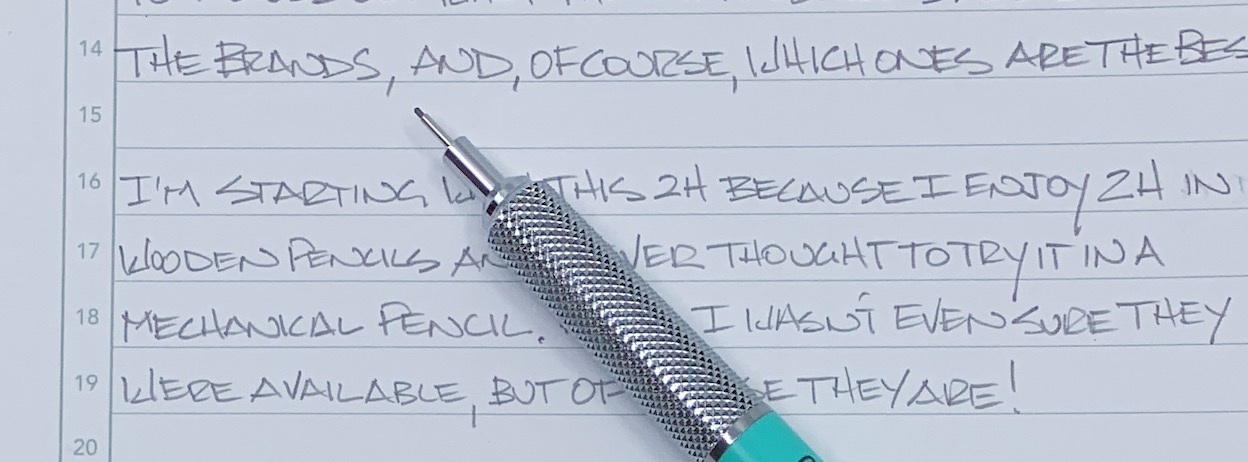
This lead is as strong as any I have used in an 0.5 mm mechanical pencil. Even with my heavy hand, breaking it isn’t even a consideration. The strength of the lead plays into point retention too. I began the review below with two clicks of my Alvin Draft-Matic and wrote the entire page without clicking to advance the lead again. Impressive.

One of the sacrifices you have to make when using H-grade lead is that it will be light on the page. Hardness and lightness go hand in hand: The harder the lead, the lighter the line. For everyday writing, 2H is about as firm as I want to go, with this Neox 2H laying down a darker than expected line. I didn’t love it as much on graph paper as I did on lined paper where there is no background distraction, but overall it was plenty dark for me.

If there is a knock on this lead it's that “luxuriously smooth” is too smooth. Smoothness in graphite is nice - no one wants scratchy lead - but it can go too far. Once it starts to feel plastic-y when writing it is too smooth for me. It is especially noticeable on the hard side of the scale. I want a touch of feedback, not carbon atoms so strongly bonded that they need to add more fiber to their diet.

Overall, I’m happy with the Pilot Neox 2H lead. It’s not knock-your-socks-off great, but it is very good. How it stacks up with the rest of my stash is to be determined. These lead reviews are a learning experiment for me, and the more I test the more I will be able to compare them to each other. I can’t wait to narrow this batch down to a few favorites that I can recommend. Stay tuned!

(JetPens provided this product at no charge to The Pen Addict for review purposes.)


Enjoy reading The Pen Addict? Then consider becoming a member to receive additional weekly content, giveaways, and discounts in The Pen Addict shop. Plus, you support me and the site directly, for which I am very grateful.

Membership starts at just $5/month, with a discounted annual option available. To find out more about membership click here and join us!
Posted on January 7, 2019 and filed under Mechanical Pencil Lead, Pencil Reviews.

Carl Ein Pencil Sharpener Review

One of the most fun parts about being obsessed with stationery isn’t just discovering new writing instruments, but also the accessories that go with the writing instruments. I’ve developed a fondness for wooden pencils over the years, and as much fun as I have trying new ones and discovering my favorites, I also enjoy exploring pencil-adjacent accessories, like pencil sharpeners.

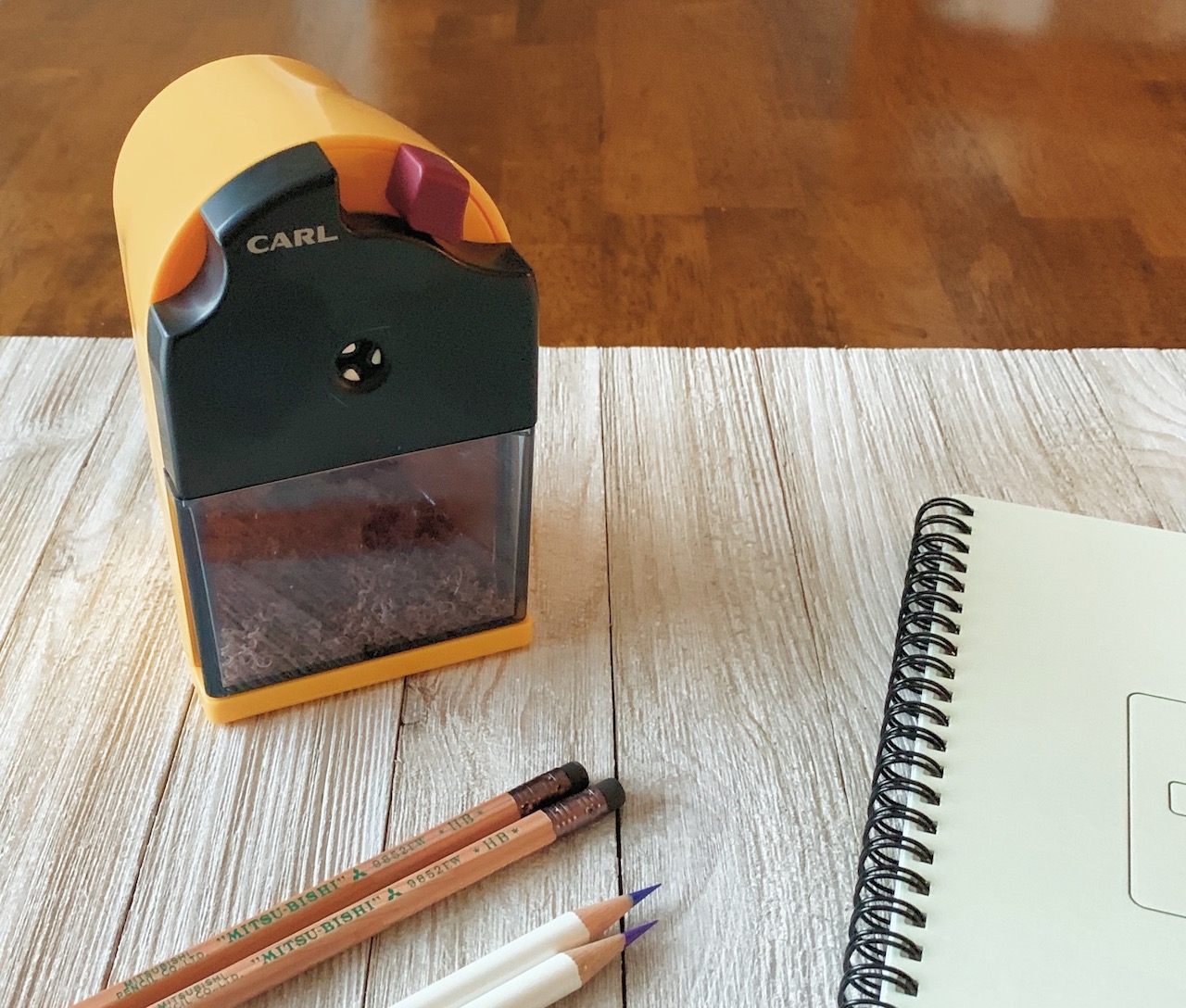
The Carl Ein Pencil Sharpener is the latest to hit my desk, and has a feature I wasn’t aware I needed: Two stages of tip sharpness. Why is this important to me? I’m so glad you asked!

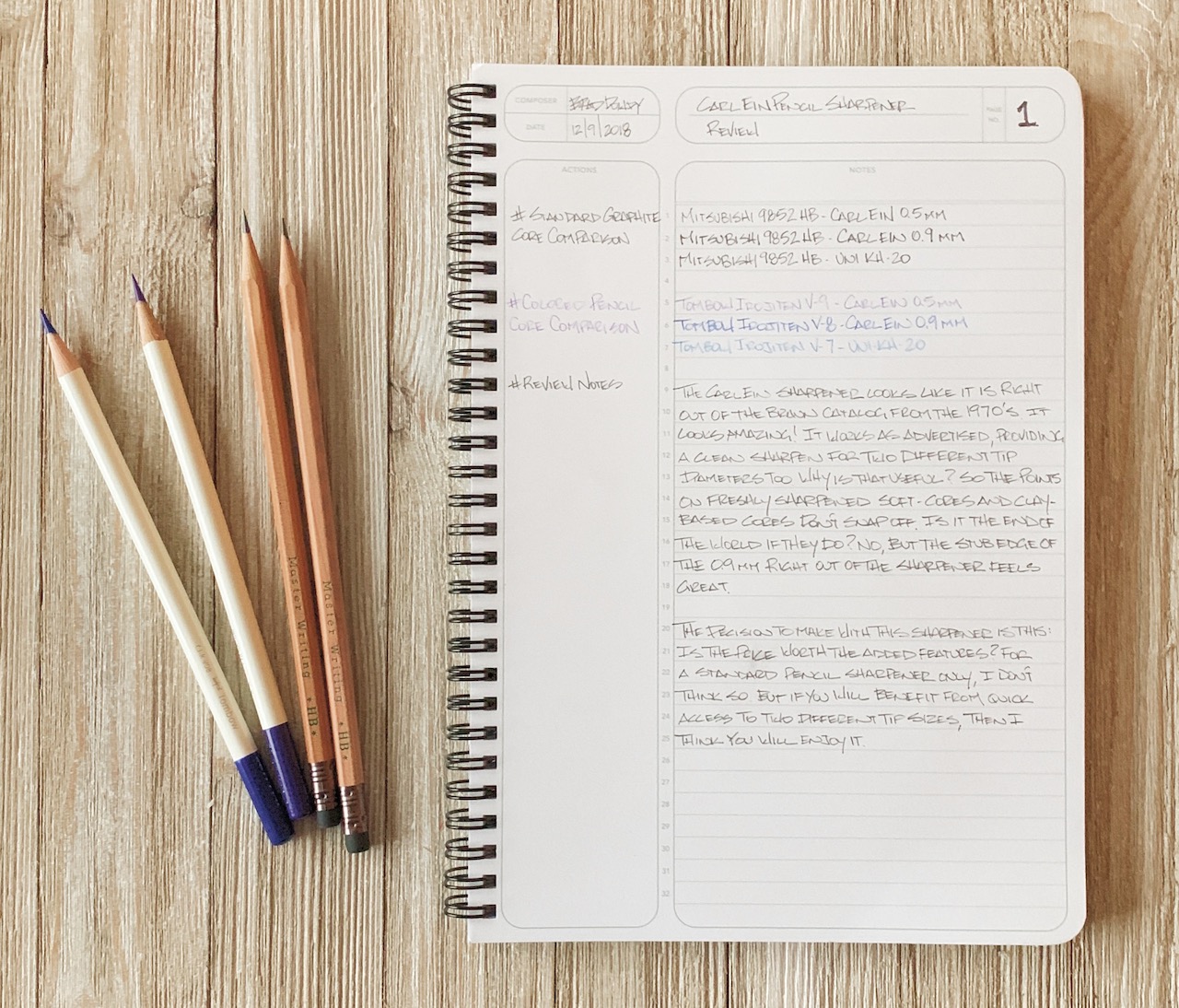
Not all pencil cores are created equally. Traditional writing pencils, like your standard HB, have a graphite core. They sharpen to a pointy, durable tip and write well from the moment they hit the page. Colored pencils use a clay-based core, making them softer and more prone to breakage when sharpened to a point as fine as I like with my writing pencils. Have you ever sharpened a colored pencil in a regular sharpener and snapped the tip of the pencil off the moment it touched the page? That’s why.

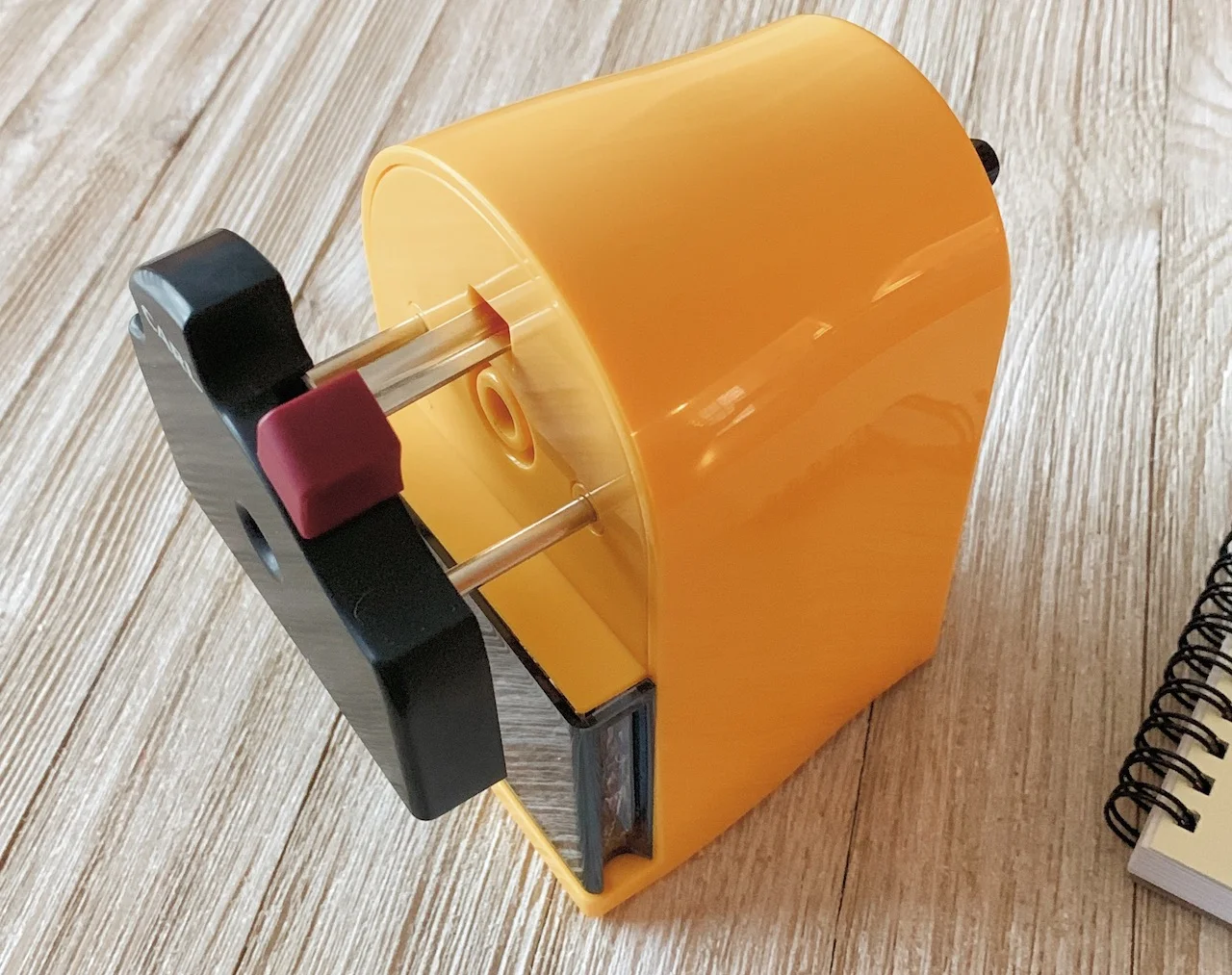
The Carl Ein helps with this issue by having two settings in one sharpener: An 0.5 mm standard pointed tip for traditional writing pencils, and an 0.9 mm broad, stub tip for pencils that are softer or use different core materials, like colored pencils. This setting is simple to swap between with a simple twist of the knob on the handle side of the sharpener.

While the selling point of the sharpener works as intended, Carl and I had a rough start. When my package arrived and I pulled out the box I noticed a lot of rattling. Opening it up, there were small, loose parts everywhere. The front, slide-out panel had become completely disassembled in shipping. Putting it back together was a 20-30 minute exercise in frustration. It’s one of those things that requires three hands to assemble, and unfortunately, I was only born with two.

This had me worried about the overall build and sturdiness of the sharpener from the jump, but it has proven to be a workhorse and no further issues with functionality have been detected.

One design feature I noticed and appreciated with regular use was the sloped top cover of the sharpener. Desk sharpeners usually require two hands to operate, one on the crank and one on the top of the sharpener to hold it steady. I didn’t even realize this feature until I was switching back and forth between my favorite Uni KH-20 sharpener and felt that the Carl was easier to hold on to. It’s also slightly wider and has a wider base, so that contributes to its sturdiness.

0.5 mm on the top of each pair, 0.9 mm on the bottom

I’m happy overall with the Carl Ein, but their is one final gotcha to be aware of: The price. This is a $40 desktop pencil sharpener. I’ve used great desktop sharpeners in the low-$20 range, like the Classroom Friendly. My personal favorite is the aforementioned KH-20, which runs $30.

Does the Carl Ein offer enough in its added features to justify the extra cost? For me personally, no. I will recommend the KH-20 every time over the Carl. But, for hardcore colorists and soft-pencil core users I can see the benefit of having dual point sizes built into a single sharpener. And for that, I think the Carl Ein is a good choice.

(JetPens provided this product at no charge to The Pen Addict for review purposes.)


Enjoy reading The Pen Addict? Then consider becoming a member to receive additional weekly content, giveaways, and discounts in The Pen Addict shop. Plus, you support me and the site directly, for which I am very grateful.

Membership starts at just $5/month, with a discounted annual option available. To find out more about membership click here and join us!
Posted on December 10, 2018 and filed under Carl Ein, Pencil Sharpener, Pencil Reviews.