Posts filed under Pencil Reviews

Namisu Pulsar Polycarbonate Mechanical Pencil Review

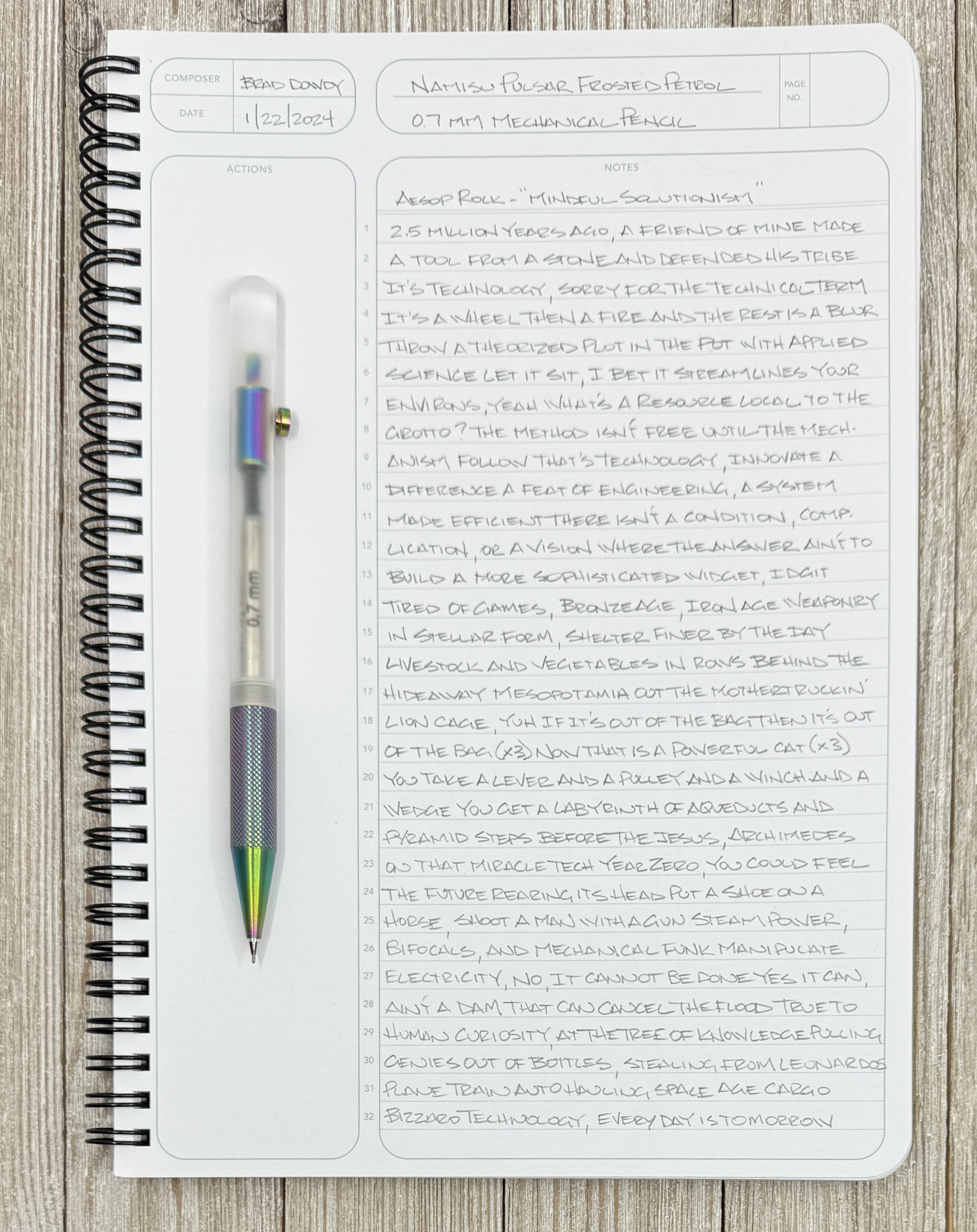
In the stationery space, Namisu has been known mostly for their fountain pens. I’ve backed several of their Kickstarter campaigns, and have always been happy with the end result. With the launch of the Pulsar, Namisu took that fountain pen aesthetic and applied it to a fresh mechanical pencil design. Successfully, I might add.

As is the norm with Namisu, choosing the style of your writing instrument poses the biggest challenge. The Pulsar comes in three different barrel materials - Aluminum, Titanium, and Polycarbonate - with each featuring different colors and finishes. How could I choose? Well, just have a look:
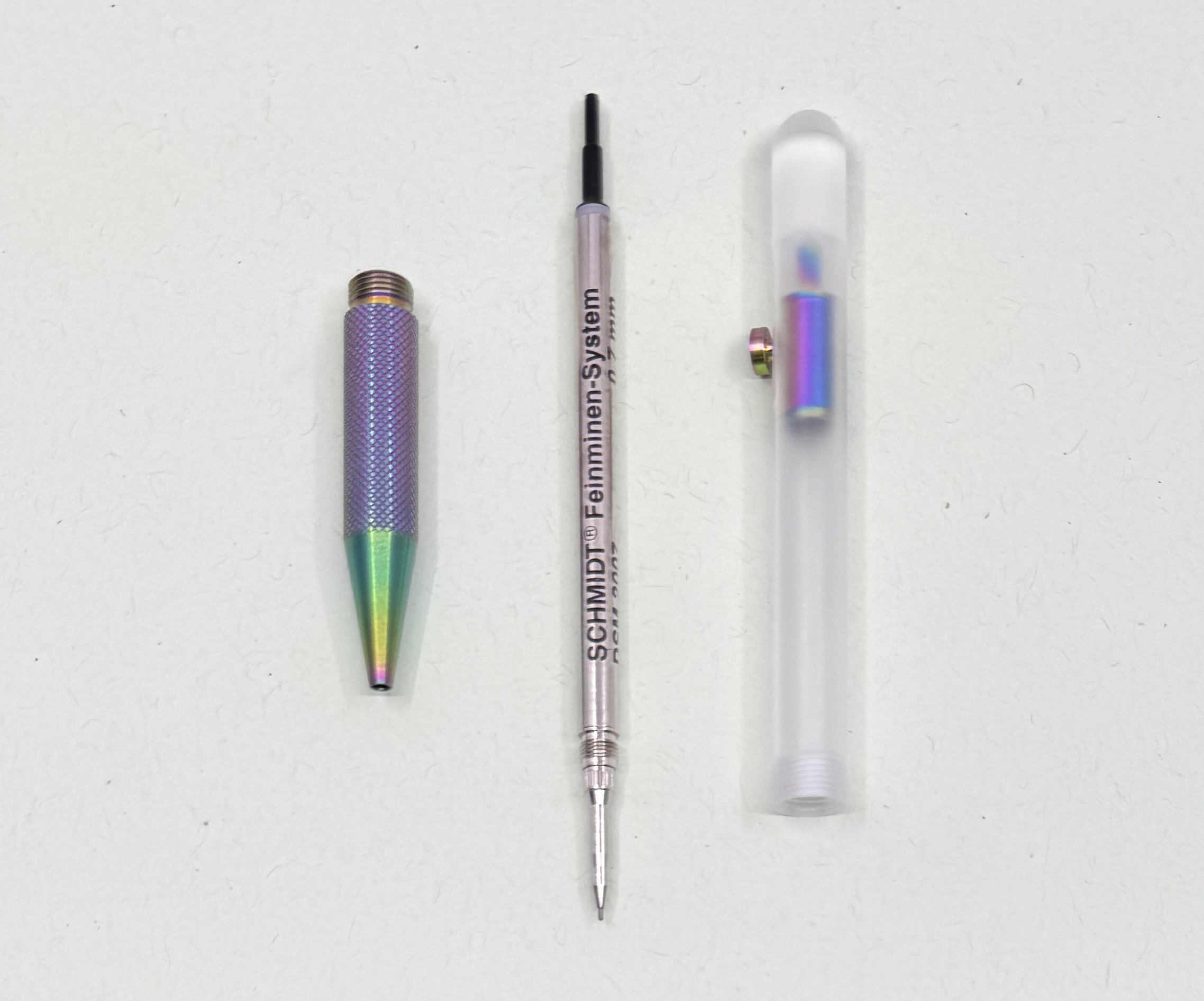
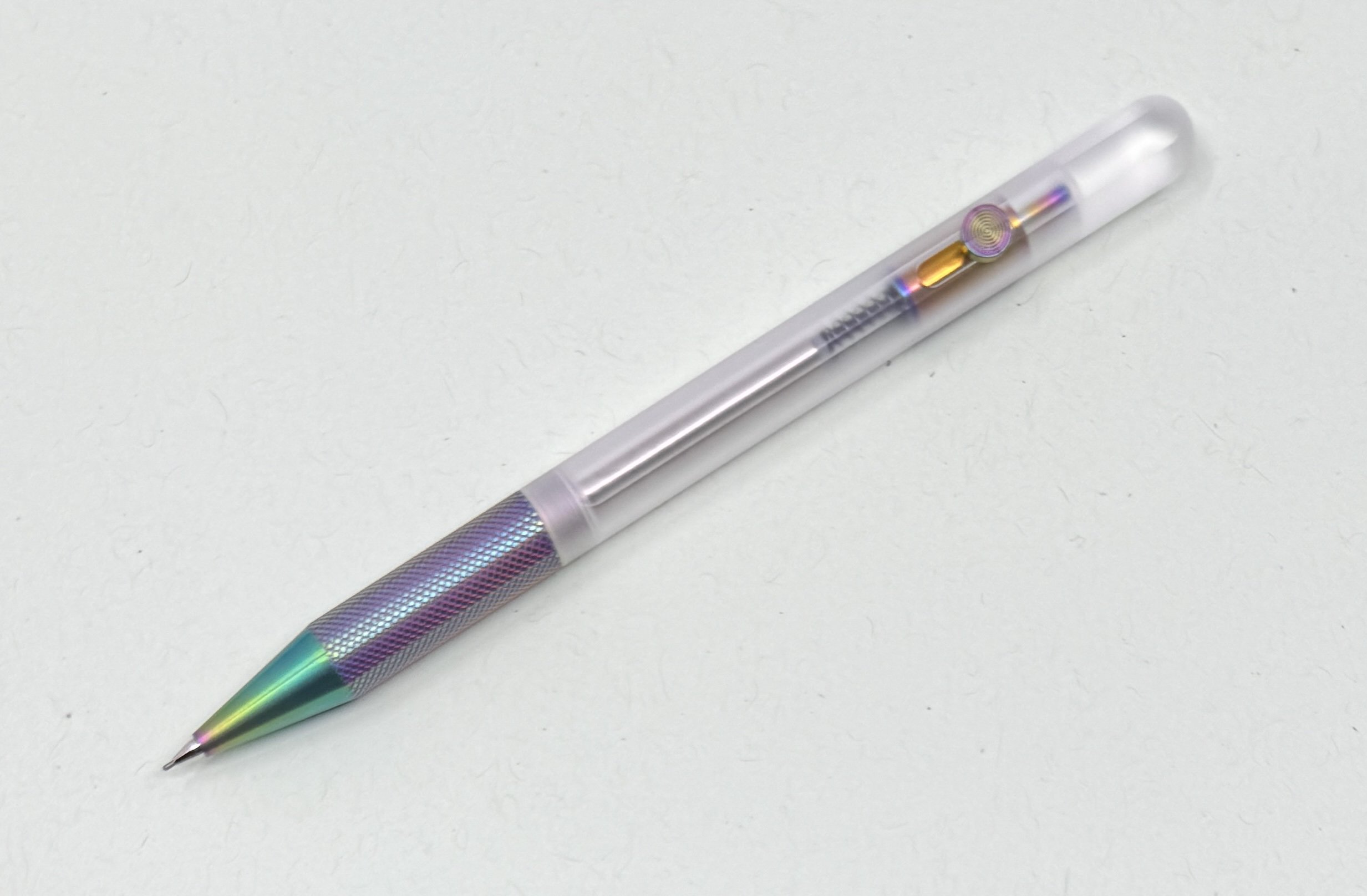
The Polycarbonate barrel with Steel grip and Petrol finish stood out to me, and would bring a different style to my writing library compared to my other mechanical pencils. Little did I know how different it would feel in hand, as well.

The best way I can describe how the Pulsar Polycarbonate feels is “different.” Not different bad, or different good, just different. I’m used to metal grips and acrylic/plastic barrels in pens and pencils, and even prefer that setup in many cases. I like it in the Pulsar as well, but I’ve yet to stop thinking about the feel of it in my hand.
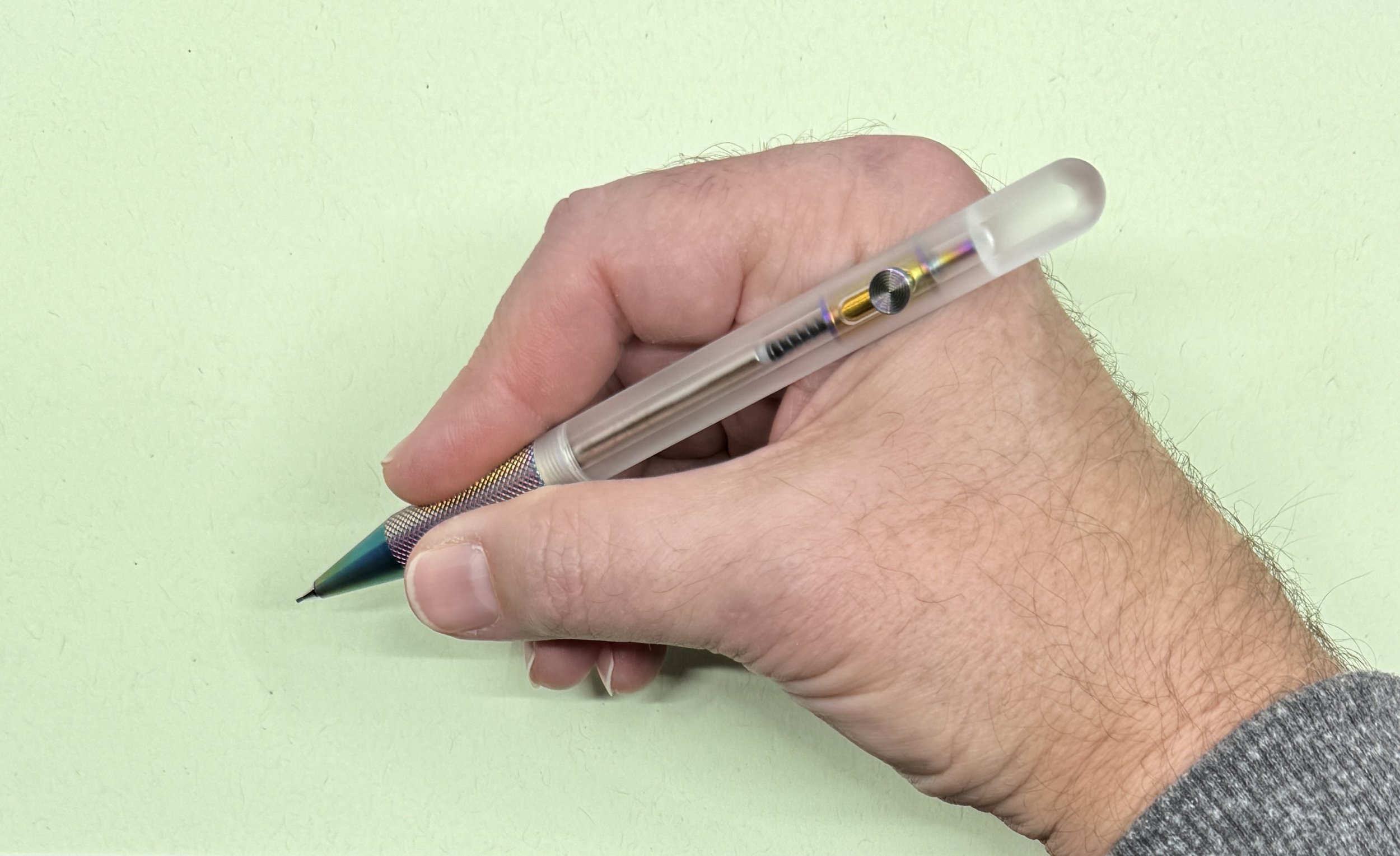
The Polycarbonate barrel has a thick wall, and combined with the bolt mechanism in the last quarter of the barrel, the balance shifts towards the rear. Not terribly, but enough that I keep thinking about it.

Mechanical pencils, even more so than most types of pens, need to feel one of two ways for my needs: weighted towards the front, or ultralight. Most mechanical pencils are designed around tip control for detailed writing or drawing. The Namisu Pulsar is designed for regular writing.
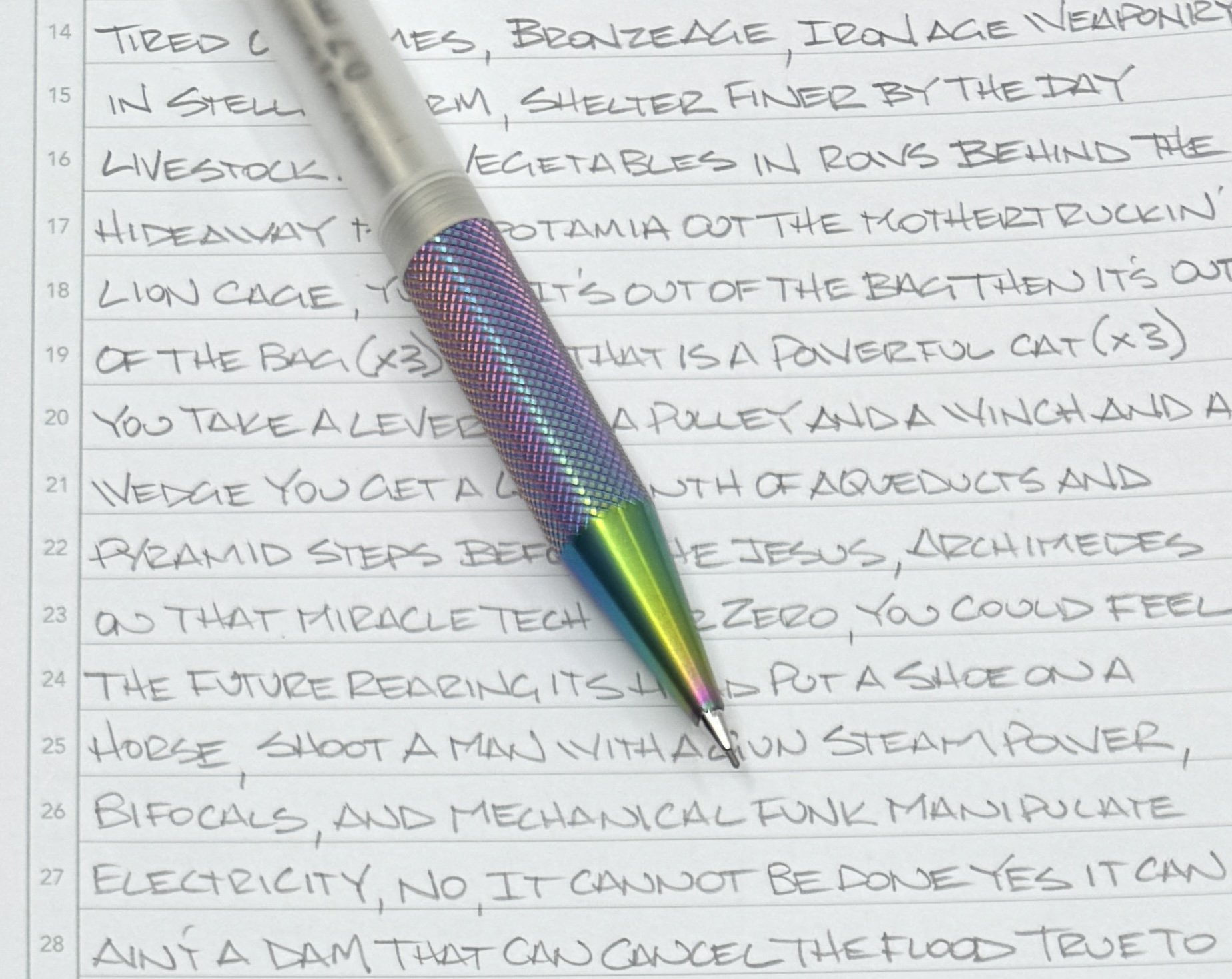
Being designed for writing is perfectly fine in my book, which is why I enjoy the Pulsar. But I think of it more as a pen than a pencil, given its more stout design, and pipe-less tip. I also have it loaded up with the 0.7 mm mechanism, which leads to more of a writing style. I have’t tried to swap in the 0.5 mm - I think the wider size suits the barrel better, but it is a nice option to have.
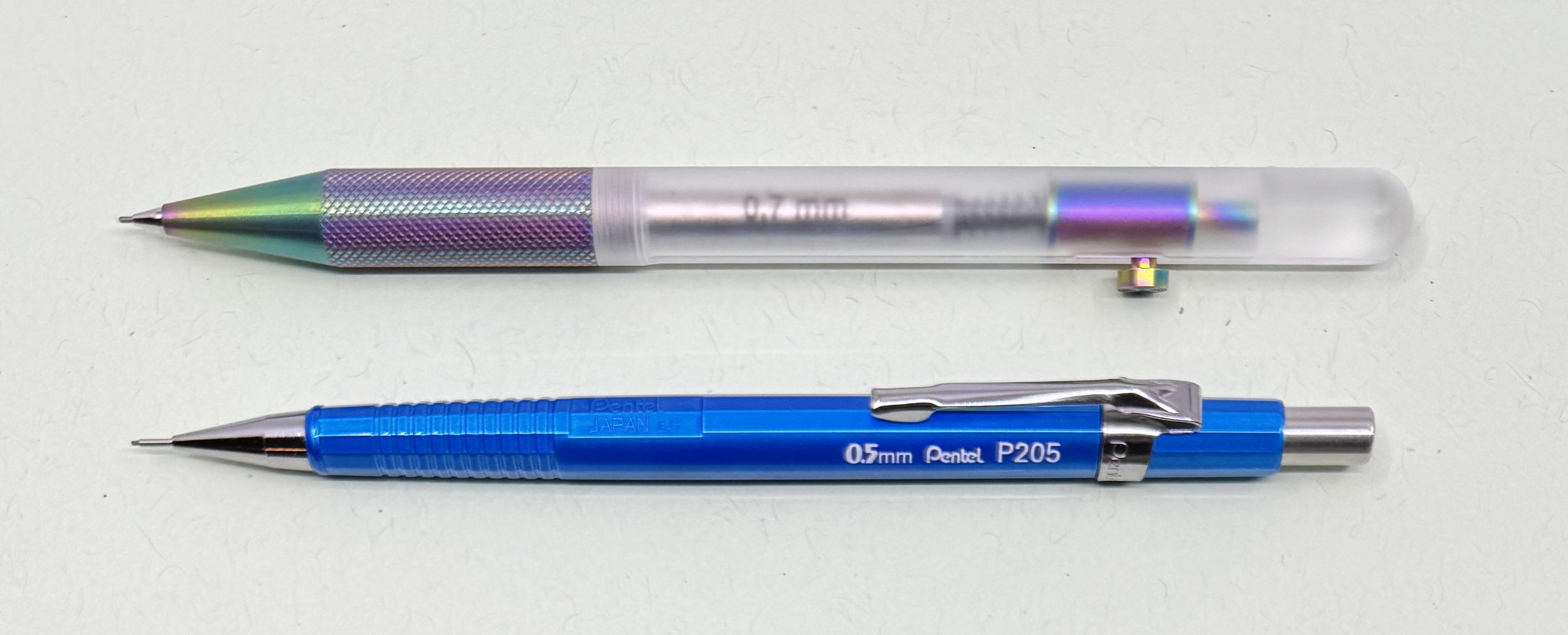
Pentel Sharp P205 comparison.

I also wonder if the aluminum model feels different, and more front balanced. It has a 23g total weight, versus 31g for the Polycarbonate model, so it’s likely. The Titanium model checks in at 33g, for reference. Aluminum may be the choice if you prefer 0.5 mm lines.

The Pulsar Polycarbonate looks amazing and feels great. It is built well, too, which is a Namisu staple. My only hangup is when do I choose to use it over any of my other favorite mechanical pencils?
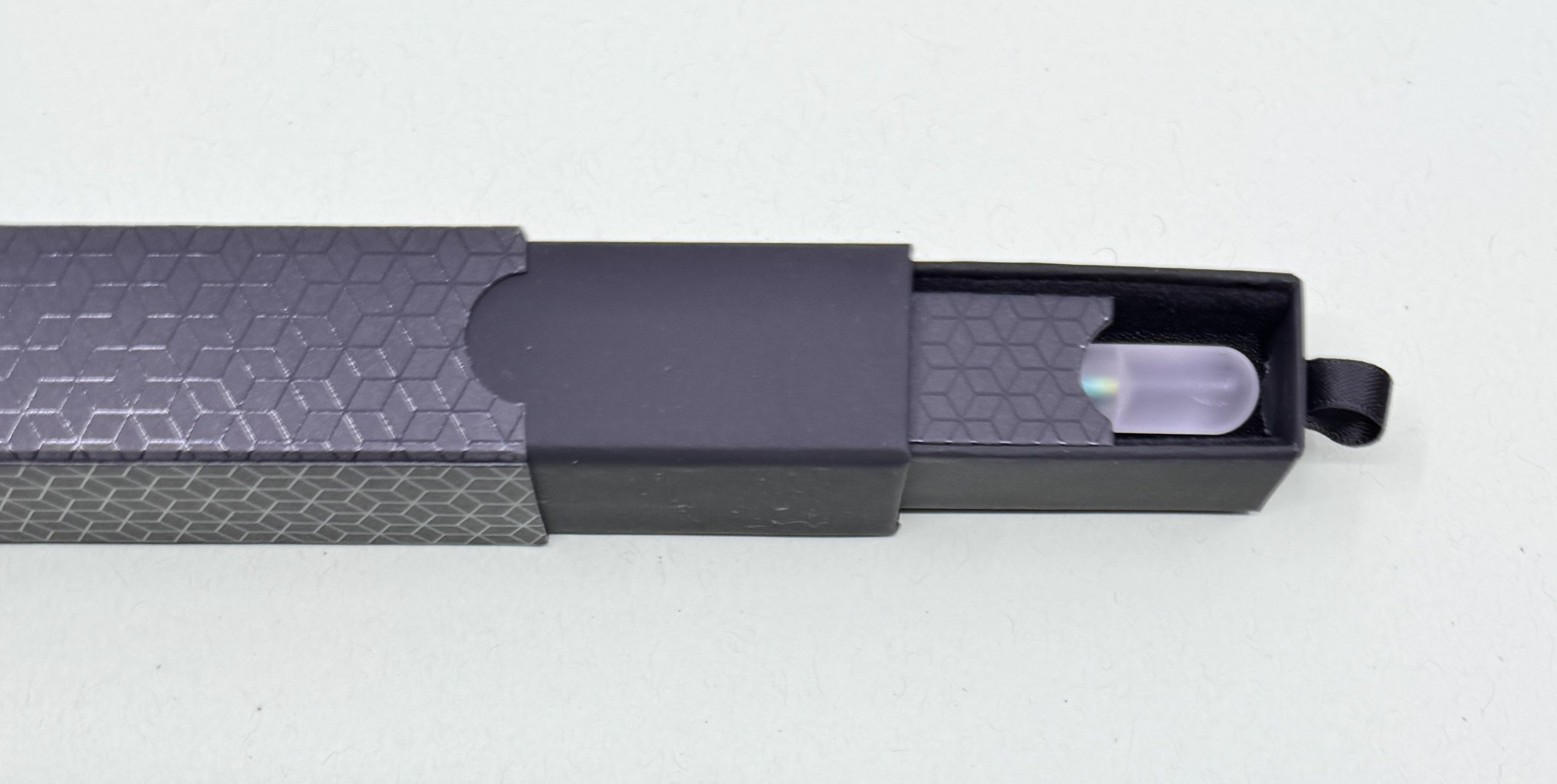
Nesting boxes.

During the Kickstarter campaign, I paid around $42 for this model. It is currently $58, with the Aluminum Pulsar at $55, and Titanium at $85. If the style is something you like, I would have no hesitation recommending this pencil. Just be sure to consider how you will use it to ensure that it is a good fit for your graphite writing needs.


Enjoy reading The Pen Addict? Then consider becoming a member to receive additional weekly content, giveaways, and discounts in The Pen Addict shop. Plus, you support me and the site directly, for which I am very grateful.

Membership starts at just $5/month, with a discounted annual option available. To find out more about membership click here and join us!
Posted on January 23, 2024 and filed under Namisu, Mechanical Pencil, Pencil Reviews.

Kokuyo Enpitsu Sharp 1.3mm Mechanical Pencil Review

(Jeff Abbott is a regular contributor at The Pen Addict. You can find more from Jeff online at Draft Evolution and Twitter.)

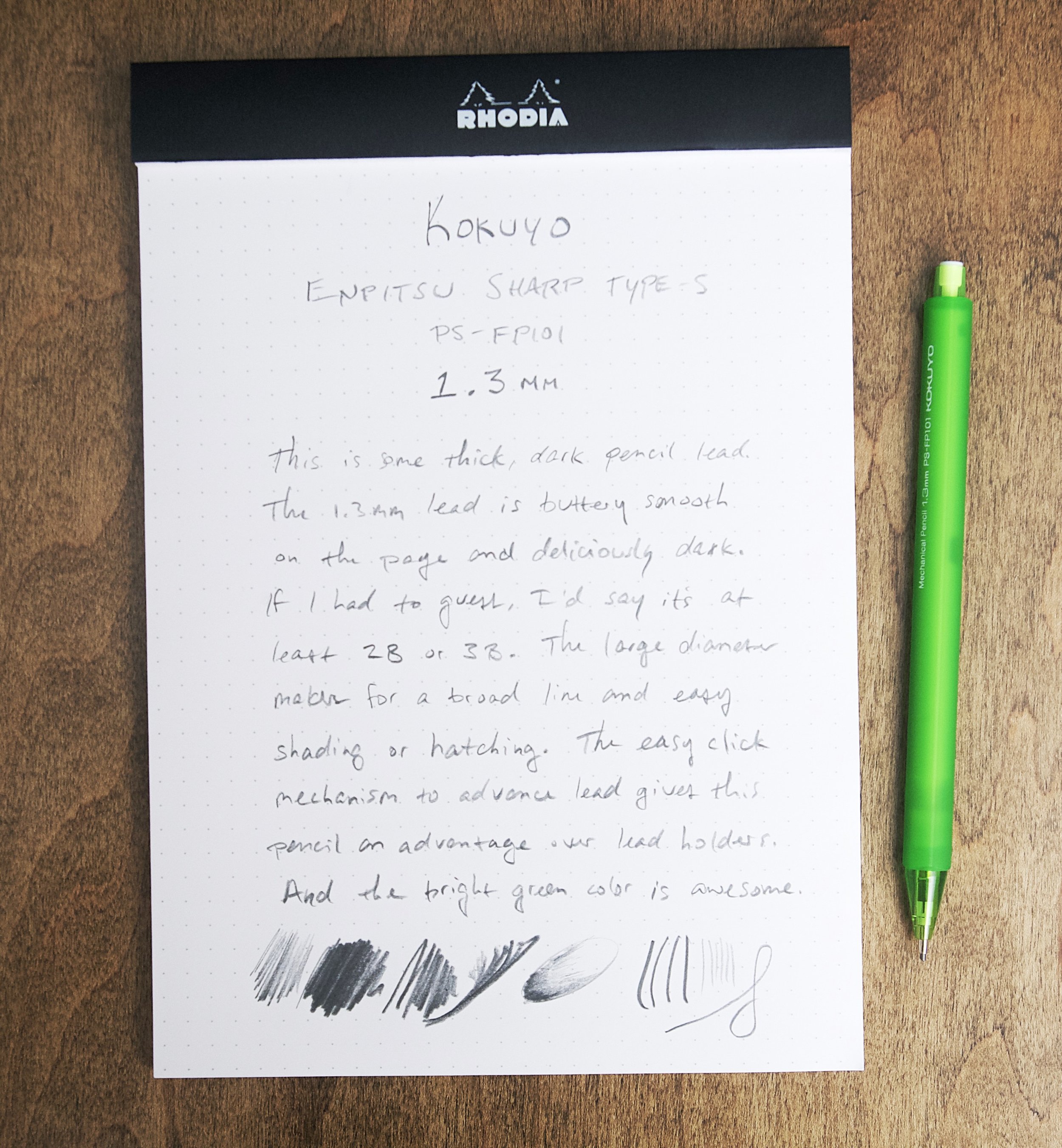
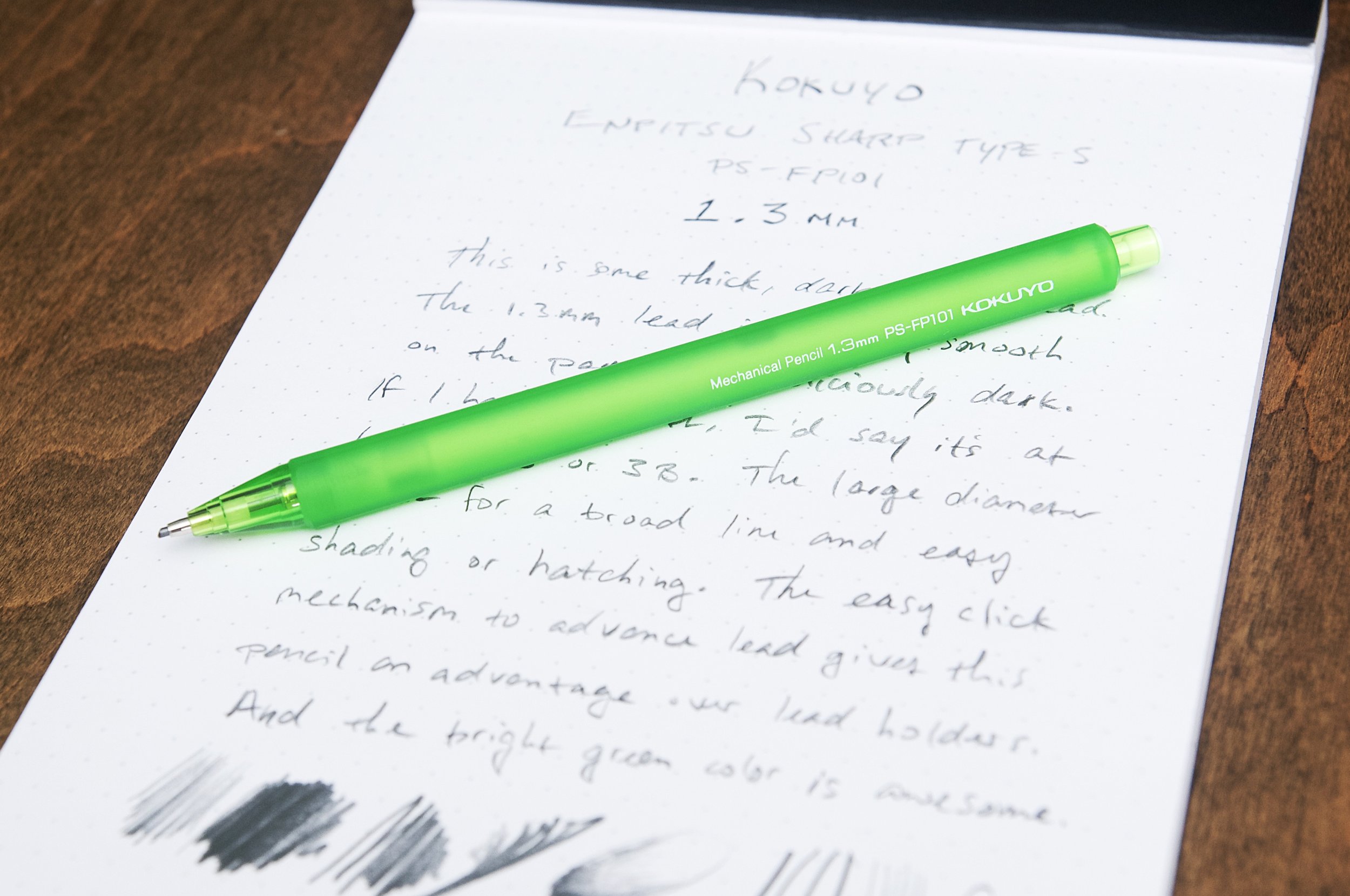
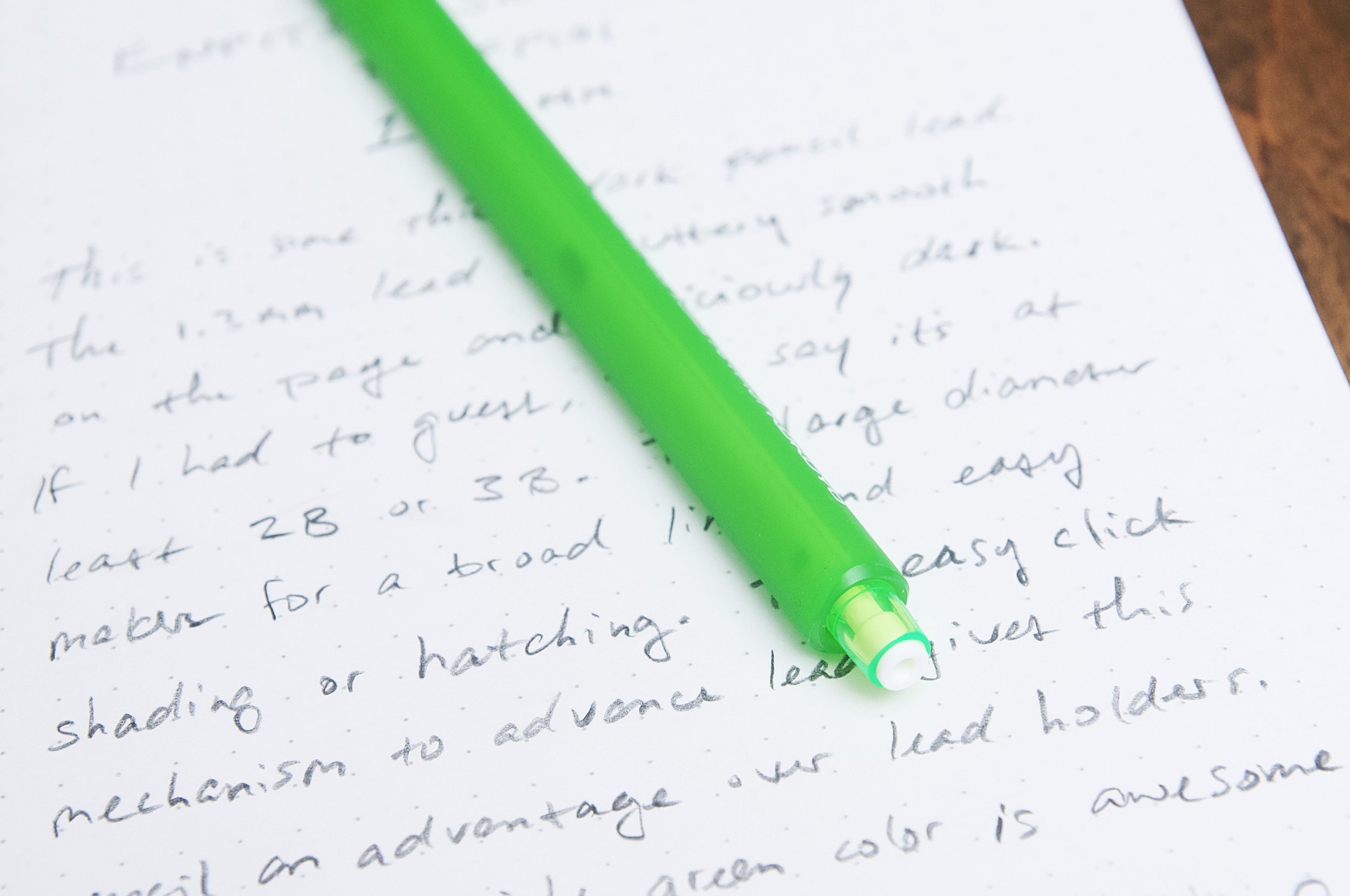
Before seeing the Enpitsu Sharp 1.3mm mechanical pencil from Kokuyo, I don't think I really knew that they made anything besides paper products. I really enjoy their paper, and I really can't pass up anything that comes in a bright, semi-transparent color, so this mechanical pencil was an instant want. I'm not even sure I noticed the lead size until I had the pencil in hand — that's how much I love anything that features a bright, semi-transparent color. To sum it up, the wide lead took some getting used to, but after settling in, this is a really comfortable and fun pencil.

Let's talk about my favorite part first — the color. Described as a yellow-green, this bright neon material is so good. It's slightly transparent and frosty so that you can see the components under the pencil barrel in blurry detail. It brings back memories of lots of different items I enjoyed in the 90s that took advantage of the bright, translucent plastic aesthetic of the time. I'll pretty much always pick something in this aesthetic over other options, and it's especially problematic if something is offered in multiple bright/translucent color options. For this pencil, it's quite simple — if you look at it and smile, then it will fit you perfectly. If you think it's garish or loud, then that's fine too — there are so many good pencils out there that will have a color option you love.

Due to the bright color, it can be a bit difficult to discern the slight triangular shape of the barrel, but it's there. Even though it's hard to see, your fingers can immediately sense the petit, soft corners that make up the three sides of the pencil grip. It's really well done and offers a bit more grip than a plain round barrel. For my grip, it feels fantastic when writing. On top of that, the barrel material feels almost porous. It's not soft-touch plastic, but it has a similar feel. Whatever it is, it provides great tactile feel and doesn't slip.

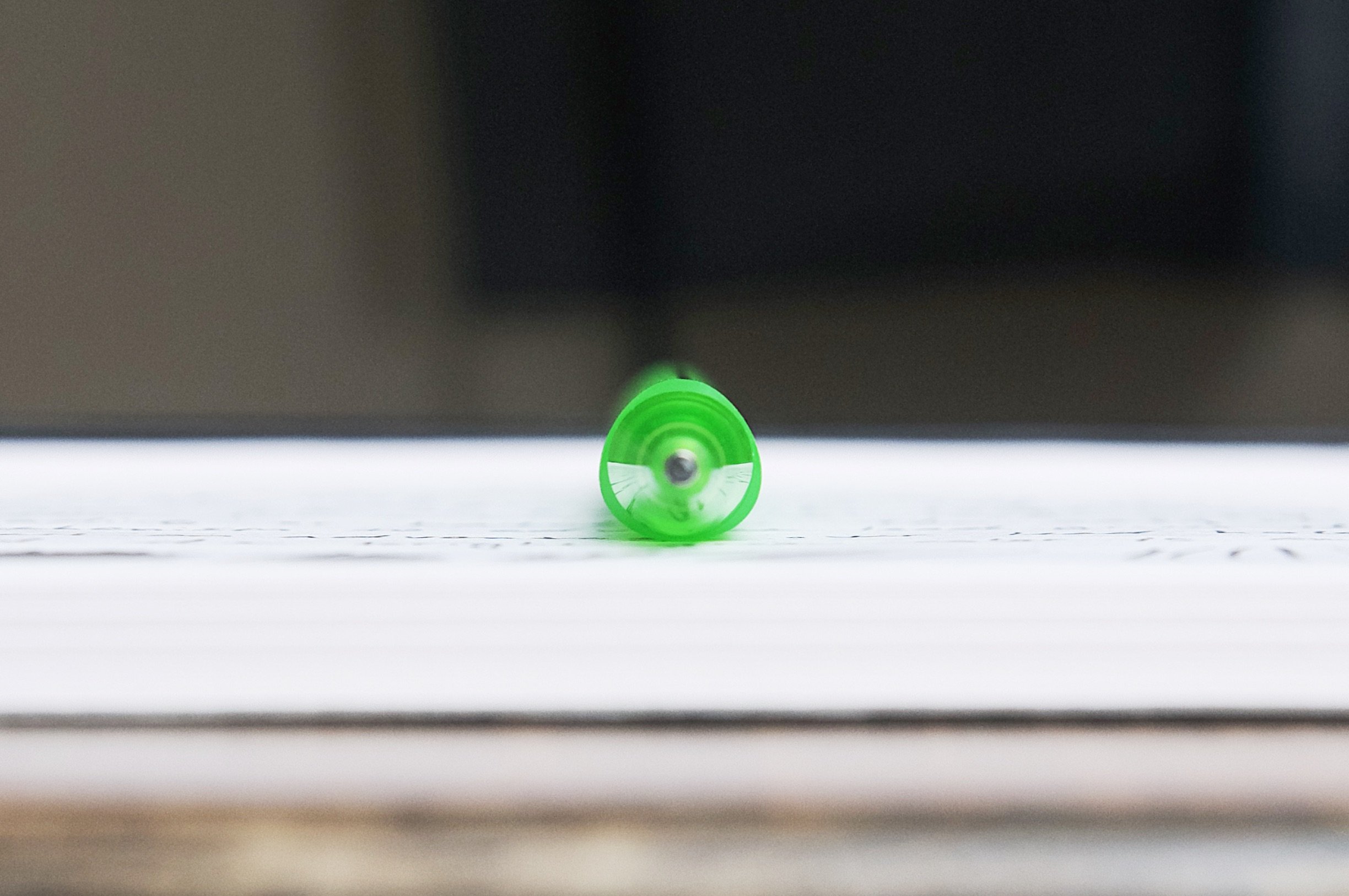
Something else that fascinated me about this pencil when I first looked it over is that there isn't a cap or eraser on the tail end of the pencil. Yes, it uses a click mechanism to advance the lead, but there aren't any removable parts or an eraser. Instead, there's a hole in the click mechanism that is just a hair larger than the 1.3mm lead that you can insert. Once you insert some lead, it feels like there's a gentle clutch that prevents the lead from coming back out, and I had zero success in trying to shake the lead out of the open hole in the pencil. Even if the stars aligned and the lead found the perfect trajectory to the hole, the small clutch mechanism would prevent it from actually escaping. I'm still fascinated by this odd design choice every time I pick up this pencil, and that's one of the reasons that I keep picking it up.

Getting to what I think is Kokuyo's main selling point for this pencil — the 1.3mm lead is wide. As someone who rarely uses 0.7mm lead because it feels too wide, this was a bit of a struggle to get used to. On top of the width, this lead is also extremely soft, so it wears down very quickly. If you're writing, your fingers will get a small workout as they continuously have to rotate the pencil to keep a usable edge against the paper. But, if you want a large writing surface for shading, hatching, or anything else that requires lots of dark graphite, this lead size and softness makes that an easy task. After getting used to the diameter of the line, I really have come to enjoy the dark, rich line that this lead produces. It's similar to writing with a wide rollerball refill that makes dark, crisp lines on the page. It's not my everyday preference, but I can certainly appreciate and enjoy it.

I really wasn't sure what to expect from this pencil. As I've stated too many times already, I only got it because of the color — and even if I never used the pencil, I'd still be happy to have it just as a decoration to look at. But I've been pleasantly enamored with the wide, rich lead and the quirky refill system that I keep reaching for this pencil over other pencils or even pens.

At $6, it's also an incredible value — especially if you know that you can really benefit from the wide lead option. For most mechanical pencils, 0.7 is the largest "easy to find" option, and 1.0mm can be had in limited supply. Anything bigger usually comes from a lead holder, but they're not as easy to use as a simple mechanical pencil. Again, this all comes down to how you intend to use a pencil or what you need from it. All I can say is that this $6 pencil has provided me with a lot more joy than I ever expected.

(Vanness Pens provided this product at a discount to The Pen Addict for review purposes.)


Enjoy reading The Pen Addict? Then consider becoming a member to receive additional weekly content, giveaways, and discounts in The Pen Addict shop. Plus, you support me and the site directly, for which I am very grateful.

Membership starts at just $5/month, with a discounted annual option available. To find out more about membership click here and join us!
Posted on November 15, 2023 and filed under Kokuyo, Mechanical Pencil, Pencil Reviews.

Little Pen Designs Acrylic Barrel Mechanical Pencil Review

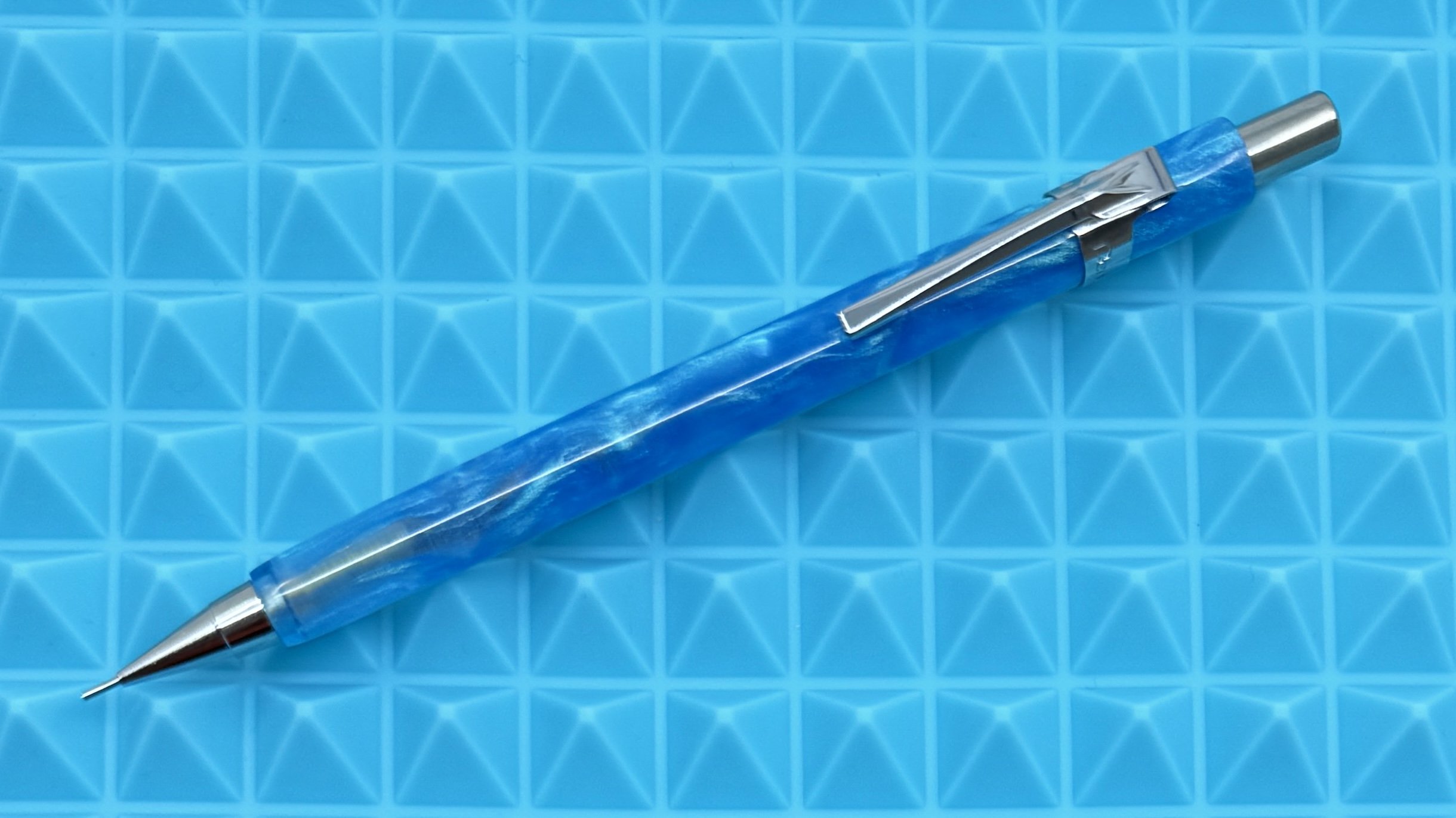
Joe Little, from Little Pen Designs, is a pen maker; casting many of his own barrel materials, and turning them on a wooden lathe into the finished products you see throughout his site, Instagram, and at pen shows. Not too long ago, he added another product to his lineup: mechanical pencils. Not just any mechanical pencils, though. These are mechanical pencils with barrels made from some of the same acrylics Joe uses for his fountain pens.

You had me at hello.

My mechanical pencil fandom began at a young age. They were the first writing instruments that were accessible to me that I could write small with. Not many pens in the 1980’s could match the lines of an 0.5 mm mechanical pencil.

At the time, my favorite was the Pentel Sharp, and it remains one of the best mechanical pencils on the market to this day. I’ve reviewed different models throughout the years, mostly with unique or limited edition barrels. Heck, I’m even part of a company that makes metal barrels for the same Pentel Sharp mechanism.

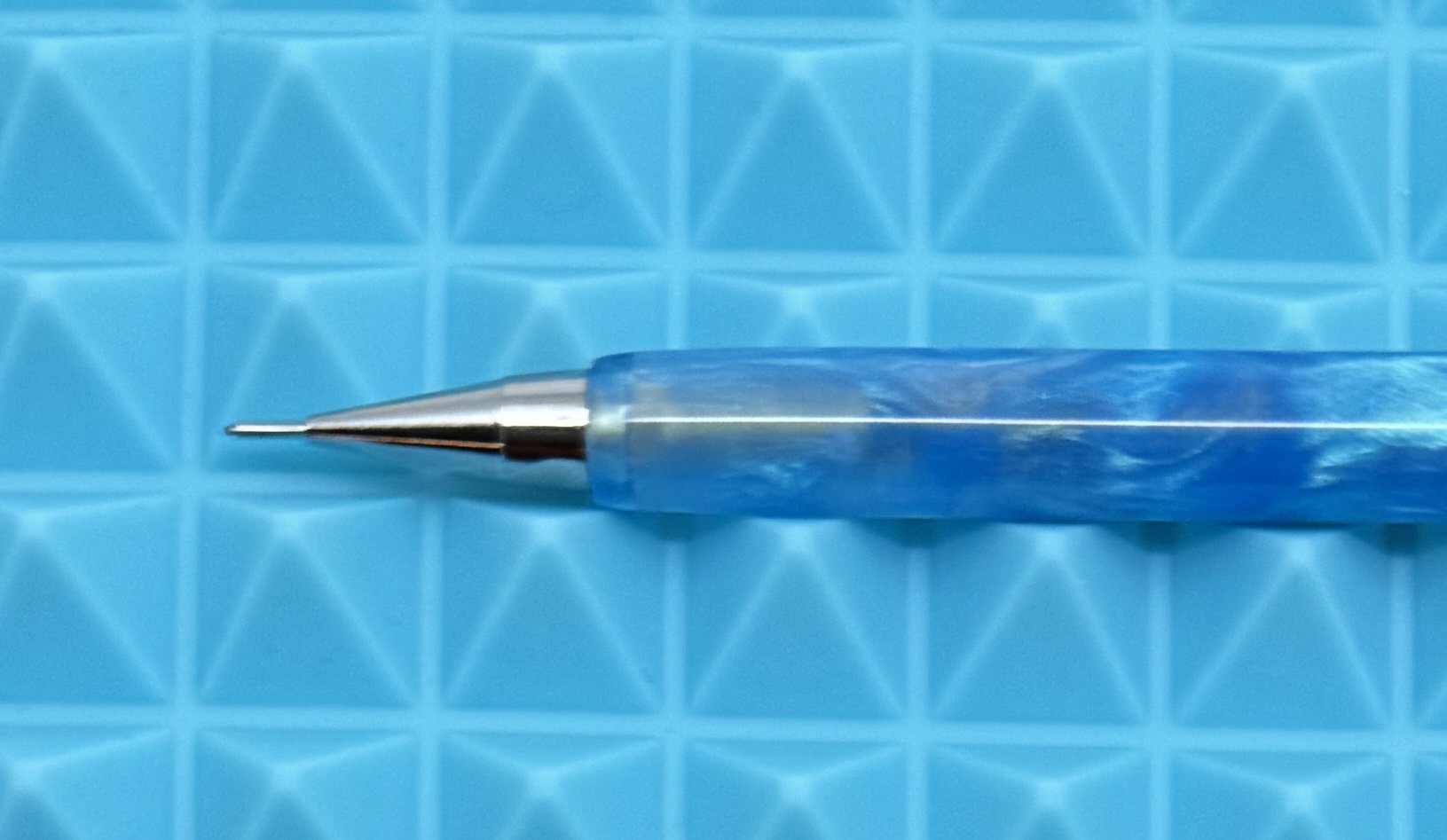
With Little Pen Designs, Joe has taken that same internal Pentel Sharp mechanism, and surrounded it with a thin, lightweight, colorful acrylic barrel. For a mechanical pencil fan like myself, these barrels add even more character to a product I already enjoy.

While a product review like this is rather straightforward, there is one pro, and one con, worth mentioning. On the downside, the grip area is smooth, and can be slick. It’s not much of an issue for me with light grip pressure on a light pencil, but I’ve noticed when my hands are dry my fingers move easily. On the plus side of the ledger, these pencils use the traditional Pentel Sharp clip. Joe turns the barrel slightly narrower in that area, allowing the clip to slide on easily.

Top to bottom: Pentel Sharp, Little Pen Designs, Spoke Design.

And that’s it. This is a full Pentel Sharp mechanical pencil, with an upgraded, fountain pen-like, exterior barrel. The only other downside is that I might cause Joe some problems reviewing this, as he doesn’t make too many of them.

There is only one in stock on his site as I type this, and I was lucky to grab mine when I saw it pop up on his Instagram. My Blue Nile model was $45, a price I’m more than happy to pay for a fun product like this. I’m not sure if the price varies depending on the material, but I imagine they are all in this range.

I love all kinds of mechanical pencils - from stock models to highly custom and unique versions - and I’m glad to add one of these Little Pen Designs models to my collection. It likely won’t be my last.


Enjoy reading The Pen Addict? Then consider becoming a member to receive additional weekly content, giveaways, and discounts in The Pen Addict shop. Plus, you support me and the site directly, for which I am very grateful.

Membership starts at just $5/month, with a discounted annual option available. To find out more about membership click here and join us!
Posted on October 9, 2023 and filed under Little Pen Designs, Mechanical Pencil, Pencil Reviews.