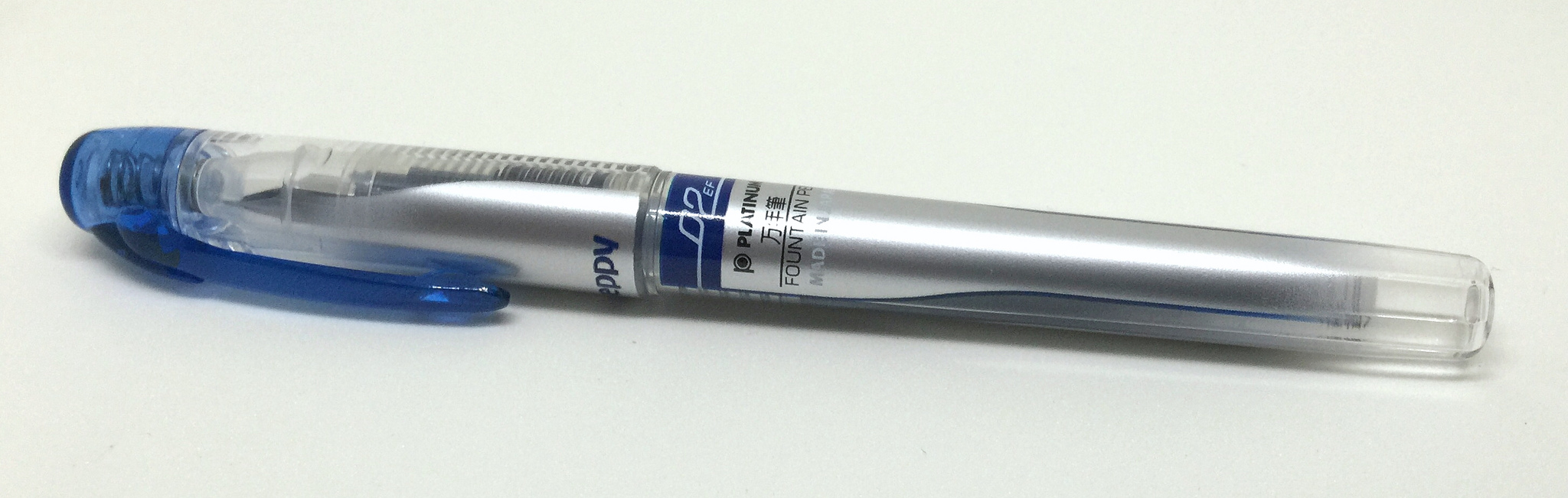
Platinum Preppy Fountain Pen 02 EF Nib Review

I'm making no bones about how much I like this refresh of the Platinum Preppy. From the moment I snapped in the ink cartridge and put nib to page I was impressed. More than impressed, I was wowed. I could not believe how nice the nib is on a $4 pen.

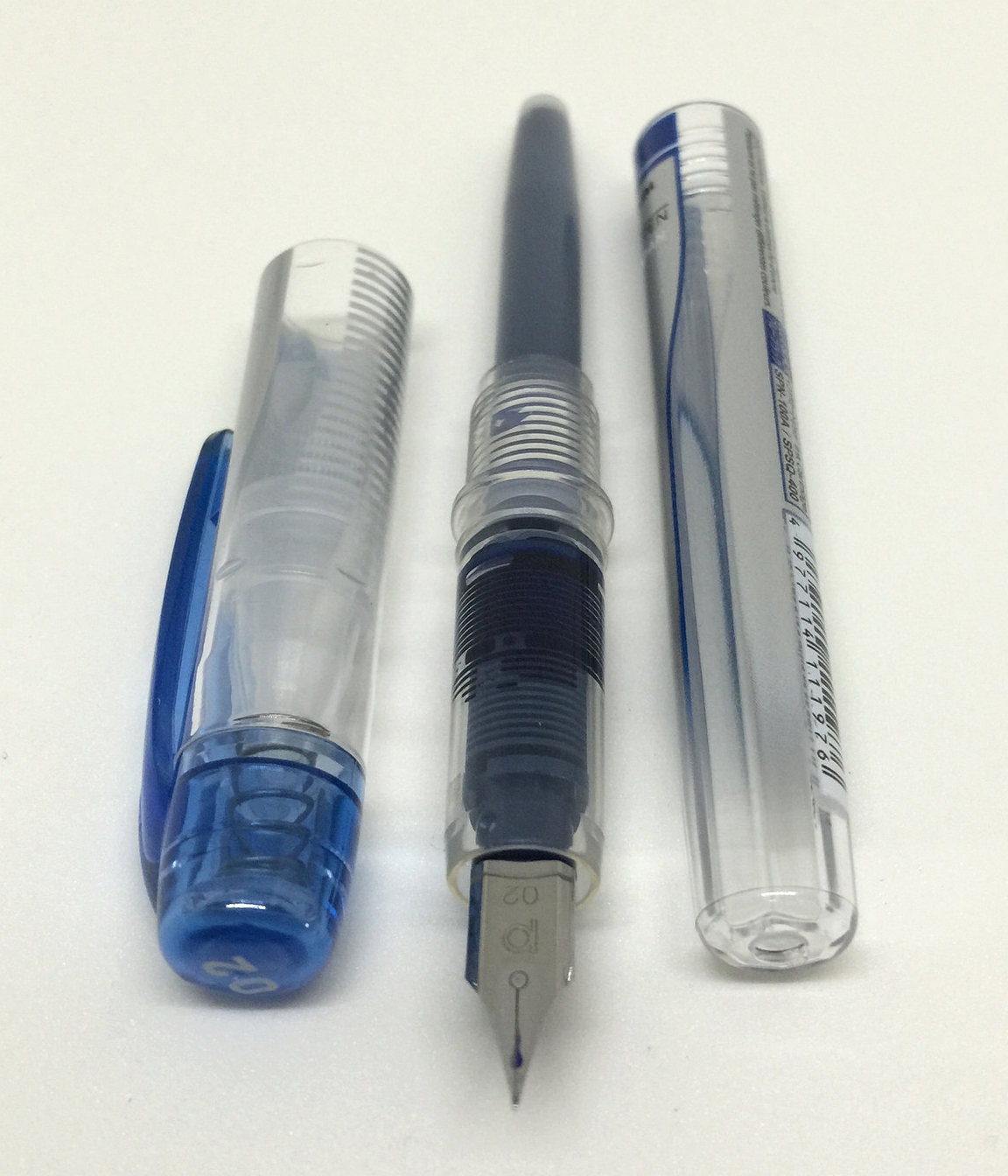
And this is no normal nib. Platinum calls it the 02, which is a standard Japanese EF nib. In the US, Japanese EF nibs aren't the easiest things to come by either. They are there if you dig a little, but most product lines start with fine, not extra fine. There is a reason for this: Japanese extra fine nibs are too fine for most people. I'd rather find that out for $4 not $100, wouldn't you?

Here is your chance to try one out on the cheap that will give you a comparable experience to much, much more expensive pens. I wouldn't buy a Pilot Vanishing Point with an EF nib if you are unsure you will like it. Same goes for a Sailor, Platinum, or any other Japanese pen. The nib in the Platinum Preppy compares to those in size and feel. Seriously. This is a spot-on, accurate match.

Maybe you'll discover that this pen will do just fine for you and don't need on of those more expensive models. If you like the Pilot Hi-Tec-C 0.4 or the Uni-ball Signo DX 0.38 you will like this pen. If you want to try fountain pens and have a nice clean writer that won't make a mess, you will like this pen. If you want a beater you can toss in the car or a bag, you will like this pen. If you don't like Japanese fine lines, you will not like this pen.

That's the only hangup. It's so sharp and fine it is not going to fit every writing style. It fits me, and it can answer questions many of you have about Japanese EF nibs. I'm enamored by this pen.

(JetPens provided this product at no charge to The Pen Addict for review purposes.)
Platinum Preppy 02 EF Review.jpg
Posted on January 19, 2015 and filed under Fountain Pens, Pen Reviews, Platinum, Preppy.

Three Questions With Harry Marks

Harry Marks takes the written word seriously, as you can tell by his writing at Curious Rat, and with Covered, his podcast described as a “conversation about books with the people who write them.” My thanks to Harry for answering Three Questions.

1. What role do analog tools such as pens, pencils, and paper play in your day to day life?

I view analog tools as life preservers on a digital current. There are new social networks and services popping up every day and whenever one starts to gain traction, I think, Is this necessary? Is it useful to me? More and more, I find myself immediately answering, “No.” My notebook will never be bought by Google. My pen doesn’t need VC funding to keep running. My typewriter doesn’t have to worry about being “the Uber of words.” I’m simplifying my life with analog tools. Simple is good. I hope to increase my use of analog tools this year by hand-writing more letters to friends and keeping correspondence via post instead of email or Twitter.

2. What are your favorite products you are currently using?

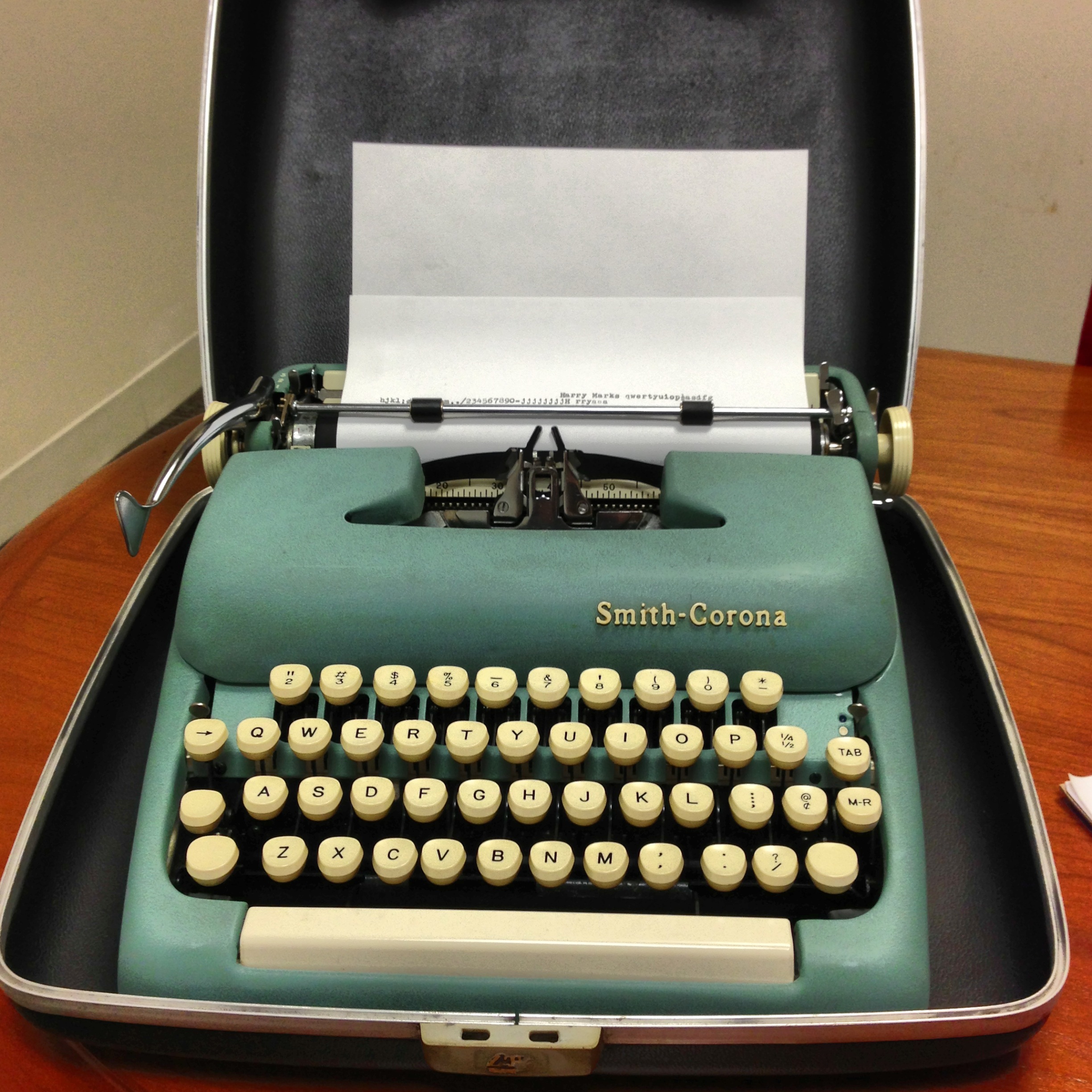
Right now, I use a Midori Traveler’s Notebook as my reading journal and general keeper of random notes (which are kept nice and even thanks to line guides from The Well-Appointed Desk). I like to transcribe passages from books I’m currently reading that I find particularly beautiful or resonate with me. My pen of choice is the 0.3mm Pilot Hi-Tec-C, which I used to write the entire first draft of my last novel. I wrote the book in a large Moleskine notebook, but I’ve got a brand new Baron Fig Confidant on my desk just waiting for my next one. I’m hoping to get into Tomoe River Paper soon - there’s a small online shop that makes Traveler’s Notebook-compatible Tomoe notebooks. When I’m not writing my fiction by hand, I’m drafting it on my trusty Smith-Corona typewriter from the 1950s. I love that beast of a machine.

3. What post are you the most proud of on your blog?

My essay on the 2014 BookCon is the post of which I’m proudest. The cohost of one of my favorite podcasts, Books on the Nightstand, read it and tweeted back to me, "LOVE your post; full of awesomeness. If that's any indication of your novel in progress, close your twitter and get to work!” which is exactly what I did. The kicker? She’s a sales person for Random House, so she reads A LOT of books and her compliment carries a lot of weight for me. Ever since I moved away from reporting on tech and focusing more on books and writing, I’ve become happier with the quality of the content I share, as well as the writing I post to the site.

Posted on January 17, 2015 and filed under Three Questions.

Pelikan Classic Series P205 Cartridge Fill Review

Image via Goldspot.com

Image via Goldspot.com

The best way to get someone interested in fountain pens is to make it as easy for them as possible. And give them a nice pen. The Pelikan Classic Series P205 accomplishes both of those things.

It’s widely known how much I enjoy my piston filling Pelikan Traditional M205, and the new P205 is practically a carbon copy, minus the piston filler of course. As I alluded to earlier, this is a matter of convenience, and the P205 pulls it off without a hitch. Did you expect anything less from Pelikan?

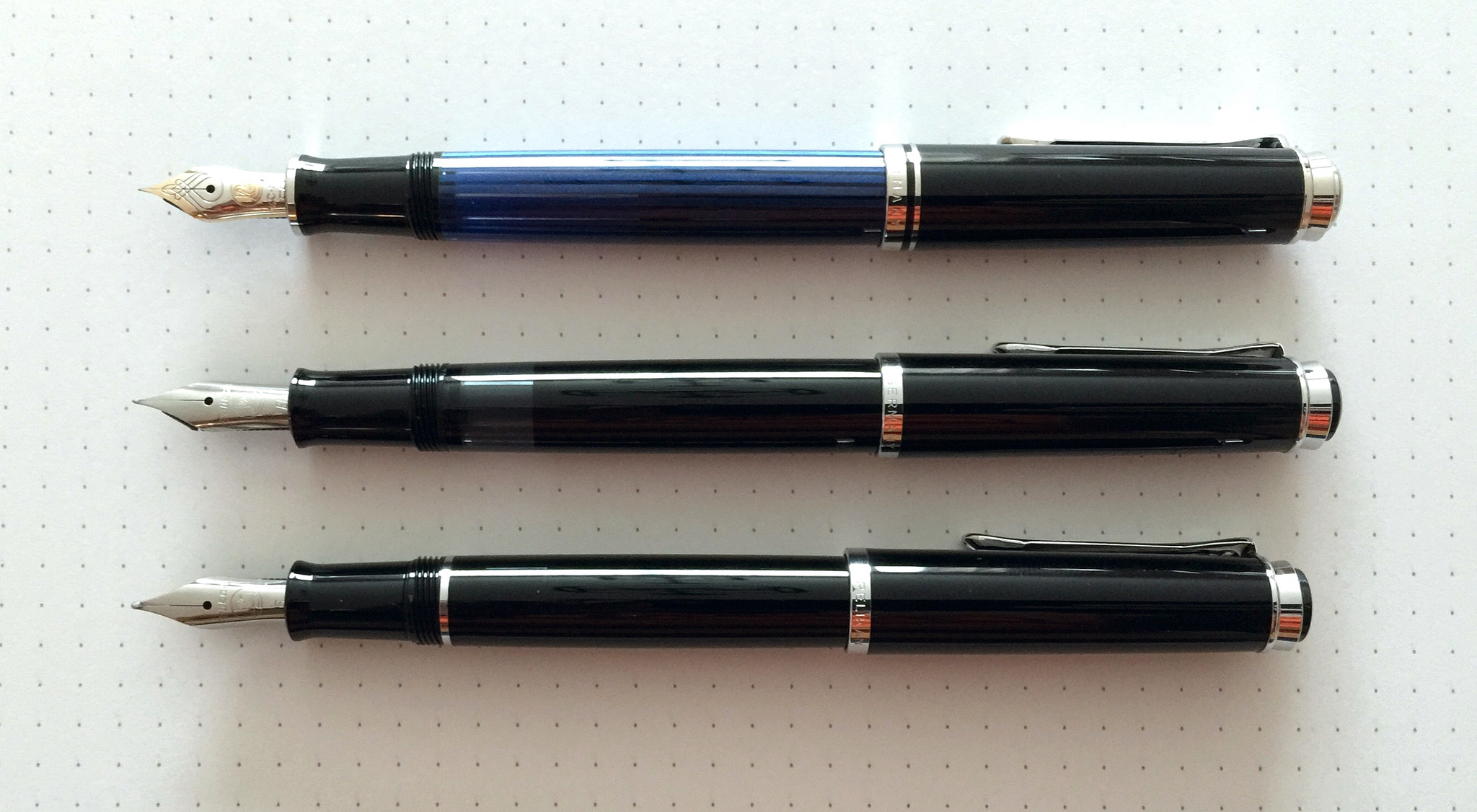
Let’s start with the barrel design. It is Pelikan through and through. While their designs aren’t flashy, they are recognizable. The sleek, simple design is German engineering at its finest. The Pelikan beak clip is a standout, and the logo on the cap is a timeless tradition. Everything related to the build quality of this pen, and any Pelikan for that matter, is spot on.

From top to bottom: Pelikan M405, M205, P205

From top to bottom: Pelikan M405, M205, P205

That translates to the nib as well. I went with a broad nib for something different and it is as clean and smooth as one would expect. I’m turning the corner on wider nibs too, as they allow for an ink expressiveness that you don’t get in extra fine nibs. The steel Pelikan broad nib is a prime example.

The cartridge filling system in the P205 (P is short for Patrone, the German word for cartridge) is the selling point of this pen. Many will ask why they should forego what is deemed as a superior filling system in the piston filler, and it all comes down to convenience. Fountain pen users, even experienced ones, sometimes want to pop in an ink cartridge and go. The P205 allows you to do just that, and in a beautiful barrel to boot.

But let’s be clear about one thing: Pelikan is no fool. They introduced this pen in conjunction with their new high-end Edelstein ink cartridge line. And I say good for them, because Edelstein inks are some of my favorites. The written review uses the Sapphire Blue cartridge, a bright blue that pops off the page, and I have enjoyed using Tanzanite and Topaz cartridges as well. All are top notch. They use the international sizing standard too, so other compatible cartridges and converters fit as well.

Pelikan is a premium brand. While there may be pens that offer more for less, there are few brands that can match the form, feel, consistency, and quality of a Pelikan. This is one of those pens that when it is in your hand you can feel the difference between it and other brands. The P205 and Edelstein ink cartridges are great additions to the product line and I look forward to years of use with this pen.

(Goldspot Pens provided this product at no charge to The Pen Addict for review purposes.)

Posted on January 16, 2015 and filed under Fountain Pens, Edelstein, Pen Reviews, Pelikan.