(Kimberly (she/her) took the express train down the fountain pen/stationery rabbit hole and doesn't want to be rescued. She can be found on Instagram @allthehobbies because there really are many, many hobbies!.)
Hang around the fountain pen hobby long enough and inevitably someone will ask about finding an inexpensive flex fountain pen option. And the answers will usually range from “it doesn’t exist”, or “nothing beats vintage flex” (with no explanation as to which vintage pens/nibs have flex), or “you can try XYZ brand but it’s not very flexy” or “cram a Zebra or Nikko G nib into a cheap pen until it rusts and you throw it out the window”. Any of these sound familiar? As someone who kinda sorta knows how to use flex (taking intro to Spencerian and Copperplate courses means I’m an expert, right? I kid, I kid.), it can be a frustrating experience trying to find something that actually is flexy and not just bouncy at best.
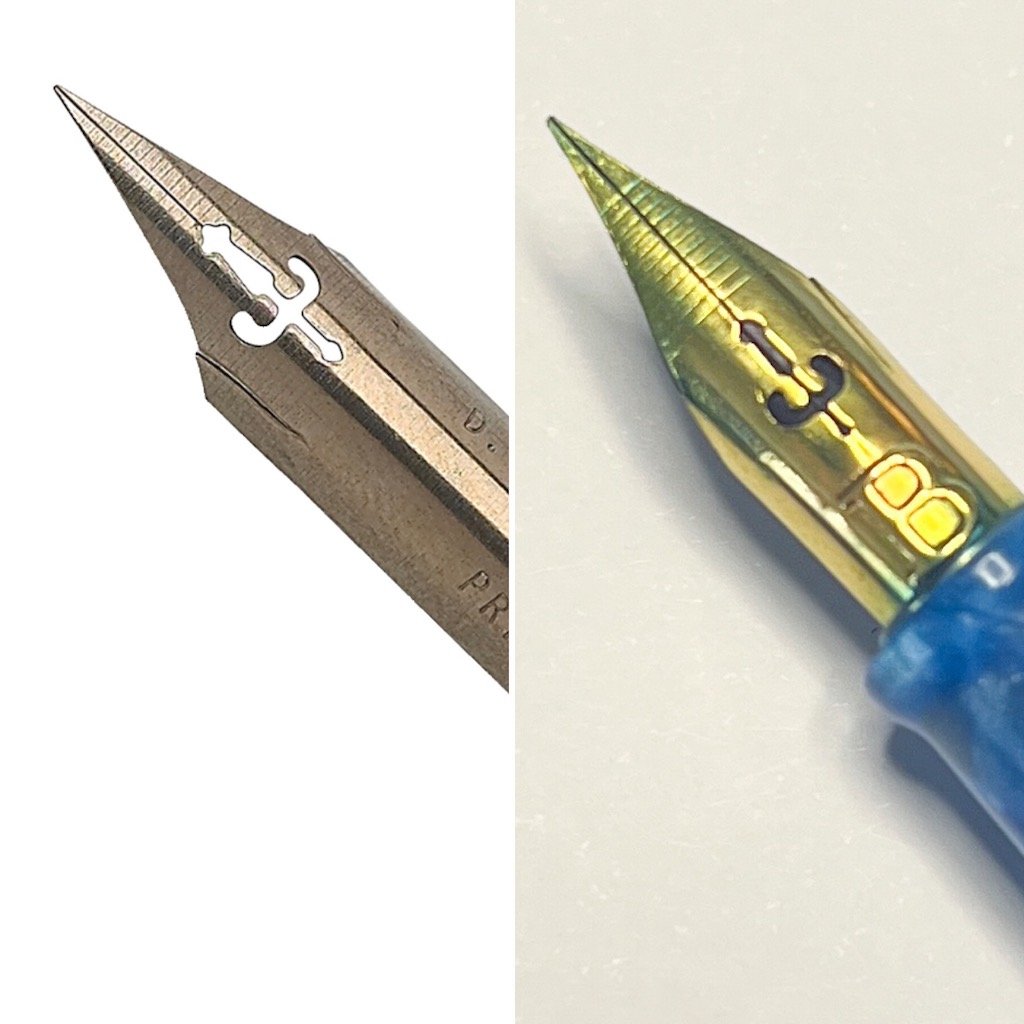
Before I go any further though, here’s a quick explanation of “what is flex” (which is from my article on Stylosuite Flex Nibs - Flex is what you get when applying pressure to the tines of the nib. The separation gives a wider line than what you’d normally get when unflexed. Most nibs are not meant to be flexed but they may vary in how much “bounce” you might get when applying a little bit of pressure. Releasing that pressure allows the tines to go back together and write as normal. Apply too much pressure and your tines may never fully go back to their original position and your nib is now “sprung”. As they say, every nib is a flex nib … once. So, don’t ever press your luck too far with any nib, flex, dip or otherwise.
Dip nibs require the user to dip the nib into ink before writing a few letters/words before dipping it again. Some of the drawbacks include the tedium of constant dipping, potential messiness if you knock your bottle, or inconsistent ink flow in your writing if you dip too much/too little. Some of the vintage fountain pens have varying degrees of flexibility in their nibs (note that not all vintage pens have flex nibs) but it does require a bit of knowledge as to which makers and nibs were flexible. Modern fountain pens have had some success with bouncier/softer nibs which can give some line variation. An example is the 14kt gold Pilot FA nibbed pens like the 742/912 and 743/823 (size 10 being a bit softer/flexier than size 15), or the Pilot Falcon, which are pretty good options but they aren’t inexpensive (~$150 - $300). There are also steel nibs that are a cheaper option but usually don’t have very much flex - usually somewhere between slightly bouncy and semi-flex. This is where BlueDew comes in. BlueDew Pens is a Singaporean company founded with the goal of creating an affordable, portable option for folks who wanted to work on their calligraphy without the hassle of dip nibs or the mystery of vintage. Let’s see if it measures up.
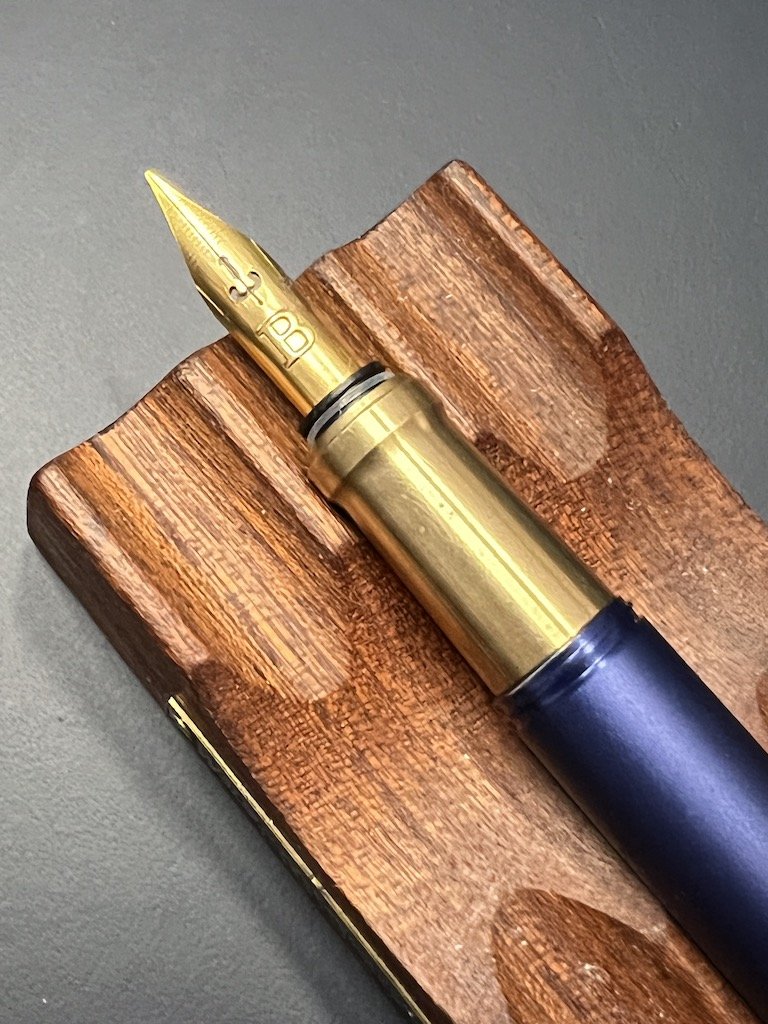
The BlueDew Flex fountain pen ships in a padded envelope with a single pen case inside. I love that there are no additional boxes or packaging that I have to deal with. The case has a magnetic flap and the bottom of the case is nicely padded so you don’t have to clip the pen to the case. I like that the branding is subtle. The textured case has since been discontinued and replaced with a smooth material instead.