Posts filed under Fountain Pens

Sailor Young Profit: A Tale of Quality Control

(Jeff Abbott is a regular contributor at The Pen Addict. You can find more from Jeff online at Draft Evolution and Twitter.)

In a perfect world, every fountain pen would be created equally and would write with flawless beauty from the very beginning. Alas, the world is far from perfect, and not every pen is perfectly tuned out of the box. It's a shame, really. Besides, the problems that new pens have out of the box are normally due to the nib and feed system that's so fascinating in the first place. It's an imperfect system, and errors occur. Luckily, they're usually not very difficult to fix.

But, on the other side of the coin, it's a hassle to ink up a new pen and have it act like a spoiled toddler on the page when first writing with it. Maybe it's just me, but I've had really sour luck with the $50-$100 range lately. The past three pens I've bought from a particular brand have been scratchy, dry, and skippy. Not only until after I did some basic tuning were they really usable. I'm glad that I could tune the pens, and I even enjoy it sometimes, but not when it's a brand new pen.

If Lamy and Kaweco (and many others) can make sub-$50 pens that write beautifully out of the box, I don't understand why others can't do the same with more expensive pens. (Lamy and Kaweco can certainly be guilty of this.) It's the age of mass production that causes the issues, I'm sure. If you buy an Edison pen, it will definitely write flawlessly from day 1, but that's because it's been hand-tuned before it's shipped out. It's unique and hand-made with care. Same goes for a Nakaya and other premium brands. Once you start mass producing something, the law of diminishing returns steps in and dictates that "good enough" quality control is a fair trade-off for selling in bulk. So it goes.

Why the rant? Well, because Sailor.

I really want to love the brand. They make some beautiful pens. My first fountain pen was a Sailor High Ace Neo, and luckily it wrote like a champ from the beginning.

Since then, I've purchased three other Sailors: the Lecoule, a Fasciner, and now a Young Profit.

Each of these pens have been imperfect writers from the beginning. In each case, the tines are too close together and/or angled poorly. Some tine adjustments and nib smoothing is all that's needed, but I think that shouldn't be a requirement for a new pen. Imagine if someone new to fountain pens purchased their first pen and had that experience! The Bic Crystal would look pretty good after that, thanks to modern engineering, etc.

They all write great now, but they still carry that bad first impression around.

The point in all this is simple. I'm just not sure that it's worth spending more than $50 or $60 on a fountain pen. In my experience, the pens that cost double that still have the same quality control issues. Only when you jump up to the next notch can you expect (mostly) to avoid the QC issues in the intro level. But $150+ purchases are more rare because of the cost barrier. With hard-hitting players like the Pilot Metropolitan, Lamy Safari, and Kaweco Sport lines, it's hard to recommend something more expensive (apart from TWSBI because they're awesome).

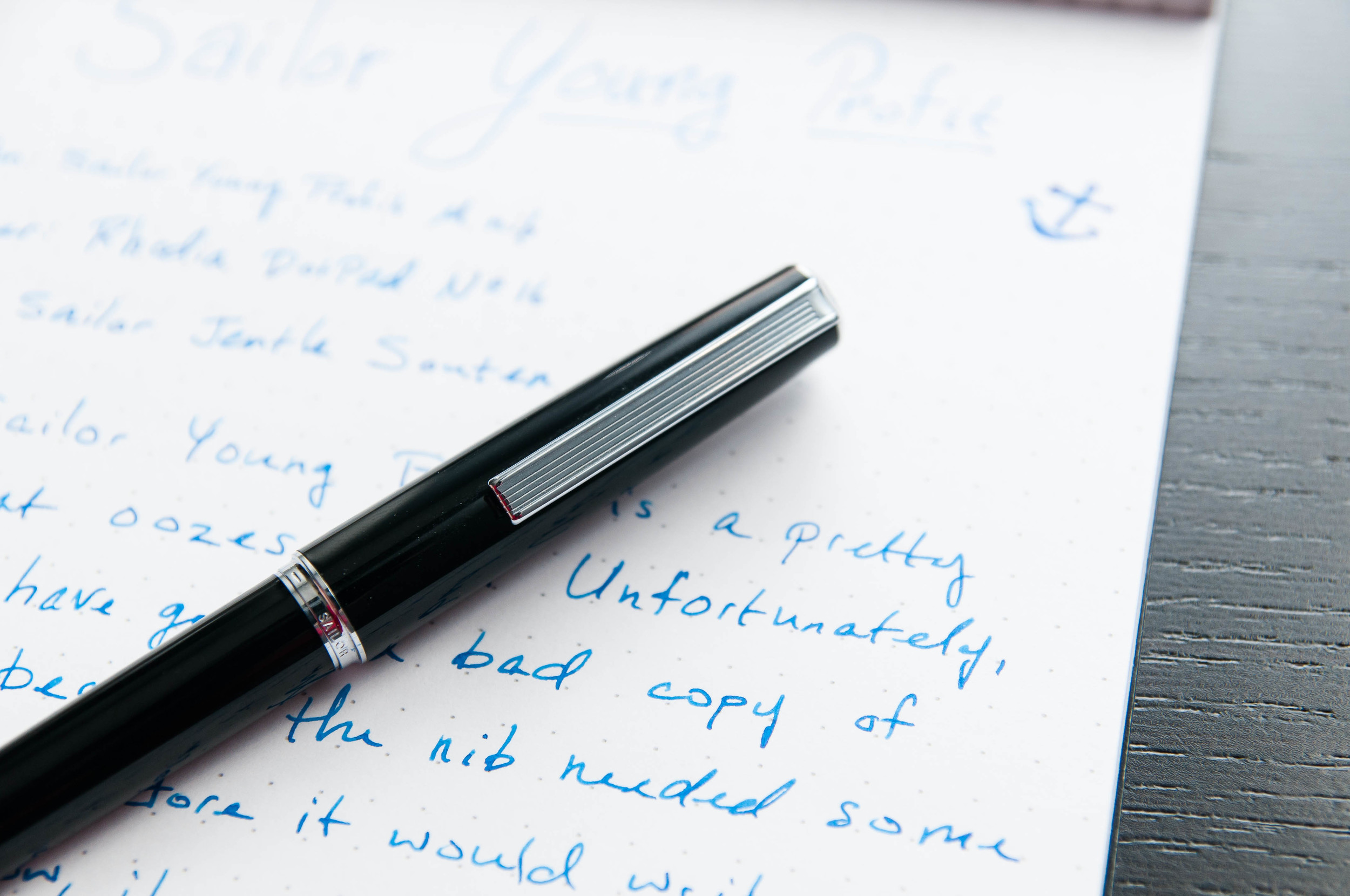
Back to the Sailor Young Profit. It's actually a pretty nice pen once you get past the flaky nib! Let's take a closer look at the outside.

I grabbed a black/silver version when they first appeared at JetPens because I wasn't a fan of the gold furniture. I went with a medium nib this time — based on past experience, Sailor runs small and I wanted to try something with more line width. The medium is a great size for me. It's comparable to a German fine nib (even on the small side of fine).

The body is plastic, which is something I don't like. I have other plastic body pens that cost about the same, but the Young Profit feels a bit cheaper than those. It doesn't feel brittle, but just doesn't have a quality feel, and let's face it: how expensive a pen feels in your hand is an important aspect that speaks to the quality.

The body is fairly slim and can actually get a tad uncomfortable for me when writing for long stretches. The grip section is plastic as well and there's a small ridge at the very end of the grip where it meets the feed. None of the grip features get in the way of my grip, but we're all unique.

The nib looks very classy and has some beautiful etching that's in line with the Sailor brand. The internal parts of the pen are solid and make me feel better about the overall quality of the parts that went into the pen.

It's a pretty pen that oozes class.
As for writing, I'll describe how it writes after the tuning. Before the tuning, it was dry, skippy, and scratchy.

The nib is extremely smooth and glides across the paper. Like I said earlier, the line width is similar to a small German fine nib. The ink flow is a tad dry for my tastes, but it works just fine and can keep up with swift strokes.

There's not much feedback in the nib, even on rough paper like the Baron Fig notebook. Paper like Mnemosyne or Tomoe River feels like velvet on glass. It's really nice.

The nib behaves very well and is a pleasure to write with. The only problem I've had so far is the slim width of the grip — makes it uncomfortable after 10 minutes of use.

Not exactly your average review, but I doubt my experiences with these nibs are isolated. I'm also not sure what to do about the situation except to vote with your money. For me, fountain pens are part hobby and part utility. Sometimes you try things you don't like, but you always have your faithful tools that always get the job done and manage to bring delight to menial tasks like writing lists and thank you notes.

As for the Young Profit, I can't recommend it purely because of the lack of value it offers compared to cheaper pens on the market. The High Ace Neo is a fantastic pen that packs a ton of value. In the Young Profit's case, the price doesn't justify the means.

(JetPens provided this product at no charge to The Pen Addict for review purposes.)

Posted on February 11, 2015 and filed under Fountain Pens, Sailor, Pen Reviews.

Nakaya Portable Cigar Ao-tamenuri Fountain Pen Review

No typed review will ever do a Nakaya justice. Neither will pictures, or handwriting samples. I've sweated over this review because, while I have reviewed a Nakaya before, this was my first Nakaya purchase. My very own. And it was worth every penny.

Let's get the specs out of the way right up front. I made my purchase from Nibs.com, choosing the Portable (barrel style) Cigar (clipless) Ao-tamenuri (finish color) as seen here. The base price is $650, with a $50 add-on for a rhodium plated nib, and another $55 to have the fine nib ground into a cursive italic. So I am $755.00 into this pen. Whoa.

If you have heard me on the podcast talk about this pen, you will know that price wasn't my main consideration in making this purchase. Yes, it is the most I have ever spent on a pen, but I had been saving for months and months before pulling the trigger. I was more concerned about being comfortable using the pen outside the comforts of my desk at home where I am less likely to break or lose it. If I am paying this much for a pen I sure as heck want to use it.

The usage part was a mental hurdle I had to overcome. The more familiar I had become with fountain pens over the years, including both usage and maintenance, the more I felt comfortable with the idea of owning a Nakaya. I was convinced I was fine with tossing it in my pocket or bag (in it's kimono, of course) and hitting the road. I'm happy to say I've found that I am willing to take my Nakaya and use it anywhere and everywhere.

A perfect example is the Fodderstack Fall Festival we held at Nock last year. We planned on doing some pen testing and a pen swap, and I made sure to bring my Portable to the event. Why? Because I love this pen so much I want to share it and let others be able to try something out they wouldn't normally be able to. It was a hit for sure, but even as I was passing it around there were people that were scared to take it from me! I'm persuasive though, and I enjoyed being able to get this pen in as many hands as possible.

I tell this story because there is an aura around Nakaya pens that they are museum pieces made to be coddled. There's nothing wrong with that, and yes, if for some reason I ever have one of the several thousand dollar models in my possession I may feel the same way. But this pen, as with any pen, is made to be used. It's a refrain you've heard a thousand times, but it's the truth.

And I use the heck out of this pen. It's probably my most used pen since I purchased it last spring (I should probably track these things), keeping it inked at all times aside from a day or two of downtime between cleanings.

The Portable barrel size fits my hand perfectly. When I first got it, it felt shockingly light, and at 22.2 grams it is, but after constant use it feels normal if that makes sense. I don't notice the weight at all. That is a big feature because my hand never gets tired when writing. My grip pressure remains light, and my strokes flow like a brush.

As I talked about in the written review below, Nakaya nibs are unlike any other nib I have used. They are smooth, with a hint of feedback. It's almost a hum-like feeling when you are writing. You hear it more than you feel it. If you have ever used a Platinum nib they are somewhat similar, which is expected as the companies are related. The cursive italic grind I had put on it is very fine with just a hint of line variation, which is perfect for my standard writing style.

I feel like I could go on and on about this pen, but at the same time I feel like I haven't said anything in this review. Nakaya's aren't about numbers or specs. Nakaya's are about feel, and about storytelling. They are different in a way that words cannot do justice. I hope I did my Nakaya Portable justice in this post, and I hope everyone can at least take one for a test drive someday. If you ever meet me in person I'll be happy to let you take mine for a spin.

Posted on February 6, 2015 and filed under Fountain Pens, Nakaya, Pen Reviews.

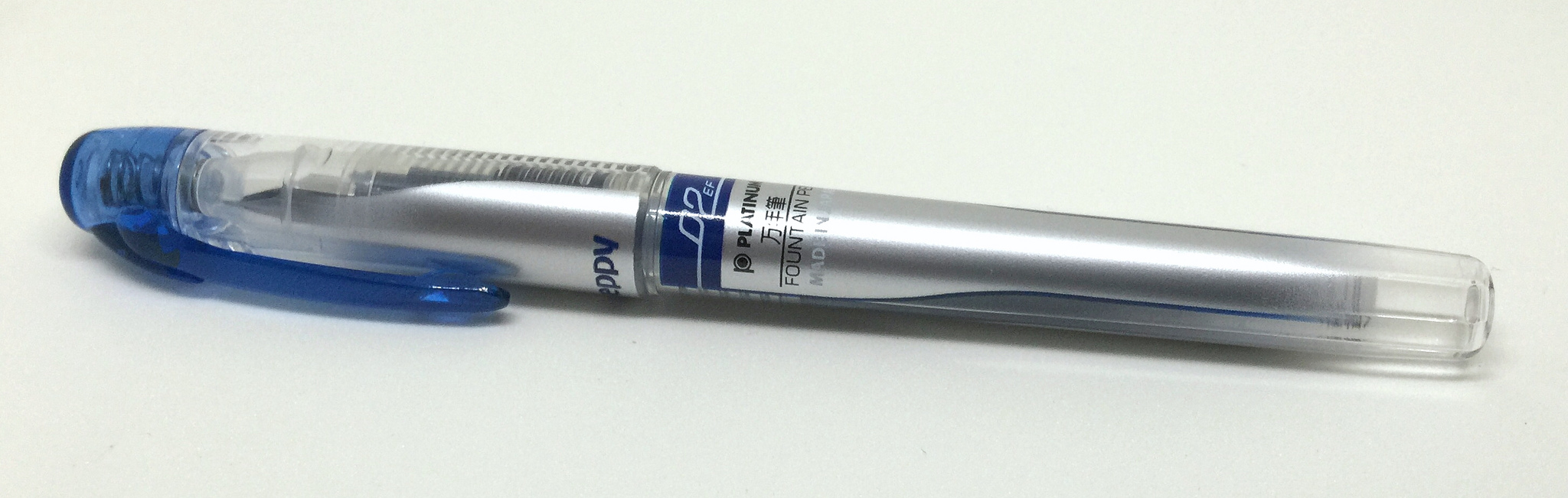
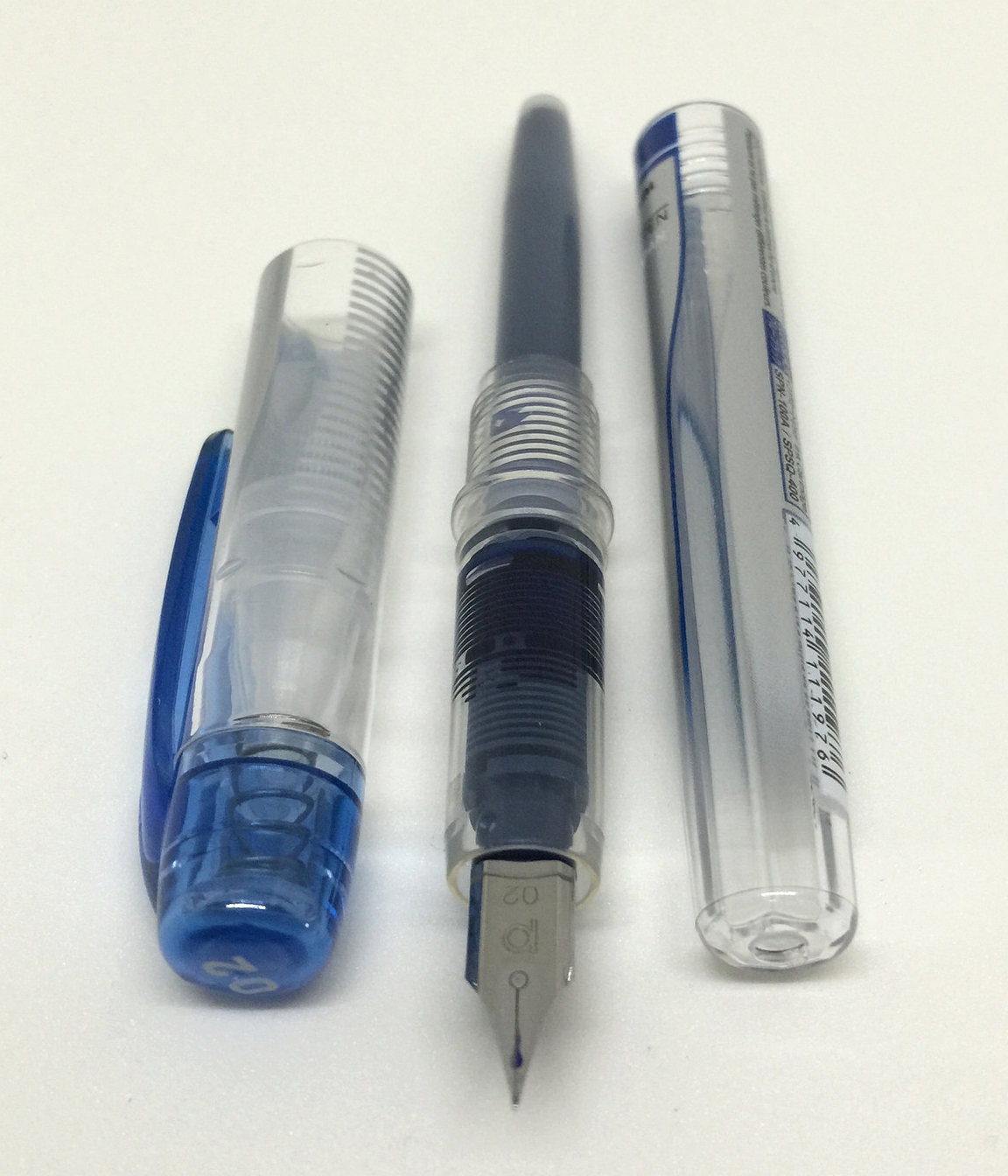
Platinum Preppy Fountain Pen 02 EF Nib Review

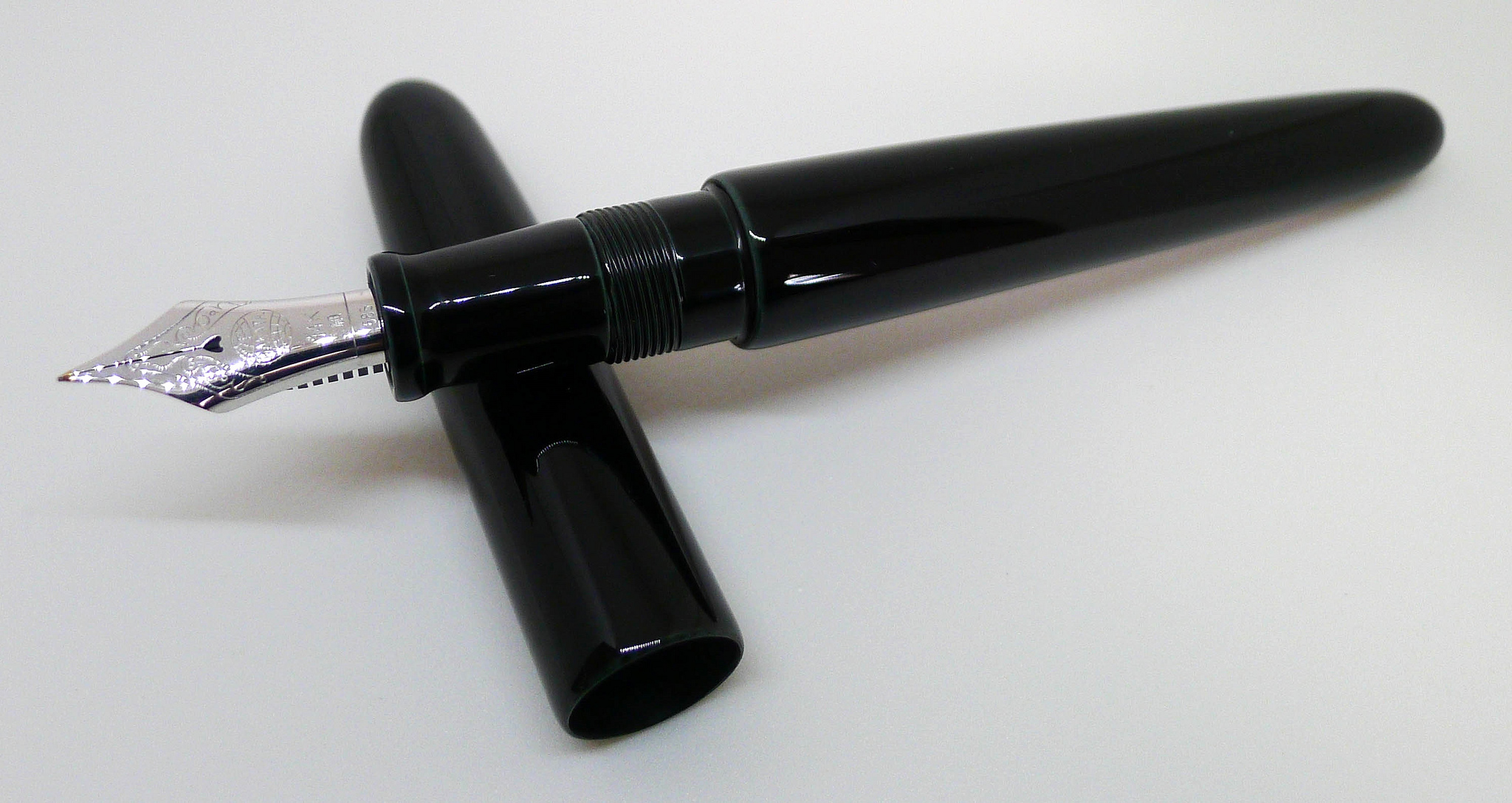
I'm making no bones about how much I like this refresh of the Platinum Preppy. From the moment I snapped in the ink cartridge and put nib to page I was impressed. More than impressed, I was wowed. I could not believe how nice the nib is on a $4 pen.

And this is no normal nib. Platinum calls it the 02, which is a standard Japanese EF nib. In the US, Japanese EF nibs aren't the easiest things to come by either. They are there if you dig a little, but most product lines start with fine, not extra fine. There is a reason for this: Japanese extra fine nibs are too fine for most people. I'd rather find that out for $4 not $100, wouldn't you?

Here is your chance to try one out on the cheap that will give you a comparable experience to much, much more expensive pens. I wouldn't buy a Pilot Vanishing Point with an EF nib if you are unsure you will like it. Same goes for a Sailor, Platinum, or any other Japanese pen. The nib in the Platinum Preppy compares to those in size and feel. Seriously. This is a spot-on, accurate match.

Maybe you'll discover that this pen will do just fine for you and don't need on of those more expensive models. If you like the Pilot Hi-Tec-C 0.4 or the Uni-ball Signo DX 0.38 you will like this pen. If you want to try fountain pens and have a nice clean writer that won't make a mess, you will like this pen. If you want a beater you can toss in the car or a bag, you will like this pen. If you don't like Japanese fine lines, you will not like this pen.

That's the only hangup. It's so sharp and fine it is not going to fit every writing style. It fits me, and it can answer questions many of you have about Japanese EF nibs. I'm enamored by this pen.

(JetPens provided this product at no charge to The Pen Addict for review purposes.)
Platinum Preppy 02 EF Review.jpg
Posted on January 19, 2015 and filed under Fountain Pens, Pen Reviews, Platinum, Preppy.