Posts filed under Fountain Pens

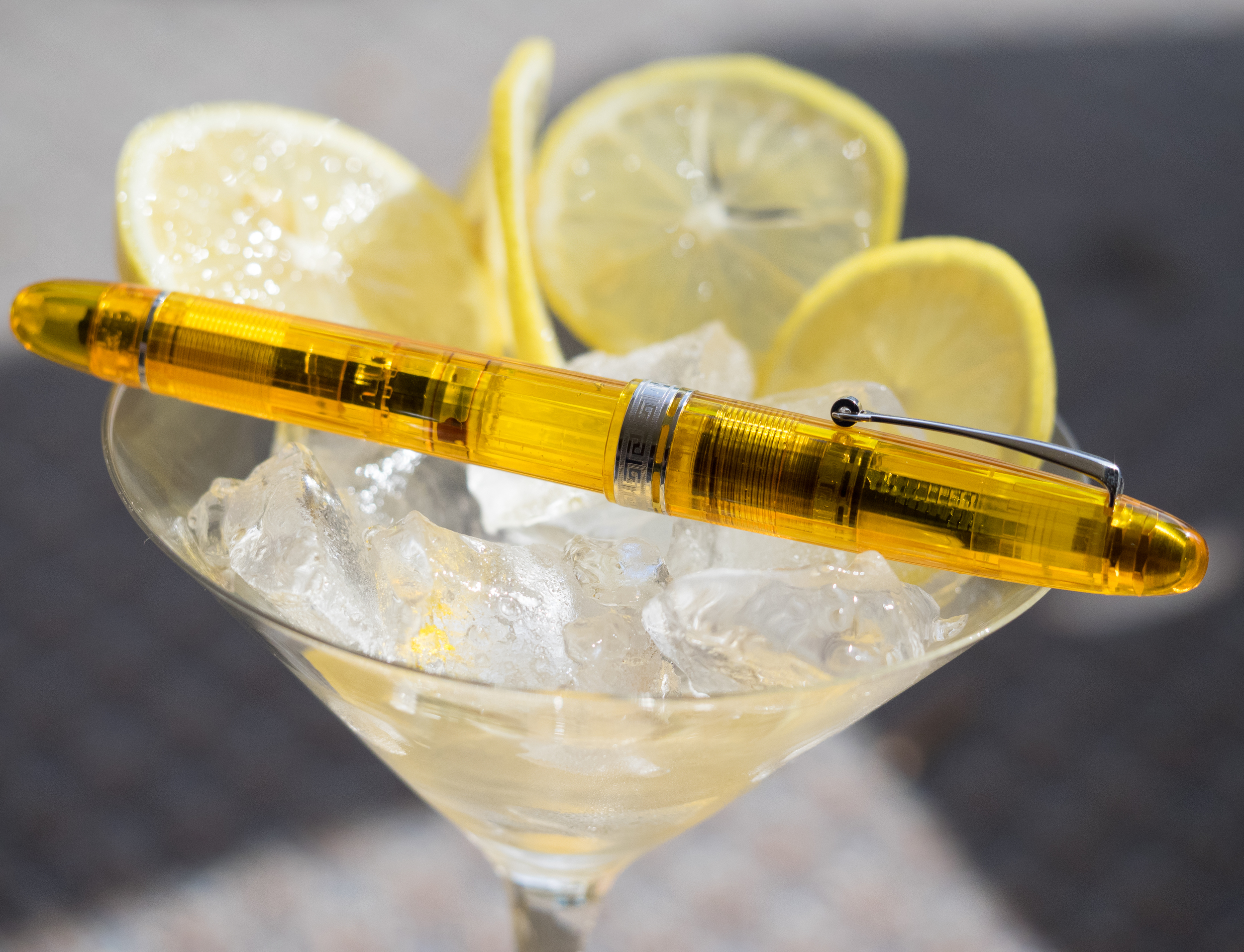
The Omas Ogiva Cocktail Vodka Yellow Limited Edition Fountain Pen: A Review

When I first saw pictures of the new Omas Ogiva Cocktail limited edition pens, I wanted one so badly. I seriously considered buying the yellow or blue version, but I simply did not have the money. Plus, I purchased one of last year's limited edition Albas in green with an EF extra flessibile nib, and I couldn't see the need for another pen just like it in a different color.

Omas Alba in Green

Omas Alba in Green

But, Kenro Industries sent the Pen Addict some pens to review, and happily, one of them was a Cocktail in Vodka Yellow with a 14K broad nib. I love my extra flessibile nib, but I was interested to see how the non-flexible broad wrote.
The Omas Ogiva Cocktail limited edition fountain pen is a cigar-shaped piston filler. All three colors (Vodka Yellow, Blue Angel, and Bloody Mary) are semi-transparent, but, obviously, the yellow is the most transparent of the three. The yellow color is rich and in sunlight the faceted surface of the cotton resin sparkles.
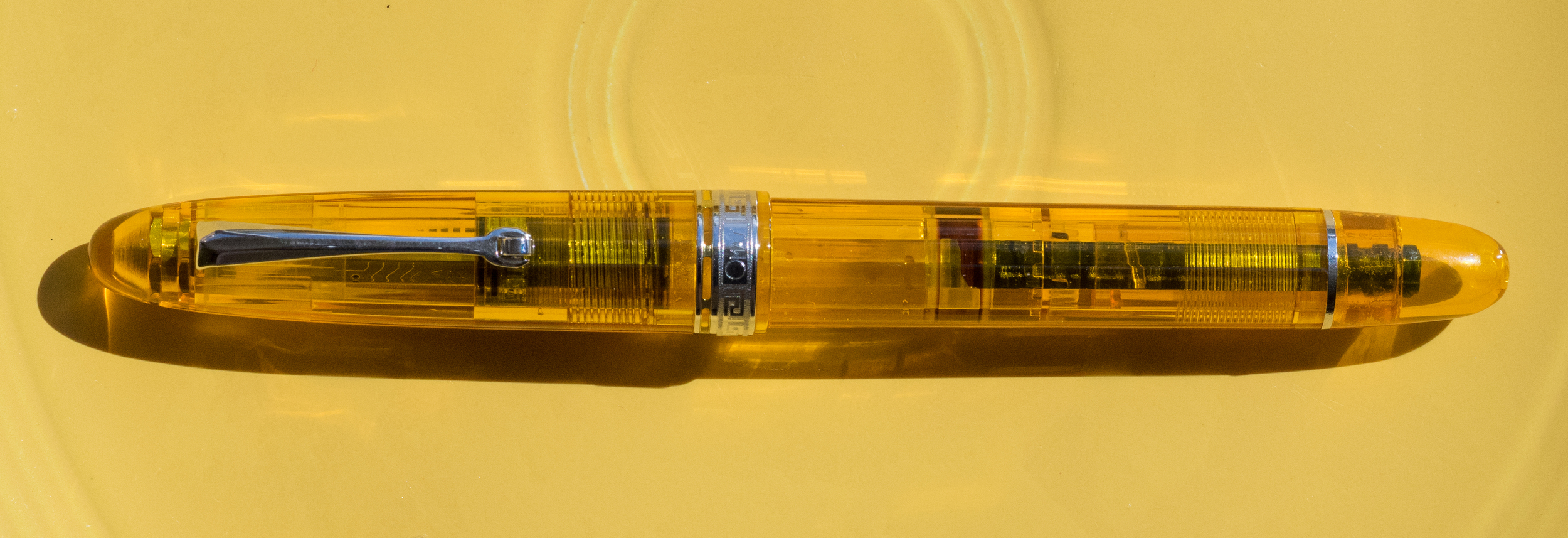
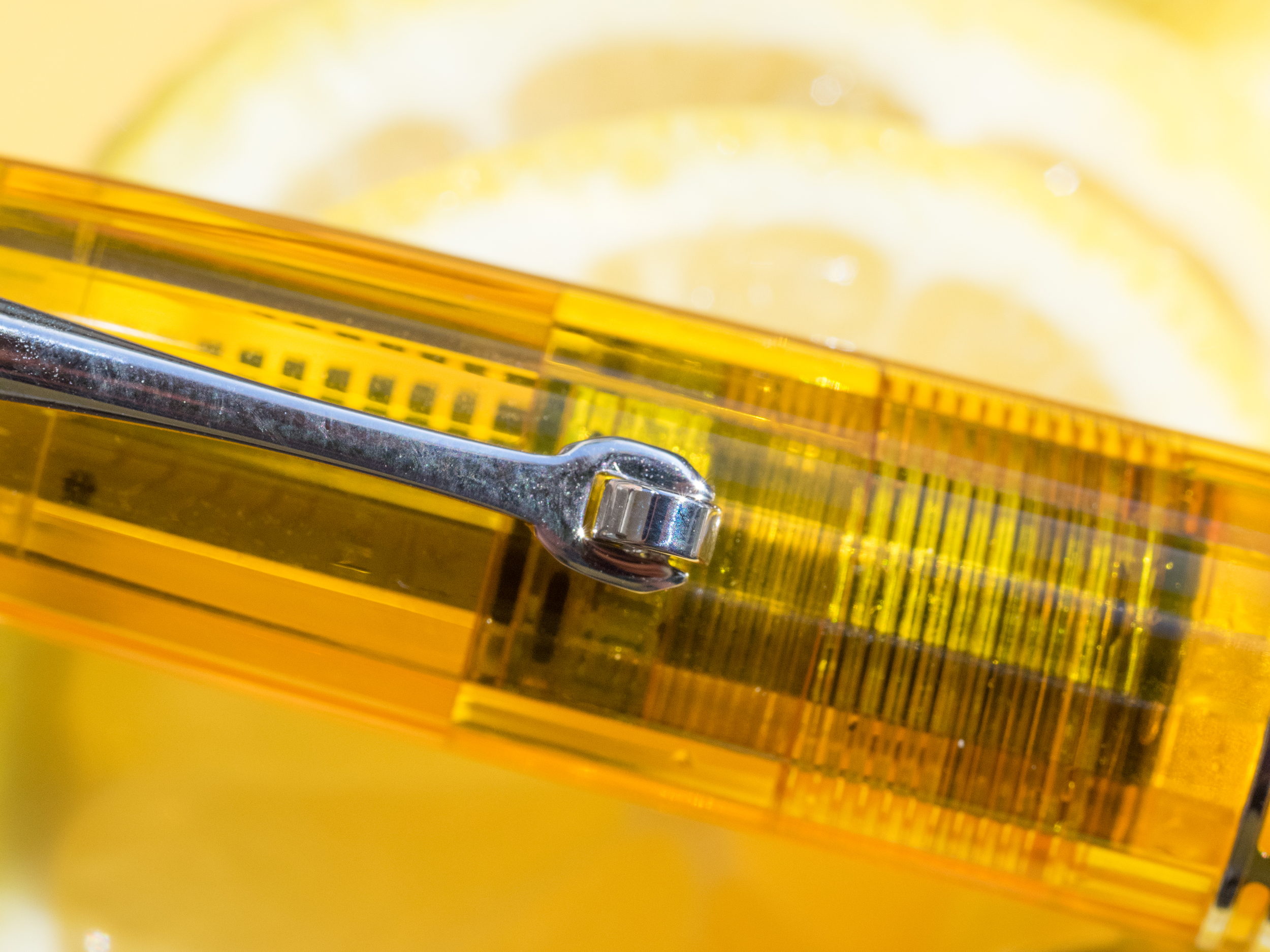
The pen has rhodium colored trim. The clip is Omas's usual style with a cylinder to assist in clipping the pen to a pocket or papers.
The band on the cap is engraved with the beautiful Greek key design as is the band at the top of the grip. The only other adornment is a thin silver ring at the piston end.

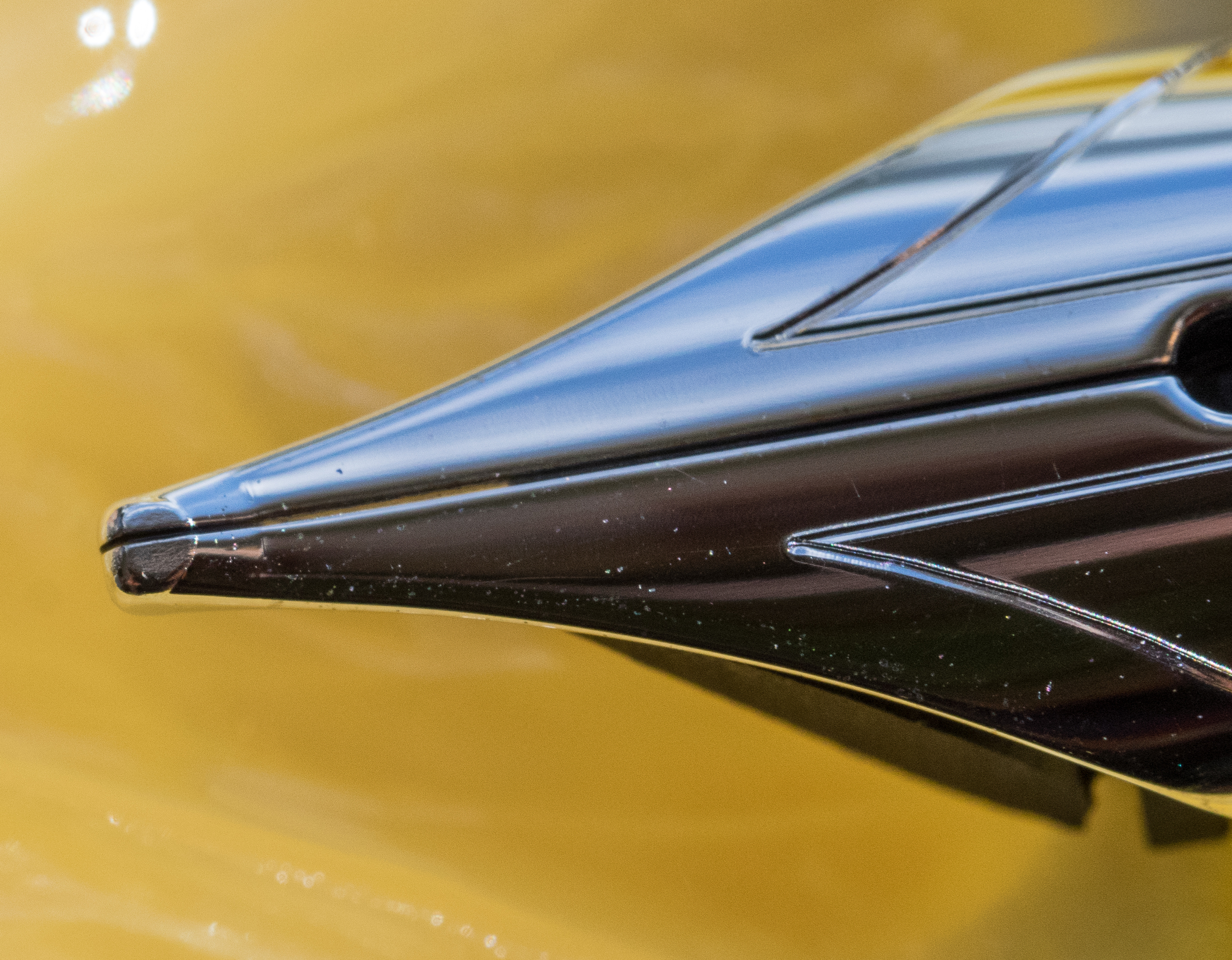
The nib is large and luscious. It has arrow engravings, the Omas name, and the gold content on top. The nib size is engraved on the side.

Omas nibs (at least the ones I've tried) tend to be very wet. That is definitely true for this nib. It never skips or has hard starts, but it lays down a thick, wet line.

Omas Broad Nib

Omas Broad Nib

Unlike the extra flessibile nibs, the broad nib has no flex. The difference is that the broad nib writes a consistently thick line whereas the extra flessibile nib offers variation from EF to B.

Omas Extra flessibile Nib

Omas Extra flessibile Nib

If I were to purchase an Omas with a broad nib, I would probably have it ground to a smooth italic and tone the wetness down just a bit. Still, I'd rather have a too-wet nib than one that stutters and is stingy with ink.

This pen is large, comparable to a MB 149 but lighter and not quite as thick. It is 5.75 inches in length, capped; 6.875 inches posted; and 5.06 inches unposted. It is light in the hand (21 grams) thanks to the cotton resin material. I find it very comfortable to write with.

I love being able to see the inner workings of demonstrator pens. But that leads to one negative. The piston seal on this pen allowed ink to seep in between the sides of the seal and the pen body. It is quite noticeable because of the light color of the pen.

Piston Seal Leak

Piston Seal Leak

I checked my green Omas for similar leaks, but it has a tight seal. So, the defect might be limited to this particular pen. I don't think there's any way to remove the piston for cleaning, unfortunately.

No leak on the Green Alba

No leak on the Green Alba

All in all, I love the Ogiva pens Omas is producing. I am sorely tempted to buy the Blue Angel (because: BLUE), but I'm sort of hoping that next year Omas will do a light turquoise version like the vintage Omas 360.

The Omas Ogiva Cocktail pen retails for around $395.00. It comes packaged in a sturdy Omas box with a suede-like sleeve for the pen. These are limited edition pens, so once they are all sold, there will be no more.

Pros

  • The Omas Ogiva Cocktail is a beautiful demonstrator pen.
  • The pen is light in the hand and well balanced.
  • It is a piston filler and holds a good amount of ink (0.9ml).
  • The nib is smooth and trouble free. * I love the Greek key details on the pen.

Cons

  • On this particular pen, the piston seal allowed ink to leak between the seal and the body of the pen.
  • The broad nib is very wet.

(This Omas Ogiva Cocktail Vodka Yellow was loaned to Pen Addict for review by Kenro Industries)

Posted on November 5, 2015 and filed under Fountain Pens, Pen Reviews, Omas.

The Pelikan M600 Pink Special Edition Fountain Pen: A Review

(Susan M. Pigott is a fountain pen collector, pen and paperholic, photographer, and professor. You can find more from Susan on her blog Scribalishess.)

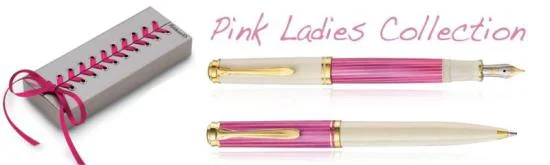
Scandalized! That's what I was when I first saw ads for the Pelikan M600 Pink "Ladies" Collection complete with boudoir box. I busted out laughing. I scoffed. I was offended by a so-called "ladies" Pelikan, even more so by the packaging. A pen in a corset box? Seriously, Pelikan?

I posted pictures on Facebook making fun of the pen. "Look! It's a Victoria's Secret pen!" "Barbie would love this pen!" "Who would buy this atrocity?"

Me, that's who.

In spite of some claims that this isn't necessarily a women's pen, it was clearly packaged and marketed to appeal primarily to women. Classic Fountain Pens simply calls it the Pelikan M600 Pink Special Edition, but notes that in "some markets" it is known as the "Pink Ladies Pelikan."

Even though I was initially incensed by such gendered marketing (I mean this is the 21st Century, people), I realized that it's nothing new. In the past there were Lady Sheaffers and Lady Soenneckens. Pilot markets pens to women, such as the Pilot Lady White Fountain Pen. Other manufacturers do the same or offer pens that might appeal more to women, such as the Montblanc Princess Grace or the Parker Sonnet Feminine collection.

So I grew a little less critical. A little. The pens above don't come in corset boxes (though one of my friends wondered why Pelikan put the pen in a tennis shoe box . . . .) Still. I think Pelikan could have thought through the implications of the packaging and marketed the pen to a broader audience.

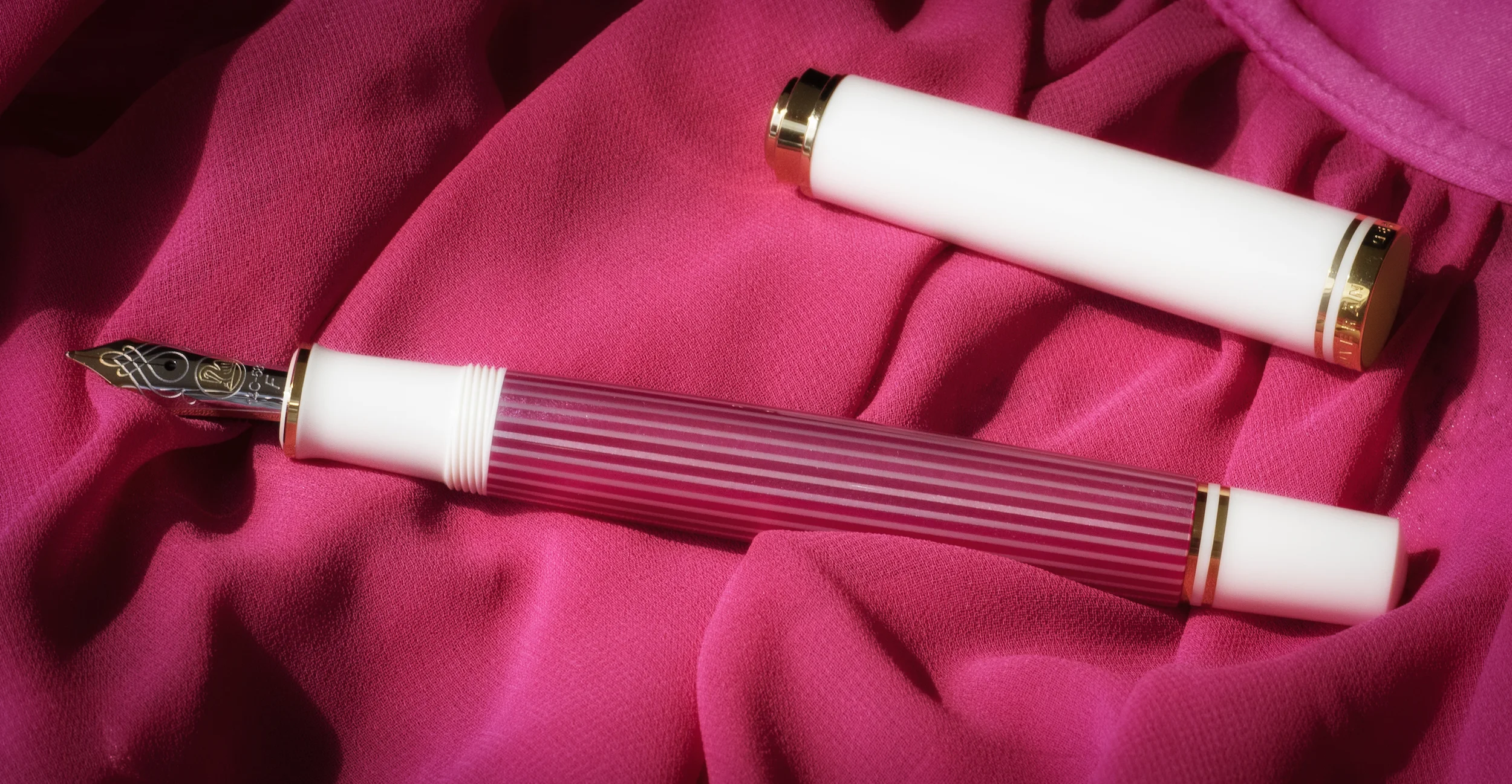
I decided it didn't matter to me since I would never be caught dead with a Victoria's Secret pen. But then I saw photographs of the pen by actual owners. The color was less Barbie pink, more subtle, like dark cherry. The pen looked sophisticated and gorgeous rather than bubble-gum silly.

And that's when the obsession started. Me. The one who derided Pelikan for flouting a gendered pen. Me, the one who owns nothing pink in her wardrobe. Suddenly, I was thinking how nice this pen would look next to black leather.

I fell for the Pink Pelikan, and I fell hard. I had to have one. I told myself it was for research–I must write a review for Pen Addict. I even told myself I wouldn't ink the pen. I would just write a review and send it back. But I inked the Pink, and I was hooked.

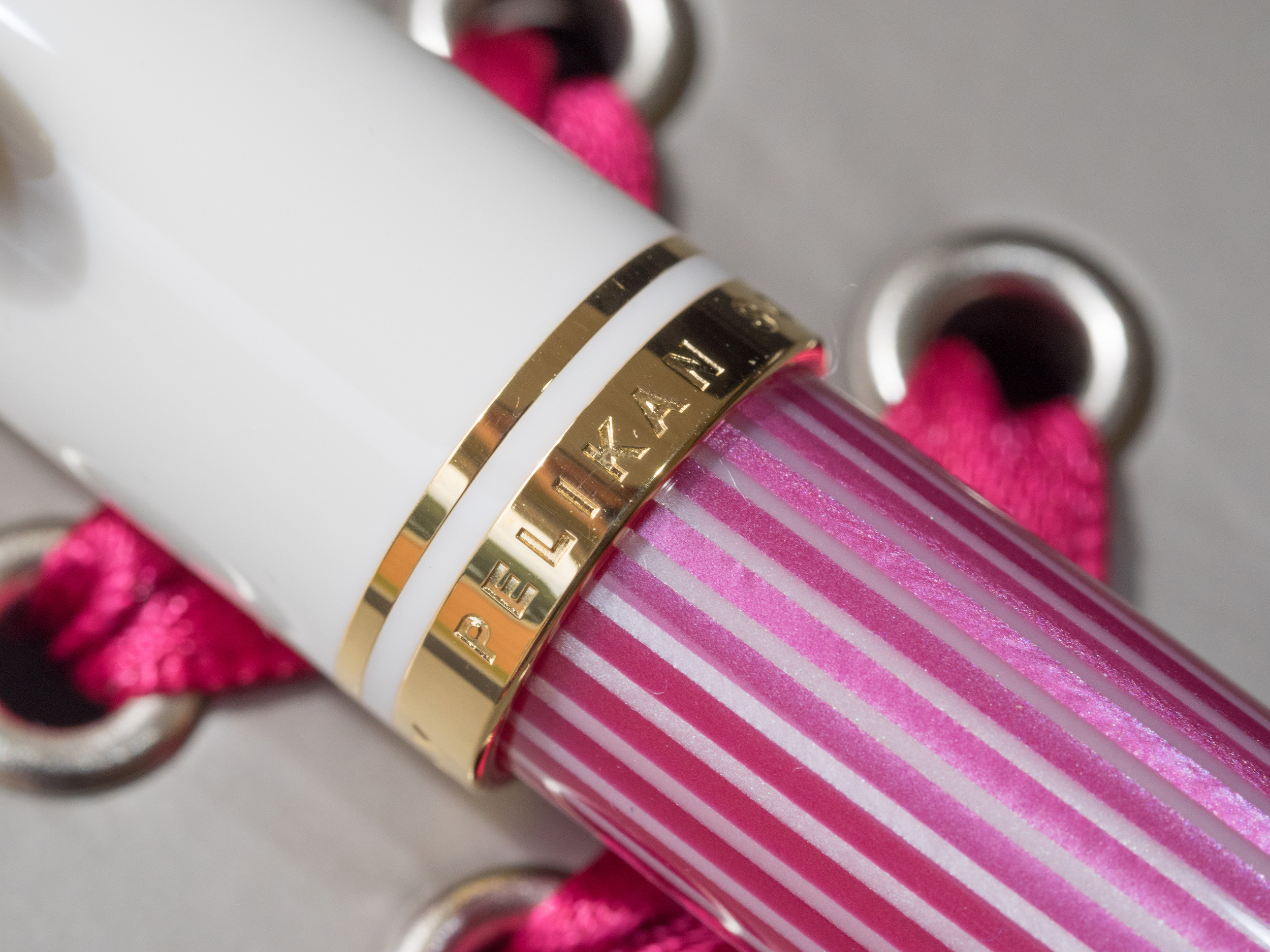
This really is a gorgeous pen in person. It comes packaged in a plain white outer box (like the sleeves that are placed over racy magazines?) Inside is the boudoir box: a corset of silver laced in pink, silky ribbon.

Fortunately, you don't have to unlace the whole box. Once you untie the bow, the two sides of the box fall open to reveal the pen.

The colors have so much more depth than in the advertising shots. The darker stripes are cherry pink with a softer pink underneath.

Like the White Pelikan Tortoise, the grip and piston are white plastic with gold rings, and the cap is white.

Unlike the Tortoise, the finial is etched gold rather than black and gold. The larger band at the base of the cap is engraved with the words "Pelikan," "Souverän," and "Germany."

The nib is two-tone 14K gold. It is engraved with the usual beautiful scrollwork and the Pelikan logo. I love the design of Pelikan nibs–they are spectacular.

I opted for a fine nib. In the past, I always purchased extra fine nibs on my Pelikans. Then I moved up to italics, and lately I've been getting oblique triple broads. This time I decided to keep things simple and go with a fine nib.

It writes perfectly–smooth and lush. I inked it with Iroshizuku Tsutsuji, purchased especially for this pen (my first truly pink ink). I have absolutely no complaints, no hard starts, no skipping.

The M600 is a good fit for many people. M800s can be too big and heavy. M400s can be too small.

The M600 is 5.2 inches when capped, just less than 5 inches uncapped, and 6 inches posted. It's a light pen, weighing only 18.2 grams. It retails for $500 at Classic Fountain Pens, and that seems to be the price across the board at most retailers. You may find it for less if you do some hunting.

The Pink Pelikan M600 is a terrific pen. It boasts the usual Pelikan quality, and hopefully this pen won't have the cap cracking issues the M400 White Tortoise did. I highly recommend this pen to both men and women who love this color. Pink can brighten anyone's day. Plus, who doesn't need a corset box in their closet?

Pros

  • A simply gorgeous pen with colors that are much more sophisticated in person than in photographs

  • This is a piston filler, which is my favorite type of filling system.

  • The 14K nib is smooth and writes straight out of the (corset) box.
  • The pen is light in the hand and well balanced.

Cons

  • The packaging is interesting, to say the least. But if you don't like it, you don't have to keep it. Me? I'm keeping it for posterity.
  • This is an expensive pen at $500.
  • People with larger hands or who prefer some heft to their fountain pens may find this pen too small or light
Posted on October 30, 2015 and filed under Pelikan, Pen Reviews, Fountain Pens.

Danitrio Sho-Hakkaku Ki-Dame Tamenuri: A Review

(Susan M. Pigott is a fountain pen collector, pen and paperholic, photographer, and professor. You can find more from Susan on her blog Scribalishess.)

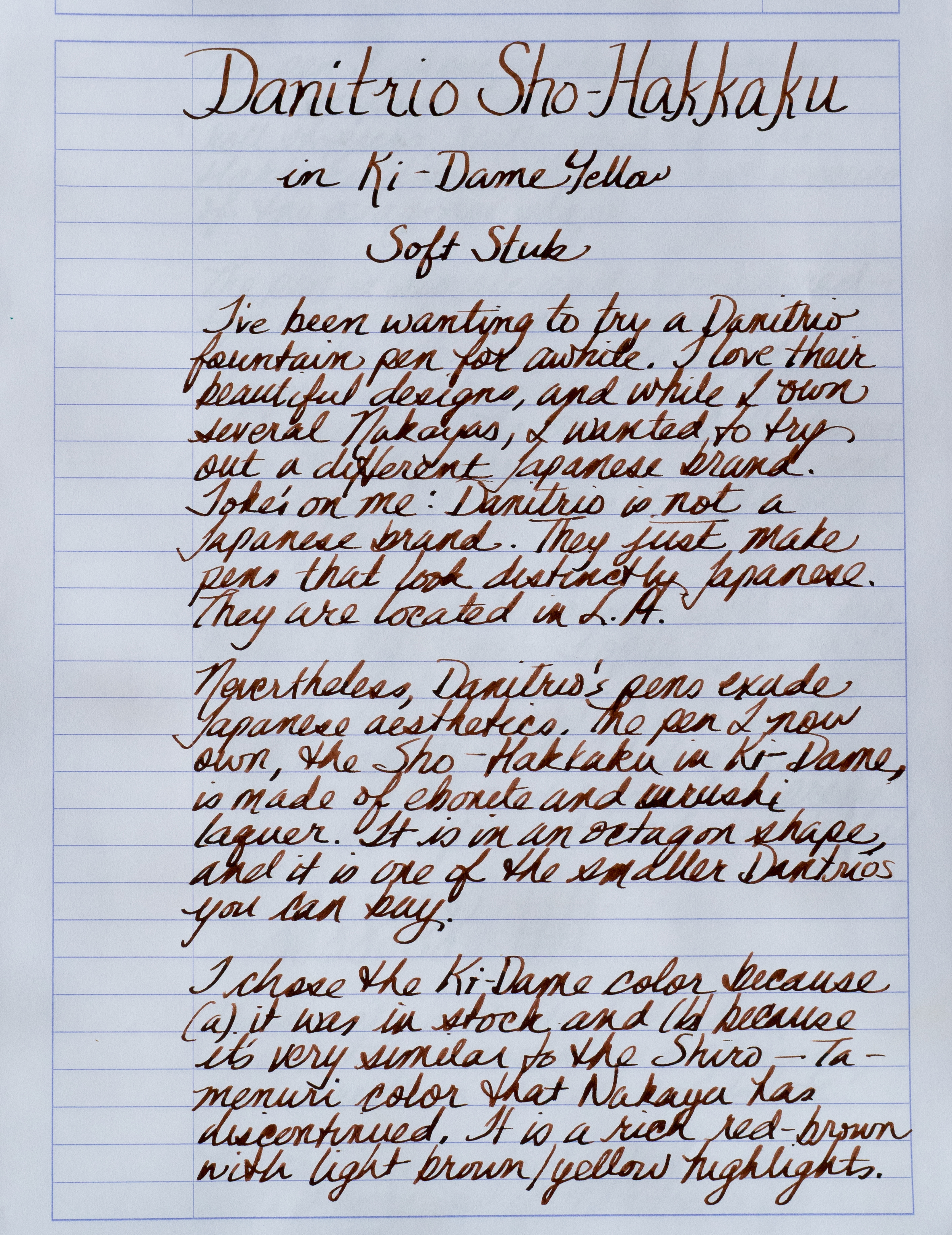
I've been wanting to buy a Danitrio fountain pen for a long time. I love their beautiful designs, and while I own several Nakayas, I wanted to try out a different Japanese brand. Joke's on me. Danitrio is not a Japanese company. They make pens using Japanese techniques and many (if not all) of their craftsmen are Japanese, but they are headquartered in Newport Beach, California. The company was founded by Mr. Bernard Lyn (read an interview with Mr. Lyn here).

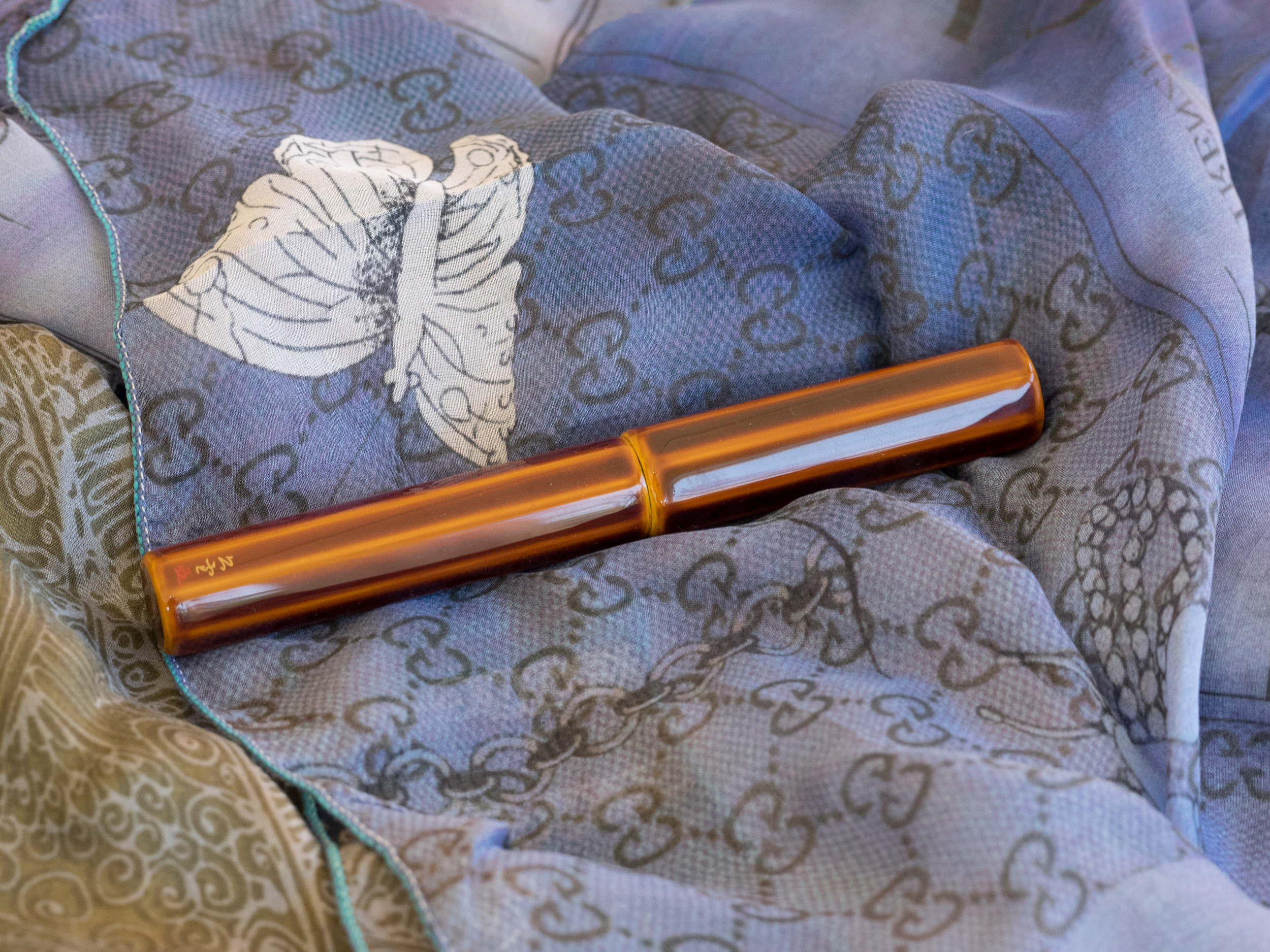
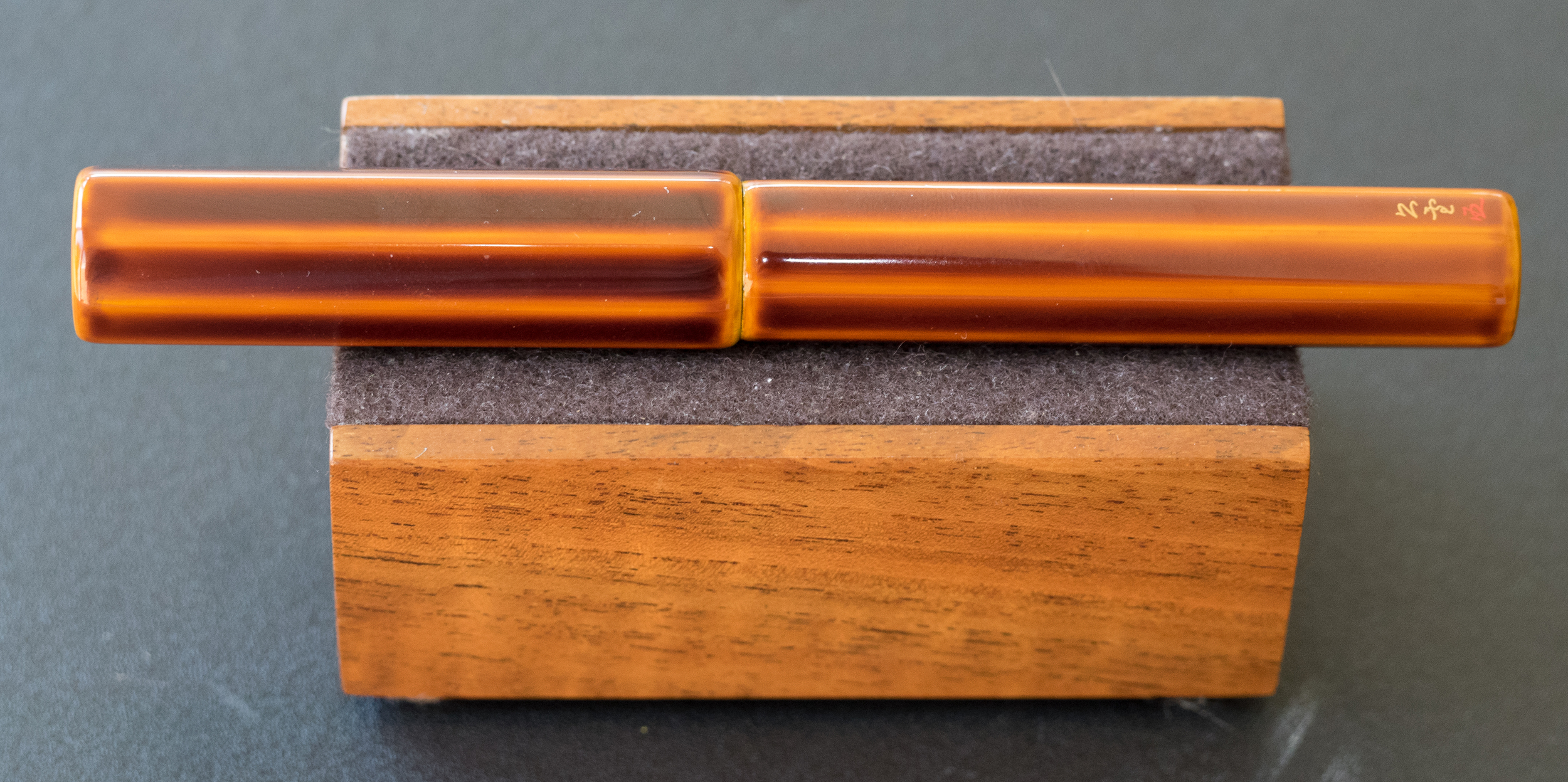
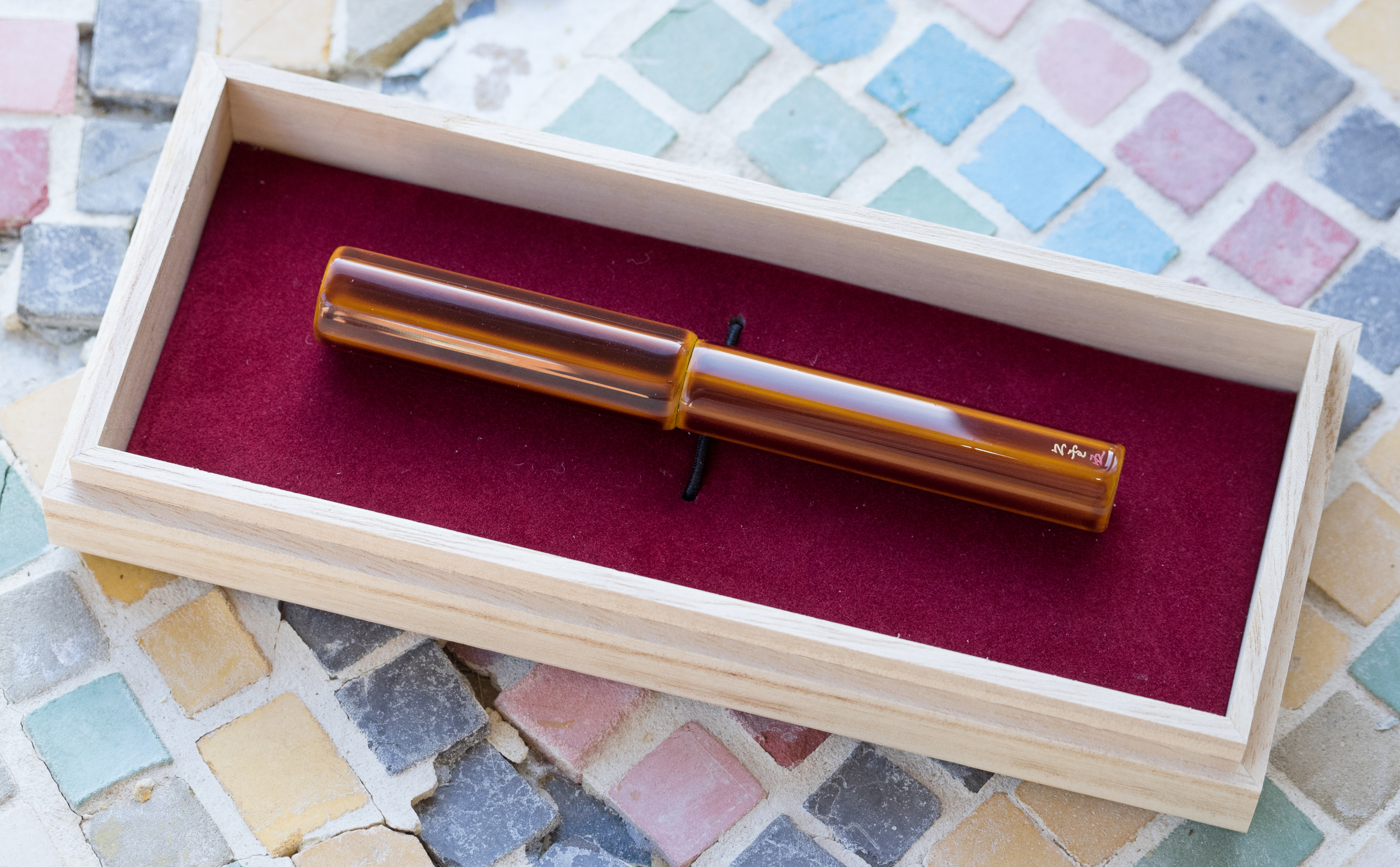
Danitrio pens exude Japanese aesthetics. The pen I now own, the Sho-Hakkaku in Ki-Dame Tamenuri, is made of ebonite coated in Urushi lacquer. It is an octagon shape, and it is one of the smaller Danitrios you can buy.

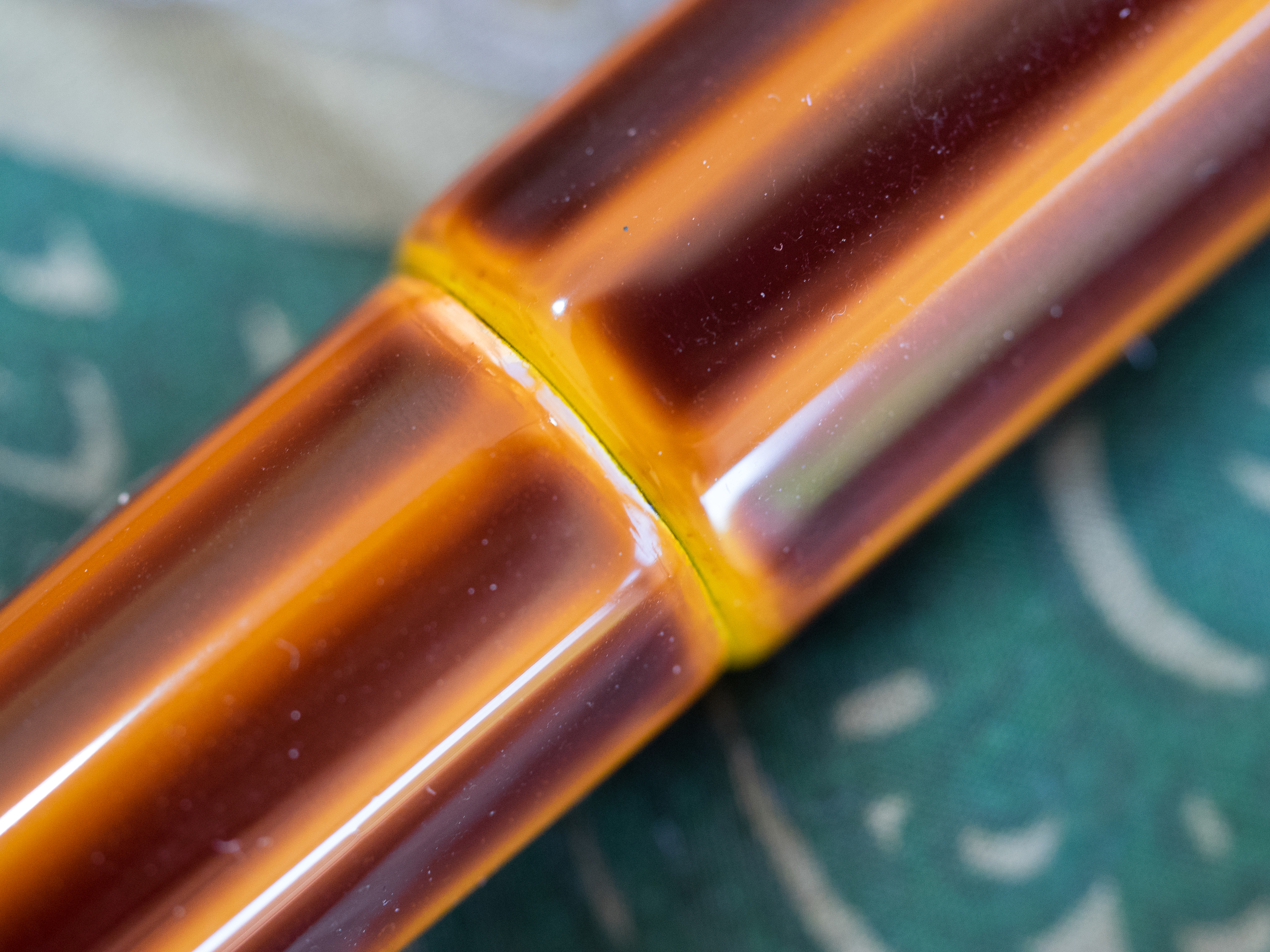
I chose the Ki-Dame (yellow) color because (a) it was in stock and (b) it is very similar to Nakaya's discontinued Shiro-Tamenuri color. It is a rich red-brown over a yellow foundation which will show through more as the pen ages.

My Sho-Hakkaku is clipless, which suits me fine. I only use clips as roll stoppers, and the Sho-Hakkaku doesn't roll easily because of the octagonal shape.

The pen is simple and uncluttered–the only ornamentation is the artist's signature in gold and red kanji on one facet of the barrel. I love this small, beautiful detail.

The portion of the barrel where the cap screws on is black, and I like how that contrasts with the rest of the pen.

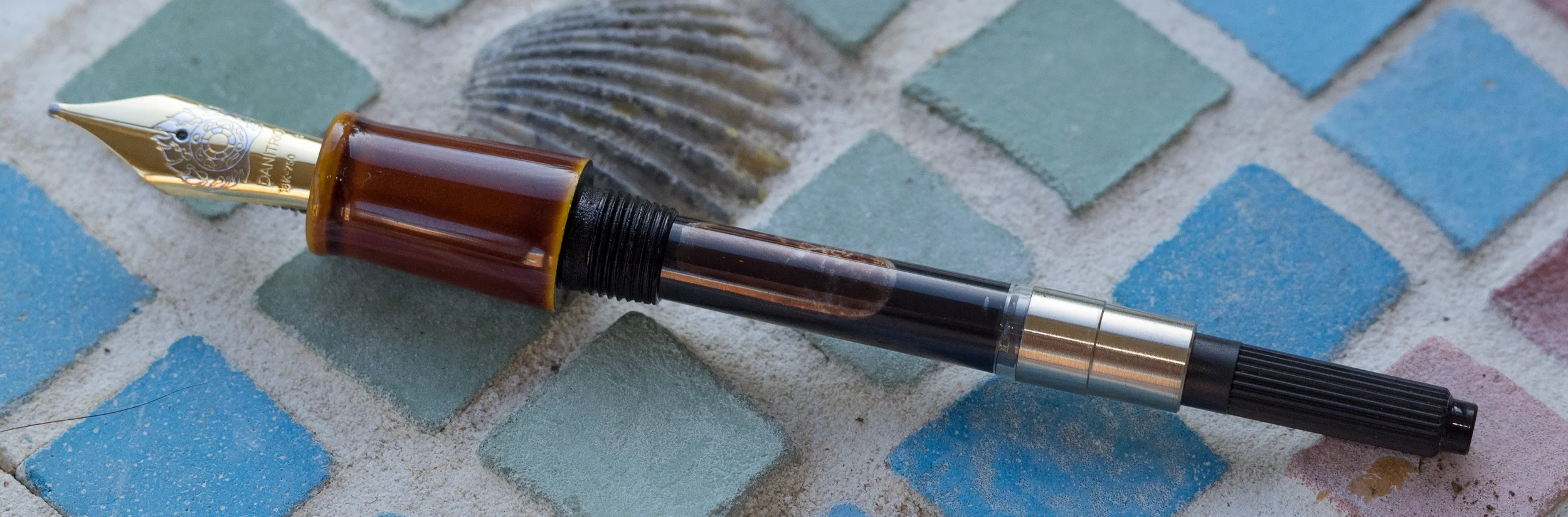
The Sho-Hakkaku comes with a big, gorgeous, ornamented #6 18K nib.

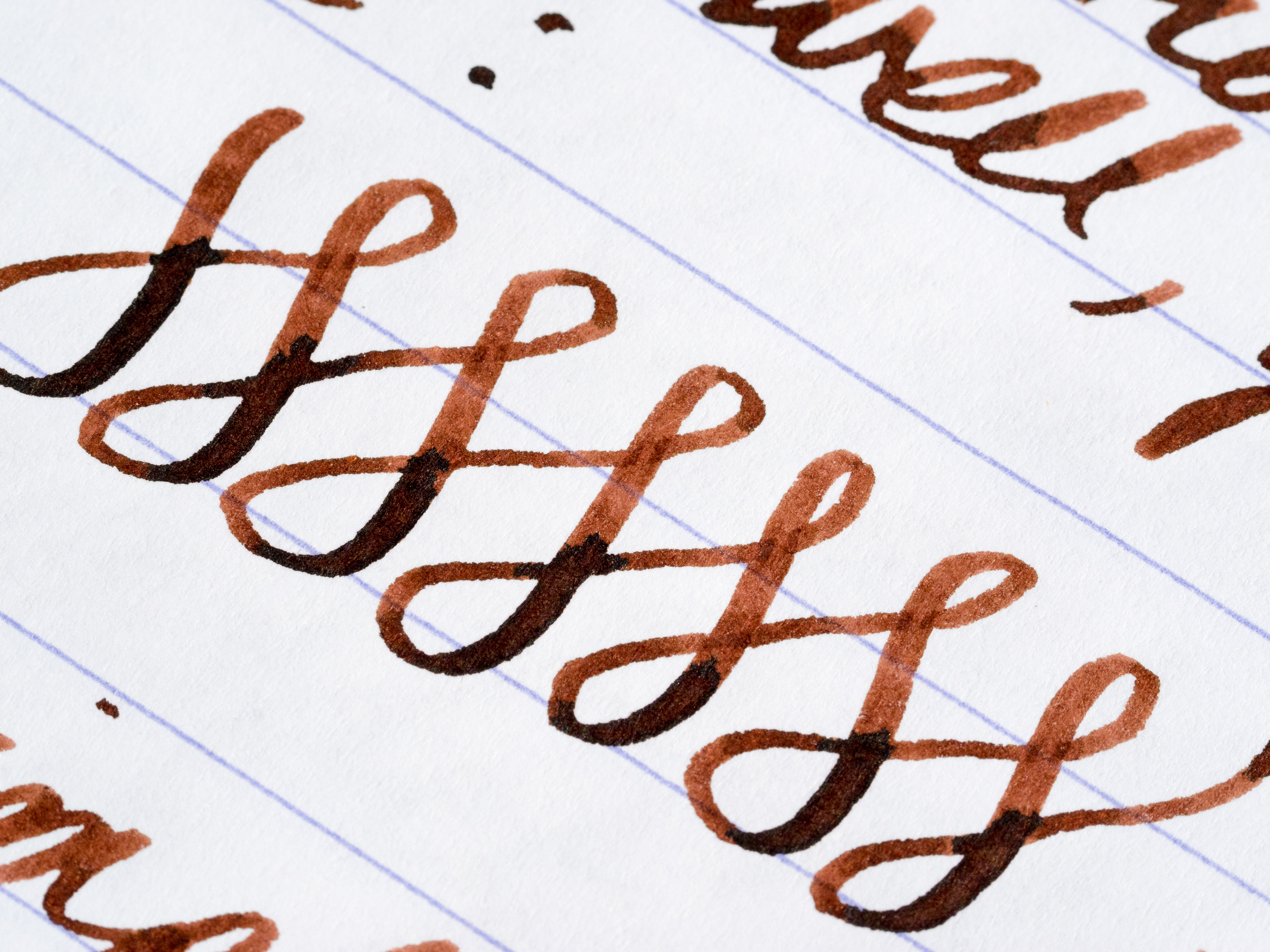
I opted for the soft stub because I heard that it was a delight to write with. And it is. The stub offers nice line variation without any pressure, but when you apply pressure the lines really pop.

The nib writes smoothly, and the feed has no trouble keeping up with the stub's ink demand even when flexed.

The pen is a cartridge/converter. I wish it were one of Danitrio's eyedropper pens, but the converter holds a decent amount of ink and is well made.

Like Nakaya pens, the Danitrio comes packaged in a soft wood box lined in red velvet. Unlike Nakaya, there is no kimono. In all honesty, I rarely use my Nakaya kimonos, but I missed that added special touch. The pen did come with a polishing cloth.

The Sho-Hakkaku is one of Danitrio's smaller pens. It measures 5.31 inches capped and four inches uncapped. The cap cannot be posted. The barrel width (0.6 inches) makes it fatter than many other pens, but it's not uncomfortable to hold (the grip section is .45 inches). The pen weighs only 27.5 grams so you don't notice its size at all, despite the barrel's girth.

The only negative comment I have about this pen is the purchasing experience. Apparently, ordinary people cannot order directly from Danitrio nor can they contact the company directly. I went through Classic Fountain Pens (nibs.com) to purchase my pen.

Unfortunately, it's impossible to know what pens you can actually order using the nibs.com website. Unlike Nakaya, there is no availability chart for Danitrio pens. Consequently, I had no idea which pens might be in stock for purchase. After searching through all the pens on nibs.com as well as on the Danitrio site, I tried to purchase a pen. This led to a long, confusing email exchange over a period of three weeks, during which the nibs.com folks mediated between me and Danitrio. All I wanted to know was which pens Danitrio had in stock. At one point, a nibs.com representative told me you "can't ask them too many questions at once because they get confused." Seriously? The Danitrio people get confused if you ask them which pens they have in stock?

In any case, it took a long time to place an order for my Danitrio, and that was for one they actually had in stock. If you order something not in stock, be prepared for a three to eight-month wait or longer. I think this girl needs some Zen patience if she ever orders another Danitrio. I drove the longsuffering people at nibs.com crazy.

As impatient as I was, it was worth the hassle. The Sho-Hakkaku is absolutely beautiful. I've read that some people think Danitrio's ebonite pens aren't as well crafted as Nakayas. But I'm completely satisfied with mine. It seems every bit as beautiful as my Nakayas.

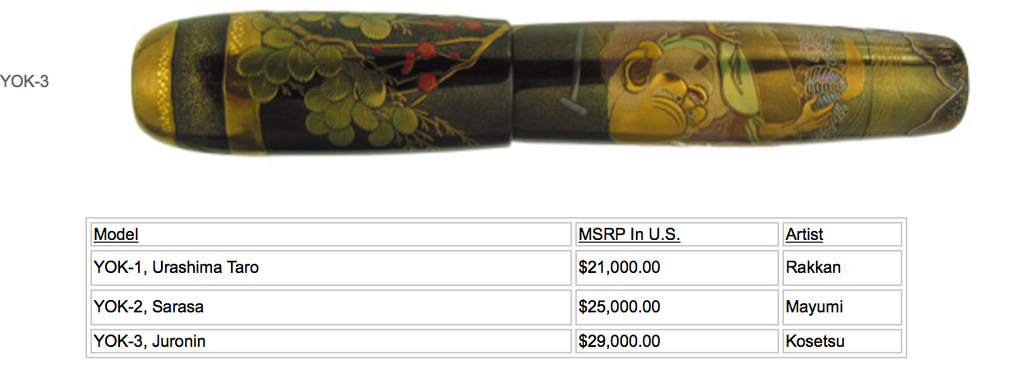
If you like Japanese-style pens and are unfamiliar with Danitrio (as I was), you ought to check them out. Although you can't buy directly off the Danitrio website, it's fun to go through all their models, especially the $20,000 ones (none of which I will be purchasing).

My Sho-Hakkaku was by anyone's standards very expensive ($960). Danitrio does not make inexpensive pens, but neither does Nakaya. Expect to pay a premium for Urushi pens, regardless of the company.

Pros

  • A stunning pen in unusual colors.
  • Gorgeous, huge nib with multiple nib size options.
  • The soft stub is a fantastic writer offering smooth writing without pressure and wonderful line variation with pressure.
  • The kanji signature adds a nice touch to an otherwise unadorned pen.
  • The octagonal shape accentuates the foundation color of the pen and the Urushi makes the pen glow.
  • Almost weightless in the hand, making the pen comfortable for long writing sessions.

Cons

  • Difficult and confusing to place an order.
  • Some might not like the cartridge/converter system.
  • Expensive. Very expensive.
Posted on October 23, 2015 and filed under Fountain Pens, Pen Reviews, Danitrio.