Posts filed under Fountain Pens

Lamy Al-Star Charged Green Review

(Jeff Abbott is a regular contributor at The Pen Addict. You can find more from Jeff online at Draft Evolution and Twitter.)

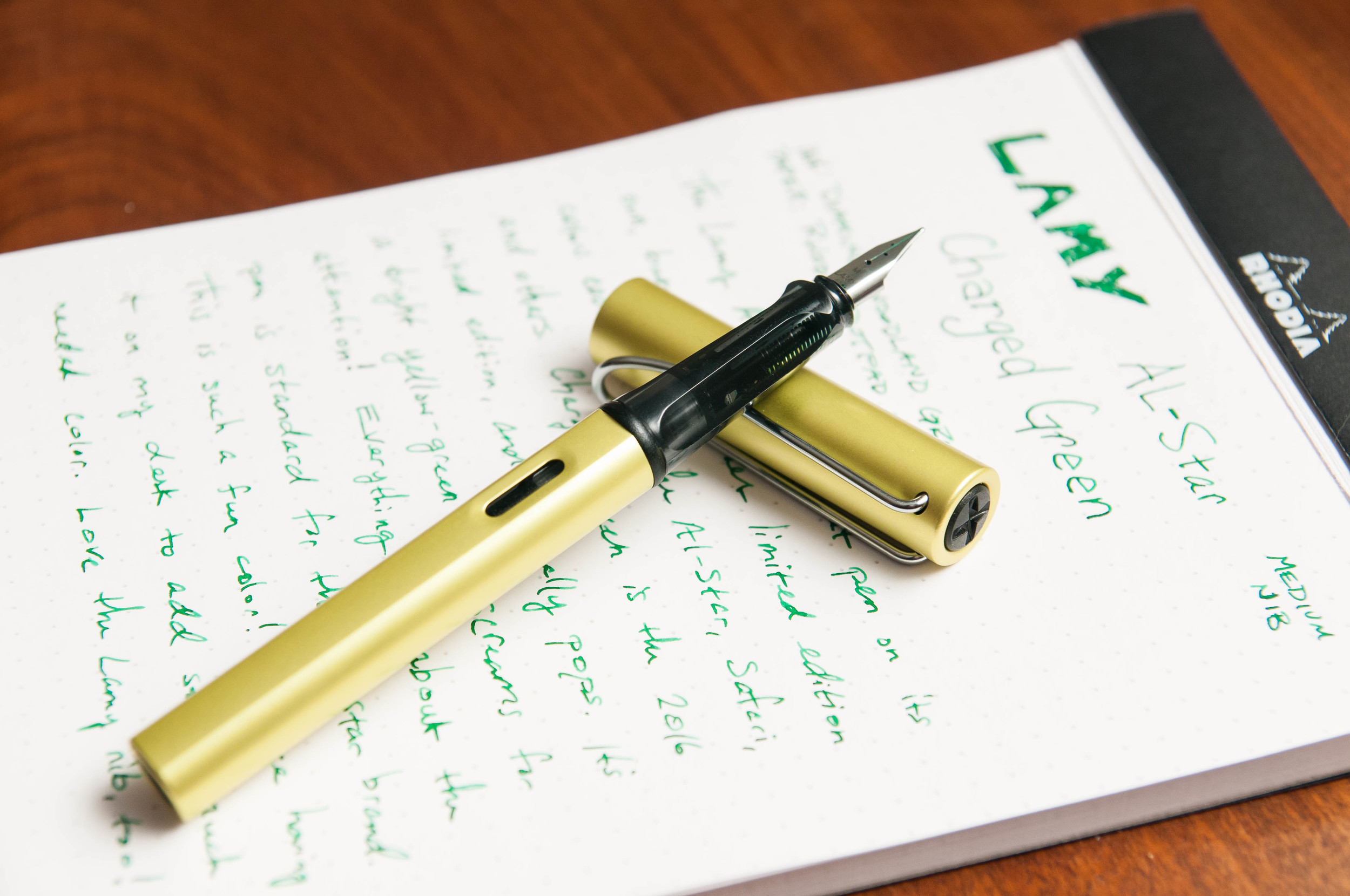
It looks like spring is finally here for most of us, which means a lot of greenery is on the way. A new year also means a new limited edition color from Lamy for the Al-Star line, which just so happens to be fairly spring oriented this year.

The Charged Green Al-Star is electric, and it's the perfect color to welcome in the spring of 2016. The Al-Star, in case you don't know, is the aluminum line of Lamy's entry level fountain pens. They look almost exactly like the Safari line, but the main difference is the material (metal vs. plastic). The same contoured grip section is found on the Al-Star, but I happen to prefer the metal bodies over the regular Safaris most of the time.

If you've never used a Lamy Safari or Al-Star before, you're really missing out. Sure, there's a chance you might hate the very opinionated grip, but there's only one way to know. Lamy introduces a limited edition color each year for the Al-Star and Safari lines, but it's usually fairly easy to score one for several months after it's released. In the case of the Charged Green Al-Star, they're still easy to come by.

It's been a while since an Al-Star was reviewed here, so it's probably worth looking at the pen from its roots, not just the fancy color. The Al-Star is a medium-sized pen, but is still fairly light because of the thin aluminum used in the body and cap. Now, Kaweco also offers some aluminum pens, but they typically use much thicker materials that feel much stronger and hefty in the hand. The Al-Stars use thin aluminum, which is lightweight but not as durable. Still, they're rugged and can keep up with your normal pen duties with no problems.

The clip is strong, but easy to use, and there's a convenient ink window on both sides of the body to see how much ink is left in the pen at a glance. The Al-Star uses a propriety Lamy cartridge or Lamy converter, and ships with a standard Lamy blue cartridge. The grip section is contoured in a way to compliment a "standard" grip (whatever that means), and this is the main point of contention for the entire lineup. You'll either like the grip, or you won't. That being said, I'm a big fan of the grip and enjoy using them.

The nib that came on this pen is a medium, and it is fantastic. No tuning needed out of the box at all. It has excellent flow, almost no feedback on the page when writing, and starts beautifully every time. For the review, I chose a nice green to go along with the green theme, but the nib has done great with several types of ink. And, as with most Lamys, it's incredibly easy (and affordable) to swap out a different nib.

All in all, it's a great writer and worthy of its fame. There are plenty of standard colors offered in the Al-Star line, like gray, silver, black, purple, and blue, but the limited edition colors are usually quite enjoyable. In the case of Charged Green, it's a knock-out. When you see it on a desk or in a bag, you can't help but be drawn to it. Maybe you think it's pretty, or maybe it's ugly — your eye is drawn to it regardless. Personally, I love the color and will enjoy having it in my collection of more "boring" pens.

You can grab a Charged Green Al-Star in extra-fine, fine, and medium, but you'd better act fast because these limited editions don't stick around forever.

(Goldspot Pens provided this product at no charge to The Pen Addict for review purposes.)

Posted on April 6, 2016 and filed under Lamy, Fountain Pens, Pen Reviews.

Visconti Traveling Inkwell: A Review

(Susan M. Pigott is a fountain pen collector, pen and paperholic, photographer, and professor. You can find more from Susan on her blog Scribalishess.)

The Visconti Traveling Inkwell is a conveniently-sized container for ink. The inkwell offers an alternative to traveling with heavy glass ink bottles. But at a retail price of $70.00 (at Goulet Pens), is it worth it?

I took my Visconti Inkwell with me on a recent trip to France. I slipped it in one of the slots of my Nock Hightower and carried it in my backpack the entire trip. It never leaked, and it went through every security check without anyone asking to examine it.

The Traveling Inkwell comes packaged in a Visconti faux-leather, clamshell box. Instructions for using the inkwell are included as is a glass eyedropper.

The inkwell is made of hard plastic and measures 5 inches (127mm) in length, a little over 1/2 inch (12.7mm) in width. It weighs only a few ounces without ink. With a capacity of 5.5 ml of ink, it will refill medium-sized pens about five times and large pens about three times. This blog post and video on Goulet is exceptionally helpful, explaining how to use the inkwell and listing pens that will and will not work.

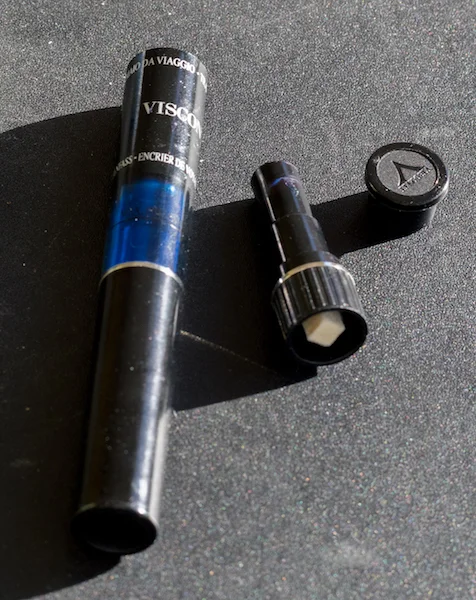
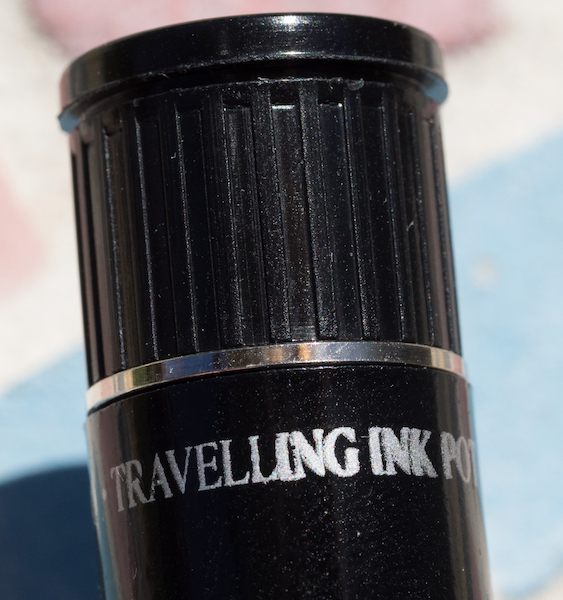
The inkwell consists of a cap, a stopper, and the ink chamber.

Removing the cap exposes a wick that can be removed for cleaning off your nib after filling.

The stopper provides a secure seal so that no ink escapes.

To fill the inkwell, you simply put the eyedropper in your chosen ink and squeeze to fill it.

Then you insert the eyedropper deep into the inkwell and squeeze out the ink.

You have to do this several times to fill the inkwell to the maximum capacity line. The glass eyedropper is a little cumbersome to use. You might want to use a pipette or a syringe instead.

When you want to fill your pen, remove the stopper, prepare your pen to receive ink, push the nib and section firmly into the inkwell to create a seal, and turn the inkwell upside down to fill your pen.

You can use the inkwell with any filling system, though each type requires a slightly different methodology to fill the pen. I recommend watching Brian Goulet's video on the inkwell to get a good overview on how to use it with different pen types.

I used the inkwell with my Pilot Custom 823, which is a vacuum filler. I pulled the pump all the way out, inserted the pen into the inkwell, pushed the pump . . . and made a huge mess–ink everywhere.

It was my own fault. I (a) didn't create a good enough seal and (b) pushed the pump in too quickly. As a result, ink spilled everywhere. My second attempt, after following the instructions more closely, resulted in a good fill.

The Visconti Traveling Inkwell can be used with most pens as long as they measure a minimum of 9.2 mm at the grip and a maximum of 13.2 mm according to Goulet. Brands like Pelikan, Montblanc, Visconti, Pilot (but not the Pilot VP), Platinum, etc., should all work fine. Pens with small diameters will not work with the inkwell. For example, the Faber-Castell Ambition, the Pilot Vanishing Point, and other small pens cannot create the necessary seal. Oversized pens also will not work because they don't fit into the inkwell.

A couple of pens that won't work: Pilot Vanishing Point, Faber-Castell Ambition.

A couple of pens that won't work: Pilot Vanishing Point, Faber-Castell Ambition.

The inkwell requires a little practice, so it's a good idea to try it out with water first (add a little ink so you can see the liquid). Once you know what you're doing, the inkwell makes it easy to fill your pens with the bonus that you can get a complete fill by manipulating the converter/piston/or pump slowly. Brian's video shows you how to get the best fill using each system.

Most brands will work regardless of the filling system: converter, piston, lever fill, etc.

Most brands will work regardless of the filling system: converter, piston, lever fill, etc.

So, is the Visconti Traveling Inkwell worth $70.00? I'm a bit torn on this question, to be honest. I didn't actually use the inkwell in France because my Pilot 823 holds so much ink, I never needed a refill. On previous trips, such as to Ireland, I took plastic ink bottles that I sealed in a plastic bag and packed in my luggage so I wouldn't have to put them through security. I filled my pens from those ink bottles just like I normally would. None of them leaked, but that may have been good luck. Since I don't travel often, I probably wouldn't purchase the Visconti Inkwell for myself, especially since, when I do travel, I like taking several ink colors and can do this with inexpensive plastic ink bottles.

Plastic Ink Bottle

Plastic Ink Bottle

What sets the Visconti Inkwell apart, however, is its pen-like shape (so it fits in most pen cases), its leak-free construction, and its ability to fill pens without a big mess (as long as you know what you're doing). If you're a frequent traveler, and you don't mind taking along just one color of ink, the Visconti is an excellent choice. It is much simpler to use than ink bottles, and you can take it in your carry-on without any problems.

Even though I won't be galavanting through France again anytime soon (le sigh), I may take my Visconti Inkwell to work. I can keep it there to refill pens without a big mess when the need arises.

Pros

  • The Visconti Traveling Inkwell is well-constructed and leak-proof (at least I had no issues with it in my trip to France and back).
  • It is shaped like a fountain pen and is about the same size, so it fits in carrying cases made for fountain pens.
  • When used correctly, it makes filling a pen virtually mess-free, but practice first!
  • The inkwell works with the vast majority of fountain pens regardless of their filling system, making it quite versatile.

Cons

  • The Visconti Traveling Inkwell is expensive at $70.00.
  • If you want to take a variety of ink colors with you when you travel, you'll need to buy several inkwells.
  • The eyedropper that comes with the inkwell is a bit awkward to use and requires repeated fills in order to get the inkwell to capacity.
  • Small pens and oversized pens will not work with the inkwell.

(Goulet Pens provided this product at no charge to The Pen Addict for review purposes.)

Posted on April 1, 2016 and filed under Visconti, Fountain Pens.

Kaweco Mini Fountain Pen Converter Review

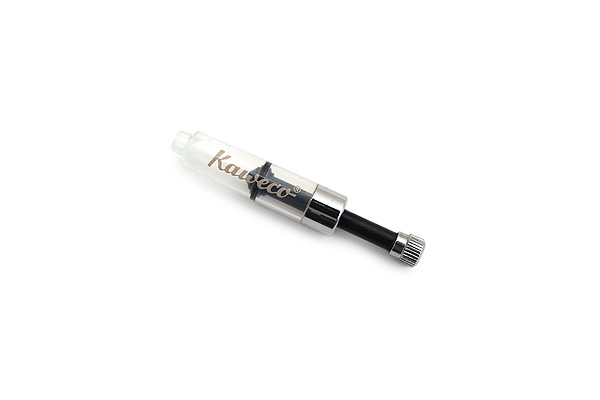
Image via JetPens.com

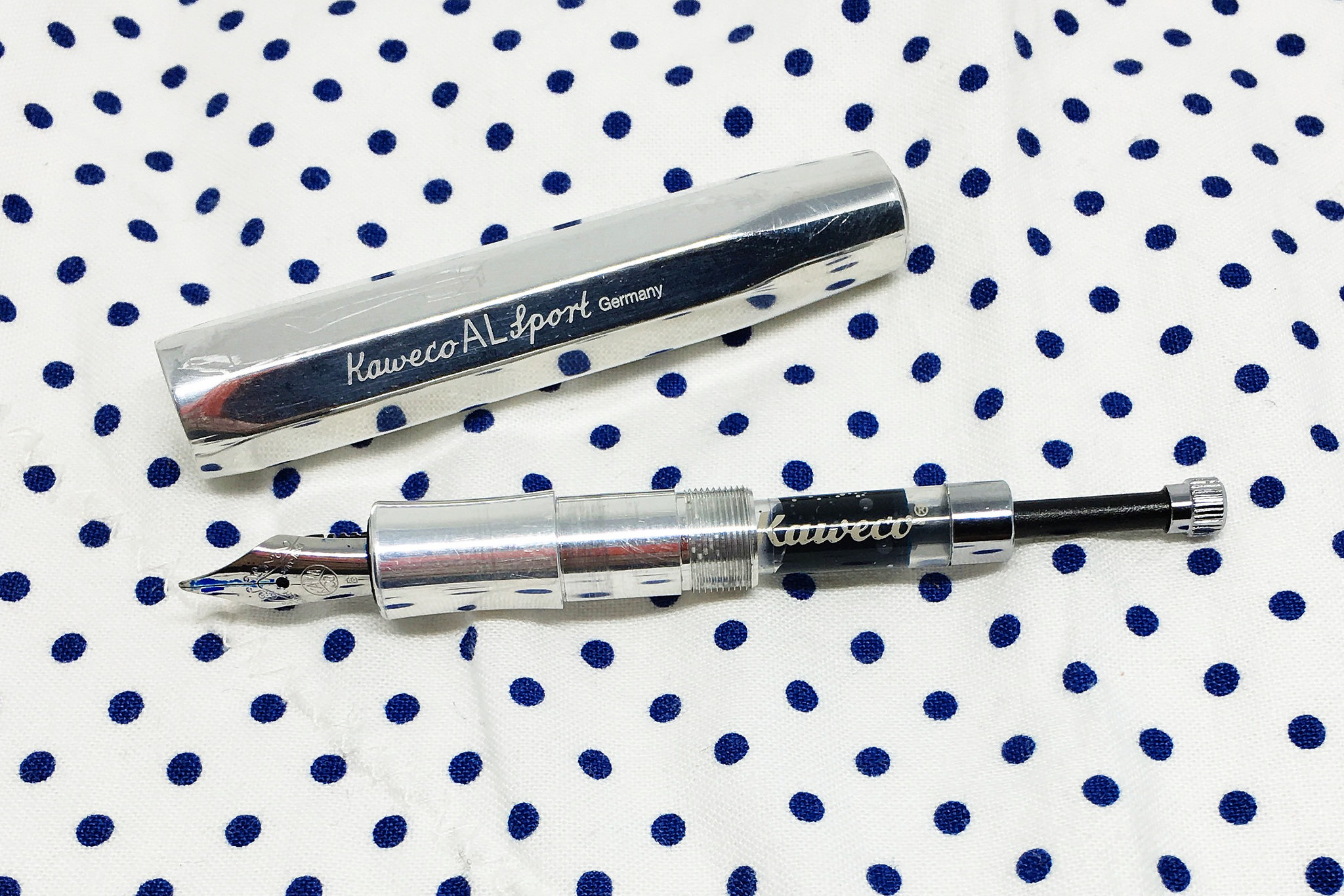
Image via JetPens.com

There was an attempt.

Those are my thoughts in a nutshell on the Kaweco Mini Fountain Pen Converter. This isn’t a bad product, but it’s not a good one either. Let’s dig in.

Converters for Kaweco fountain pens have always been sought after. The small barrels in the Sport and Liliput lines don’t take traditional converters - the barrels are too short. But people love their Kaweco’s - myself included - so news of any converter that fits is always met with excitement.

The previous attempt was the Kaweco Squeeze Converter, and it was a failure. Good idea, but it didn’t work. You could barely pull in enough ink to get you through the day, which made trying to use it a frustrating experience.

The new Mini Converter is a piston style converter that does pull in more ink than the Squeeze, but it is only slightly less frustrating to use.

Liliput for scale. If it doesn't fit, you must acquit.

Liliput for scale. If it doesn't fit, you must acquit.

First of all, it only fits the Sport models, not the Liliput. I didn’t realize this initially, thinking the piston rod would somehow remain flush with the end of the converter when filled. That’s not how this converter works. You attach it to the nib unit, dip the nib into the bottle, pull the piston back to fill, and leave it in that position. That added length doesn’t fit inside of the Liliput, as I found out the hard way when screwing the barrel back together. #InkyFingers

Once I realized the mistake I made, I grabbed an AL Sport and started over. The second issue, which you will see in the video below, is that it is a two handed operation to fill. That’s not abnormal, but due to the small size I had to stick my left thumb and index finger practically inside the top of the ink bottle to pull back the piston properly. There isn’t a lot of room to work with. And this bottle is 90% full. I imagine you will have an even harder time with ink bottles under 50% full.

Filling the new Kaweco Sport piston converter. #Kaweco #fountainpen

A video posted by Brad Dowdy (@penaddict) on

When I went to screw the AL Sport back together, the fully extended piston still hit the back end of the barrel. This caused ink to once again to come out of the nib as I tightened everything back up. In the end it fit, but it wasn’t a smooth process.

Kaweco converters add frustration to what should be a simple process. Including this one, they are 0-for-2 in making a functional product. I would love to be able to recommend one of these to you, but they just aren’t worth the headache.

This leaves you two options: Use short international cartridges or syringe fill empty cartridges from your ink bottles. Fortunately, we are seeing more short international options hit the market, including great colors from Waterman, Diamine, and Caran d’Ache. Waterman Mysterious Blue has been my go-to short cartridge recently, and works well with all of my Kaweco’s.

Time to move on to other ideas Kaweco.

(JetPens provided this product at no charge to The Pen Addict for review purposes.)

Posted on March 27, 2016 and filed under Kaweco, Fountain Pens.