Posts filed under Fountain Pens

Kaweco Squeeze Fountain Pen Converter Review

(Jeff Abbott is a regular contributor at The Pen Addict. You can find more from Jeff online at Draft Evolution and Twitter.)

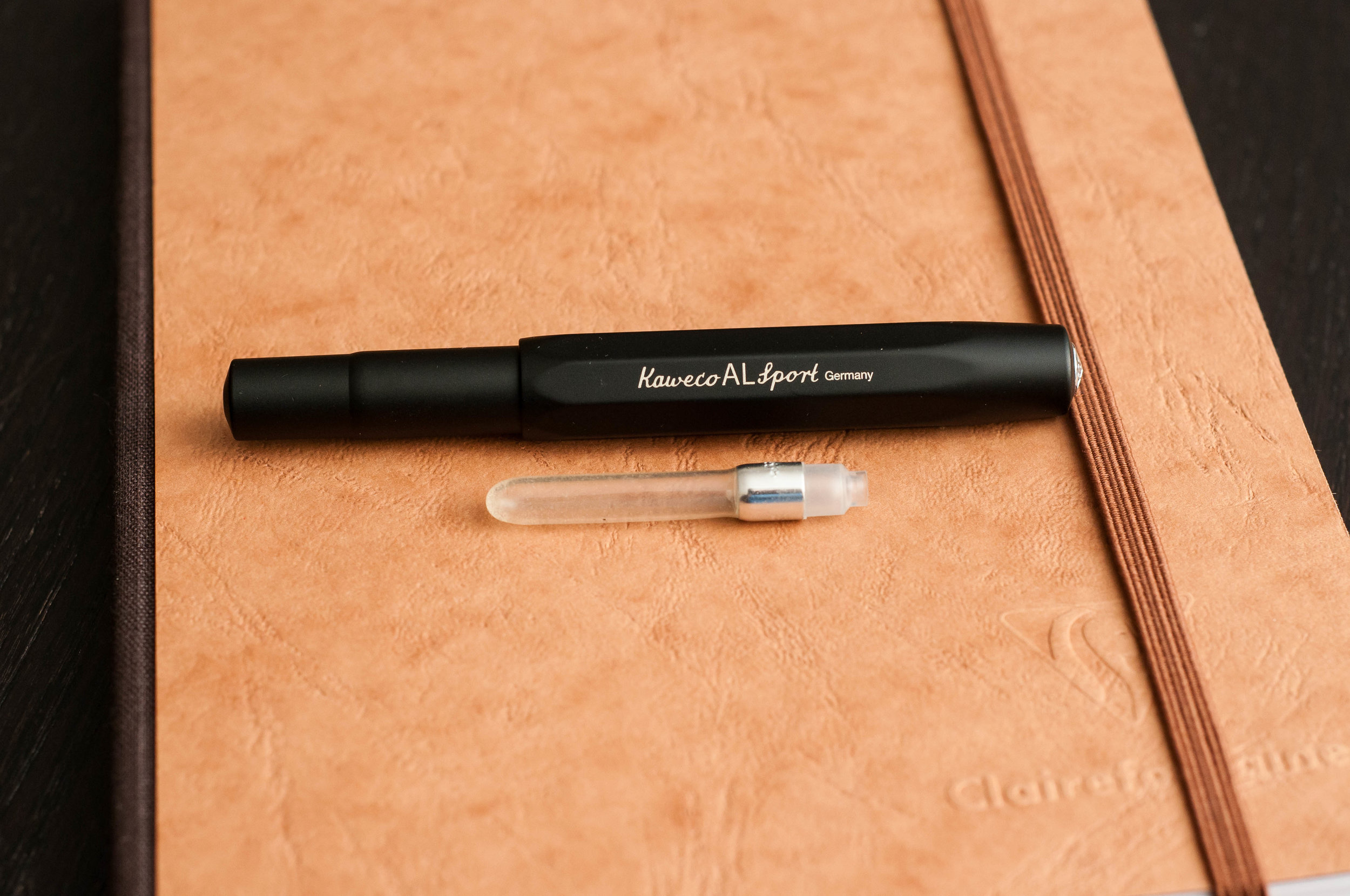
Every so often, you come across a new product that looks like it will solve a problem that you've been trying to remedy for quite a while. For me, the problem was Kaweco Sport pens and the lack of any converters. Before now, my only option was to reuse old cartridges by filling them with a syringe. The Kaweco Squeeze Converter looked like a perfect solution, so I ordered a couple. After all, the squeeze converters I've used from Pilot have been great, so this should be a great new addition for my Kaweco Sports.

The premise of the squeeze converter is great, but it doesn't quite live up my idealistic hopes. First off, these converters aren't pricey. When I bought them, they were $3 a piece. For converters, that's cheap. So, take the cost into consideration when I say that this is the worst converter I've ever used, and I probably won't bother using them again after the pens run out of ink.

Every now and then, you land on a dud. The Kaweco Squeeze converter is that dud for me, but it was worth the shot to try them out. The idea is still great — and the product would be great if a couple of major design flaws were corrected.

In practice, the squeeze converter is extremely simple to operate. Simply pop it into a pen that uses international short cartridges (two different Kaweco Sports in my case), dunk the nib in ink, and squeeze the bulb to expel the air and soak up the ink. The Kaweco converter does this, but not very well.

Basically, the problems boil down to:

  • I could only ever achieve a 1/3 full converter no matter how hard I tried to expel all the air from the bulb. 1/3 of a converter is not much ink at all.
  • The floppy design (which is necessary to expel air and creation suction) means that you must be careful when handling it. If you're planning to use a syringe to fill the converter 100%, I'll be astonished if you can fit the full converter to your pen without making a mess. I sure couldn't.
  • The pens I used were never "leakers" — meaning, they never had any nib creep while the cap was on. With these converters installed, a good amount of ink ends up on the nib while the pen is being transported. For example, if I put the cap on the pen and set it down on the table, there will be spots of ink on the nib when I re-open it. I tested this several times and my only conclusion is that the floppy nature of the converter means that it bounces slightly when the pen is jarred, which causes some ink to leak out of the nib. Really uncool.
  • They're annoying to clean properly.

These converters are usable, but I wouldn't recommend them to anyone. They're messy, inefficient, and don't hold much ink at all.
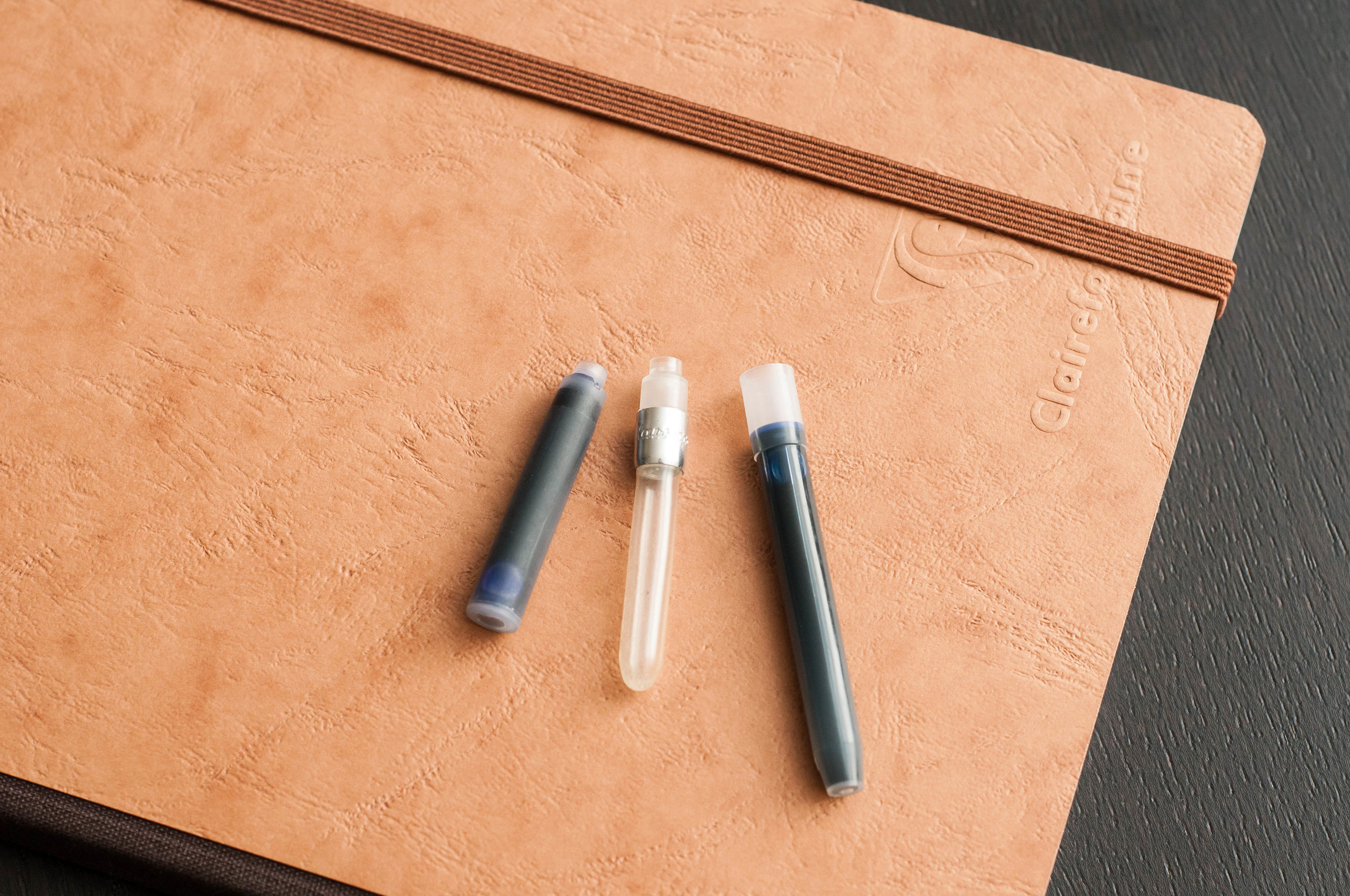
That doesn't mean that all bulb converters are bad. Take the Pilot CON-20 or the converter that ships with the Pilot Metropolitan for example. Same concept, but pilot has put a metal cage around the bulb to protect it, along with a window that allows you to pump the bulb. The Pilot CON-20 costs a mere $0.30 more than the Kaweco converter, so I have a hard time believing that this design choice was related to cost on Kaweco's part.

Overall, this is a product that has potential with some design changes, but not worth your time as it stands today. Spend your $3 on some silicone grease to turn your Kaweco Sport into an eyedropper, or reuse old cartridges by filling them with a syringe instead!

(JetPens provided this product at no charge to The Pen Addict for review purposes.)


Enjoy reading The Pen Addict? Then consider becoming a member to receive additional weekly content, giveaways, and discounts in The Pen Addict shop. Plus, you support me and the site directly, which I am very grateful for.

Membership starts at just $5/month, with a discounted annual option available. To find out more about membership click here and join us!

Posted on August 24, 2016 and filed under Kaweco, Fountain Pens.

Diplomat Aero Fountain Pen Review

As a manufacturer, Diplomat has been making pens since 1922. As a brand on my radar, Diplomat arrived about a year ago. How did a brand that has been in existence for over 90 years just now make it into the pen communities conscious? Marketing for one, but when you have a pen as beautiful and as well made as the Diplomat Aero you don’t have to sell it too hard.

The Aero engages you immediately with its good looks. The black matte aluminum barrel features rounded grooves that taper from the middle of the pen towards the gunmetal caps on each end. The satin gunmetal look continues in the grip section as well as the long, flat clip. The design is so tight I think it is right up there with the matte black Pilot Vanishing Point as an attention getter.

It looks good from far, and even better up close and in your hand.

Performance can sometime be an afterthought, especially when a pen looks this good, but that is not the case with the Aero. The Fine steel nib is as smooth as any I have used, and the ink flow is medium to wet. This is exactly what I would expect from a German nib. The Diplomat logo is stamped on to the nib for a nice visual touch.

It feels good, it looks great, and it writes wonderfully. The last element in creating the perfect pen is price, and that is where the Diplomat Aero falls short. It’s not bad, mind you: The Aero runs around $150 street price (Appelboom has it for $132). The issue is that puts it in direct competition with gold nib offerings like the Lamy 2000, Pilot Custom 74 and Vanishing Point, Platinum 3776, Sailor Pro Gear Slims, and more.

This is a tough spot to be in for a pen that deserves more. I wholeheartedly recommend it on its design and performance merits, but if you ask me to pick the Aero or the Lamy 2000 I will choose the 2000 every single time.

If the style of the Aero piques your interest you should go for it and not let the steel nib hold you back. I’ve paid more than twice as much for steel nib acrylic barrel pens (granted most were custom), and was happy to do so. What matters most is if the design aesthetic fits you and your style, and if you will get good use out of the pen and enjoy it. There is a reason that all of the Diplomat Aero reviews online are glowing.

(Points Of Distinction provided this product at no charge to The Pen Addict for review purposes.)


Enjoy reading The Pen Addict? Then consider becoming a member to receive additional weekly content, giveaways, and discounts in The Pen Addict shop. Plus, you support me and the site directly, which I am very grateful for.

Membership starts at just $5/month, with a discounted annual option available. To find out more about membership click here and join us!

Posted on August 15, 2016 and filed under Diplomat, Pen Reviews, Fountain Pens.

The Franklin-Christoph SIG Nib: A Review

(Susan M. Pigott is a fountain pen collector, pen and paperholic, photographer, and professor. You can find more from Susan on her blog Scribalishess.)

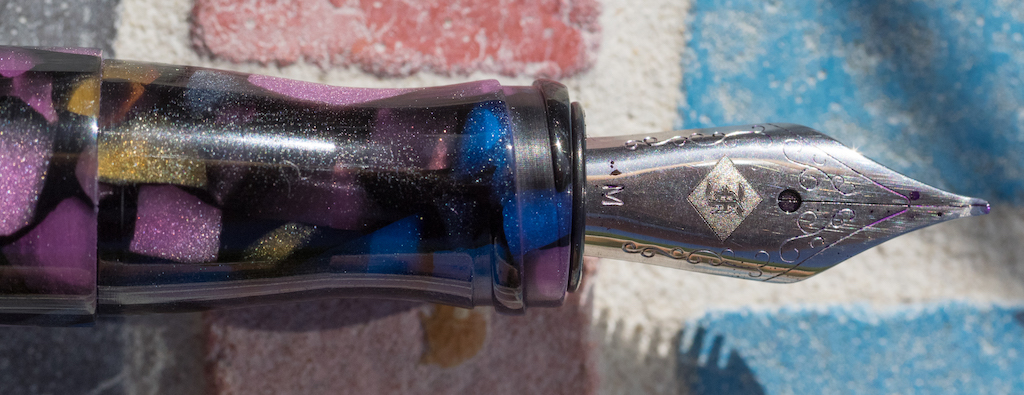
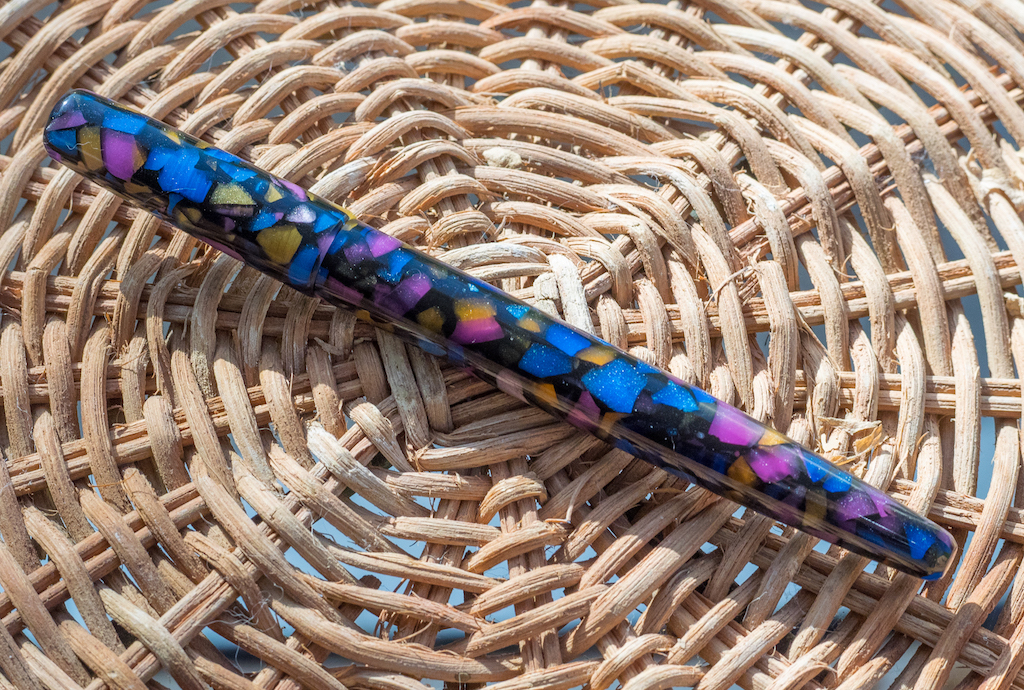
Recently, I lucked out and bought a Stabilis 65 in tiffany from a seller on Fountain Pen Geeks. The pen came with a Masuyama steel needlepoint nib I was eager to try. Unfortunately, I found the needlepoint scratchy (expected) and very dry (unexpected).

But I loved the pen, so I decided to order a different nib for it. That's when I discovered you can buy a new grind from Franklin-Christoph called the SIG (stub-italic-gradient) nib. The nib is in between an italic and a stub with less sharpness than an italic but a crisper line than a stub. The gradient means that, depending on the angle you hold the pen (shallow or steep), you get more or less line variation.

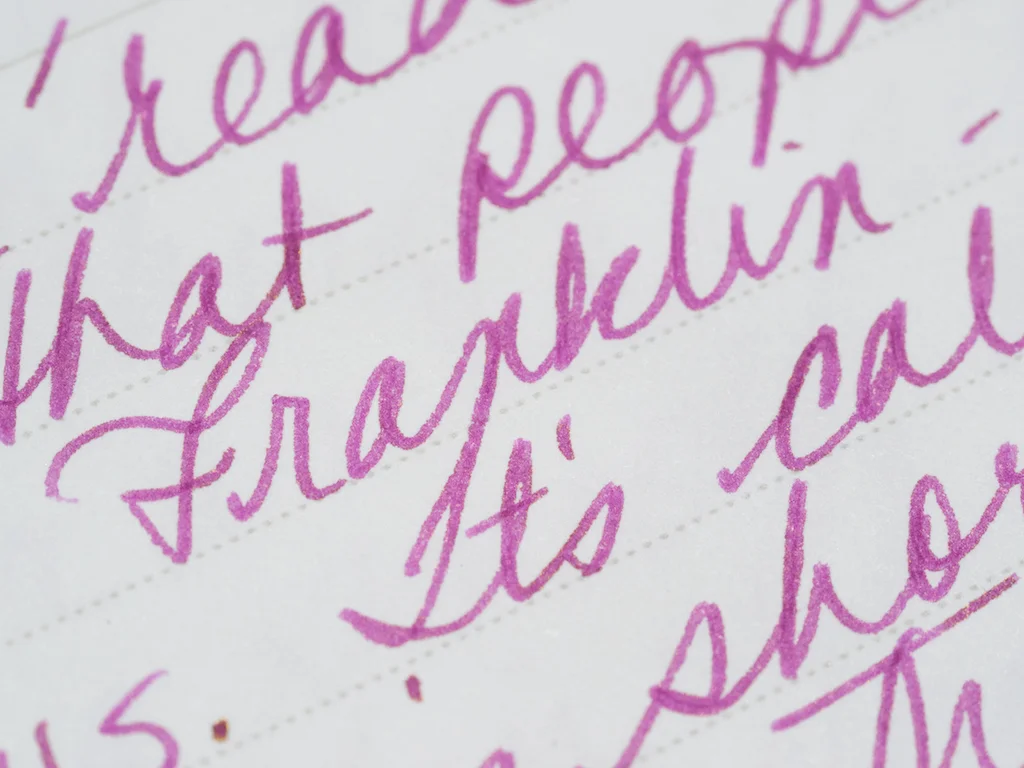
I purchased a medium SIG for my new Stabilis 65. It arrived a few days later and, I must say, I adore this nib. It is smooth. It's not hard to find the sweet spot because the whole nib is sweet. The edges don't gouge the paper (like some super crisp italics), and there's just enough line variation to distinguish the nib from a stub.

The Franklin-Christoph steel nibs don't have any spring to them, but in this case, it doesn't really matter as the nib itself offers such an enjoyable writing experience.

Franklin-Christoph nibs simply screw into the grip, so you can purchase a nib and use it with any Franklin-Christoph pen. Just make sure you know which size nib your pen requires (#5 or #6).

My Franklin-Christoph Stabilis 65 in tiffany with the medium SIG nib is already one of my favorite writing pens. You can get a Stabilis 65 from Franklin-Christoph with the SIG nib for $159.50 in black or emerald. Unfortunately, the tiffany acrylic was a special run and is no longer available. If you just want the SIG nib, you can order the ^5 nib for $40 and the #6 nib for $45. All the SIG nibs are steel, but hopefully Franklin-Christoph will produce them in gold as well in the future.

(I purchased both the pen and nib with my own funds and was not compensated by Franklin-Christoph for this review.)


Enjoy reading The Pen Addict? Then consider becoming a member to receive additional weekly content, giveaways, and discounts in The Pen Addict shop. Plus, you support me and the site directly, which I am very grateful for.

Membership starts at just $5/month, with a discounted annual option available. To find out more about membership click here and join us!

Posted on August 5, 2016 and filed under Franklin-Christoph, Fountain Pens.