Posts filed under Fountain Pens

Pilot Custom 74 Fountain Pen Review

Pilot Custom 74 Fountain Pen Review

Why am I reviewing a pen for the second time that I already praised greatly the first time? And why has it taken so long to re-review this pen that hasn’t changed - at all - from the first time around?

While the Pilot Custom 74 hasn’t physically changed, the greater context around this pen has. And that took me longer to realize than I care to admit.

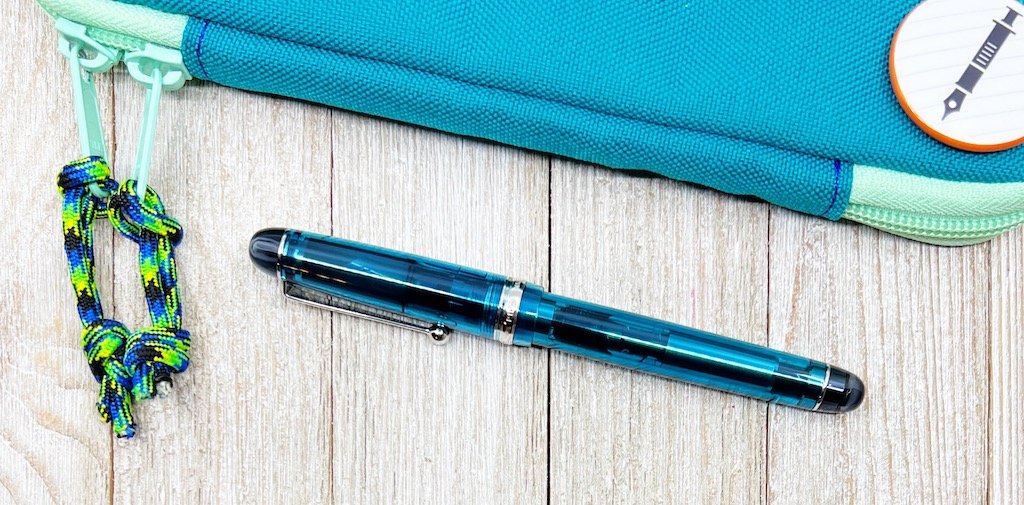
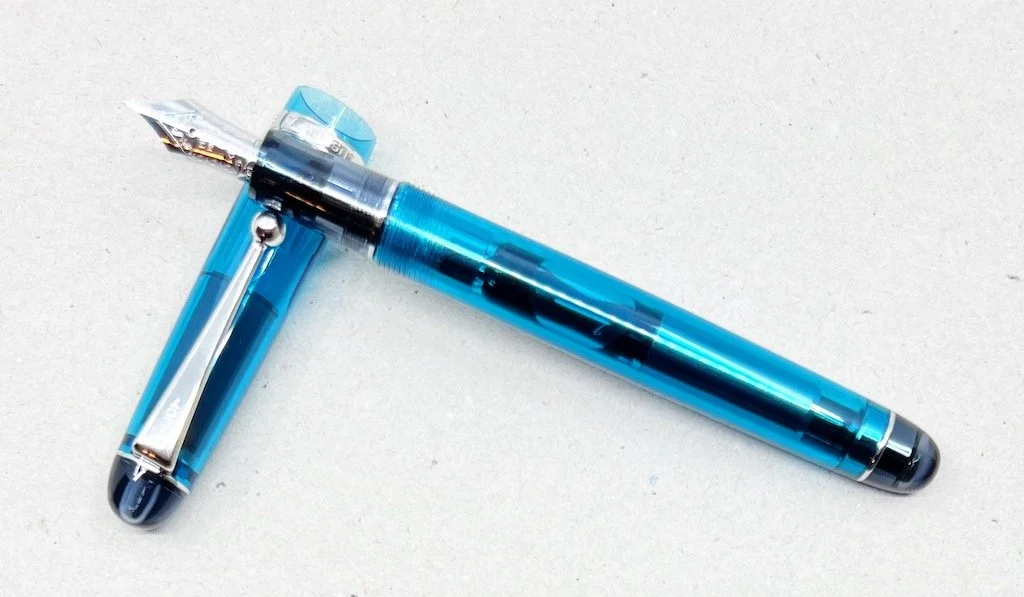
From a technical review perspective, the Custom 74 is a classically designed fountain pen. The shape is traditional, with a rounded-end barrel design and a classic Pilot clip shape. The translucent barrel adds a modern touch, especially with some of the fun colors Pilot has chosen, like this Teal model.
Pilot Custom 74 Fountain Pen

The nib is purely Pilot, which means the 14k Gold nib is well-tuned out of the box, and a glassy-smooth writer. It has a softer, bouncier feel than, say, a similarly sized Sailor nib, but don’t read too much into that difference. It is a perfect writer.

In the hand, the Pilot Custom 74 is lightweight. This could be the lone knock on the pen if you are a writer that requires a weightier weapon. Outside of that, it is difficult to say anything negative about this pen.
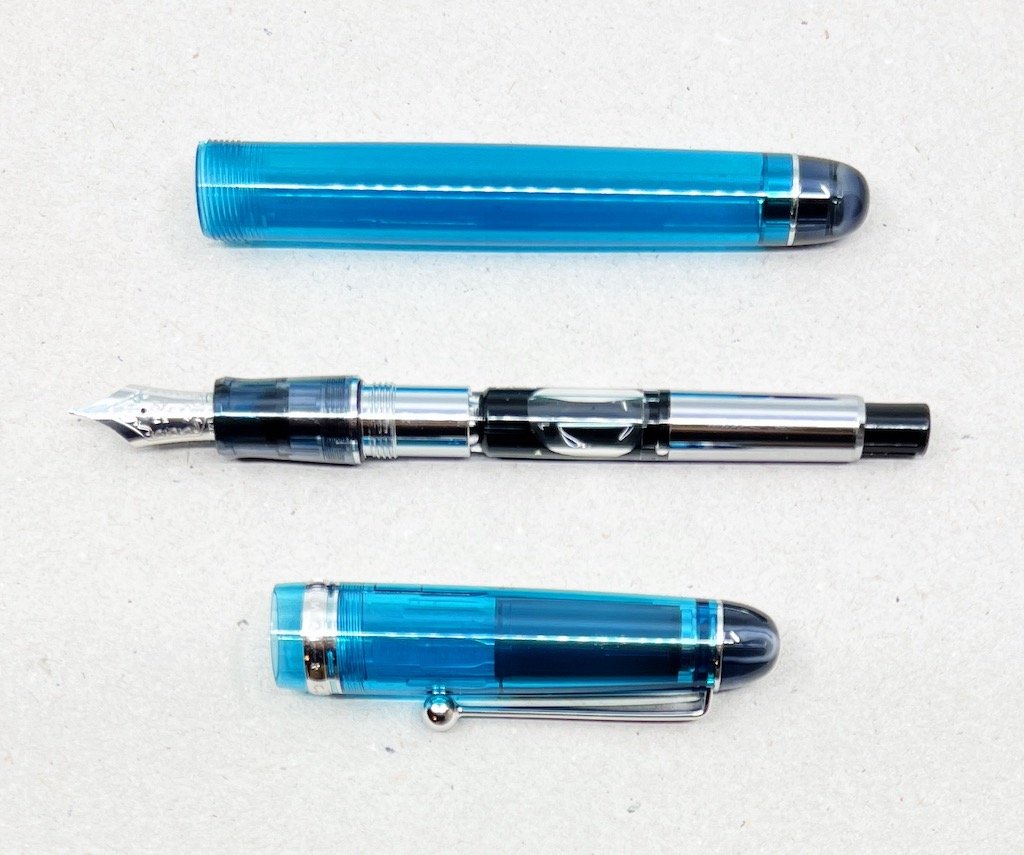
Pilot Custom 74

That includes the price, which is the real reason I am putting the Custom 74 on a pedestal today.

In my early days of fountain pen discovery, there was a group of three pens, from three major companies, that all seemed to work in conjunction with each other. They were built similarly, priced similarly, and resided in their respective product lineups similarly. Those pens are:

You may consider other label mates in the same group (Sailor 1911 Standard, Pilot Custom 91, etc.) but for purposes of this conversation I’m going to focus on the three pens above.
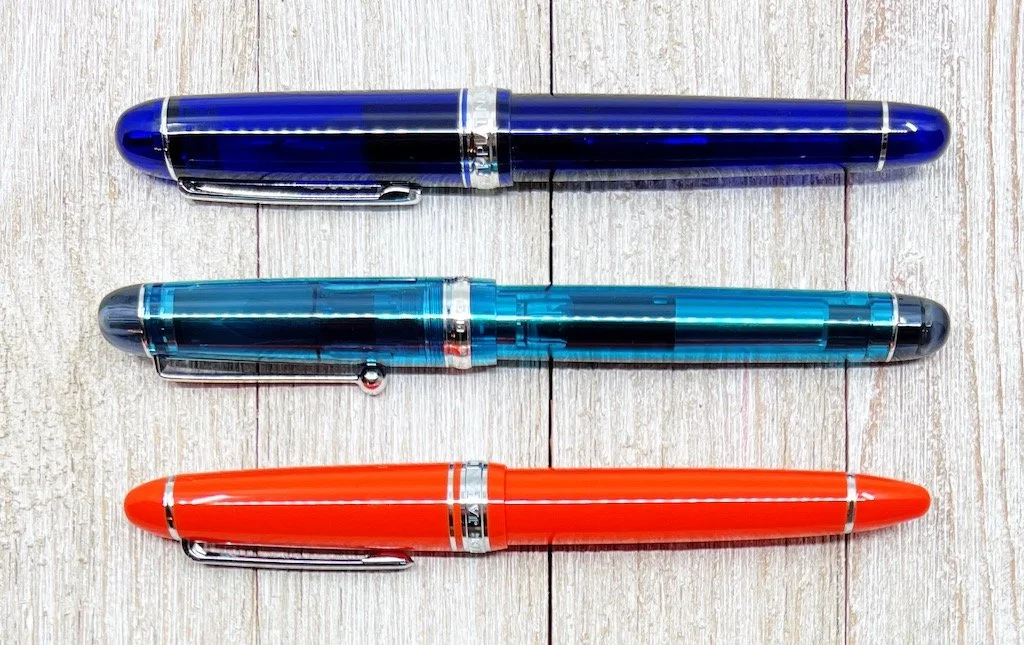
Platinum Pilot Sailor

Top to bottom: Platinum 3776, Pilot Custom 74, Sailor 1911.

For a period of time in the mid-2010’s, you chose one of those three pens based on how it appealed to your personal style and writing needs. If you wanted the brightest barrel and firmest nib, you chose the Pro Gear. If the nib was the single most important aspect, you chose the 3776 and settled for its basic barrel. If you wanted both style and substance, but maybe not the single best of either, you chose the Custom 74.

At the time, you were able to make this determination exclusive of price, because they were all priced similarly. If your budget was around $125-$150, you had a world of choice for a high-performing, well-designed gold-nibbled fountain pen. Heck, a decade ago you could grab some of these pens for $100, or less.

That time has passed. The cost of materials has increased. The cost of manufacturing has increased. The cost of everything has increased, and fountain pen prices have increased accordingly.

Platinum Pilot Sailor Nibs

The reason why I’m focusing on the Pilot Custom 74 today is because, while yes, it has increased in price from “back in my day,” it hasn’t increased as much relative to its competition. If I consider it the equivalent to the two pens listed above, and if those pens are now priced higher than the Custom 74, shouldn’t the Custom 74 be more highly recommended?

Yes, it should.

All models of the Pilot Custom 74 are $160 in the US market. The Sailor Pro Gear Slim starts at $180 for classic models, and on up from there, depending on release date vs. Sailor’s 2021 price increase. The Platinum 3776 runs $176 for gold trim pens, and $200 for rhodium plated trim. While there isn’t an outsized discrepancy in pricing, it’s enough to be noted. It’s also worth noting the simplicity of Pilot’s pricing of the 74 versus the other two models.

Not having the Pilot Custom 74 on my Top 5 Pens list in the $100-$200 fountain pen list is a huge oversight on my part. In fact, I think it needs to be in the number one spot in that group. Look for an update soon.

A couple of personal notes on this specific Pilot Custom 74 in Teal, ordered with a Medium nib:
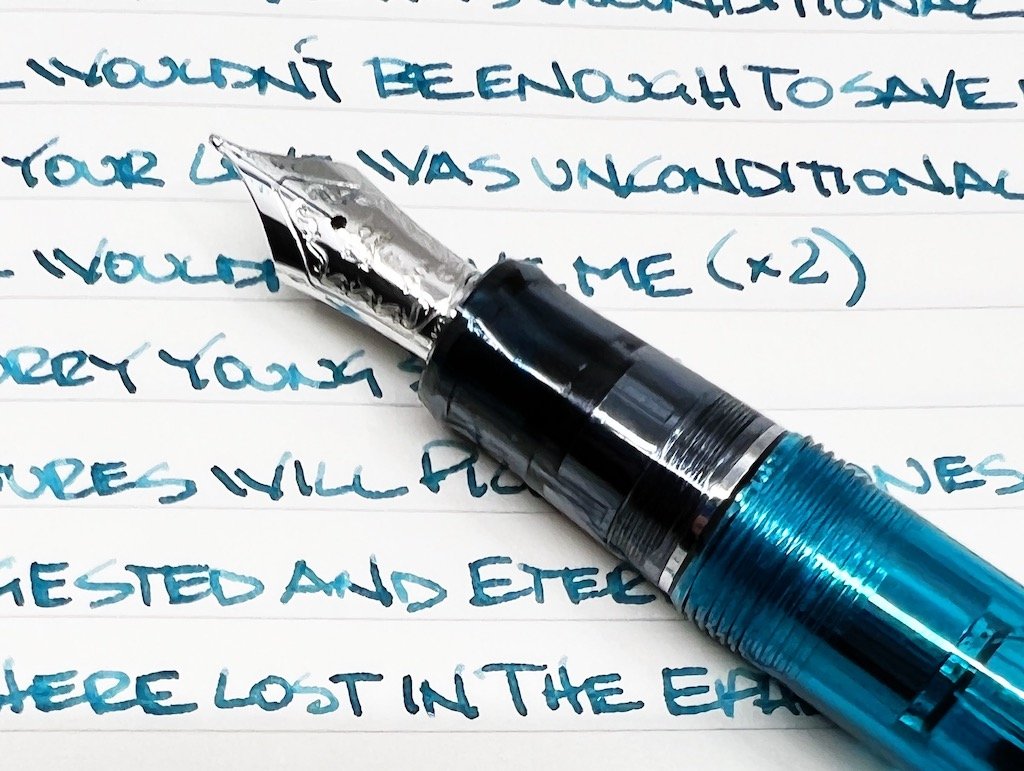
Pilot Custom 74 Writing

I ordered the Medium nib on purpose, knowing it may not be perfect for me. I had yet to spend time with this nib size in Pilot’s range, so I wanted to give it it shot. It is an amazing writer, but it is too wide for my daily use. The nib tipping is large, and therefore a perfect platform for modification. Likely, a cursive italic grind. More on that soon.

The Pilot CON-70 (which ships with the Custom 74) is the best, worst converter on the market. Trying to fill it attached to the pen and dipped into an ink bottle is an exercise in frustration. I could barely get it 1/3 filled no matter the number of pumps I gave it. I recommend filling it via syringe or pipette, if nothing else, for your sanity. Even so, it’s nice to have this high-capacity upgrade as the included converter.
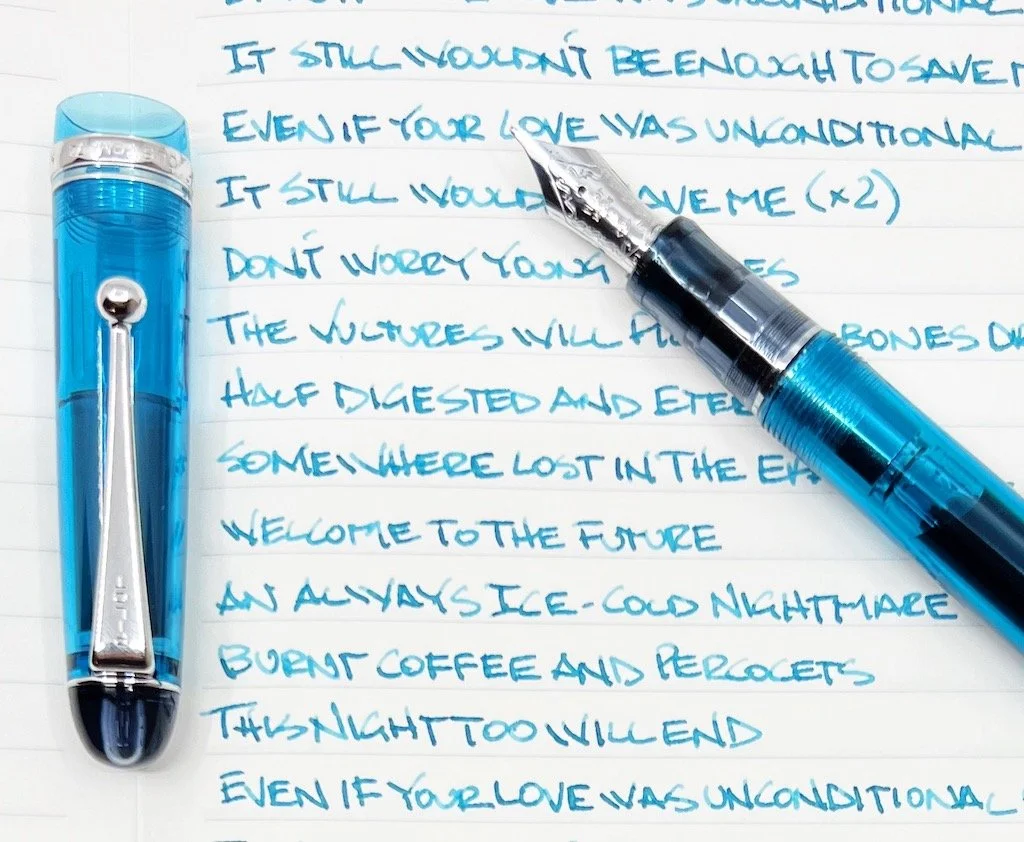
Pilot Custom 74 Writing Combo

Finally, I nailed the pen and ink matchy matchy combination with the recently reviewed Robert Oster Cities of America Miami Fountain Pen Ink. A highly recommended combination.

And if you couldn’t tell by now, I highly recommend the Pilot Custom 74. It is a great upgrade if you are making the leap from steel nibs, or entry-level fountain pens, and is high quality for those of us who have many pens in their collection already. The Custom 74 is a good choice no matter where you are in your fountain pen journey.

(I purchased this pen from Vanness Pens at a discount.)


Enjoy reading The Pen Addict? Then consider becoming a member to receive additional weekly content, giveaways, and discounts in The Pen Addict shop. Plus, you support me and the site directly, for which I am very grateful.

Membership starts at just $5/month, with a discounted annual option available. To find out more about membership click here and join us!
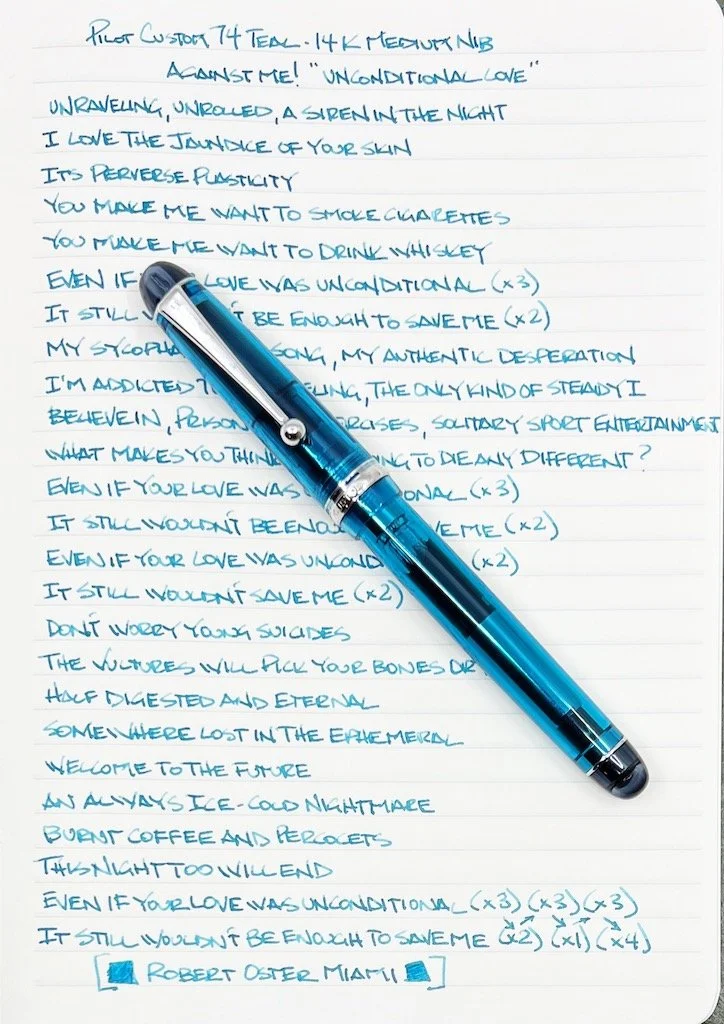
Pilot Custom 74 Review
Posted on February 21, 2022 and filed under Pilot, Custom 74, Fountain Pens, Pen Reviews.

Taccia Spotlight Forest Eye Fountain Pen Review

Taccia Spotlight Forest Eye Fountain Pen Review

(Kimberly (she/her) took the express train down the fountain pen/stationery rabbit hole and doesn't want to be rescued. She can be found on Instagram @allthehobbies because there really are many, many hobbies!.)

The Taccia Spotlight debuted a few years ago at the Dallas 2019 pen show. I remember Shu-Jen Lin, Taccia’s Brand Manager, telling me that they had just gotten them in time for the show and she was really excited to have a new offering. Taccia is known primarily for their gorgeous, artisan-made urushi pens, but they have always made sure to have pens that were more budget-friendly, like the Spectrum and Pinnacle.

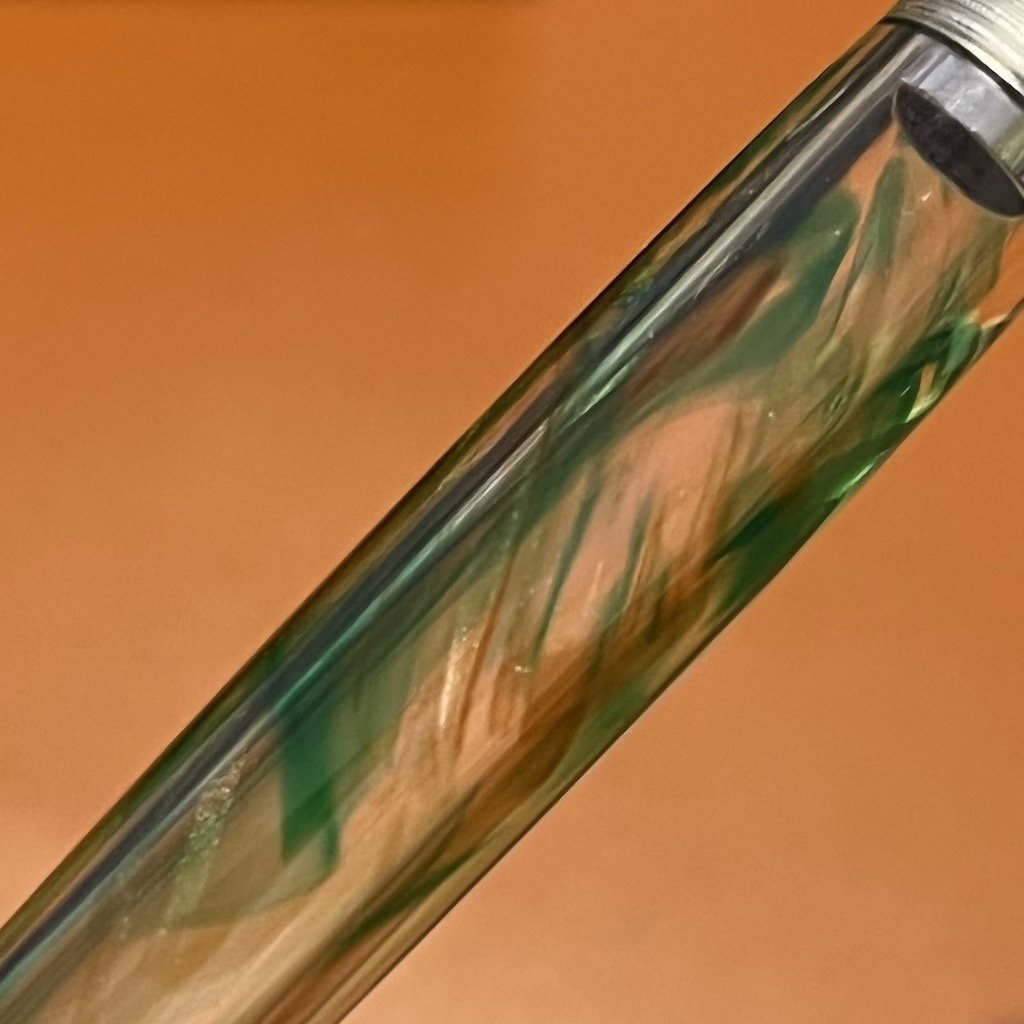
The Taccia Spotlight is a classically-shaped resin pen with silver trim. All of the models of the Spotlight are demonstrators; this review is for Forest Eye, which is the only colorway that is multicolored, with swirls of green, yellow and brown against a clear canvas. The other available colors are Highlighter Vision (a fluorescent yellowish green), Pure Clear (totally clear), and Airline Blue (a medium sky, almost turquoise blue).

The Spotlight comes in a black Taccia-branded box with a black outer box sleeve. There is a Sailor converter with a green piston knob included, which looks really good with this colorway.

Taccia Spotlight Fountain Pen
Taccia Spotlight Forest Eye Fountain Pen

The green piston knob of the converter looks great in this pen.

Taccia Spotlight Fountain Pen

Closeup of the green, yellow and brown swirls of the Forest Eye.

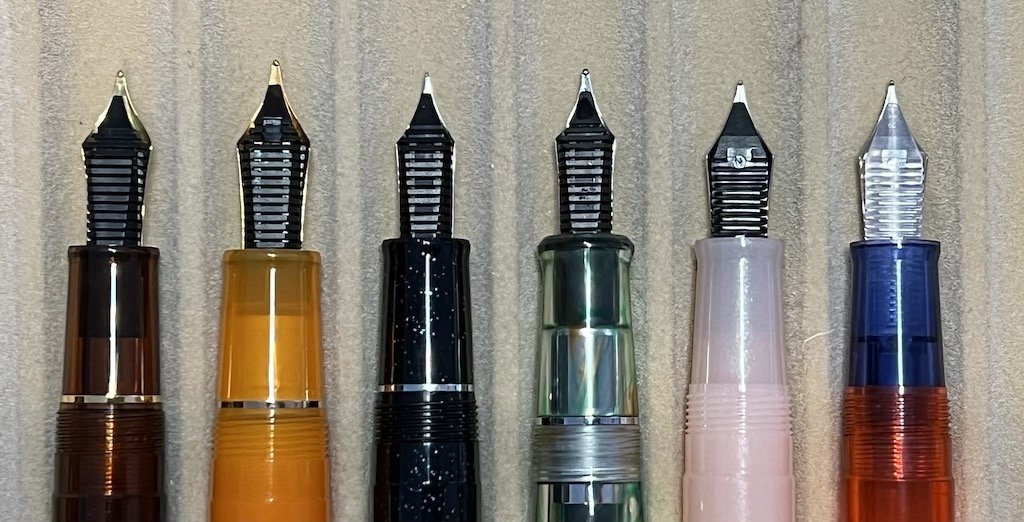
The pen is polished on both the interior and exterior, giving it a smooth clean finish. According to their website, the pens are not injection-molded but hand-turned. But the pen isn’t just lovely to look at, it also writes well because it houses Sailor nibs which are specially made and branded for Taccia. Unlike other steel nibs found in other Sailor pens like the Lecoule or Compass which are usually only available in MF, the Spotlight’s steel nib comes in a variety of nib sizes and the writing experience also feels different. The Spotlight steel nib feels more like a Sailor 14kt gold nib than the Lecoule steel nib; the pencil-like feedback is more like the gold nib, firm but not quite as nail-like as the Lecoule nib. Sailor does have some steel nibbed models, like the Procolor or Shikiori, that look more similar to the Taccia nib. Aesthetically, the Taccia steel nib just looks nicer/fancier to me than the Lecoule nib.

Sailor vs Taccia Nibs

L to R: Nibs from the Sailor Pro Gear Slim, Pro Gear, Procolor, Taccia Spotlight, Lecoule, and Compass.

Feeds from the same pens - The Spotlight has a similar feed as the Procolor, and is more similar to the gold-nibbed feeds than to the Lecoule/Compass feeds.

I like that the cap has an inner cap to help prevent evaporation. The nib wrote flawlessly even after not being used for a couple weeks.

The inner cap stops right at the collar of the feed/housing to minimize evaporation.

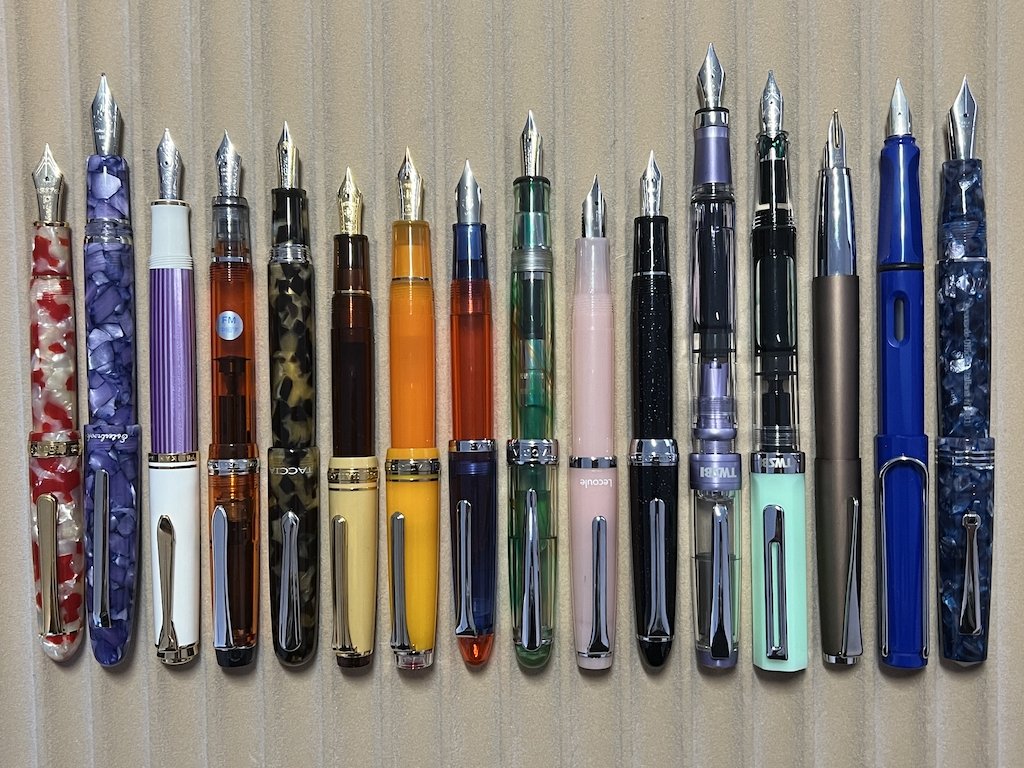
The Spotlight is a fairly light pen, weighing in at 0.845 oz/23.95 g capped and 0.42 oz/11.91 g uncapped. I excluded the converter in the weight, in case you wanted to use cartridges instead. Note that Taccia Pens only work with proprietary Sailor converters and cartridges. I don’t post my pens but you could do so with the Spotlight and it wouldn’t feel too back-heavy. Similarly weighted pens include the Pilot Custom 74 and Platinum 3776, both of which weigh in at 0.8oz/0.70 oz capped and 0.5 oz/0.33 oz uncapped, respectively.

Comparison with other pens L to R: Platinum 3776, Esterbrook Estie, Pelikan M600, Pilot Custom Heritage 92, Taccia Spectrum, Sailor Pro Gear Slim, Sailor Pro Gear, Sailor Compass, Taccia Spotlight, Sailor Lecoule, Sailor Procolor, TWSBI 580 ALR, TWSBI Eco, Lamy Studio, Lamy Safari, Leonardo Momento Zero

The Taccia Spotlight, along with other models like the Spectrum and Pinnacle, are available in steel (EF, F, M, B & Music) or 14kt gold (EF, F, MF, M, B and Music) nibs. It has a retail/street price of $159/$127 (~140 EU/110 EU) for the steel nib and $269/$215 (236 EU/189 EU) for the gold nib. I think the steel nib is a nice option for someone looking for a next-level steel nib pen as there aren’t many Japanese steel nib pens in the $75-$150 range, but the gold nib feels just a bit on the pricier side, considering the street price for a regular issue Pilot Custom 74 is $200/$160, the Platinum 3776 is $220/$176, and even the Sailor Pro Gear Slim or 1911S which would be the most similar to the Spotlight is $225/$180.

Likes:

  • Good looking, demonstrator pen that’s available in several colors and nib offerings in both steel and gold
  • Reliable, well-tuned nib that writes well out of the box
  • Inner cap helps with preventing evaporation

Things to consider:

  • Pen may be too light for some users
  • Price is a bit on the higher side, especially for the gold option, as compared to similar Japanese counterparts

Overall, the Taccia Spotlight is a really nice writer and very comfortable for long writing sessions. The inner cap sealed well, allowing it to start up immediately after a couple weeks of unuse.

(Brad purchased this pen at a discount from Vanness Pens for review purposes.)

Posted on February 11, 2022 and filed under Taccia, Fountain Pens, Pen Reviews.

Cross ATX Fountain Pen Review

Cross ATX Fountain Pen Review

(Jeff Abbott is a regular contributor at The Pen Addict. You can find more from Jeff online at Draft Evolution and Twitter.)

It's been several years since I've tried out a new Cross fountain pen, so I was excited to use the new ATX I received. My experience with the Cross Townsend was really good, so I had high expectations for the ATX as well. Luckily, I wasn't let down.

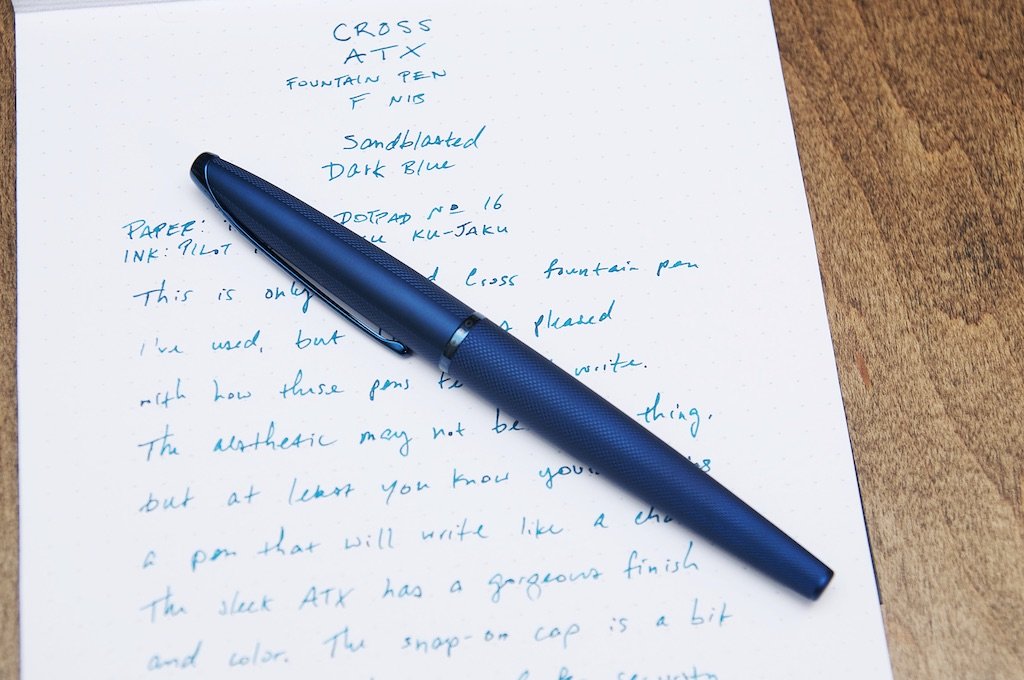
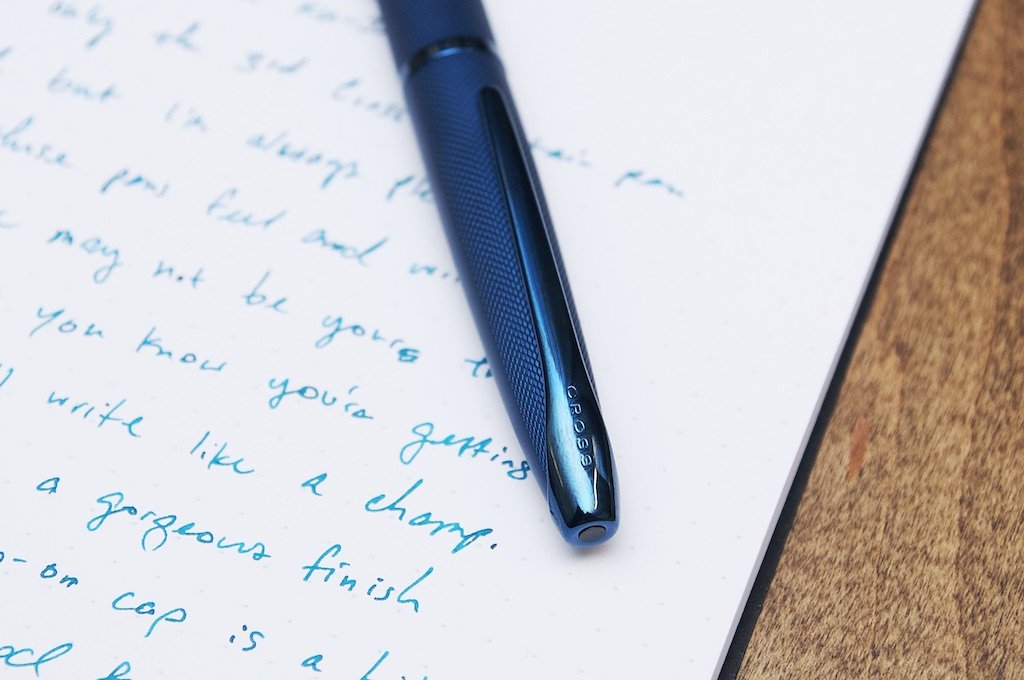
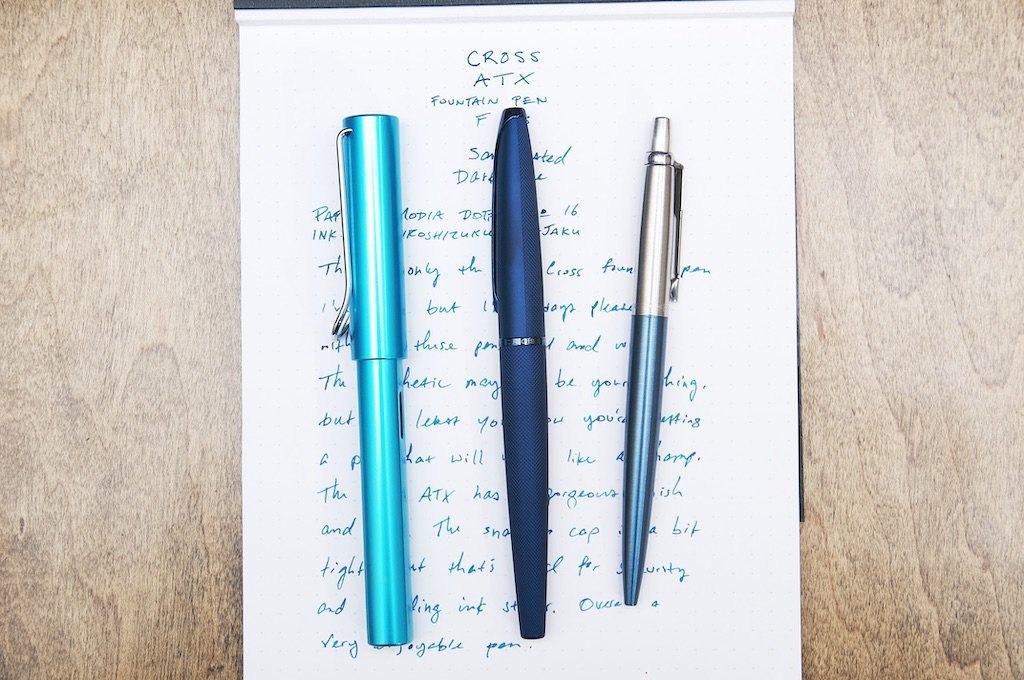
The Cross ATX is a sleek and modern fountain pen that's made of a lightweight metal material. The color is a lovely blue/teal with very little shine. I'd say it's matte, but there's just enough gloss in the finish to give it a little glimmer. The texture on the exterior of the pen is also something that catches your eye. It's a wavy line that looks like hatch marks from more than 10 inches away. The etching is light enough to still feel smooth, but there's plenty of tactile grip left to make sure you can hold onto it easily.

Cross ATX Fountain Pen

I really enjoy the blue/teal color of this pen. In certain light, it looks like a dark blue pen with a subdued texture. In brighter light, you can see more of the green and the wavy lines make it look like it's changing colors between blue and teal. It's a fantastic finish.

I'm less enthusiastic about the finish on the grip section and the nib plating. They're both a similar color as the exterior, but they're quite shiny and reflective — and this means they collect fingerprints easily. It's a minor gripe, but I do wish they'd used a slightly more matte finish for the grip so it would have a better grip feel.

Cross ATX Fountain Pen

The same shiny blue material is used on the band around the opening of the cap as well as the clip. Since these elements are so small, they work nicely with the textured matte finish of the pen body and cap. The shiny grip section feels like too much, and the nib sharing the same color as everything else contributes to the pen feeling a bit too monochromatic. The different finishes provide a drastic amount of contrast, but they could have done so much more with a little color contrast as well!

Getting into the actual performance of the pen, I couldn't be happier. Several years ago, I was really surprised by how much I liked the Townsend, and the same thing is true with the ATX today. The nib is a petite fine, but it flows smoothly and lays down plenty of ink to keep pace with my sloppy writing. It was buttery smooth out of the box and has a great line width for what I'd consider a fine nib from a non-Japanese pen brand.

Cross ATX Fountain Pen

The pen writes perfectly after being stored for a bit. There's no hard starts or sputtering. Part of this equation is down to the ink I've chosen to use here, but a larger part is the cap system. The cap uses a push/pull system that relies on a friction fit to keep everything sealed and secure. There's a small click once you've fully seated the cap onto the pen body to let you know it's capped securely. When uncapping the pen, there's a satisfying pop (albeit a quiet one) that goes with the motion. I was worried at first that the tight seal would create enough suction when uncapping the pen that it might spurt a small amount of ink onto me, the floor, or anything near me, but this hasn't been the case so far. As long as you use a smooth motion to uncap the pen, I don't see any issues here. It does require a good bit of force, but I'd rather than than the opposite (a cap that's too loose to stay on securely).

The cap also posts to the back of the pen and results in a slightly longer overall pen without being too long. For me, the unposted pen is a great length for writing, but posting the cap only changed the feel a small amount. This is one of those pens that I'll post every time since it feels great in the hand either way. When it's posted, I don't have to worry about where the cap is.

Cross ATX Fountain Pen

The ATX is a fairly slim pen, so it fits any pocket, bag, sleeve, etc. that fits any generic gel pen size barrel. The clip is nice and strong, but it is mounted very close to the cap, which means you'll have trouble clipping this onto thick fabrics or other thick materials. In most cases, the clip has no problem working as intended.

I'm really happy to report that the ATX is another great pen from Cross. I only have two or three fountain pens from Cross, and they've impressed me every time.

Cross ATX Fountain Pen

The ATX comes with a couple of black ink cartridges. It's important to know that Cross uses a proprietary cartridge fitting, so you'll either need to pick up a converter to go with the pen, or buy some extra cartridges that fit it. The Cross converter is only a few bucks, but it's one of those things that I wish all large pen companies would just include in the box with the pen.

If you like this pen, check it out on Pen Chalet. There are a couple other colors to pick from (like Black PVD, Brushed Chrome, and Sandblasted Titanium Gray) and they're available in either a fine or medium nib (except for the Black PVD option — medium only!).

(Pen Chalet provided this product at no charge to The Pen Addict for review purposes.)


Enjoy reading The Pen Addict? Then consider becoming a member to receive additional weekly content, giveaways, and discounts in The Pen Addict shop. Plus, you support me and the site directly, for which I am very grateful.

Membership starts at just $5/month, with a discounted annual option available. To find out more about membership click here and join us!

Cross ATX Fountain Pen
Posted on February 9, 2022 and filed under Cross, Fountain Pens, Pen Reviews.