Posts filed under Fountain Pens

Hinze Pen Co. Sleipnir Fountain Pen Review

Hinze Pen Co. Sleipnir Fountain Pen Review

When you are naming a pen model after after the eight-legged horse Norse god Odin rode in on, you better get it right. Luckily for us, Hinze Pen Co. always gets it right, and the Sleipnir model is just the latest example of their craftsmanship.

When you are dealing with a magical creature as inspiration, how do you bring that forward into a pen design? For starters, how about an eight-sided barrel, matching the number of the mythical beasts legs. If eight sides weren’t enough on its own, they are built around a big barrel, befitting the story being told through this pen.
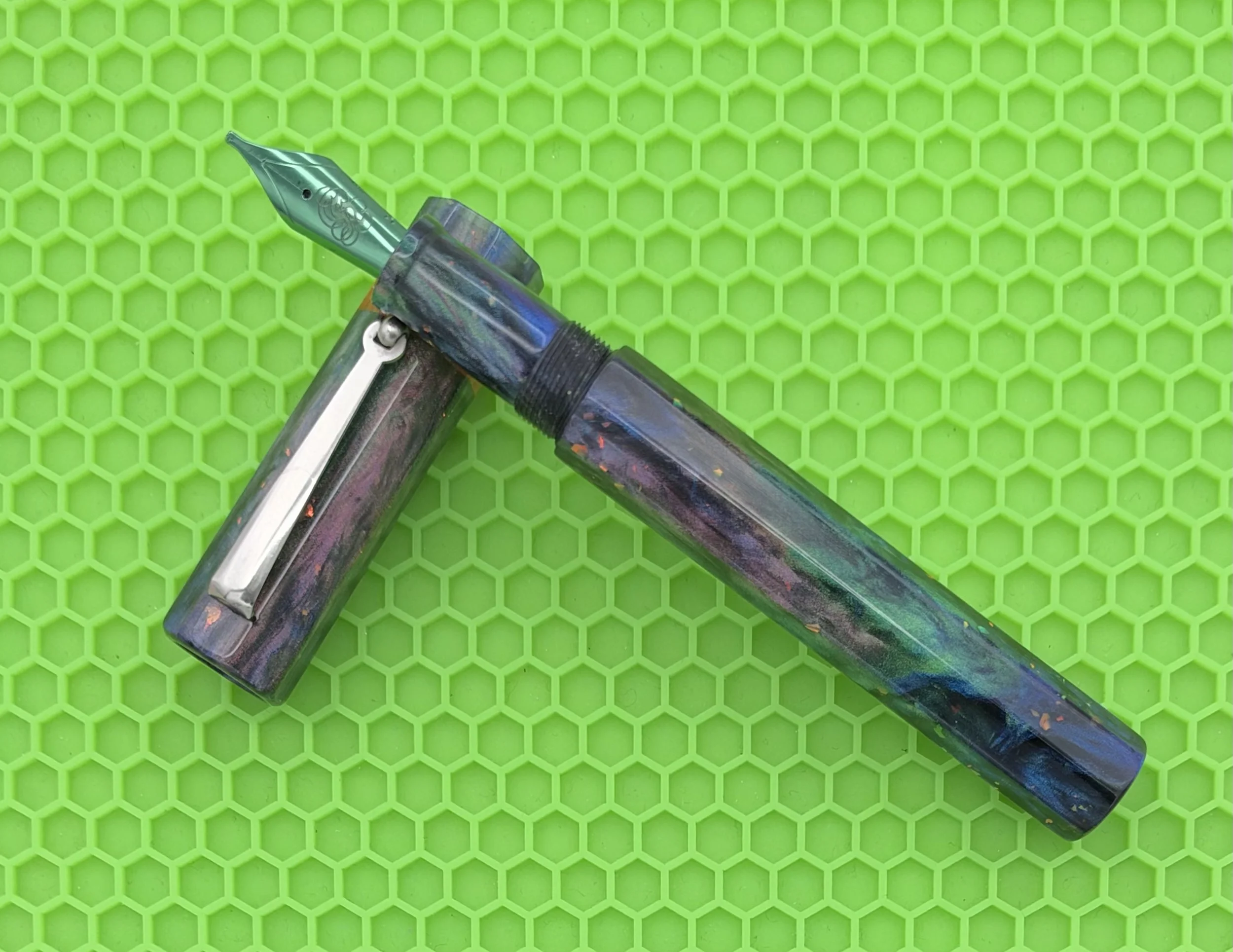
Hinze Pen Co. Sleipnir Fountain Pen

The diameter of the Sleipnir model is the main consideration when thinking about this pen. Large barrel pens are not for everyone, and this one, checking in at 14.5 mm at its widest point will be too big for some. In general, I prefer narrower diameter pens, but I have a few in my collection around this size that I enjoy because the overall feel of the pen works in my hand.
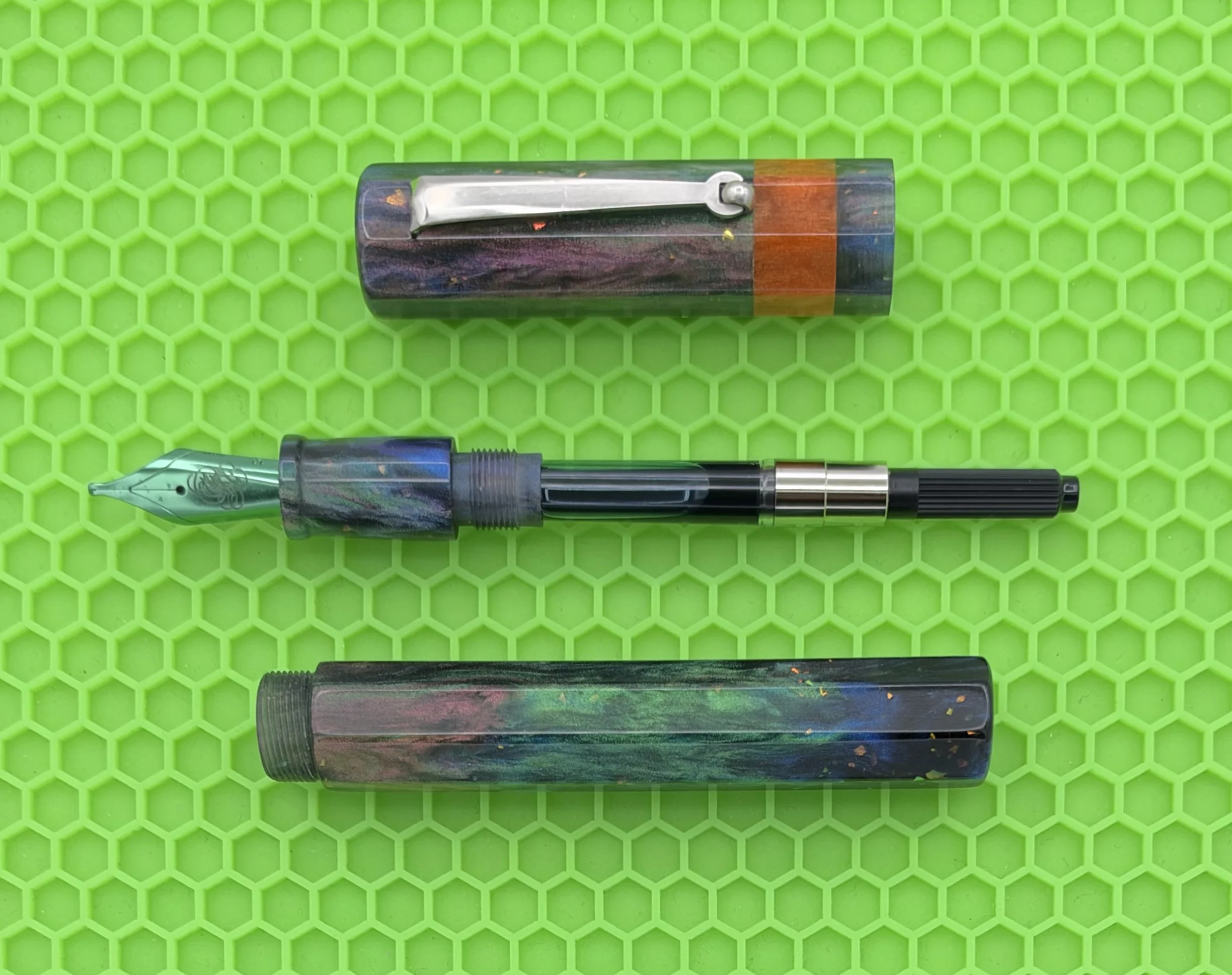
Hinze Pen Co. Sleipnir

To me, feel is made up of the combination of weight, balance, and grip section design. On any pen, all of these things have to work together, but they are especially important aspects when it comes to large pens. I have average-sized hands, and I like to write small. That combination lends itself best to smaller, narrower pens, but doesn’t exclude large pens. There is just less room for sacrifice if one thing throws the whole experience off.
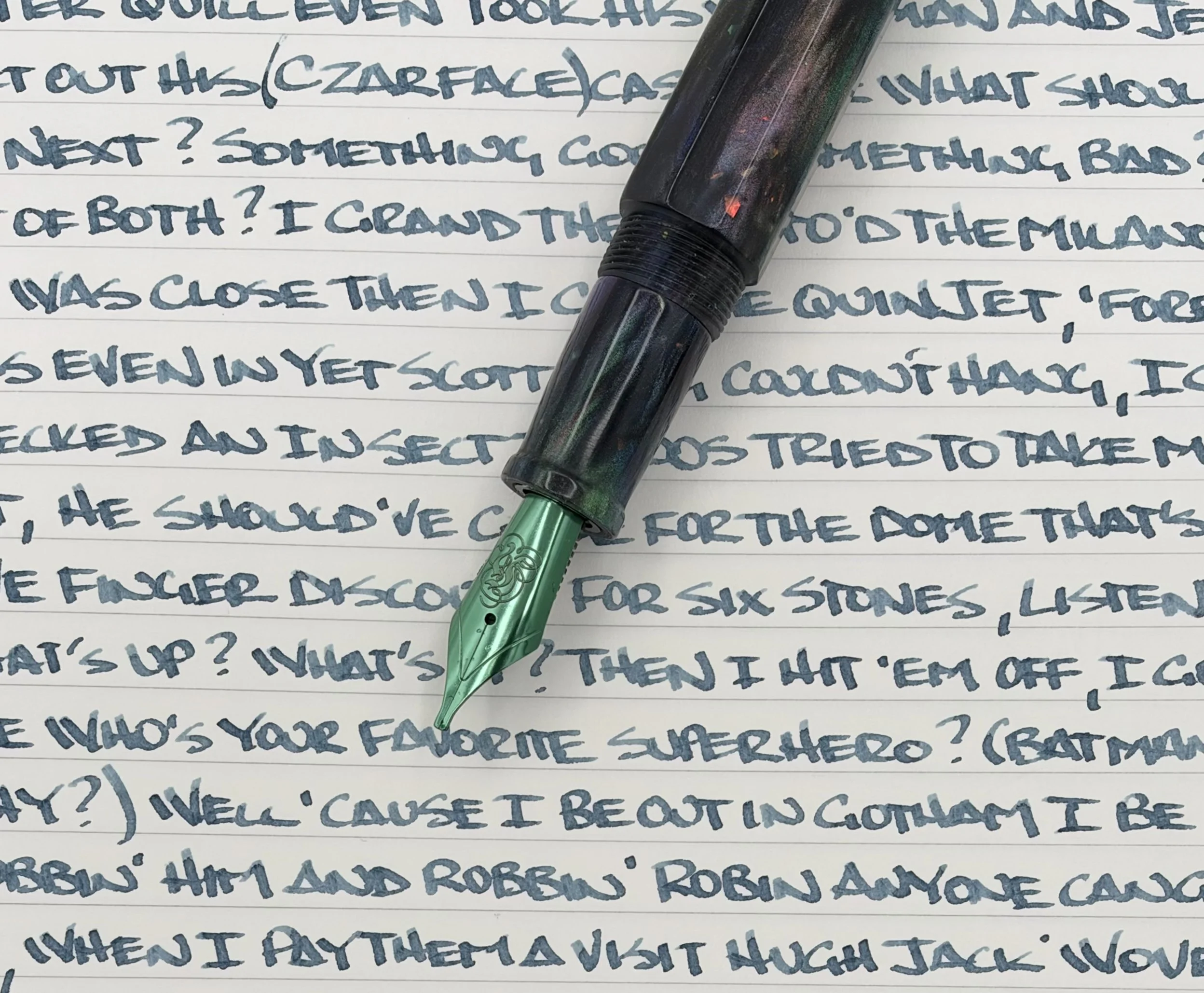
Hinze Pen Co. Sleipnir Nib

Luckily for me, everything on the Sleipnir works well in hand. I did fit it out with a 1.1 mm stub nib, which is a good size match. It doesn’t hurt that Hinze Pens has fun electroplated options such as this Green that matches the barrel perfectly.

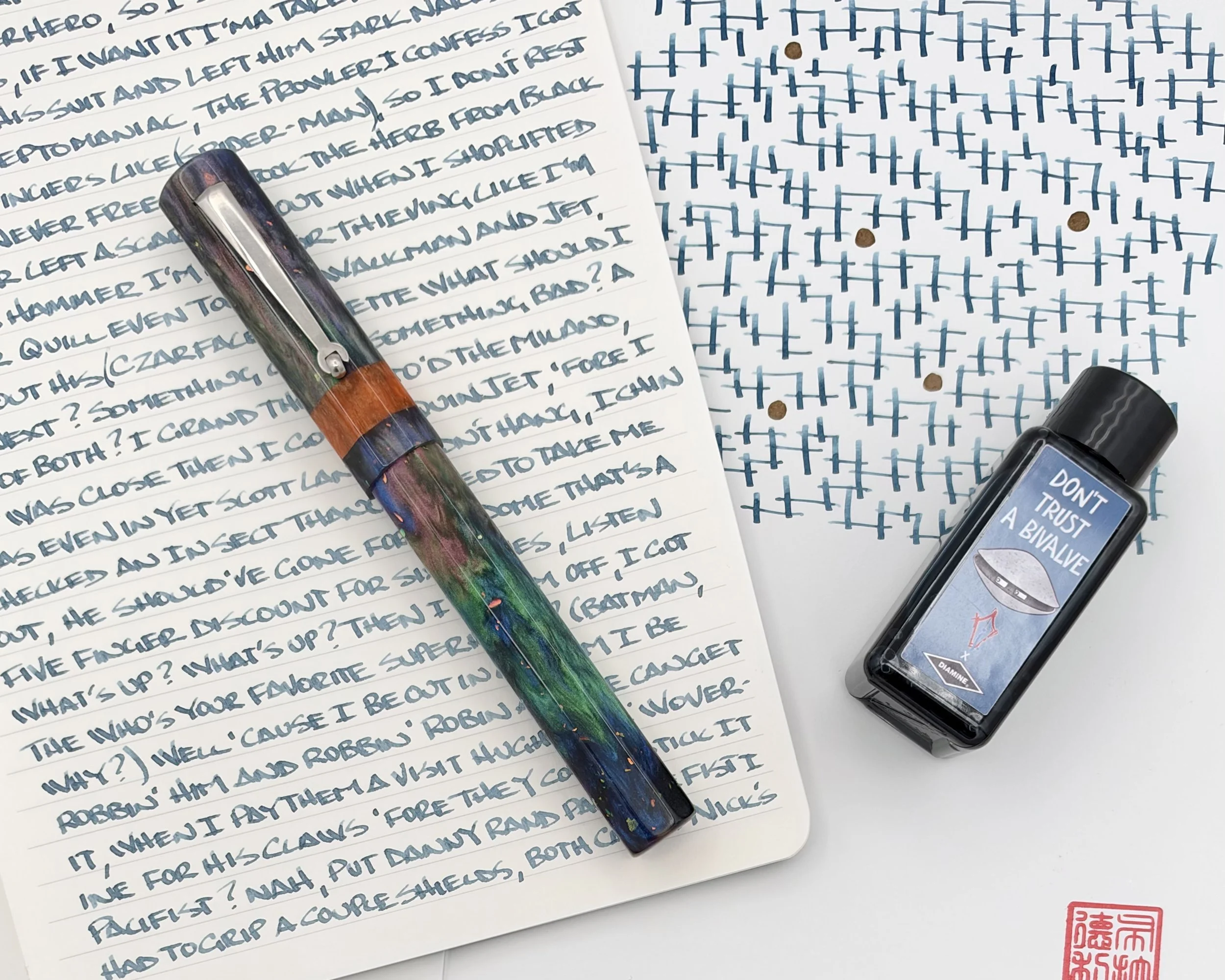
Speaking of the barrel, this Dark Side material I picked out from in-house maker Starry Night Resins is a knockout. It’s Northern Lights-esque, with holographic flakes scattered throughout, and a highlight Orange ring in the cap. This is one of those materials where you see something different every time you pick it up.
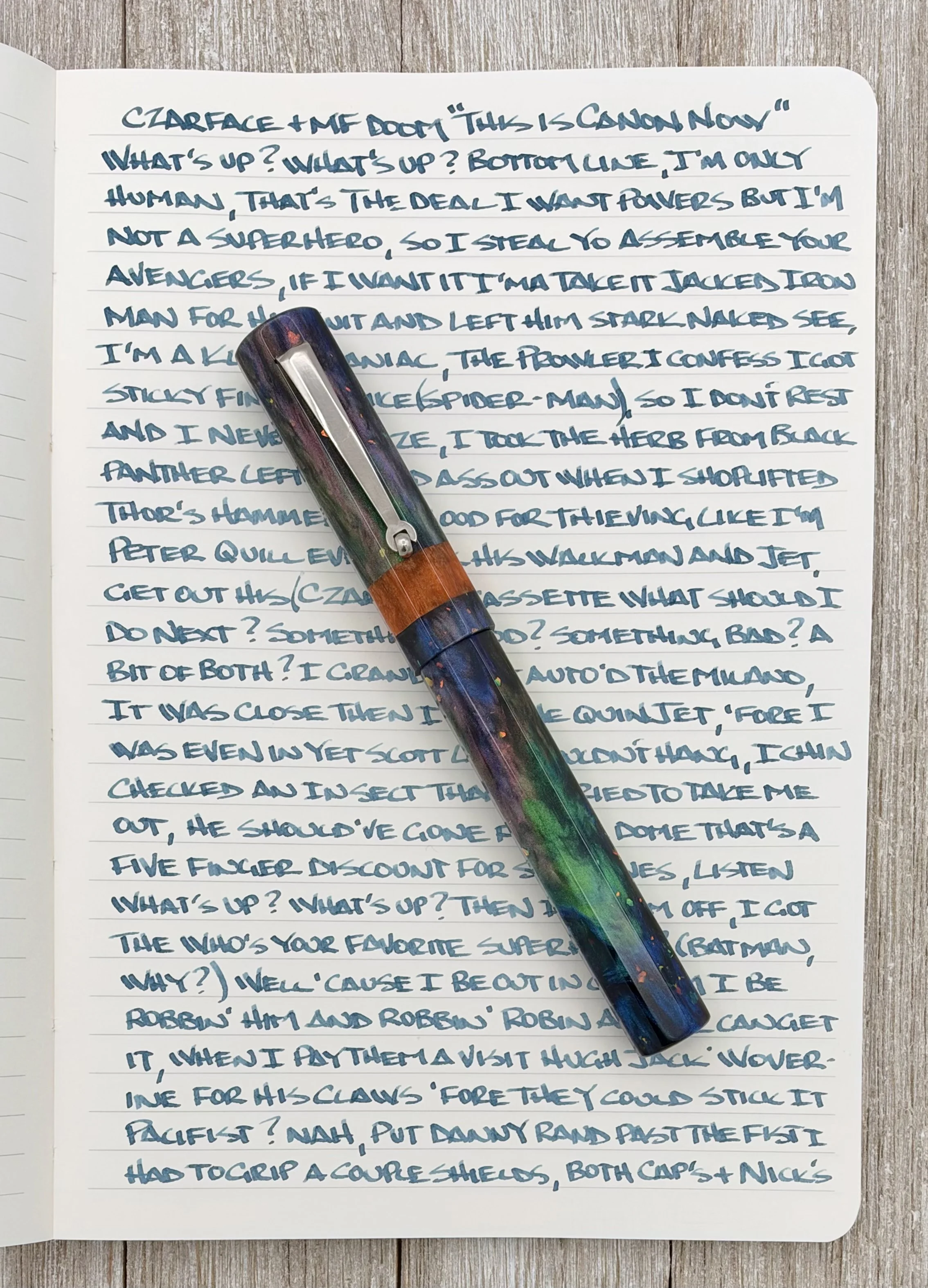
Hinze Pen Co. Sleipnir Ink

Mitsubishi Bank Paper.

For ink, I’ve exclusively used Inkdependence “Don’t Trust a Bivalve” with it, giving it a perfect match-matchy look. That said, there are dozens of shades that would look right in this pen, so who knows what’s next.

What’s next for now is I’m going to keep writing with the Hinze Pen Co. Sleipnir, and keep looking for my own to keep because I’ve really enjoyed it so far. It runs $320, and comes in many different materials you can see online, and at a pen show near you - including the Dallas Pen Show this upcoming weekend.

Big thanks to Jim, Elyce, and the entire Hinze team for providing this pen at no charge so I could test our their latest model!


Enjoy reading The Pen Addict? Then consider becoming a member to receive additional weekly content, giveaways, and discounts in The Pen Addict shop. Plus, you support me and the site directly, for which I am very grateful.

Membership starts at just $5/month, with a discounted annual option available. To find out more about membership click here and join us!
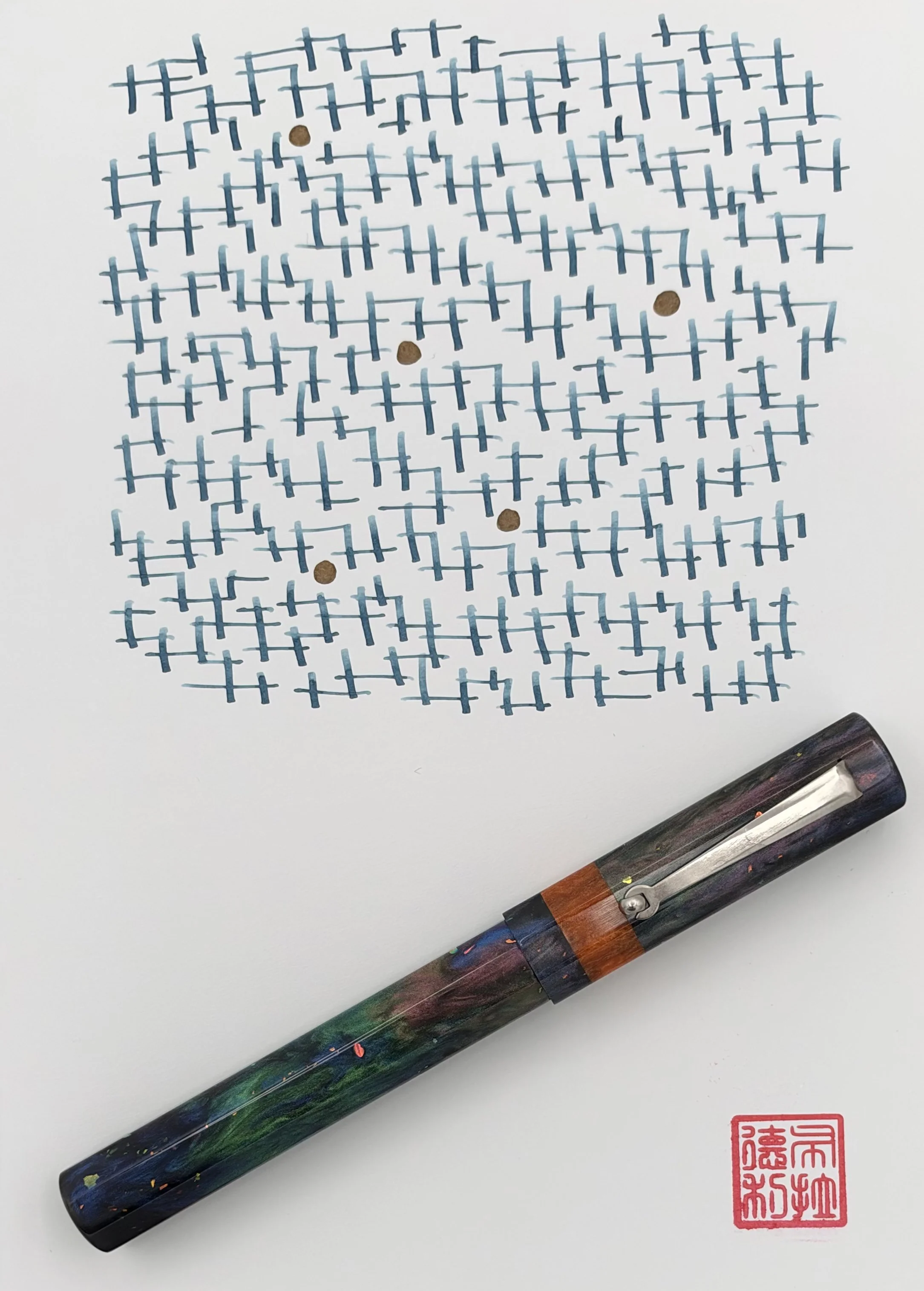
Hinze Pen Co. Sleipnir Lines

Yoseka Notebook.
Posted on September 21, 2026 and filed under Hinze Pen Co., Fountain Pens, Pen Reviews, Inkdependence.

Platinum Komono (PQ-1500) Fountain Pen Review

Platinum Komono (PQ-1500) Fountain Pen Review

One of the dilemmas I have when deciding to review a product is if it’s worth spending the time discussing a product that is not easy to acquire. That covers many areas, such as limited edition pens, or event exclusive inks. In the case of the Platinum Komono, this also means discussing a pen - to borrow a phrase from the digital world - that is region locked.

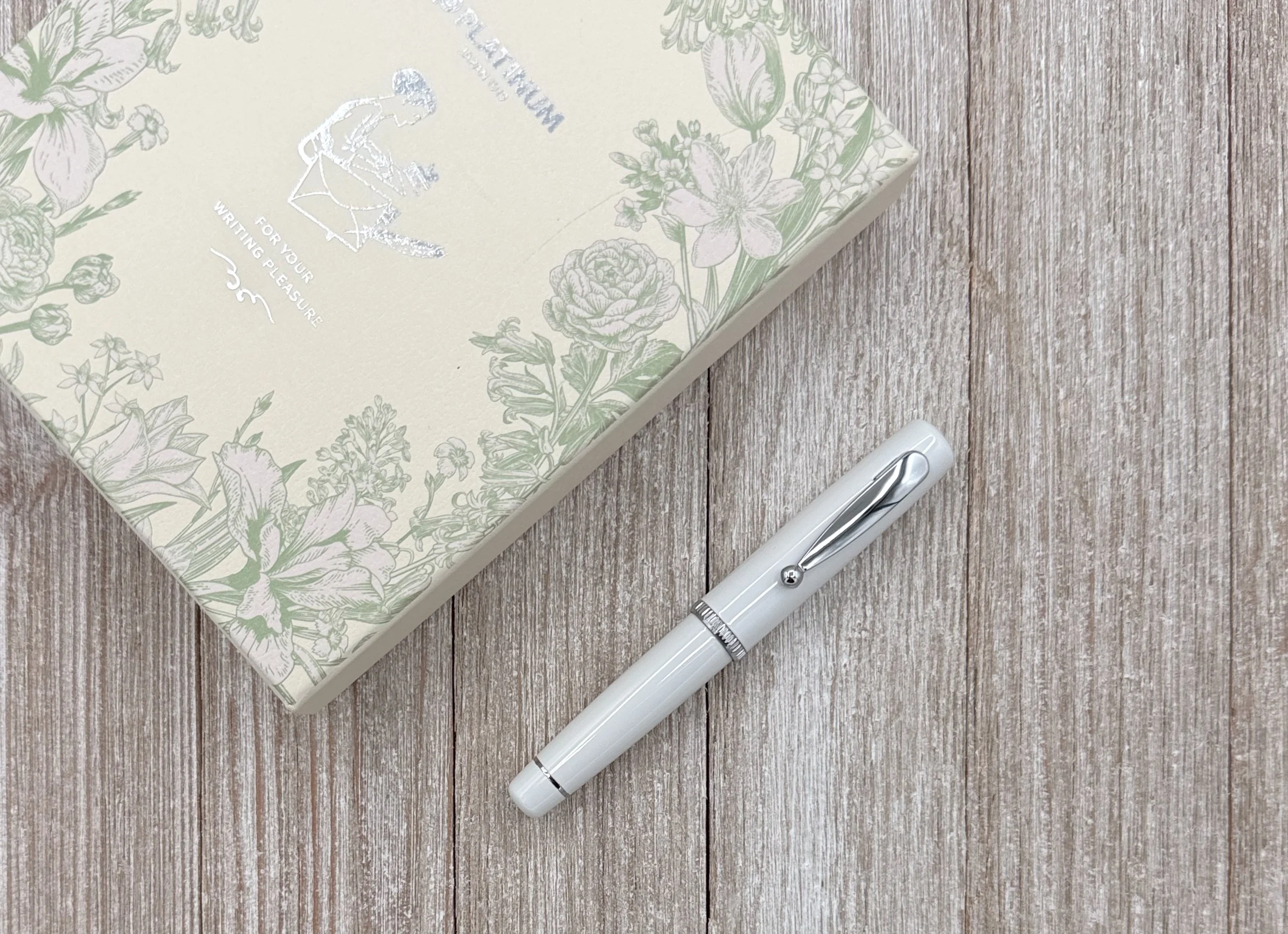
Platinum Komono (PQ-1500) Fountain Pen

I received my Komono, also referred to by its model number PQ-1500, around the same time Jacob at Fudefan released his video on it, and have been enjoying it ever since. I’ve also been waiting and seeing if there was going to be any movement outside of the Chinese market, where, according to Jacob, Platinum has a factory that produced this pen for the region.

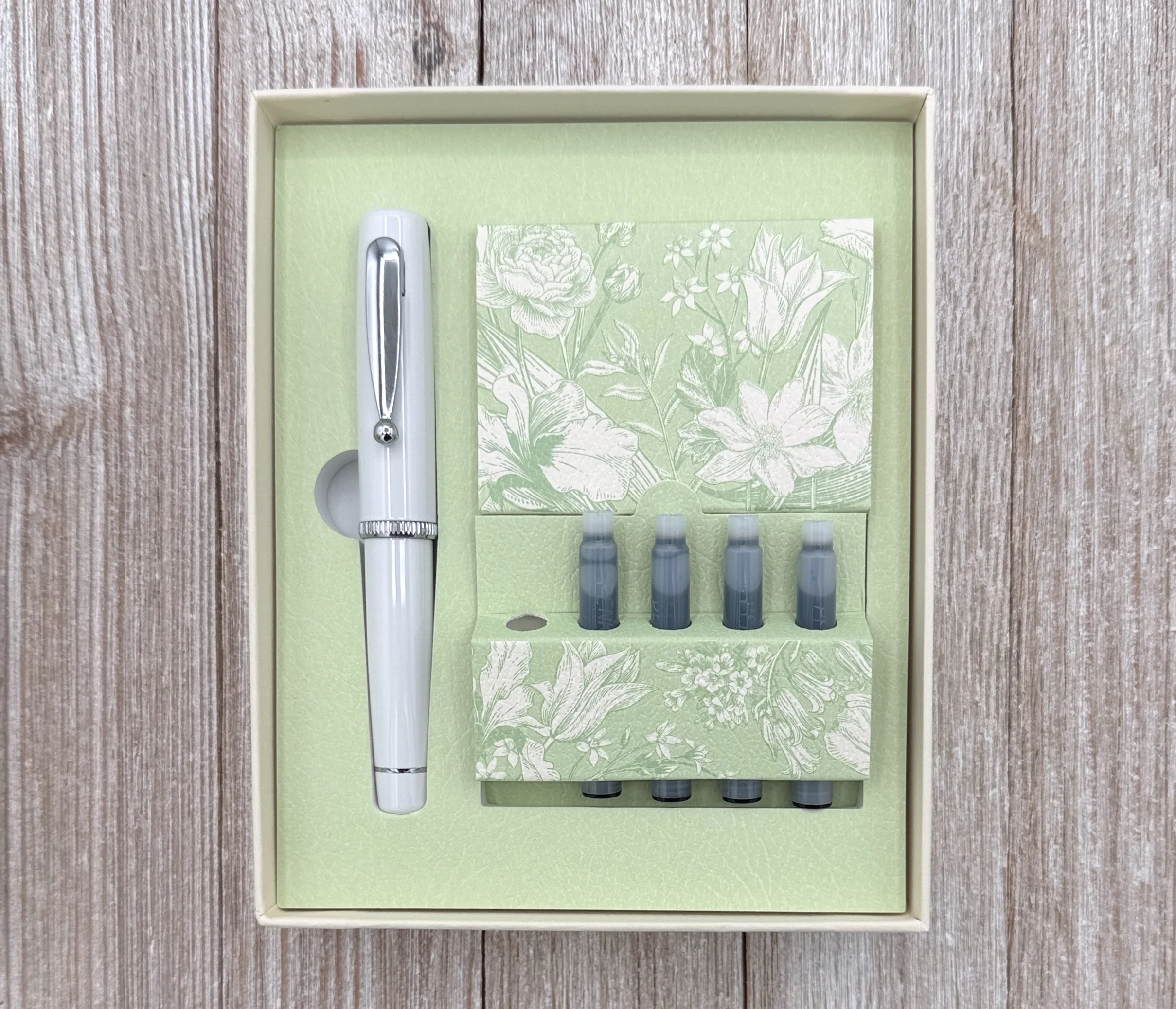
Platinum Komono Fountain Pen

So far, it’s stayed there as best as I can tell, and otherwise made accessible by sites like AliExpress. Why has it remained only in that market? Who can say other than Platinum, but one interesting design decision may be the answer.

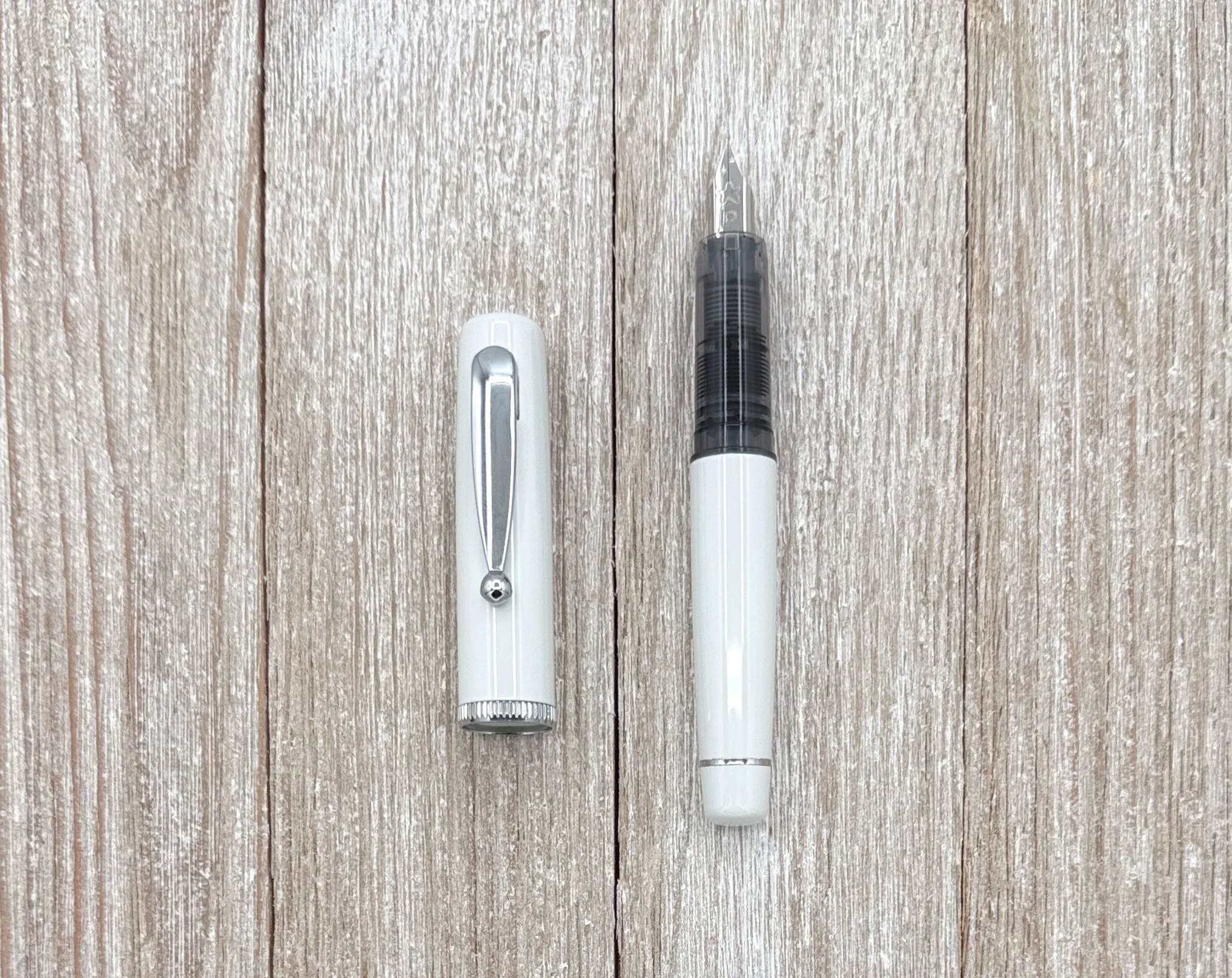
Platinum Komono Fountain Pen

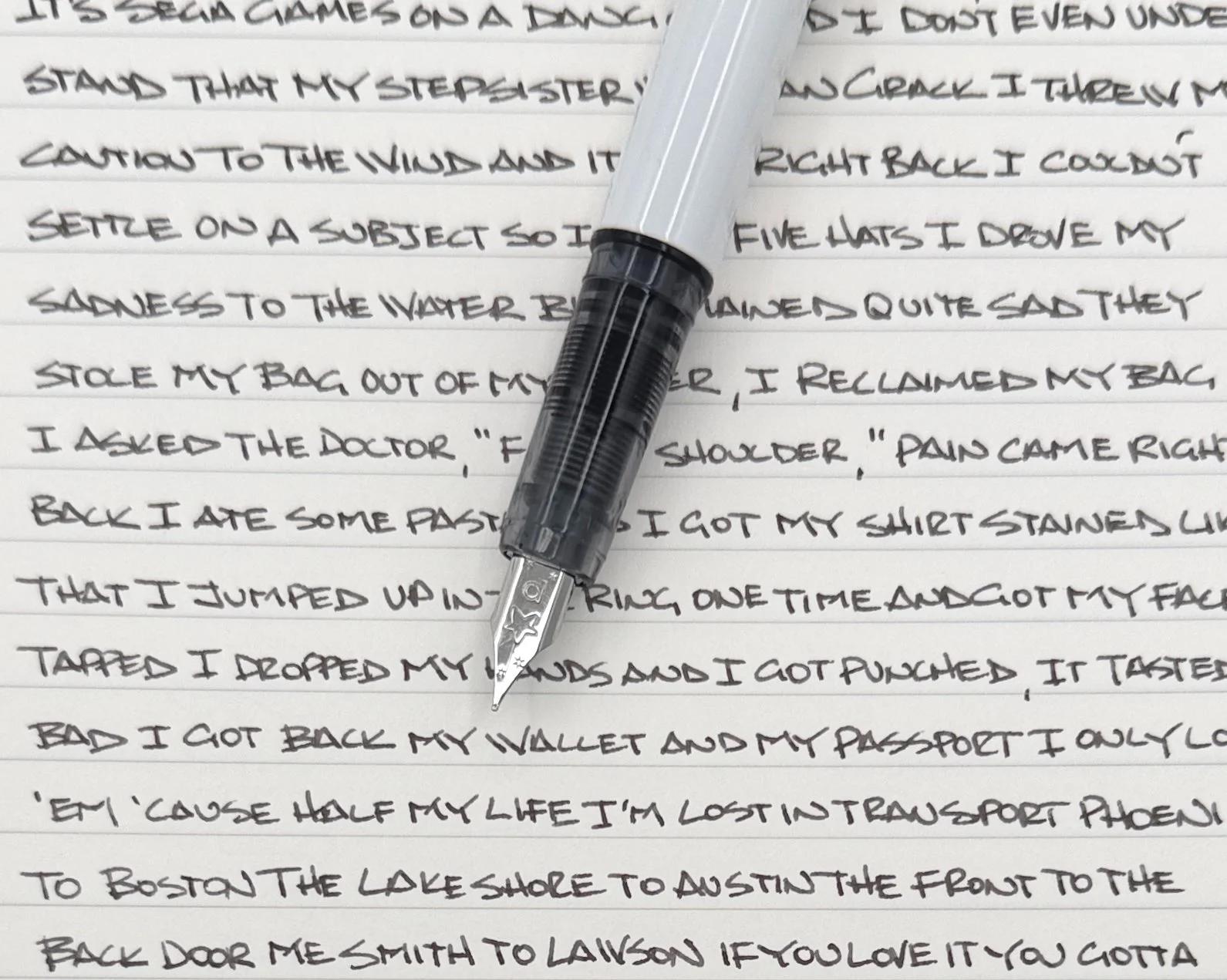
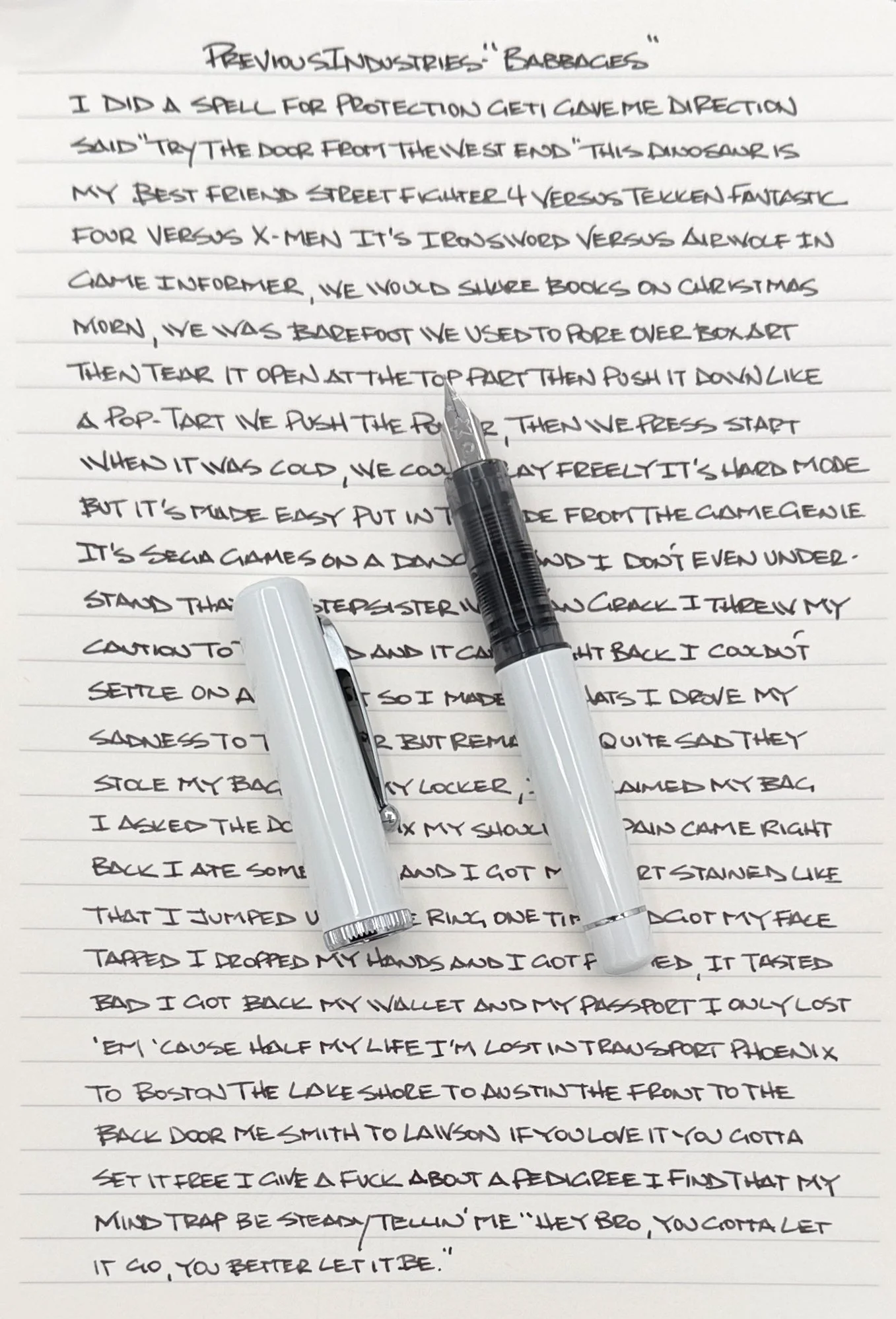
The Komono is a pocket pen, and sets itself apart from others in the category with a metal barrel. The grip section features the classic Platinum translucent smoky plastic, and the nib is similar to what you would see on other Platinum entry-level pens like the Preppy, with the addition of a handful of stars etched onto it. It writes just as well, too.

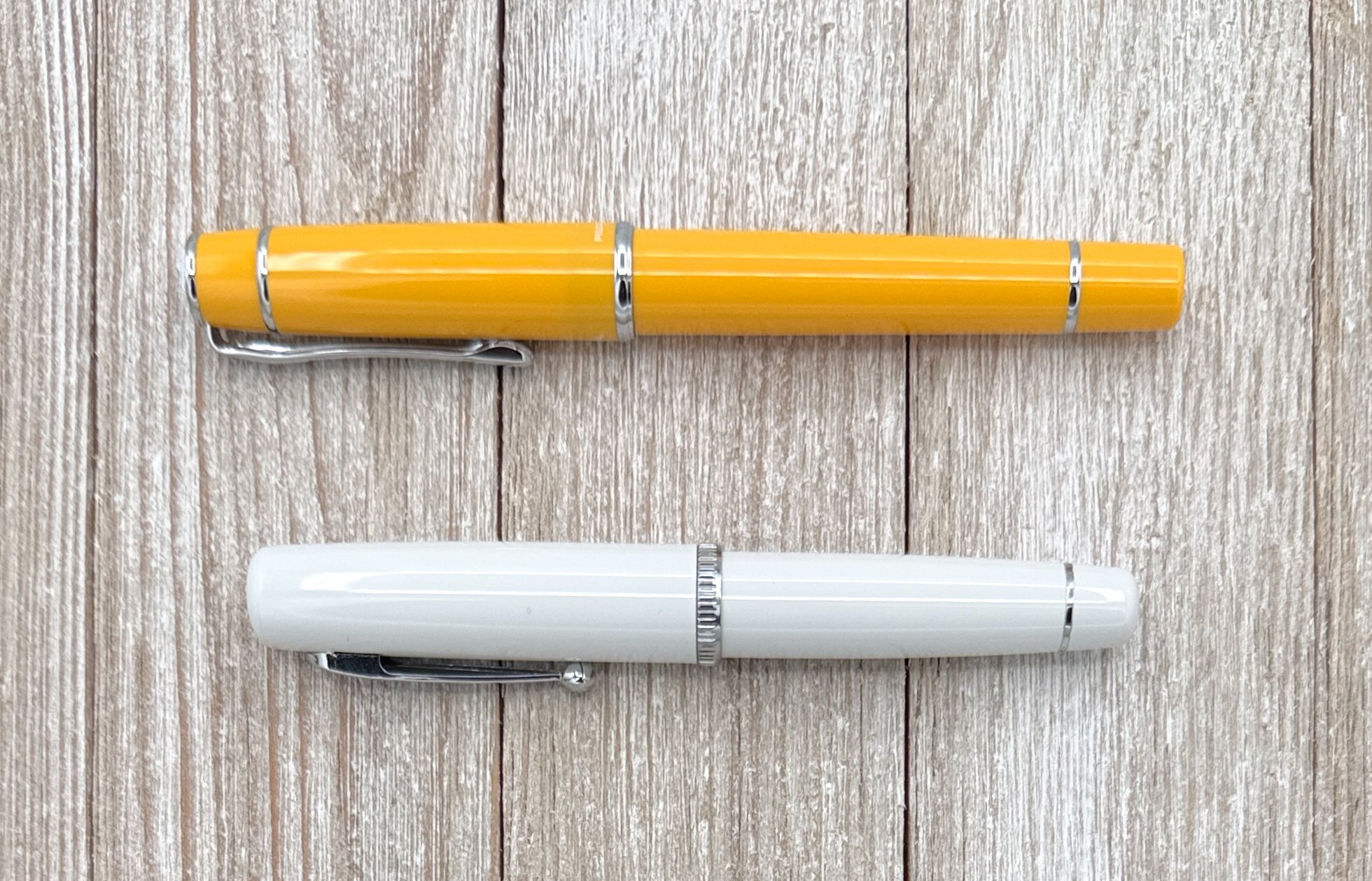
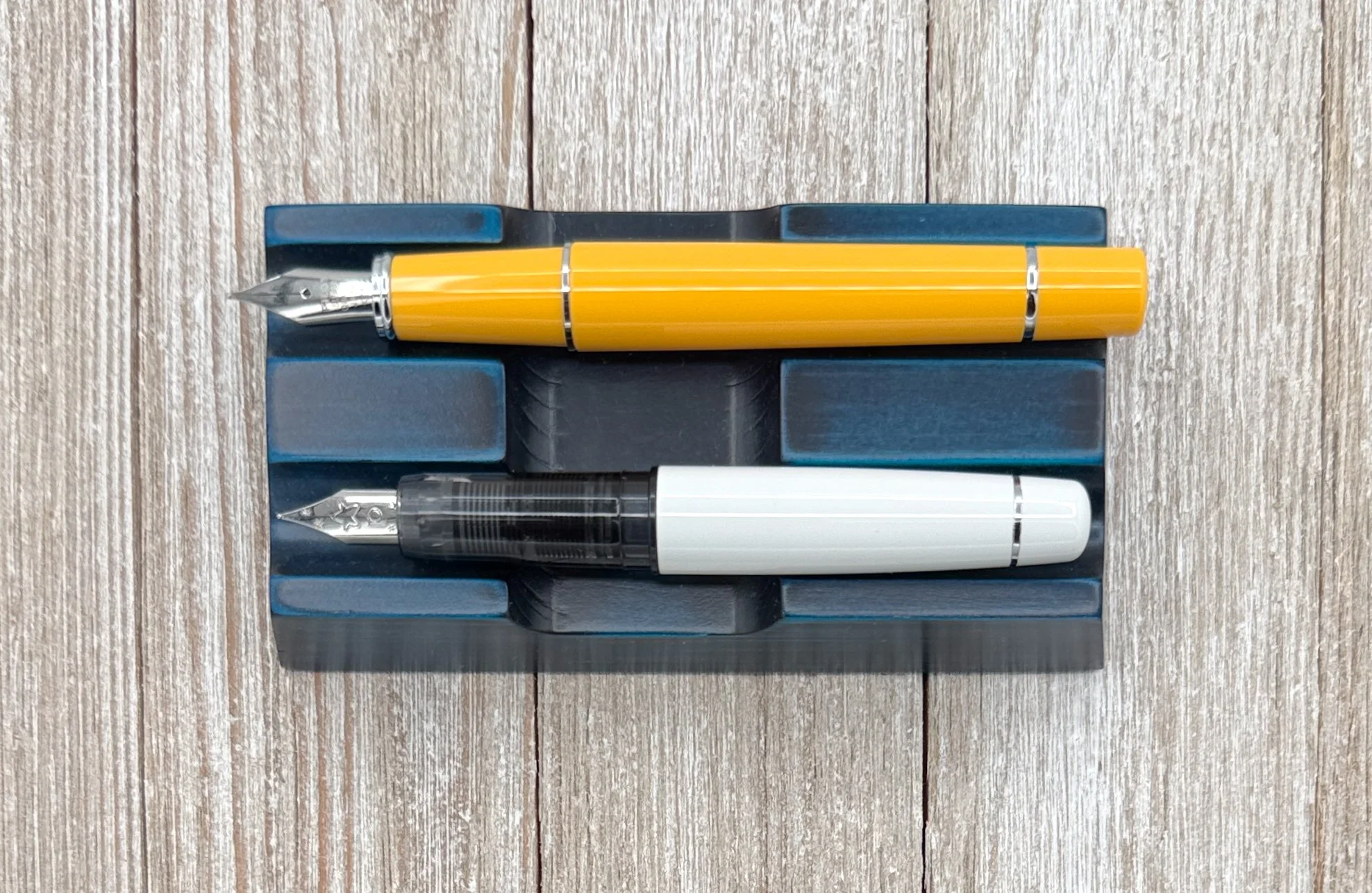
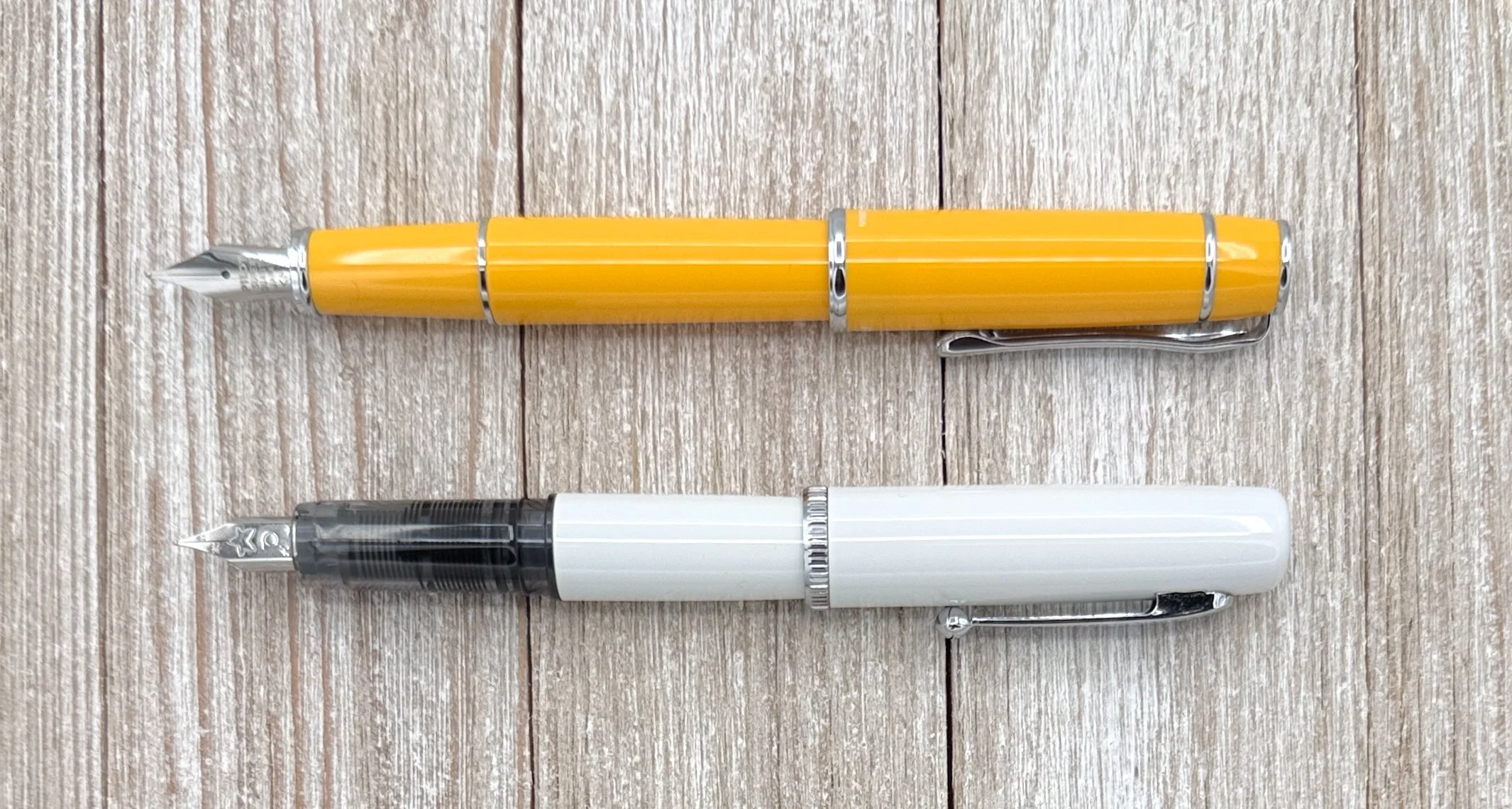
Platinum Komono vs Pilot Prera

The Komono reminds me a lot of the Pilot Prera. It’s a little heavier than the ultralight Prera, and since you need to write with it posted, almost the same length.

Platinum Komono vs Pilot Prera

The cap is of the snap variety, not threaded, and is tight, sealing with clear audible notification. The inside of the cap has a plastic seal, but it doesn’t look like their Slip & Seal mechanism because I don’t see a spring. (Update: The spring is there! I just needed to poke another pen in the cap to feel it. A nice touch.) For posting, the end of the barrel tapers, allowing you to seat the cap down tight enough to write comfortably. The clip looks like a cute exclamation point, and there are a couple of added visual elements like a ridged cap band, and a small ring near the end of the pen. It’s a simple pen, executed well.

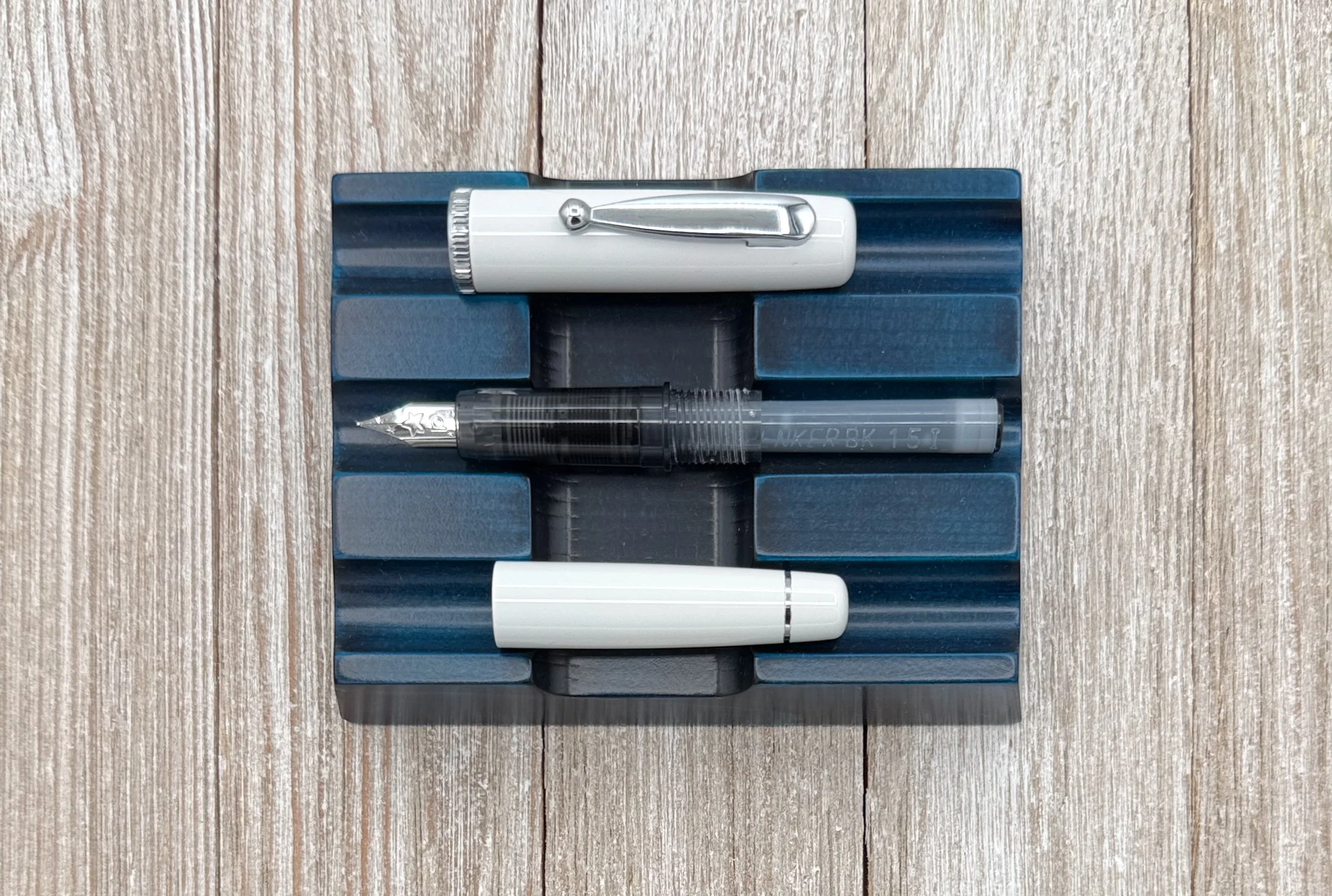
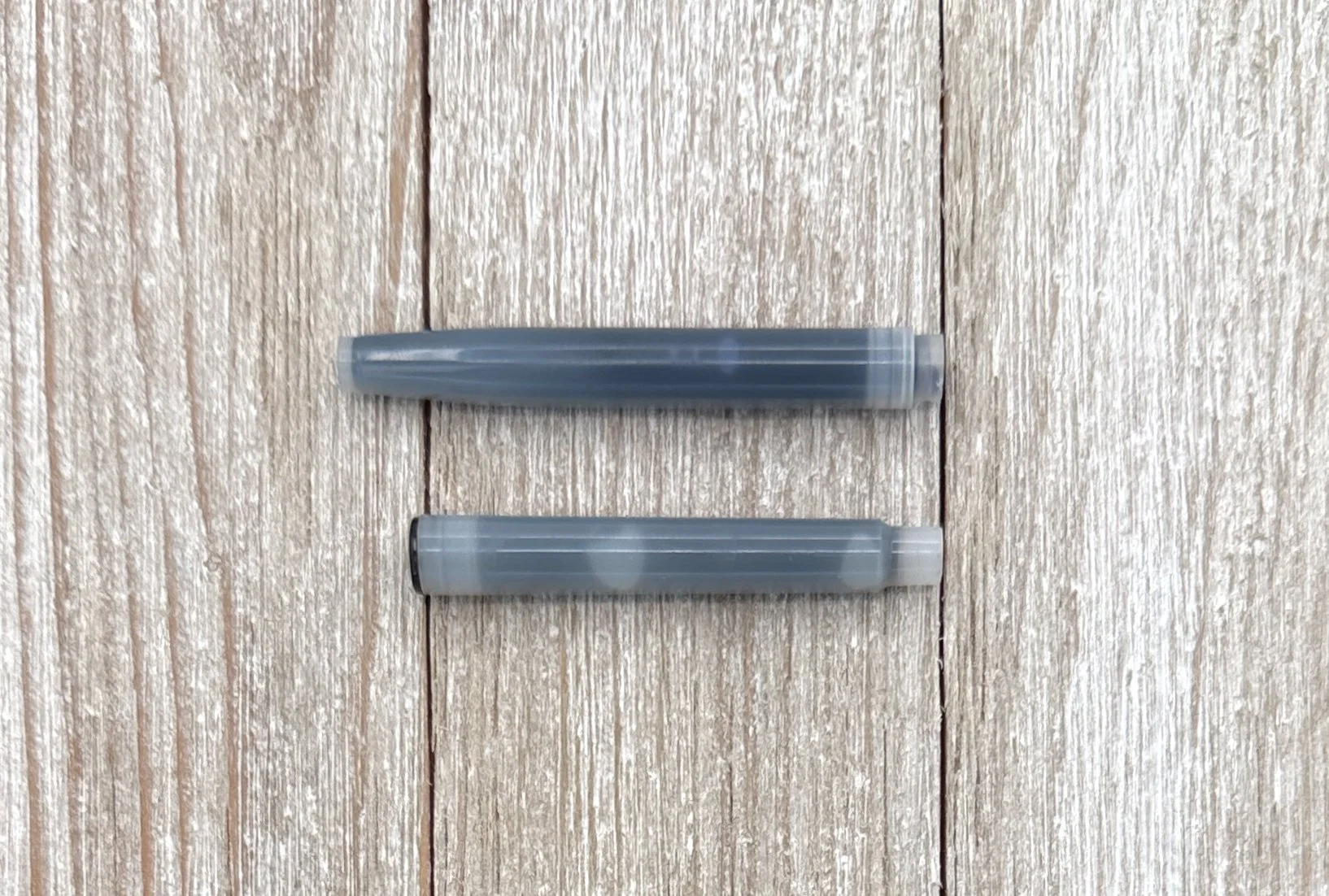
Platinum Komono Cartridge

That small difference makes a big impact.

The aforementioned interesting design decision is that Platinum chose a proprietary cartridge length. It’s the same opening size, but 7-8 millimeters shorter. Traditional Platinum cartridges and converters will not fit the shorter barrel of the Komono, which is assumedly why the pen ships with five Black cartridges for use.

Overall, this is a fantastic pen, so why not send it around the world? Only Platinum can answer that. For what looks to be a $20-$30 retail price, I think it would do well, and give them a slightly different look in their lineup.

Platinum Komono Nib

Black Platinum ink on Mitsubishi Bank Paper.

If you want to hunt one down, AliExpress seems to be the way to go. I’ve seen them under $10 in the past, and right now they are $15. What I wouldn’t do is search for one on eBay or any random retailer, with both options pricing them in the $50-$80 range in my searches.

I think the best we can hope for is that Platinum gets the message that these are an excellent option for the worldwide market, and play the waiting game. We aren’t exactly a patient lot though, are we?

(This pen was sent to me by a friend for free.)


Enjoy reading The Pen Addict? Then consider becoming a member to receive additional weekly content, giveaways, and discounts in The Pen Addict shop. Plus, you support me and the site directly, for which I am very grateful.

Membership starts at just $5/month, with a discounted annual option available. To find out more about membership click here and join us!

Platinum Komono Writing
Posted on September 14, 2026 and filed under Platinum, Fountain Pens, Pen Reviews.

Platinum 3776 Century Travia - A Quick Look

(Kimberly (she/her) took the express train down the fountain pen/stationery rabbit hole and doesn't want to be rescued. She can be found on Instagram @allthehobbies because there really are many, many hobbies!.)

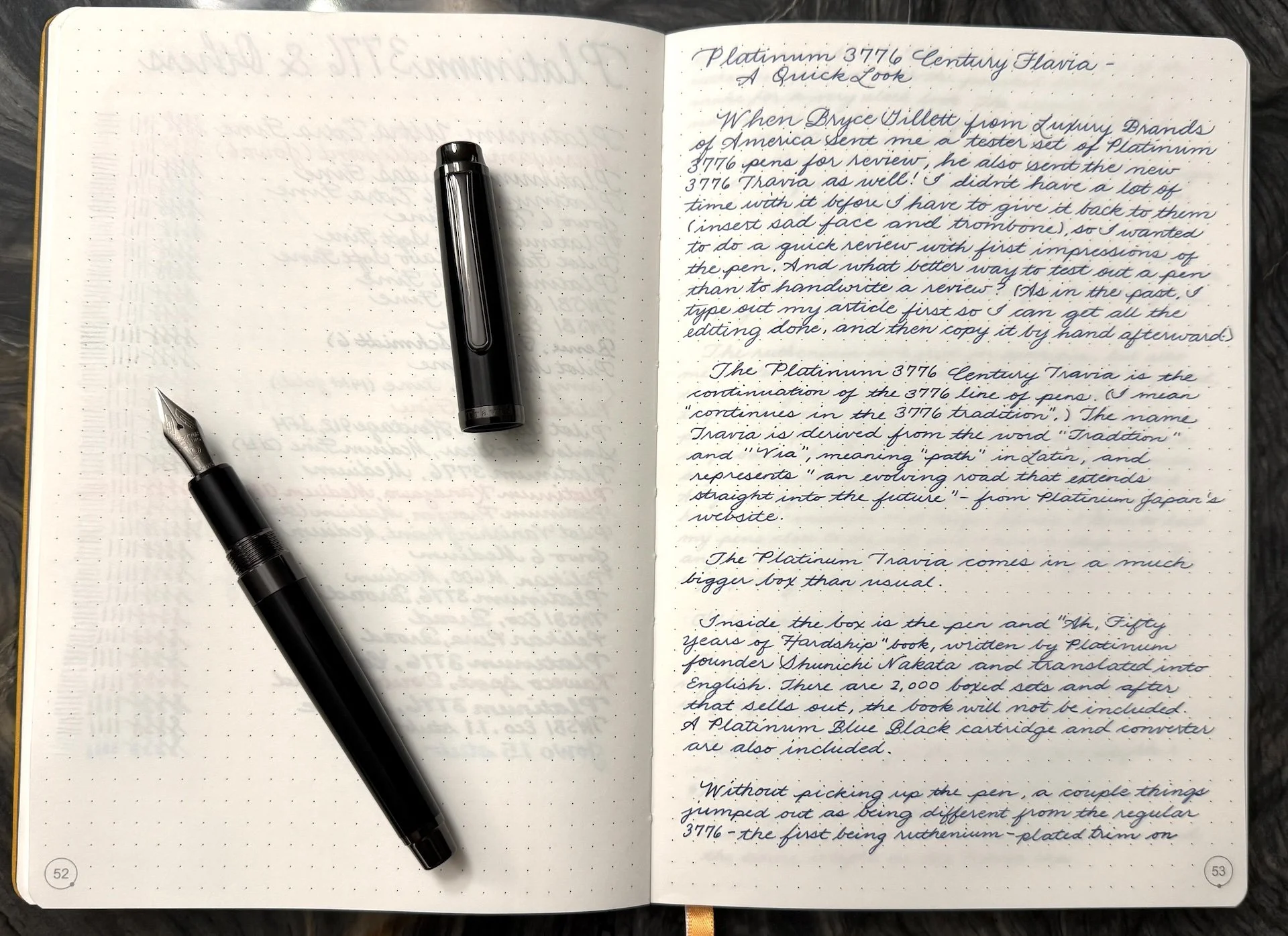
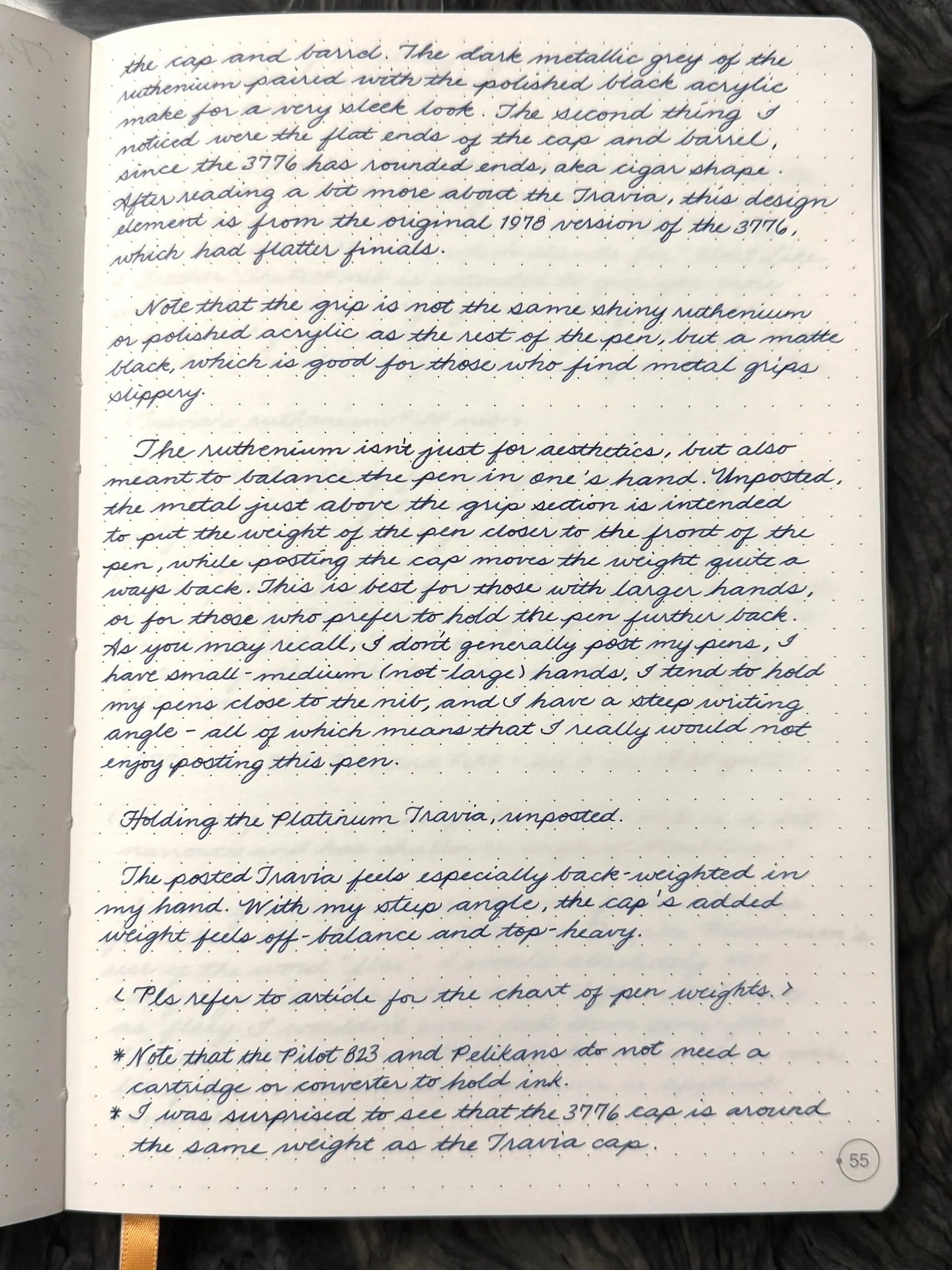
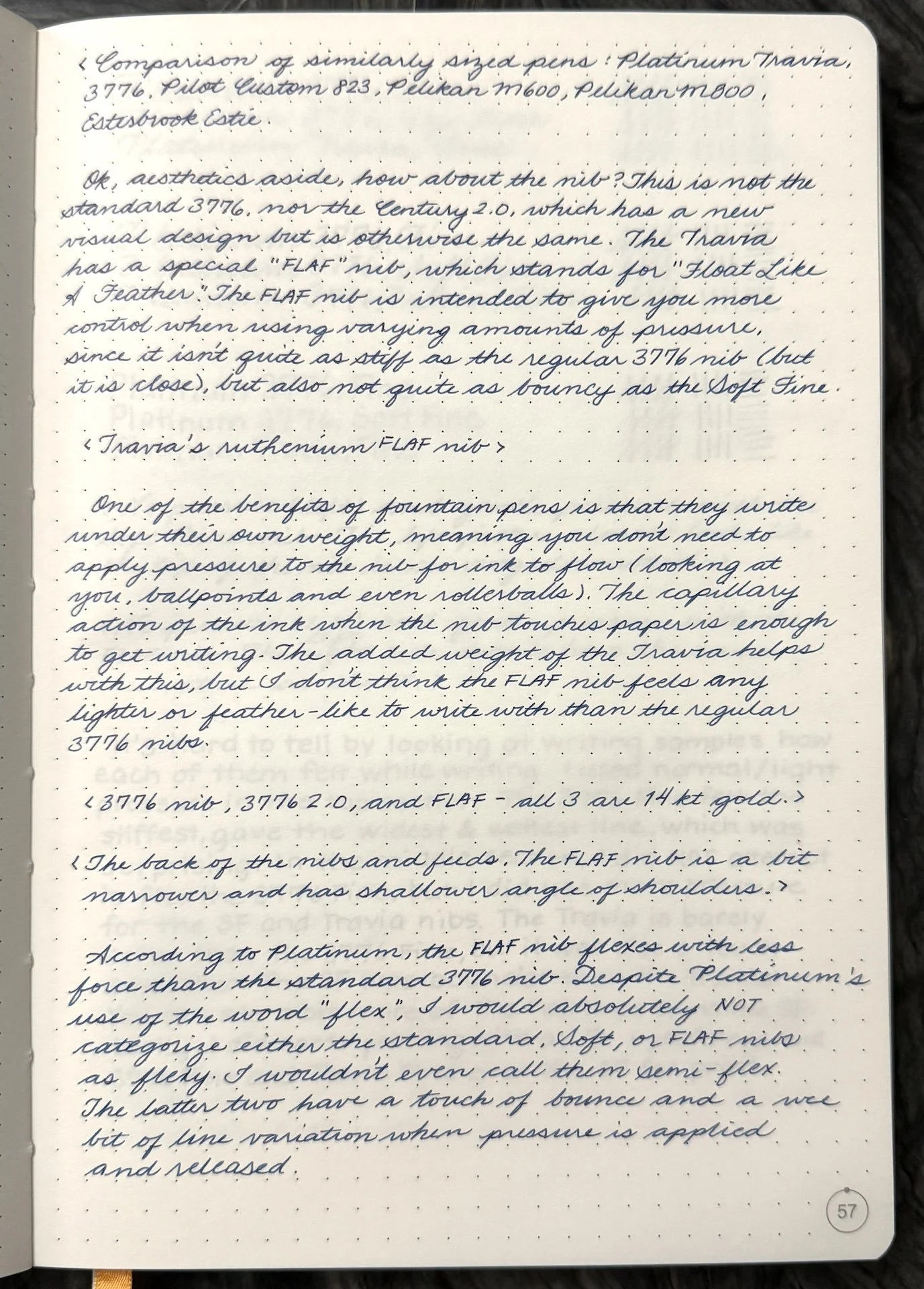
When Bryce Gillet from Luxury Brands of America sent me a tester set of Platinum 3776 pens for review, he also sent the new 3776 Century Travia as well! I didn’t have a lot of time with it before I have to hand it back to them (insert sad face and trombone), so I wanted to do a quick review with first impressions of the pen. And what better way to test out a pen than to handwrite a review? (As in the past, I type out my article first so I can get all the editing done, and then copy it by hand afterward.)

The Platinum 3776 Century Travia continues in the Platinum 3776 tradition. The name Travia is derived from the words “Tradition” and “Via”, meaning “path” in Latin, and represents “an evolving road that extends straight into the future” - from Platinum Japan’s website.

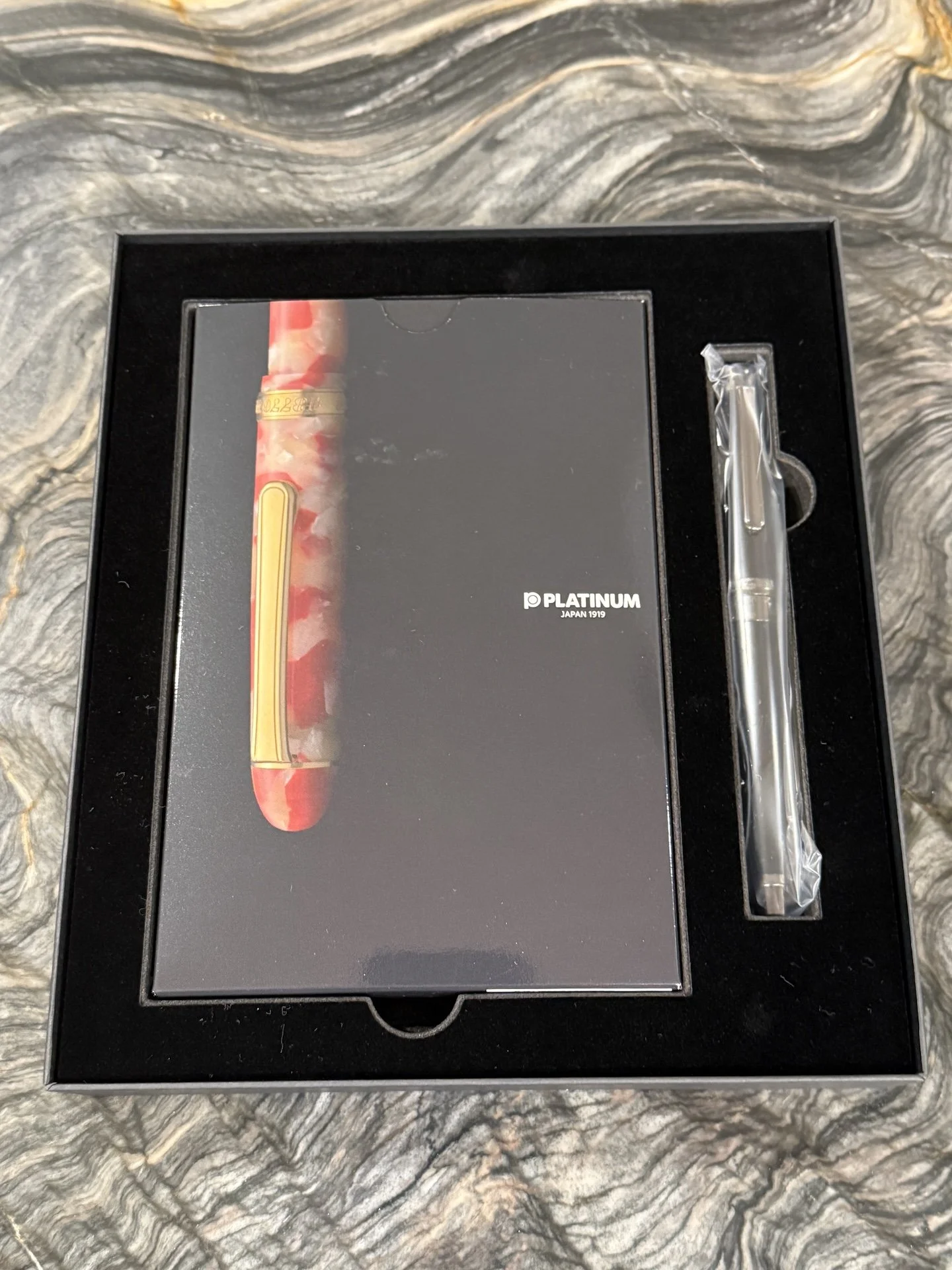
Inside the box is the pen and “Ah, Fifty Years of Hardship” book, written by Platinum founder Shunichi Nakata and translated into English. There are 2,000 boxed sets and after that sells out, the book will not be included. A Platinum Blue Black cartridge and converter are also included.

Without picking up the pen, a couple things jumped out as being different from the regular 3776 - the first being ruthenium-plated trim on the cap and barrel. The dark metallic grey of the ruthenium paired with the polished black acrylic make for a very sleek look. The second thing I noticed were the flat ends of the cap and barrel, since the 3776 has rounded ends, aka cigar shape. After reading a bit more about the Travia, this design element is from the original 1978 version of the 3776, which had flatter finials.

Note that the grip is not the same shiny ruthenium or polished acrylic as the rest of the pen, but a matte black, which is good for those who find metal grips slippery.

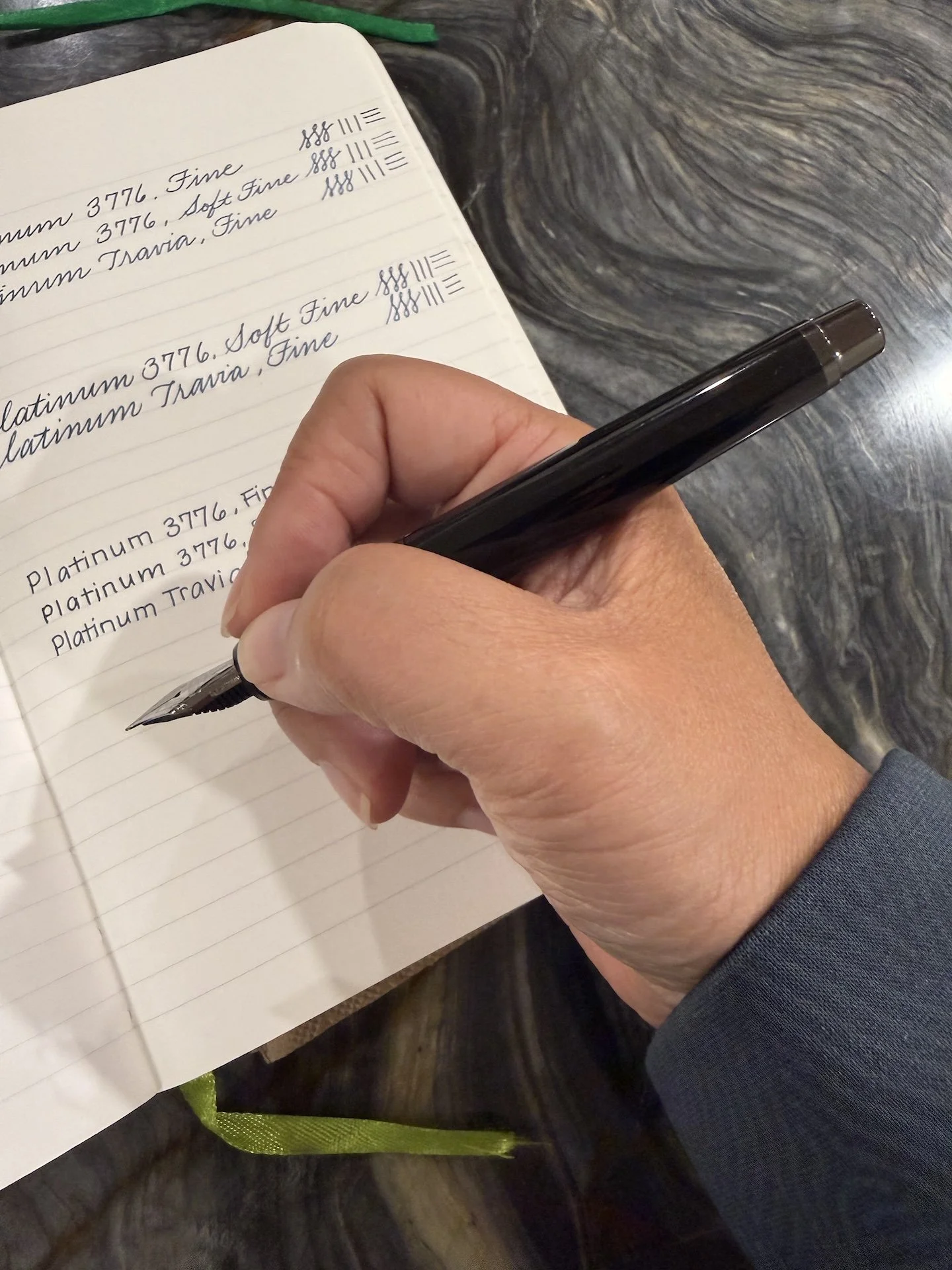
The ruthenium isn’t just for aesthetics, but also meant to balance the pen in one’s hand. Unposted, the metal just above the grip section is intended to put the weight of the pen closer to the front of the pen, while posting the cap moves the weight of the pen quite a ways back. This is best for those with larger hands, or for those who prefer to hold the pen further back. As you may recall, I don’t generally post my pens, I have small-medium (not-large) hands, I tend to hold my pens close to the nib, and I have a steep writing angle - all of which means that I really would not enjoy posting this pen.

Holding the Platinum Travia, unposted.

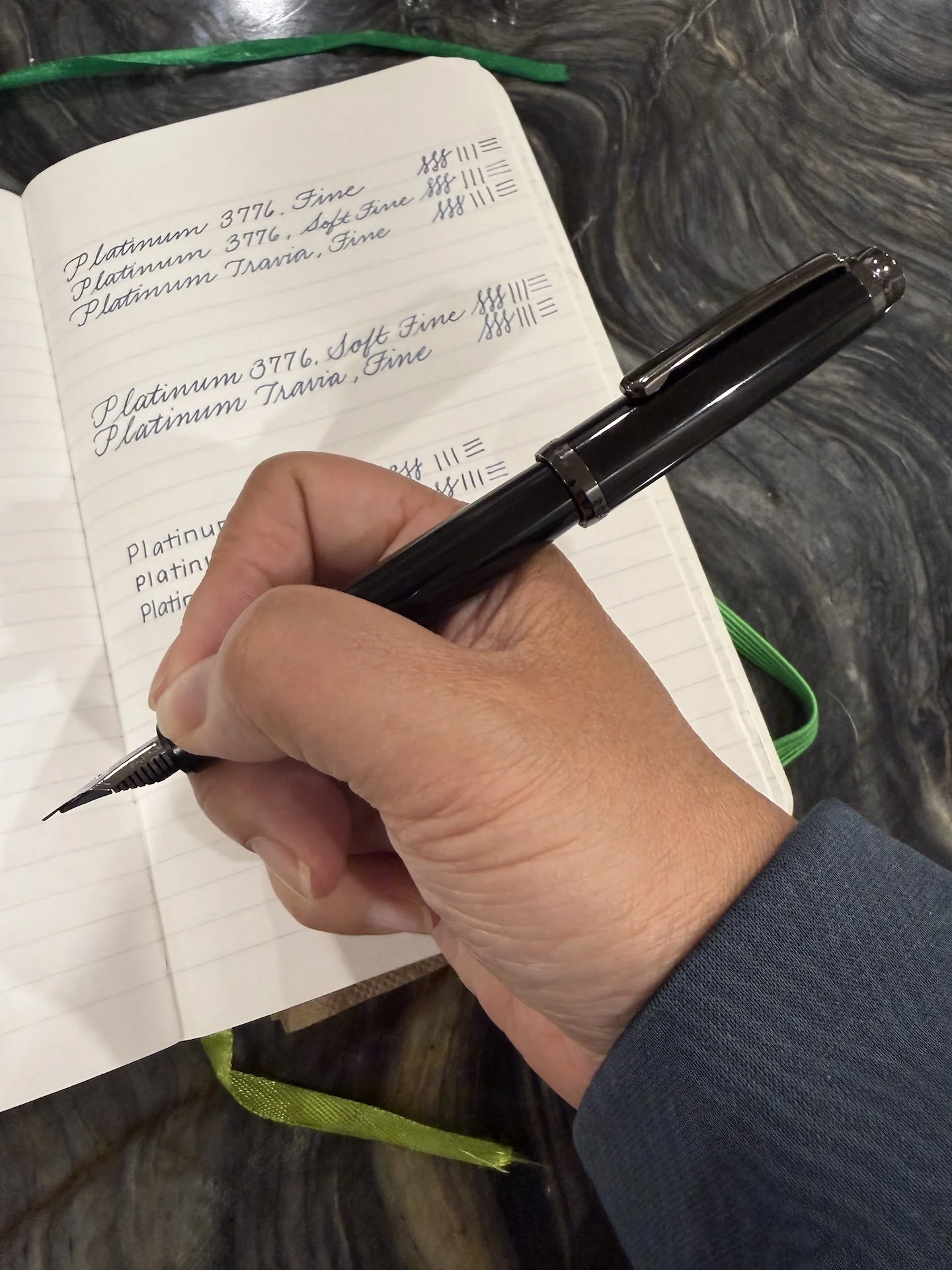
The posted Travia feels especially back-weighted for my hand. With my steep angle, the cap’s weight feels off-balance and top-heavy.

Specs:

Pen Type

Cap

Rest of pen (empty)

Total (Posted)

Platinum Travia

.361 oz / 10.23 g

.69 oz / 19.57 g

1.051 oz / 29.80 g

Platinum 3776

.368 oz / 10.43 g

.342 oz / 9.71 g

.71 oz / 20.14 g

Pilot Custom 823

.342 oz / 9.68 g

.665 oz / 18.91 g

1.007 oz / 28.59 g

Pelikan M600

.244 oz / 6.93 g

.395 oz / 11.18 g

.639 oz / 18.11 g

Pelikan M800

.305 oz / 8.66 g

.721 oz / 20.44 g

1.026 oz / 29.10 g

Esterbrook Estie

.320 oz / 9.06 g

.573 oz / 16.24 g

.893 oz / 25.3 g

  • Note that the Pilot 823 and Pelikans do not need a cartridge or converter to hold ink.

  • Also, I was surprised to see that the 3776 cap is around the same weight as the Travia cap.

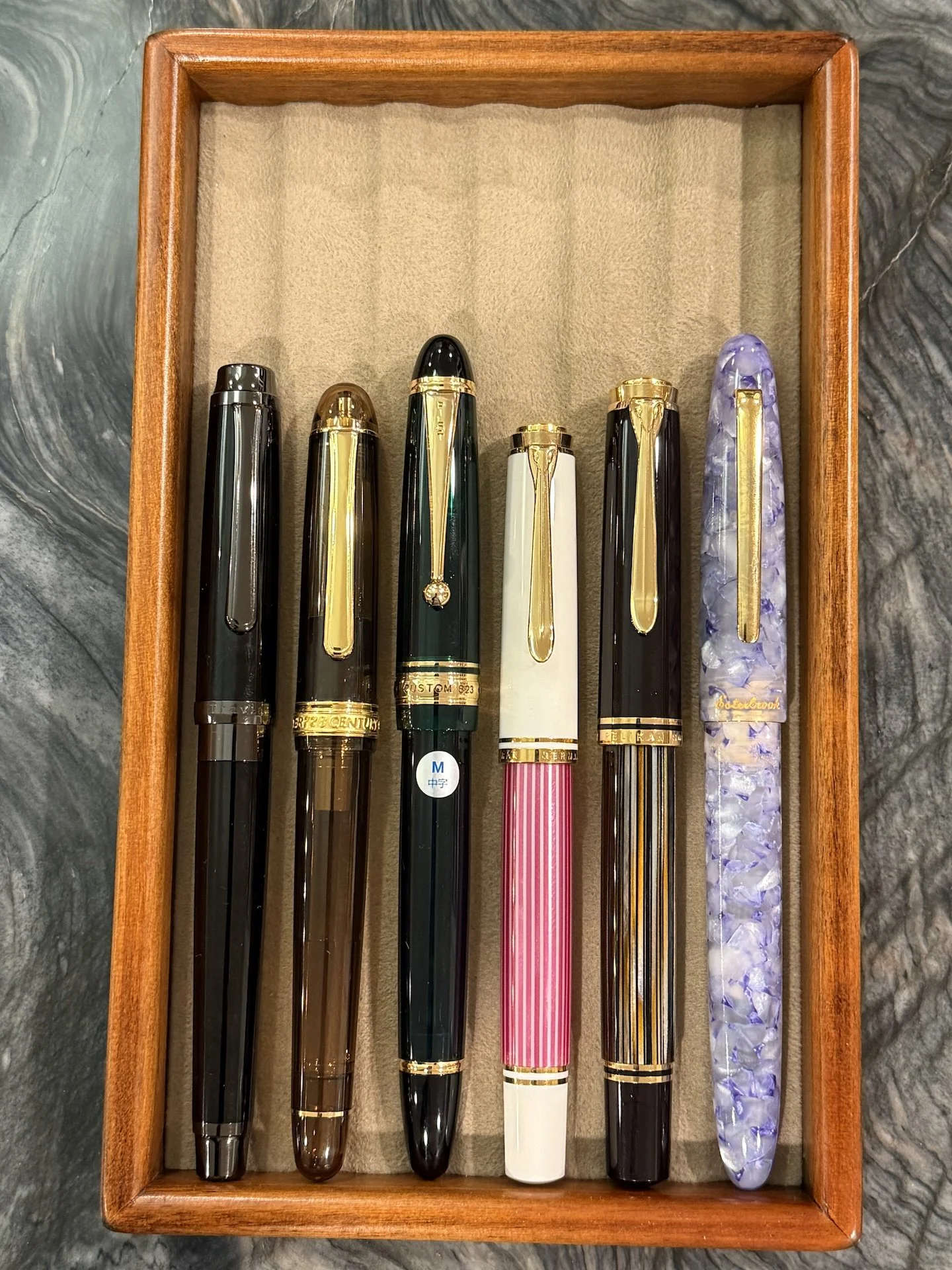
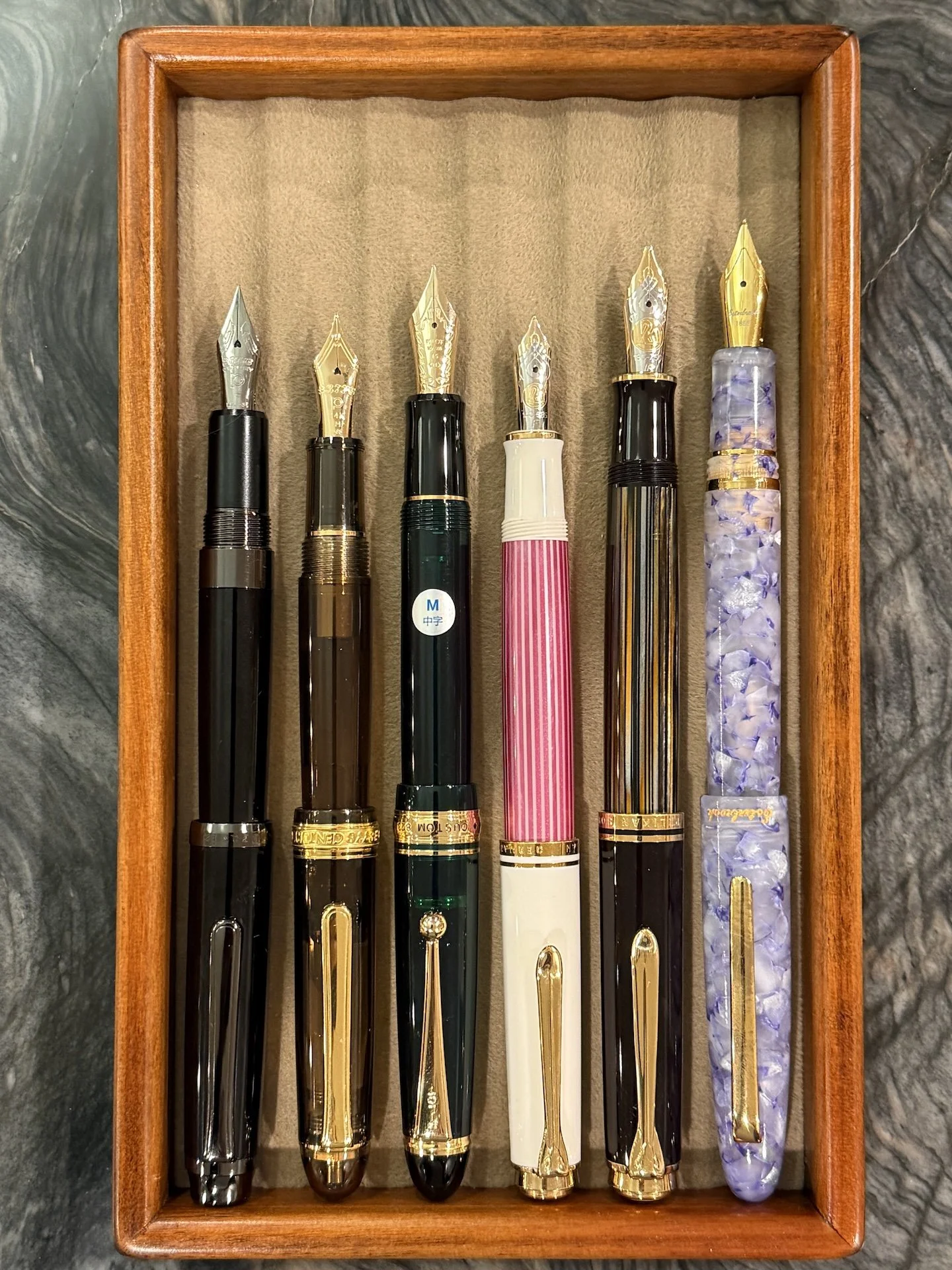
Comparison of similarly sized pens (capped): Platinum Travia, 3776, Pilot Custom 823, Pelikan M600, Pelikan M800, Esterbrook Estie.

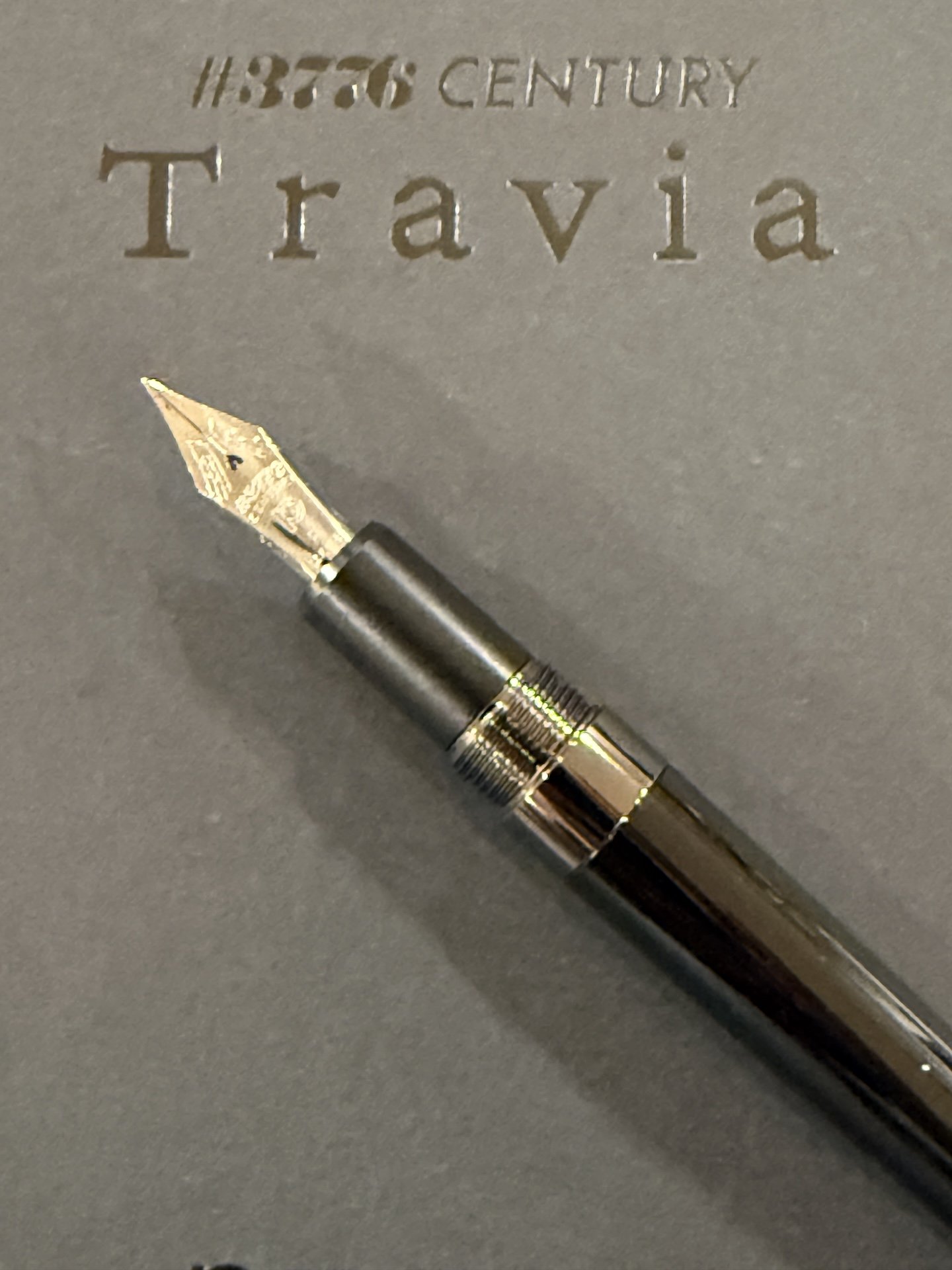
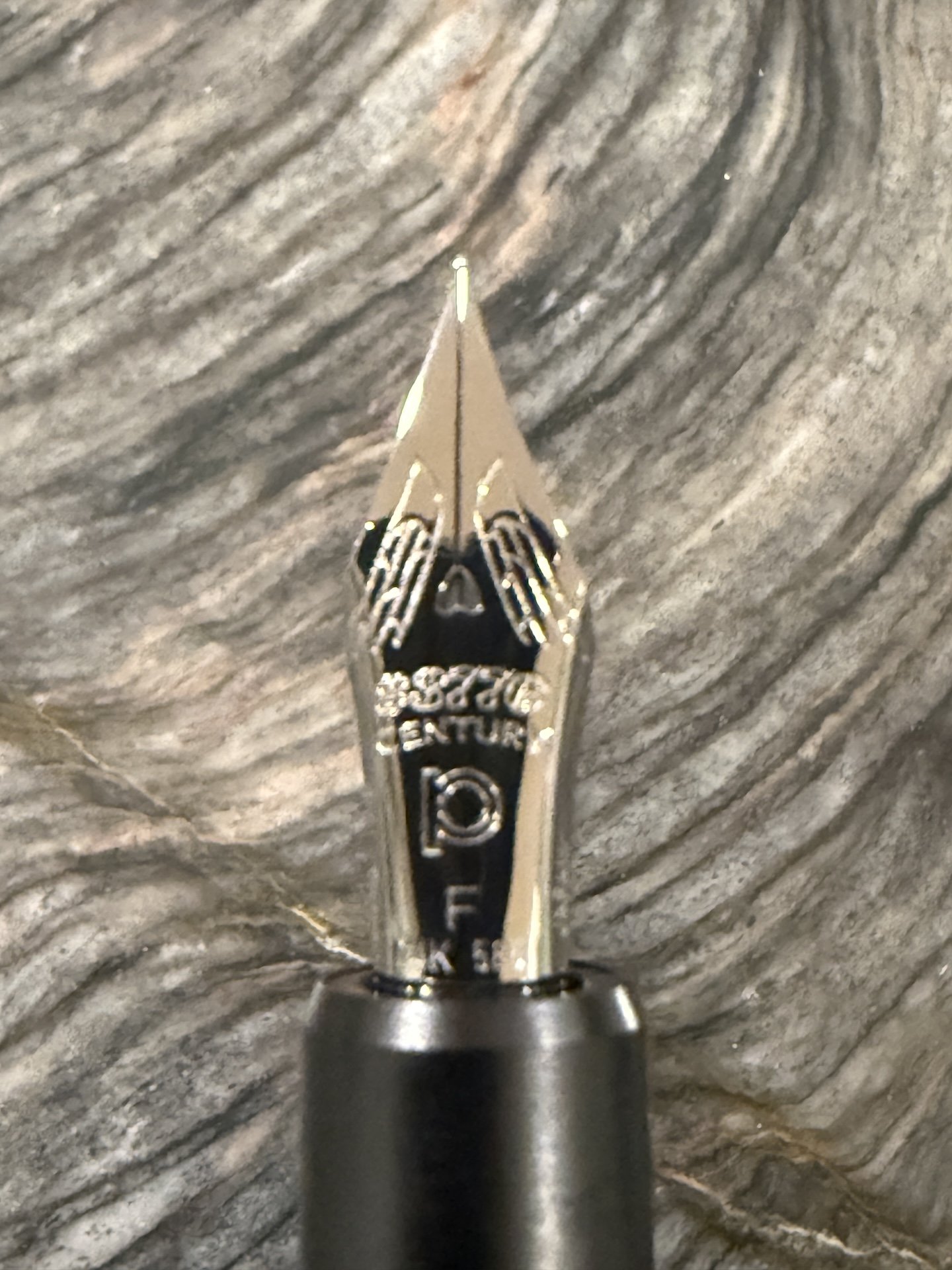
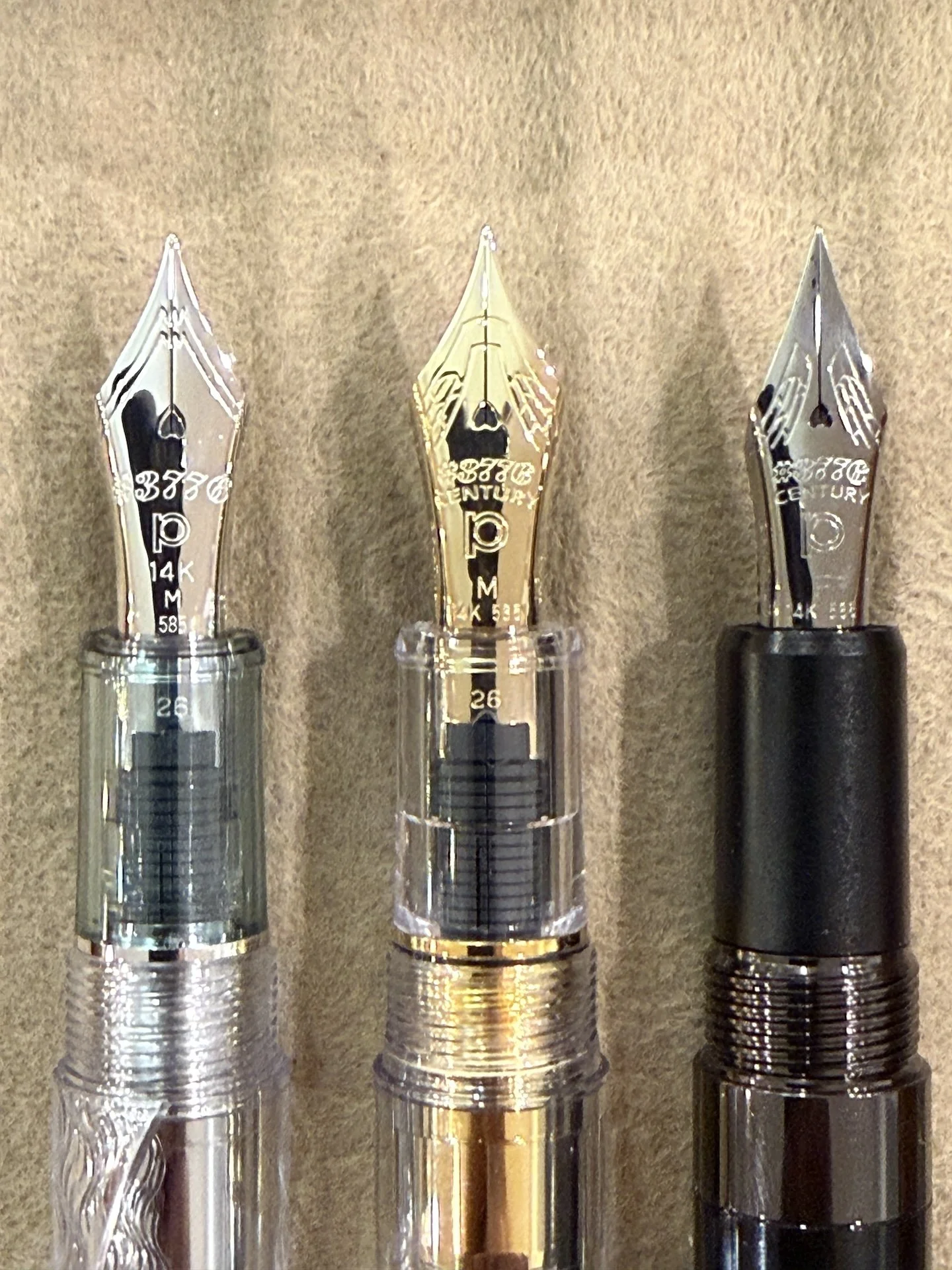
Ok, aesthetics aside, how about the nib? This is not the standard 3776 nib, nor the Century 2.0, which has a new visual design but is otherwise the same.The Travia has a special “FLAF” nib, which stands for “Floats Like A Feather”. The FLAF nib is intended to give you better control when using varying amounts of pressure, since it isn’t quite as stiff as the regular 3776 (but it is close), but also not quite as bouncy as the Soft Fine.

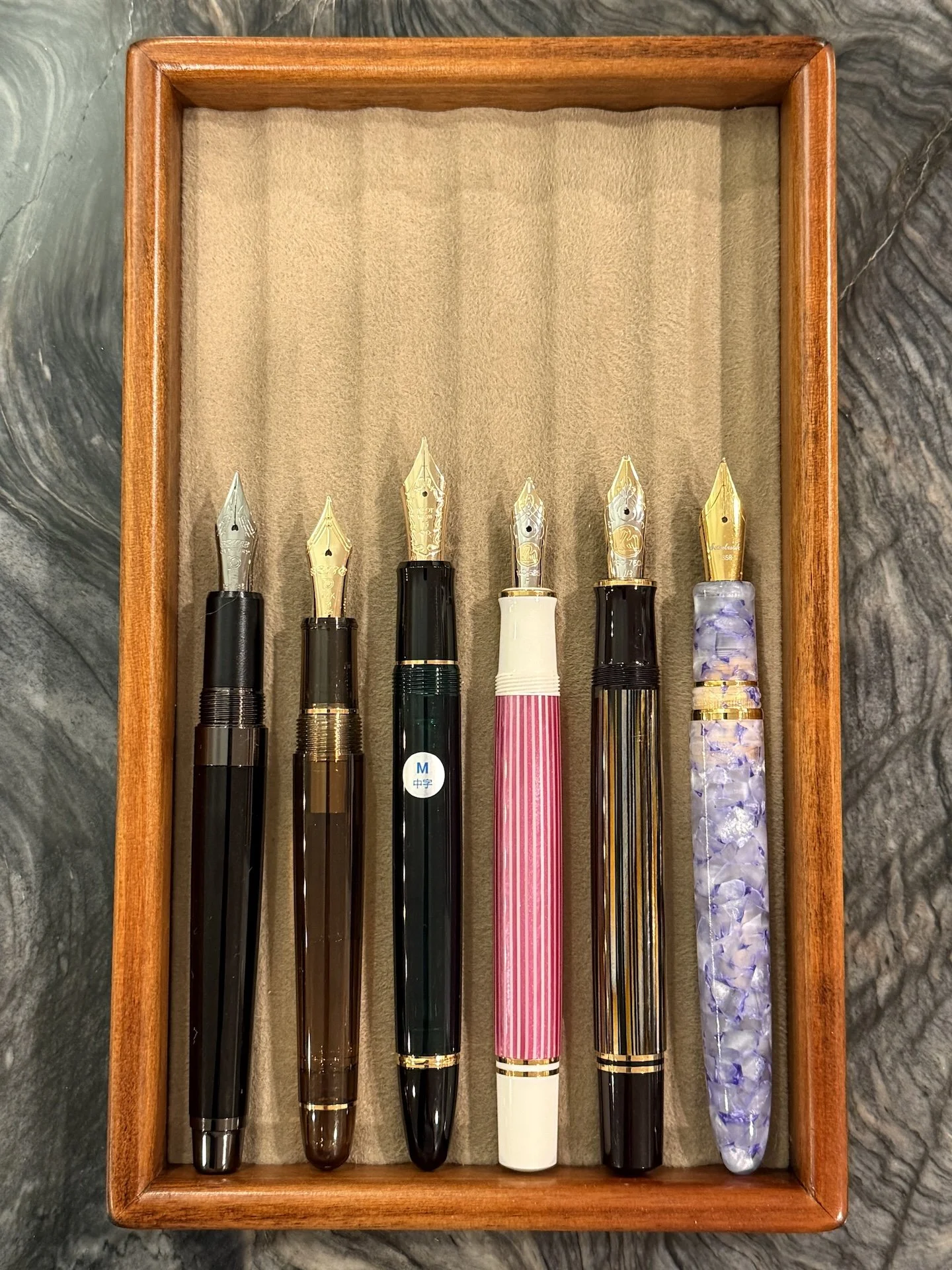
Travia’s ruthenium FLAF nib.

One of the benefits of fountain pens is that they write under their own weight, meaning you don’t need to apply pressure to the nib for ink to flow (looking at you, ballpoints and even rollerballs). The capillary action of the ink when the nib touches paper is enough to get writing. The added weight of the Travia helps with this, but I don’t think the FLAF nib feels any lighter or feather-like to write with than the regular 3776 nib.

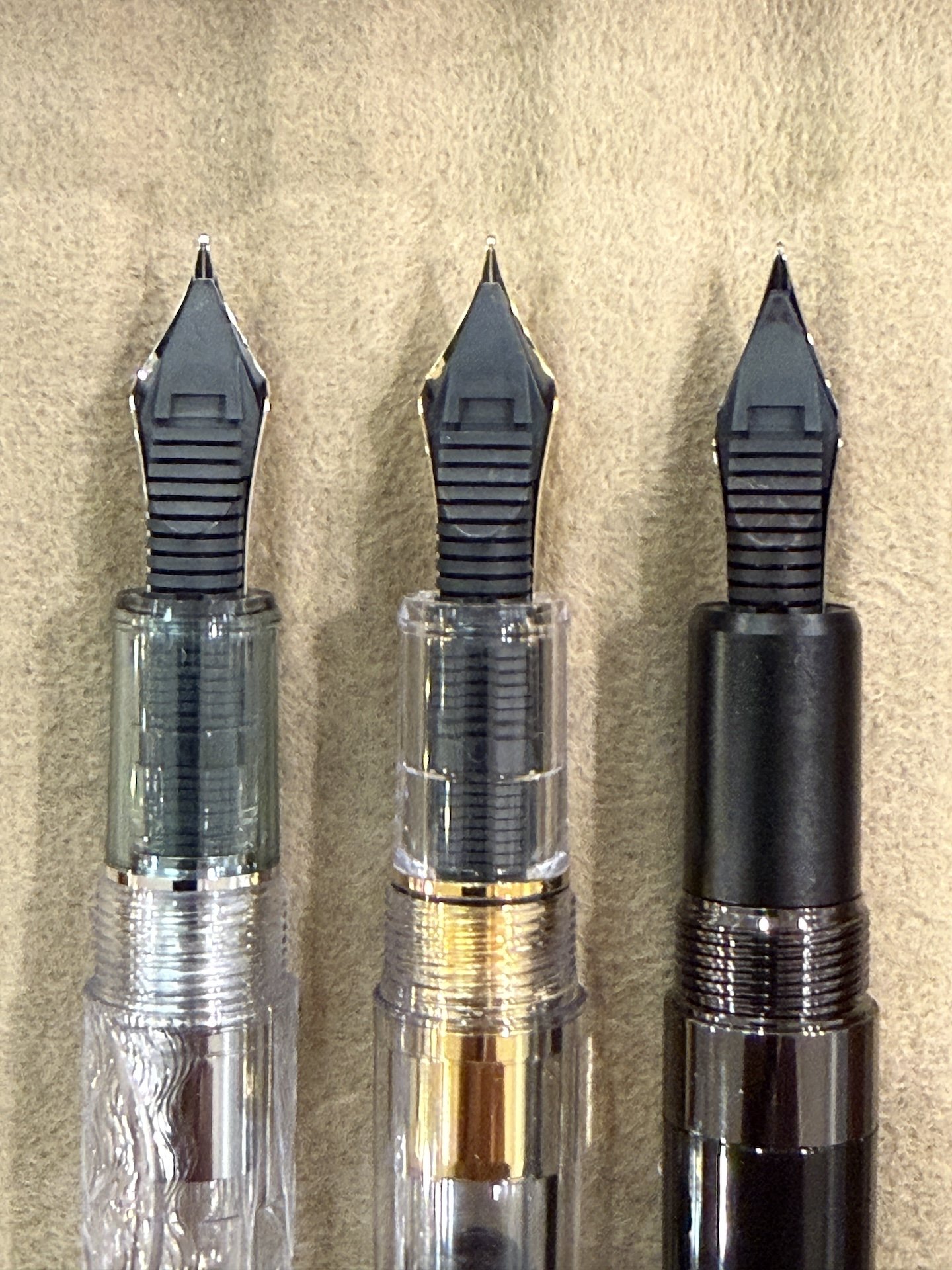
3776 nib (left), 3776 2.0, and FLAF (right) - all 3 nibs are 14kt gold.

The back of the nibs & feeds. The FLAF nib is a bit narrower and has shallower angle of shoulders.

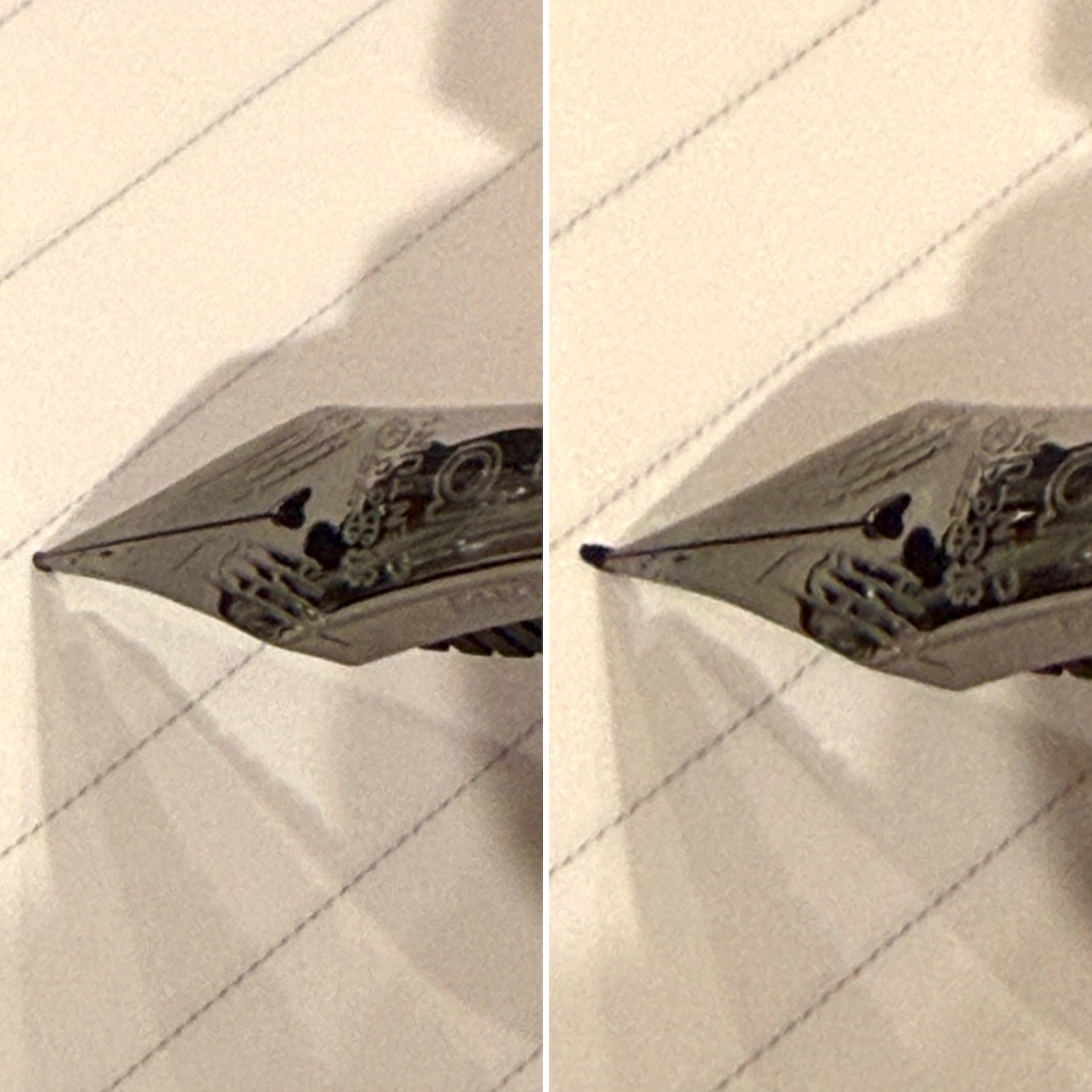
According to Platinum, the FLAF nib flexes with less force than the standard 3776 nib. Despite Platinum’s use of the word “flex”, I would absolutely NOT categorize either the standard, Soft, or FLAF nibs as flexy. I wouldn’t even call them semi-flex. The latter two have a touch of bounce and give a wee bit of line variation when pressure is applied and released.

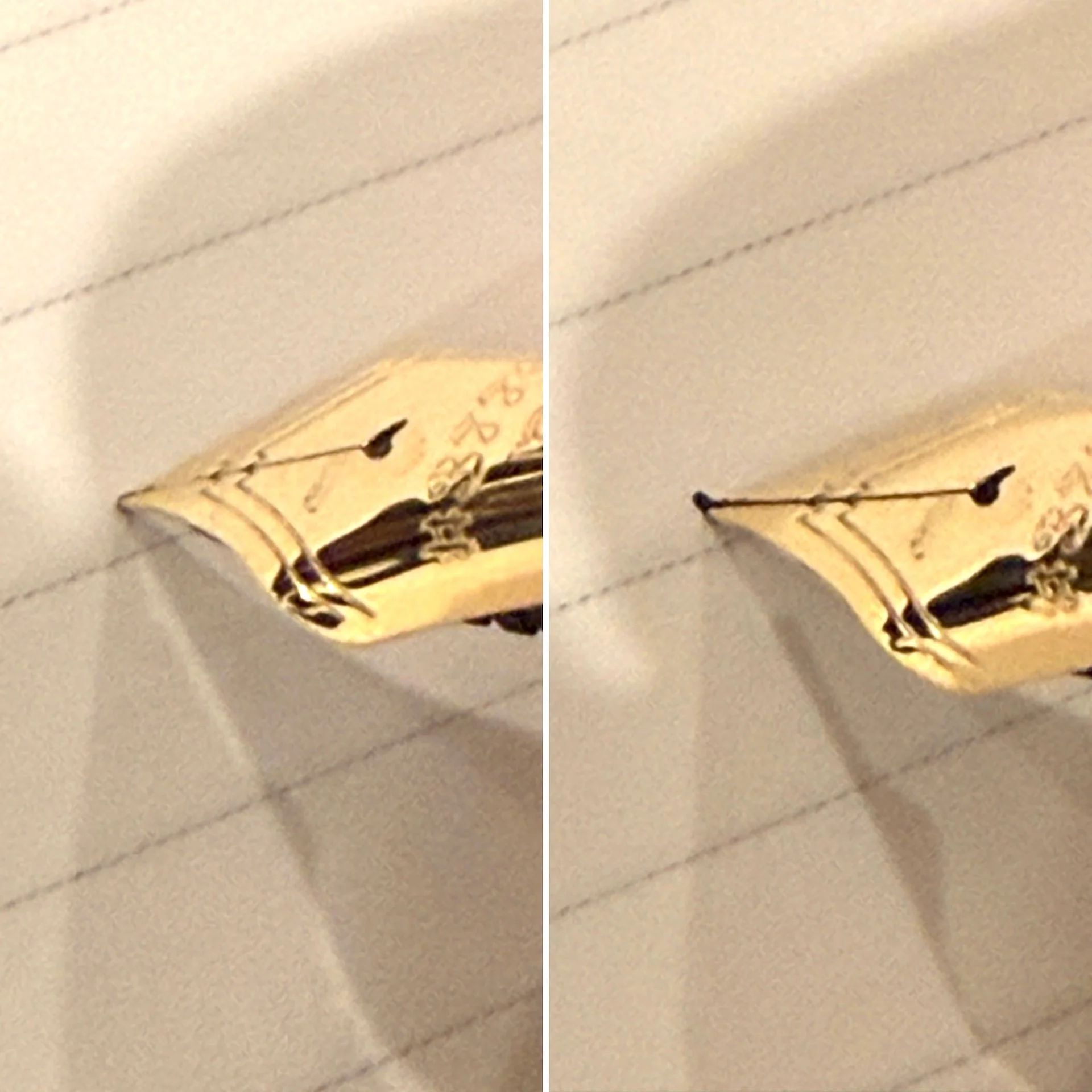
No pressure (left) and gentle pressure with the Soft Fine nib. The left picture almost looks like the tip of the nib is curving downward.

No pressure (left) and gentle pressure with the FLAF nib. The left side doesn’t have the same curvature as the SF.

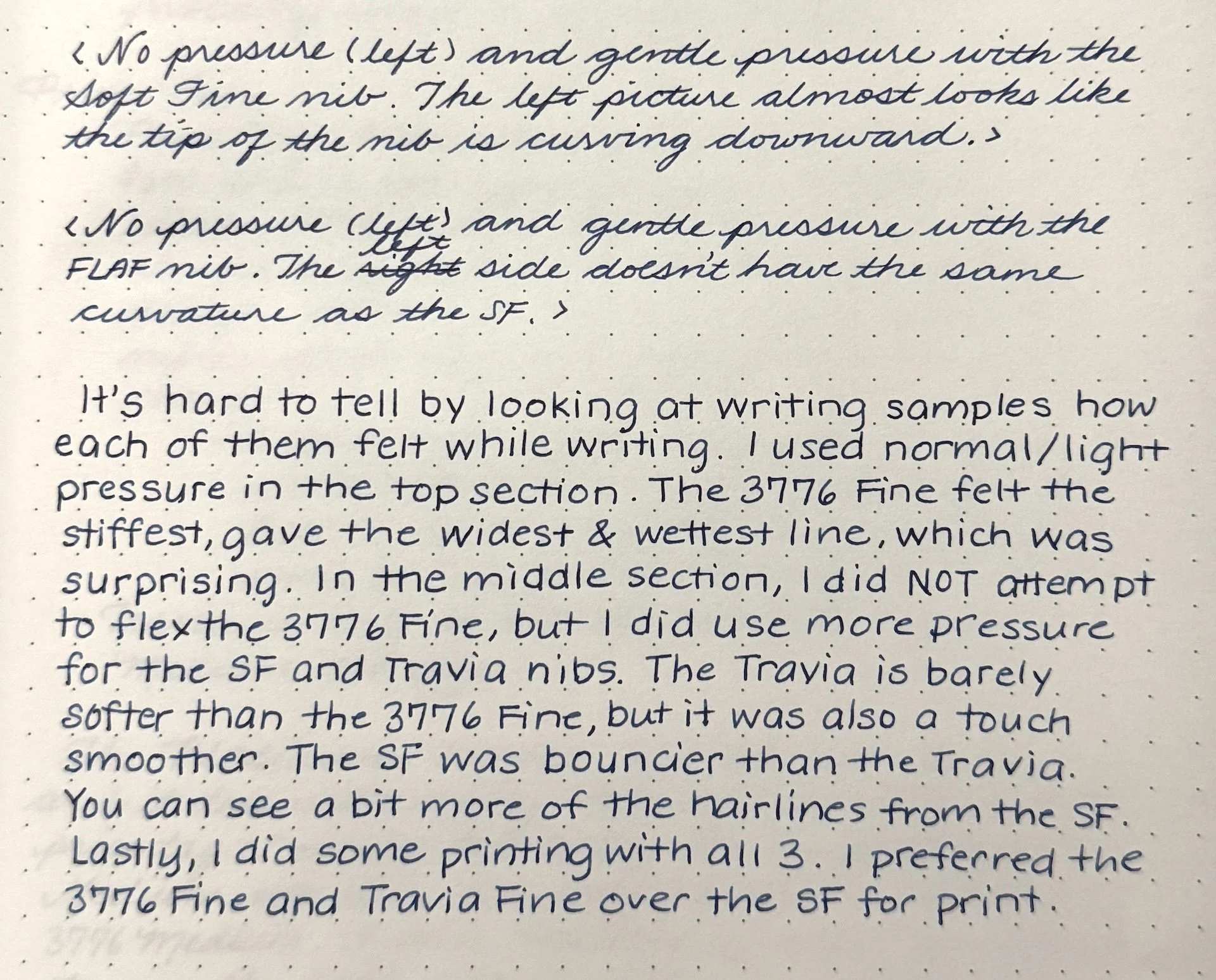
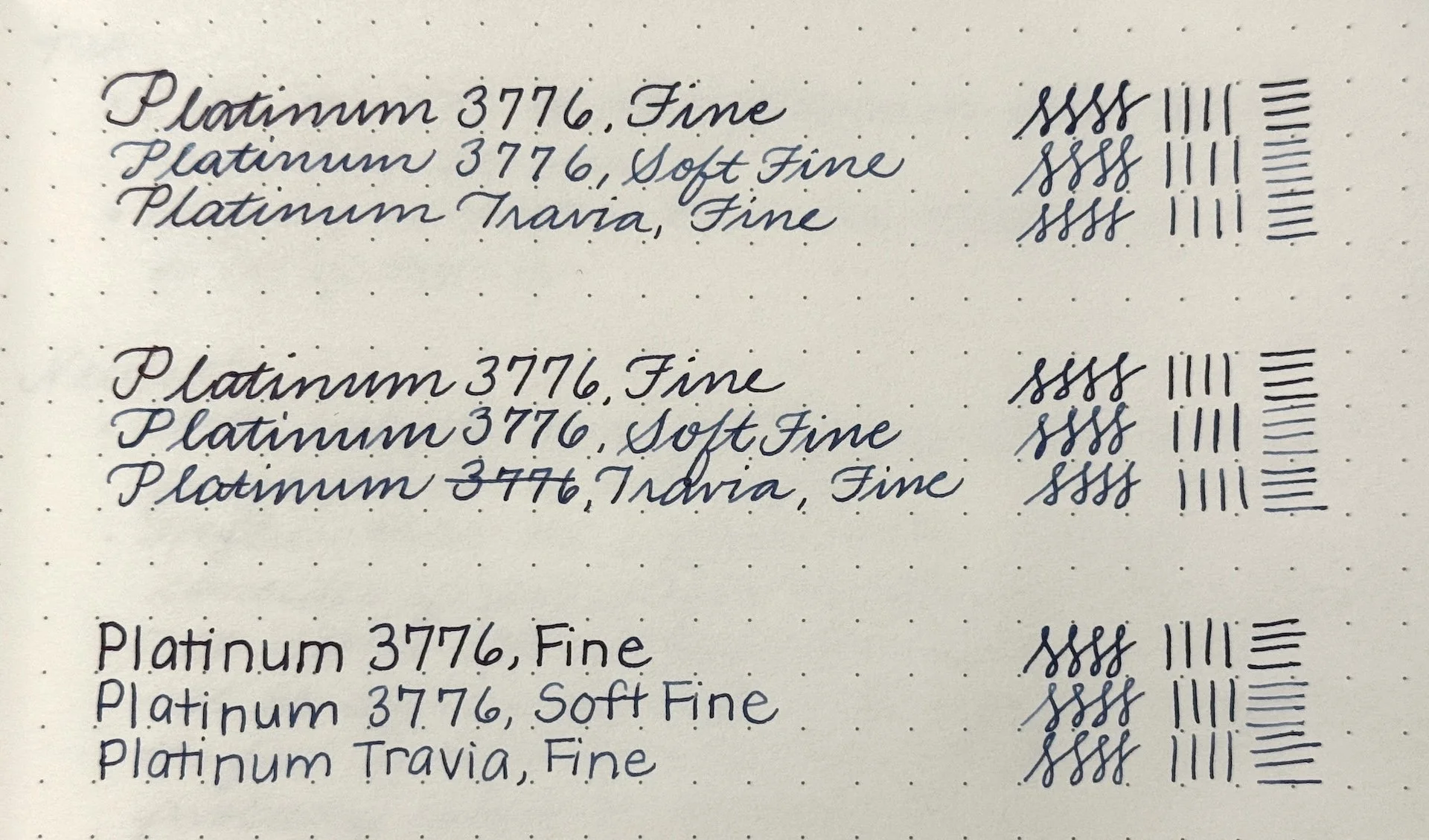
Writing samples of the Platinum 3776 Fine, Soft Fine, and Travia Fine nibs.

It’s hard to tell by looking at writing samples how each of them felt while writing. I used normal/light pressure in the top section. The 3776 Fine felt like stiffest, gave the widest & wettest line, which was surprising. In the middle section, I did NOT attempt to flex the 3776 Fine but I did use more pressure for the SF and Travia nibs. The Travia is barely softer than the 3776 Fine, but it was also a touch smoother. The SF was bouncier than the Travia. You can see a bit more of the hairlines from the SF. Lastly, I did some printing with all 3. I preferred both 3776 the Fine or the Travia Fine over the SF for print.

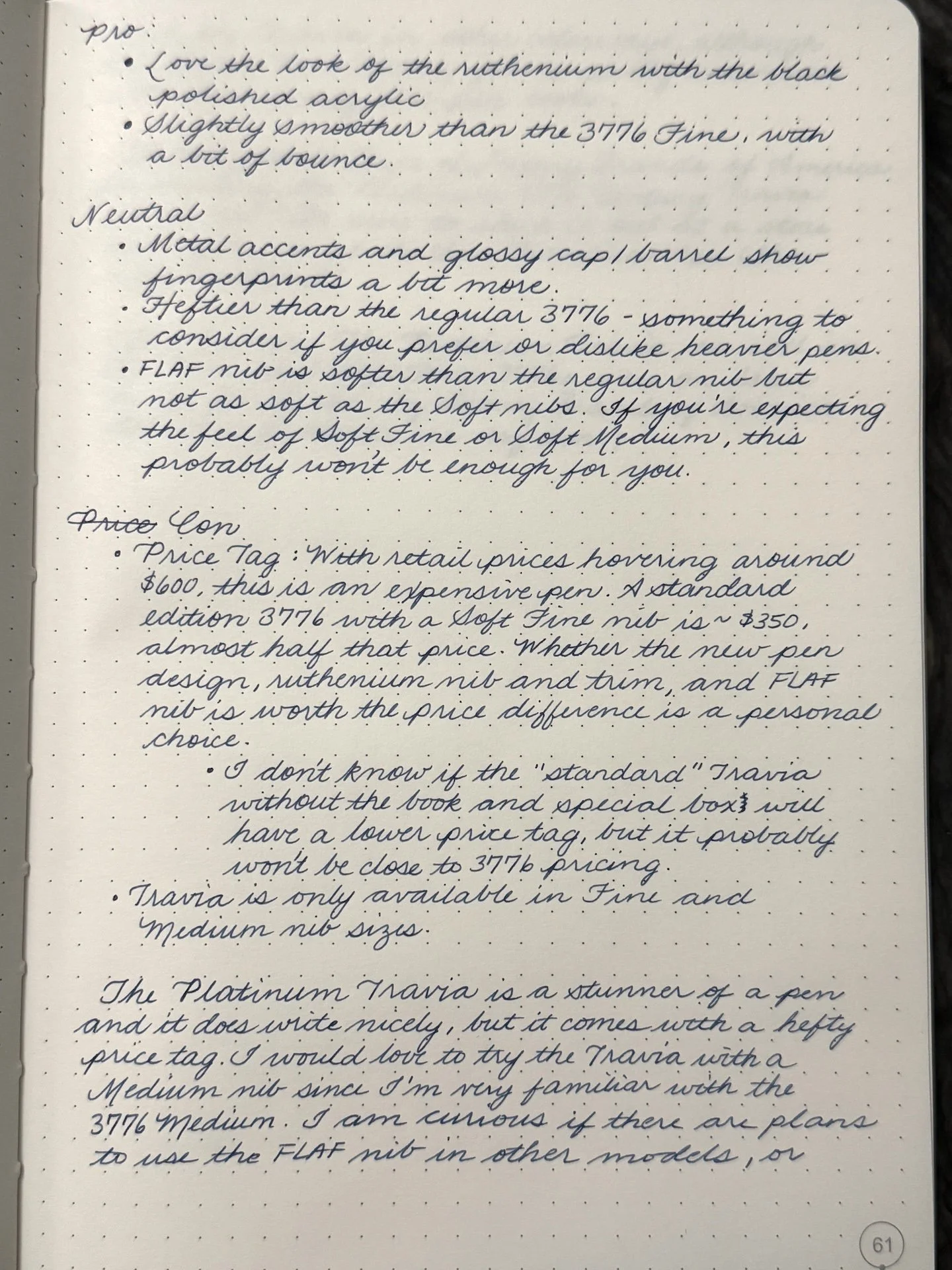
Pro:

  • Love the look of the ruthenium with the polished black acrylic
  • Slightly smoother than the 3776 Fine, with a bit of bounce

Neutral:

  • Metal accents and glossy cap/barrel show fingerprints a bit more.
  • Heftier than the regular 3776 - something to consider if you prefer or dislike heavier pens.
  • FLAF nib is softer than regular nib but not as soft as the Soft nib. If you’re expecting the feel of Soft Fine (or Soft Medium), this probably won’t be enough for you.

Con:

  • Price tag: With retail prices hovering around $600 (and about to go up,) this is an expensive pen. A standard edition 3776 with a Soft Fine is around $350, almost half that price. Whether the metal accents and FLAF nib is worth the price difference is a personal choice.
  • I don’t know if the “standard” Travia and without the book and special box will have a lower price tag, but it probably still won’t be close to 3776 pricing.
  • Travia is only available in Fine and Medium nib sizes.

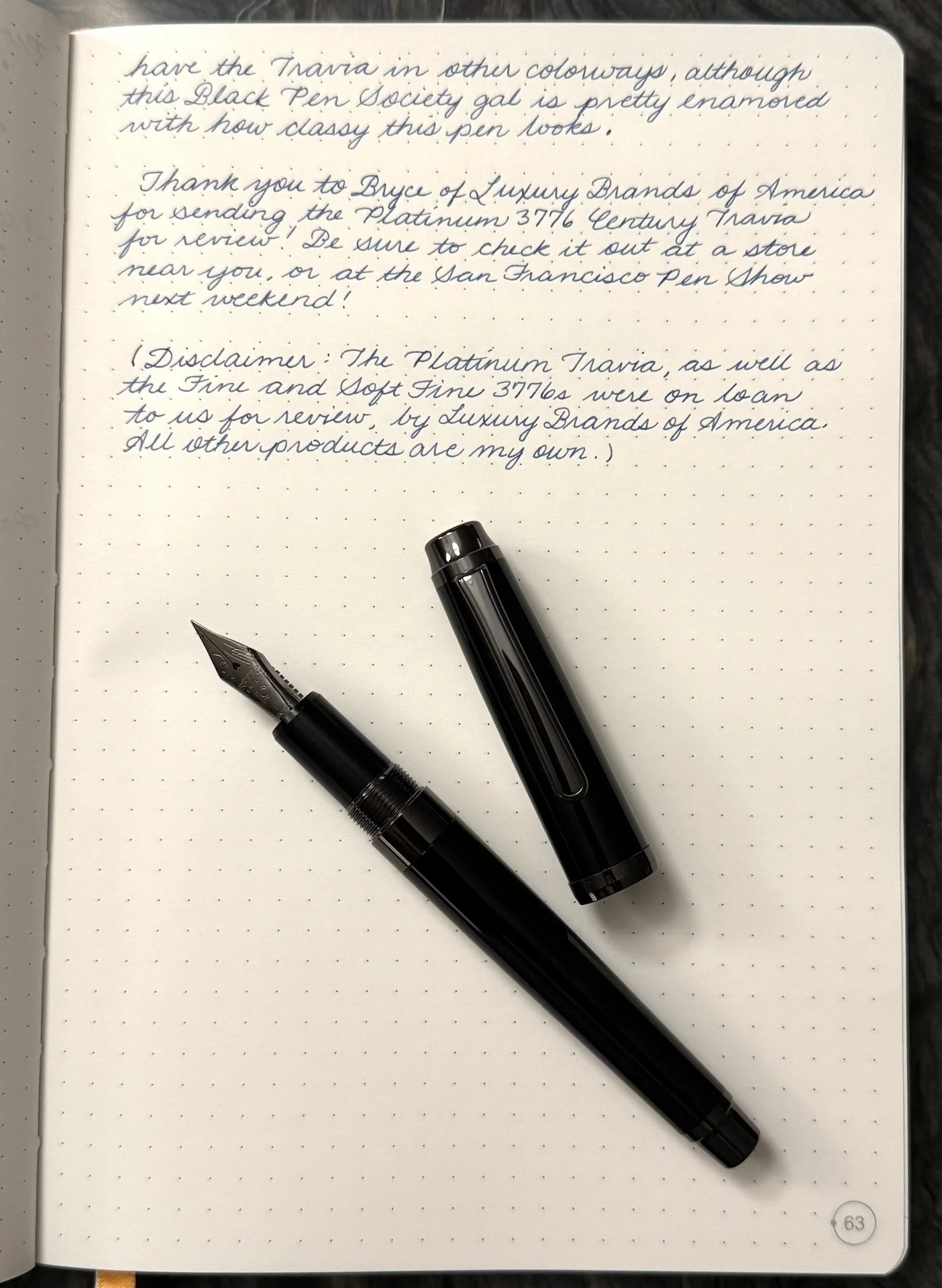
The Platinum Travia is a stunner of a pen and it does write nicely, but it comes with a hefty price tag. I am curious to know if there are plans to put the FLAF nib in other models, or have the Travia in other colorways though this Black Pen Society gal is pretty enamored with how classy this pen looks.

Thank you to Bryce of Luxury Brands of America for sending the Platinum 3776 Century Travia for review! Be sure to check it out at a store near you, or at the San Francisco Pen Show next weekend!

(Disclaimer: The Platinum Travia, as well as the Fine and Soft Fine 3776s were on loan to us for review, by Luxury Brands of America. All other products are my own.)


Enjoy reading The Pen Addict? Then consider becoming a member to receive additional weekly content, giveaways, and discounts in The Pen Addict shop. Plus, you support me and the site directly, for which I am very grateful.

Membership starts at just $5/month, with a discounted annual option available. To find out more about membership click here and join us!

Posted on August 21, 2026 and filed under Platinum, Fountain Pens, Pen Reviews.