Posts filed under Guest Post

Getting Inky in October

(This is a guest post by Brian Draghi. You can find more of Brian’s work on Instagram @Sketchscape)

I wanted to describe my process for my March of Robots and the current Name-Your-Own-tober for this post. I am not a professional artist, but this process works for me and what I use for my hobby. I like to use many references to what I draw, whether it's online research or my book collection the I've collected over many years. Some people may have an issue with artists using reference photos, but it's suitable for a couple of reasons. Most artists aren't good at using memory sources, especially if you are doing any photo-realistic illustration. Two- it's always ideal to use source material from actual environments or as real sources as possible. The more practice you have from real life, the faster your work becomes, and the experience helps with future sketches.
Art Supplies

Tools of the Trade

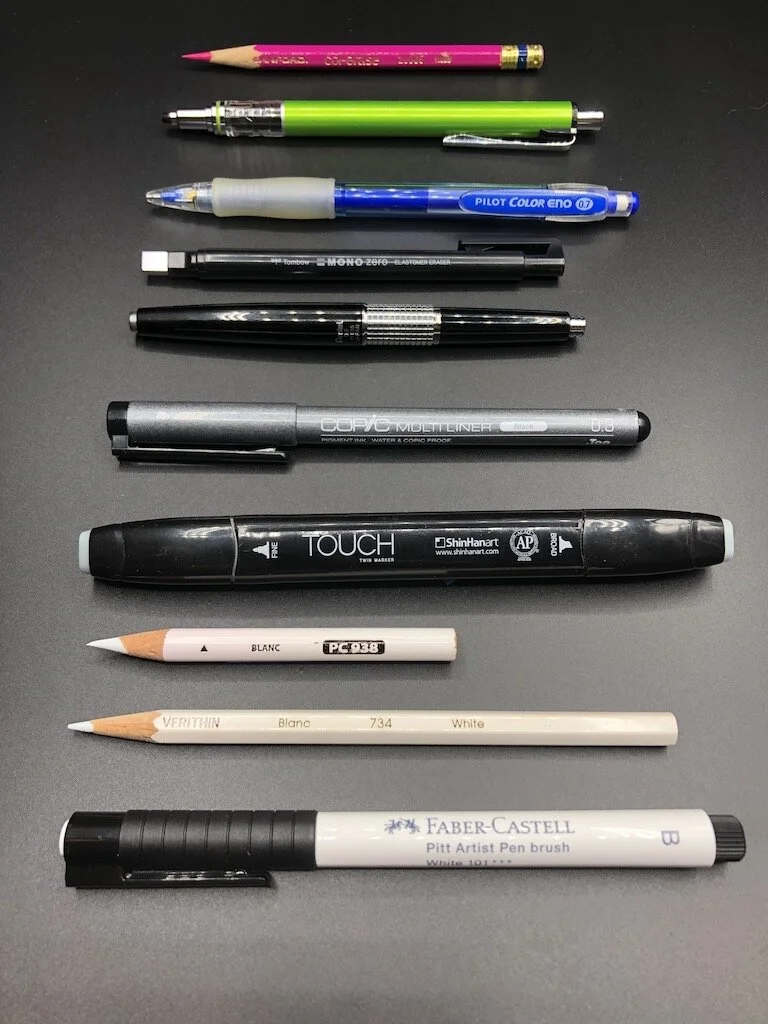
Prismacolor Col-erase pencils, blue or red

Kuru Toga Advance mechanical pencil

Pilot Color Eno mechanical pencil

Electric sharpener

Tombow Mono click eraser

Pentel Kerry mechanical pencil

Copic Multiliner

ShinHan Touch markers

White Prismacolor pencil

White Verthin pencil

White Faber Castell Pitt Artist Pen brush

Prismacolor Toned Tan paper squares

Nock Co. Brasstown case

Nock Co Chimneytop case

Lihit Labs Smart fit case

The Prismacolor Col-erase pencils are my go-to pencil of choice for laying down the beginning sketch before ink. I like these pencils for two reasons. They don't smear as regular graphite lead does, and they erase quite well without much effort. I tend to have a heavy hand, so these leads are more forgiving than traditional graphite.

My favorite mechanical pencil in my Uni Kuru Toga advance for two reasons. The lead rotation mechanism continually rotates the lead while sketching, allowing the same consistent line without variation. The Kuru Toga also features the ability to retract the guide pipe for the lead to protect it from getting bent or poking a hole in my case.

Kuru Toga

I'm particular about the pencils I use for the highlights, and some provide a brighter look for the more intensive highlights. I favor the Prismacolor white pencils using both the Verithin version, a more rigid type of lead, and the colored pencil version with a softer lead. The Verithin creates cleaner edge lines and outlines, and the white-colored pencil has a more soft waxy core used for more blending. I tend to favor the Faber Castell brand and the German Edding brand of white markers. These tend to be more of a pigmented water-based ink, with some brands being more opaque than others.

Markers

The markers of choice are the cool greys of the ShinHan Touch marker. These are cheaper markers than the popular yet more expensive Copic markers that professionals use, but they work well and blend well on the page. Many marker brands available react differently to certain paper types and having different shades for each color. As the digital format has become more accessible to more artists, these traditional mediums can be overlooked. I still prefer the tactile feel of using conventional tools on actual paper rather than a digital screen.

Nock Co Chimneytop

The paper choice is the Prismacolor Toned Tan squares, which provides a nice manageable size to create sketches promptly. The toned paper works well with white pencils and allows you to create highlights that you wouldn't achieve with regular sketch paper.

Nock Co Brasstown

Most of my sketching supplies are stored in my trusty Nock Co. Brasstown case. The Brasstown is from the original Nock Co. Kickstarter I backed in 2013 and still use it today. It is my favorite case because it stores everything in a nice protected rolled out tongue. Everything is presented organized in a row without having to do a search and rescue for my supplies. The Brasstown also makes it convenient to carry my supplies on long trips or to go on vacation.
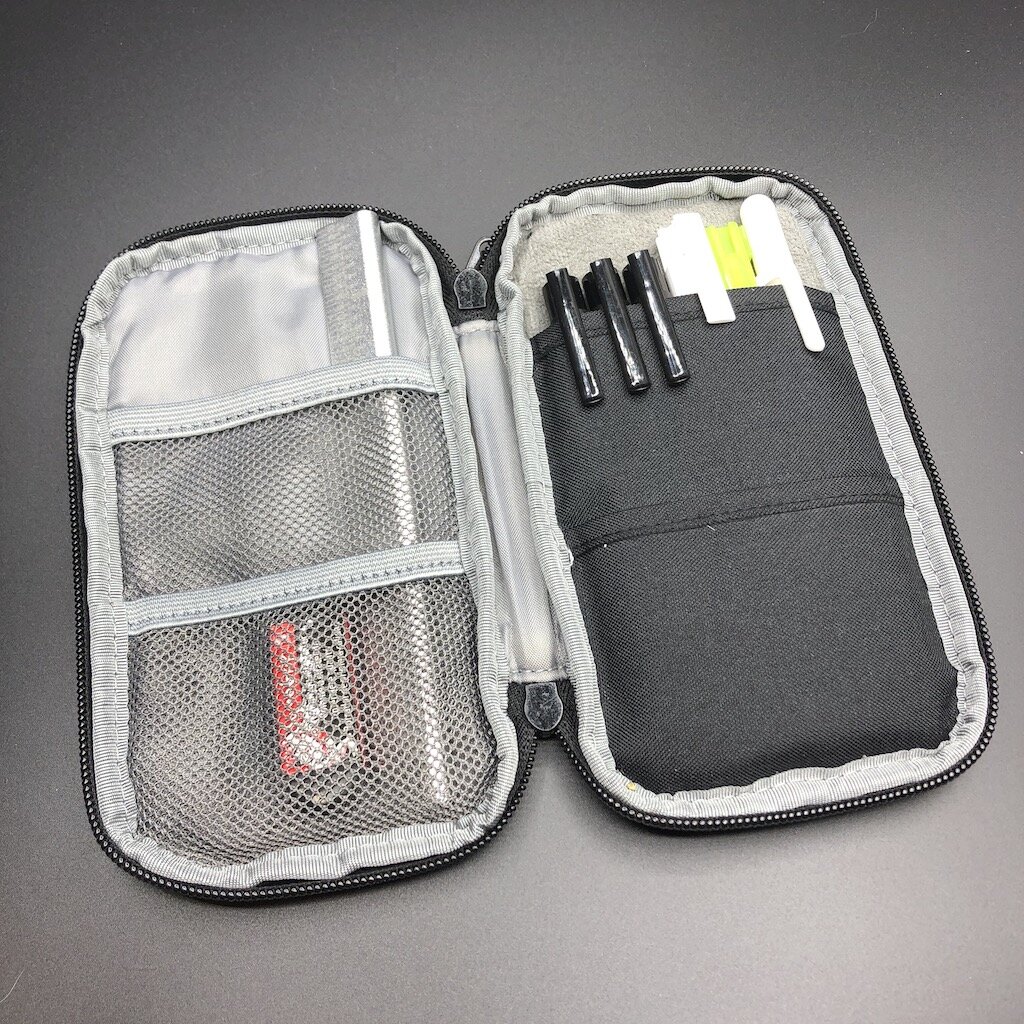
Lihit Lab

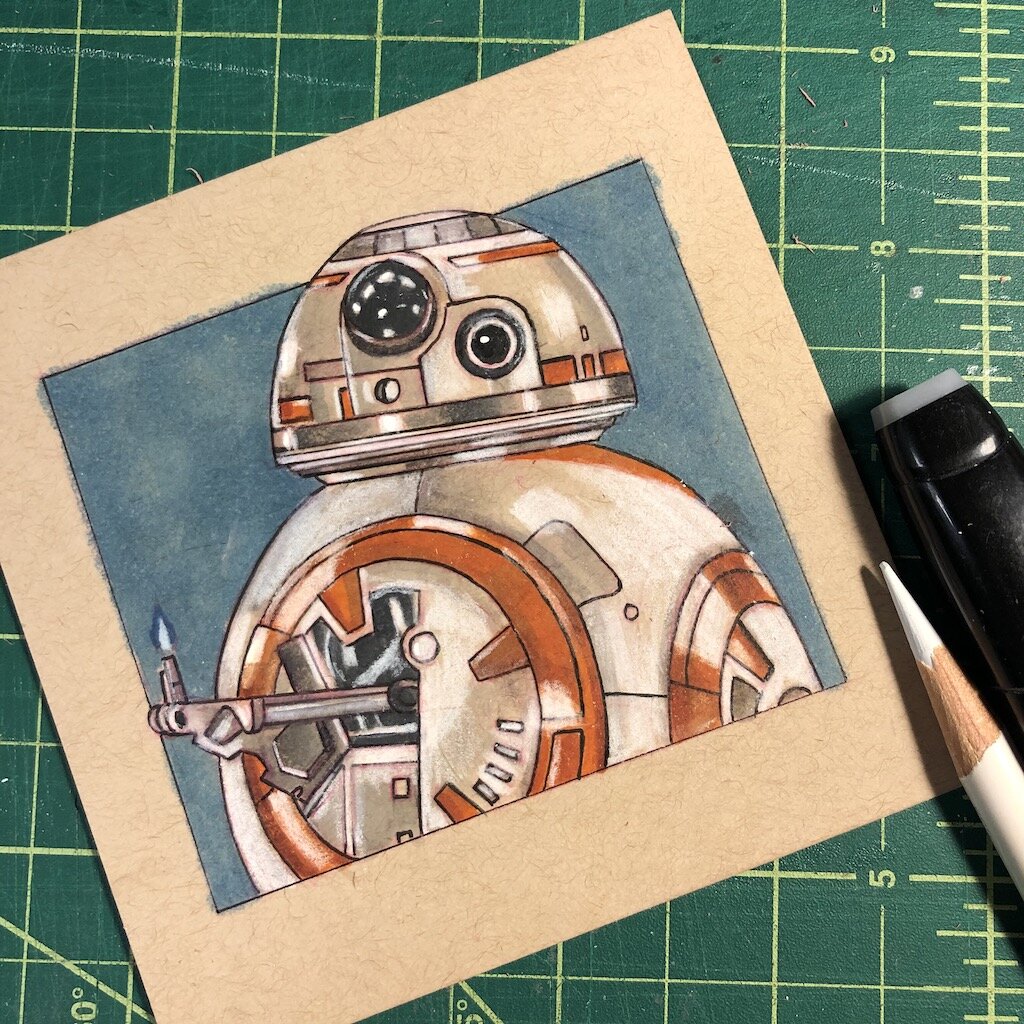
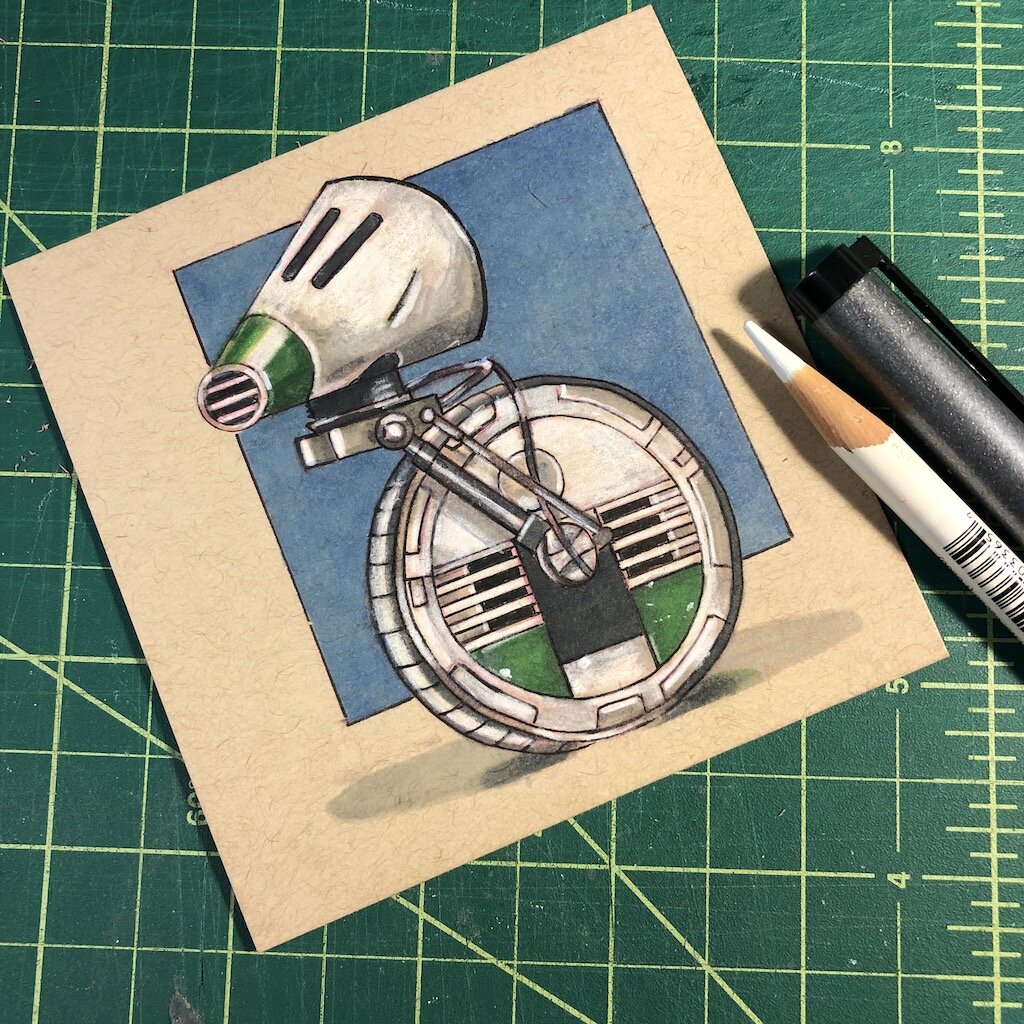
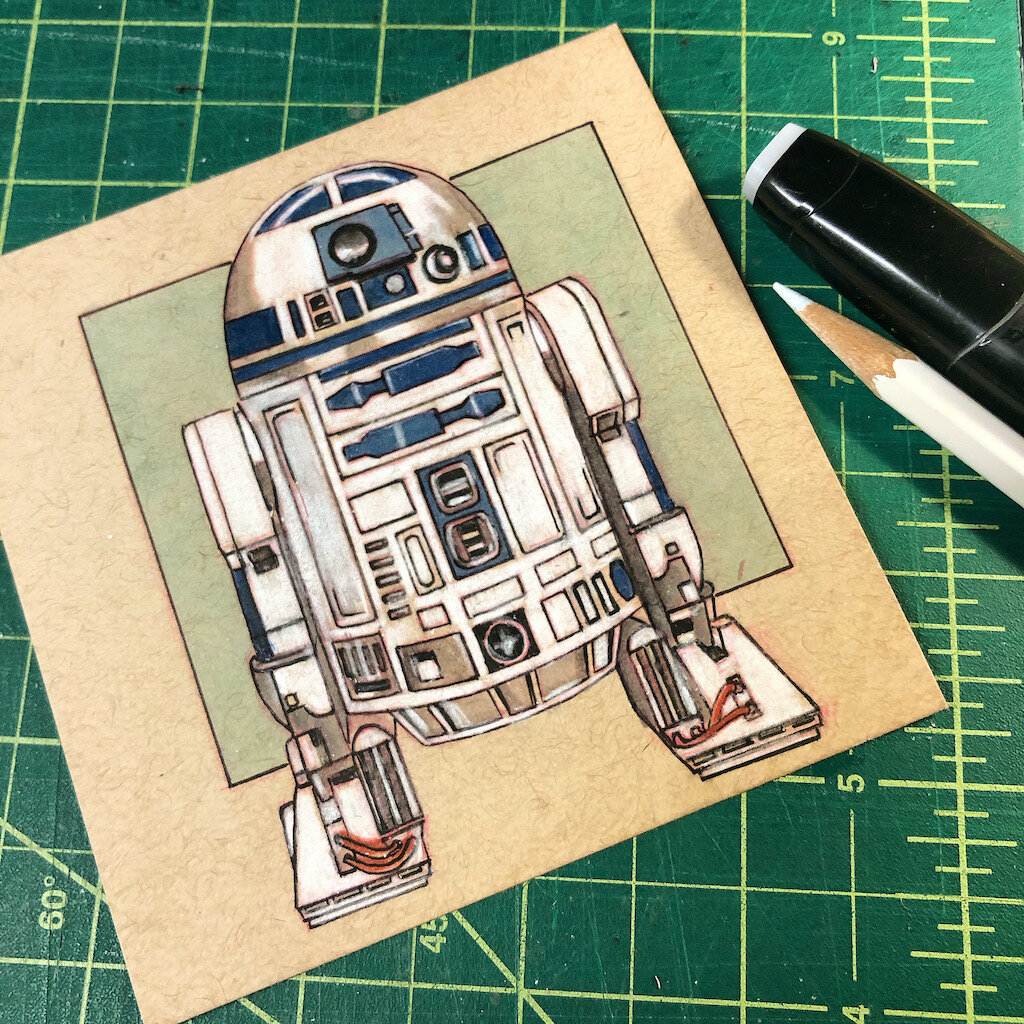
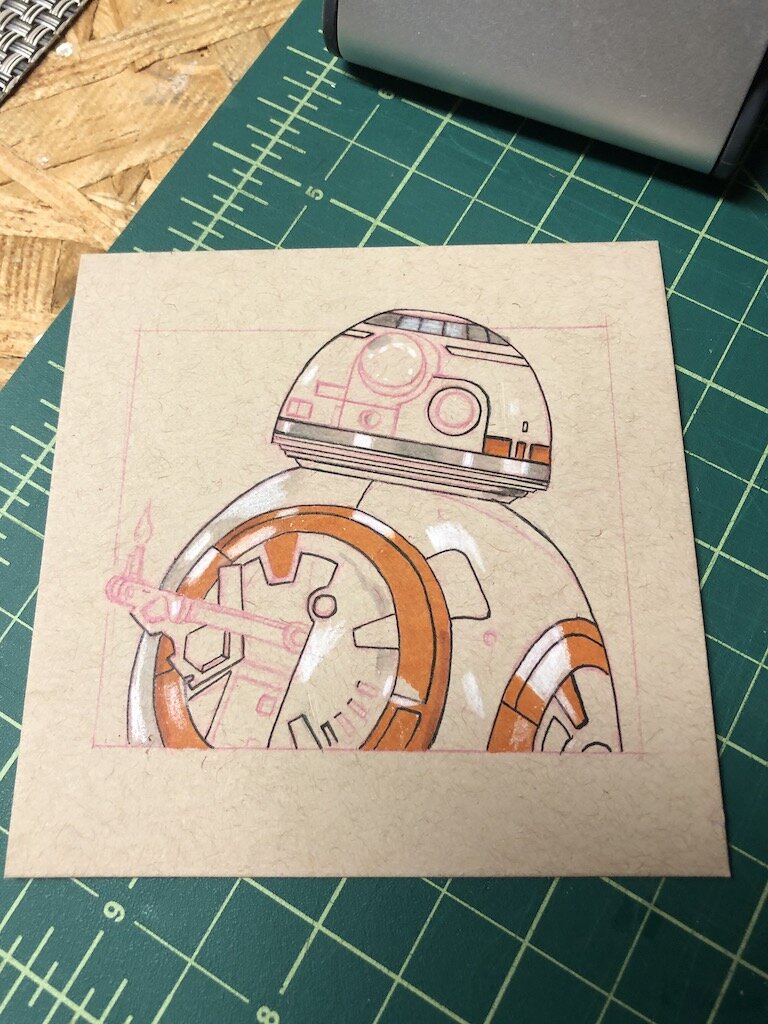
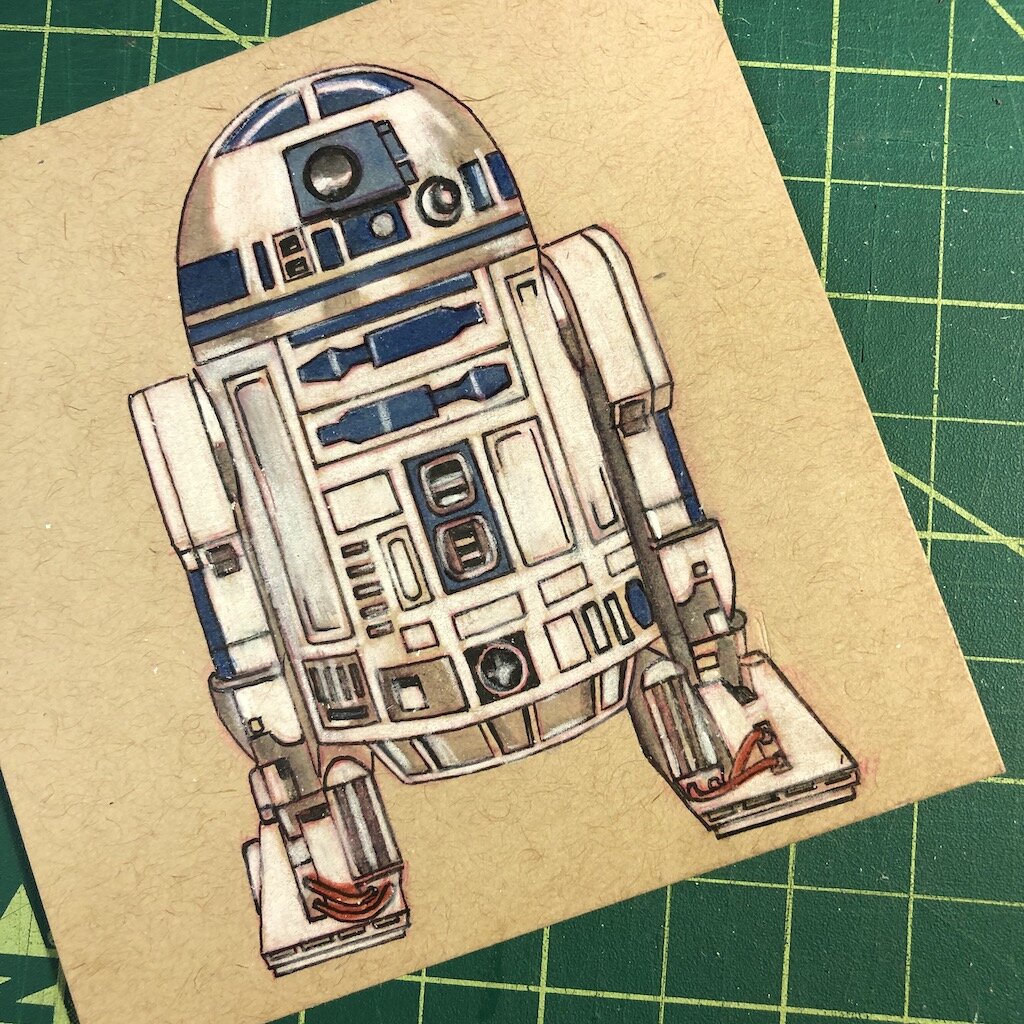
Let's get into the step by step process I used to create my March of Robots illustrations back in March and the process I will use this month. My March of Robots covered the Droids of Star Wars theme, and I'll be showing a few examples of my sketches and the processes used to create these fun droids.

Step one: Reference, Reference, and more Reference

I look at as much visual information as I can to figure out the look of what I’m sketching. Photos are ideal, but real-life examples are even better. Many artists may frown upon using too much reference, but I’m just not the type that remembers every detail from memory. I need as much reference to influence my sketches without having to take into account any guesswork.
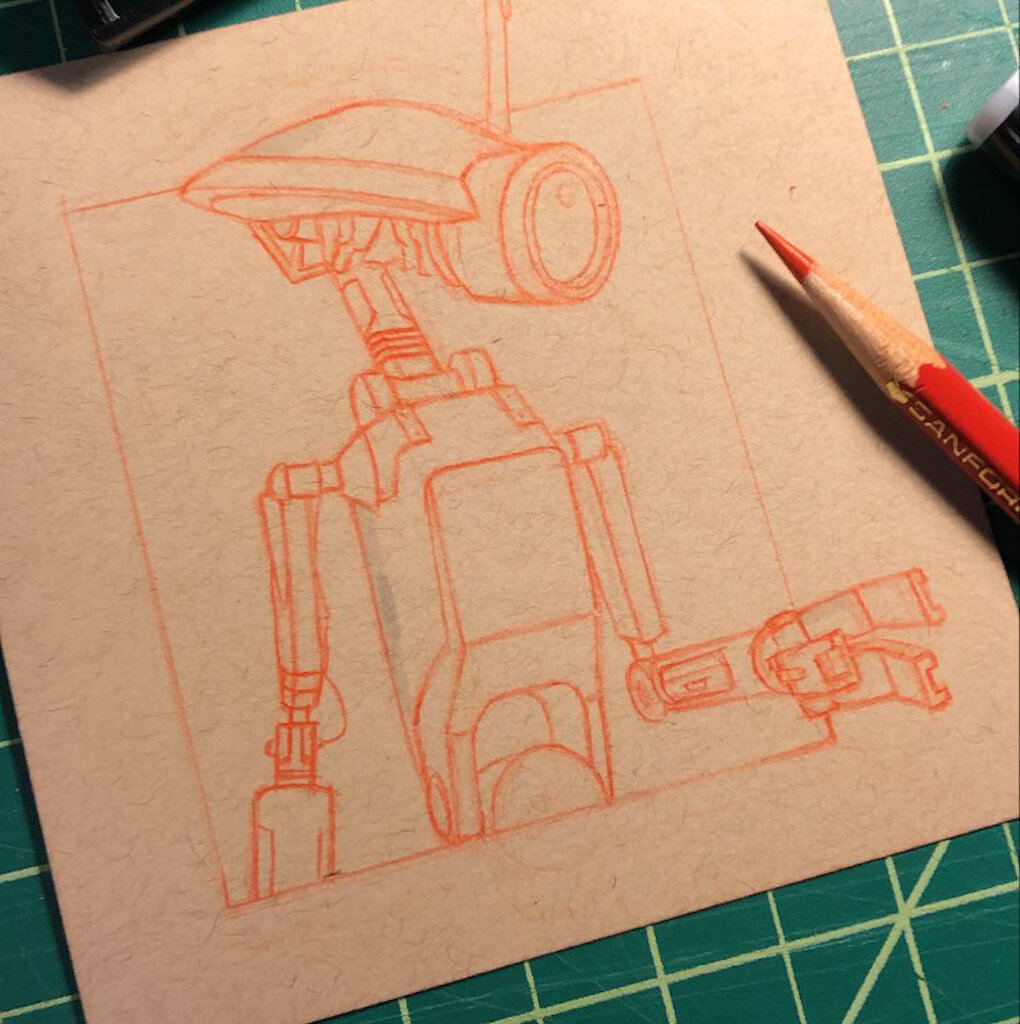
Rough Lines

Step two: Rough sketch

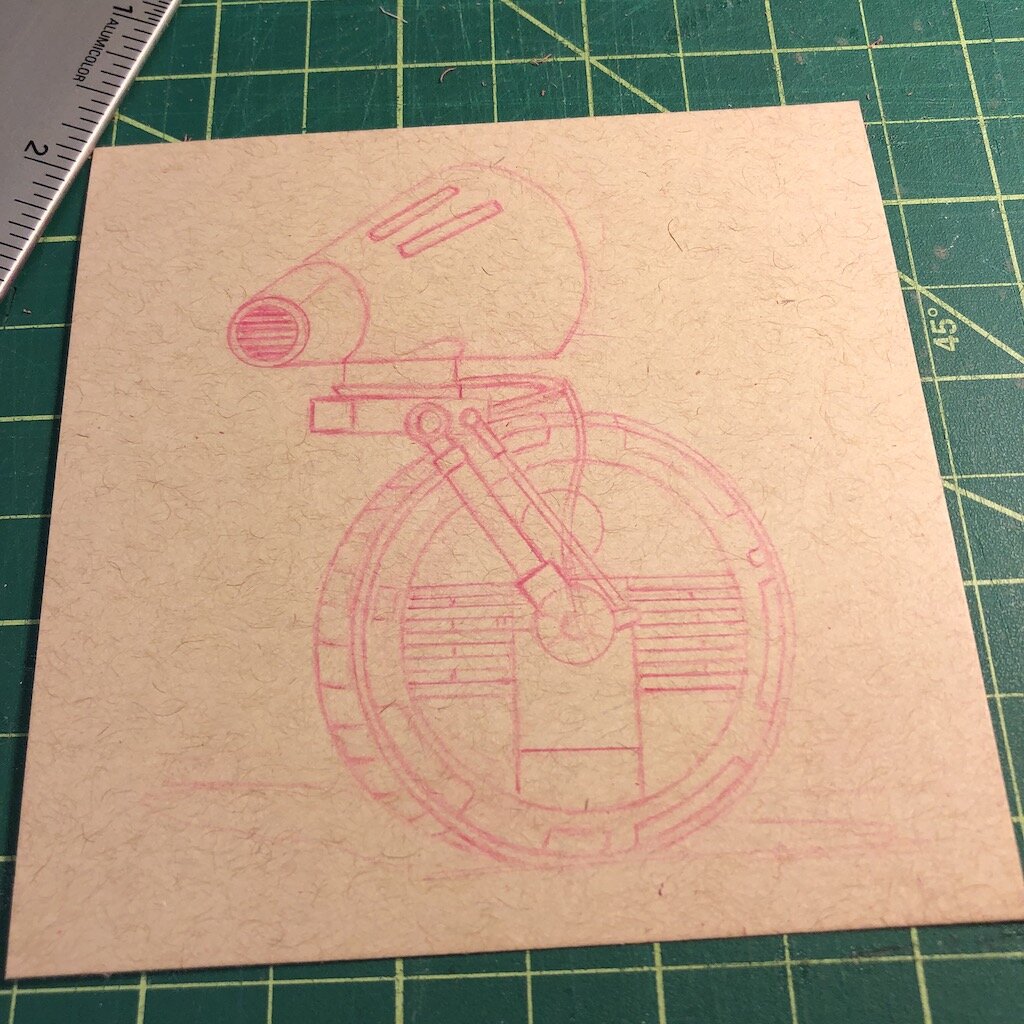
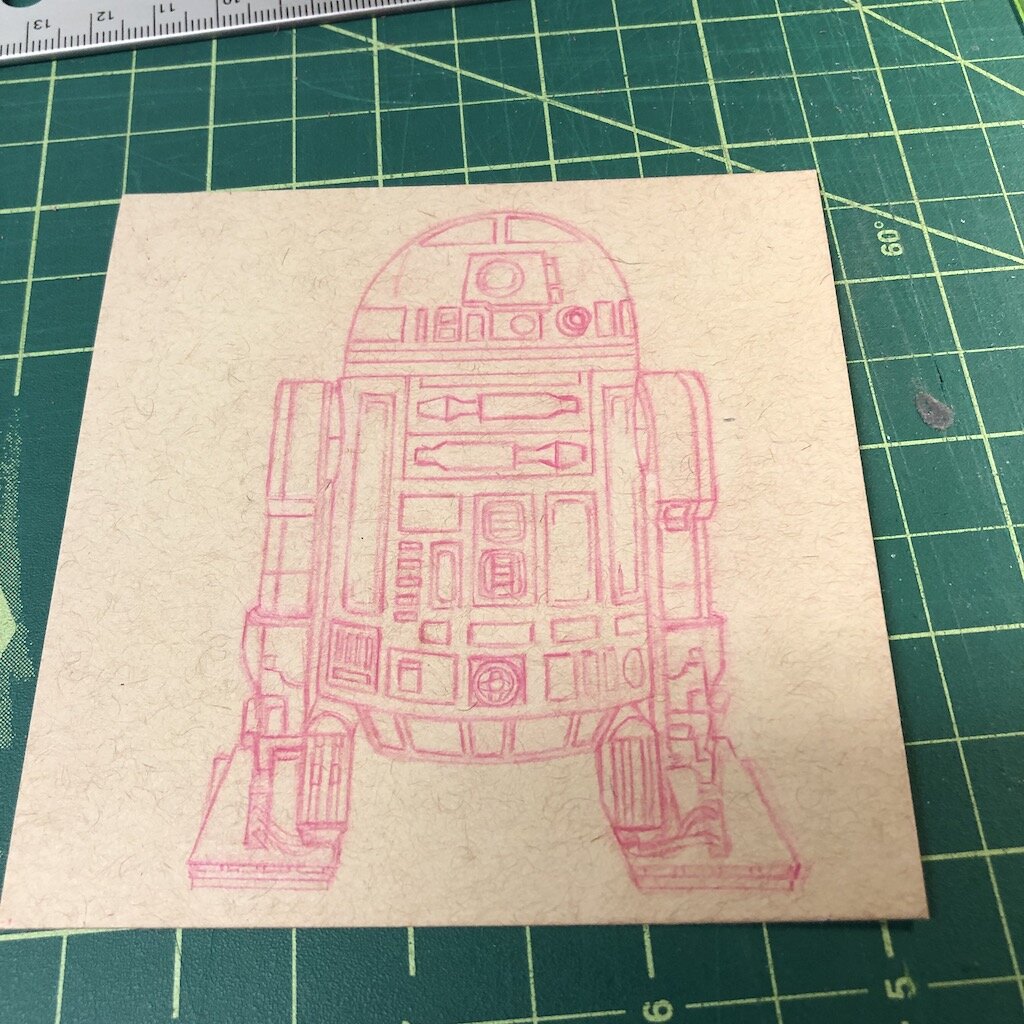
I block out the basic shapes and composition of my droid, making sure that the design fits on the page, and the construction is good. I try to keep everything as light as possible, especially since I tend to have a heavy hand. I want to be able to erase everything if something doesn't work, which happens regularly. I'm guaranteed never to get something quite right the first time. I either need to adjust proportions or composition within my sketch. I'll often work out some basic thumbnails on a scratch piece of paper to get the construction down for the final image. I can always transfer things from one sketch to another instead of having to start over.

Solid Lines

Step three: Solid lines

Once I get a composition that works out, I will make my pencil lines a bit darker before heading into inking. This process allows me to see where I need to ink my lines before color. This step also allows me to include those small details like some design elements and the armor's worn look. This is what I like to call authentic battle damage, now that I have all the lines finalized for inking.

Step four: Inking time!

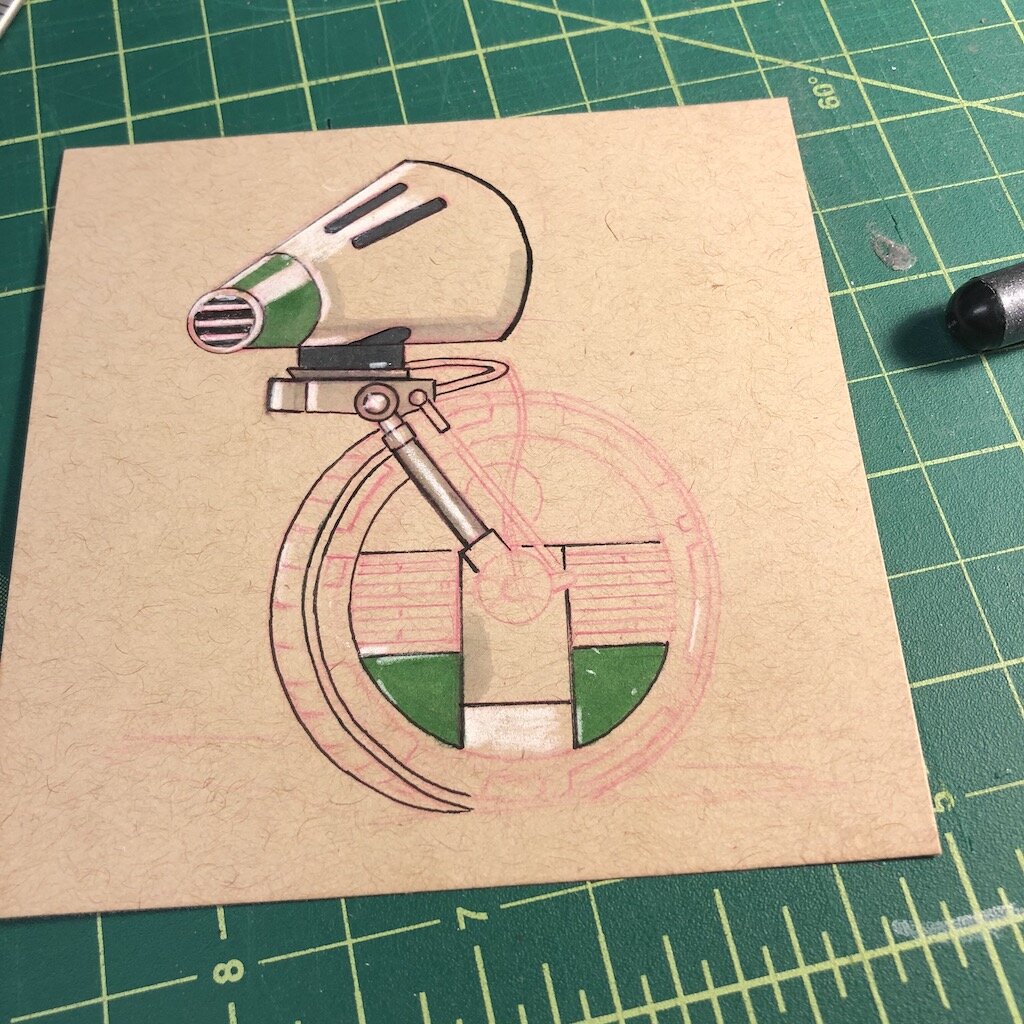
I usually tend to use the Copic Multiliner or the Faber-Castell Ecco Pigment since they do not bleed when you have use markers on top of the line. I use multiple different tip sizes for inking, depending on the details. Use a smaller point for tiny details and have a larger tip to show more contrast with the form closest to you. I usually use fineliners that do not bleed when you apply markers over them, so it does not mark the piece. Many artists tend to use the opposite approach and apply markers first and then inking after to give the markers a chance to dry. This approach avoids having to be more careful but does take more planning to make sure where you are placing your inking lines.

Highlights

Step five: Highlights

I focus on the highlights first before I start the primary base color of my sketch. This gives me the ability to gauge where most of the main highlights are located. It's easier on the saturated sections to apply white pencil to blend in more directly to paper than using it over the marker after the fact. I sometimes tend to block the highlights first before I lay down the primary base color, so I don't overlook them when adding the overall base color.
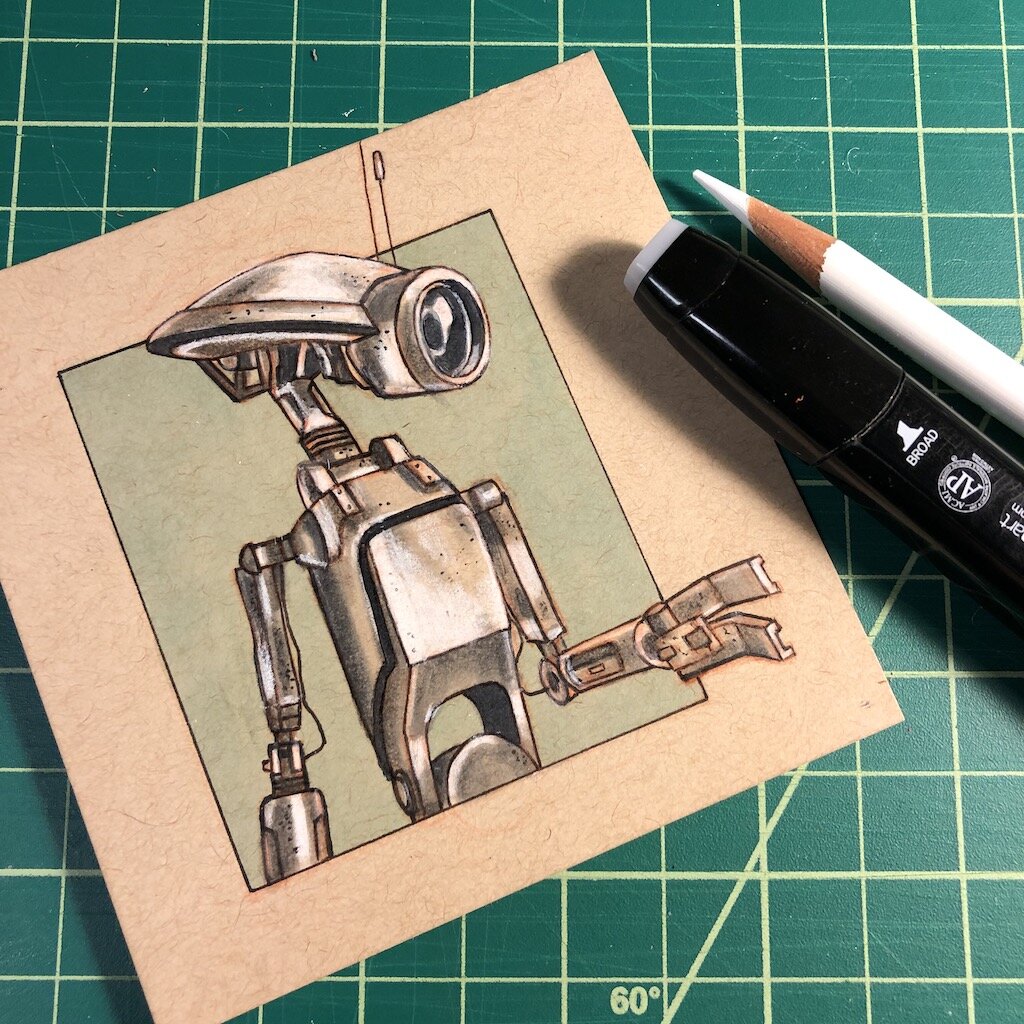
Color Finish

Step six: Color

I keep a scratch piece of toned paper next to my sketch to test the markers for my chosen colors. I usually make small swatches of color thumbnails directly on the page to see if the color palette works. I pull out these markers first since they will be the primary markers I'm using during the sketch.

I test out the markers to see how they handle the paper I'm using to sketch for two reasons. First, check if the markers are still saturated and not dried out. The second is to test how the markers react to the paper material. Certain marker brands react differently to paper; some are more saturated, while others tend to bleed more.
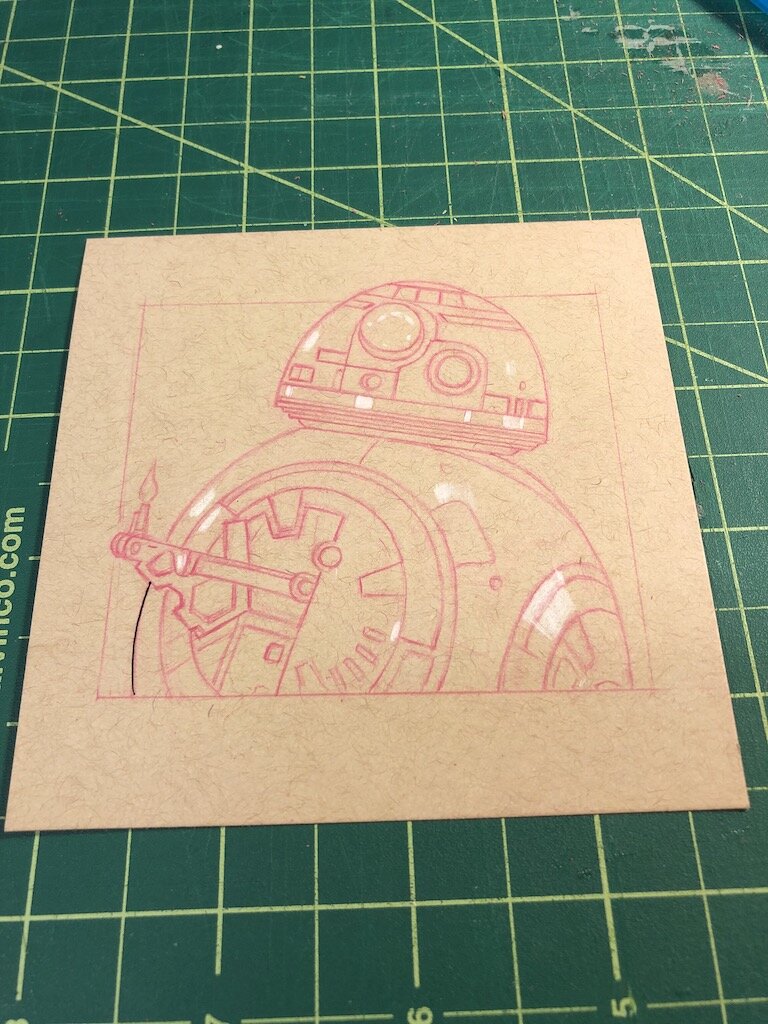
Step seven: Shadows

Once the primary colors are down for the sketch, I'll block in the shadows of the image. I usually use my cool greyscale markers for any dark shadows. I'll blend over each marker until it's the right gradual shade. I am always more comfortable working light to dark than the opposite way; you can still make it darker. Doing the opposite tends to be more challenging to correct and lighten and adjust after lying down darker lines.

Once the shadows are complete, I work on the extra details that give a sketch a little bit more character. I'll take my fineliner to work on some weathered look of a droid. I'll make some extra scratches and distressed wear to highlight some authentic battle damage that a droid may have encountered over the years. This gives it a more realistic look and adds character to my piece.
Final step: Final touches

Once I'm happy with the render and adding details, I'll go back over my sketch, add extra highlights, and add additional inking for the outline that I missed or make the edges a bit more crisper. Using markers and adding highlights tends to wash out some of the inking lines, so I'll attend to those lines with another coat. Once the extra details are finished, I'll typically add a color box behind the image that creates a bit of contrast and distinguishes the piece from the page. The lighter the image, the darker the background, and so forth.

Sometimes it's an actual image that I'll add to the background that you instantly recognize, and other times I may suggest an image by adding a shadow on the background. Adding a shadow may be a more lazy route, but it lets the viewer use their imagination to suggest what might be happening in the background. The point is to break up the image and give your sketch more contrast and make it more attractive to the viewer without having too much detail.
Last thoughts:

My process isn't too different from other artists using various supplies and techniques. I enjoy seeing the process of other artists that highlight certain materials. It's always great to discover new products I've never heard of before or something I never considered using to create my work. That’s probably why I'm addicted to Kickstarter, but that's another story. New materials never make you a better artist, but it is always fun to try new things or create a different process that works better for you.

My art background has fueled my interest in learning about different types of materials and lead me to get into the world of fountain pens. I would have never considered using fountain pens ten years ago, but it's great to expand myself and try more things. Get your pencils, pens, and ink ready!

Posted on October 19, 2020 and filed under Sketching, Art, Guest Post.

Fountain Pens: An Argentine Perspective

Is El Ateneo the most beautiful book store in the world?

Is El Ateneo the most beautiful book store in the world?

(This is a guest post from Robert E. Zink, who has spent the past few years living and working in Argentina.)

Like you, I remember my first fountain pen. Even today, the feel of a classic writing instrument in my hand still induces an experience that no other tool can produce. What I did not realize at the time was that defining myself as a fountain pen user would identify me as part of a unique worldwide community; soon, I realized just how worldwide. Seven years later and I now live in Argentina, an initial move that brought a question: Can my fountain pen life continue in this new place?

Latin culture rarely invokes images or descriptions of fine writing instruments. However, Argentina is unique among those Latin countries, which is prominently displayed in its fountain pen community. It’s yet an additional characteristic that exposes the European influence. Unfortunately, for someone like me, who lives in a rural part of the country, the fountain pen community primarily exists in Buenos Aires. It makes sense; the majority of the population and wealth inhabit the 13th largest city in the world. Thankfully, online merchandise gives the rest of the country access to this community, although minimally (because few shops sell online).

Visit the city, and you’ll find the typical brands such as Pelikan, Montblanc, Lamy, or Cross. Are you a stationery enthusiast? If so, here’s what you can expect to find:

  • Pens: I’m not sure why, but Lamy occupies a prominent position. However, many of the major brands are represented in both pens and ink.
  • Pencils: You won’t find many elite pencil brands, but sketching generates a presence for Staedtler. Faber-Castell also maintains immense recognition because of the popularity of their lower-end products with school children.
  • Paper: Quality paper is another story. There are some beautiful handmade journals if you want a nice souvenir. But if your hope is to find something with fountain pen friendly paper, unless you’re looking for a Moleskine, your expectations are too high.

While there are a few well-known shops and collectors, the best finds come from simply walking the streets in the central area. Check out the Recoleta area (where Evita is laid to rest) on your way to my favorite bookstore in the world, El Ateneo. Enjoy your new acquisitions there while you sip a cup of espresso on the stage of this former opera house. The environment invites writing.

Ultimately, culture defines availability. Because Argentina is a land of beef, it is also a land of leather, but that craft has not worked its way into the stationery industry as much as I would like. I do have a beautiful leather folder that elicits attention wherever I go. If you are fortunate enough to visit, these make a wonderful souvenir. Generally, finding notebook covers that meet my needs or pen cases is non-existent. Cost is the biggest defining factor. A fledgling economy with 50% inflation places fountain pens into the luxury item category. Additionally, high import fees push the cost higher, out of reach for most Argentines. In an era of technology, though, Argentina is a land where pen and paper still reign.

Many people are surprised to note a thriving fountain pen community here. Overall, the average user will likely find himself/herself content. However, participation in it does mean adjusting expectations in the following ways:

  • Expect to Search More: A committed enthusiast will expend a lot of energy searching for pen, ink, and paper. I once stumbled on a Visconti Van Gogh on an unknown side street only because I got lost.
  • Expect to See Less: Your requests cannot be too specific, as options here are limited, especially at the higher price points.
  • Expect to Pay More: Finally, expect to pay more. A non-special edition Lamy Safari will set you back about $38 USD (about $9 more than the typical price). Many of the common brands of ink also run about $4 more per bottle.

The country was in the middle of a significant economic downturn when the COVID-19 crisis hit. It will be interesting to see what the fountain pen industry will look like afterward, assuming it will survive.

Posted on June 23, 2020 and filed under Guest Post.

The Pen of Jeopardy

(Diane L. is a renegade physicist, engineer, photographer and writer, and was gracious enough to write this geust post for The Pen Addict.)

I was over a thousand points ahead and each of my two opponents had just provided a wrong answer to the final question. I knew I had given the right answer, so I was poised to win Pen Addict Jeopardy at the Baltimore / Washington International Pen Show 2020. What could possibly go wrong? But just as the show master Brad Dowdy prepared to read out my answer, it dawned on me that I had committed the most egregious mistake a Jeopardy player could make. I covered my head in my hands as Brad announced, “she said ‘shoes!’” and then repeated in horror “wait, she said ‘shoes…’” and turned in consternation to the other judges, Ana Reinert and Corinne Litchfield …

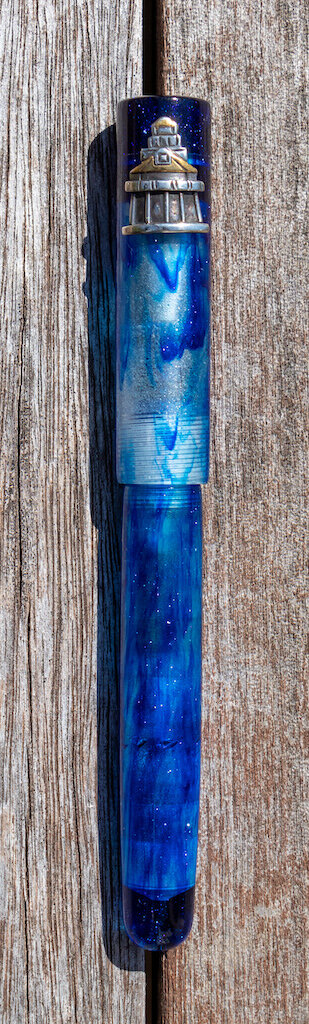
The Thomas Point Lighthouse Pen by Greg Hardy of Hardy Penwrights is a one-of-a-kind custom pen made to be a prize for a competition at the show.

Hardy Penwrights Thomas Point Lighthouse Pen

To quote from the pen’s Instagram page, “The barrels of this pen feature a custom pour by McKenzie Penworks in DiamondCast Ocean Blue and Clear resin. It was chosen to fit the theme of the pen which highlights the Thomas Point Lighthouse located on the Chesapeake. The idea for the metal work came up in a brainstorming session with fellow pen maker Tom Gauntt of Chesapeake Pen Co., and is constructed of nickel silver and bronze – a dozen separate pieces in total.”

Hardy Penwrights Thomas Point Lighthouse Rollstop

And that metalwork, forming the roll stop, is a replica of the Chesapeake Bay’s iconic Thomas Point Shoal Light.

What literally sparks joy about this pen at a first glance is the presence of tiny flakes of mica and real diamond dust which recreate both the sparkle of the sun on the waves and the twinkling stars in the night sky behind the lighthouse. The swirls of deep blue in the translucent material move like waves as you rotate the barrel.

Hardy Penwrights Thomas Point Lighthouse Pen Barrel

The lighthouse theme is also a personal favorite.

The pen came with an easy-going Jowo #6 F nib, which I chose to keep although an exchange was offered. As a lifelong extra-fine enthusiast recently getting into architect and flex nibs, I’m happy to just write with this pen without expending any mental effort on alignment and form - and I can always swap it for another of my Jowo #6’s if I change my mind. In terms of construction, the cap has a slightly conical, nearly flat top and a rounded end. The cap takes just over 2 turns to open or close, and the triple threads on the barrel are barely perceptible to the touch as well as being out of contact when I grip the comfortable, slightly flared section.

Hardy Penwrights Thomas Point Lighthouse Pen Section

The pen came with a name-branded Schmidt converter which fits reliably. Although I often go for a contrast color when inking pens, in this case I decided to go matchy-matchy with Organics Studio Glycine.

Organics Studio Glycine

As mentioned above, this pen is one of a kind. However, Greg Hardy is a custom pen manufacturer working from a variety of inspirations including Arthurian legend, Celtic knotwork, nature and astronomy. He has a variety of pens available for sale in gorgeous colors with handmade metal clips and roll stops, and invites suggestions for concept pens.

Hardy Penwrights Thomas Point Lighthouse Pens

So how did I win Pen Addict Jeopardy? As I was called up to join the game in round 2, I muttered “this won’t go well,” because I have never watched an episode of Jeopardy. As a spectator during the first round, I had learned the importance of stating the answer in the form of a question. I carefully drilled myself to think before I spoke and always speak the question; for example in response to “this pen company makes the Soubriquet?” one would have to reply “What is the Desiderata Pen Company?” rather than just “Desiderata.” Unfortunately, having trained myself to do this when I spoke, I forgot to do so in writing for the last question: instead of turning in something like “what are shoes” in answer to “Jim Rouse was selling this when he met Bert Oser,” I simply wrote “shoes.” So despite being correct, this answer was wrong, and I lost my bet.

However, rather than betting the entire farm on my answer as my two opponents had done, I bet a conservative 600 points, and so even though I lost the question, I still won the game. Winning was such a rush that I completely forgot there were prizes. I was given a gift bag containing a bottle of Pilot Iroshizuku Take-Sumi and a plain black pen box. When I opened it, I was in disbelief that I was the new owner of the beautiful pen within. The next day I was able to meet and thank the maker, Greg Hardy, hear the story of how the pen came to be, and see more of his wonderful creations.

With many thanks to Bert Oser for another fantastic BWI pen show, Brad for being the Pen Addict Jeopardy show master, Ana and Corinne for judging, to the other competitors, especially runner-up Meghan,> and to the spirit of the late Jim Rouse, who would surely have been entertained by the turn of events at the end of the game.

(I didn’t pay for this pen. I won it in a game of Pen Addict Jeopardy!)


Enjoy reading The Pen Addict? Then consider becoming a member to receive additional weekly content, giveaways, and discounts in The Pen Addict shop. Plus, you support me and the site directly, for which I am very grateful.

Membership starts at just $5/month, with a discounted annual option available. To find out more about membership click here and join us!

Hardy Penwrights Thomas Point Lighthouse Pen Full
Posted on May 19, 2020 and filed under Hardy Penwrights, Pen Shows, Guest Post.