Posts filed under Kokuyo

Kokuyo Campus High Grade Notebooks (CYO-BO and MIO) Review

I bought a Kokuyo Campus notebook with CYO-BO paper over a year ago with intentions of reviewing it, but Kokuyo had another plan. I'm not sure when it happened, but they stopped selling the high grade notebooks with the CYO-BO paper. This is a shame, but it looks like they're replaced it with another notebook. The Kokuyo Campus high grade with MIO paper. So, which one is better, and is the MIO worth buying now?

The Similarities

The notebooks both share quite a few similarities. From what I can tell, the only differences are the number of pages in the notebook and what kind of paper they use.

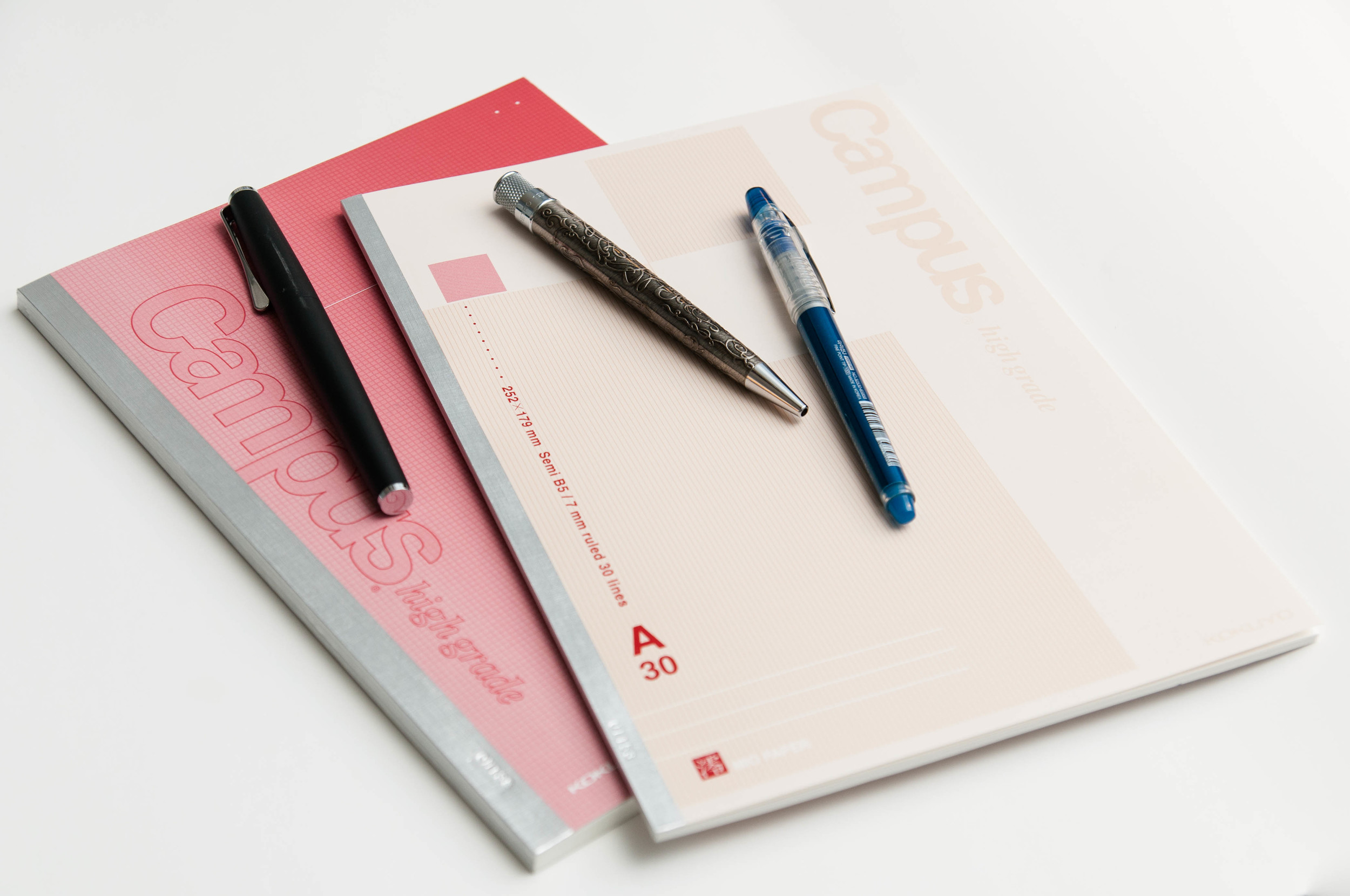
Both notebooks are semi-B5 (9.9x7") and have 7mm ruling with subtle blue-gray lines. There's an area at the top of each page for a title or subject, a number, and the date. Each notebook has 30 lines per page.

A complaint of mine for both notebooks is the binding. It's some sort of glue binding, and it makes it difficult for some of the pages to lay flat, causing some wrinkling in the page that you're trying to write on. This wasn't a huge deal since I could bend and abuse the notebook into submission, but it was an annoyance.

Both papers are archive-safe and acid-free. The MIO notebook has a page at the beginning for your name, subject, etc, while the CYO-BO does not.

I mentioned I didn't like the glue binding, but I am a fan of the shiny silver tape that they use to cover the binding on the outside. Both notebooks have covers that are made of slightly light-weight cardstock. They won't hold up well in a back-pack.

Kokuyo Campus.jpg

The Differences

The only difference in these notebooks is the paper. In a sentence, the CYO-BO paper is thick and velvety, and the MIO is thin and light. They're both smooth and handle inks extremely well – I haven't noticed any feathering – but the paper weight is a major difference.

The CYO-BO notebook is about twice the thickness as the MIO notebook, even though there's only a 20 sheet difference.

CYO-BO Performance

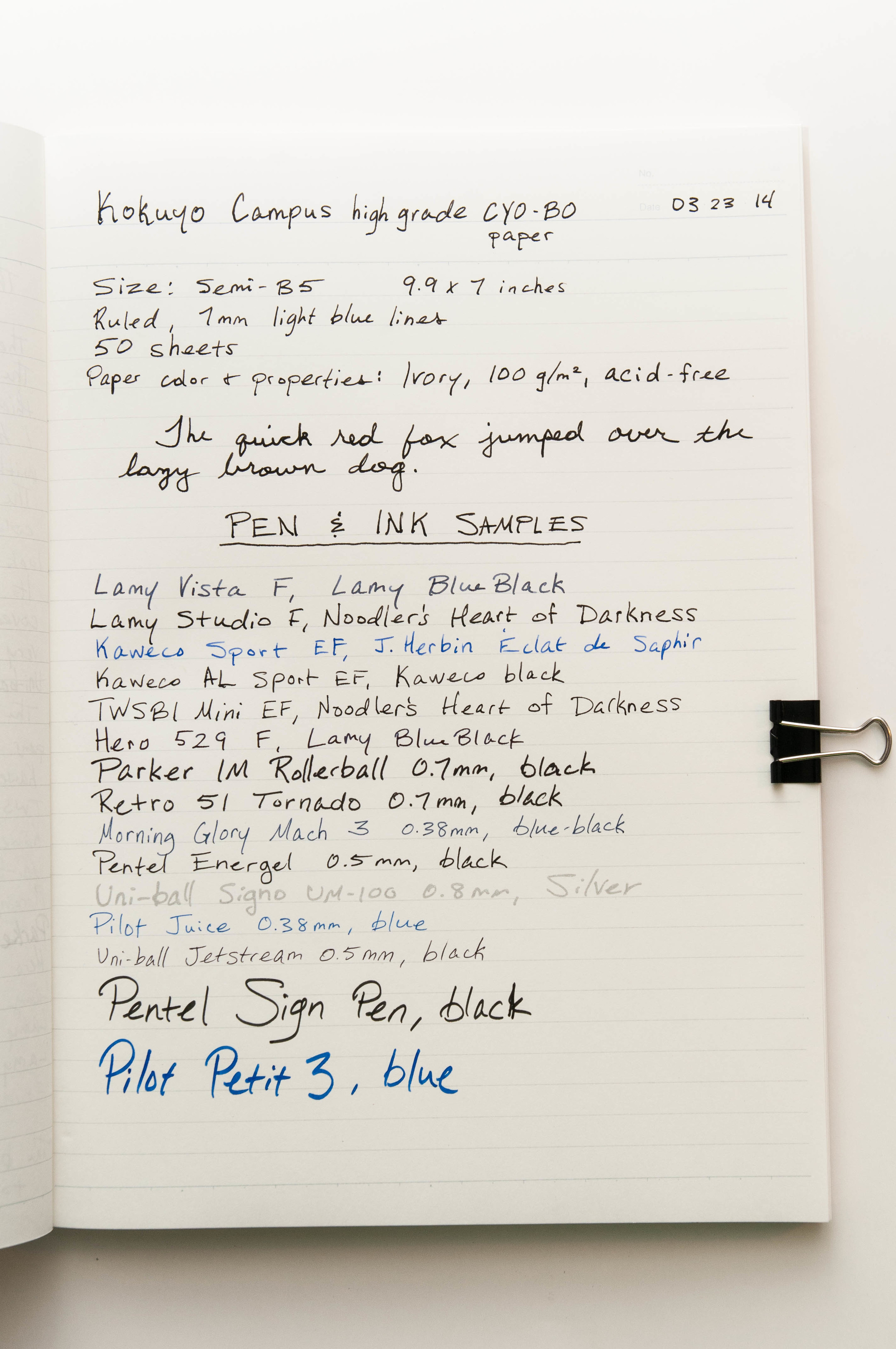
I'll keep this brief since it's no longer for sale. This is a spectacular paper that handled all of my pens and inks with great ease. No feathering, hardly any show-through, and not much feedback. Great paper. I'll be disappointed when I finish this notebook.
CYO-BO Front
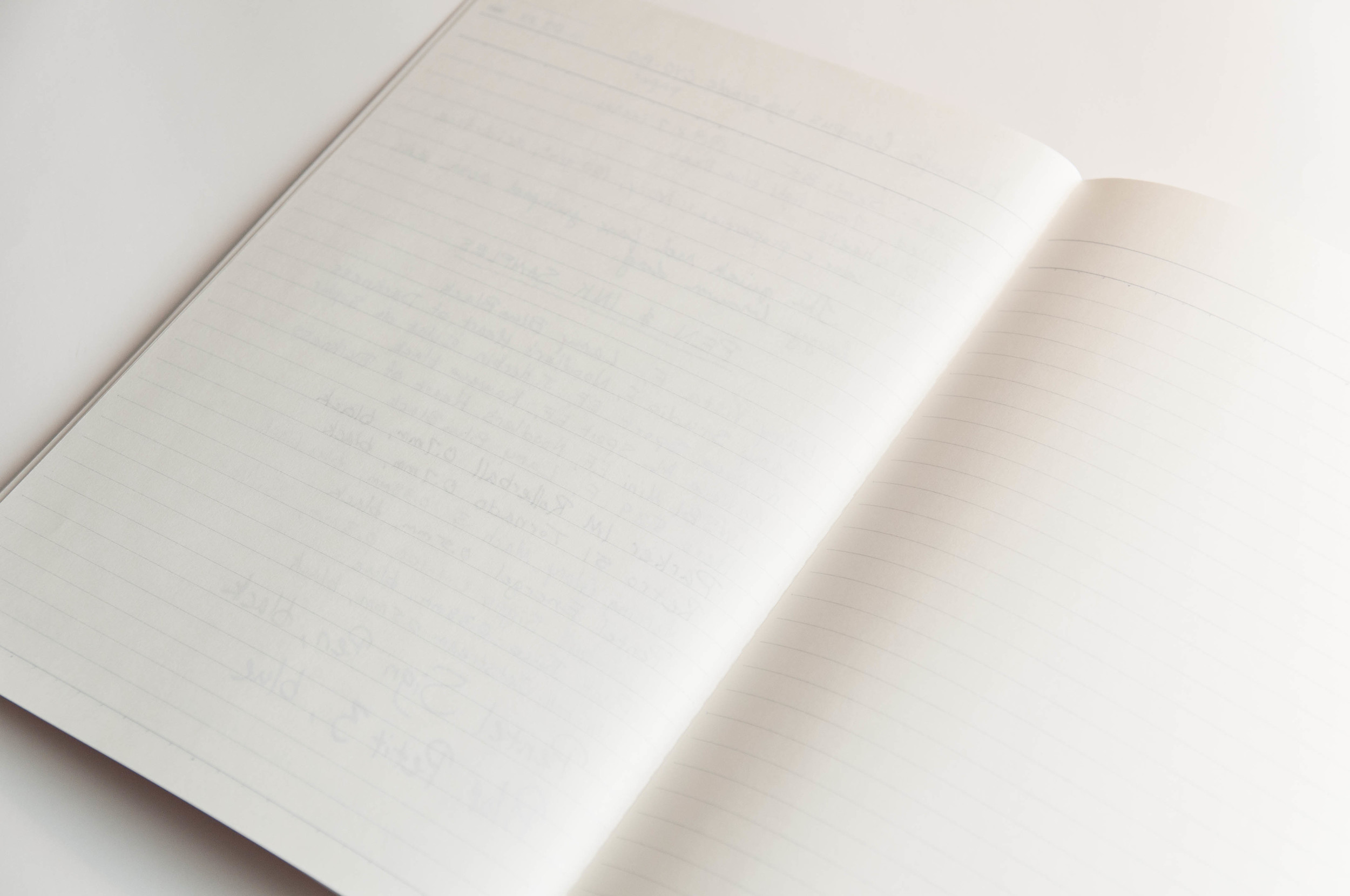
CYO-BO Front

CYO-BO Back

CYO-BO Back

MIO Performance

This is a lovely paper. First touch makes you think of the Tomoe River paper. It's thin, light, and smooth. It's not Tomoe River paper, though. Despite being thin paper, there's no feathering at all. There's a good amount of show-through, but that's to be expected for thin paper. Keep in mind, I'm talking about show-through, not bleed-through. I haven't seen any bleed-through.

The paper feels almost slippery with certain pens. Particularly gel pens – they wanted to slide off the page. I like this effect, but it could take some adjustment. Fountain pens felt great and there is just enough tooth to maintain excellent control of the nib.

Kokuyo explains that the MIO paper stands for "Mobile Ideal Original" paper. I'm not sure what that means, but I can vouch for the quality of the paper.
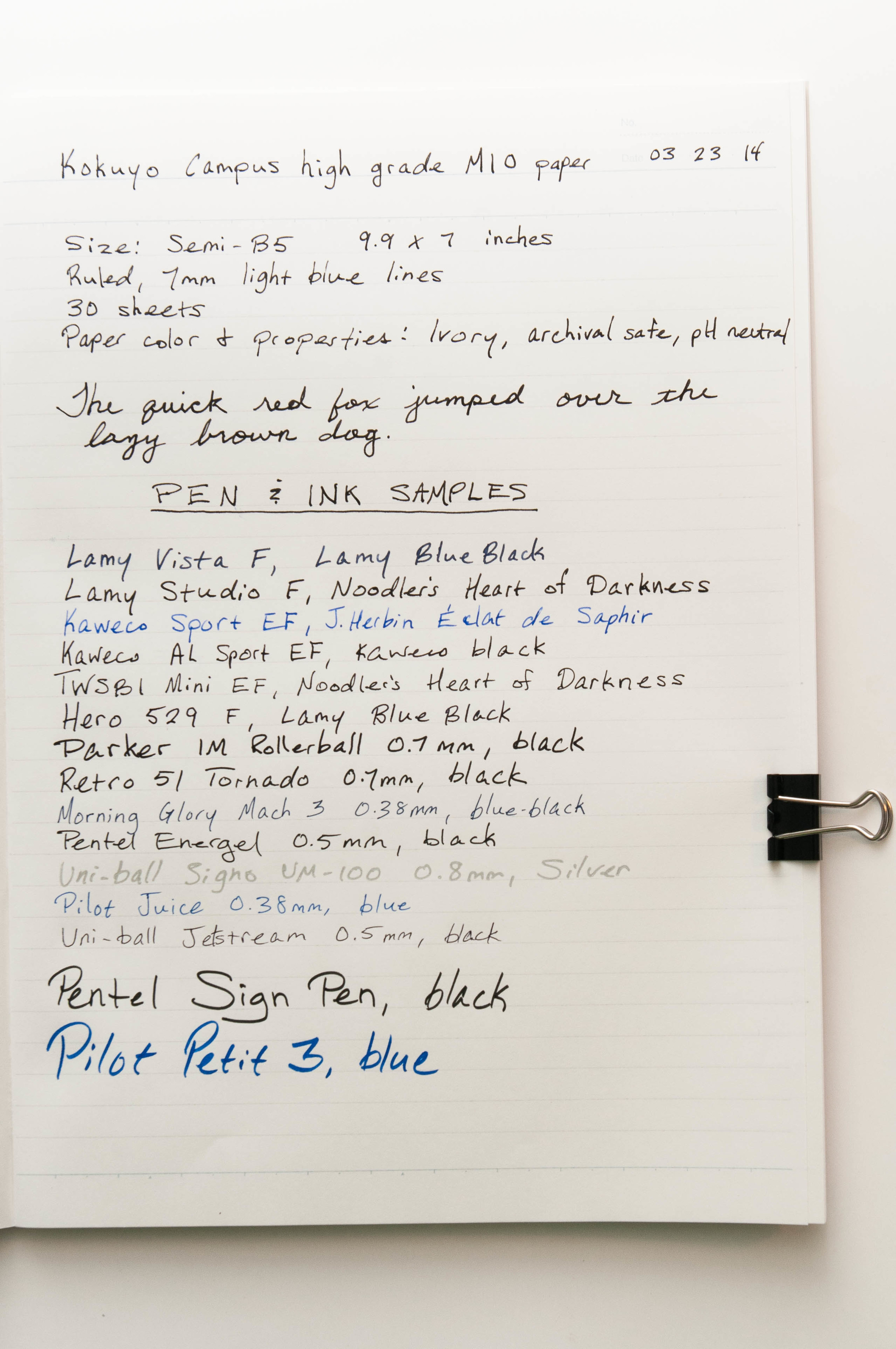
MIO Front

MIO Front

MIO Back

MIO Back

Conclusion

The Kokuyo Campus high grade MIO notebook is an excellent writing tool. It's extremely thin and handles pens and inks with ease. I love the size of semi-B5, but they also sell A5 for this notebook.

The major cause of hesitancy for me is the paper thickness. Being so thin, there's a good amount of show-through on the back sides of the paper. For me, this means I can't use both sides of the sheet. Effectively, this is a 30-page notebook for me, unless I use gel pens that are less than 0.5mm or pencils. Given the price, I don't think this is a good value. Still, it's fun to try and experience the silky smooth paper. Hopefully, Kokuyo will keep this notebook around for a while longer.

JetPens offers the MIO notebooks with blue and red accents in B5 or A5, and as bundles.

(You can find more from Jeff online at Draft Evolution, Twitter, and App.net.)

Posted on March 26, 2014 and filed under Kokuyo, Notebook Reviews.

Kokuyo Enpitsu 1.3 mm Mechanical Pencil Review

Kokuyo Enpitsu

Stepping out of my comfort zone is part of the deal when reviewing products here at The Pen Addict. There are so many products on the market and only a subset of them make my regular rotation. That doesn't mean the rest of the goods don't warrant any attention though. Products like the Kokuyo Enpitsu are exactly why I write this blog.

By all appearances the Enpitsu is a simple pencil but it has a couple of added features that set it apart. First of all, the lead pipe retracts for protection when not in use. This is always a welcome feature in mechanical pencils to help prevent damage if dropped, or to prevent stabbing yourself if you get a little clumsy.

Secondly - and I'm not sure how I feel about this - the cap is fixed with a hole on top to insert lead through (I discount the fact there is no eraser. I assume most serious pencil users have seperate erasers anyway.). This sounds like a good idea in priciple and assumedly in practice too. It saves you from removing the cap and losing it while allowing you to drop the lead straight in (Forgive my ignorance in the image above. It was late.). I'm not sure of any other pencils designed this way.

Design wise, the rubber coated barrel provides an excellent grip surface, and the overall look of the pencil is great. The 1.3 mm lead was a pleasant surprise too. It was soft, dark, and smooth.

While I'm not a prime candidate to put this pencil through the rigors of everyday use, I see artists, sketchers, and even students as a good fit for the Kokuyo Enpitsu. It is comfortable, built well, and appears ready to handle anything you can throw at it.

(JetPens is an advertiser on The Pen Addict and I received this product at no charge.)

Posted on June 27, 2013 and filed under Kokuyo, Pencil Reviews.

Kokuyo Campus Todai Series Pre-Dotted Twin Ring Notebook Review

Kokuyo Campus Todai Series Pre-Dotted Twin Ring Notebook Writing Sample


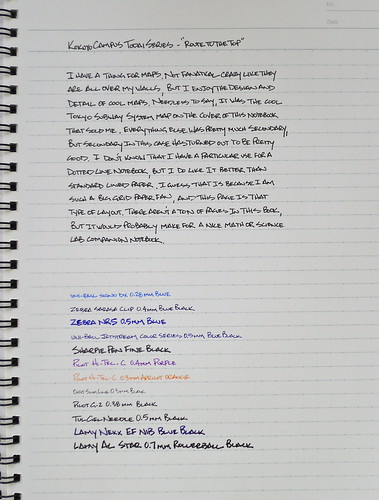
I mentioned a few weeks back that I am way behind in paper/notebook/journal reviews, so I am glad to finally start to get caught up on some of these. The Kokuyo Campus Todai Pre-Dotted notebook is a unique notebook in the fact that it combines both lines and dots for a really unique writing background. I think I have had this one laying around for 6 months or so - it's about time I tested it out!


This notebook was created as the result of a joint research project on students in Japan, and that is definitely who this notebook is targeted to. At just 40 sheets, it is not going to take the full brunt of daily note taking, but it is the perfect compliment to math and science classes with any type of lab work. The lines allow for clean written notes, and the dots are perfect for diagrams and sketches.


Kokuyo Campus Todai Series Pre-Dotted Twin Ring Notebook Inside Cover


Since I am not a student, and didn't really excel at math or science, I bought it for another reason - the cool cover! While I am not a full fledged map nerd, I have always enjoyed the technical aspects of maps, especially subway/train type maps. Something about how chaotic they can be, but still remain very clean and focused fascinates me (if you browse through my Tumblr you will see many examples). The map on the cover of this Kokuyo Campus is of the Tokyo Subway system, and is the same on the yellow version of the notebook.


Kokuyo Campus Todai Series Pre-Dotted Twin Ring Notebook Cover


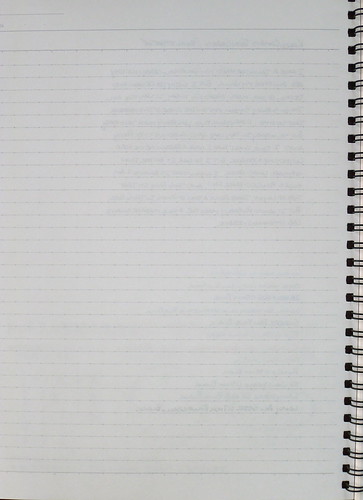
All of the inks I threw at this paper did exceptionally well, including the liquid ink pens. There was no bleed, feathering, or show through of any type. You can check it out on the back page for yourself. A pretty impressive performance if you ask me.


Kokuyo Campus Todai Series Pre-Dotted Twin Ring Notebook Writing Sample Back


You can find the the full range of Kokuyo Campus Todai Series Pre-Dotted Notebooks at JetPens.com.

Posted on June 20, 2011 and filed under Campus, Kokuyo, Notebook Reviews.