Posts filed under Notebook Reviews

Leuchtturm 1917 Soft Cover Notebook Review

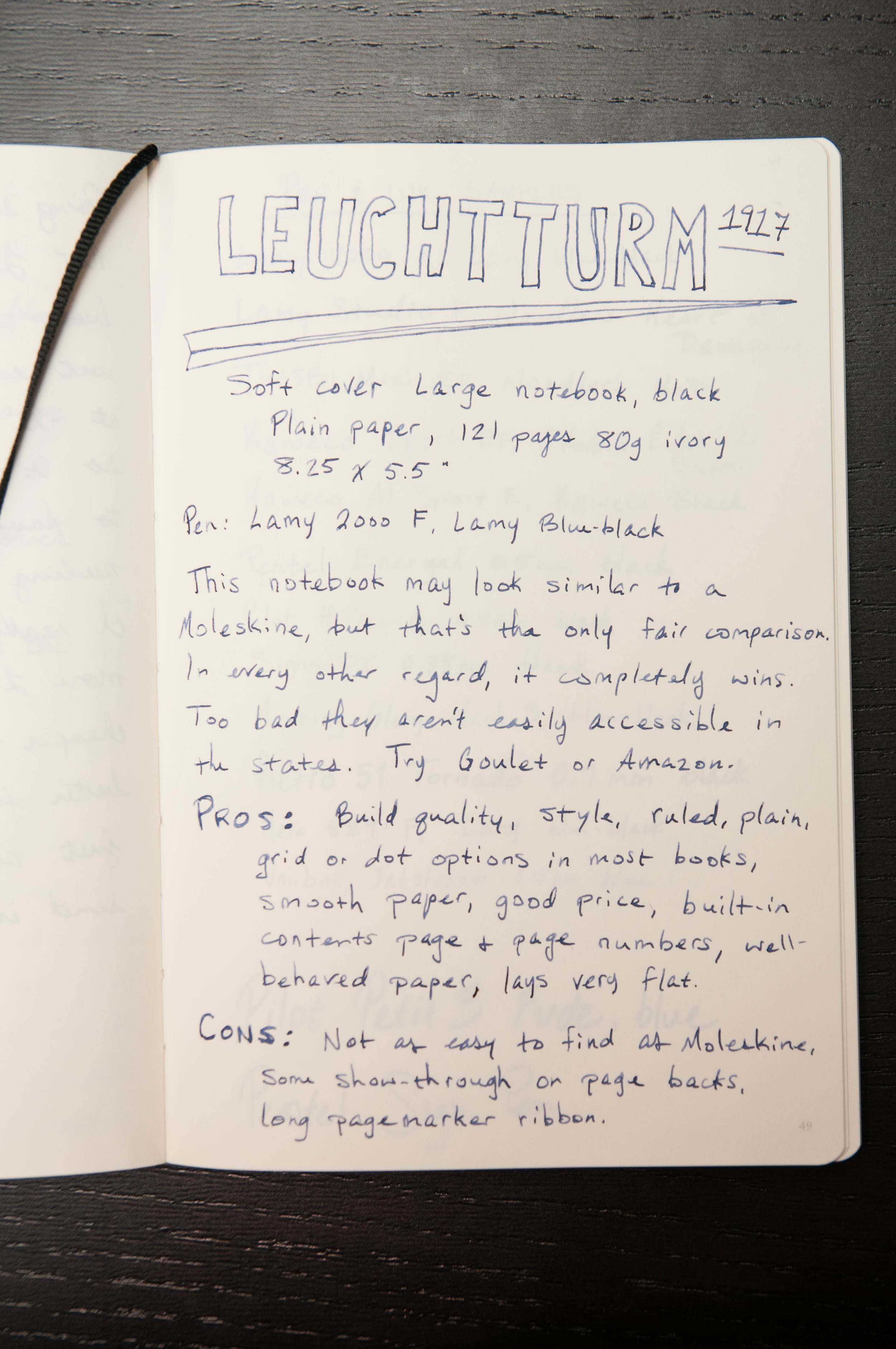
This week, I'm really pleased to talk about one of my favorite notebooks: the Leuchtturm 1917 Soft Cover Large Notebook. I've had this particular book for about two years now, and it's always a joy to use. When this one is full, I'll buy a replacement or two (or twelve).

Look and feel

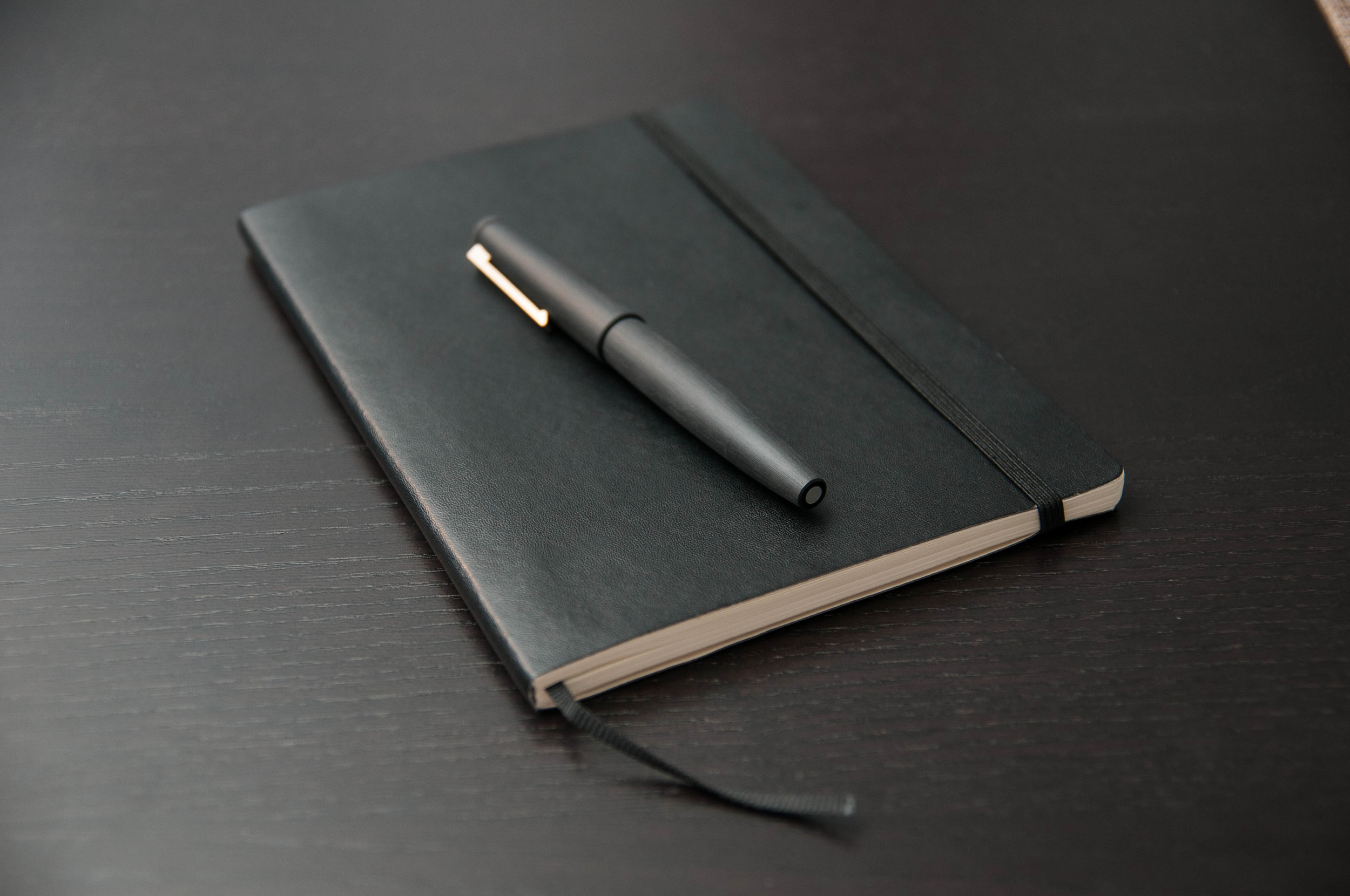
There's something about a simple black notebook that catches my eye. It's not trying to be fancy or flamboyant. I'm neither of these things either, so maybe that's why I like it so much – we're two peas in a pod.

The synthetic cover is soft and pliable in the hand. In my years of using it, the cover hasn't discolored or worn at all. It sill looks new. Of course, there's an elastic closure and a black ribbon marker to hold your place. The sides of the notebook are completely square, and by that I mean that there aren't groups of pages that are misaligned due to hasty cutting at the shop. From the outside of this book, you can tell that quality was one of the top three requirements.

One thing I don't completely understand is the length of the page marker ribbon. It extends about 4 inches below the book and tends to get in the way when open or closed. My guess is that this can serve as a dual page marker, meaning you can tuck the end into a different place in the book. This is a small quibble, but worth mentioning.
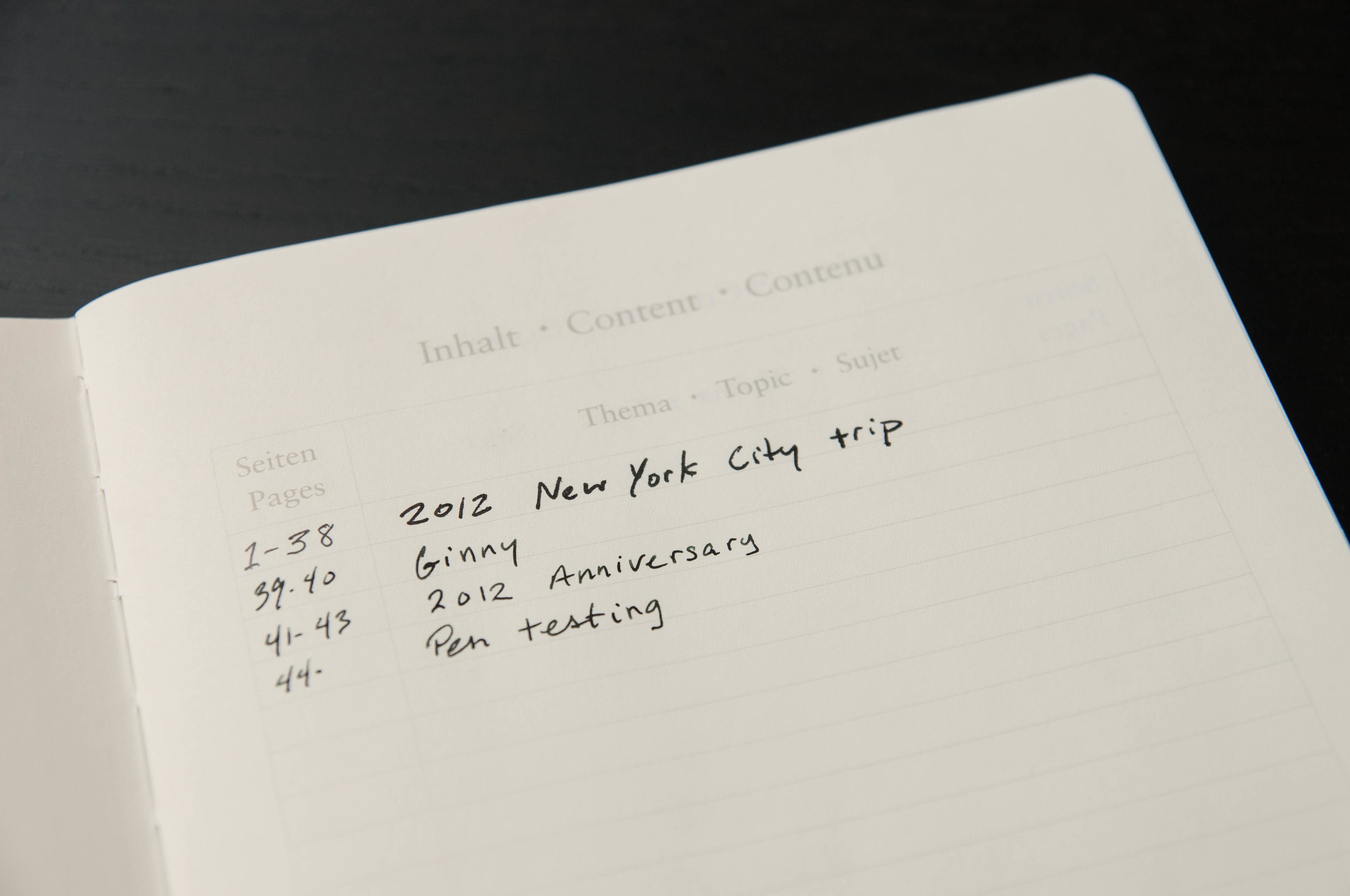
On the inside, the Leuchtturm has a page dedicated to your name and address, a blank page, and then another page that has a pre-printed table of contents. This is really useful, and I know that several people have mentioned that this is really handy when using the Bullet Journal method. The back cover has a sturdy pocket for holding loose pages, which I've never used. Pages 107-121 are perforated.

One of my favorite features is the page numbering. Yes, the Leuchtturm notebooks have the page numbers printed in the bottom corner of each page in a light gray ink. I number all my notebooks, and this is a huge convenience for me.

The book also came with a sheet of stickers that you can place on the front or spine to label the notebook. I haven't used them yet, but plan to once it's full and I store it away for reference. Another cool thing that is included is a ruled card that can be placed behind the blank page so that you can have a rule to follow on the page. I haven't used it, but it's a nice thing to include. I have a plan paper version, and I'm not sure if they include this card with the other types.

Like I said, my notebook has plain paper, but this seems to be slightly difficult to find sometimes. Goulet Pens has a softcover book, but only with lined paper. Amazon has the Large Squared Soft Cover, which I'm sure Brad is all over.

Now, on to the paper.
Writing performance

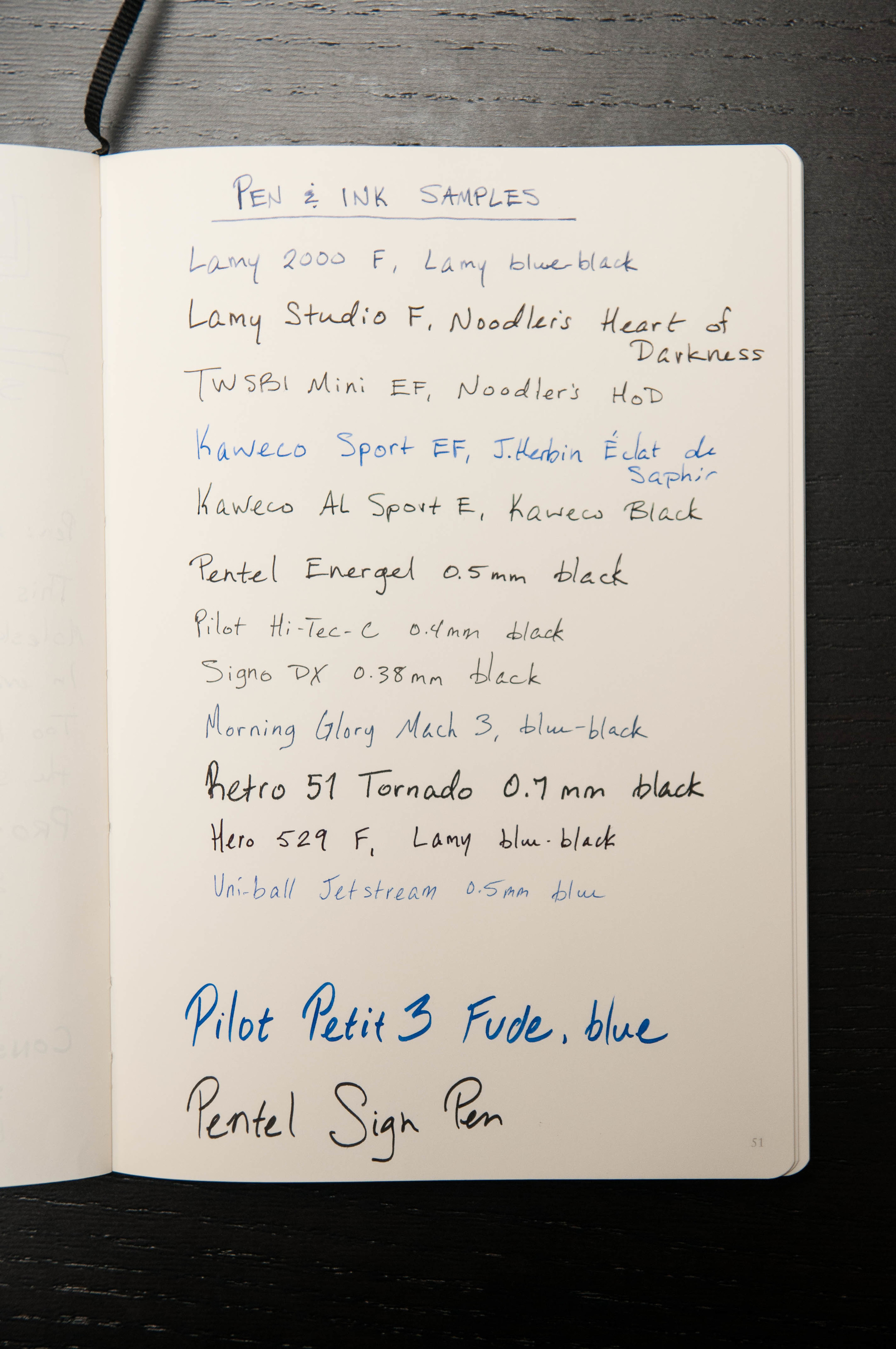
In my testing, this paper has worked splendidly with every pen and ink I've tried with it. It's an 80g ivory paper, so it's a tad bit thin and allows heavier inks or pens to show through, but I haven't seen any bleed-through. I also haven't seen any feathering or bleeding on the paper.

It's a thin, bright paper that is enjoyable to write on. The paper tends to have a small amount of tooth with some pens, but it's nothing that bothers me. It gives a sense of feedback, which is usually helpful. Any pens that caught a bit more tooth were somewhat scratchy on other papers anyway. Overall, it's an excellent paper.

Being thinner than other papers like Clairefontaine, the dry time is slightly faster. The color and properties of the paper also show what I think of as the "true" color of the inks being used. Some papers make inks appear more or less saturated, which can be annoying.

Overall, this is a fantastic paper. I don't have any complaints.
Wrap up

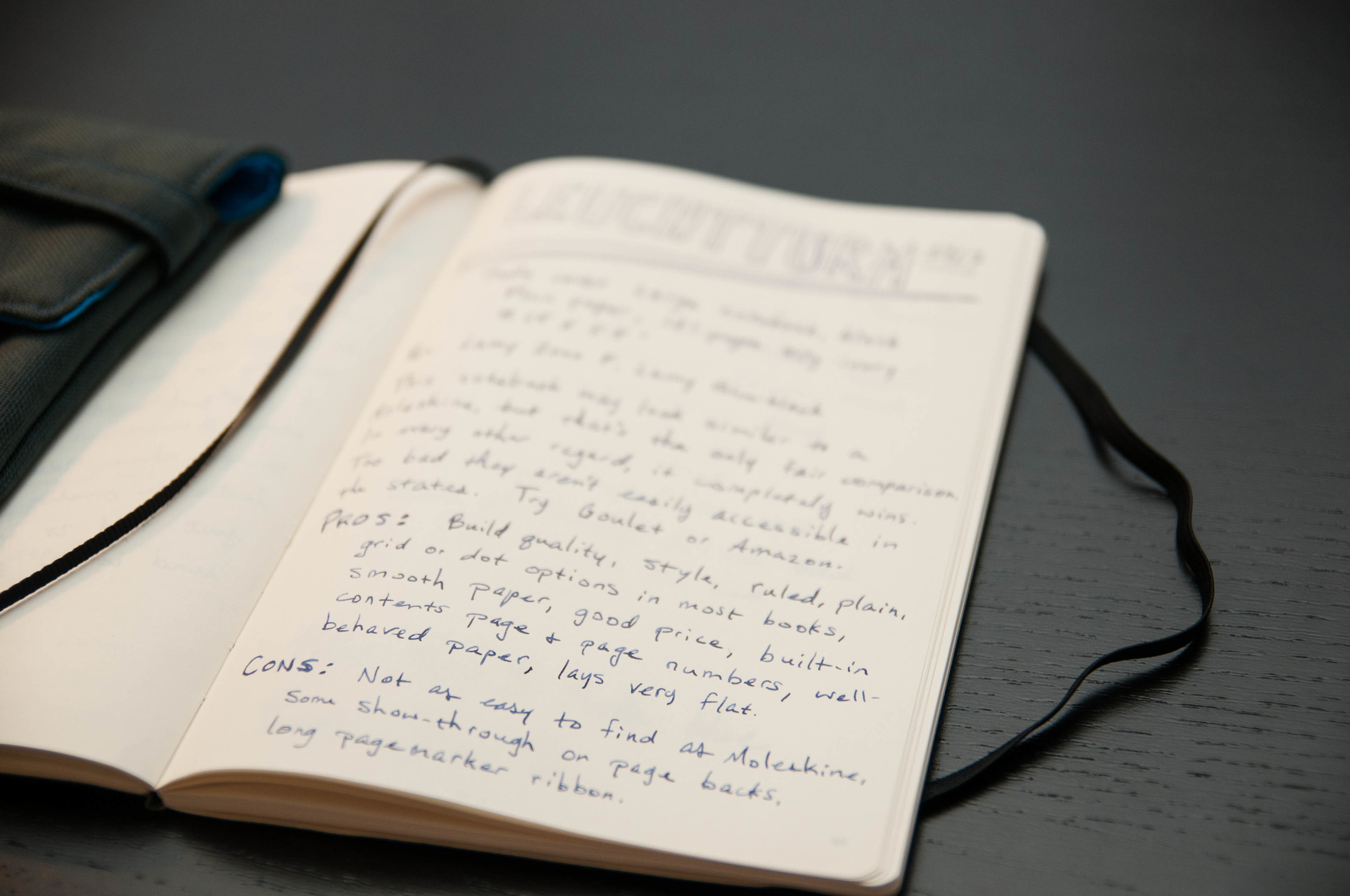
Leuchtturm 1917 look like Moleskines on the outside, but they're so much better in quality and writing experience that it's not even funny. What is funny, however, is that the Leuchtturm notebooks usually cost a couple of dollars less than Moleskine. Now, if only Leuchtturm were in every major book seller in the states...

If you haven't tried a Leuchtturm book, it's a worthy risk to take. They have larger and smaller sizes, soft and hard covers, as well as different colors.

(You can find more from Jeff online at Draft Evolution, Twitter, and App.net.)

Posted on April 10, 2014 and filed under Notebook Reviews, Leuchtturm.

Kokuyo Campus High Grade Notebooks (CYO-BO and MIO) Review

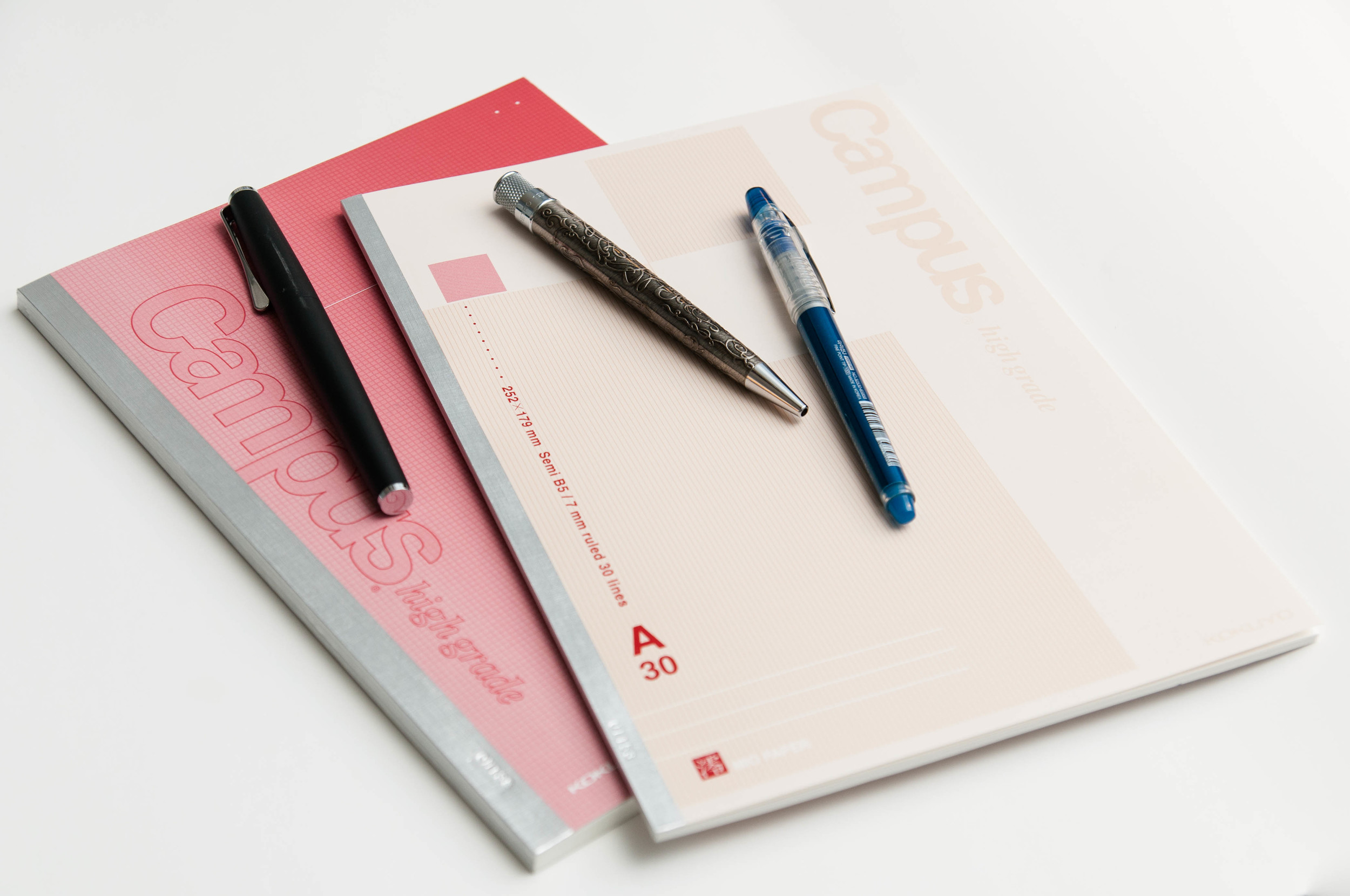
I bought a Kokuyo Campus notebook with CYO-BO paper over a year ago with intentions of reviewing it, but Kokuyo had another plan. I'm not sure when it happened, but they stopped selling the high grade notebooks with the CYO-BO paper. This is a shame, but it looks like they're replaced it with another notebook. The Kokuyo Campus high grade with MIO paper. So, which one is better, and is the MIO worth buying now?

The Similarities

The notebooks both share quite a few similarities. From what I can tell, the only differences are the number of pages in the notebook and what kind of paper they use.

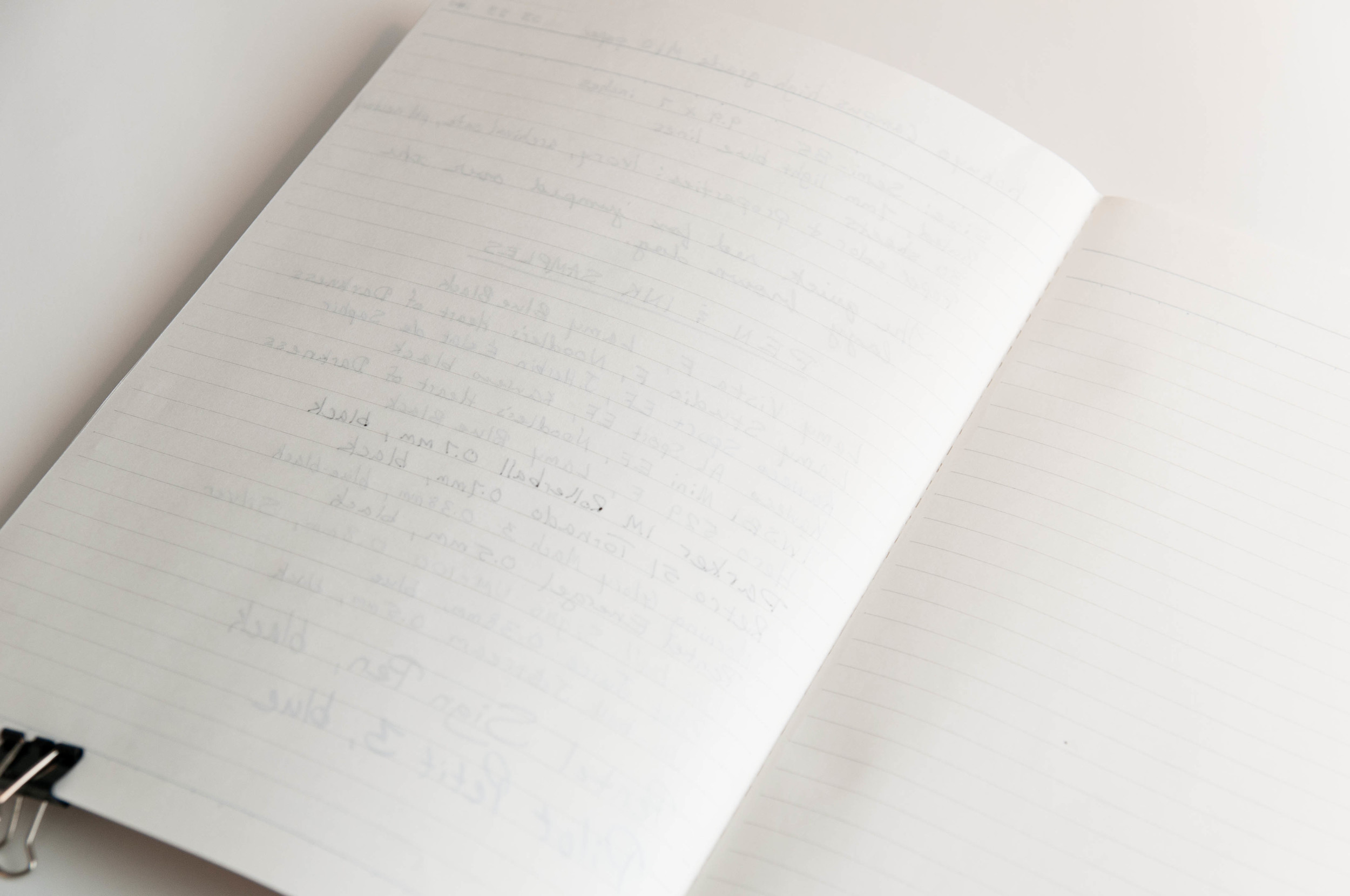
Both notebooks are semi-B5 (9.9x7") and have 7mm ruling with subtle blue-gray lines. There's an area at the top of each page for a title or subject, a number, and the date. Each notebook has 30 lines per page.

A complaint of mine for both notebooks is the binding. It's some sort of glue binding, and it makes it difficult for some of the pages to lay flat, causing some wrinkling in the page that you're trying to write on. This wasn't a huge deal since I could bend and abuse the notebook into submission, but it was an annoyance.

Both papers are archive-safe and acid-free. The MIO notebook has a page at the beginning for your name, subject, etc, while the CYO-BO does not.

I mentioned I didn't like the glue binding, but I am a fan of the shiny silver tape that they use to cover the binding on the outside. Both notebooks have covers that are made of slightly light-weight cardstock. They won't hold up well in a back-pack.

Kokuyo Campus.jpg

The Differences

The only difference in these notebooks is the paper. In a sentence, the CYO-BO paper is thick and velvety, and the MIO is thin and light. They're both smooth and handle inks extremely well – I haven't noticed any feathering – but the paper weight is a major difference.

The CYO-BO notebook is about twice the thickness as the MIO notebook, even though there's only a 20 sheet difference.

CYO-BO Performance

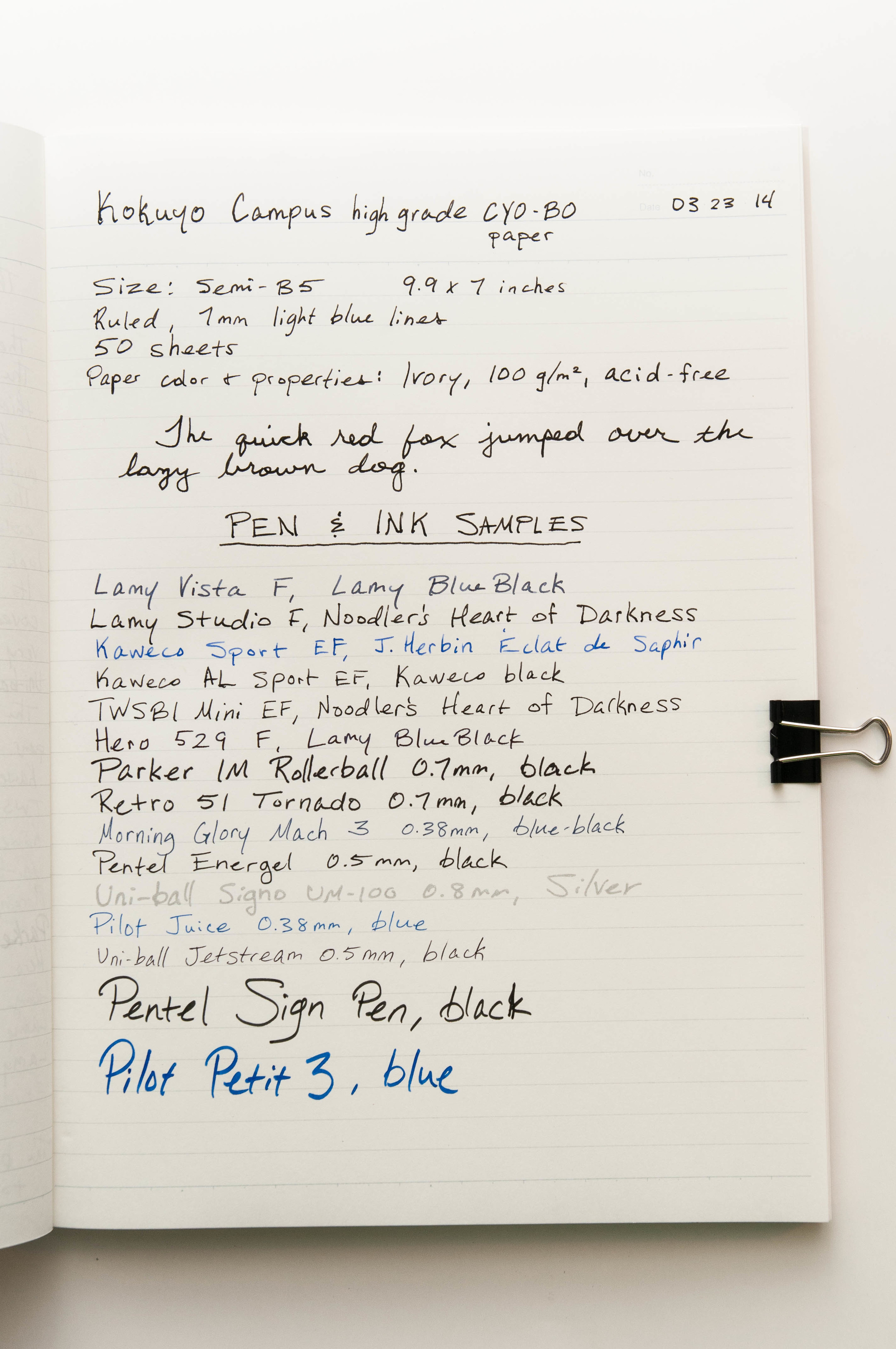
I'll keep this brief since it's no longer for sale. This is a spectacular paper that handled all of my pens and inks with great ease. No feathering, hardly any show-through, and not much feedback. Great paper. I'll be disappointed when I finish this notebook.

CYO-BO Front

CYO-BO Front

CYO-BO Back

CYO-BO Back

MIO Performance

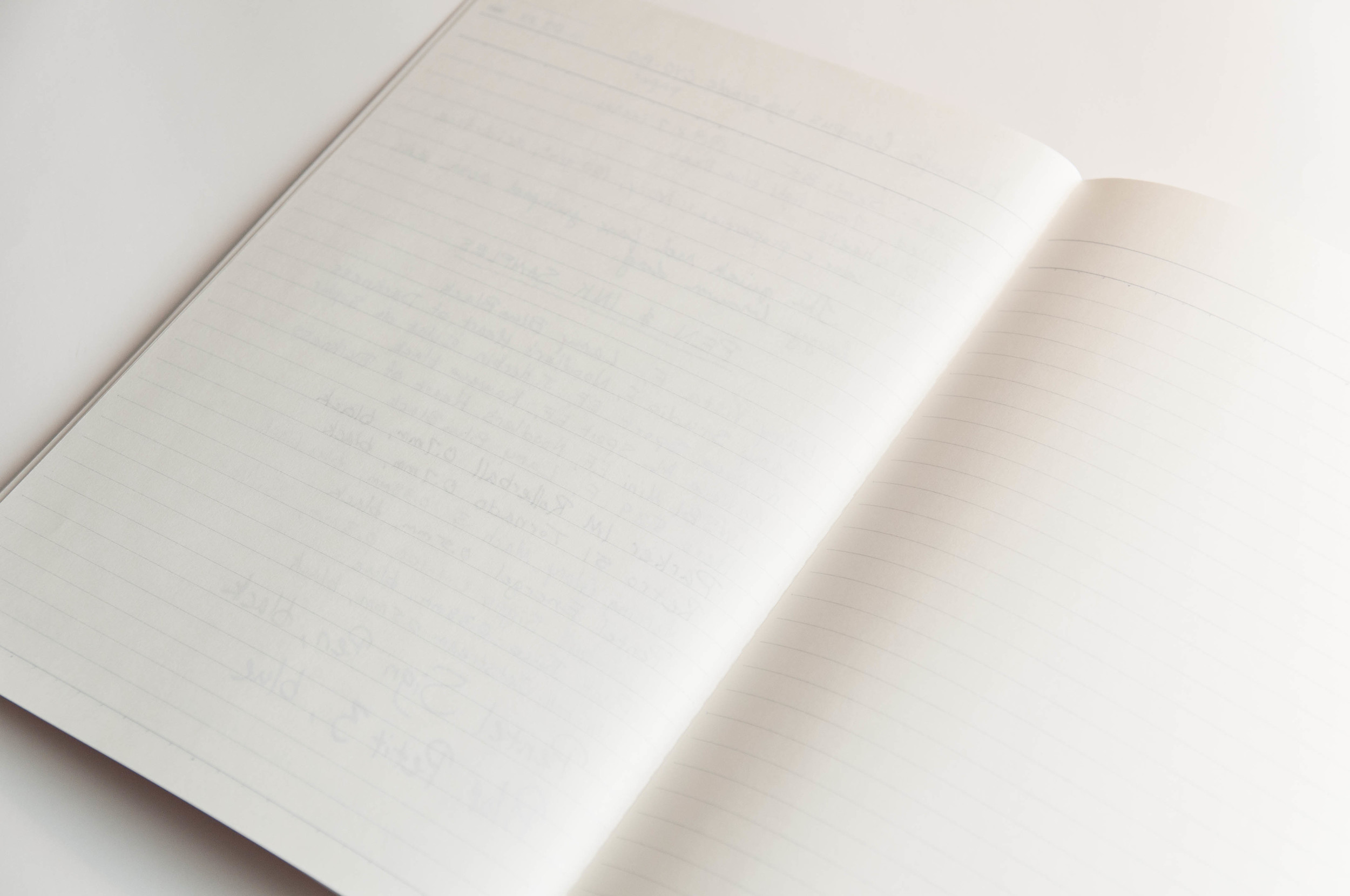
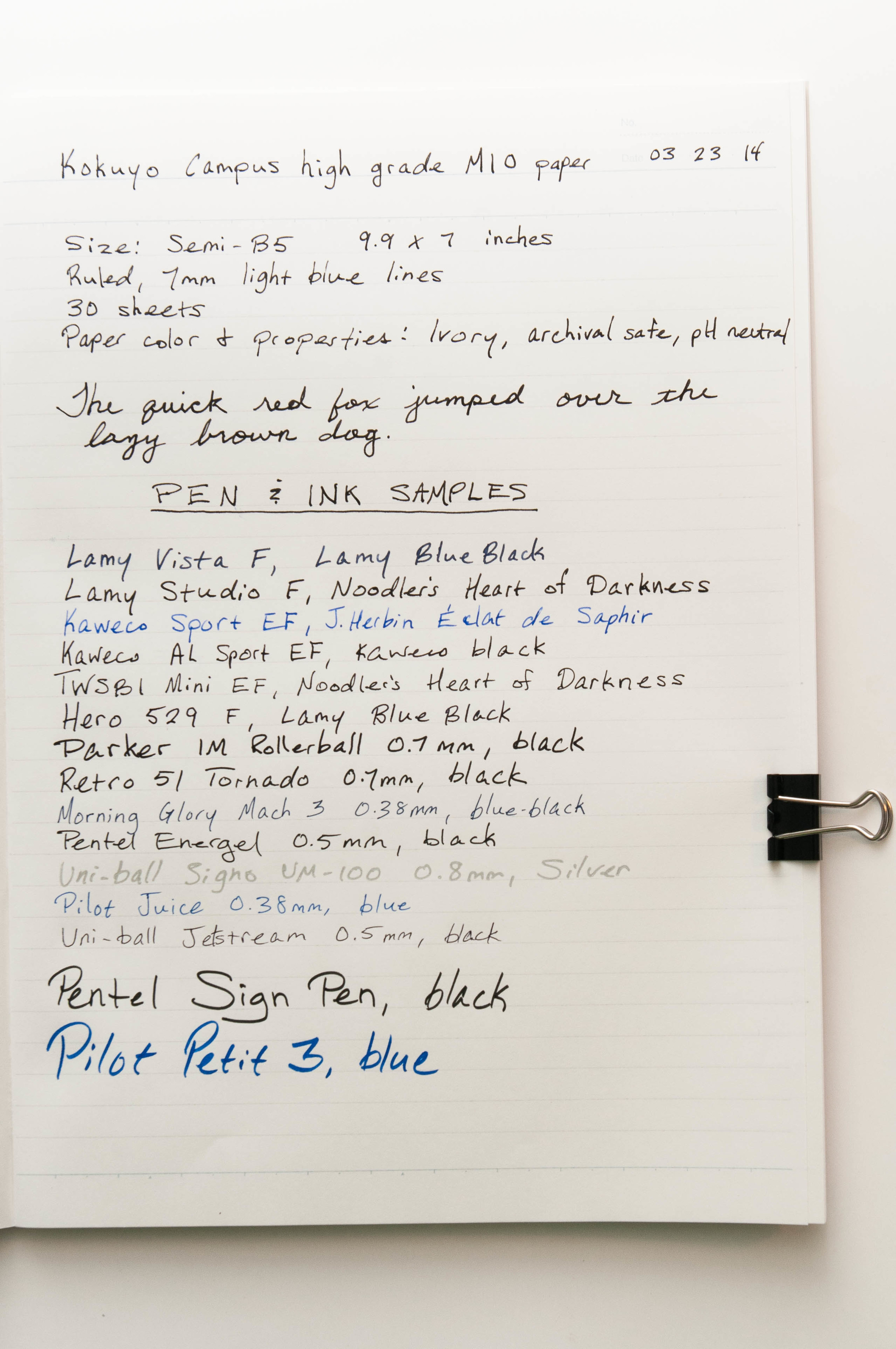
This is a lovely paper. First touch makes you think of the Tomoe River paper. It's thin, light, and smooth. It's not Tomoe River paper, though. Despite being thin paper, there's no feathering at all. There's a good amount of show-through, but that's to be expected for thin paper. Keep in mind, I'm talking about show-through, not bleed-through. I haven't seen any bleed-through.

The paper feels almost slippery with certain pens. Particularly gel pens – they wanted to slide off the page. I like this effect, but it could take some adjustment. Fountain pens felt great and there is just enough tooth to maintain excellent control of the nib.

Kokuyo explains that the MIO paper stands for "Mobile Ideal Original" paper. I'm not sure what that means, but I can vouch for the quality of the paper.

MIO Front

MIO Front

MIO Back

MIO Back

Conclusion

The Kokuyo Campus high grade MIO notebook is an excellent writing tool. It's extremely thin and handles pens and inks with ease. I love the size of semi-B5, but they also sell A5 for this notebook.

The major cause of hesitancy for me is the paper thickness. Being so thin, there's a good amount of show-through on the back sides of the paper. For me, this means I can't use both sides of the sheet. Effectively, this is a 30-page notebook for me, unless I use gel pens that are less than 0.5mm or pencils. Given the price, I don't think this is a good value. Still, it's fun to try and experience the silky smooth paper. Hopefully, Kokuyo will keep this notebook around for a while longer.

JetPens offers the MIO notebooks with blue and red accents in B5 or A5, and as bundles.

(You can find more from Jeff online at Draft Evolution, Twitter, and App.net.)
Posted on March 26, 2014 and filed under Kokuyo, Notebook Reviews.

JAWNS No. 1 Notebook Review

Instagram is one of my favorite tools for discovery of new and interesting products. It is where I first stumbled on the ridiculously cool Pilot Kakuno and, more recently, where I found a curious notebook with a curious name: JAWNS.

JAWNS is an acronym meaning Journal for All things Written Needed and Sketched. An all encompassing name for an all encompassing notebook, JAWNS tries to cover it all with the number of features they pack into a 3.6" x 5" notebook. I think they succeeded.

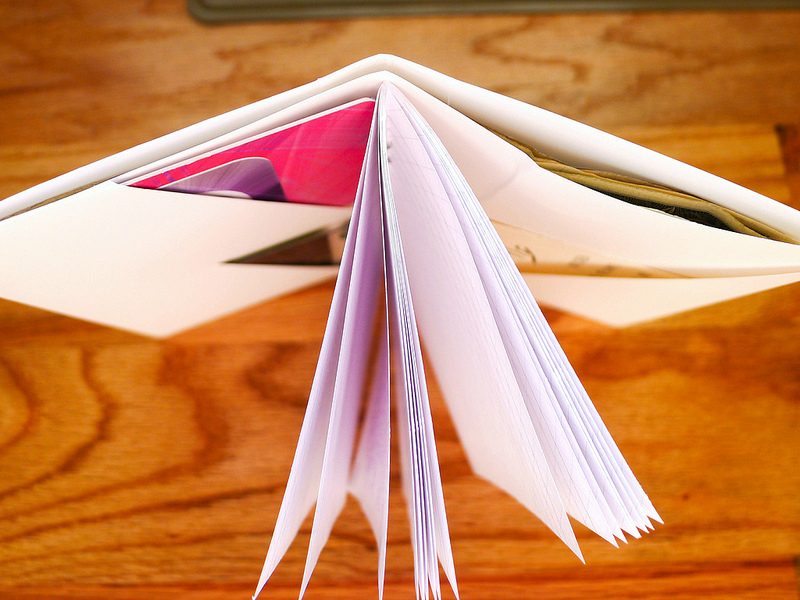
The first thing that caught my eye in the early images I saw was the use of two credit card slots inside the front cover. While that idea isn't exactly new and novel in leather memo book covers, it is less frequently seen built into a paper cover notebook. JAWNS uses 80 lb. Yupo cover stock to handle the added wear and tear the cover gets. If Yupo sounds familiar, it is the same water and tear proof paper used in the Field Notes Expedition Edition. The JAWNS cover is going to hold up well to daily use.

That's good, because the front card pockets are only the beginning. The inside back cover contains a single full-length utility pocket for larger paper notes, receipts, stickers, etc. While that is standard fare in many notebooks, the money pocket across the insdie back length of the notebook is a cool addition. Before I dropped my singles in there I assumed it would be a full-depth pocket but was pleasantly surprised that it was only half-depth, meaning your bills are easily accessible as if they were in a bi-fold wallet.

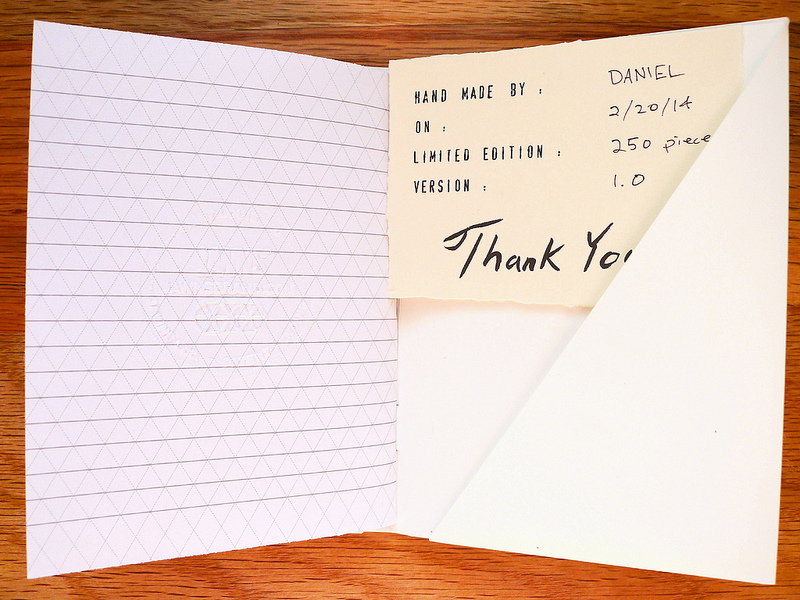
When it comes time to jot down your innermost thoughts, international flight changes, or make a depression robe shopping list, the uncoated 50 lb. triangle grid paper in the JAWNS notebook gets the job done. It's not fountain pen friendly as evidenced by the writing samples, but handled everything else (except the Pilot FriXion) well. The rollerball and liquid ink pens were the best, with my Kuretake Mangaka 02 Purple getting the call for the handwritten portion of the review.

In talking with Daniel, the co-founder of JAWNS, simplicity and freedom drive the design behind the brand. That shows through in this limited all-white design, with cool added touches like embossed stamping and an edition card with specs like manufacture date and edition run. Future editions will include varied cover styles, designs, and colors.

Where does the JAWNS brand notebook fit in this great big world of paper at our fingertips? At $12 each it isn't cheap but it provides high utility. For urban warriors bouncing through the city or travellers looking to lighten their load it is ideal. It is a notebook begging to be used and carried daily with the inclusion of the card pockets and money pocket. Leave the junk behind and simplify with JAWNS.

Big thanks to Daniel and JAWNS for providing this review sample free of charge. Daniel has also offered up a discount to all Pen Addict readers for 15% off at checkout by using the code PENADDICT. The offer expires on 3/28 so get on it if you want to give JAWNS a try.

Posted on March 10, 2014 and filed under Notebook Reviews, JAWNS.