Posts filed under Notebook Reviews

The Rhodia DotPad Notepad Review

(Jeff Abbott is a regular contributor at The Pen Addict. You can find more from Jeff online at Draft Evolution and Twitter.)

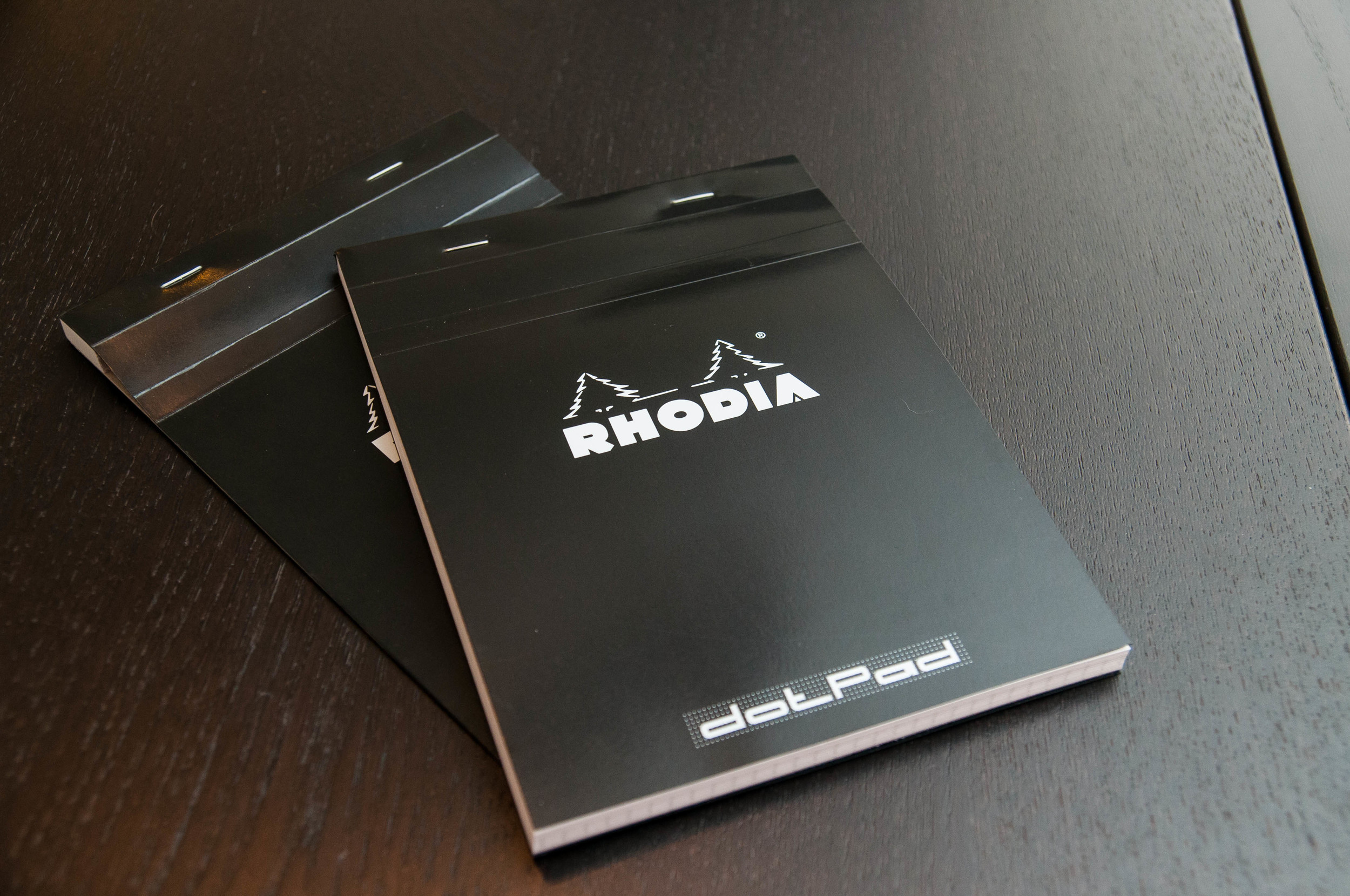
For the last couple of years, I've used the same notebook to do reviews for pens and paper, so I thought it was about time to put the spotlight on this workhorse notebook for a while.

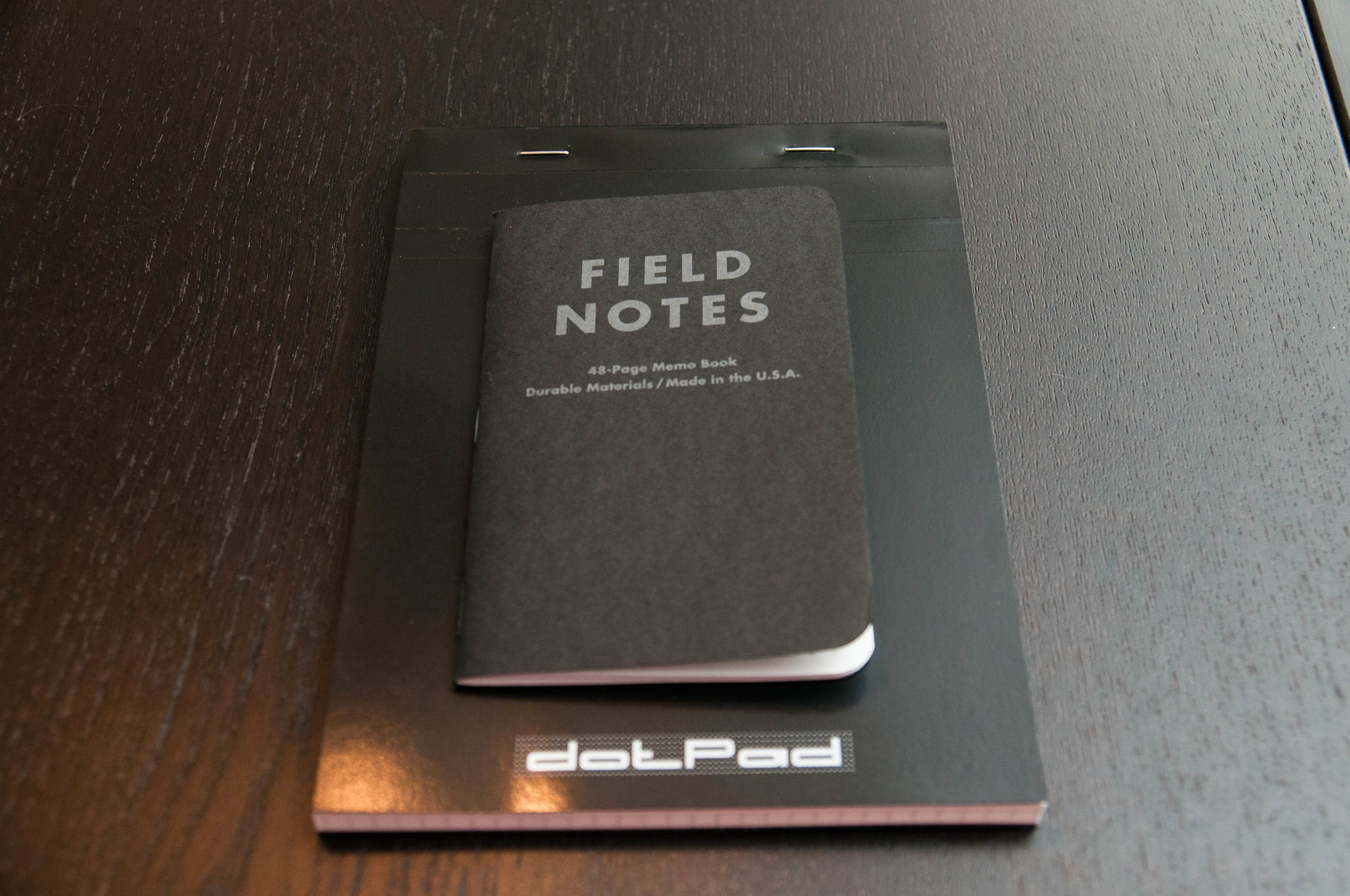
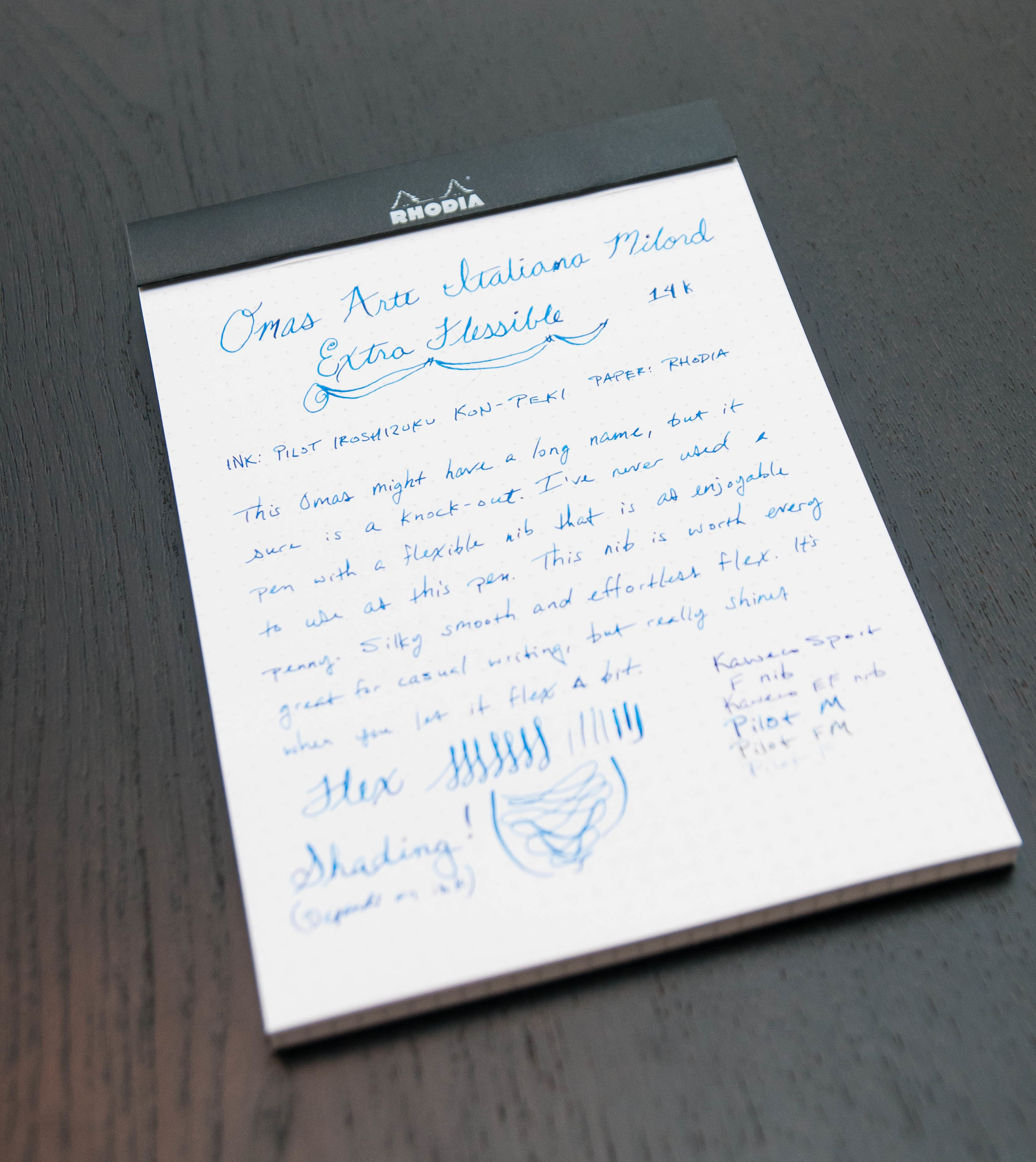
The Rhodia DotPad Notepad No. 16 is an A5-sized notebook that has served me well for quite a while. I use the notebook exclusively for reviewing pens and inks, but it's such a great notebook that I've started using it for other things as well.

Size and usability

The A5 size is a personal favorite of mine. It's not too big, and not too small. That, combined with the staple top-bound layout really make me a happy camper. It's like a legal pad done right, but sized for notes and scribbles.

The cover of the notebook has a couple of pre-made seams that make it easy and clean to fold the cover back over the spine of the notebook. This keeps the cover out of your way when writing, and Rhodia even thought ahead and put their logo on the inside cover so that it's prominently displayed on the top of the binding.

Another thing I love about this notebook is the perforated sheets. In a notepad like this, perforated sheets seems like a standard, but the Rhodia has some of the easiest, cleanest perforations I've ever used. I rarely have any jagged edges when ripping out a sheet, and it looks clean even when you get down to the last pages of the pad.

For me, I think this notebook was meant to be ripped as you progress. Sure, you could leave the pages attached and fold them over, but that would become a problem after about 30 sheets. There's something refreshing about finishing a page of something and ripping it out to store, send, or whatever. It's also nice to open the notebook to a fresh, clean sheet on top.

Paper quality

The notebook contains 80 sheets of Rhodia paper (80gsm), which is a favorite among many, many people. Rhodia makes fantastic paper, and this notebook is no exception. It can handle anything you throw at it, including ink swabs from cotton balls, fat brush pens, and wide calligraphy nibs. If you've ever used Rhodia paper, you know what to expect. If you've never used Rhodia, you're in for a treat.

To sum up the paper, it's smooth, bright, and well-behaved. It's a bit on the thick side, but this isn't Tomoe River paper — it has substance.

Dot grid pattern

Finally, the namesake feature. Personally, I love a dot grid pattern on paper. It provides a lot of structure, but plenty of room to breathe at the same time. Graph ruling is helpful, but the lines can take over the page visually, and can get in the way of your work sometimes. The dot grid provides the same benefits of graph paper, but has a more minimal footprint. It's there when you want, but easily fades in the background if you don't want it. The flexibility of this pattern is why I love it so much, and Rhodia does a great job with it.
Conclusion

Wrapping up, the Rhodia DotPad is an essential notebook in my opinion. They aren't very expensive (less than $10 for the A5 size), have plenty of sheets, and work well with all types of pens and pencils. They're incredibly simple notebooks that are well-made and delightful to use. I heartily recommend them, or a comparable Rhodia notepad if dot grid isn't your jam.

(JetPens provided this product at no charge to The Pen Addict for review purposes.)
Posted on January 20, 2016 and filed under Notebook Reviews, Rhodia.

Apica Blank Twin Ring Notebook Review

(Jeff Abbott is a regular contributor at The Pen Addict. You can find more from Jeff online at Draft Evolution and Twitter.)

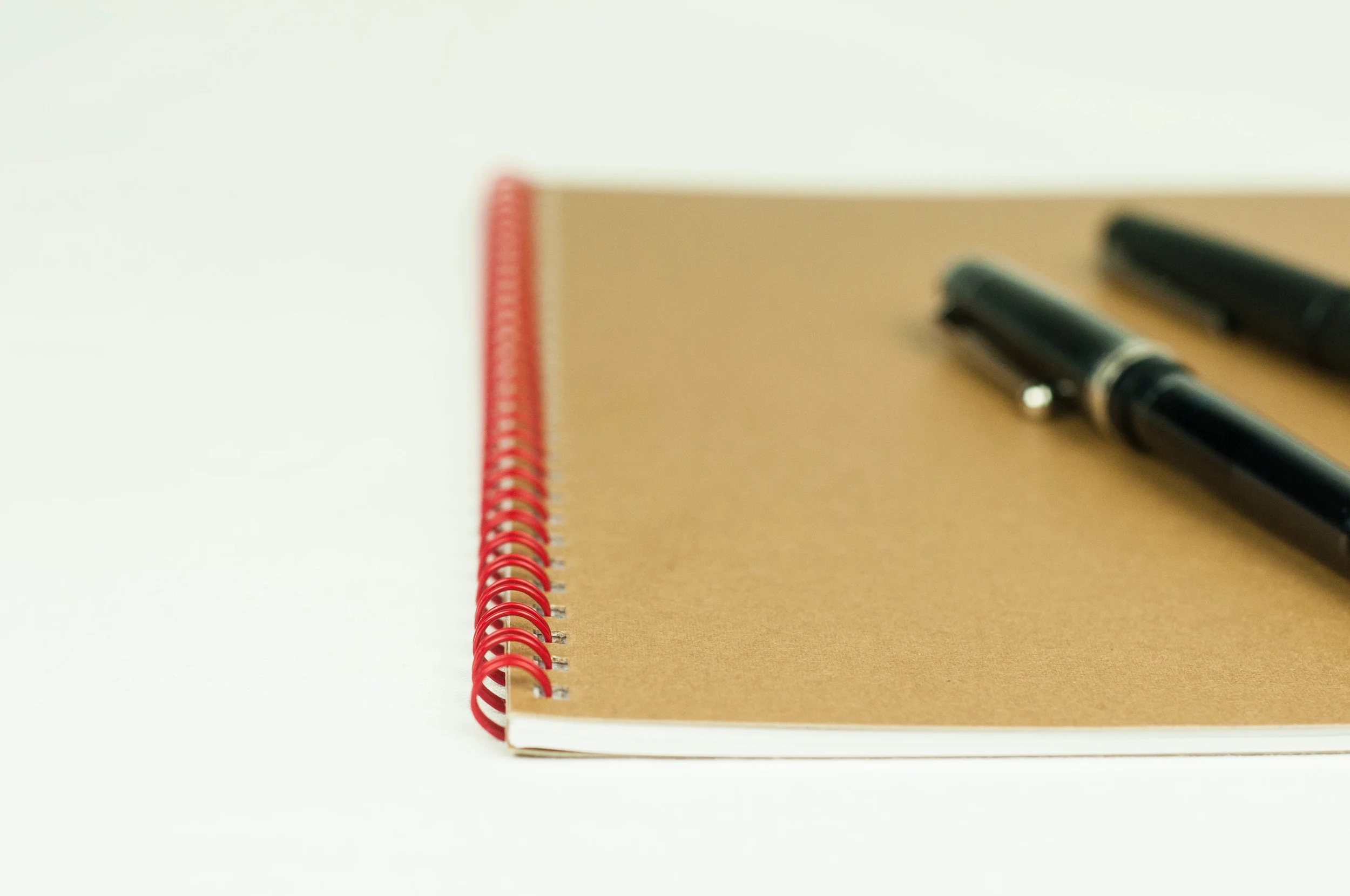
In the never-ending quest to find the perfect notebook for every situation, I recently came across the Apica Blank Cover Twin Ring Notebooks.

Premium notebooks are plentiful and definitely have their place. The major downside (for me, at least) is that I feel like I have to fill them with award-winning thoughts since they cost so much. While this is completely my own irrational problem, it's still real to me. So, that's why inexpensive "beater" notebooks that take fountain pens well are so enticing.

The Apica notebooks are the perfect solution to my self-inflicted problem, and I'm sure they meet the needs and desires of a lot of other people as well. In the slim-B5 market, they are my equivalent to Field Notes. At $4.35 for a 30-sheet fountain-pen-friendly notebook, it's hard to argue with.

The exterior

The outside of the notebook is a plain, light-weight, craft card-stock. It's not heavy duty, so don't expect it to hold up any better than your Field Notes covers. Part of the allure of a blank cover is the ability to decorate it in any way you see fit. The only thing on the cover is a small sticker on the back of the notebook. And, if that sticker bothers you, it's simple to remove without damaging the card-stock underneath. The interiors of the covers are also blank. Really, the description of this product is quite apt.

The thickness of the notebook is thinner than I expected based on other Apica notebooks I've purchased with the same number of sheets. Still, the paper doesn't feel thin or cheap. I think most of the thinness can be attributed to the thin cover materials.

The twin ring binding is fantastic on these books. It's strong, sturdy, and come in a variety of colors. While we're talking about colors and variety, I'll also mention that the books come in graph, blank, and lined varieties. The graph books have white binding, the blank books have black binding, and the lined books are available with blue, green, red, or yellow binding. Plenty of choices, all for $4.35.

Finally, the size is one of my favorites — slim B5. It's tall and slender, which is perfect for me when writing.

The paper

I was surprised by the quality of the paper in relation to the price, which is a good thing.

The paper is very smooth with every pen I've tried. It's a pleasure to write on, just like other Apica papers I've tried. The paper is 70 gsm weight, which is barely good enough for fountain pens. I say barely, but it actually handled everything I tried with flying colors. Each paper is different, and I've used other 70 gsm papers that didn't perform as well as this one.

Feathering was almost non-existent, show-through was impressively low, and dry time was pretty quick. The version I have is lined, and they're spaced 6.5 mm apart in a light blue ink. The pages are not perforated, which is something I appreciate; although, this might deter some buyers based on their preferences for tearing out sheets as needed.

In my experience, anything up to a medium nib and standard ink will do fine with this paper. Anything above that or an exceptionally wet ink might cause some problems, but I think they would be minimal. Overall, I'm really impressed by the paper for the price of the notebook. I'd wager they cut costs on the covers in order to use higher quality paper.

Conclusion

It's plain, has no frills, but is inexpensive and works really well with most fountain pens. This is a great notebook for classes, general writing, brainstorming, etc. in situations where you don't want to use a more expensive notebook. If a low-key, budget-friendly, fountain-pen-friendly notebook sounds enticing to you, I can't recommend the Apica Blank Cover Twin Ring enough.

(JetPens provided this product at no charge to The Pen Addict for review purposes.)

Posted on December 9, 2015 and filed under Apica, Notebook Reviews.

Nanami Paper Seven Seas Writer Review

(Jeff Abbott is a regular contributor at The Pen Addict. You can find more from Jeff online at Draft Evolution and Twitter.)

Tomoe River paper took the world (well, a very small portion of the world) by storm a couple years ago for its phenomenal paper. Basically, the paper that Tomoe River produces is super thin, but handles fountain pen nibs and inks like nothing else. You're hard pressed to find something that will bleed through or feather on its worst day. Brad wrote a bit about it back in 2013, and I've never had a bad thing to say about it. I love Tomoe River paper.

Problem was, you could only buy Tomoe River paper in loose leaf. There weren't any notebooks or pads at first. Thankfully, this has changed. There are many products nowadays that feature this miraculous paper, and in many different formats and uses. This review focuses on a product that appeals to those who like to write on lined pages without having to switch to a new notebook for a long, long time: The Seven Seas Writer by Nanami Paper.

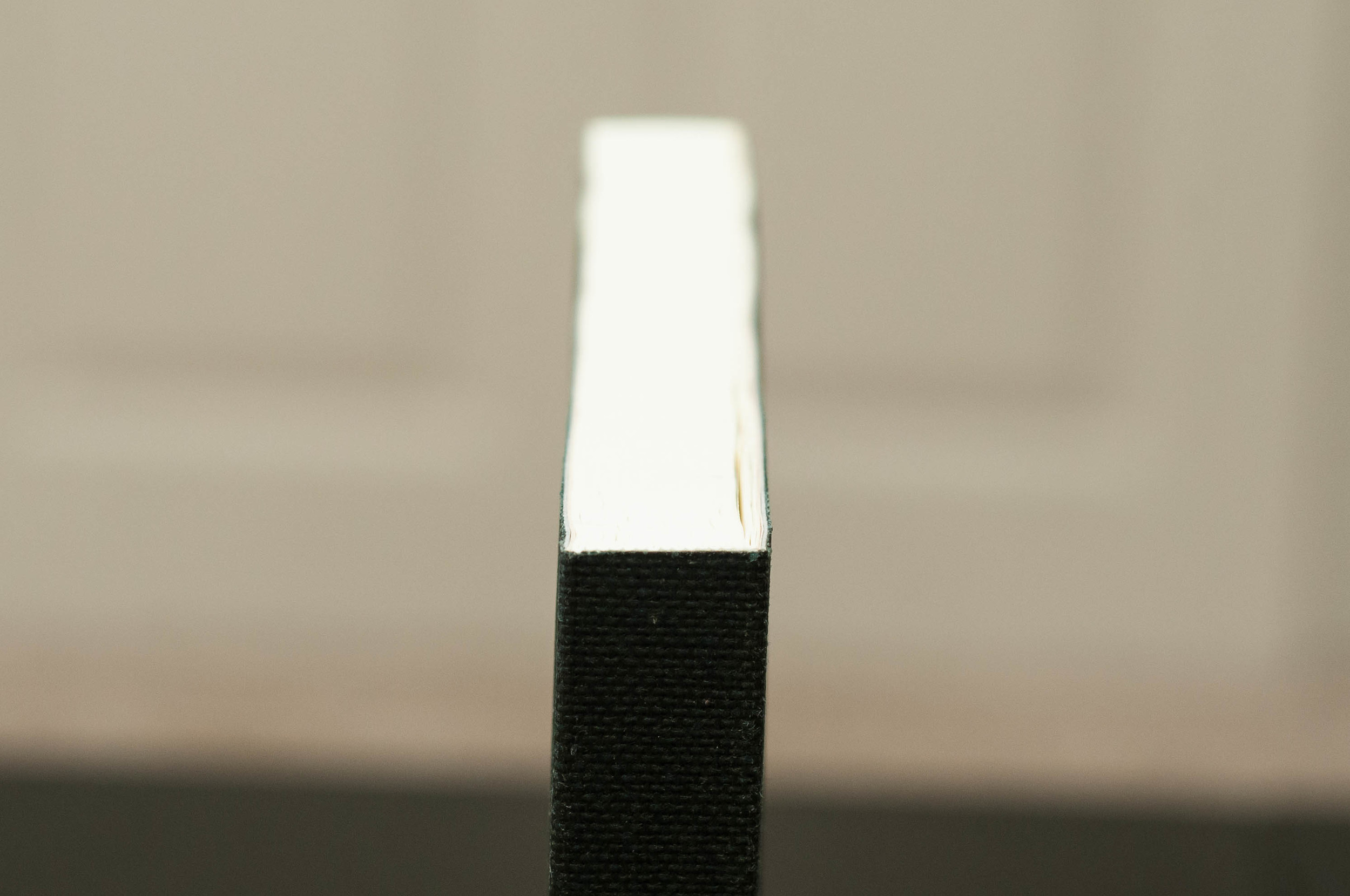
Most of the notebooks I review come in around 80 pages or so. Some of them even have upwards of 220. The Seven Seas Writer blows that number away with a whopping 480 pages of ivory lined Tomoe River paper. In case you didn't know, that's a ton of paper for one notebook. You'd expect a notebook of that size to be about 3 inches thick to accommodate all those pages, but that's not the case with the Seven Seas Writer. Since it's using the ultra-thin Tomoe River paper, it's the same thickness as other notebooks I have that only have 220 pages or so. Same size, almost twice the pages.

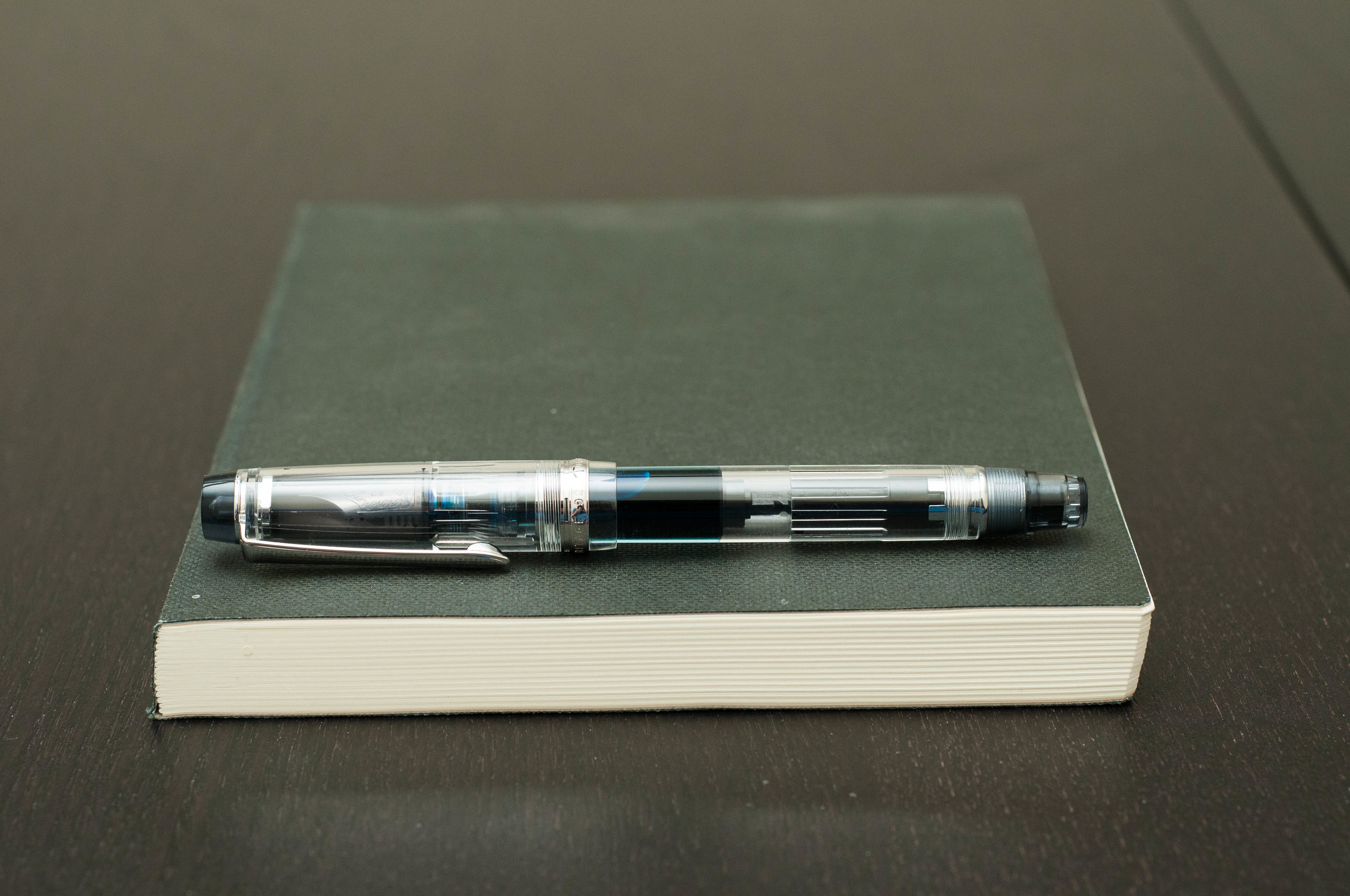
The book is an A5 size, and features a strong (but soft) cover. The cover is thin and made of a fabric of some kind. To my eyes, it's a dark brown or dark green color, and looks really inconspicuous. It's not flashy at all, but you can easily change that by purchasing a high-quality leather cover to go along with it (if you can find them in stock).

The exterior of the book is well-made. When you look at the sides of the book, the pages line up perfectly. There's no sloppy binding here. Everything about the construction of this book is done with care, and that really becomes obvious the more you use it. Tomoe River paper is incredible for how thin it is and how well it behaves with pens and inks of all types, but it's still really easy to tear. The Writer protects the pages very well so you don't have to worry about where you take it.

I've taken my Writer with me (sans-cover) many, many times, and it barely shows any wear. The cover is soft, but strong.

There are a couple of things it lacks that are mostly personal preferences: page numbers and a bookmark. The first is a nice-to-have, and the second can be solved by adding a notebook cover that also has a bookmark ribbon attached. These are really minor quibbles, though.

So, how does the book do when you're actually writing in it? Well, I love mine.

The book has absolutely no issue laying flat, even when you're still in those first pages where most notebooks really resist until broken in. Given the thin paper and high-quality binding, it just lays flat naturally, and closes with ease.

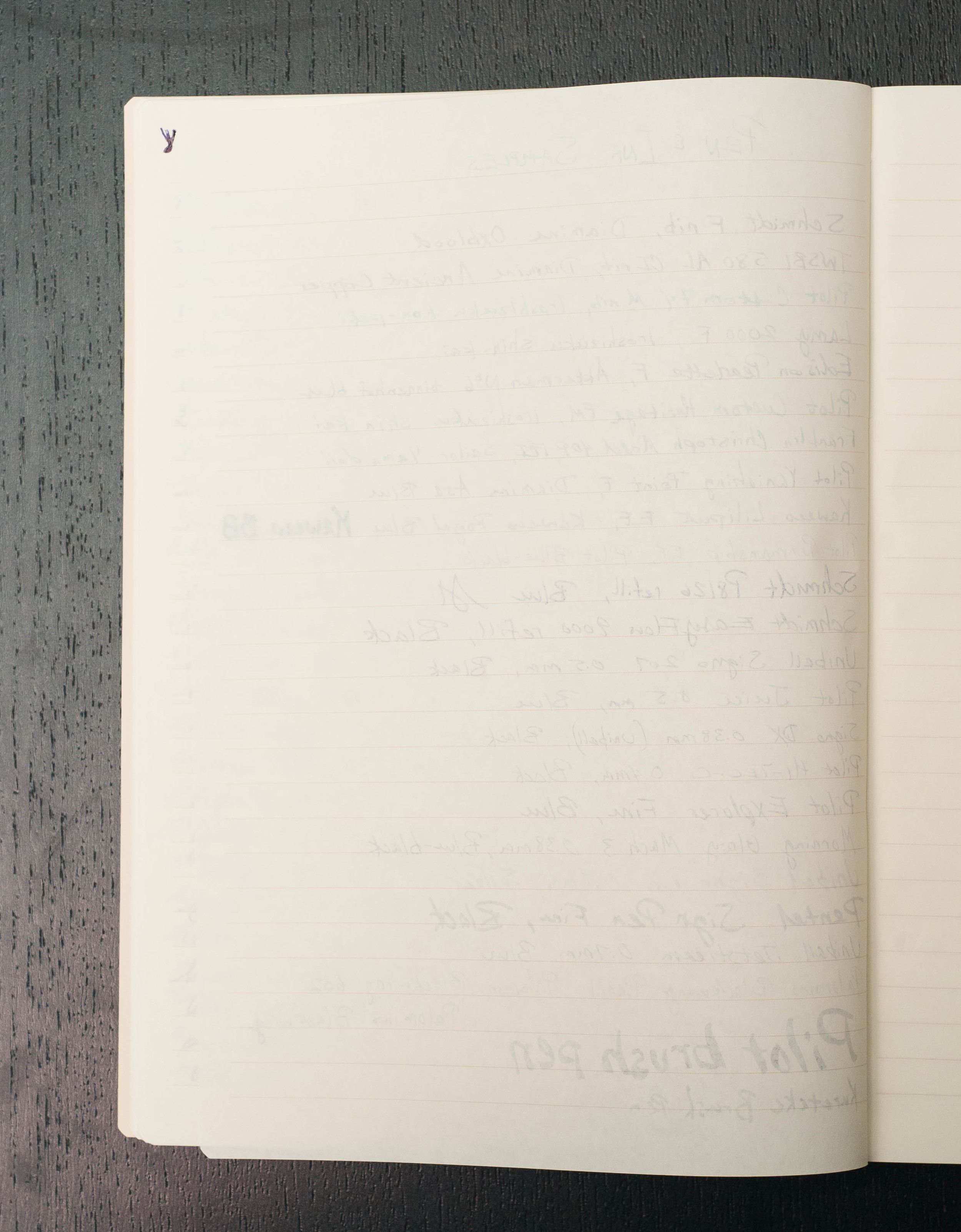
The paper is glassy smooth, the lines are perfectly spaced (8mm spacing), and it just stays out of your way. I tend to get a bit uncomfortable when writing on the fat side of the notebook when I get to the bottom of the page, but that's normal for any notebook that has this many pages (or half as many).

Nanami Paper Seven Seas Writer Ink.jpg

Dry time is incredibly fast, but you will smudge or mark up other pages if you close the book just after writing. Nanami was nice enough to include a perfectly-sized piece of blotter paper that you can use to keep that from happening, but I'm reckless and live a life a danger. The paper is thin, so there's plenty of show-through on the backs of pages, but actual bleed-through is extremely rare, regardless of the pen/ink.

I can easily say this is my favorite notebook. It's a pleasure to use, and it just keeps holding up past my expectations. I highly recommend it to anyone who enjoys lined paper and an exceptional paper. Since it's a standard size (A5), you can customize it by adding covers.

And, did I mention it's only $25? I'm still blown away by the price. Tomoe River paper is like mithril to me, so I honestly don't know how this 480-page notebook comes in at that price. I would guess that the cost is reduced because of the plain, thin cover and lack of bookmark, closure band, etc., but it still gets the job done.

Check out the Seven Seas Writer for yourself or as a gift. If they happen to be sold out, don't worry — they'll likely release a new edition fairly quickly.

Posted on October 28, 2015 and filed under Notebook Reviews, Tomoe River.