Posts filed under Pen Reviews

Guest Review: Vintage 1950s Montblanc Meisterstück 146 Fountain Pen

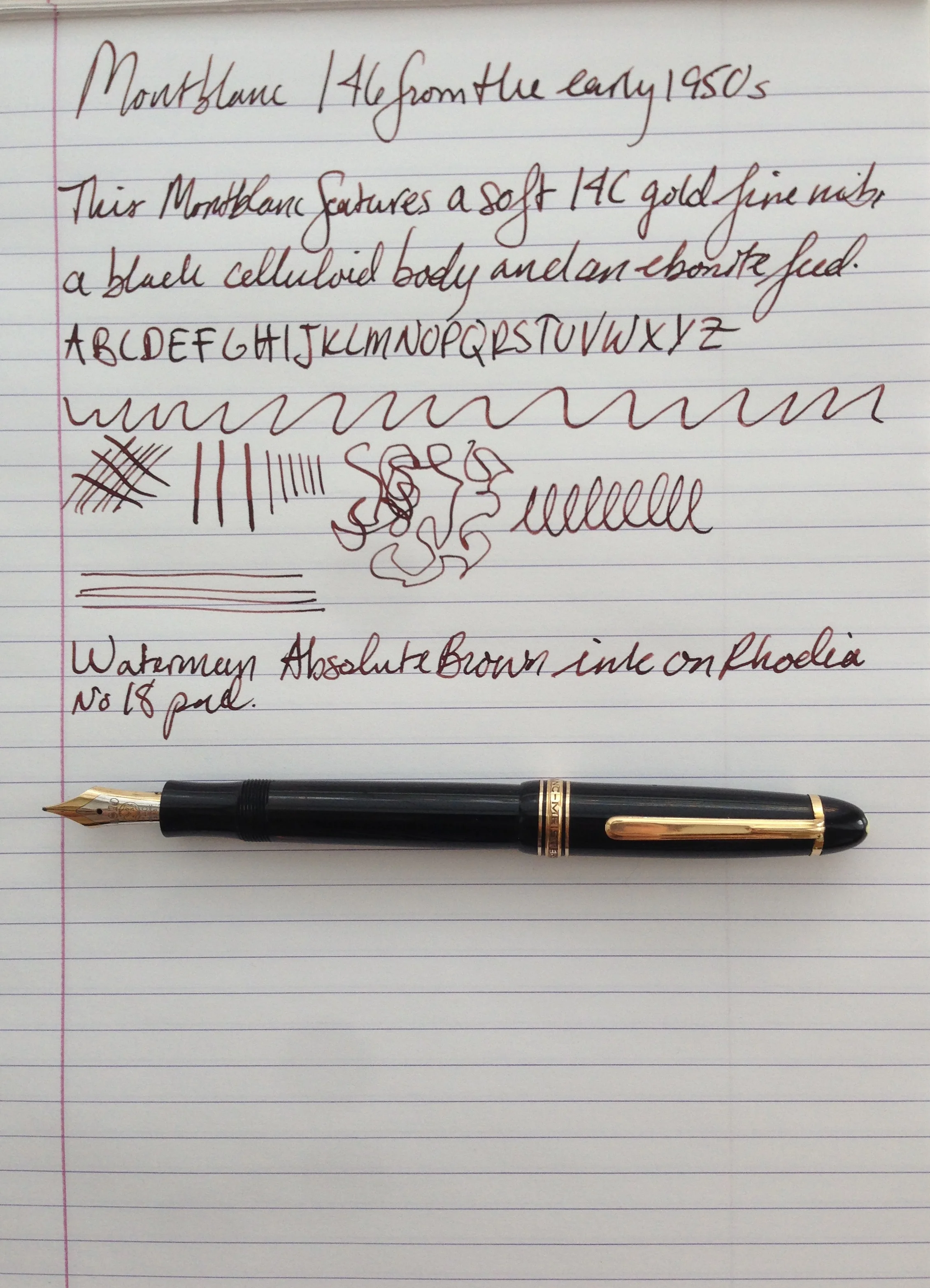
If you are reading this blog you likely have a grail pen, something that you think is beyond or in some way more exciting than what is in your current collection. I have been collecting fountain pens for almost 10 years now and I strive to buy great writers over anything else. With the help of some friends at the Fountain Pen Network I landed on the Montblanc 146, specifically one from the early 1950s as the pens of this era had the most appealing features of the Meisterstück (masterpiece) line: a celluloid body, a softer 14C gold nib, and the flat ebonite “ski slope” style feed.
Montblanc 1

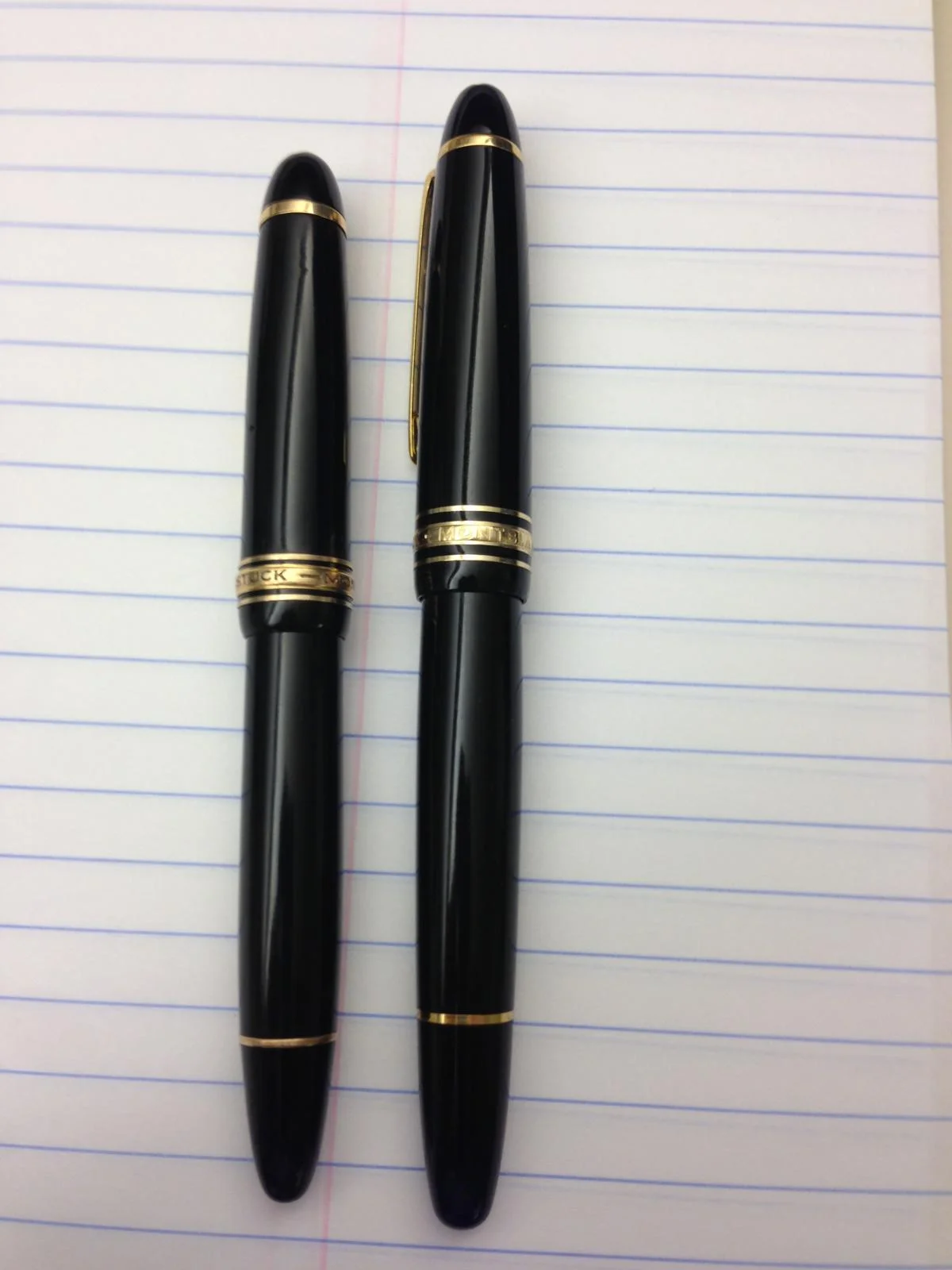
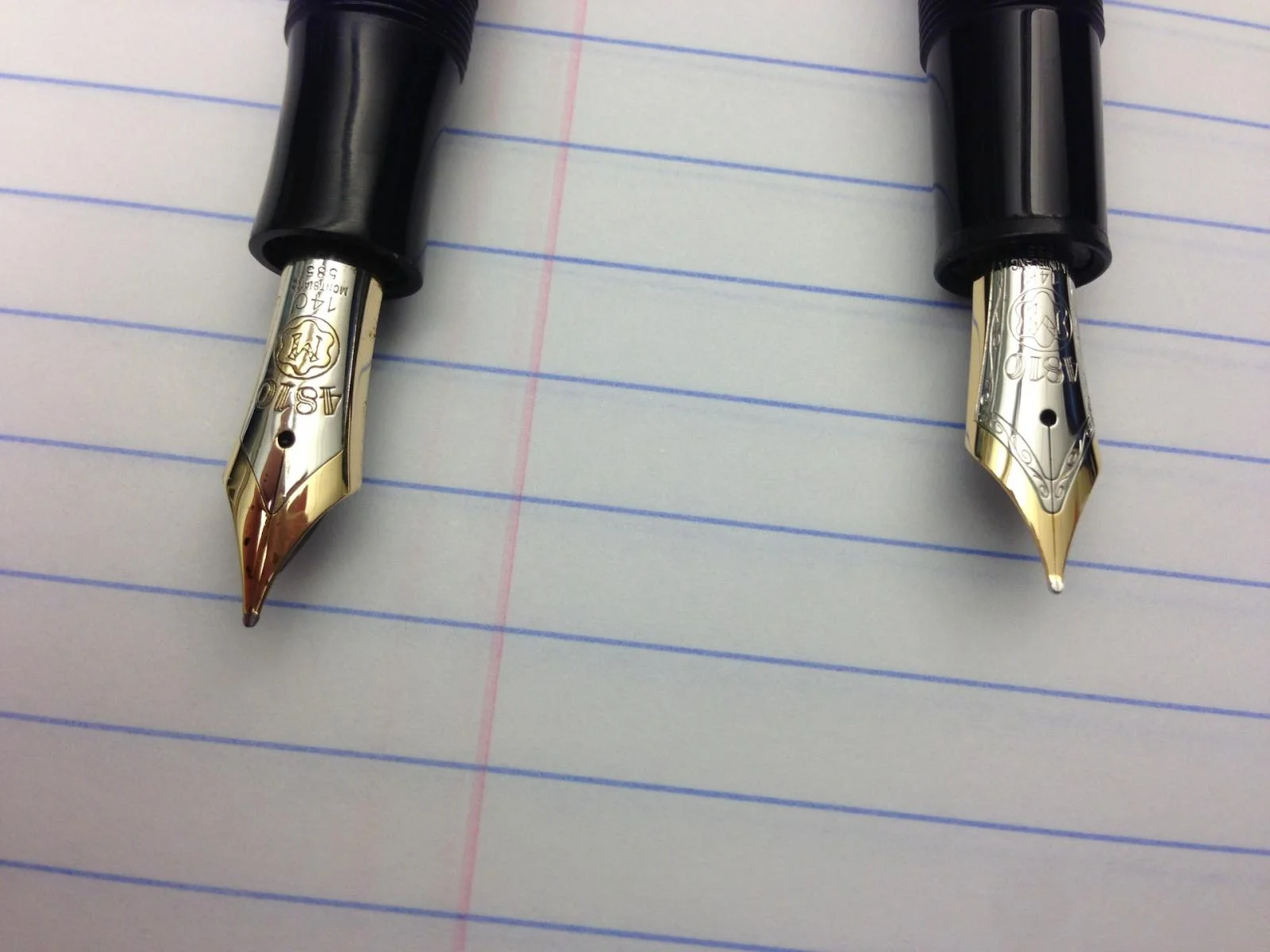
The 146 is a piston fill fountain pen that is larger than the 144 (Classique) and smaller than the 149. Compared with the modern 146 (often referred to as the “LeGrand”) the vintage 146 is slightly shorter with a shapelier barrel and deeper engravings on the gold furniture. The vintage 146 also has a larger more attractive two-tone 14-carat gold nib.
Montblanc 2
Montblanc 3

Vintage 146 Nib on the left, modern 146 nib on the right.

The 146 fits comfortably in my hand and weighs approximately 26 grams full of ink, and 18.5 grams uncapped. This pen does not post well. I have to apply more pressure than I would like to get the cap to sit straight on the body so I usually write with it uncapped. At 4.75” uncapped and just under 5.5” capped (not posted) it’s average sized and will be comfortable for most people to use.

The nib is the softest non-flex nib that I have used and provides some mild line variation. The buttery soft springy writing experience makes the 146 one of my favorite fountain pens. The nib writes wide and wet for a fine. The pen always starts right away and does not skip. I have left the cap off for over a half hour and it started without a hitch.

Montblanc 4

The vintage 146 uses a unique two-stage piston filling system that holds a lot of ink. You unscrew the piston knob, which will come up away from the body, but this does not move the piston. You keep twisting until you feel a transition at this point the knob becomes harder to turn (but still smooth) and no longer moves away from the body; it is at this stage that the piston moves. The mechanism behind this is complicated and likely discontinued due to cost. One weak point is the cork piston head; it is likely less durable than the synthetic ones found in most modern pens.

Being around 60 years old there is some loss of plate on the gold furniture but overall it is in great shape. If you look closely you can see that the nib tines are not in perfect alignment but the pen writes without a hitch so I haven’t been in a huge rush to get it to a nibmeister.

Montblanc 5

The prices of these pens have been going up and can be bought between $500-$700 on auction sites and for around $900 from a reputable dealer of vintage pens (I highly recommend the latter option). I bought mine on an auction site and got lucky as my pen turned out to be in great shape and functioned wonderfully.

To me the price is worth it as it offers a fantastic writing experience with an elegant high quality body but these pens can be tricky to buy and even trickier to fix if you get a bad one. I highly recommend the vintage 146 to experienced fountain pen users.
Posted on January 15, 2014 and filed under Fountain Pens, Pen Reviews, Montblanc.

Pilot Acroball Color Ballpoint Pen - 0.5 mm - Light Blue and Orange

One of my favorite pens keeps on getting better as Pilot has added color to its excellent Acroball ballpoint pen line.

The Acroball has picked up steam since I first reviewed it in 2009. At that time they were only available in Japan, but soon started showing up at importers in the US like JetPens. Nearly four years later, Pilot decided to put the Acroball on the store shelves and at least by the chatter surrounding it, it seems to be doing well.

Why does it take a popular Japanese pen from a major manufacturer four years to hit the market in the US and other countries? I'm still searching for that answer.

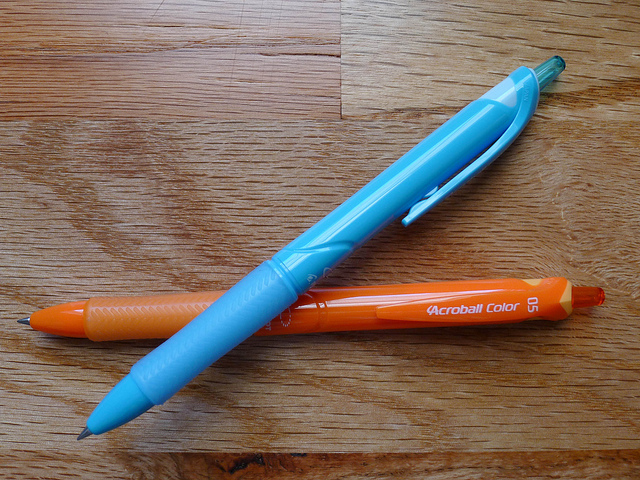
Back to the Acroball Color before I go completely off the rails. It's great - as good as any Acroball I have used in fact. If you have never used one or heard of it, what sets it apart from most ballpoints is the use of a hybrid ballpoint ink, similar to the Uni-ball Jetstream that is so loved. This gives it a smooth, clean ink flow that is as good as you will find in a ballpoint. It allows for a vibrancy in color too, which is shown in the writing sample below.

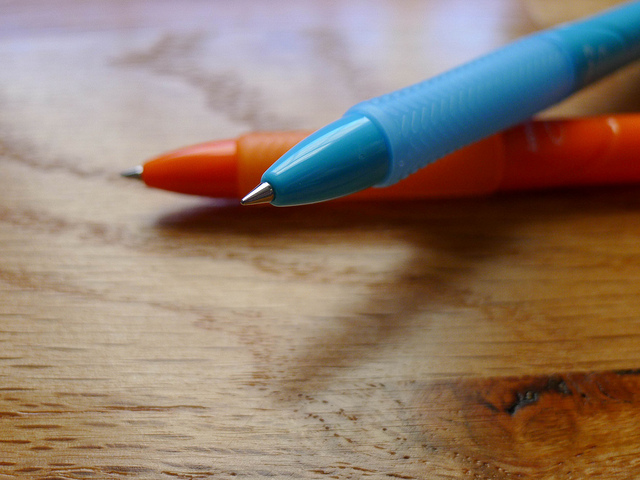
The use of the Miami Dolphins color scheme is unintentional, but it kind of works, doesn't it? Both light blue and orange are difficult to get right in ballpoints but Pilot pulls it off here. I could use both of these colors on their own without pause. And the grip? Why this hasn't propagated through Pilot's offerings (especially the G-2) is beyond me. It is fantastic.

The Violet model is in my future, and if they come out with a good blue black it might be game over for the Jetstream.

(JetPens is an advertiser on The Pen Addict and I received this product at no charge.)

Posted on January 13, 2014 and filed under Acroball, Ballpoint, Hybrid, Pen Reviews, Pilot.

Platinum 3776 Century UEF Nib Fountain Pen Review

There is wow and there is WOW. The Platinum 3776 Century UEF nib fountain pen that Thomas loaned me late last year falls clearly into the latter category. This nib is something to behold.

Thomas knows my preference for super-fine pens and this one takes the cake. And the thing is, I was wrong in my handwritten review below. Mike Masuyama did not grind down the pen to this size. This is the stock UEF nib from Platinum! According to Thomas, Masuyama only tuned the nib so it was perfectly aligned, wet, and smooth. I can't fathom how steady Mr. Mauyama's hands are to be able to work on pens this fine. I would end up with some wonky half-stub nib if I even thought about trying this.

The 3776 in itself is one of Platinum's cornerstone pens, similar in style and price to Sailor's Sapporo line and Pilot's Custom Heritage line. Basic, but classically designed barrels and 14k gold nibs at a fair price. The 3776 was a glaring omission on my 2014 wish list from yesterday's podcast and I can assure you I will own one by the end of the year.

Will it be the UEF nib? I'm not sure, but probably so. I own several Japanese EF nib pens so why not go one step further. This one was an amazing writer. The line was as advertised - consistent and smooth - and required only a very light touch to move it across the page. My only hesitancy is if I could use the UEF nib all day or would it actually be too fine? Only time will tell I guess.

For your reading pleasure, Thomas passed along this Tipping Sizes Comparison Chart from Nibs.com where you can compare different nib sizes from company to company. Notice that only Platinum/Nakaya and Sailor dare to dip their toes in the 0.1 mm range. Also be sure to read up on the history of the 3776 from Platinum and watch the nib size comparison video from Brian Goulet. Awesome stuff!

Posted on January 8, 2014 and filed under Pen Reviews, Fountain Pens, Platinum.