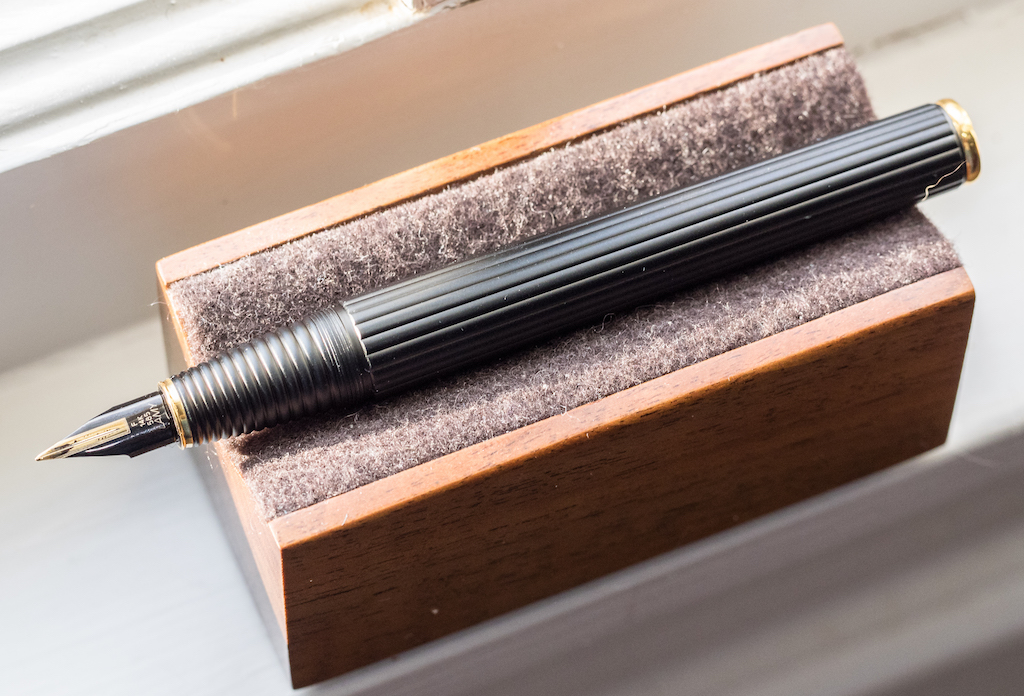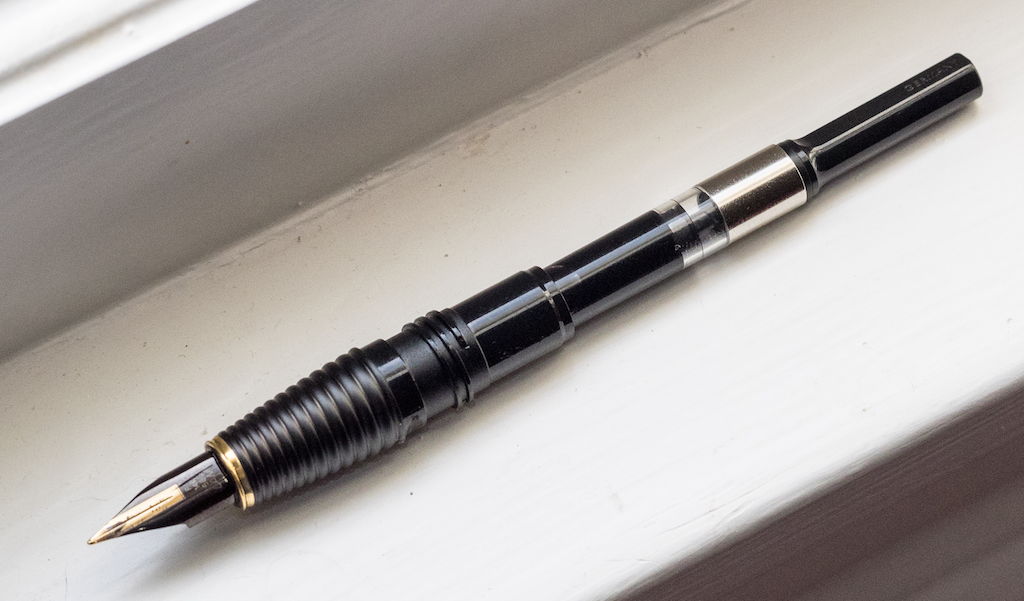
Posts filed under Pen Reviews

The Conid Minimalistica Demonstrator Fountain Pen: A Review

(Susan M. Pigott is a fountain pen collector, pen and paperholic, photographer, and professor. You can find more from Susan on her blog Scribalishess.)

The Conid Minimalistica is a fountain pen made in Antwerp, Belgium by Conid Pen. Conid is known for their bulkfiller system (described below) and their unique, custom-designed pens.

I borrowed Brad's Minimalistica back in August. I was so impressed with it that I decided to order my own. When a demonstrator version of the Minimalistica was announced, I jumped on it.

The Conid Minimalistica comes packaged in a hinged black metal box.

Inside is a card indicating who worked on the nib and an impressive titanium plate with the certificate of authenticity inside the cover.
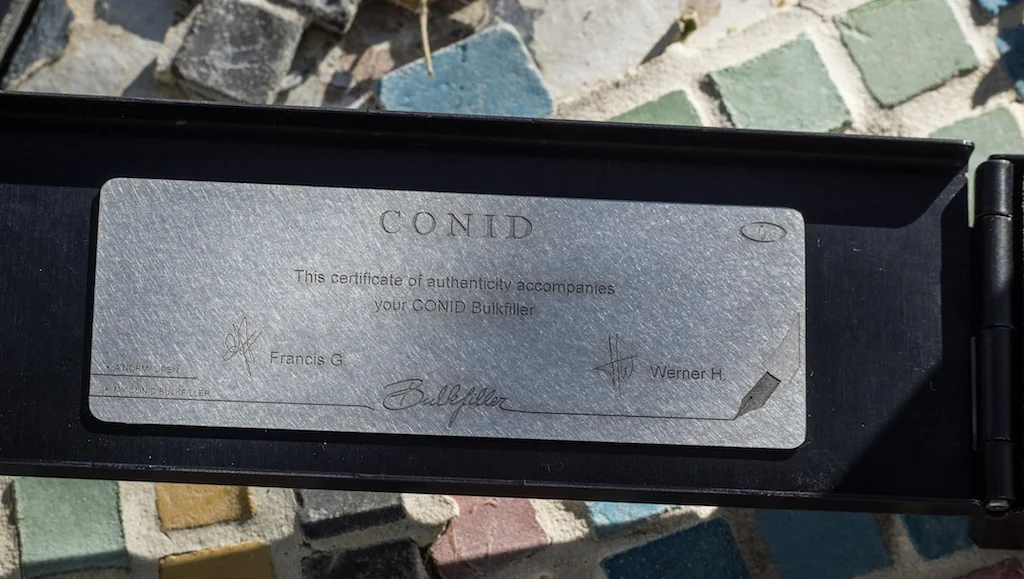
The foam insert holds the pen, tools and extra nibs (if you ordered them). A small cleaning cloth is also provided.

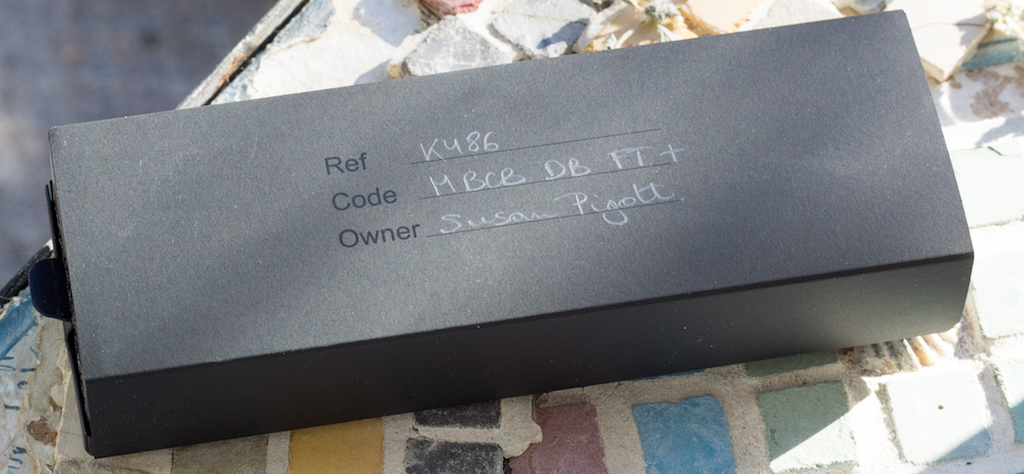
The metal box is enclosed in a cardboard sleeve with your name and pen information hand-penciled on top. This gives the pen a "made-just-for-me" feel. The code tells you exactly what pen you purchased: M BCB DB FT+ = Minimalistica Black Conid Bulkfiller Demonstrator Barrel Flat Top Plus Clip. I feel like I just solved an equation.
Brad's pen is the solid black "Pi" model. I was very disappointed that my clip didn't have the Pi symbol on it, but I learned that Brad's is one of the first production run that came out March 14, 2015 (3.1415=Pi). So no Pi symbol for me.

Our pens are essentially the same, except for the fact that mine is a demonstrator. Although mine appears to be a few millimeters longer, I think that is just due to how deeply the caps fit onto the barrel.

Brad's Minimalistica (L) and Mine (R)

Brad's Minimalistica (L) and Mine (R)

When you compare the caps side by side and the pens (uncapped) side by side, they are the same length.
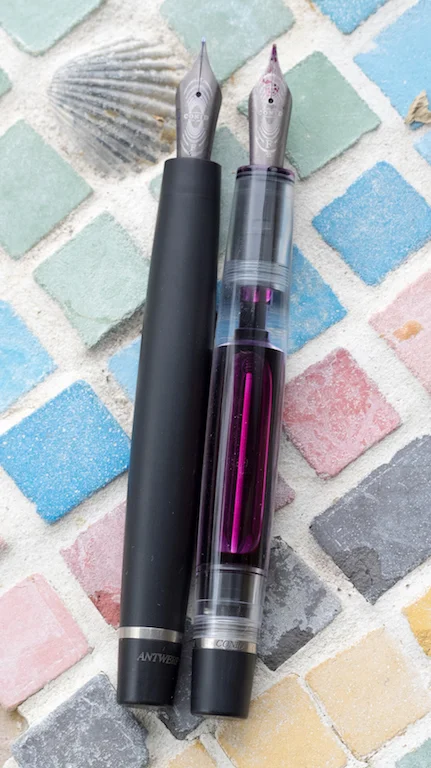
Brad's Minimalistica (L) and Mine (R)

Brad's Minimalistica (L) and Mine (R)

The cap is made of Delrin resin with a solid titanium clip and the yin-yang Conid logo on the finial.

My clip ring has a small flaw on it, but, really, you can only see it if you use a magnifying glass or a macro lens.

The piston knob has a small hole for the hex key should you want to remove it from the pen. Above that is a titanium ring engraved with "Antwerp Belgium Conid." Otherwise the pen is unadorned.

The Minimalistica is 137 mm/5.4 inches in length capped, 126 mm/5 inches uncapped, and 160 mm/6.3 inches posted. It weighs 26 grams (without ink) and holds 2.5 ml of ink. For me this is the perfect size. However, a whole range of pens is available, including the Regular, the Giraffe, the Slimline, and the Kingsize.

One of the main claims to fame for Conid is their unique bulkfiller system. With the bulkfiller, the ink completely fills the barrel, unlike other systems which always leave space. The instructions included with the pen explain the process, but watching the video helps you understand the system more fully. The demonstrator Minimalistica allows you to see the filling system in action, and, I must say, it's very cool.

The one caveat I have about this otherwise perfect filling system is that you have to unscrew the piston a few millimeters for long writing sessions (just like the Pilot Custom 823). It's not a big deal, but sometimes I forget and the ink stops flowing.

The titanium nib is smooth and bouncy. I love the design on the nib and the titanium complements the pen perfectly.

And just look at that gorgeous fine nib ground to a perfect stub:
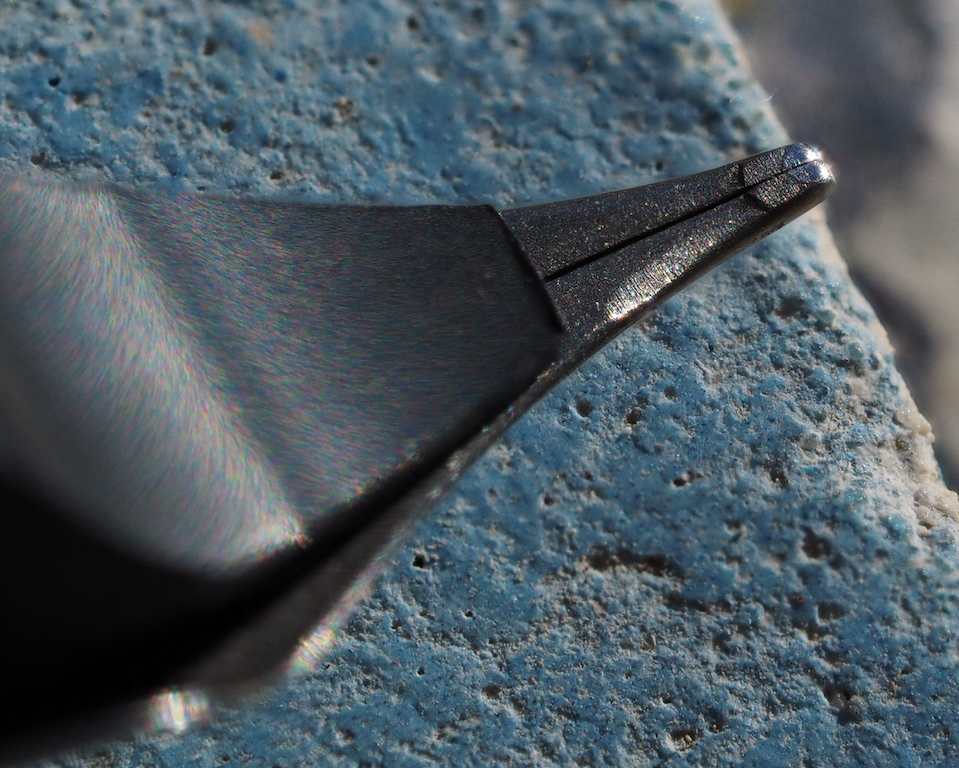
Writing with the Minimalistica is a wonderful experience. The fine stub nib offers some line variation and the ink flows nicely. On occasion I've had some skips, and if I push the nib too hard (it is not a flex nib) sometimes the ink stops completely. A pull and push of the piston gets everything working again.

I decided to disassemble my pen completely in order to clean out the first batch of ink. You can only do this if you order the special tools.

Conid offers instructions on their site and you can watch Stephen R. E. Brown's video which shows you step-by-step how to disassemble the pen (though Brown's pen is a different model). Disassembly is not at all difficult, and I was able to get all traces of ink out of the nooks and crannies of my pen.
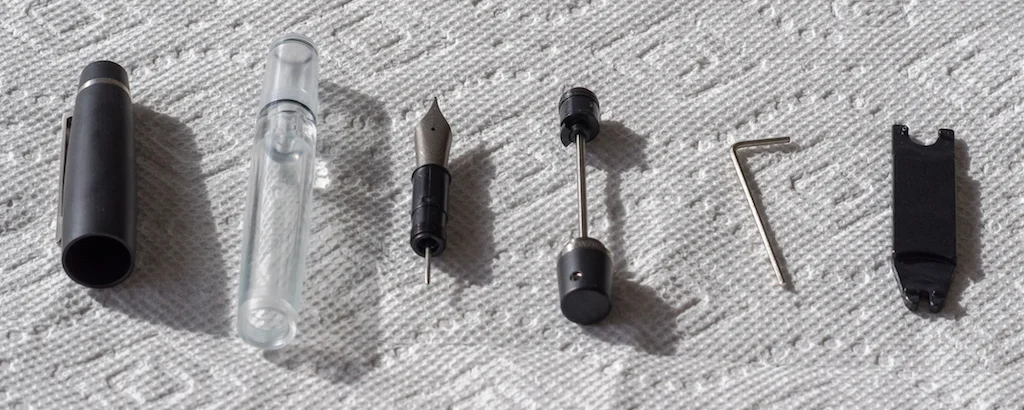
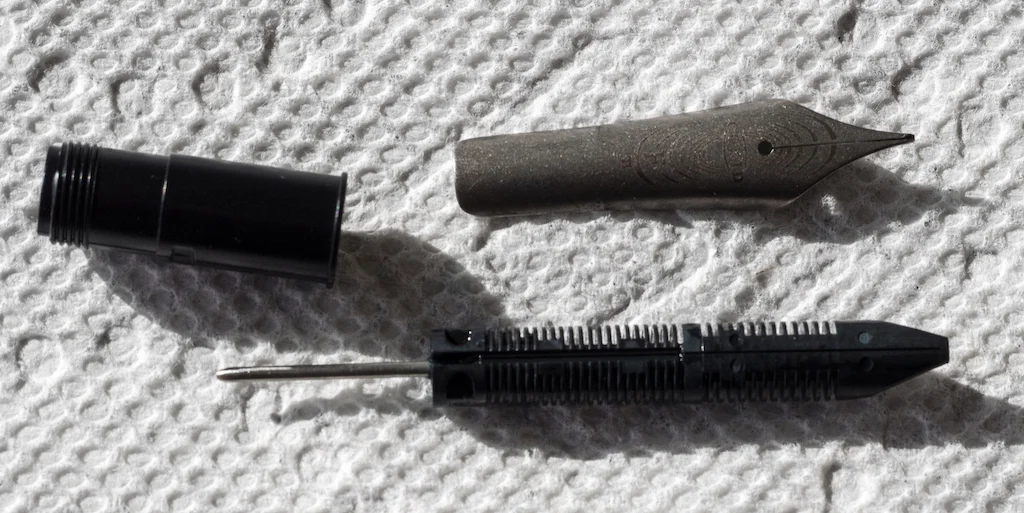
I removed the nib unit and cleaned that as well. The only difficulty I had was reinserting the nib unit. I discovered that I had to insert the feed first and then push the nib in on top of it.
Conid pens are made to order, and, once you place your order, you will receive an email confirmation (this can take several days, so be patient). The company emails you again when they start work on your pen and one more time when the pen ships. It took about a month from the day I ordered my pen to the day I received it.

I love my Conid Minimalistica. It is a well-designed pen, and, depending on the model, you have dozens of configurations from which to choose. That said, it is also a very expensive pen because it is custom made. Considering the superior materials and design, I think it is well worth the cost.

Pros

  • This is a beautiful, custom-designed demonstrator pen made with top-notch materials.
  • Conid uses a unique filling system with a huge ink reservoir.
  • You can completely disassemble the pen for cleaning (though you have to pay extra for the tools).
  • The titanium nib is spectacular and the stub grind is perfect.

Cons

  • The pen is very expensive, but you are paying for a custom design.
  • At this price I think the tools for disassembling the pen should be included at no extra cost.
  • You have to remember to unscrew the piston knob a few millimeters for long writing sessions.
Posted on January 8, 2016 and filed under Fountain Pens, Pen Reviews, Conid.

Deleter Neopiko Line 3 Drawing Pen Review

Deleter is known as one of the premier Japanese manga supply brands, releasing various sets of pens, markers, and paper for those interested in manga artwork, and comic art in general. I’ve used their products in the past, and Brian Draghi reviewed the Neopiko Line 2 for The Pen Addict when it was imported by JetPens in 2012.

The Line 2 is a good pen, but not a great one when compared to its peers in the drawing pen market. I found the tip to be a little soft and the price a bit high compared to pens like the Sakura Pigma Micron but it was something different, was kind of cool, and worth having one laying around for a switch up from time to time.

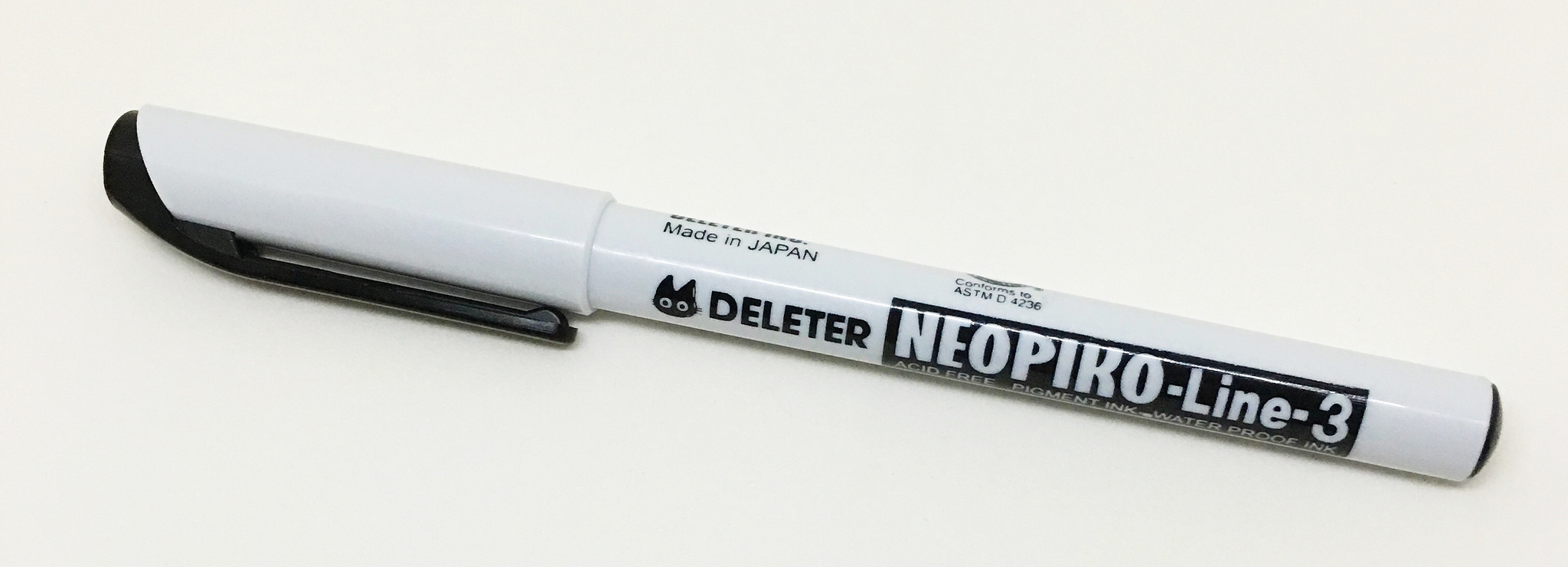
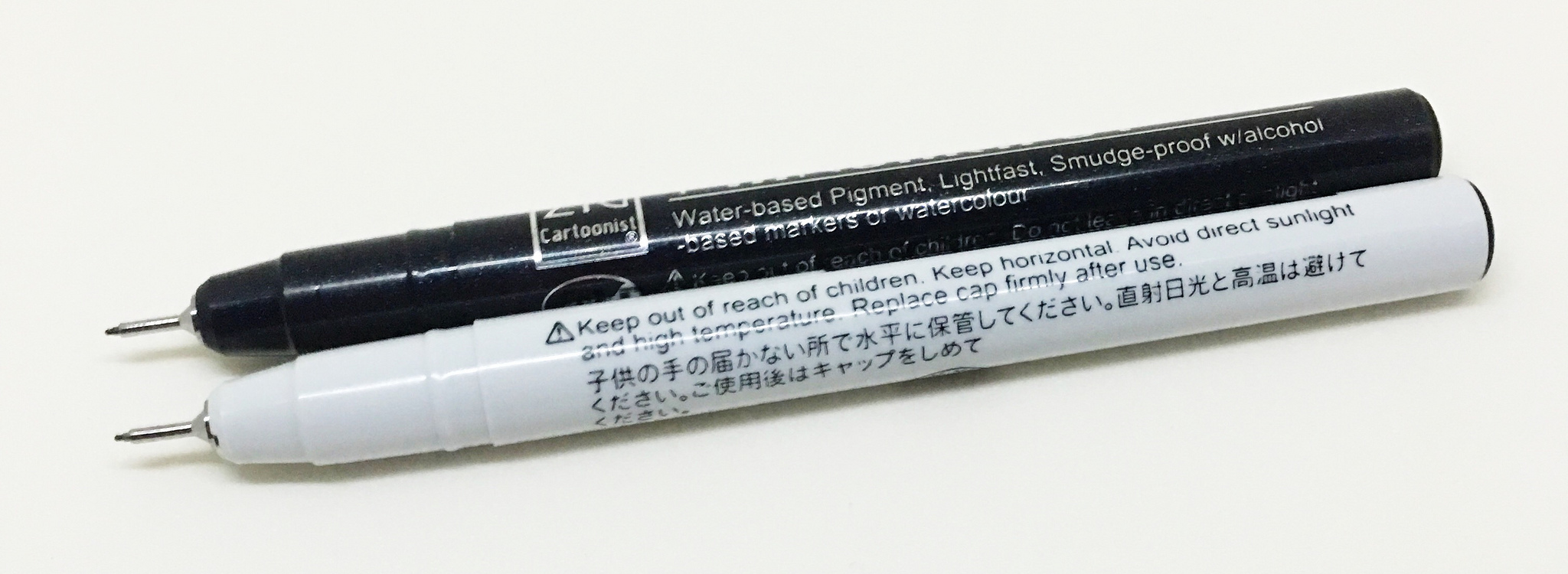
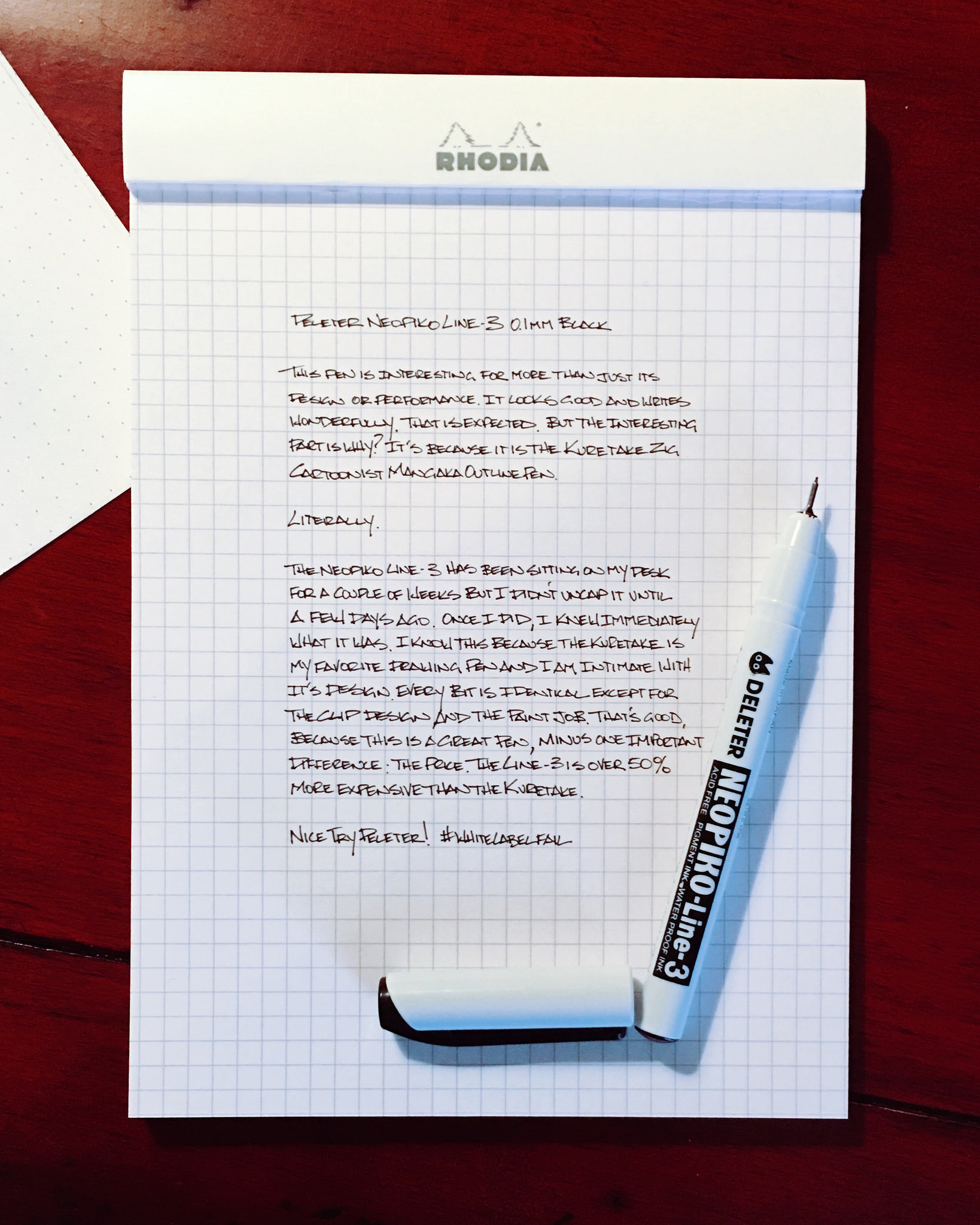
Because of that, I was happy to grab the Deleter Neopiko Line 3 when it landed at JetPens and try it out. The barrel looked nice and the price was even less than the previous model, but I discovered something strange when I uncapped it the first time. This pen is a Deleter in paint job only. The pen itself is the Kuretake Zig Cartoonist Mangaka Outline Pen, also known as my number 1 plastic tip pen.

White label production is not a new thing. Many companies across many industries use this type of manufacturing for various reasons, primarily to increase the bottom line. There is no issue with this, and it is actually a benefit to the consumer in many cases, allowing them to buy a similar quality product for less than the original marketed and advertised product. Unfortunately for Deleter, that’s not what happened here.

(Note: I'm making an assumption that Kuretake is the one making the pen for Deleter. Could it be the other way around? Yes, but I think that is very unlikely.)

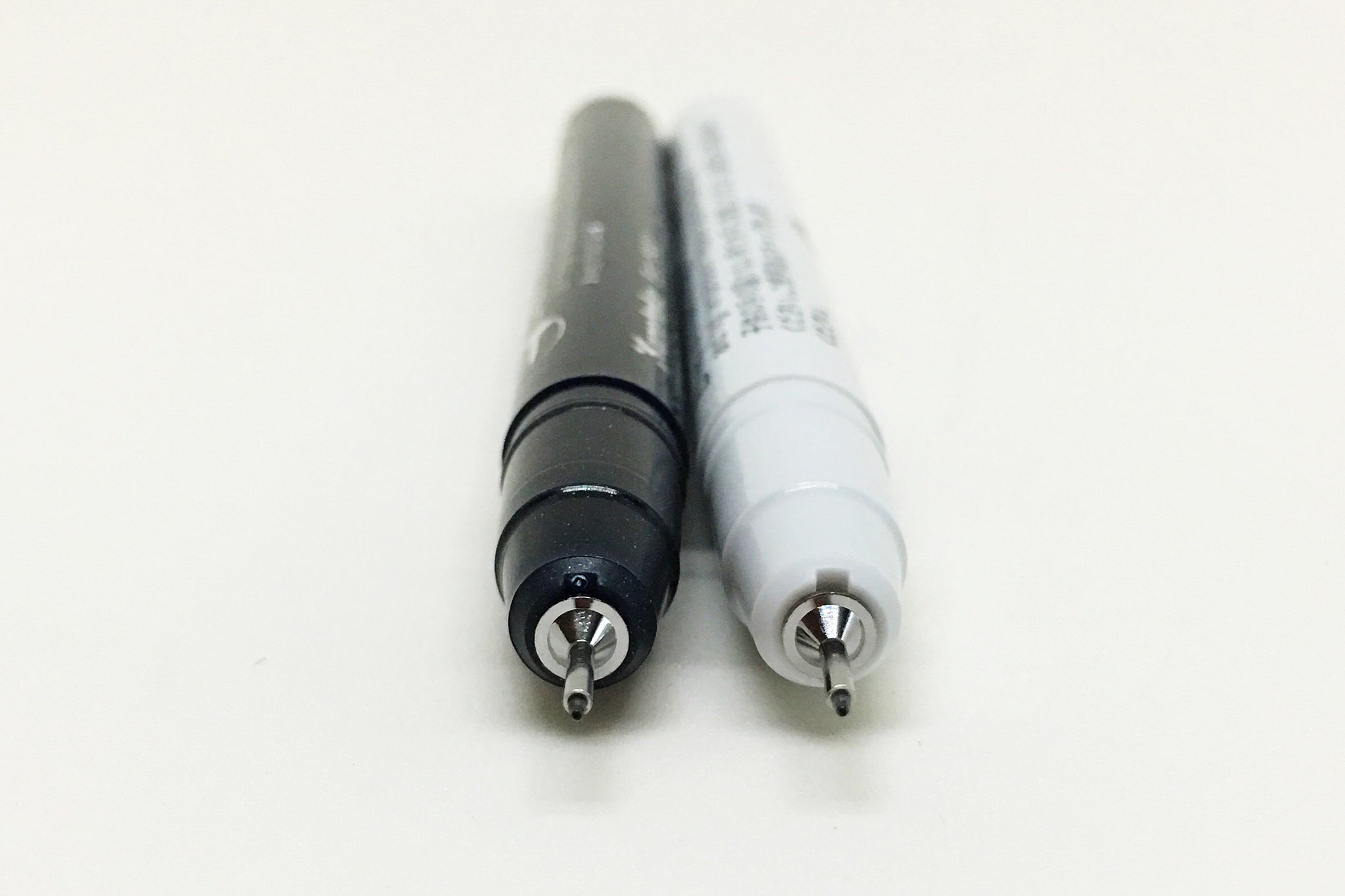
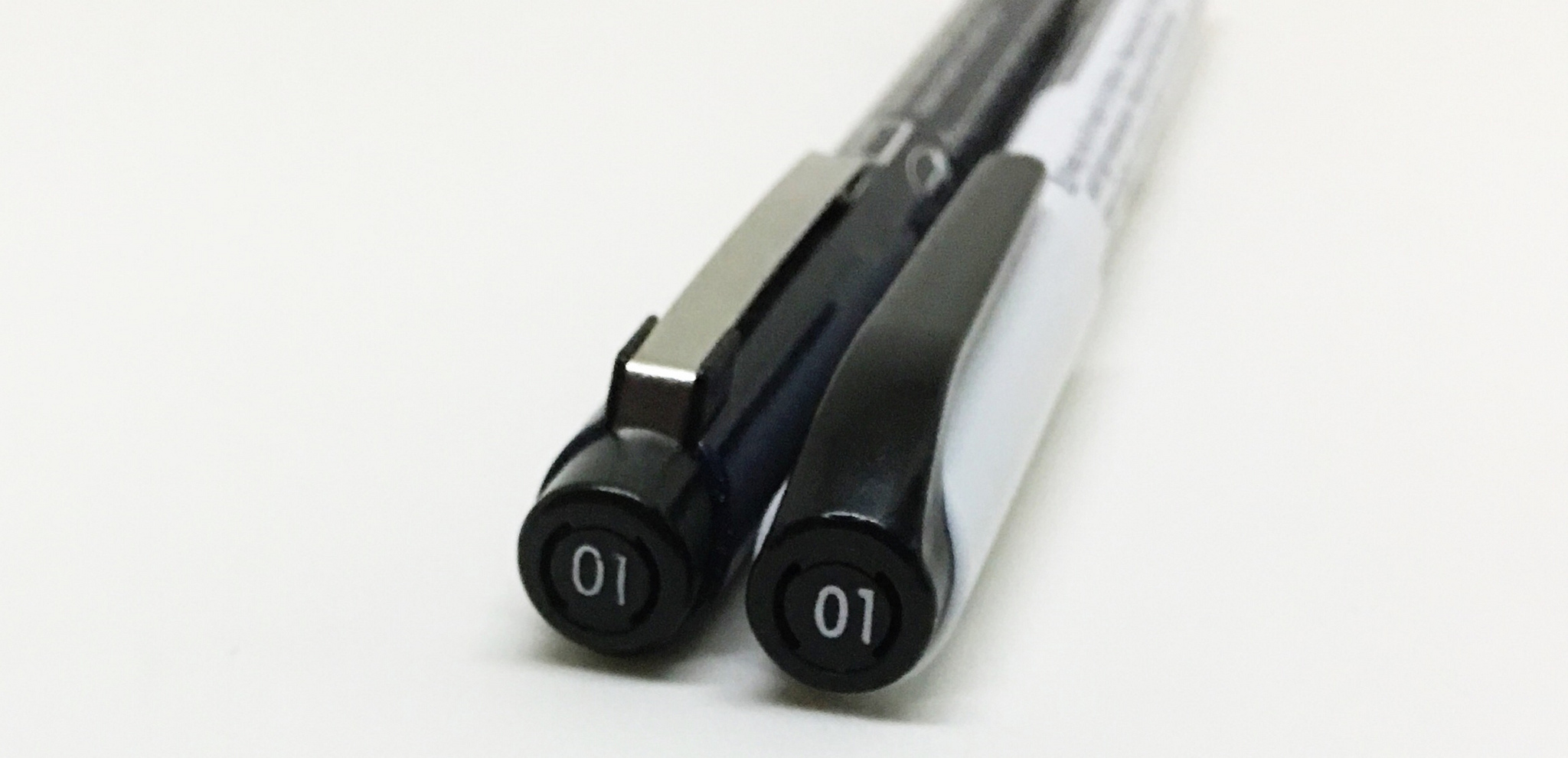
I didn’t catch it from the exterior design at first, but the second I opened the pen and before I even wrote with it I said wait a minute, this looks familiar. I grabbed the Kuretake Zig from my desk, uncapped it, and set it next to the Line 3 and I was right. It is the exact same pen. Literally.

That’s good I thought, because the Kuretake is a great pen. My next thought was to compare the price. The Deleter should be cheaper, or at least the same price, right? Nope. It’s 50% more from JetPens than the Kuretake, and comes in fewer options. Bummer.

If you are a Deleter fan and swear by their products this shouldn’t sway you from paying more for the same pen. I pay more for Copics because I like them and their style even though they are overpriced compared to the competition. But just know what you are getting with Deleter. If you want an awesome drawing pen, save over a dollar per unit, and have more choice, then buy the Kuretake Zig Cartoonist and don’t look back.

(JetPens provided this product at no charge to The Pen Addict for review purposes.)

Posted on January 4, 2016 and filed under Deleter, Drawing Pen, Kuretake, Pen Reviews.

Lamy Imporium in Black and Gold: A Review

(Susan M. Pigott is a fountain pen collector, pen and paperholic, photographer, and professor. You can find more from Susan on her blog Scribalishess.)

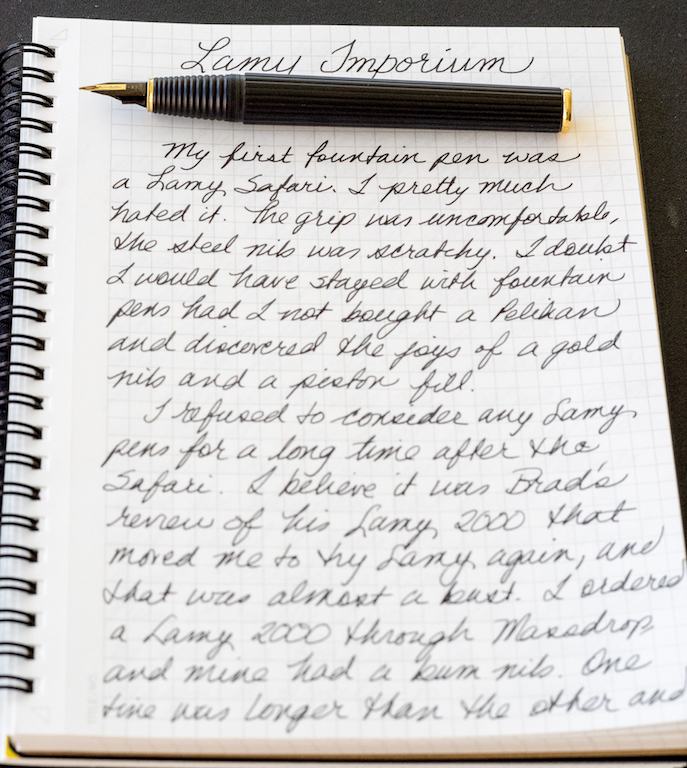
My first fountain pen was a Lamy Safari in metallic blue. I pretty much hated it. The grip was uncomfortable; the steel nib was scratchy; I didn't like the cartridges. I doubt I would have stuck with fountain pens had I not bought a Pelikan later that year and discovered the joys of a gold nib and a piston fill.

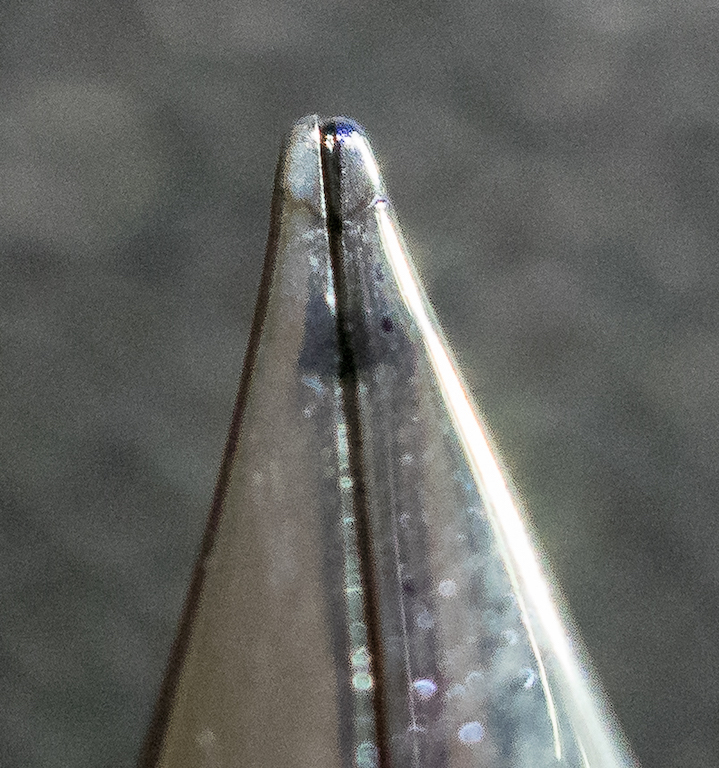
I refused to consider any more Lamy pens for a long time after the Safari. I believe it was Brad's review of his Lamy 2000 that convinced me to try the brand again, but that was almost a bust. I ordered a Lamy 2000 Makrolon through Massdrop, and when it arrived it had a bum nib. One tine was longer than the other, and there was this big divot on the top of the nib. Fortunately, Massdrop is an authorized Lamy dealer, so I was able to get a replacement nib. Now the pen writes like a dream, and it's one of my favorite pens.

The bum Lamy nib.

The bum Lamy nib.

When I first saw shots of the Lamy Imporium, I was mesmerized. I loved the guilloche patterns, the clean lines of the cap, and the nib–oh, that nib! The black exterior with the gold center was just too cool. Then I saw the price. $520 for a Lamy? No way. Plus, initially I was told the pen wouldn't be sold in the US (that turned out to be incorrect). I quietly resigned myself to no Lamy Imporium.

But then Black Friday arrived, and I happened upon a sale at Pen Boutique. The Lamy Imporium was reduced plus Pen Boutique was offering an additional 20% off! I got my pen for around $320, which seemed considerably more reasonable.

The Imporium comes in a large, heavy box wrapped in tissue paper inside a white cardboard outer box. The box is black/gray with the Lamy name on top. The lid is hinged and when you open it, the pen is centered in the middle with a ribbon to keep it in place. The ribbon doesn't work. My Imporium had made its way to the outer edges of the box during shipping.

Underneath the presentation board is a cartridge, a cleaning cloth, and a booklet about the Lamy Imporium. It's nicely packaged, but in all honesty, a huge box like this seems unnecessary. I know the more expensive pens all come in big, heavy boxes (think Visconti and Omas), but Lamy could have crafted a much smaller, elegant box.

I'm not exactly sure what the Lamy Imporium is made of. Lamy states that the pen has been "partially galvanized" and "refined" with a black matte PVD coating, but what has been galvanized is never stated. I think that the underlying body of my pen is steel, but there's also a titanium version.

Regardless, it's a beautiful pen designed by Marco Bellini. The barrel and grip have contrasting horizontal and vertical guilloche patterns.

The screw-on cap is smooth with a gold-plated clip that nicely matches the cap's shape. The clip is spring loaded and opens and closes easily.

The only branding is the word "Lamy" on one side of the clip.

The barrel sports a gold ring where the nib and grip meet and a gold disc at the bottom.

The Imporium is a solid pen in the hand. It weighs 47 grams capped. It is 141mm/5.6 inches in length capped; 121mm/4.8 inches uncapped; and 169mm/6.7 inches posted. I write with it unposted (posted it is a bit ungainly), and the guilloche pattern on the grip helps to keep my fingertips from slipping on the coated metal surface. The ribs on the grip are rounded, and I don't find them to be at all uncomfortable.

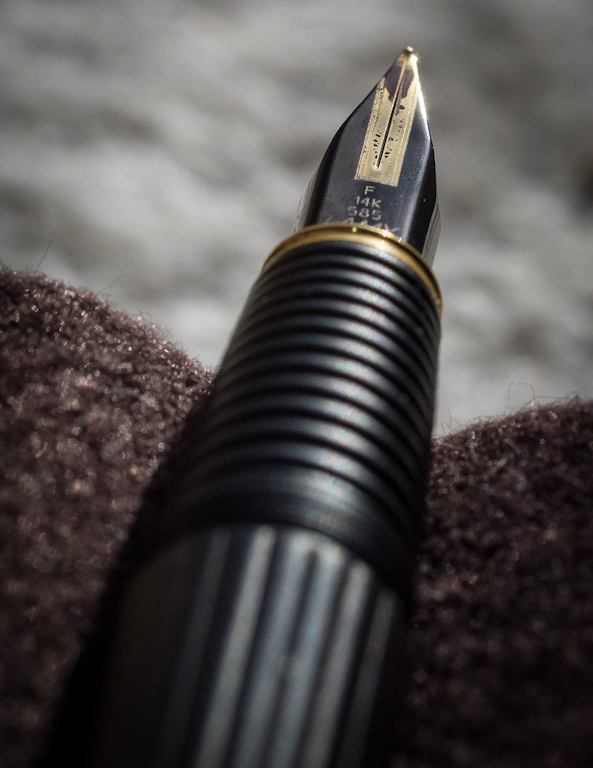
The 14K EF nib is spectacular, writing more like a fine. Lamy describes the nib as "PVD-refined bicolour gold" that provides "a uniquely soft writing experience." I will say the nib writes smoothly and has unique feel. There's no flex, of course, but it has a bit of give when you press into it.

The pen is a cartridge/converter filler. I suppose a piston converter would have made the Imporium prohibitively heavy, but at this price point you sort of expect a piston.

I have a crazy affection for this pen. It grabbed me the moment I laid eyes on it, and I can't explain that rationally. It's just a black and gold guilloche pen. Big woo. But I think it's absolutely fantastic.

Pros

  • The Lamy Imporium is incredibly solid and well made.
  • The nib on this pen is fantastic. Not only is it unique with the black and gold contrasts, it writes beautifully.
  • I love the design of this pen with the guilloche patterns and the contrasting smooth cap. The gold accents add just the right amount of elegance.
  • Even though the pen is heavy, it is well balanced. The guilloche design makes the grip easy to hold.
  • If you don't like the black and gold, there's an all-black, stealth version and a titanium version.

Cons

  • Obviously the biggest negative about the Lamy Imporium is the cost. It is super expensive for what you get. I would never have bought one at the full price.
  • Some may find this pen too heavy for comfort.
Posted on December 30, 2015 and filed under Fountain Pens, Lamy, Pen Reviews.