Posts filed under Pen Reviews

Rotring Isograph Review

(This is a guest post by Nick Folz. You can find more of Nick and his work on his blog, Smallberry Drive, Twitter, and Instagram.)

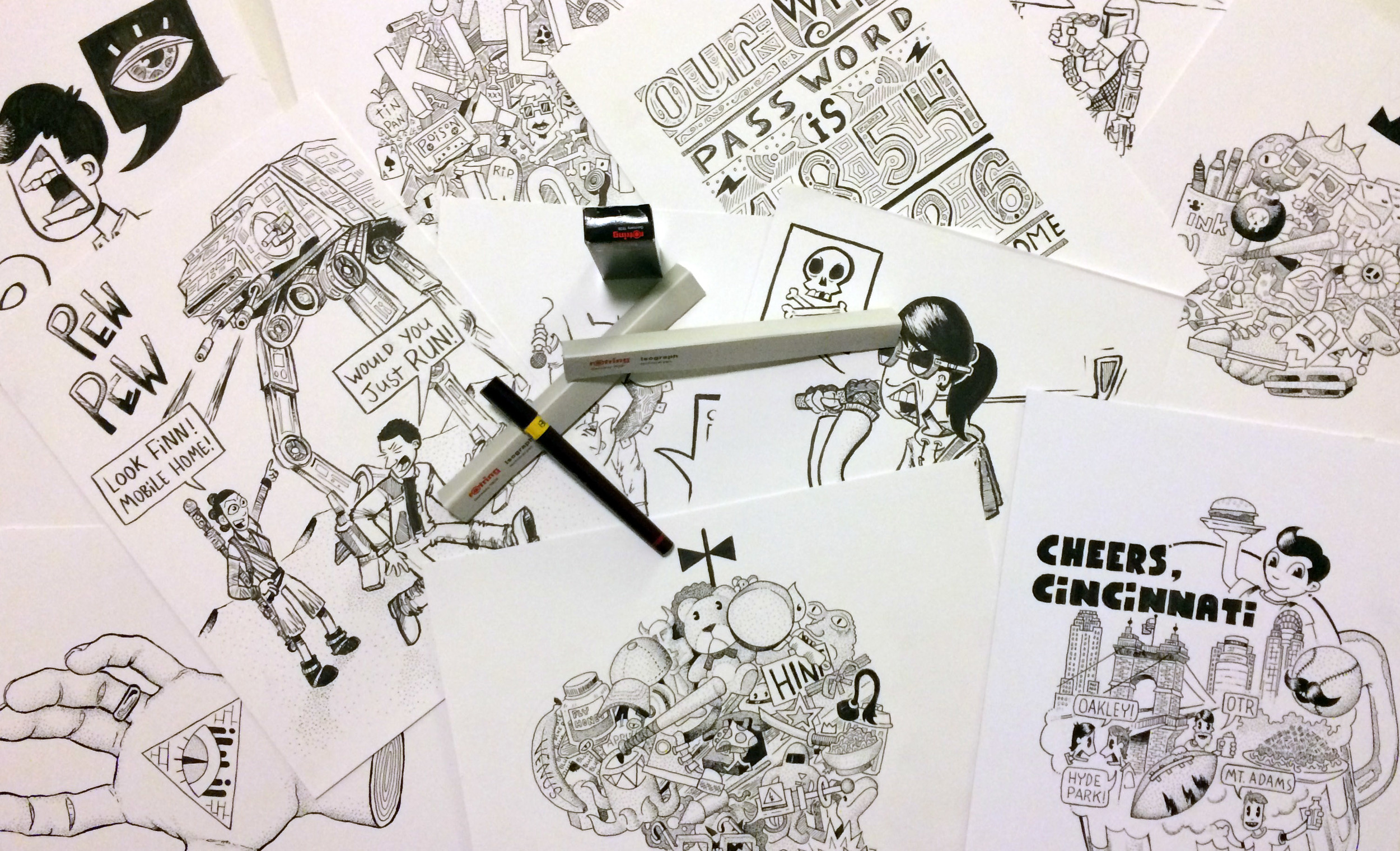
Rotring technical pens were the subject of envy or resentment of every art student in my class. For those who have never seen one, they are famous for the ultra thin points and consistent ink flow. Engineering students used them for blueprints and wiring schematics, Art students used them for tiny details, cross-hatching and stippling. They were pricy and you needed to occasionally clean them, but they were a symbol that you had made it. Owning one meant you were good enough to need a hair-thin line and had the discipline to maintain it.
Being that my dinners sometimes consisted of a single can of corn back when I was a student, I simply couldn’t fork out the money for such a luxurious item, so I resented them. After all, who wanted to do all that maintenance? It was sort of annoying how people who used them would tilt them back with a flourish of the arm to get more ink flow, and it seemed to me that they did this more often than was really needed… Almost as often as they pointed out that Rotrings were R. Crumb’s favorite pen. Yes. We all heard you the first fifteen times. I had my Pilot V5 and that was fine enough for me (pun intended).

Well, sometimes you have to realize you were just wrong, or bitter, or both.

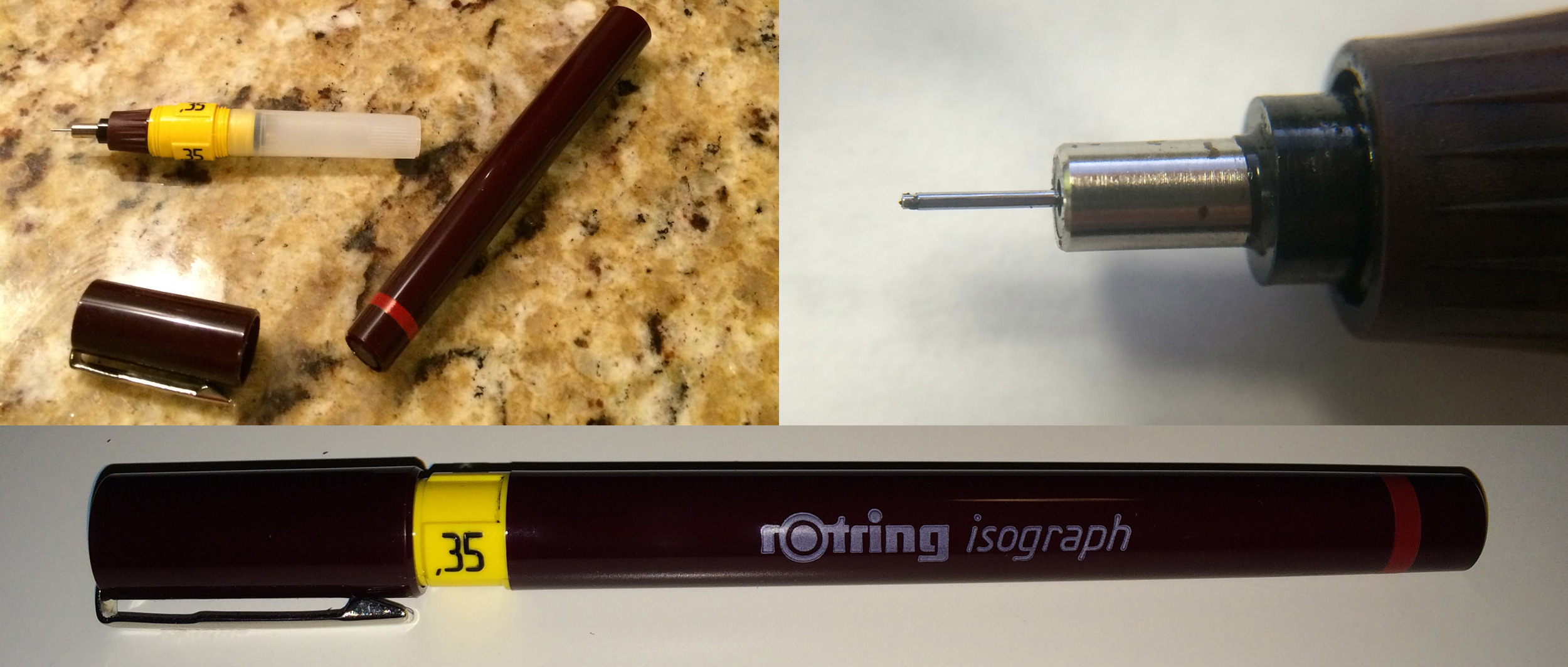
I got my hands on a .35 Isograph, a smaller point than I am usually comfortable with. Rotring’s Isograph is nearly identical to the more ubiquitous Rapidograph, the exception being that you can refill the cartridge of the Isograph while the Rapidograph only takes special pre-filled capillary cartridges. I was looking for something I could do some stippling and very small detail work with. I would usually just use the Pilot V5 for this, but the rollerball tip doesn’t handle the dots of stippling very well, since it relies on the roller ball movement to supply ink. The Isograph tip uses gravity and a tiny feed wire to facilitate ink flow, so the tapping of the nip will always produce a dot of ink, so long as there is ink available and it's not clogged (which has yet to happen to me, more on that later).
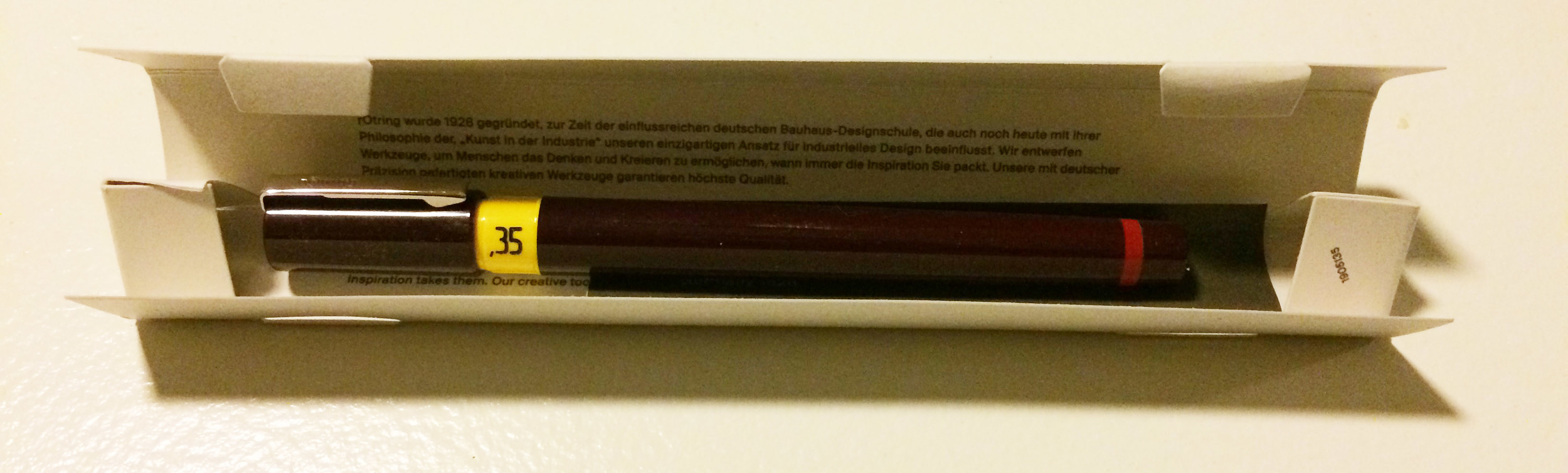
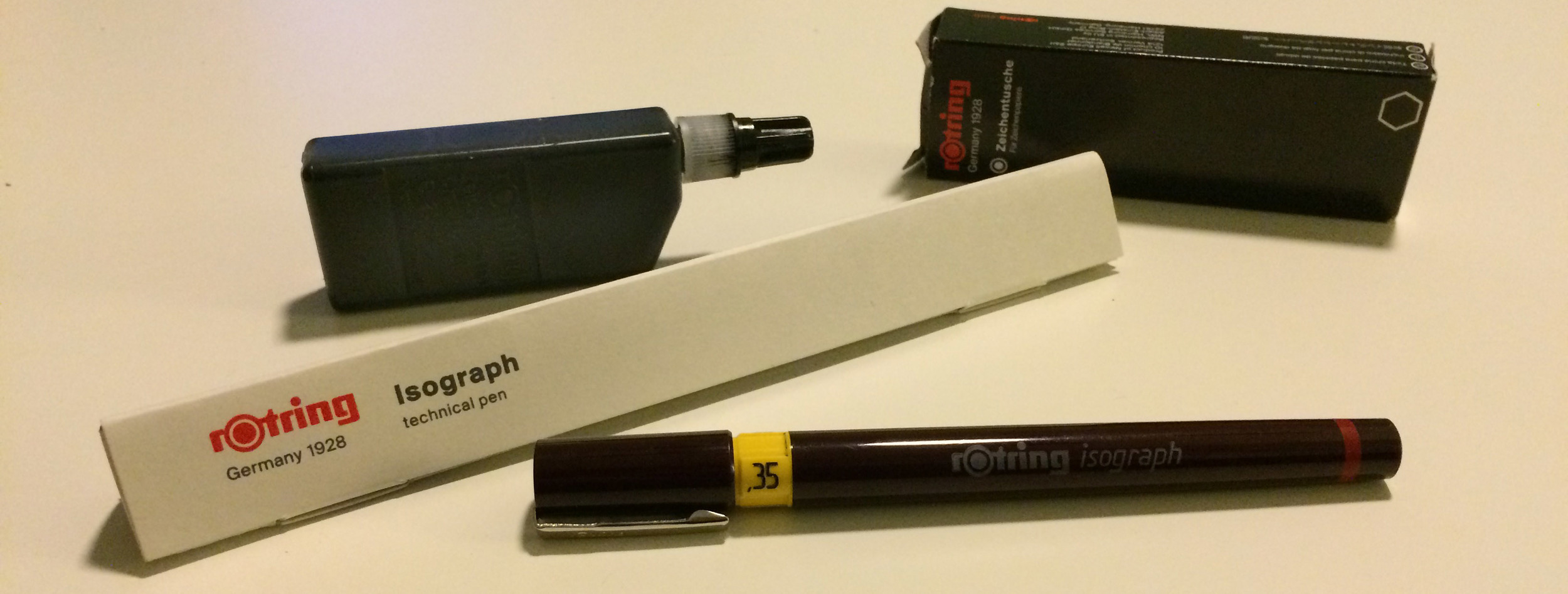
First impressions are important. Rotring knows this. It always depresses me to see a quality item delivered in nothing more than a blister pack. While Rotring is not exactly Apple level when it comes to this, they are no slouch either. This is the second item I have gotten from them, and their triangle shaped packaging is well thought out and considered. I feels like the kind of packaging you might find in a grandparents garage. It is still just a thin cardboard, but I like it.

This pen comes with NO INK. It is usually well labeled as such, but I would hate for someone to make the jump to buy one only to have to wait another 3-4 business days to use it. I am using the Rotring Black Drawing Ink which has a convenient tip made to fill the cartridge for the Isograph. Still, I managed to get a bit of ink on me, but it should be easy and clean for anyone who isn’t a clumsy mess like me. The empty ink cartridge that comes with the pen is a simple plastic cart very reminiscent of an empty fountain pen cart. It slides firmly onto the tip and the tip screws into the plastic barrel of the pen.

The body is slightly tapered. Since the plastic barrel of the pen is hollow, it is dramatically weighted to the front. This is different from most pens, but you use this pen differently than most pens. Technical pens work best when perpendicular to the page, or being held straight up and down. That is going to be a deal breaker for some but it is far more natural than you might expect, especially when only doing details or making a million little dots. It does still work at an angle, but not as predictably as straight up and down. A big plus of using the pen in this manner is that none of the pen obstructs your view, important when doing tiny details.

The aforementioned tilting the pen backwards to get more ink flow works like this: If you are drawing and it seems like you are running low on ink, you lift the pen, turn the pen's tip upwards and then back down. You will hear a slight "click clack." and more ink will be on the ready. I am not sure if the ink feeding system has improved over the years but the constant tipping of the pen back and forth is not that necessary. Maybe if you are filling in large black areas and then jumping to do tiny dots, but I can’t imagine a worse pen for filling in areas. Anyway, tilt it or shake it you want to, but you probably only would need to do it once or twice every half hour.
The tip of the pen is the star: sharp, tiny and chrome plated. It is durable without being bulky. It lays down a consistent fine line that is easy to control. It is long enough to be used with a straight edge or ruler, but not so long that would make it fragile. I heard horror stories when doing research about the non-stop-clog-fest that these pens can suffer from; I have not experienced one yet. It helps to use them often, and I don’t think I have gone longer than four days without picking it up. So maybe I’m the wrong person to ask about this.

About the barrel: it’s plastic and not very durable. This is a bummer since you have a lot of screwing going on; the cap screws onto the tip and the tip screws into the barrel. If you have ahold of the barrel and try to over tighten the cap onto the tip, you are going to overstrain the plastic of the barrel and get tiny cracks on the barrel where it is connected to the tip. This happened to my pen and they really sucked the joy out of using it. The tip would come loose and it never felt right after the tiny cracks showed up, sometimes when holding it a little too tightly I could feel the threads of the tip push the barrel away and the whole thing would bend a bit. I contacted Rotring and they sent me a whole new pen at no cost. I am being very careful with the new barrel and have had no issues so far. My advice would be to hold the yellow part of the tip when screwing the cap on, that way you don't over torque the threads of the tip into the barrel.
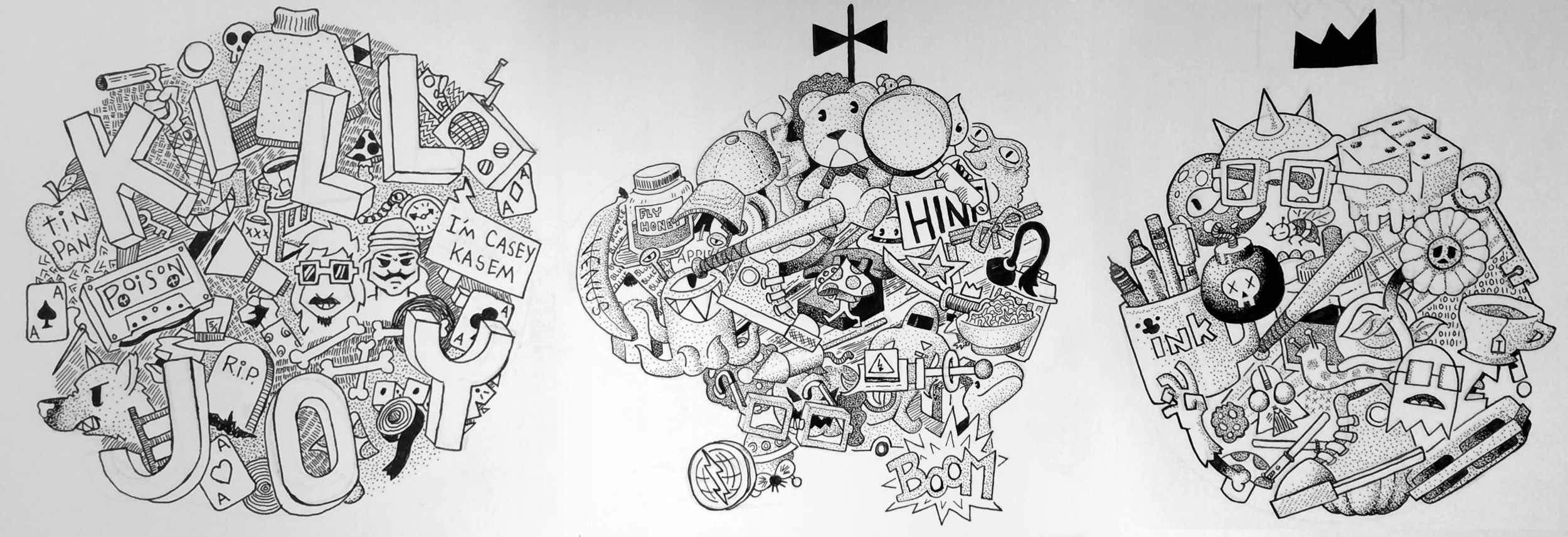
When I got this pen I thought I would use it for only two or three projects in mind. Add a few dots there, some hatching here, you get the idea. Much to my surprise, I have used this pen on almost every drawing I have done since I got it. It is one of my favorite tools in my bag now. It works incredibly well and I would make a bigger deal out of the barrel cracking, but Rotring's customer service fixed my problem and I haven't had it happen since. You can find the complete line of Rotring Isographs at Jetpens.com in nine tip sizes that range from .1mm to .5mm.

Back when engineers or illustrators had to go through an apprenticeship, they would often receive a full set of Rotring Pens as their gift for completing their training, much like tattoo machine would be gifted to an apprentice. I can see why, they are the tools of the trade and a badge of honor. Did you know that they were R. Crumb’s favorite pen?
(JetPens provided this product at no charge to The Pen Addict for review purposes.)
Posted on March 11, 2016 and filed under Rotring, Pen Reviews.

The Uni-ball Signo UM-151 Gel Pen Review

(Jeff Abbott is a regular contributor at The Pen Addict. You can find more from Jeff online at Draft Evolution and Twitter.)

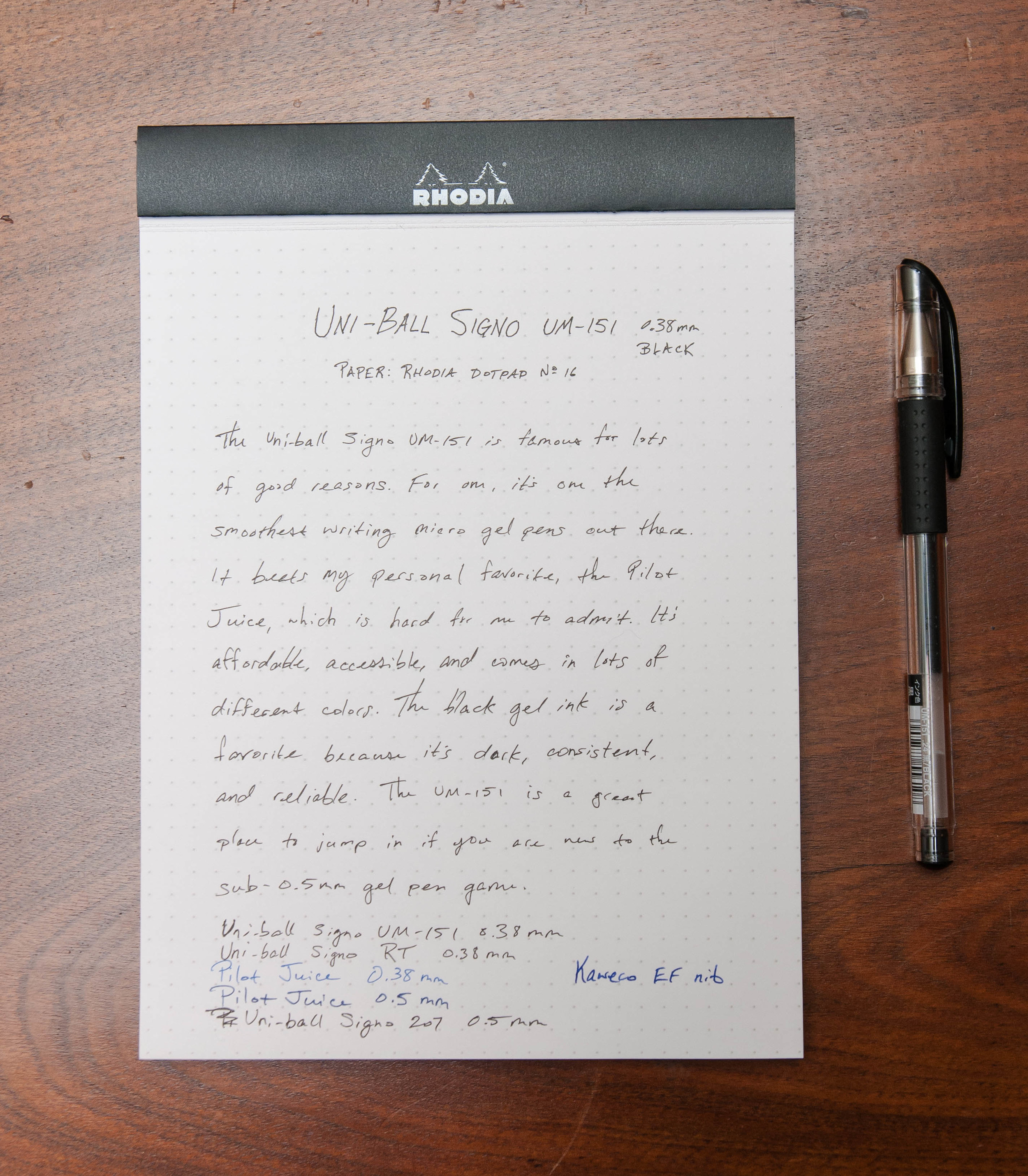
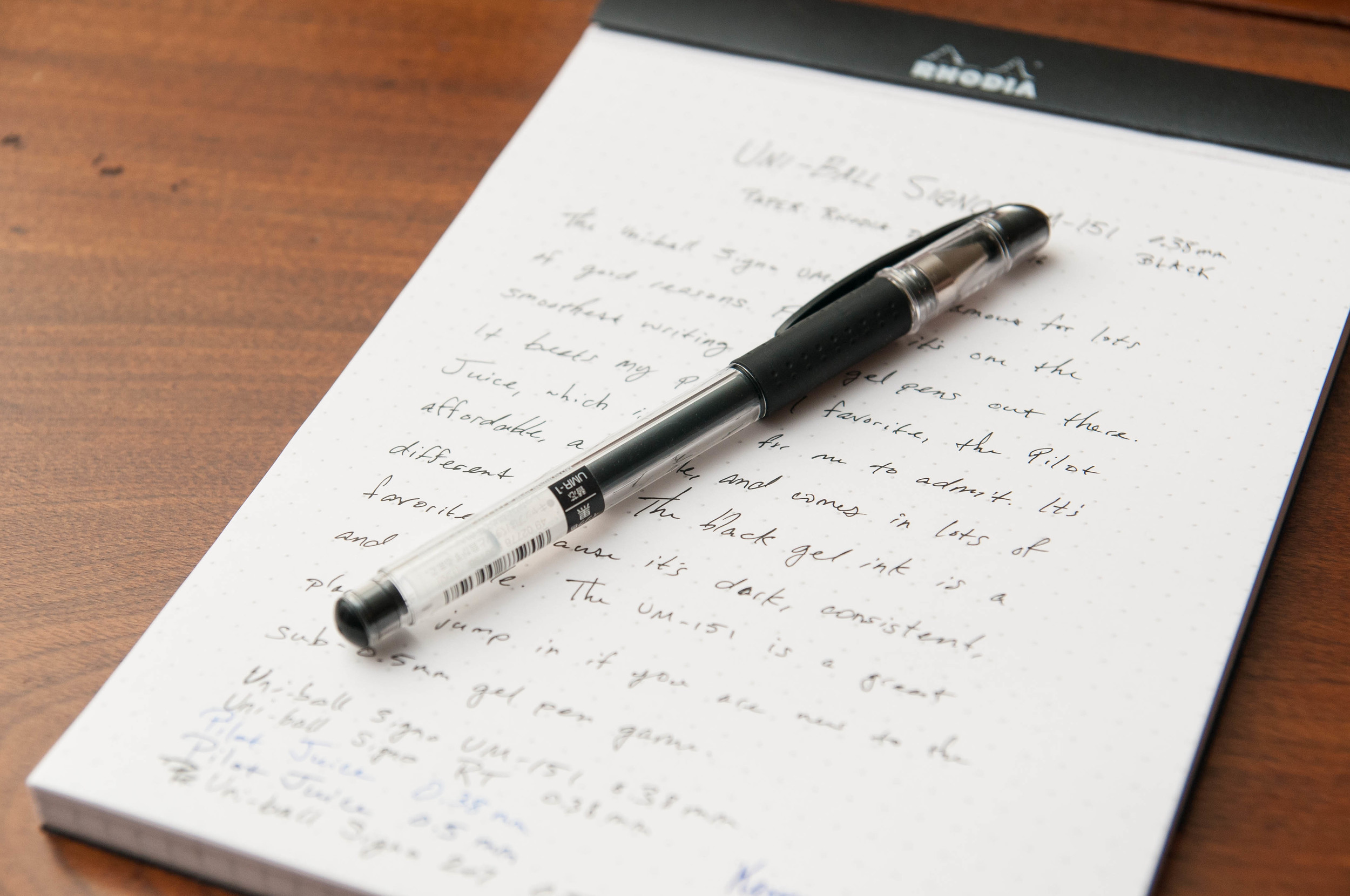
The road to pen addict status can be a long and windy one, but it has to start somewhere. For me, it all started with a Uni-ball Signo UM-151. This was the first gel ink pen that I purchased after being introduced to the world of pens that I never knew existed. Up until this point, I was limited to the standard selections found at big-box retailers. The 0.38mm tip on the UM-151 was astounding, and there was no turning back for me.

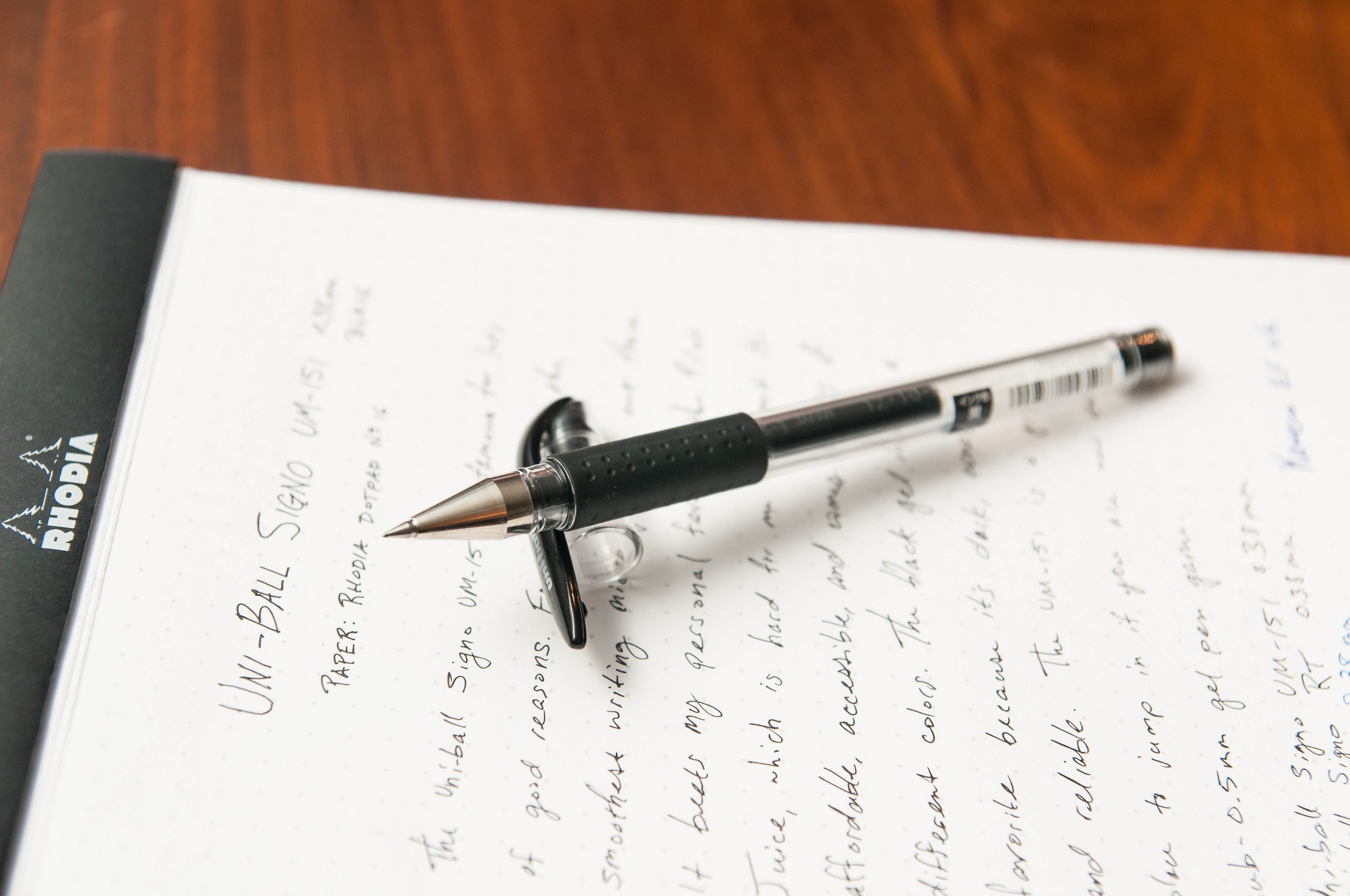
What makes the UM-151 special? For me, it's all about that refill. The refill that goes in the UM-151 is exceptionally smooth and consistent. Even today, it's still my favorite gel refill in the 0.38mm size. The color is bold, the lines are crisp and clean, they start without any issues, and the writing experience is smooth (even for a 0.38mm tip). I've used 0.5mm refills from other makers that aren't as smooth as this refill. I don't know much about engineering pens, but that seems like a major feat to me.

The body of the UM-151 is pretty plain. There's a rubberized grip on the section, a conical metal tip that screws off to provide access to the refill, and the rest of the pen is clear plastic. The clip contains the name of pen and the size of the refill, which is helpful if you have a large collection of these pens in various sizes. Of course, it only comes in the same capped model — no retractable version. There are similar pens offered by Uni-ball, but they just aren't the same. The closest one I've found is the Uni-ball Signo RT, but the refill color isn't as bold and dark as the UM-151.

This pen has long been a permanent fixture in my pen arsenal, but that doesn't mean it's a perfect pen. For one, I really wish they offered this pen in a retractable barrel that uses the same refill. Also, The grip section is just a tad short for my tastes. Apart from those two niggles, I've always been very happy with the pen. It's close to perfect, but not there yet.

The UM-151 is affordable at only $2.50 a pen. The refills cost $1.65, which isn't much cheaper than the pen itself. Another great benefit of the pen is the variety of colors you can grab. I prefer the standard black, but the other colors are a lot of fun. You can also get the UM-151 in 0.28mm and 0.5mm tips. I can't recommend the 0.28mm since it feels like writing with a needle, and I've never tried the 0.5 variety. The way I see it, I'm satisfied with the 0.38mm and haven't had a reason to go looking for something else.

So, there you have it. The UM-151 is a standard among the pen addict community. For many, like me, it was the gateway drug and the beginning of a new hobby (obsession) that led to a revived love for stationery. No matter how deep I get into fountain pens, I'll never stop loving the UM-151 for what it is — an absolutely fantastic gel ink pen.

(JetPens provided this product at no charge to The Pen Addict for review purposes.)

Posted on March 9, 2016 and filed under Uni-Ball, Signo DX, Pen Reviews.

The Pelikan Stola III (Fountain Pen, Rollerball, and Ballpoint): A Review

(Susan M. Pigott is a fountain pen collector, pen and paperholic, photographer, and professor. You can find more from Susan on her blog Scribalishess.)

Pelikan introduced a new line of pens in the fall of 2015 called Stola. The Stola I line is matte and glossy black and comes in a ballpoint and rollerball. The Stola II line (also ballpoint and rollerball) combines two colors: black and matte silver, and the ballpoint pen includes a stylus. These two lines do not appear to be available in America. The Stola III line is matte silver with black accents and is the only one that includes a fountain pen. The word "stola" in German means "wrap," so perhaps the name derives from the special coating used on the pens.

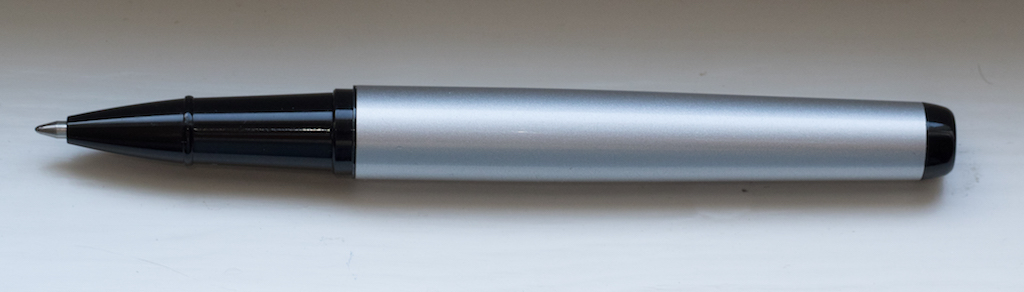
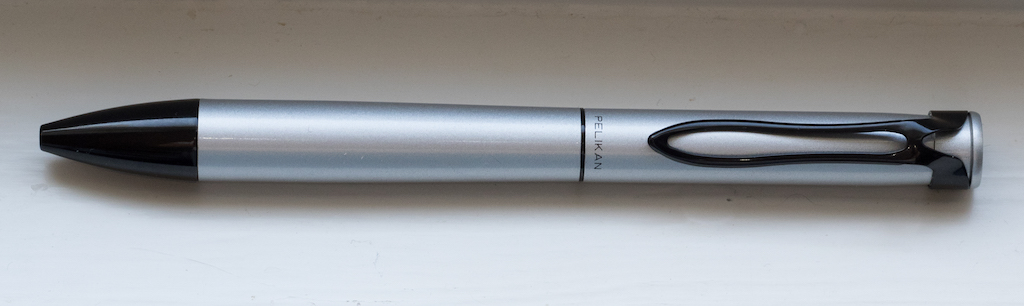
The Pelikan Stola III comes in three flavors: fountain pen, rollerball, and ballpoint. All three are coated with matte-silver lacquer with black plastic accents and a steel clip. The barrels are brass, coated with the same silver lacquer. This gives the pens a nice amount of heft in the hand, but they are not overly heavy.

Each pen comes packaged in a minimalist silver box with a black foam interior and ribbon holder.

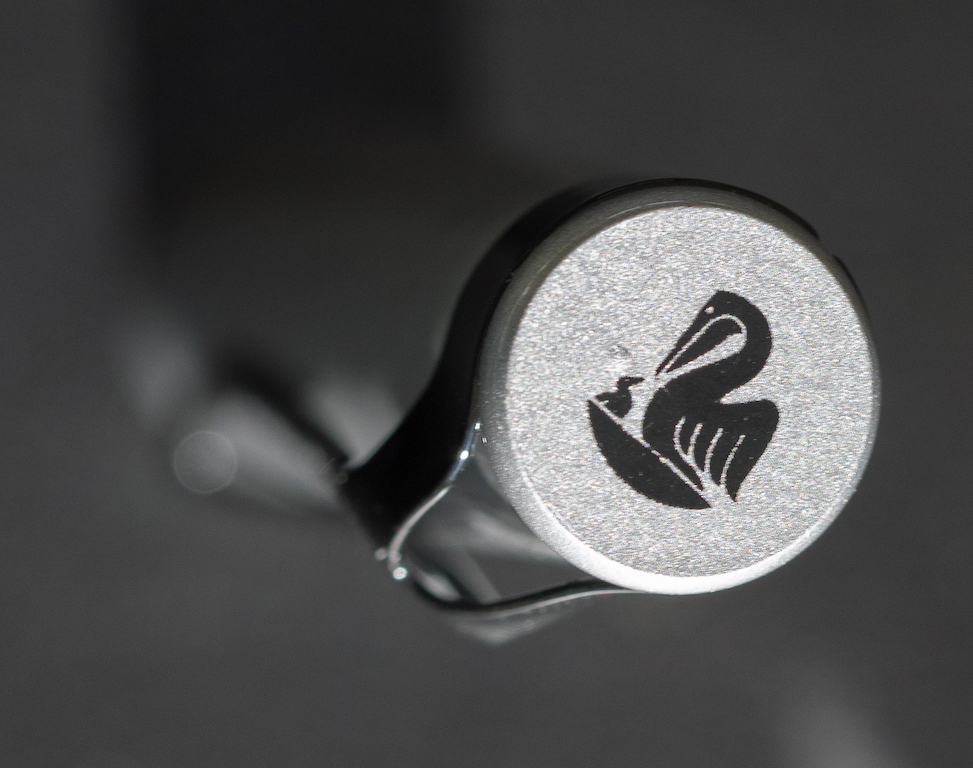
The cap (for the fountain pen and rollerball) is made of aluminum and bears the Pelikan logo on its finial.

The black steel clip shape echoes the pelican beak clips on the higher-end Pelikan fountain pens, though it is an outline not solid. It is also very tight so it might be difficult to clip onto thick fabric. The Pelikan name is printed in black at the bottom of the cap which snaps on.

The Fountain Pen

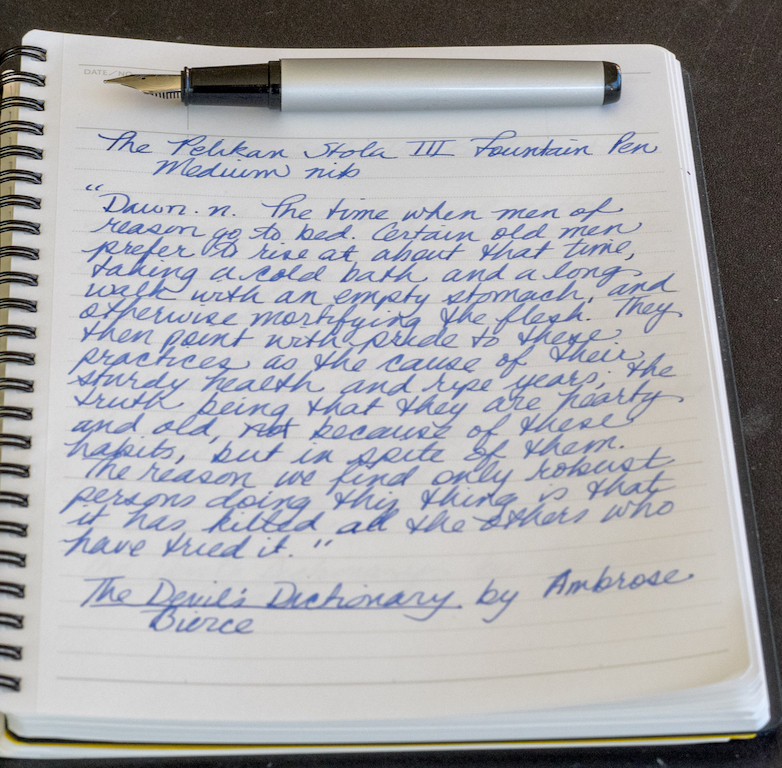
The Stola III fountain pen comes with a medium steel nib (no other sizes are offered). The nib is engraved with some simple scroll work.

A high-capacity cartridge with blue ink is provided with the pen. The Pelikan site doesn't clarify whether or not the pen can use a Pelikan converter. It only mentions the large cartridges and the Pelikan Edelstein ink cartridges.

The Stola writes quite well. I noticed a couple of skips from time to time, but no hard starts. It writes smoothly, but offers no flex or bounce. This is a hard nib.

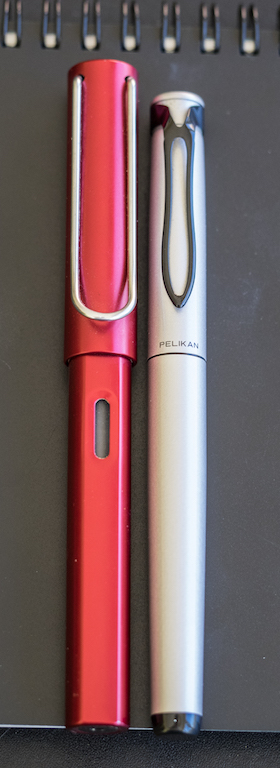
The Stola III fountain pen is a nice alternative to the Lamy AL-Star, a very similar pen at a similar price point. For those of us who don't like the Lamy's grip section, the Stola offers a smooth grip with a brass (rather than aluminum) barrel. The Stola is significantly shorter than the Lamy (4.625 inches vs. 5.12 inches unposted). I tried posting the Stola and the cap kept popping off, so if length is important to you, the Stola might be too short. The Stola is heavier than the Lamy at 1.2 ounces vs. 0.78 ounces. Unlike the Lamy, you don't have numerous color choices with the Stola, but the Stola seems much more sophisticated in design.

The Rollerball

The Stola III rollerball I reviewed has a medium width stroke, but you can get Pelikan 338 refills in blue or black in fine, medium, or broad.

The rollerball writes smoothly and the ink is bold. I didn't encounter any ink blobbing, hard starts, or skipping. The pen is a nice weight (1.2 ounces) and feels good in the hand. Like the fountain pen, it is almost impossible to post the cap.

The Ballpoint

The Stola III ballpoint uses a twist mechanism to extend and retract the point. Compared to the other two pens, its grip section is quite broad (0.438 inches). Because of this, the pen was uncomfortable for me to hold and my hand tired easily. However, of the three pens, this one is the lightest at 0.9 ounces.

Like the rollerball, my review pen came with a medium stroke. But, once again, you can get 337 refills in black, blue, or red in fine, medium, or broad.

The ballpoint was the least impressive of the three pens in terms of writing. The ink didn't flow as well and was definitely lighter than the rollerball ink. The pen seemed to drag on the paper.

You can purchase any of the three Stola III pens from Goldspot Pens. The fountain pen is $35.95; the rollerball is $27.95, and the ballpoint is $27.95. Refills for the rollerball and ballpoint run $10.00 a piece.

Pros

  • The Stola III pens are very reasonably priced.
  • The construction of these pens is solid, and the matte silver with black accents is classy looking.
  • The fountain pen and rollerball write beautifully.
  • These pens would make wonderful gifts for fountain pen newbies, graduates, officemates, and others.

Cons

  • Of the three pens, I would recommend only the fountain pen and rollerball. The ballpoint was uncomfortable and the least smooth writer.
  • The fountain pen is fairly short and posting the cap is difficult.
  • You don't have any nib choices for the fountain pen other than medium.

(Goldspot Pens provided these products at no charge to The Pen Addict for review purposes).

Posted on March 4, 2016 and filed under Pelikan, Fountain Pens, Pen Reviews.