Posts filed under Pen Reviews

Faber-Castell Textliner 38 Highlighter Review

Faber-Castell Textliner 38 Highlighter Review

(Jeff Abbott is a regular contributor at The Pen Addict. You can find more from Jeff online at Draft Evolution and Twitter.)

These days, highlighters aren't essential to my workflows or journaling practice, but they're still fun to play with. I've always enjoyed adding a bright pop of color to printed or written notes, though I'm not sure the extra color actually aids in studying later. Either way, I think the more colors you have available for highlighting, the better. With the Faber-Castell Textliner 38 6-pack, you get plenty of options to differentiate your callouts.
Faber-Castell Textliner 38 Highlighter

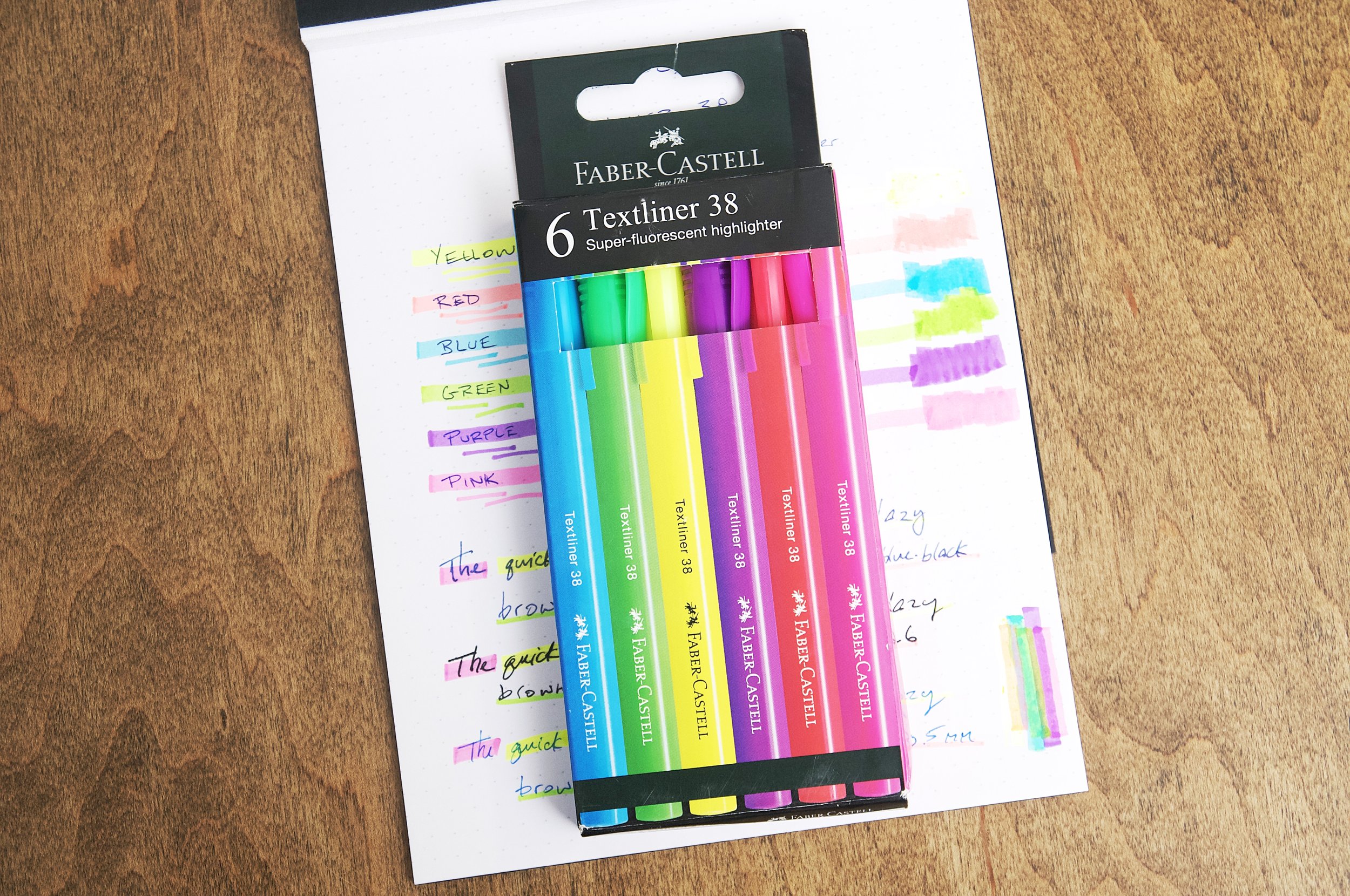
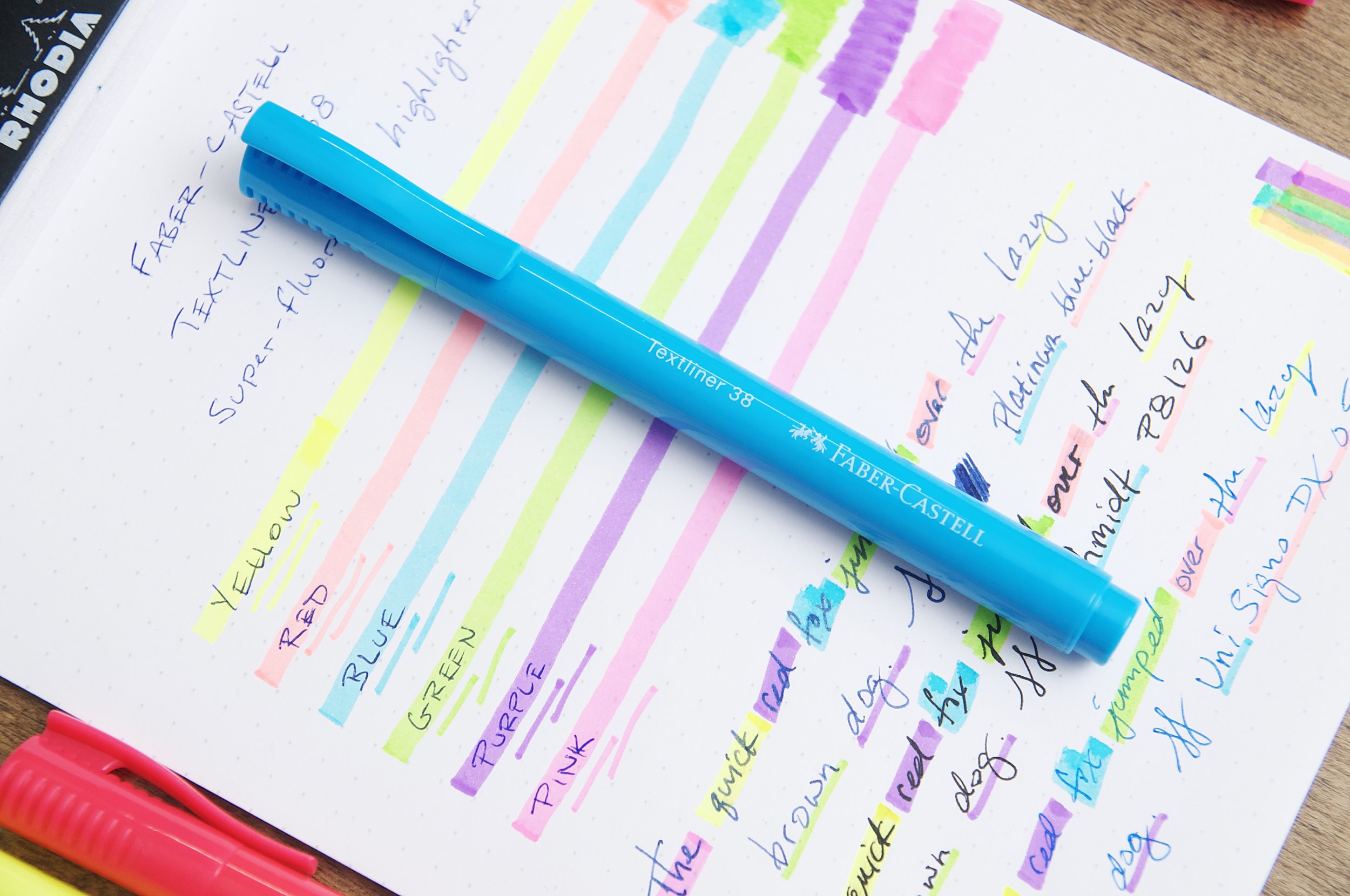
The Textliner 38 is a slim body highlighter that features ultra fluorescent ink colors. The slim body is easy to handle and control when marking over text, and you also have the option of two different line widths due to the chisel tip. With the 6-pack, you get yellow, red, purple, pink, green, and blue color options, and they're all appropriately loud hues.

The chisel tips on these highlighters work really well. The broad side is about 4mm wide and the narrow side is just 1.5mm. Both sides are really sharp and lay down crisp lines.
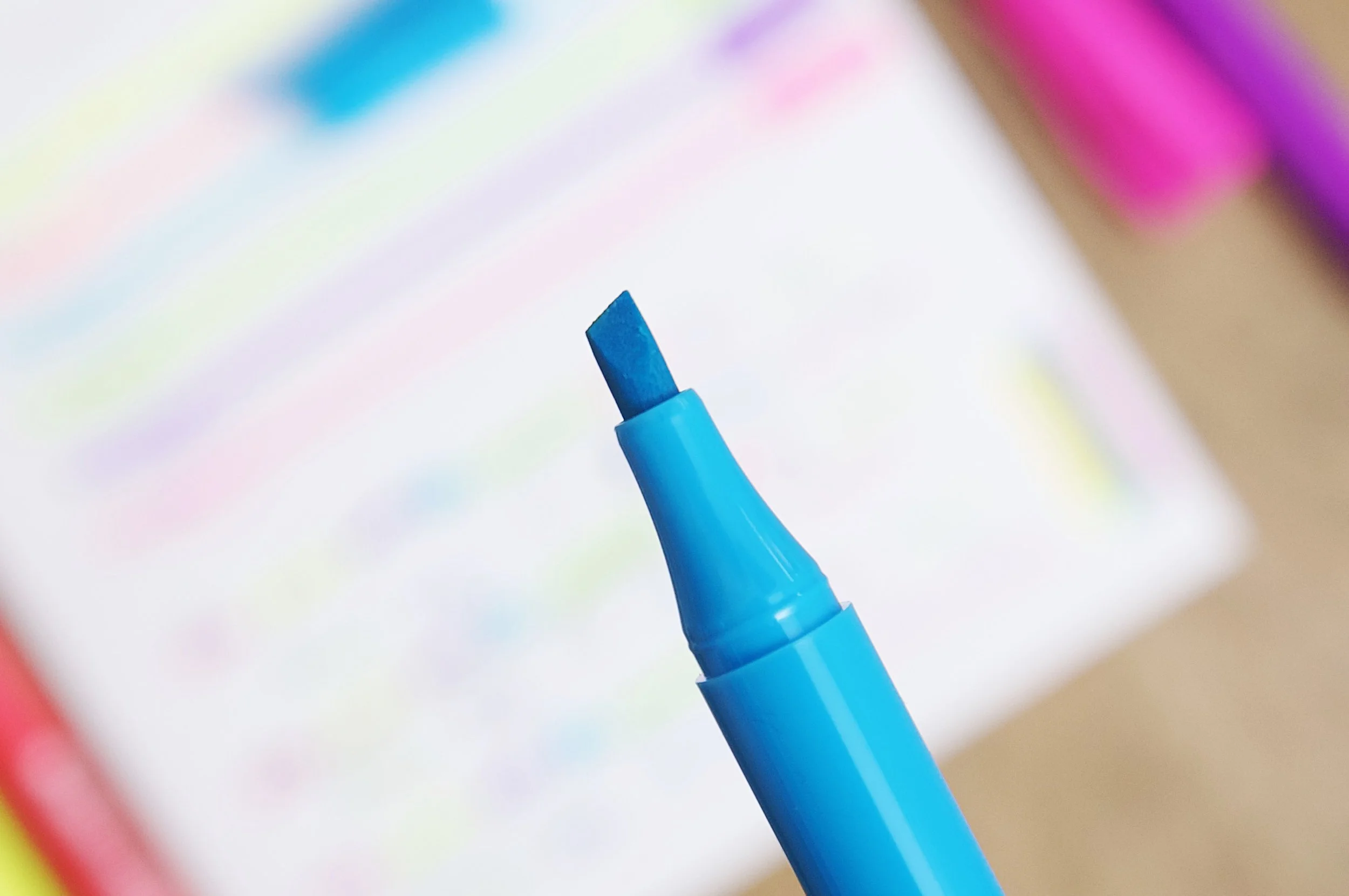
Faber-Castell Textliner 38 Highlighter
Faber-Castell Highlighter

The colors of each marker are fantastic, but I'm a little bummed with how dark the purple is on paper. I'd like it to be just a little lighter, but it's still perfectly usable as-is.

I haven't had any trouble with ink smearing under the highlighter with printed out pages, but some fountain pen inks or rollerball inks smear and feather a bit when using these highlighters over them. It's not a drastic amount of smear, but it's worth noting. If you only plan on using these highlighters in textbooks and printed notes, you should be fine.

Faber-Castell Highlighter

Another thing I like about these highlighters is the shape. The slim shape is similar to a large bodied fountain pen, so it fits easily into sleeves, pouches, pockets, and cases designed for regular pens. There are plenty of highlighters out there that have a non-standard shape, and those can be problematic to store and carry. These highlighters don't share that problem, and they also have a handy pocket clip in case you need to attach them to something.
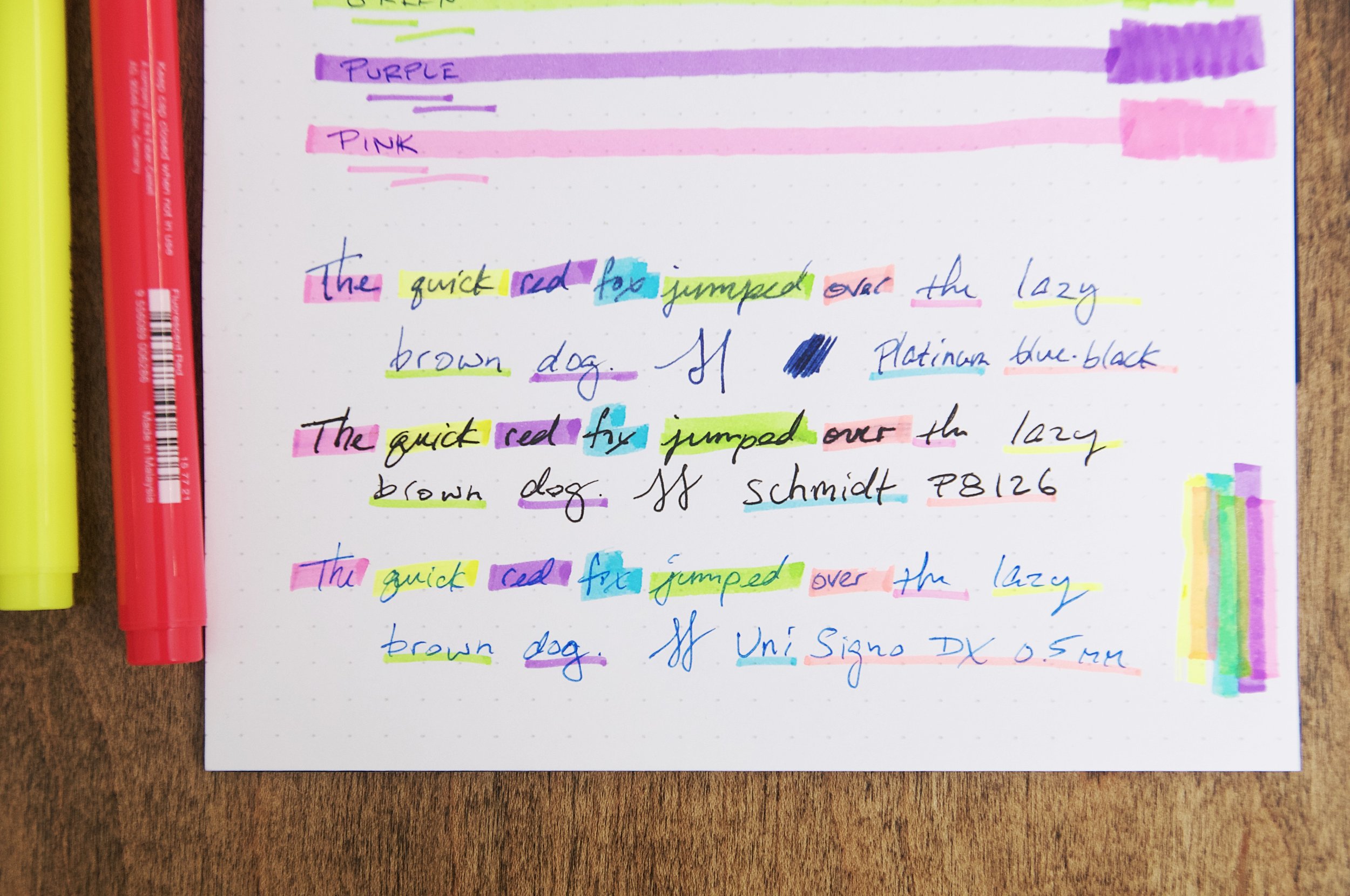
Faber-Castell Highlighter

These Faber-Castell Textliner 38 highlighters work great, and I'd recommend them to anyone that needs a variety of colors for highlighting notes, textbooks, or their own handwritten notes or plans. Six colors is a great variety, but you can also buy an 8-pack for around $10 (Amazon affiliate link) that includes an extra yellow highlighter plus a nice orange one as well!

(Faber Castell Maylasia provided this product at no charge to The Pen Addict for review purposes.)


Enjoy reading The Pen Addict? Then consider becoming a member to receive additional weekly content, giveaways, and discounts in The Pen Addict shop. Plus, you support me and the site directly, for which I am very grateful.

Membership starts at just $5/month, with a discounted annual option available. To find out more about membership click here and join us!
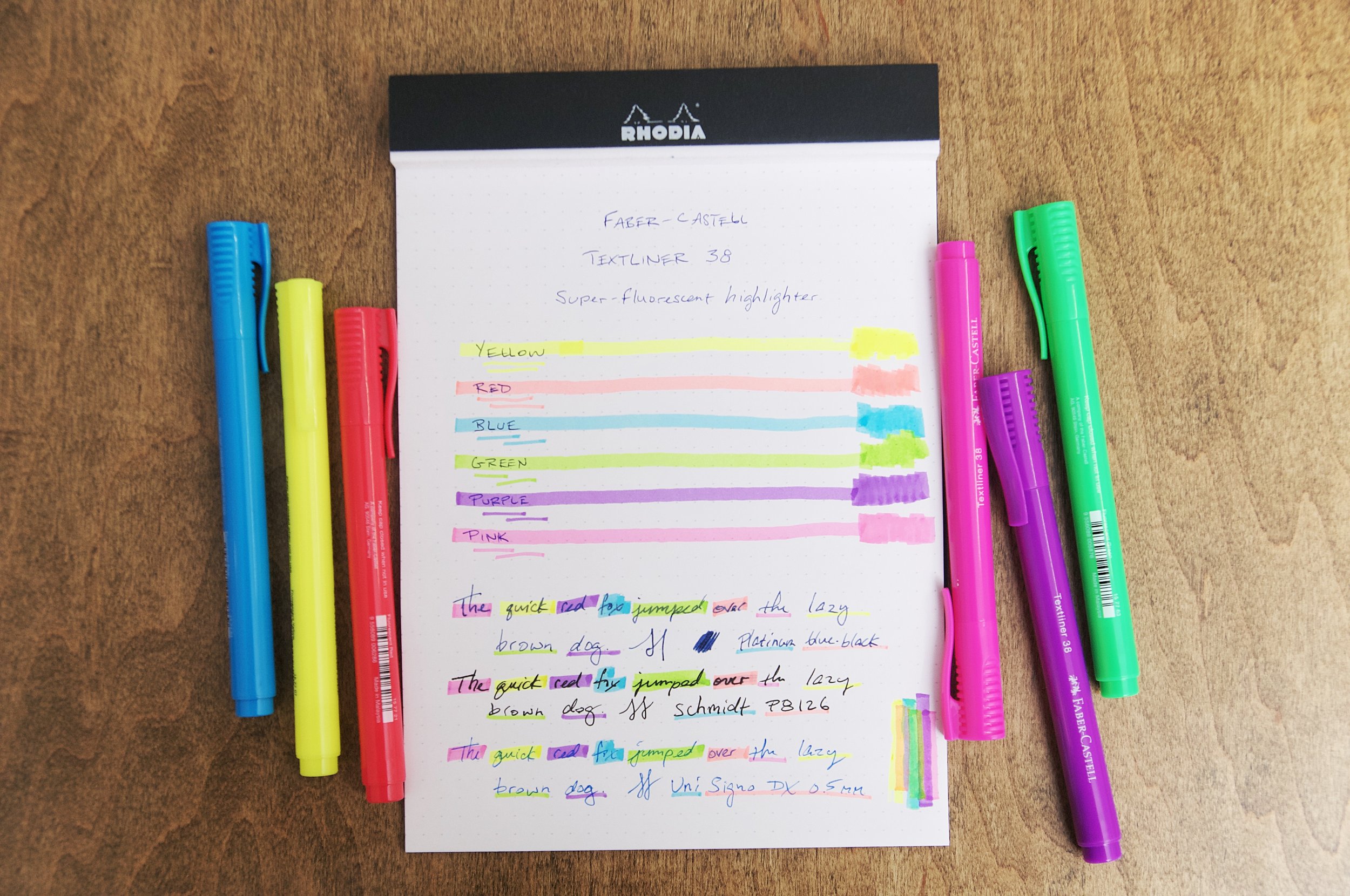
Faber-Castell Highlighter
Posted on December 7, 2022 and filed under Faber-Castell, Highlighter, Pen Reviews.

Rotring 600 3-in-1 Multi Pen Review

Rotring 600 3-in-1 Multi Pen Review

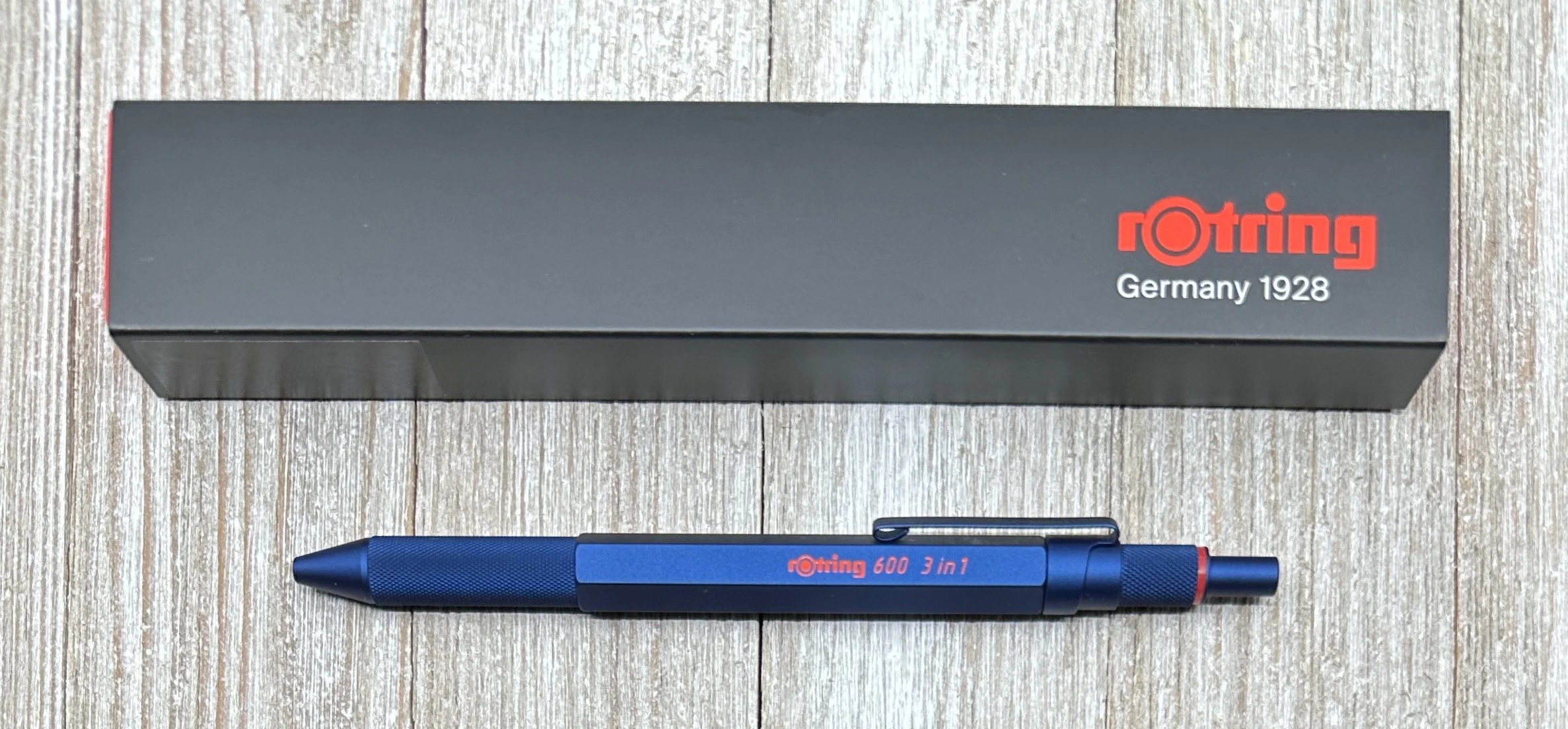
It doesn’t take much from Rotring to get me excited. The 600 Mechanical Pencil is a first-ballot Stationery Hall of Fame product, and, while their product line is not enormous, their updated colors are so nice I’ll buy the pencil twice!

While their stand-alone ballpoint pens and multi pens don’t move the needle as much as the classic 600 drafting pencil, the same Rotring design language and quality is found in each product.

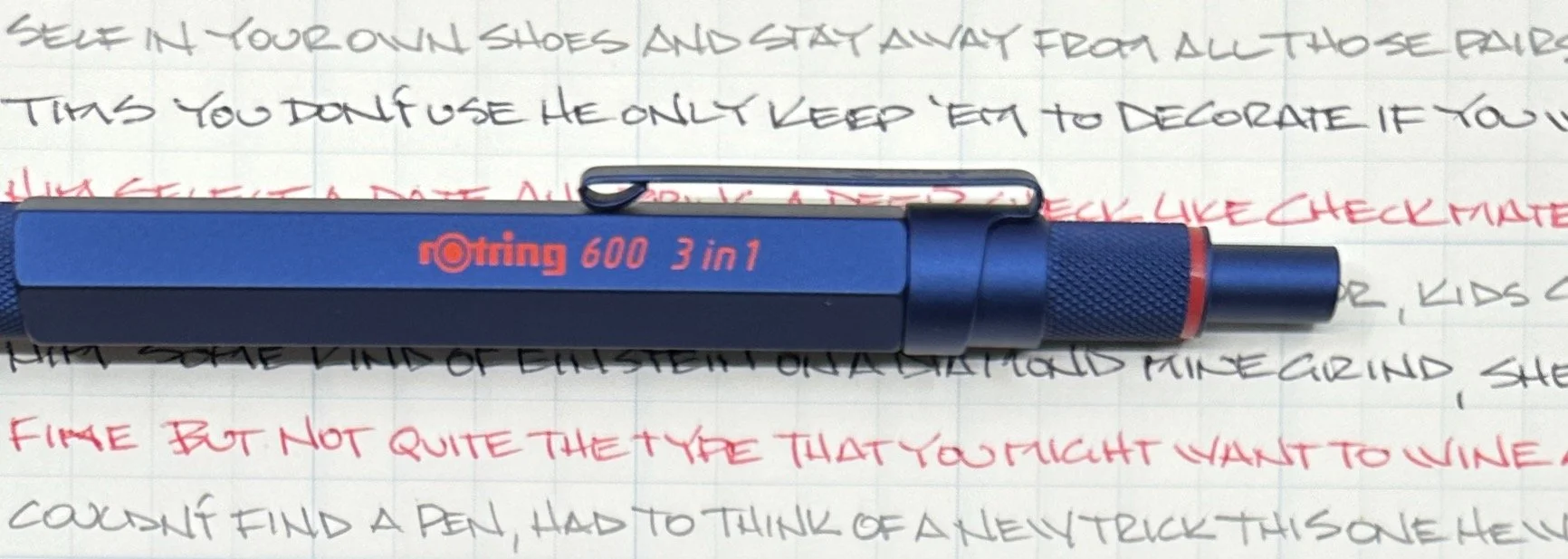
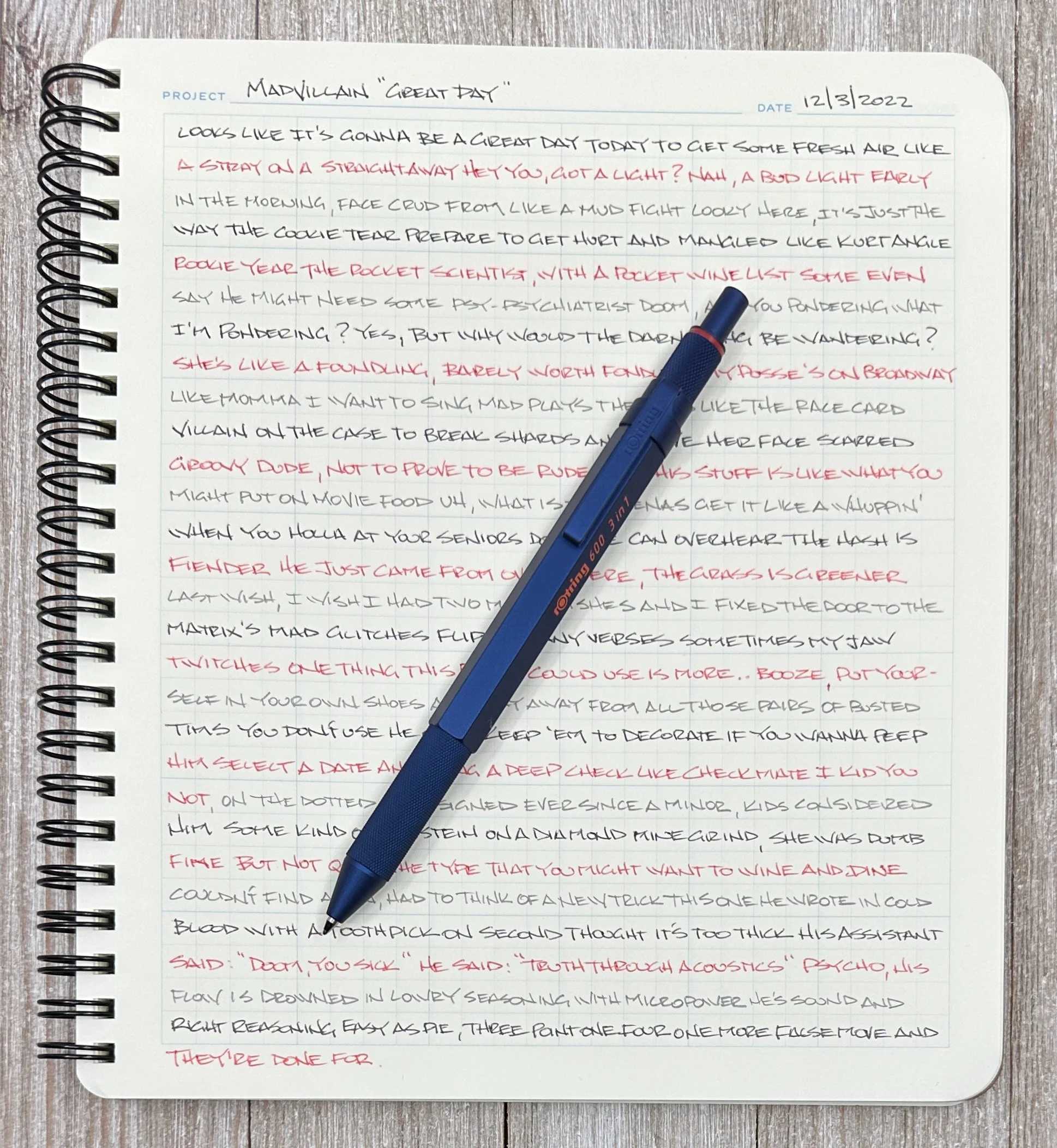
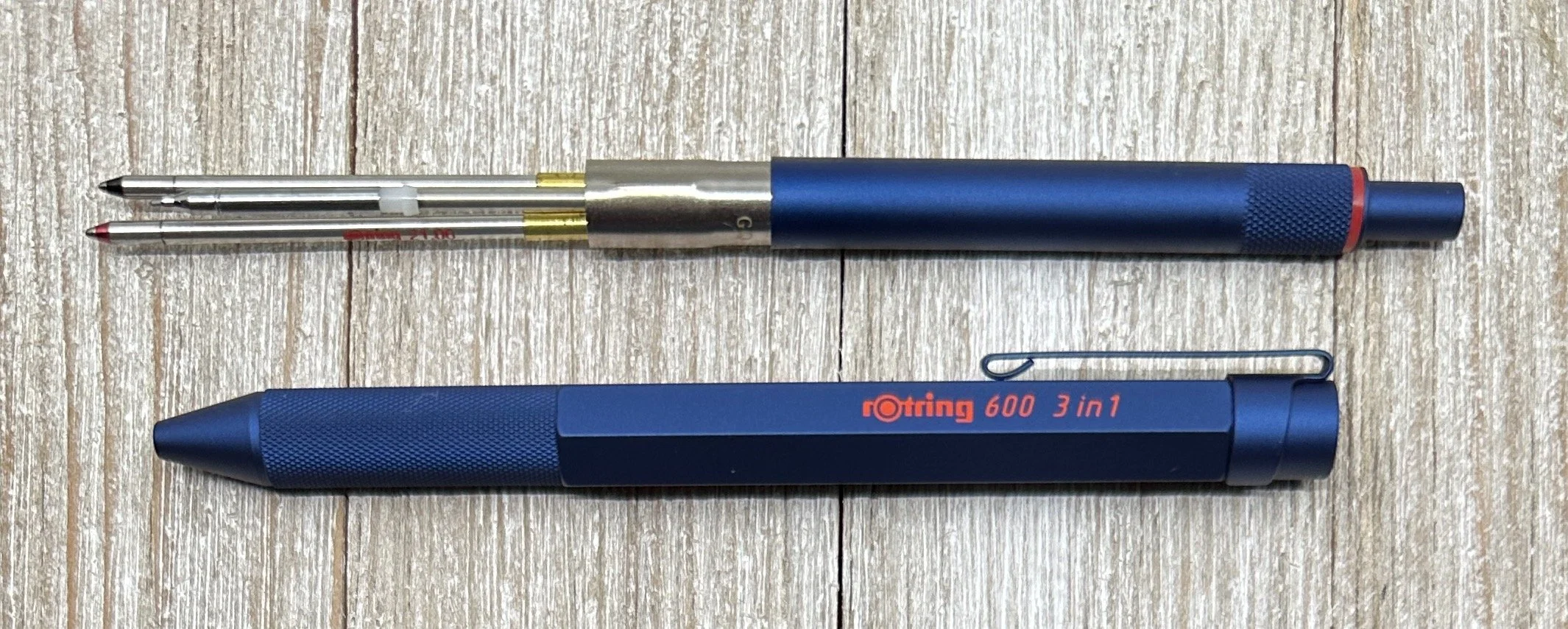
The Rotring 600 3-in-1 Multi Pen is my first experience with this model, despite it being around in various iterations for years. The new barrel colors caught my eye, specifically Iron Blue with the classic red Rotring markings.

Rotring 600 3-in-1 Multi Pen

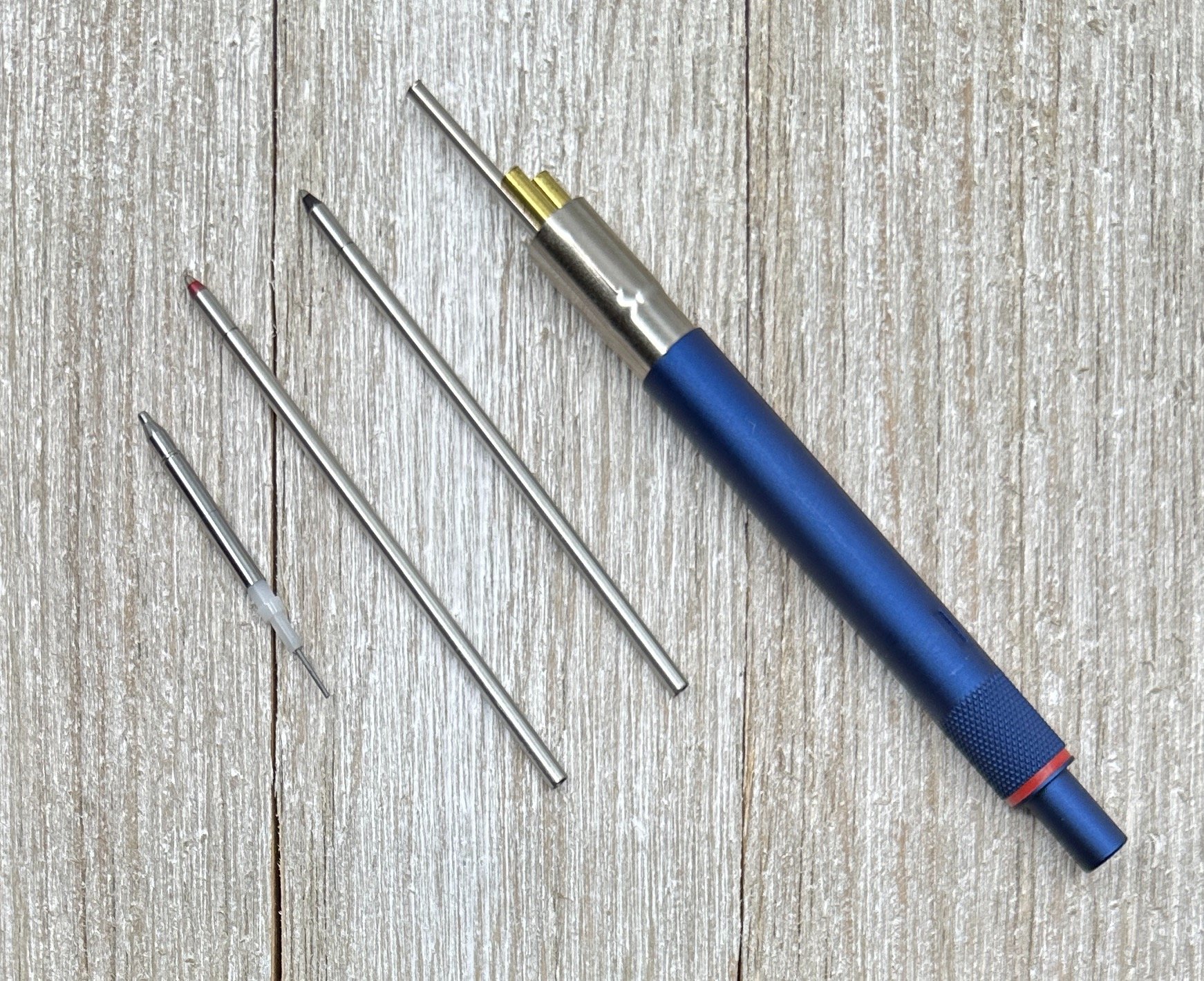
To access the refills, grab the knurled section near the top of the pen and pull this entire section out.

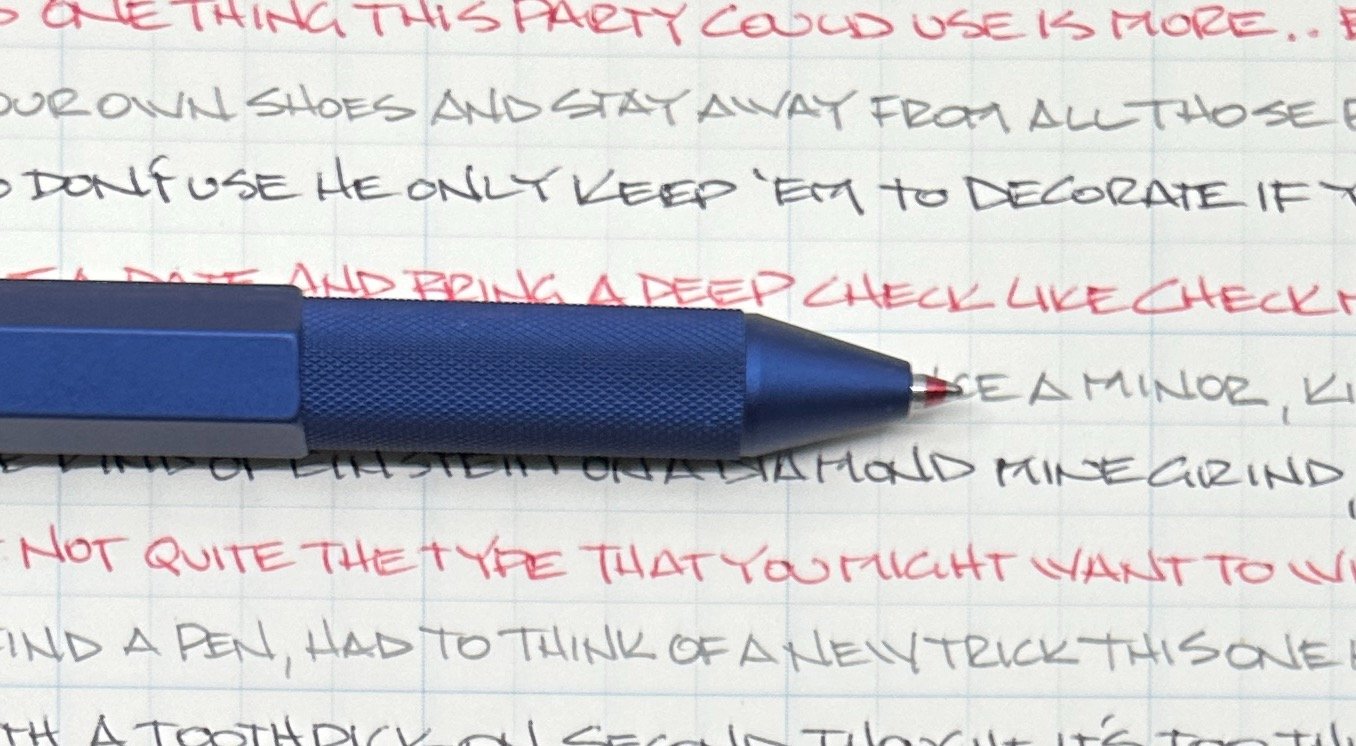
While the name is officially 3-in-1, I consider this multi pen a 2 + 1 model, meaning there are two ballpoint refills (black and red-both 0.5 mm,) plus an 0.5 mm width mechanical pencil insert. This is the classic all-in-one setup as far as I am concerned, with one difference being the choice of 0.5 mm ink refills instead of a the more standard 0.7 mm found in similar multi pens.

Rotring 600 3-in-1 Multi Pen

To add more pencil graphite, slide the sticks into the metal sleeve protruding from the barrel, and then replace the pencil mechanism.

To deploy your preferred writing tip, simply twist the knurled section near the top of the barrel. It will rotate through them until your choice is made. When choosing the pencil, use the click on the back of the barrel to extend or retract the lead.

The lines of both refills are excellent, leaving fine, clean lines on the page. The fineness isn’t for everyone, so know that they are standard D1 refills and easily replaceable if you like the barrel but not the line. Rotring pencil lead is average, so I advise replacing it with something better over the long term.

Rotring 600 3-in-1 Multi Pen

The knock advances the lead when the pencil mechanism is deployed. It’s not removable, so therefore there is no eraser found underneath.

How do I personally use multi pens, especially the + 1 pencil varieties? I use the base ink color, in this case black, as my main writing choice, and the secondary color for markup, notations, highlights, etc. The pencil is more of a mood thing, performing the same tasks that the base ink color does, while also being a good sketching or drawing option.

Rotring 600 3-in-1 Multi Pen

The grip diameter is comfortable to hold when writing, and the classic Rotring knurling provides just enough grip without digging into your fingers.

The main question to ask is why spend $46 on a multi pen when similar ones can be had in the $10 range? I’m the last person to argue against those less expensive pens, as they are some of my favorites. That said, I didn’t blink when I saw this price for the Rotring, given their place in the market. In fact, I would have guessed it would have been more.

I’m glad it’s not, because as Rotring has started to expand their color offerings from Black and Silver to Camouflage Green and Iron Blue (plus even more colors in other product lineups,) they are widening their stationery reach beyond the drafting and engineering focus of the brand.

As long as the quality remains at the same high Rotring standard, which it is, I am here for everything the current version of the brand is doing.

(JetPens provided this product at no charge to The Pen Addict for review purposes.)


Enjoy reading The Pen Addict? Then consider becoming a member to receive additional weekly content, giveaways, and discounts in The Pen Addict shop. Plus, you support me and the site directly, for which I am very grateful.

Membership starts at just $5/month, with a discounted annual option available. To find out more about membership click here and join us!
Rotring 600 3-in-1 Multi Pen
Posted on December 5, 2022 and filed under Rotring, Multi Pen, Pen Reviews.

Dippity doo dah, dippity yay - A Dip Nib Comparison

(Kimberly (she/her) took the express train down the fountain pen/stationery rabbit hole and doesn't want to be rescued. She can be found on Instagram @allthehobbies because there really are many, many hobbies!.)

….my oh my, what a wonderful day! Sorry, not sorry, for the ear worm but I decided to play with some dip nibs cuz it’s swatch time in December, AKA Inkvent! Even if you aren’t joining in Diamine’s Green Edition Inkvent for 2022, chances are good that you still want to swatch your inks at some point, right? So I thought it would be fun to do a little dip pen showdown - are you ready? Let’s go!

Methodology

Ok, this isn’t rocket science but I wanted to make sure the different dip nibs were on the same playing field, so here are the ground rules.

  1. Ink - I used Waterman Serenity Blue as a baseline for the swatches/writing samples. This is most nib grinders’ preferred ink of choice as it has consistent flow, does not stain and is good for vintage pens. I also picked a shimmer ink to see if it behaved differently. I capped and shook the vial between each test.
  2. Paper - I used a combination of a 68 gsm Tomoe River notebook, a 80 gsm Rhodia graph pad, and the standard sized Col-O-Ring cards made from 160gsm paper.
  3. Cleaning - Since I have used some of these for a long time and others I just got last week, some have been cleaned many times and some have not. I will make a note of which ones were cleaned prior to usage and which ones needed extra cleaning, if any. I will just use tap water to rinse between uses.
  4. Writing - Aside from the name of the dip nib, I tried to write the same text on the different papers so you can see how much writing I could get out of one dip. The exceptions are the Sailor Hocoro Fine Dip Nib and Kakimori Pen Nib where I wrote the first line without first cleaning the nib and then I did a quick water rinse/dry before rewriting the line again.
  5. Swatches - I made a broad line swatch for some but not all of the nibs. The finer dip nibs/ones without feeds aren’t really designed for depositing large amounts of ink.
Dip Pens

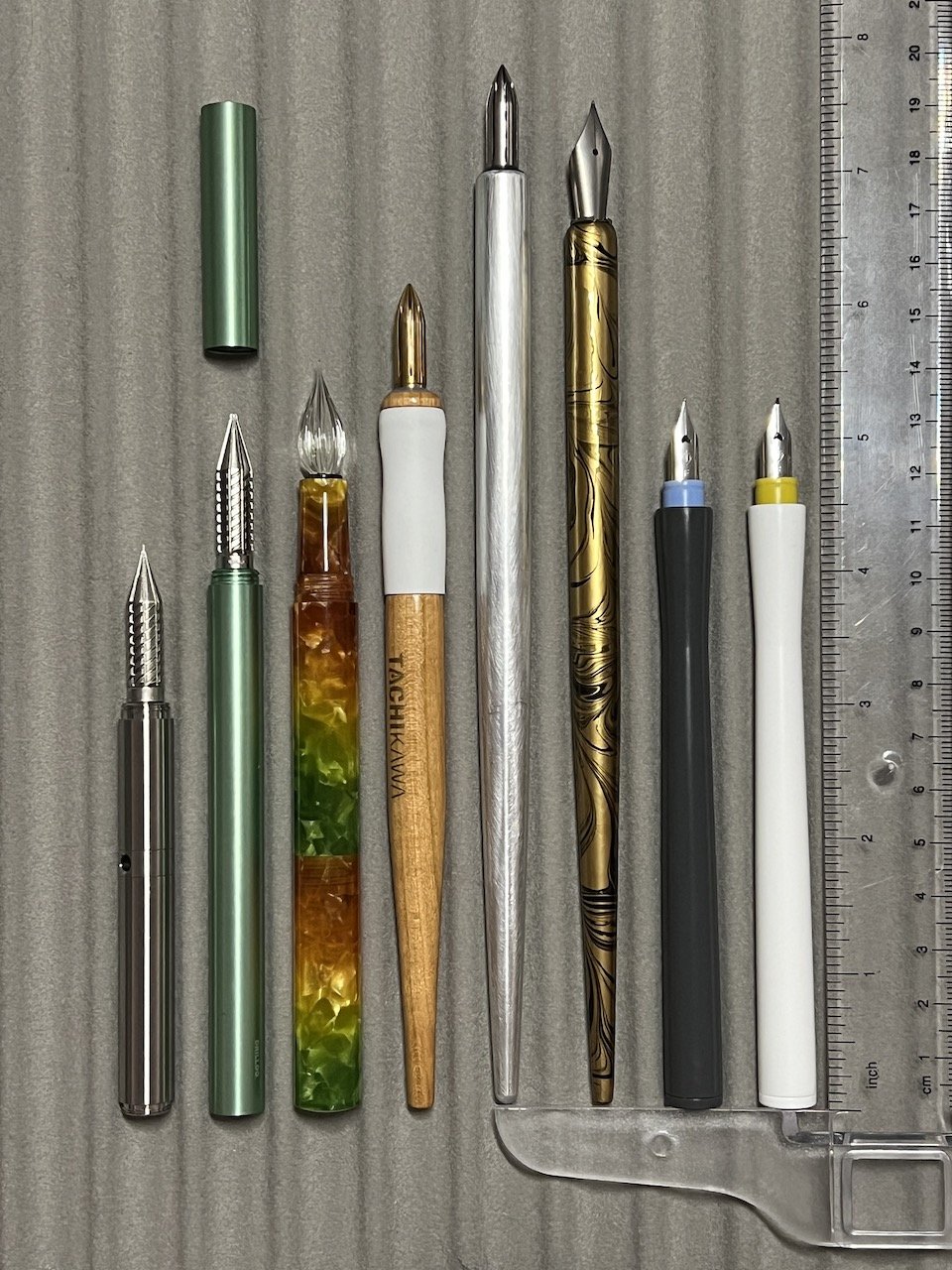
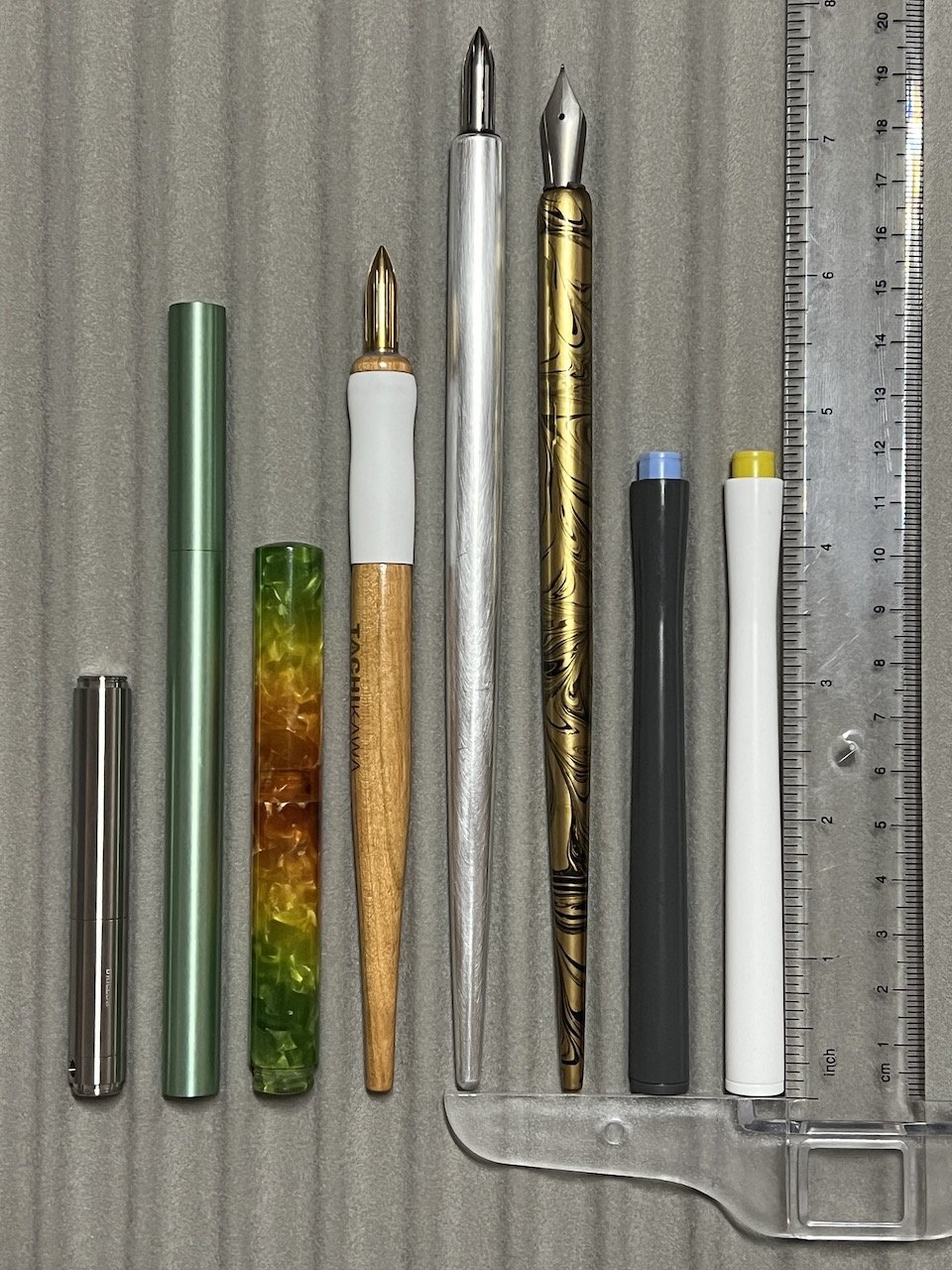
Short Drillog holder with 0.5 nib, Long Drillog holder with 1.2 nib, Glass Dip Pen, Brass Kakimori nib in a Tachikawa T36 holder, Stainless Steel Kakimori nib in an Aluminum Kakimori holder, Kakimori Pen Nib in a Speedball Marbled holder, Sailor Hocoro Fine and Fude Dip Pens.

Not all of these holders have caps, though you can get a Tachikawa holder with a cap which is handy for travel. Also, the length of the Kakimori is, of course, dependent on whatever holder you buy.

Dip Nibs/Pens

  1. Drillog Dip Pens/Nibs - The nibs and holders were sent to Brad for review by Drillog. They currently cost 16,280 Yen (currently ~$120) for the nibs - the holders are sold separately starting at 14,080 Yen (~$103).
  2. Glass Dip Pen - I purchased mine on eBay years ago (so the brand/name/price might be different) but you can still find them on eBay, like this one
  3. Kakimori Brass Dip Nib - I bought this from Yoseka - it is currently $54.50.
  4. Kakimori Stainless Steel Dip Nib - I bought mine new from someone on Instagram, but you can get the Kakimori Steel dip nib from Yoseka for $54.50 and the holder for $72.00. These Kakimori nibs are more widely available now than a few months ago.
  5. Kakimori Pen Nib - The Pen Nib for $28 as well as the Tachikawa Nib Holder were sent to Brad from St Louis Art Supply.
  6. Sailor Hocoro Fine Dip Nib (without feed) - I bought the Sailor Hocoro Fine in Grey from Stilo e Stile for 12.30 EU (~$13), but it also comes in white. The feeds were out of stock but are now back in stock here for an additional 2.05EU (~$2.15).
  7. Sailor Hocoro Fude Dip Nib (with feed) - I bought the Sailor Hocoro Fude in White from Stilo e Stile for 13.11EU (~14), but it also comes in grey. The feed was already part of the pen.
Drillog

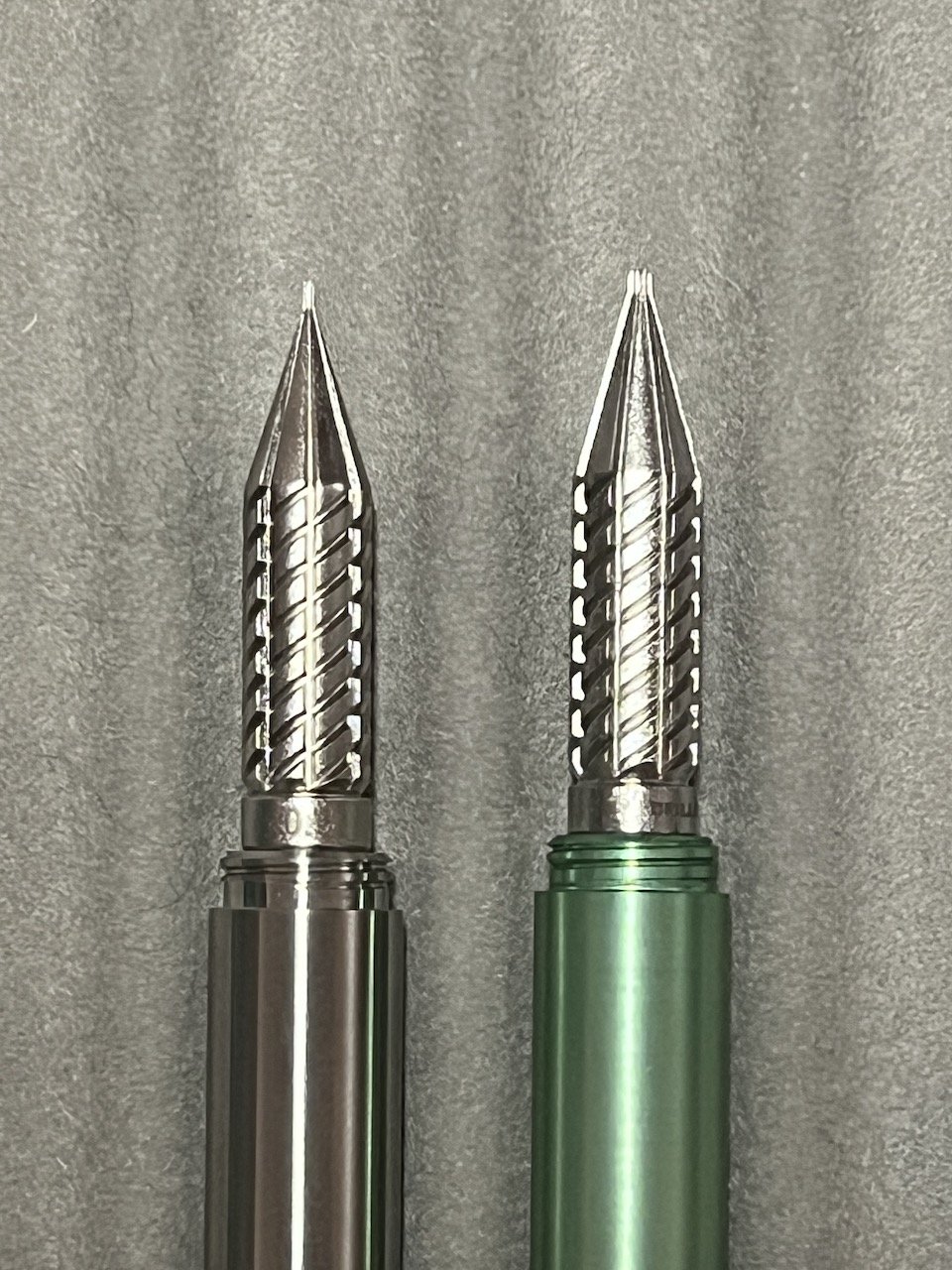
The Drillog 0.5 (left) and 1.2 (right) nibs - I am referring to the 0.5 as “Fine”.

Drillog

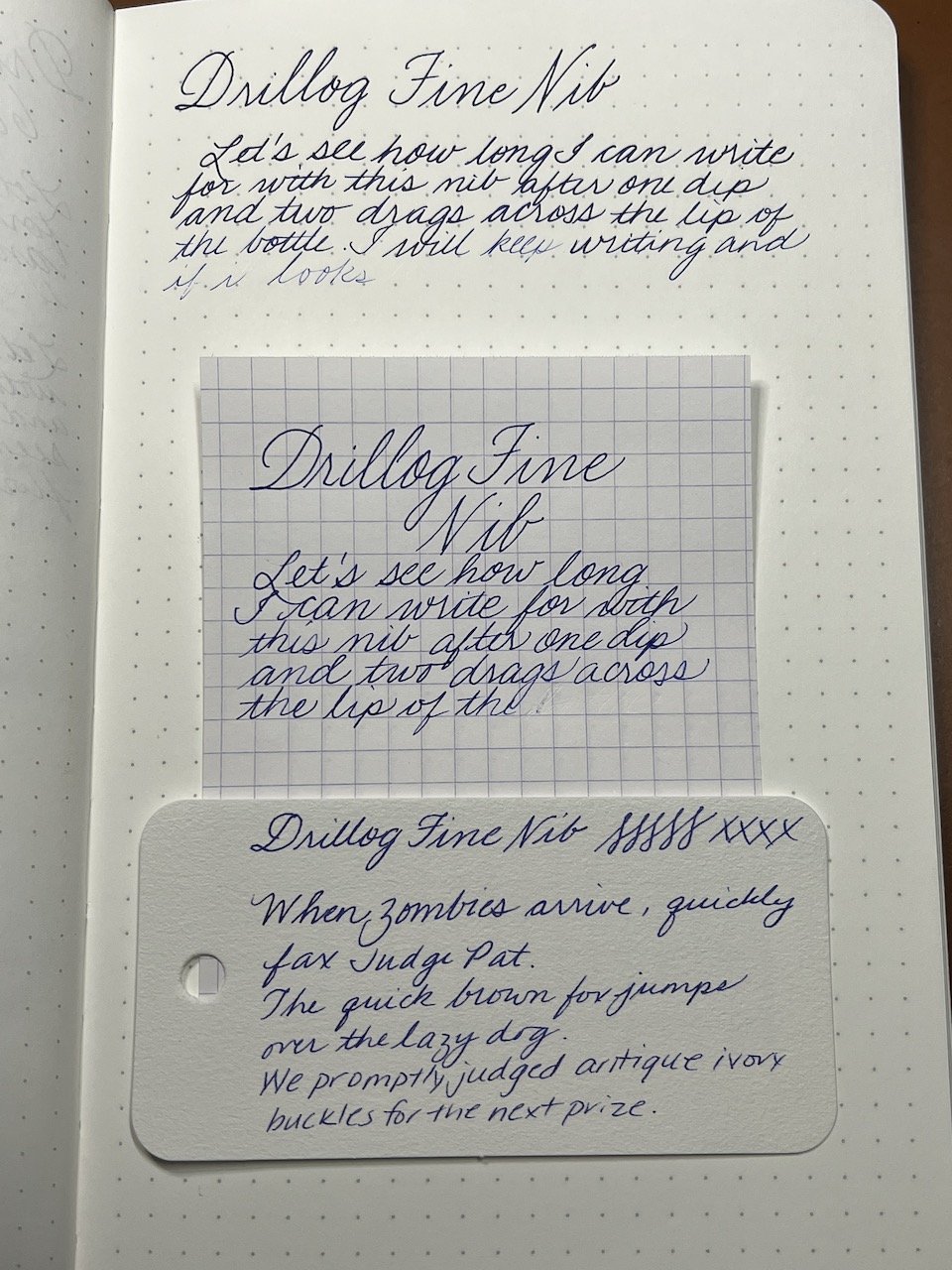
Drillog Fine writing sample - It writes similar to a Japanese Medium Fine or a Western Fine.

Drillog

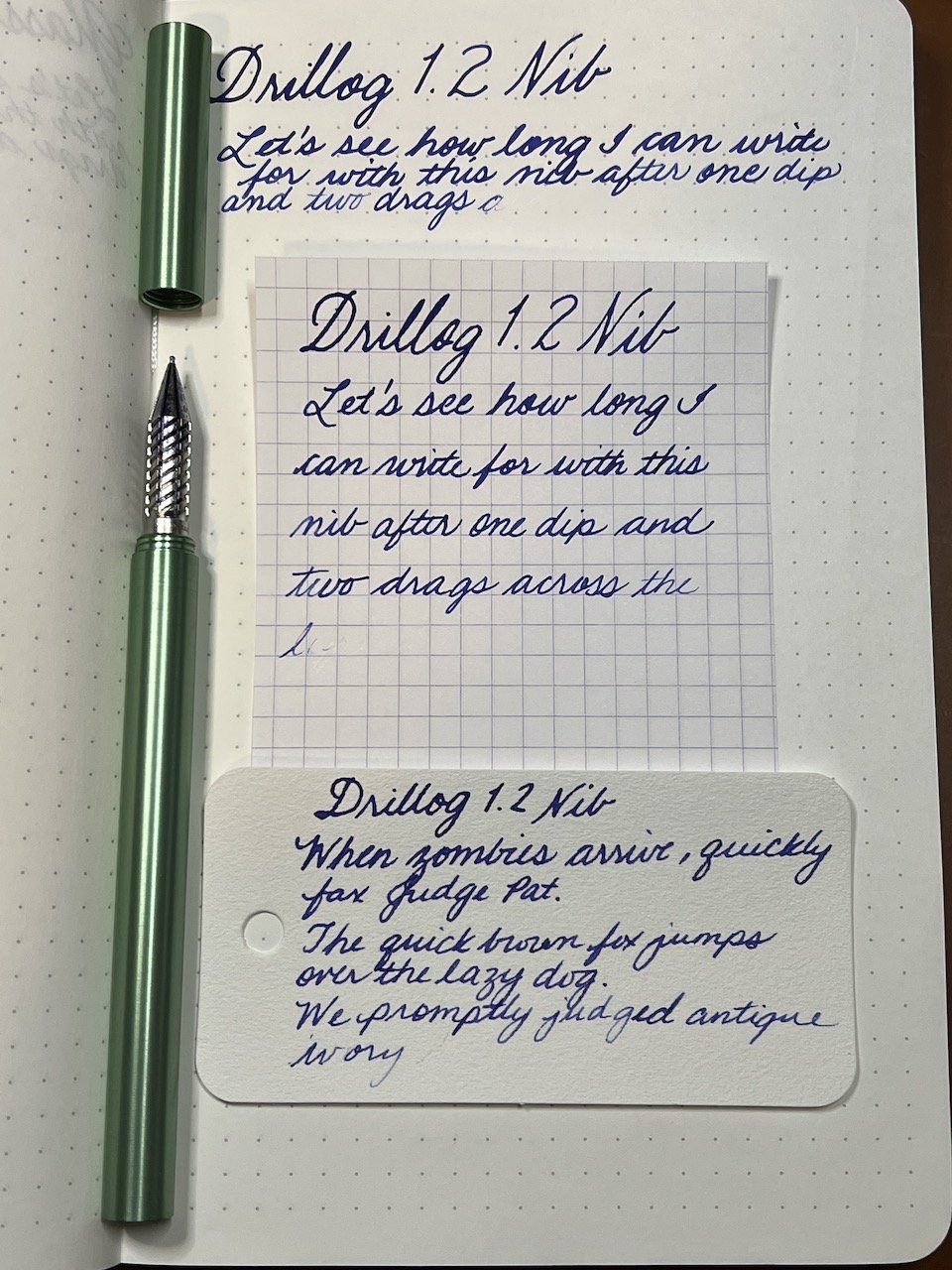
Drillog 1.2 writing sample - This didn’t write as much like a stub as I expected. Not surprising that the bigger tip means you don’t get as many words per dip.

Considering how expensive the Drillog nibs are, as well as their nibs being proprietary to their holders (though a couple of makers have figured out how to make their own Drillog holders), I was surprised at how poorly they performed. I had tried them a few times when I got them from Brad a few months ago and I couldn’t get them to write, so I set them aside for future testing. I was actually shocked that both of them wrote immediately with Waterman Serenity Blue but the Fine 0.5 did not want to write with the Robert Oster shimmer (the first line at the very top of the shimmer test page) until I dipped it again and the 1.2 was quite the gusher as well. The Fine also felt very scratchy. Writing on the Col-O-Ring was quite unpleasant as nib would catch on the subtle texture of the card. The Drillog Fine was probably my least favorite of them all and the 1.2 was kind of fun but a bit too wet/broad for me to use for swatching/writing samples. Lastly, because I hold my pens close to the nib and have a steep writing angle, I did not love how long the nibs were, as well as how far back I had to hold the pen due to the taper on the barrel. This is obviously a personal bias, but is something to keep in mind.

Glass Dip Pen

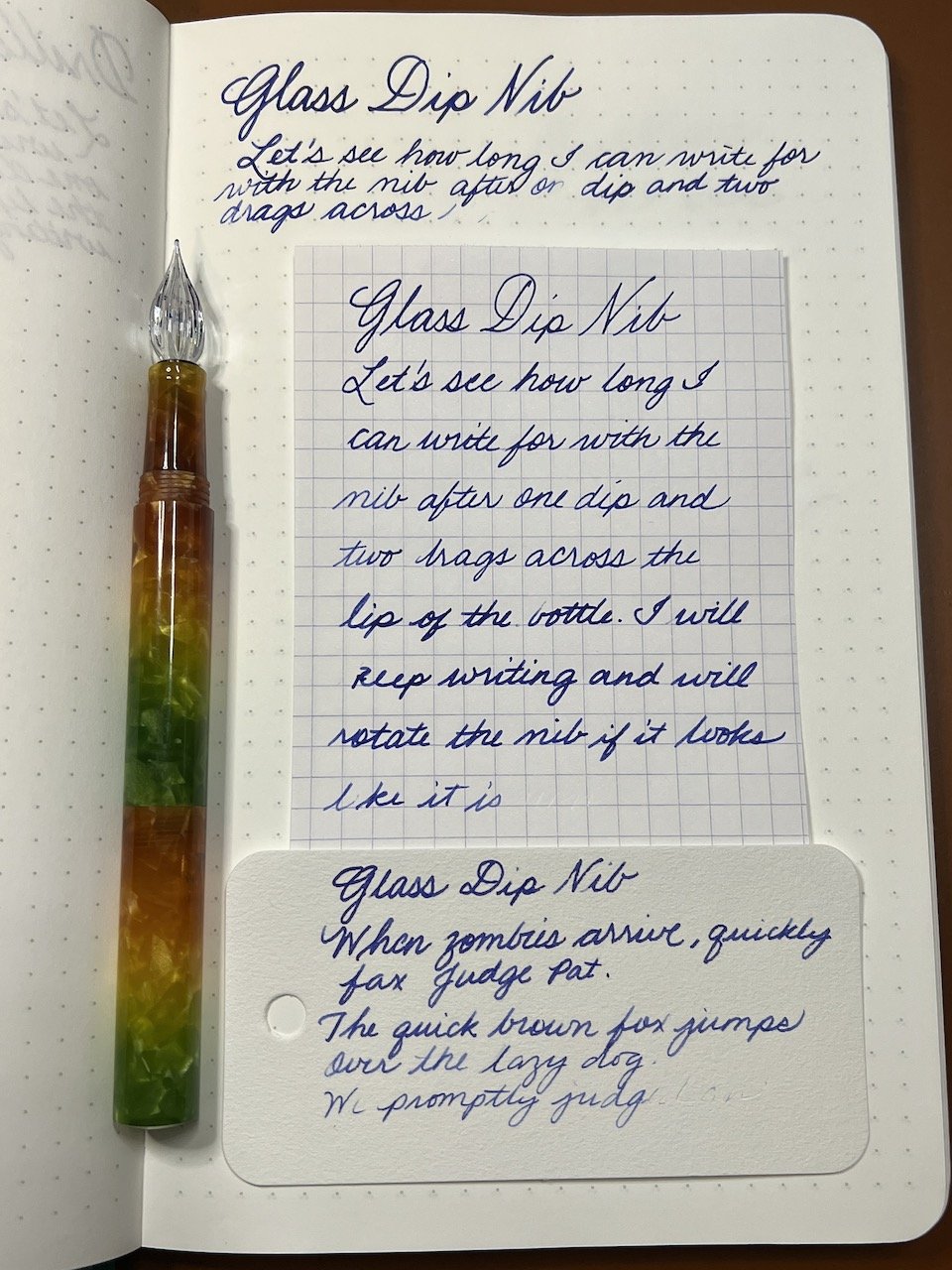
Glass dip pen writing sample - You can see when I rotated the nib to get more ink to the tip.

I have had mixed success with glass dip nibs over the years with some writing well, like this one, and others giving me inconsistent lines or having sweet spots that would only write if I rotated it just so. The other thing about glass dip nibs is that they are, well, made of glass, which makes them more fragile than all the other nibs that I tested which are metal. But they have traditionally been fairly inexpensive (though you can also get fancy glass dip pens from Japan for several hundred dollars) and I particularly like that this one has a cap, which can be screwed to post - I keep mine in my pen accessories case which I pack in my suitcase.

Kakimori Brass Nib

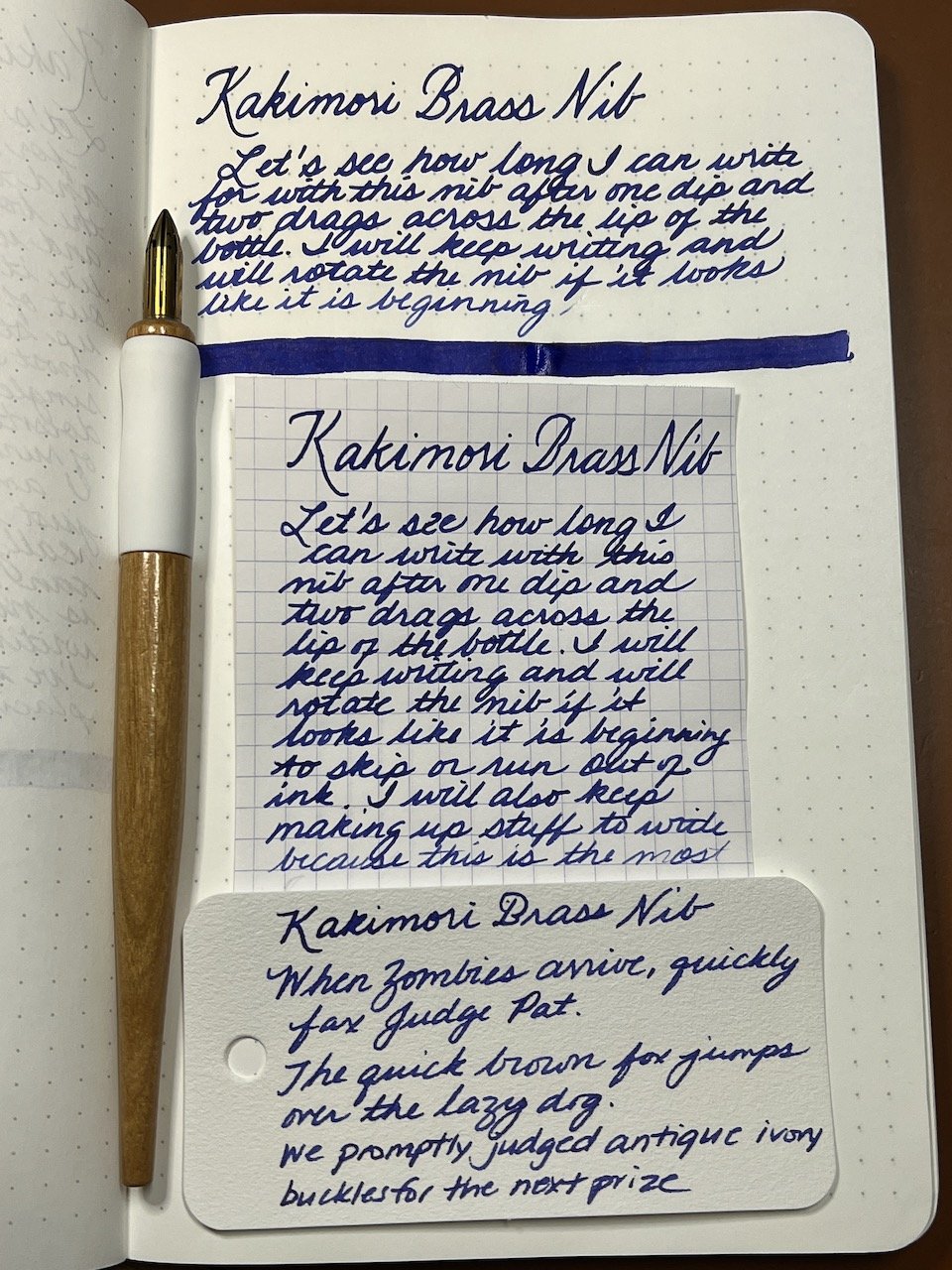
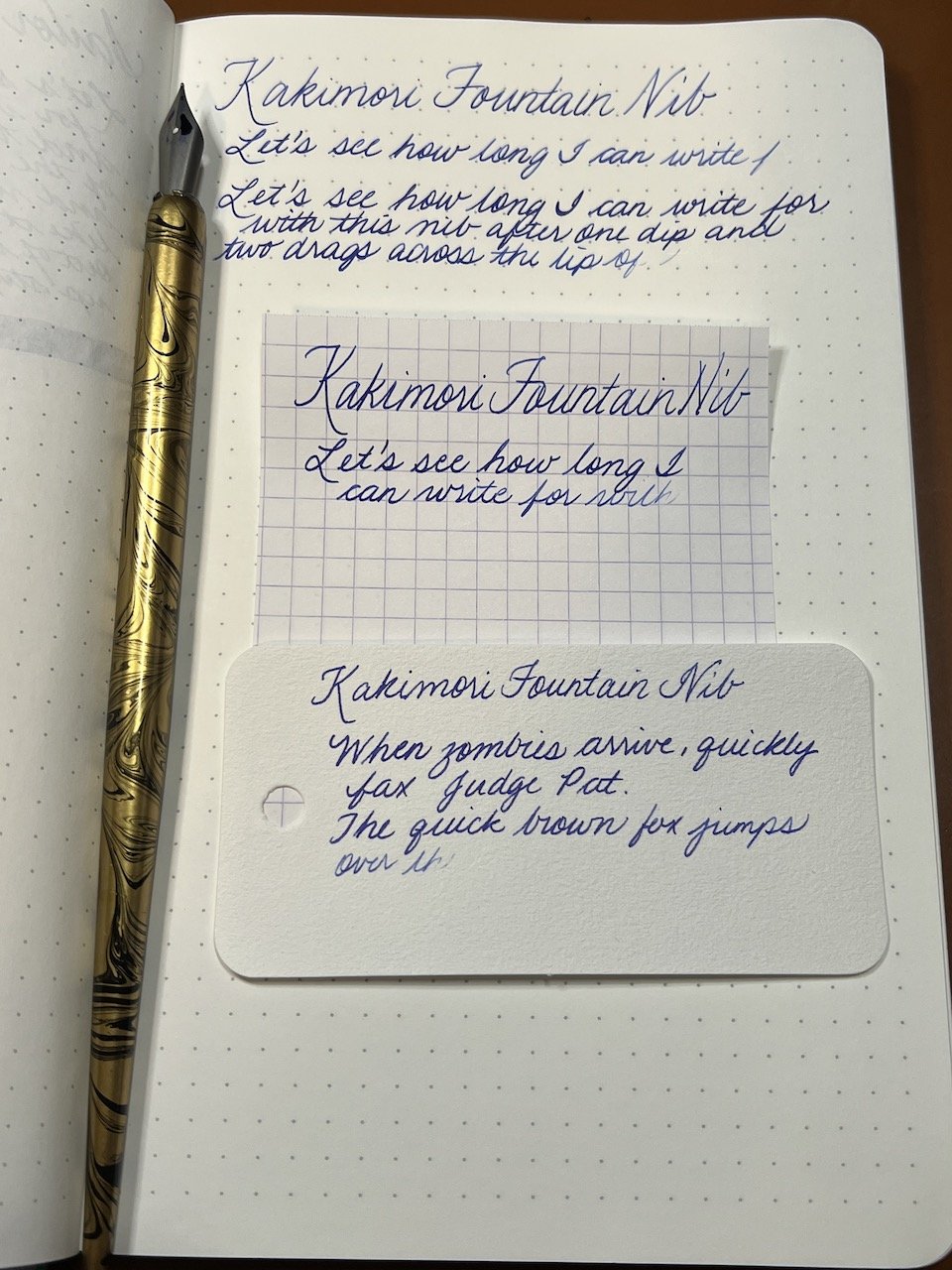
Kakimori Brass writing sample - Compare the line width to its Stainless Steel sibling below.

Kakimori Steel Nib
Kakimori Steel Nib

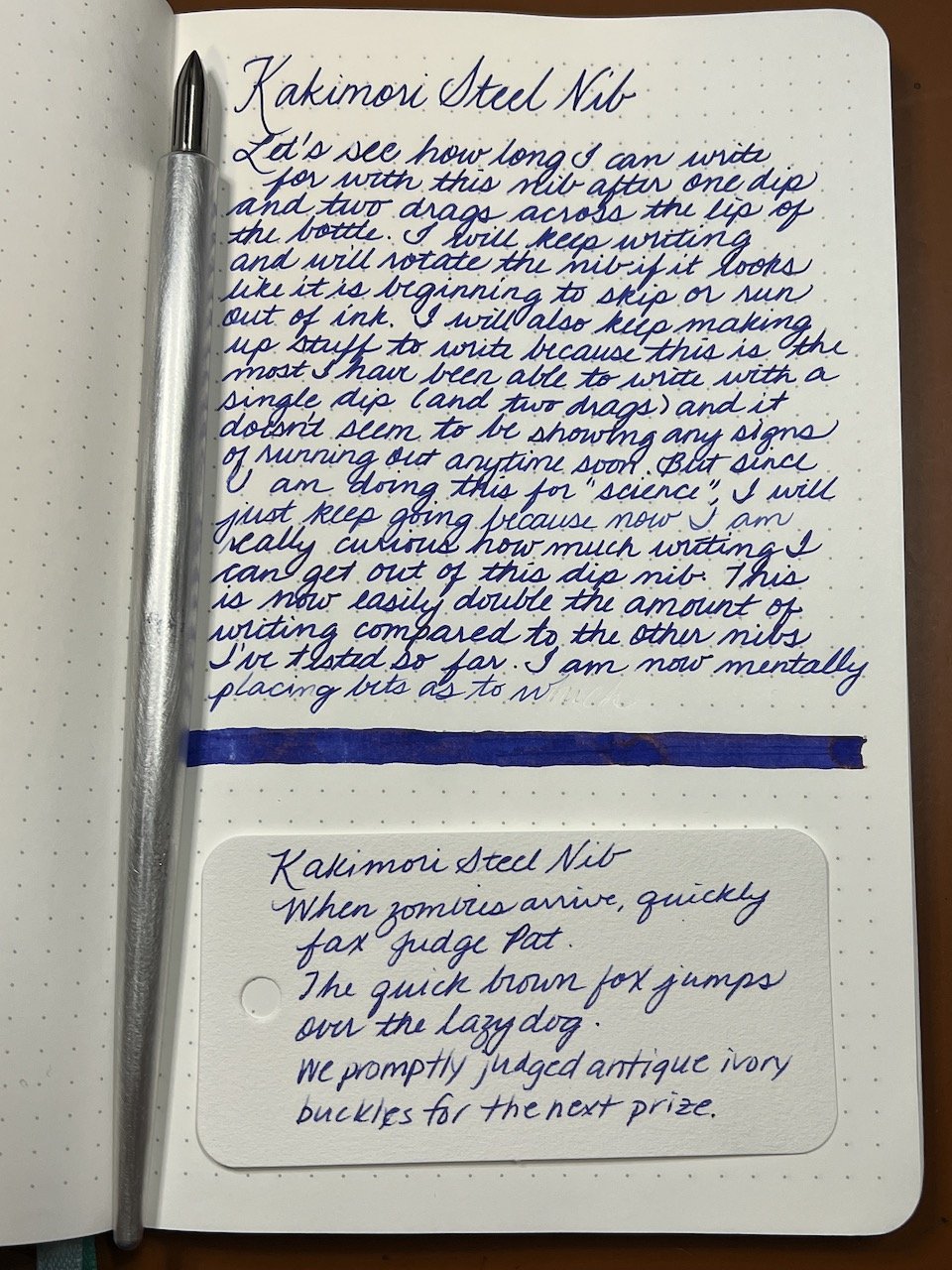
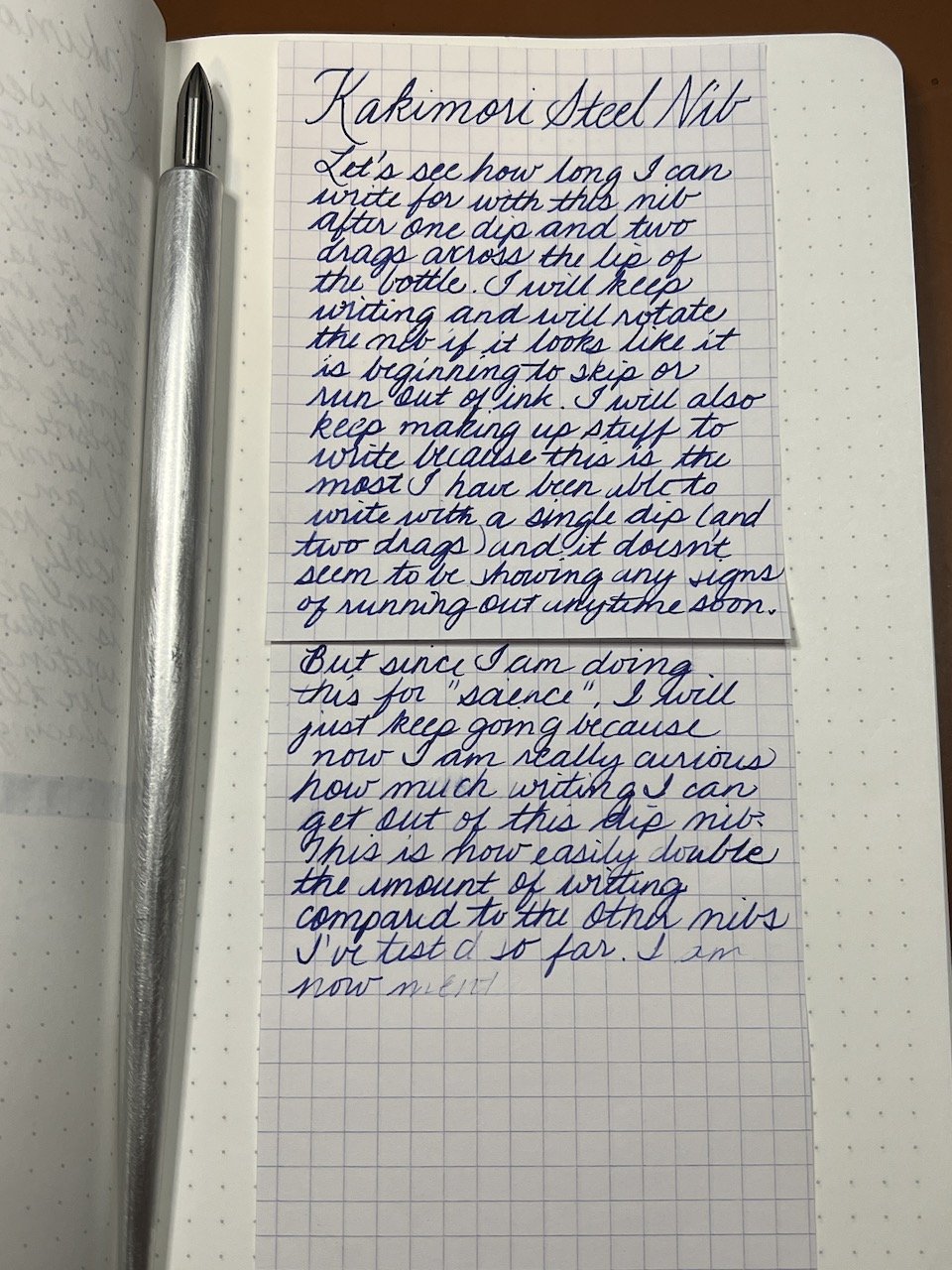
I was able to get significantly more writing with the Steel Kakimori because it didn’t make thicker/wetter lines like the Brass one.

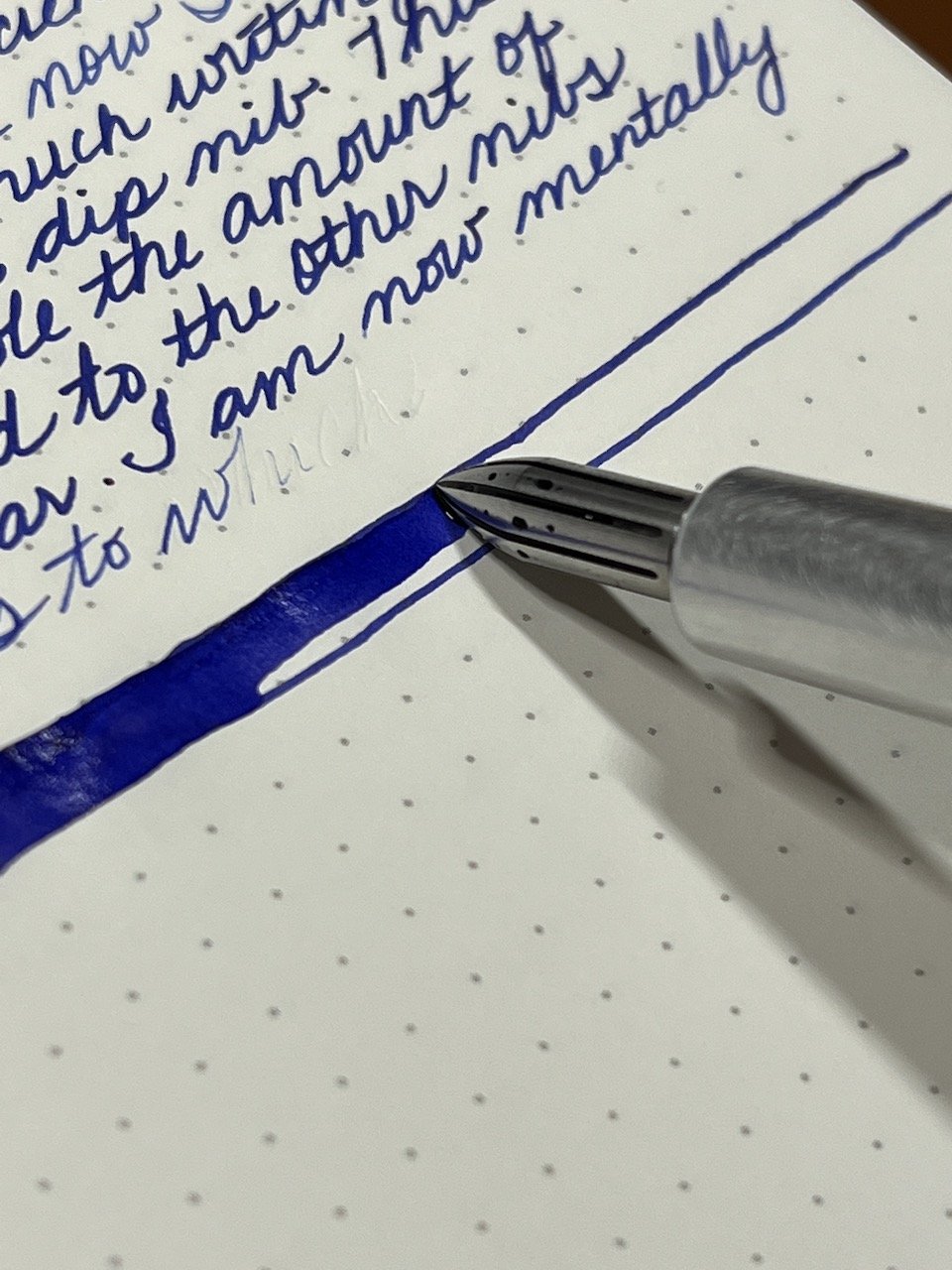
My first experience with the Kakimori dip nib was with the brass one, since the steel one was sold out. I had a heck of a time getting it to write at all, and despite washing it several times with soap and water and a gentle toothbrush, it would either not write, or would blob ink. I even asked several folks to see if this was normal, but most of the others had the steel one. I was almost ready to call it quits but decided to just keep trying and then out of the blue it started working. I had been using that for swatching/writing samples for several months. When a steel one came up for sale on Instagram, I pounced on it and this one wrote right out of the box with no fuss. The Brass one seems to have much more flow and gives me a much broader line than the Steel one. I have been using the Kakimori Steel dip nib ever since I got it a couple months ago. I like that they can be used at a shallower angle to provide nice wide lines, which I use in one of my ink swatch journals.

Kakimori Steel Dip Nib

Wider lines of ink are easily made with either of the Kakimori dip nibs.

Like the Brass and Steel dip nibs, the Kakimori Pen Nib can also be fitted into any nib holder that has a ferrule. The Pen Nib has a nice fine line but because it does not have a feed or reservoir or channels to hold ink, it isn’t meant for a lot of writing between dips. Still, if I didn’t have a need for making wide lines in my ink journal, I could see using this for the writing sample part of ink swatching.

Kakimori Nib

I mistakenly wrote “Fountain Nib” instead of “Pen Nib” because it looks like a fountain pen nib.

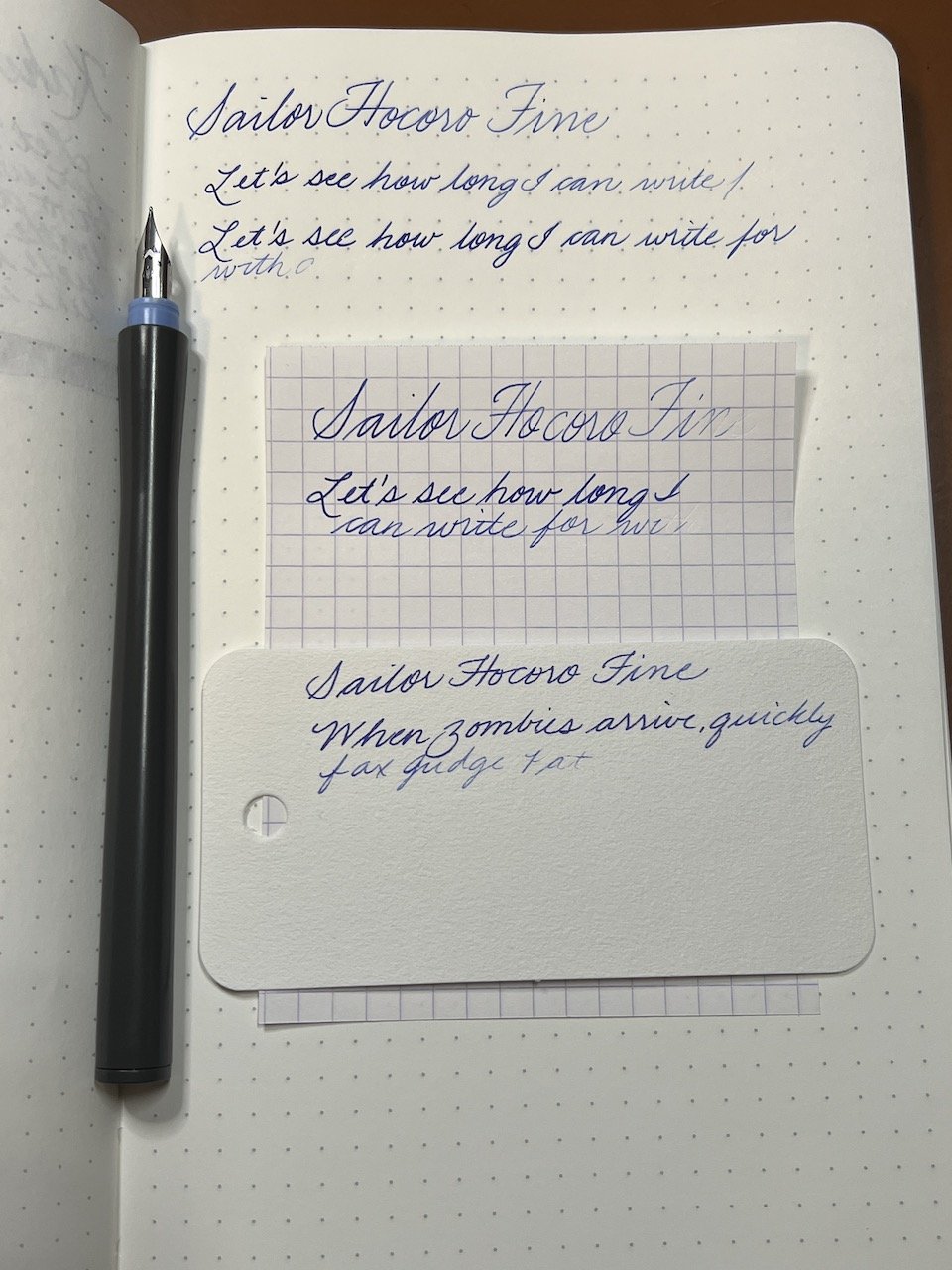
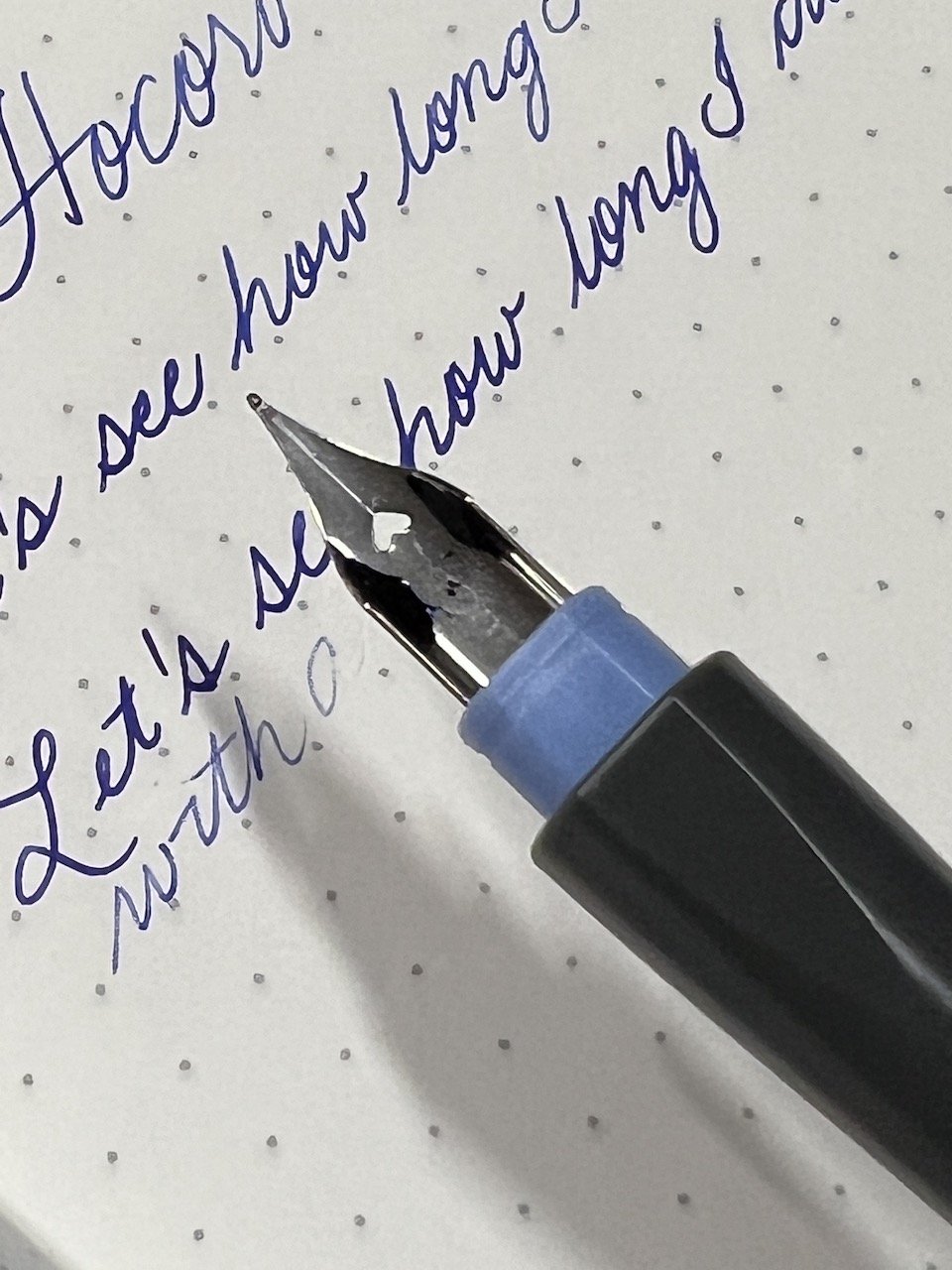
The Sailor Hocoro Dip Pen in Fine had an even fewer number of words it could write before running out. I first tried writing without cleaning the nib and then again after a water rinse and wipe. The lack of feed or channels makes it difficult to hold much ink. The Fude, on the other hand, wrote quite nicely and for a decent amount of lines. This is because there is an included feed which holds a bit more ink. I suspect the Fine will be much better when I am able to order the feed.

Sailor Hocoro

Not a lot of words with the Sailor Hocoro Fine nib - but this could be good for swatching where you are writing a few words.

Sailor Hocoro

No feed means nothing to hold onto the ink means fewer words.

Sailor Hocoro Fude

Sailor Hocoro Fude writing sample.

Sailor Hocoro Fude
Sailor Hocoro Fude Feed

You can get more words on the page even with the added line width due to the presence of a feed.

A few things I really like about the Hocoro Dip Pens: (1) they come in different sizes - Fine, Fude, 1.0 and 2.0 stubs, (2) there is no cap to lose because the nibs can be stored in the pen barrel so they don’t get damaged and (3) there is a flat bevel on the barrel so that it doesn’t roll around - I literally had to corral all the other dip pens on the table because they kept threatening to jump ship. And they are reasonably priced too.

Sailor Hocoro

Left shows the nib inserted into the barrel for storage. The grip section and nib unit are beveled so there is only one way to install or put away the nib. Right shows the other end of the barrel, which is also beveled.

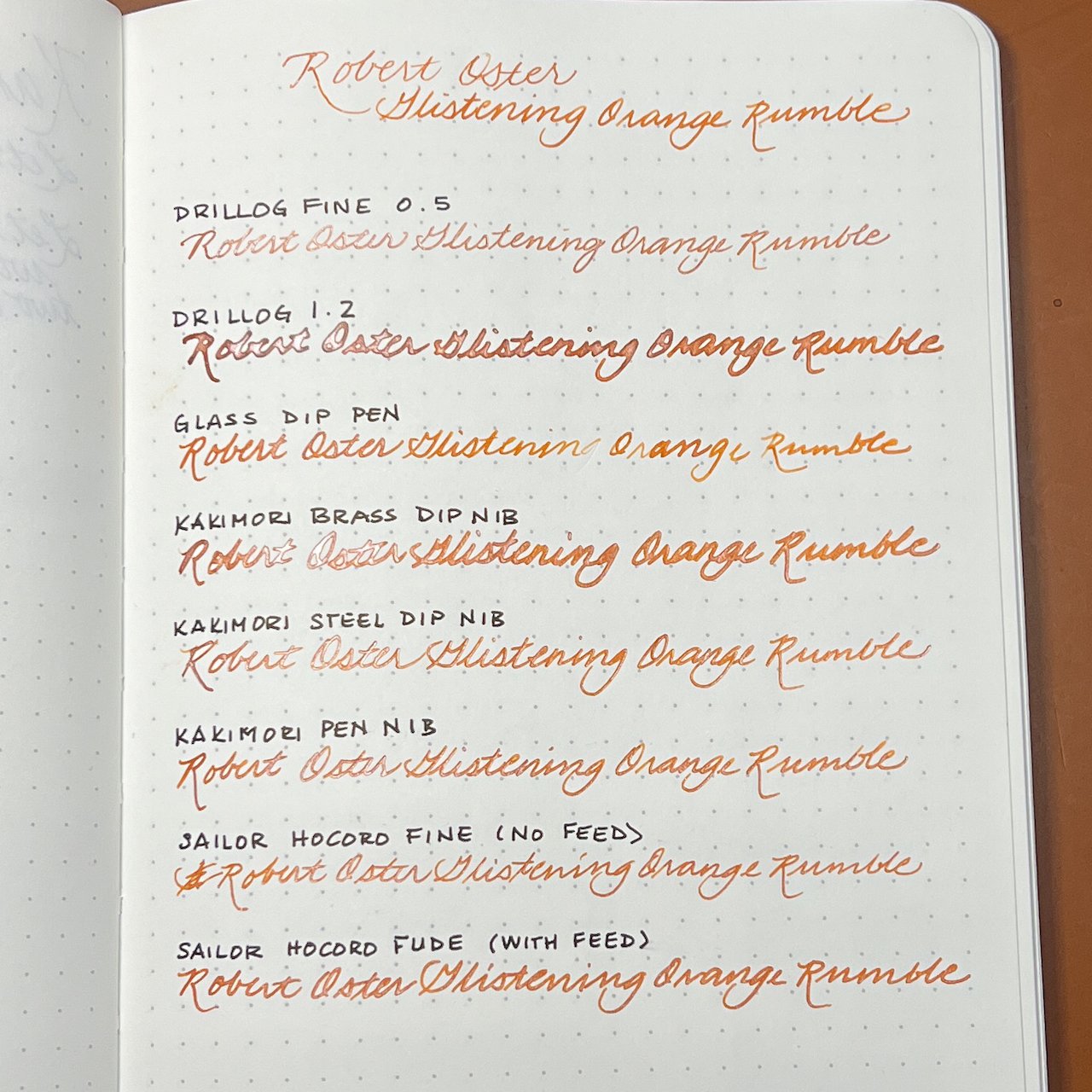
Lastly, I thought I’d try something that wasn’t a tried and true ink like Waterman Serenity Blue so I picked a shimmer ink from my shimmer samples bag. I knew that Robert Oster Glistening Orange Rumble had a fair amount of shimmer, so I wanted to see if the shimmer (1) would cause any flow issues and (2) if you could see the shimmer on the page or if would it get stuck in the channels or immediately get dumped onto the first few characters.

Dip Nib Shimmer Ink

You can see the difference in line widths and as a result the difference in color/saturation.

Dip Nib Shimmer Ink

Angled so you can see some of the shimmer - All but the glass dip pen deposited the shimmer without any issues. The glass dip pen had very little shimmer and a couple of skips.

All of the nibs cleaned out pretty easily - I blasted a syringeful of water after using Waterman and also rinsed in the sink after using the RO shimmer ink. The glass dip nib took a little more effort than the others but it wasn’t too bad.

So what’s the TLDR version of all this?

  1. Drillog is way too expensive for what it is, and it didn’t behave well enough even if it was a fraction of the price.
  2. My favorite is probably the Kakimori Stainless Steel nib because it has a Medium line and can also deposit a wider line for swatches. I had a lot of trouble with the Brass and even now it’s too wet/thick for my preference. This could be fun if I did art.
  3. The Sailor Hocoro Fude Nib is my second favorite as it has a little bit of line variation and can write a decent number of words due to the feed. Can’t wait to try the Hocoro Fine with a feed.
  4. The others are fine (Get it? “Fine”? I’ll see myself out, lol) - they behave alright. It comes down to personal preference and budget.
  5. Dip pens with caps are extra cool.

Anyway, now that I’ve done this research, I’m going to use Kakimori Stainless Steel dip nib and the Sailor Hocoro Fude nib for my Diamine Inkvent swatching and see which one will be crowned the winner! Happy dipping to all, and to all a good write!

Diamine Inkvent

Happy Inkvent!


Enjoy reading The Pen Addict? Then consider becoming a member to receive additional weekly content, giveaways, and discounts in The Pen Addict shop. Plus, you support me and the site directly, for which I am very grateful.

Membership starts at just $5/month, with a discounted annual option available. To find out more about membership click here and join us!
Posted on December 2, 2022 and filed under Dip Nib, Kakimori, Sailor, Tachikawa, Waterman, Pen Reviews.