Posts filed under Pencil Reviews

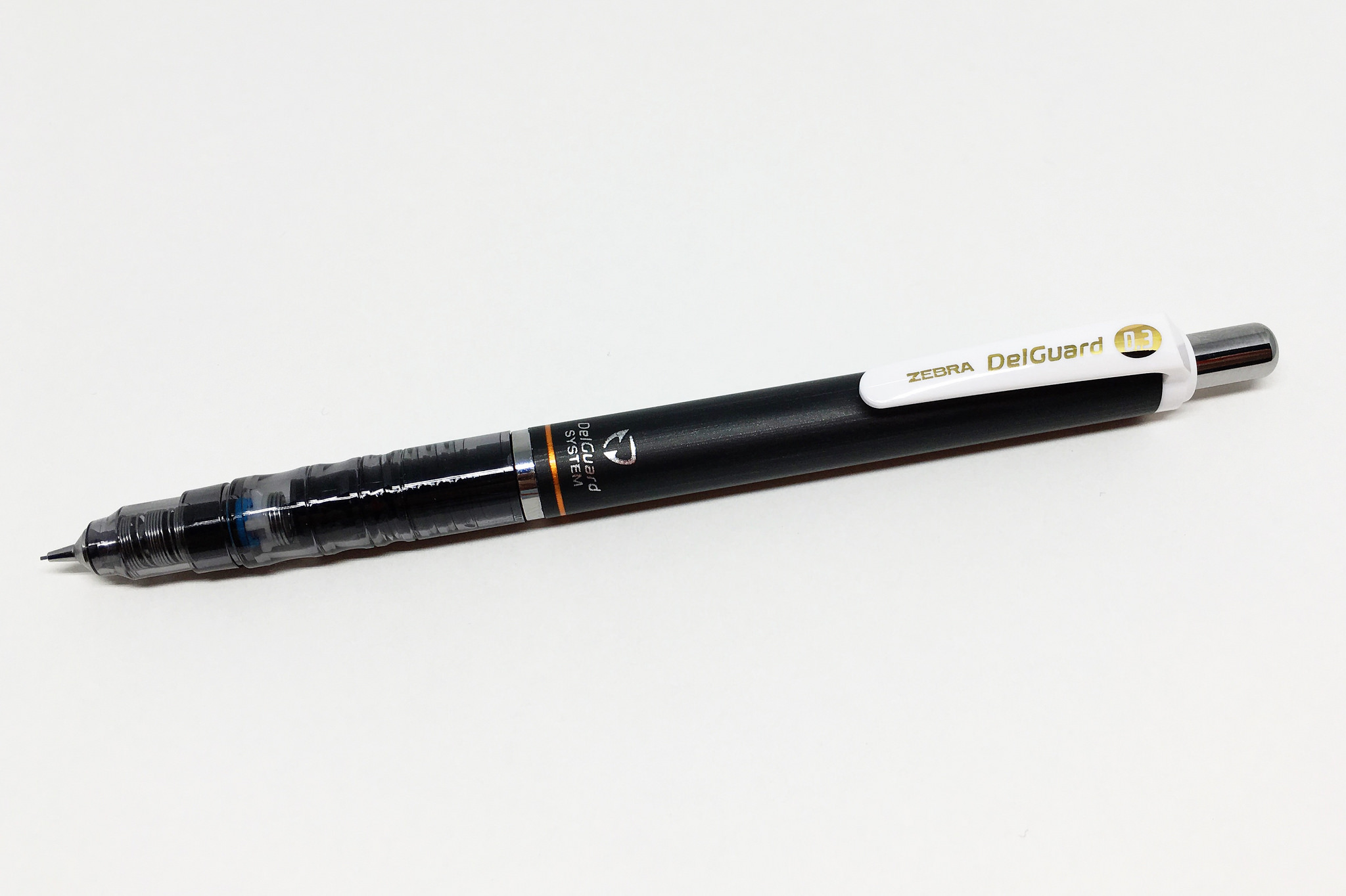
Zebra DelGuard 0.3 mm Mechanical Pencil Review

There is no getting around the fact that 0.3 mm lead is fragile. It’s my preferred lead width when available, and I accept that it is going to break more often than wider diameter lead. The Zebra DelGuard proposes to fix that issue with a special internal mechanism to prevent breakage, and it works like a champ.

I previously reviewed the 0.5 mm Zebra DelGuard and found the same thing - the mechanism worked as advertised. But I don’t have a breakage problem with 0.5 mm lead to begin with. So yes, the mechanism worked fine in the 0.5 mm, but it wasn’t the best test. 0.3 mm lead, on the other hand, is very fragile and needs the added benefit of what the DelGuard offers.
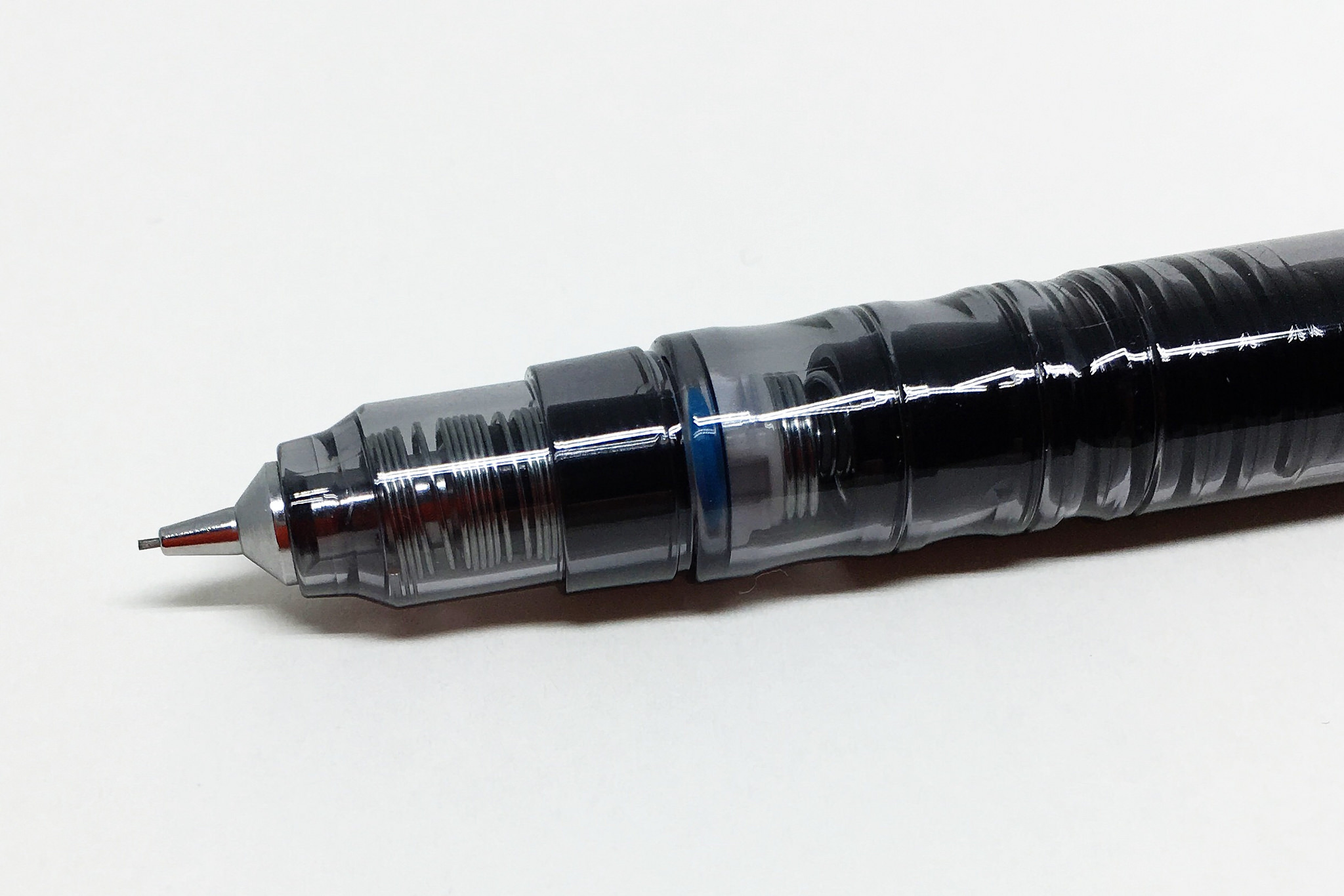
I haven’t written novel-length notes with the 0.3 mm DelGuard yet, but in the time I have used it, I haven’t broken the lead one time. With my previous favorite 0.3 mm mechanical pencil - the Alvin Draft-Matic - breaking the lead every now and then was the price of admission, and I accepted it. I don’t have to accept that as fact anymore with the DelGuard.

The Pentel Orenz 0.2 mm Mechanical Pencil solved this problem a different way by having an extended pipe where the lead barely poked out, but the look and feel of writing with metal as opposed to graphite didn’t work for me. The DelGuard does it in a more traditional style and functional manner.

As far as negatives go I only have minor design quibbles. Why have a white clip with gold writing when the rest of the pencil has a black and silver style? It’s not egregious and doesn’t keep me from using the pencil, but that’s one of those things I find odd. I’m guessing the clip color is to designate between the 0.3 mm and 0.5 mm sizes. Otherwise, it is a comfortable pencil to write with, and the eraser is actually works. If you like the plastic barrel Uni-ball Kuru Toga then you will like the DelGuard as well.

Innovation in basic writing instruments is a challenge for most companies, so it’s nice to see brands try things like this from time to time. Especially when it solves a problem and works this well.

(JetPens provided this product at no charge to The Pen Addict for review purposes.)

Posted on March 2, 2016 and filed under Zebra, Mechanical Pencil, Pencil Reviews.

TWSBI Vac Mini Fountain Pen Review

I appreciate TWSBI as a company. They aren’t afraid to experiment and do things other companies don’t, or can’t. Does that lead to issues sometimes? Without question. TWSBI had many quality issues in the early days that turned customers off their product completely, and rightfully so. But they keep pushing forward and innovating, and have improved the quality of their products as the years pass.

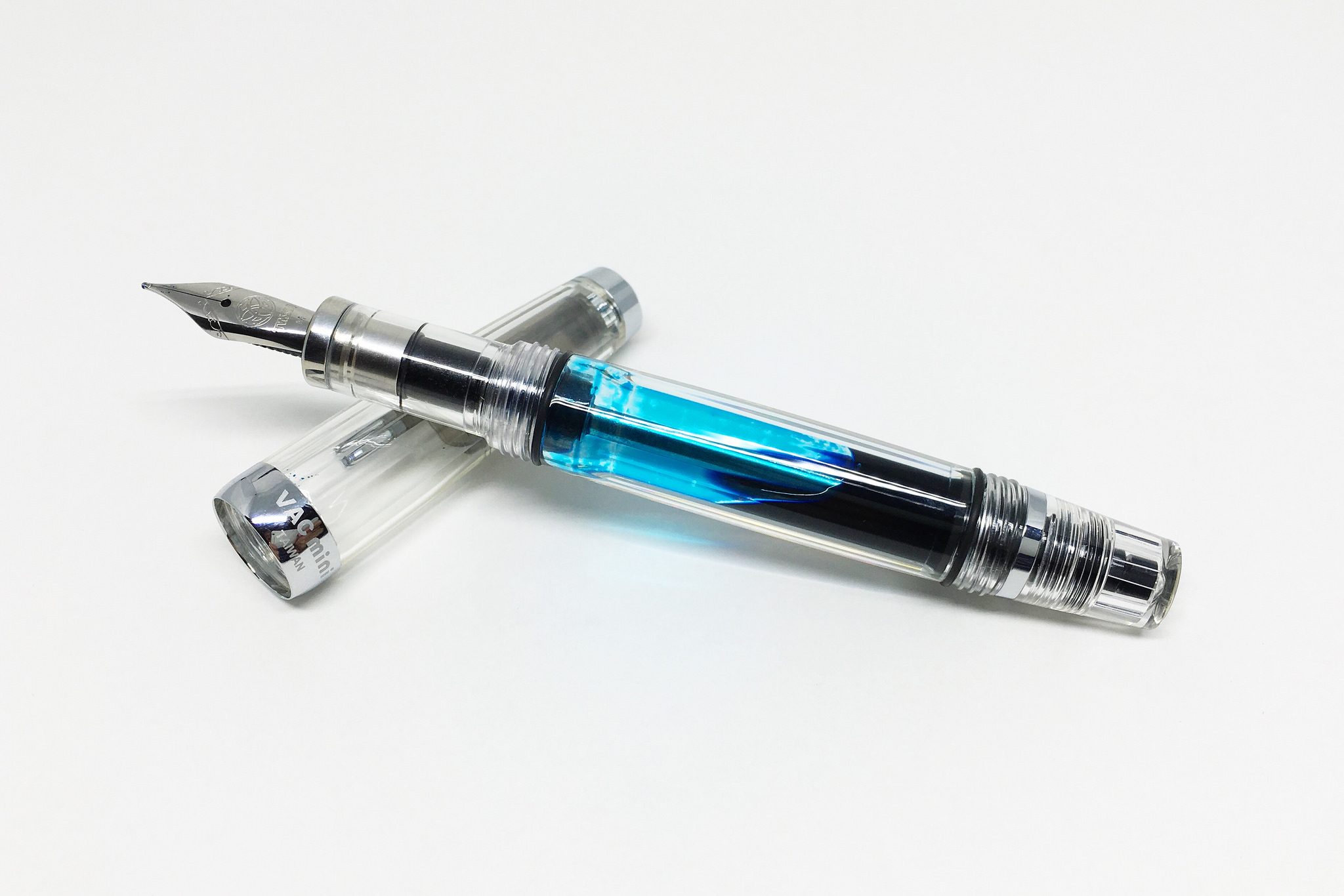
The TWSBI Vac Mini is a prime example of their innovation. What other company is able to manufacture a pen like this, or even want to? A vacuum filling mini fountain pen? “Not possible,” I imagine most companies saying. And for many reasons, not only technical. TWSBI is positioned well the sub-$100 pen market, with only Lamy and Kaweco as real threats. Most companies don’t compete here, which has allowed TWSBI to do things no one else would consider.

But enough of why I like TWSBI as a company, let’s get into this pen. If you have never used a vac filling system in a fountain pen, here are some things to know before purchasing:

  • It is simple to fill.
  • It is difficult to clean.
  • It can be sealed off for travel.
  • It needs to be open when writing.

It is far from hard to use, but beginners need to keep these things in mind. It is a different animal than a cartridge/converter pen. I wouldn’t recommend this pen as a first fountain pen for example. But for a fun, unique fountain pen I am all over it.

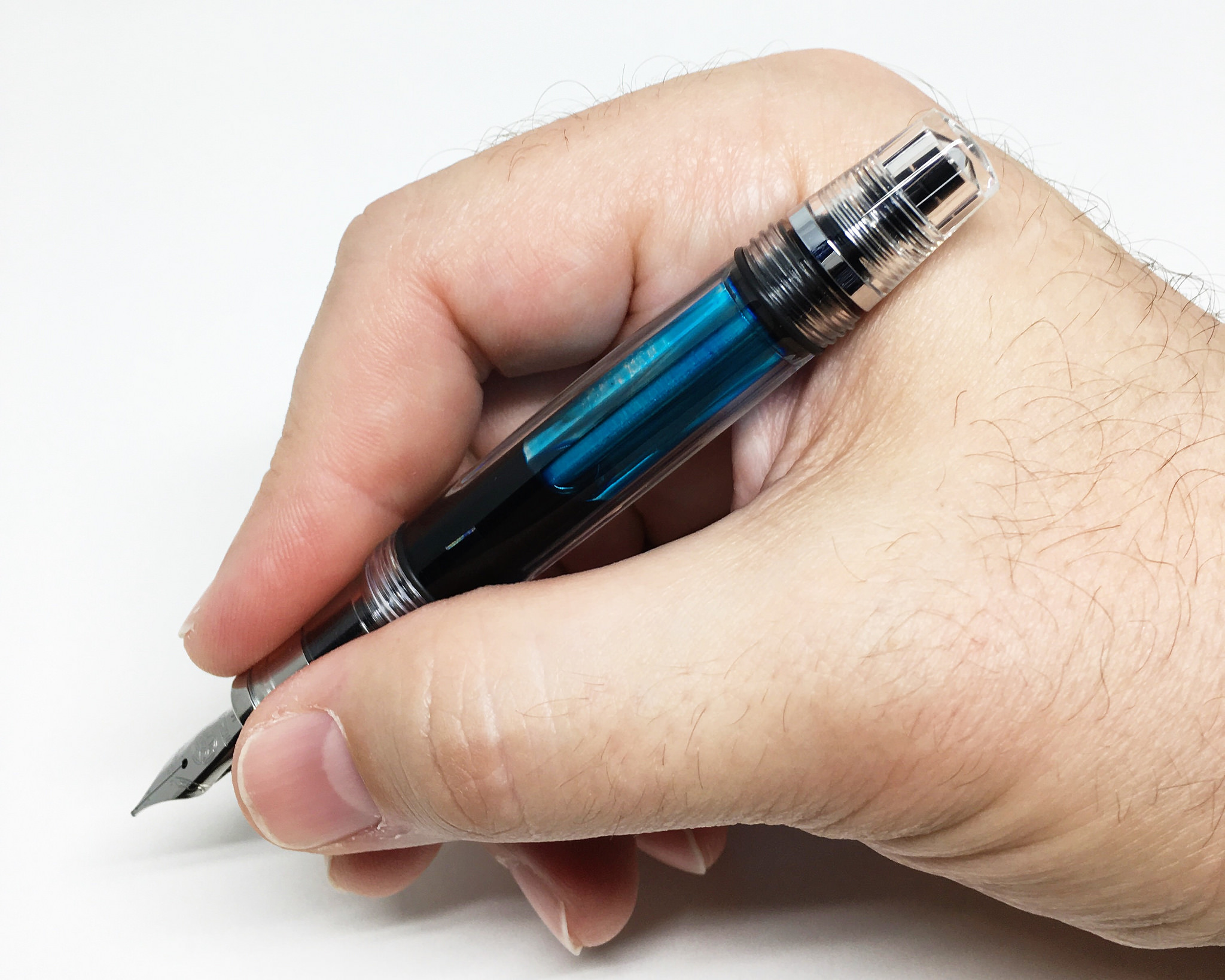
In comparison to the TWSBI Mini, which I am also a fan of, the Vac Mini is longer, including a longer grip section, and has a larger ink capacity. I’ve never had an issue writing with the regular Mini unposted and the added length of the Vac Mini makes it even better for me. For those who like to post their pens, the cap screws on the back to give you a more full length pen writing experience. The nibs are the same size, but the nib units are not, so it will take more effort than unscrewing to swap nibs.

On the negative side of the ledger, the only issue I have is with the clip. It wiggles too much and I would worry about it eventually breaking if I carried it clipped to my pants pocket. In a shirt pocket or a pen case it’s fine, but for a portable pen the clip needs to be stronger.

I don’t see the $60 price tag as a negative, but that does put the TWSBI Vac Mini in a strange place amongst the rest of TWSBI’s lineup. If you have never owned a TWSBI and are looking for the best pen of the brand, I would recommend the 580AL, which is their full length piston filler and is the exact same price. For beginners, the TWSBI ECO is the clear choice at half the cost. The standard Mini runs between $50-$55 depending on the nib, but I would pay up for the slightly larger and more ink capacity in the Vac Mini.

To me, the Vac Mini is your second TWSBI. You’ve bought a 580 or an ECO, enjoy the style and performance of the pen, and want to add something a little different to your collection. This is that pen.

(Goulet Pens provided this product at no charge to The Pen Addict for review purposes.)
Posted on February 24, 2016 and filed under TWSBI, Fountain Pens, Pencil Reviews.

Uni Mitsubishi Vermilion and Prussian Blue Pencil Review

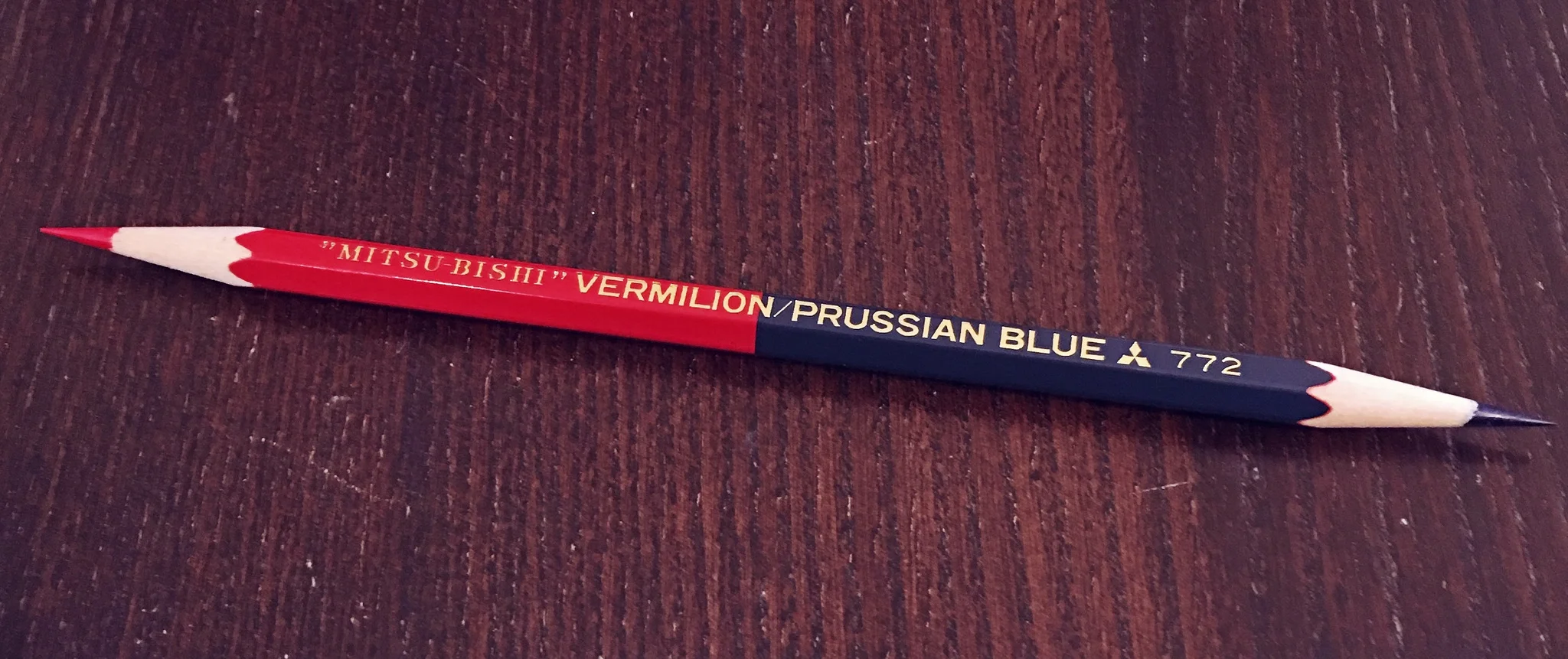
Seeing a two-tone pencil, especially one of the red and blue variety, takes me back. They seem like a cool relic of the 1960’s, although I assume they have been around much longer that that. If my memory serves me, I first ran across them in the 1970’s and 1980’s in my grandfathers art studio. It was one of those pencils that you only found on a table or in a desk there, giving them a bit of cachet in my young pen addict’s brain.

I liberated one or two over the years I’m sure, allowing me to double-blade long before Darth Maul made it popular. But they weren’t great pencils. The red was often too orange or too light, and the blue was similarly faint. Plus, I’m sure I would get in trouble turning in a school assignment in red colored pencil.

But red and blue two-tone pencils have an aura about them. If you see them in the wild, you know serious or interesting work goes on where they rest, more so than a desk full of yellow pencils or Bic Clics. Having one on my desk makes me feel like I am in Mad Men about to edit the new Coca-Cola ad copy.

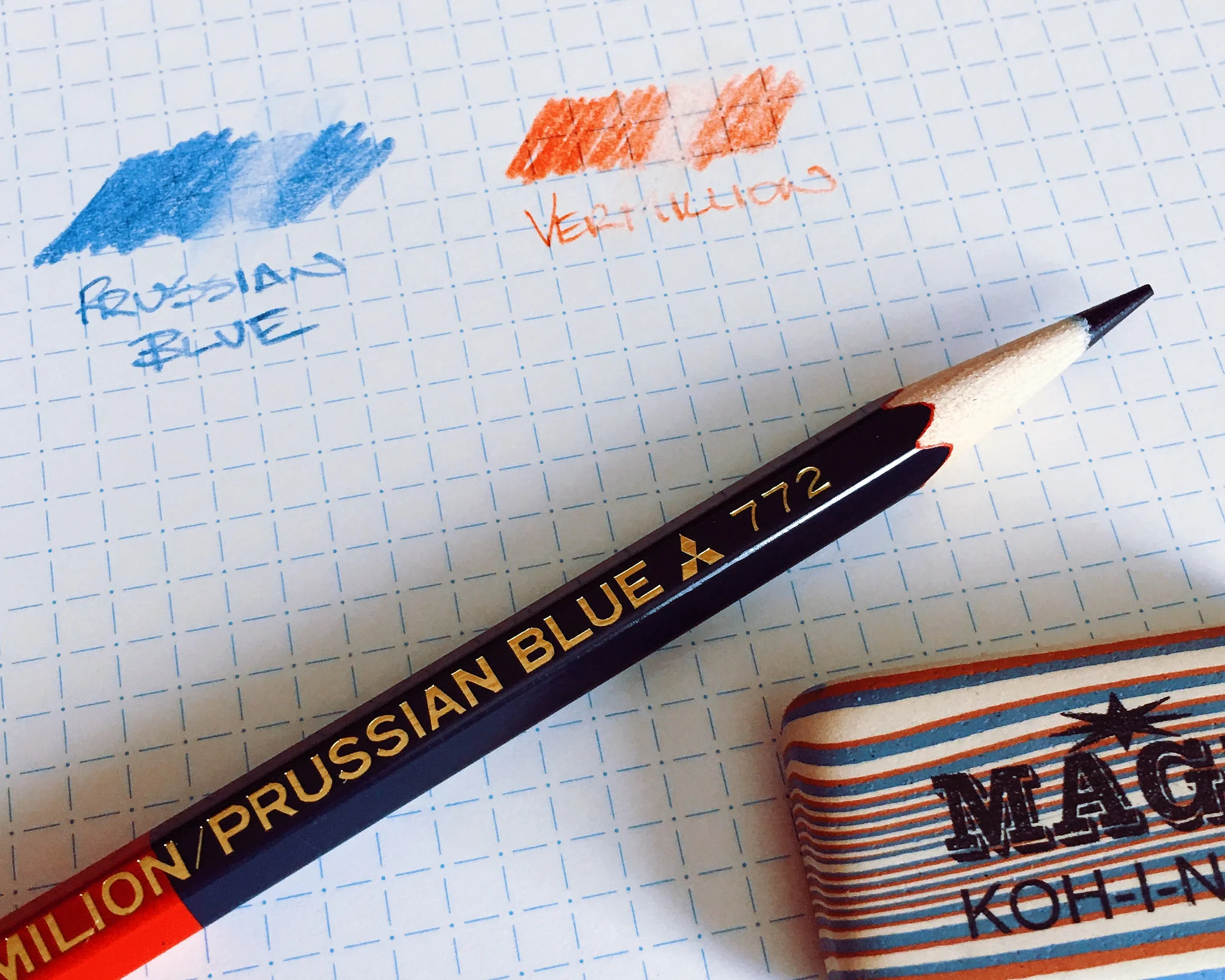
The Uni Mitsubishi Vermilion and Prussian Blue Pencil is the first one I have tried in years, and I’m very happy with the results. Both pencil cores are dark enough, and the red isn’t too orange. The blue is softer than the red, so if you are using them in equal amounts the blue will need to be sharpened sooner. Also, don’t even bother with trying to erase them. That’s not happening.

This leads to another interesting bit about two-tone pencils. As if they weren’t unique enough, they come in different color proportions. This one is a standard 5:5 model, meaning the ratio of red to blue is exactly even. There is a 7:3 model available, with red taking on the lions share of the core. That’s the one my editor would need to use if I actually had an editor. Red would be all over the page.

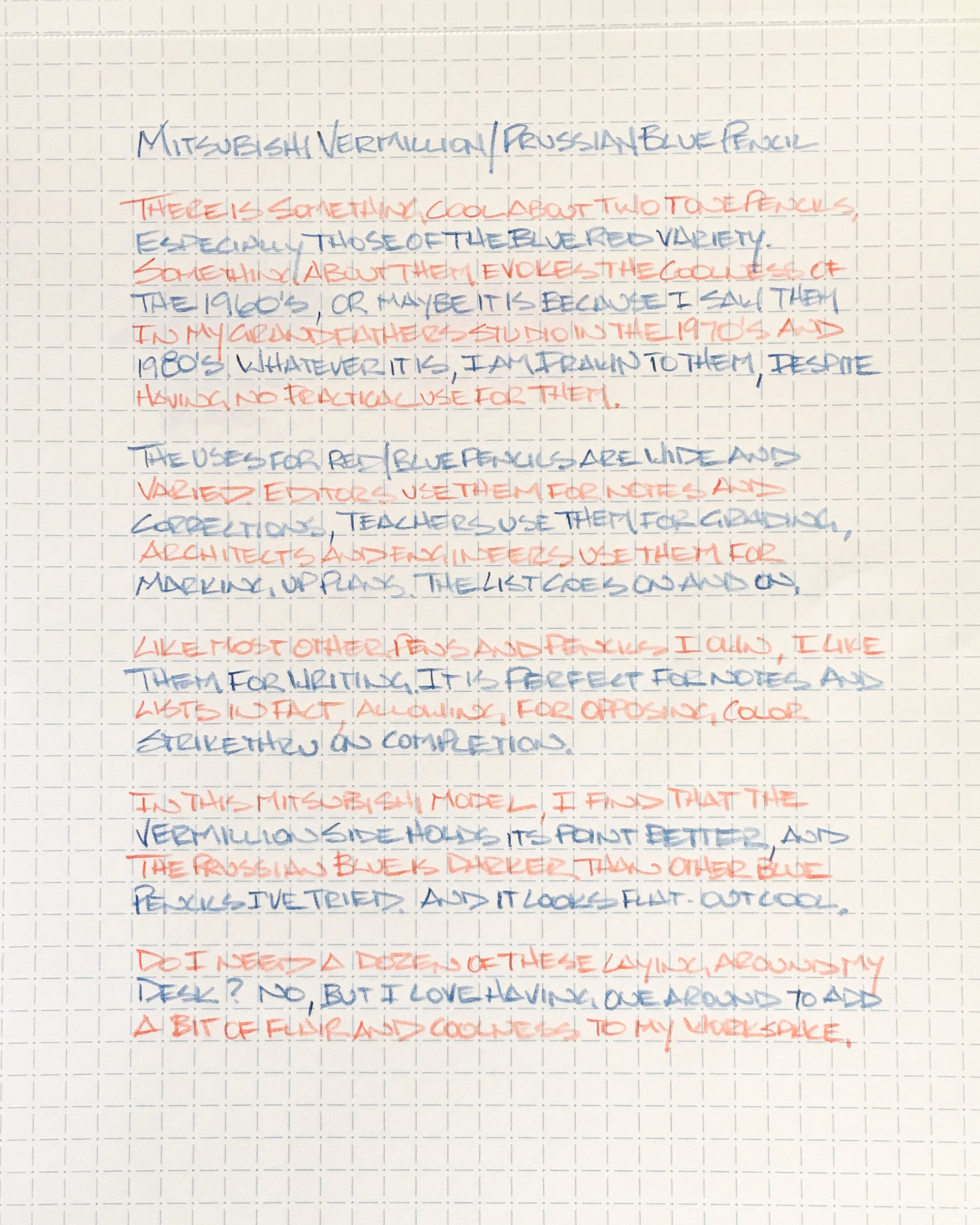
And that is where the use case for two-tone pencils lies today. If you aren’t using them as a markup tool for editing, engineering, or teaching, you may be using them as a colored pencil for artwork and sketching. Outside of that, they aren’t a great writing pencil. A traditional graphite pencil will outwork them every day of the week. But they are cool. And they are old school. And they add a little bit of brightness and inspiration to any desk they reside on.

(JetPens provided this product at no charge to The Pen Addict for review purposes.)

Posted on February 8, 2016 and filed under Uni, Pencil Reviews.