Posts filed under Pencil Reviews

A Different Kind Of Rabbit Hole

(Daniel Lemay is an analog tool enthusiast and enjoys pondering over many things. You can find him on Twitter at @dslemay and his blog at Circumspect Reverie.)

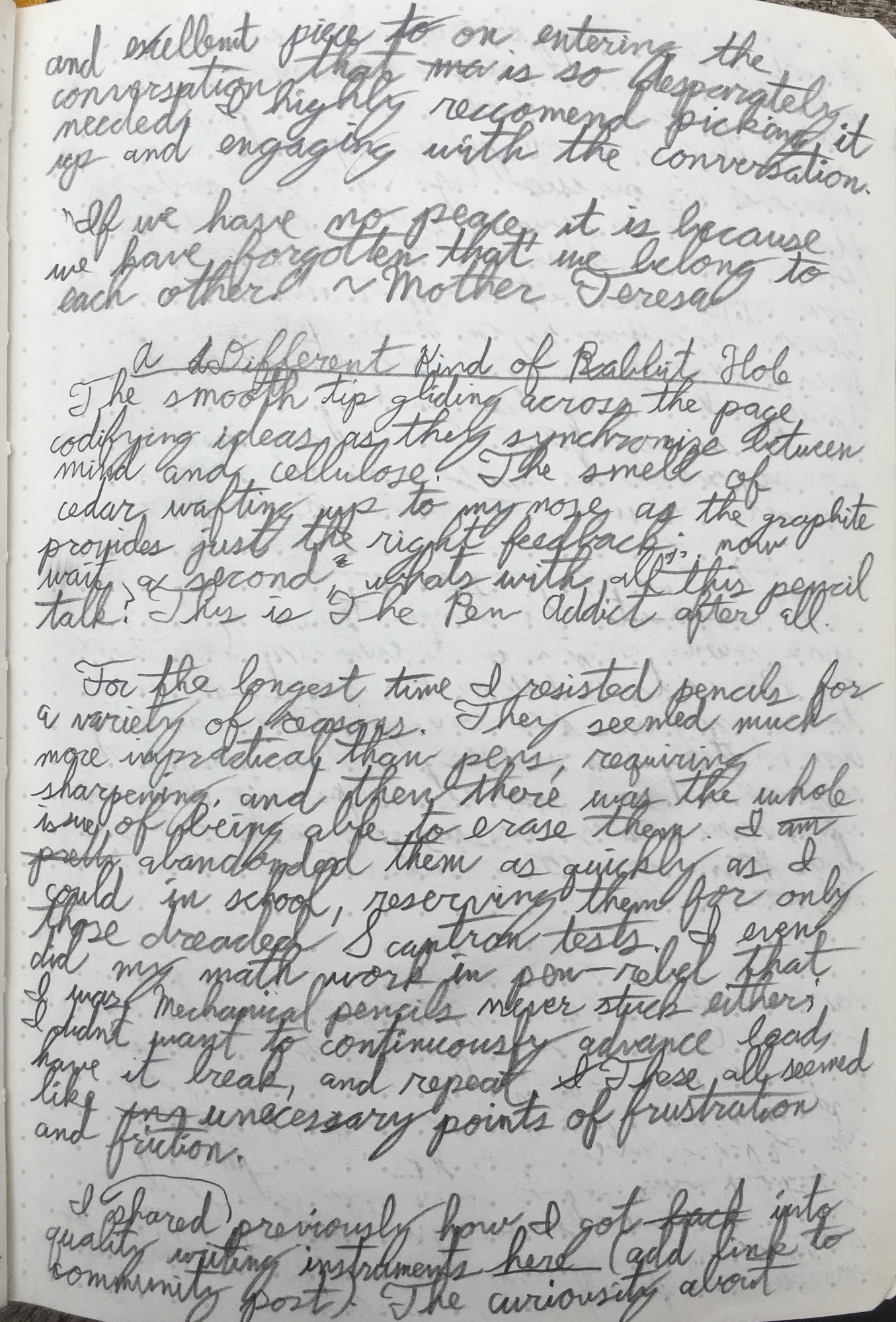
The smooth tip gliding across the page codifying ideas as they synchronize between mind and cellulose. The smell of cedar wafting up to my nose as the graphite provides just the right feedback; now wait a second, what is with all this pencil talk? This is The Pen Addict after all.

How it all Started

For the longest time I resisted pencils for a variety of reasons. They seemed much more impractical than pens, requiring sharpening, and then there was the whole issue of being able to erase them. I abandoned them as quickly as I could in school, reserving them only for those dreaded Scantron tests. I even did my math work in pen, rebel that I was. Mechanical pencils never stuck either; I didn't want to continuously advance lead, have it break, and repeat. These all seemed like unnecessary points of frustration and friction.

I previously shared how I got into quality writing instruments here. The curiosity about quality pencils began during my 2.5 month binge through the entire Pen Addict podcast back catalog and the seemingly out of place episode I'm Attached to Pencils with Andy Welfle from The Erasable Podcast. It's a good thing the show notes clarified "No we haven't gone off our rocker, we just want to learn," because they had me worried for a minute. Of course it proved to be the spark for this addict's mind to wonder what he was missing. Shortly thereafter I went to a local bookstore and glossed over the selection of Blackwing pencils at once mesmerized and also intimidated by the unknown. Eventually I determined the $25 cost of entry too steep for what appeared to be a fleeting curiosity at the time. After all, I was in the midst of my highest ink acquisition period. I loved color and why would I want to trade that for being constricted to a monochromatic world?

About six months passed before pencils re-entered the forefront of my mind. July 2015 came and brought with it the "Portland pen show." It's not really much of a show and sports maybe fifteen vendors, and almost exclusively vintage. I did find a beautiful blue clouds Waterman with stub nib that I couldn't leave without. To my surprise at purchase it came with the matching mechanical pencil. "Ok, I suppose I will give it a try since I am getting it any way," I thought to myself. I used it a couple times but found the experience unsatisfying and unlike the exterior, lackluster. Once again, pencils failed to stick for me.

Another five months went by before pencils again attempted to gain some traction. This past December I inquired with the Slack group and Caroline Weaver at CW Pencil Enterprise for recommendations on introductory pencils and sharpeners. Around that time I also began writing out the drafts of my initial blog posts in their entirety longhand. Disappointed by the low quality paper and feathering in the notebook I had just bought for the purpose, I decided that there was no better time to try them out. I quickly determined that this was my ideal tool for long form writing.

The Draw of Pencils

There are so many draws to using quality pencils, even for a person primarily using fountain pens. Similar to pens, there is a big divide between crappy and good ones. The first major draw is the intoxicating smell of the wood. It adds another dimension to the writing experience and is much more pleasant than the chemical smell of some inks. I'll admit that sometimes I will smell the pencil while formulating my next thoughts. Secondly, the build quality and aesthetic variance is plentiful. Pencils range from natural finish to lacquered beauties, to different styles of ferrule (what attaches the eraser to the pencil) or no ferrule at all. There is so much room for artistry, even though it isn't maki-e or urushi lacquered; then again a dozen of really nice pencils might set me back $25-30 not $1,500. I also love the sound of the slight audio feedback reinforcing each fluid line. Maybe it's influenced by my love of dip nibs. Don't get me wrong, I love my smooth fountain pen nibs too. However, that is just a small part of the available writing experiences and isn't always the unicorn it is made out to be. Lastly, I love the permanence of pencils and wish I had not succumbed to misinformation for so long. Like many people, I believed that pencils erasability equated to not being a lasting medium, However, unless it is erased pencil is a lasting medium. It is not as susceptible to humidity or UV light and won't run across the page at the slightest sign of moisture as some fountain pen inks do.

So that's how I finally became a pencil nerd on top of my love for fountain pens. They have expanded in use beyond blog writing. I find myself reaching for them consistently for my primary tool of the day. I love the process of sharpening them into a fresh point while collecting my thoughts. I love experimenting with different graphite grades and point lengths. I still use fountain pens primarily, but rapidly cannot imagine my writing life without pencils.
Posted on March 18, 2016 and filed under Pencil Reviews.

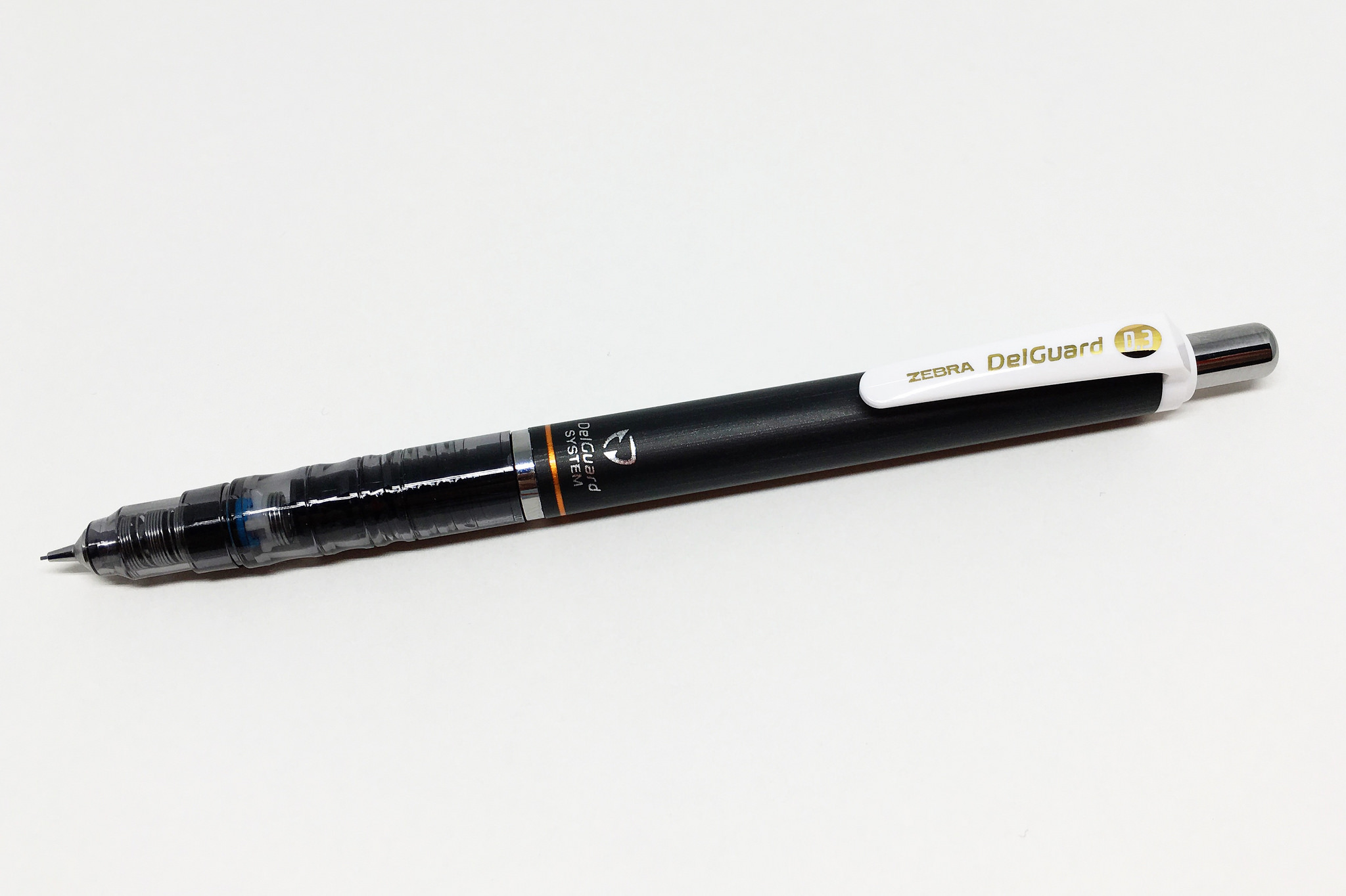
Zebra DelGuard 0.3 mm Mechanical Pencil Review

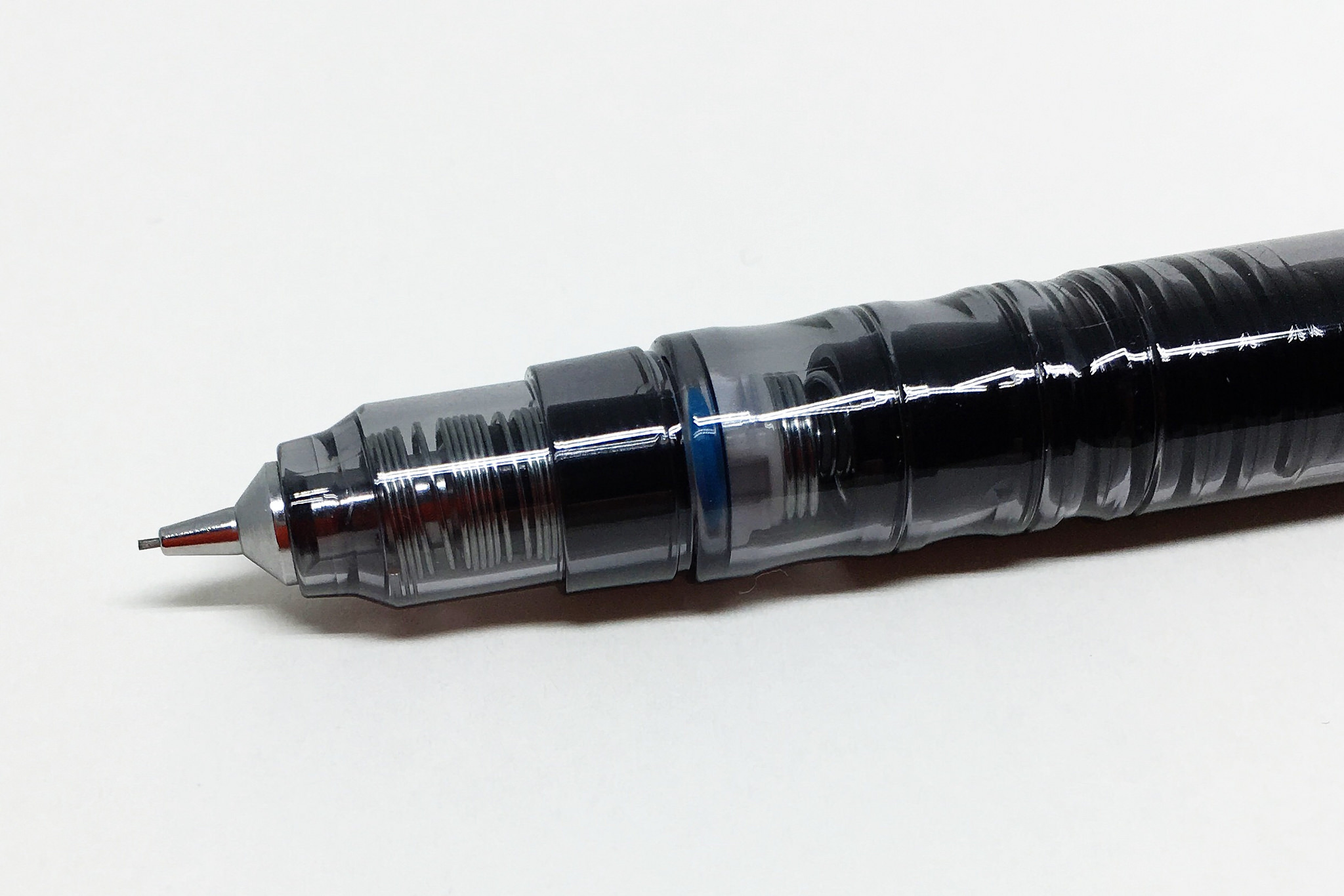
There is no getting around the fact that 0.3 mm lead is fragile. It’s my preferred lead width when available, and I accept that it is going to break more often than wider diameter lead. The Zebra DelGuard proposes to fix that issue with a special internal mechanism to prevent breakage, and it works like a champ.

I previously reviewed the 0.5 mm Zebra DelGuard and found the same thing - the mechanism worked as advertised. But I don’t have a breakage problem with 0.5 mm lead to begin with. So yes, the mechanism worked fine in the 0.5 mm, but it wasn’t the best test. 0.3 mm lead, on the other hand, is very fragile and needs the added benefit of what the DelGuard offers.

I haven’t written novel-length notes with the 0.3 mm DelGuard yet, but in the time I have used it, I haven’t broken the lead one time. With my previous favorite 0.3 mm mechanical pencil - the Alvin Draft-Matic - breaking the lead every now and then was the price of admission, and I accepted it. I don’t have to accept that as fact anymore with the DelGuard.

The Pentel Orenz 0.2 mm Mechanical Pencil solved this problem a different way by having an extended pipe where the lead barely poked out, but the look and feel of writing with metal as opposed to graphite didn’t work for me. The DelGuard does it in a more traditional style and functional manner.

As far as negatives go I only have minor design quibbles. Why have a white clip with gold writing when the rest of the pencil has a black and silver style? It’s not egregious and doesn’t keep me from using the pencil, but that’s one of those things I find odd. I’m guessing the clip color is to designate between the 0.3 mm and 0.5 mm sizes. Otherwise, it is a comfortable pencil to write with, and the eraser is actually works. If you like the plastic barrel Uni-ball Kuru Toga then you will like the DelGuard as well.

Innovation in basic writing instruments is a challenge for most companies, so it’s nice to see brands try things like this from time to time. Especially when it solves a problem and works this well.

(JetPens provided this product at no charge to The Pen Addict for review purposes.)

Posted on March 2, 2016 and filed under Zebra, Mechanical Pencil, Pencil Reviews.

TWSBI Vac Mini Fountain Pen Review

I appreciate TWSBI as a company. They aren’t afraid to experiment and do things other companies don’t, or can’t. Does that lead to issues sometimes? Without question. TWSBI had many quality issues in the early days that turned customers off their product completely, and rightfully so. But they keep pushing forward and innovating, and have improved the quality of their products as the years pass.

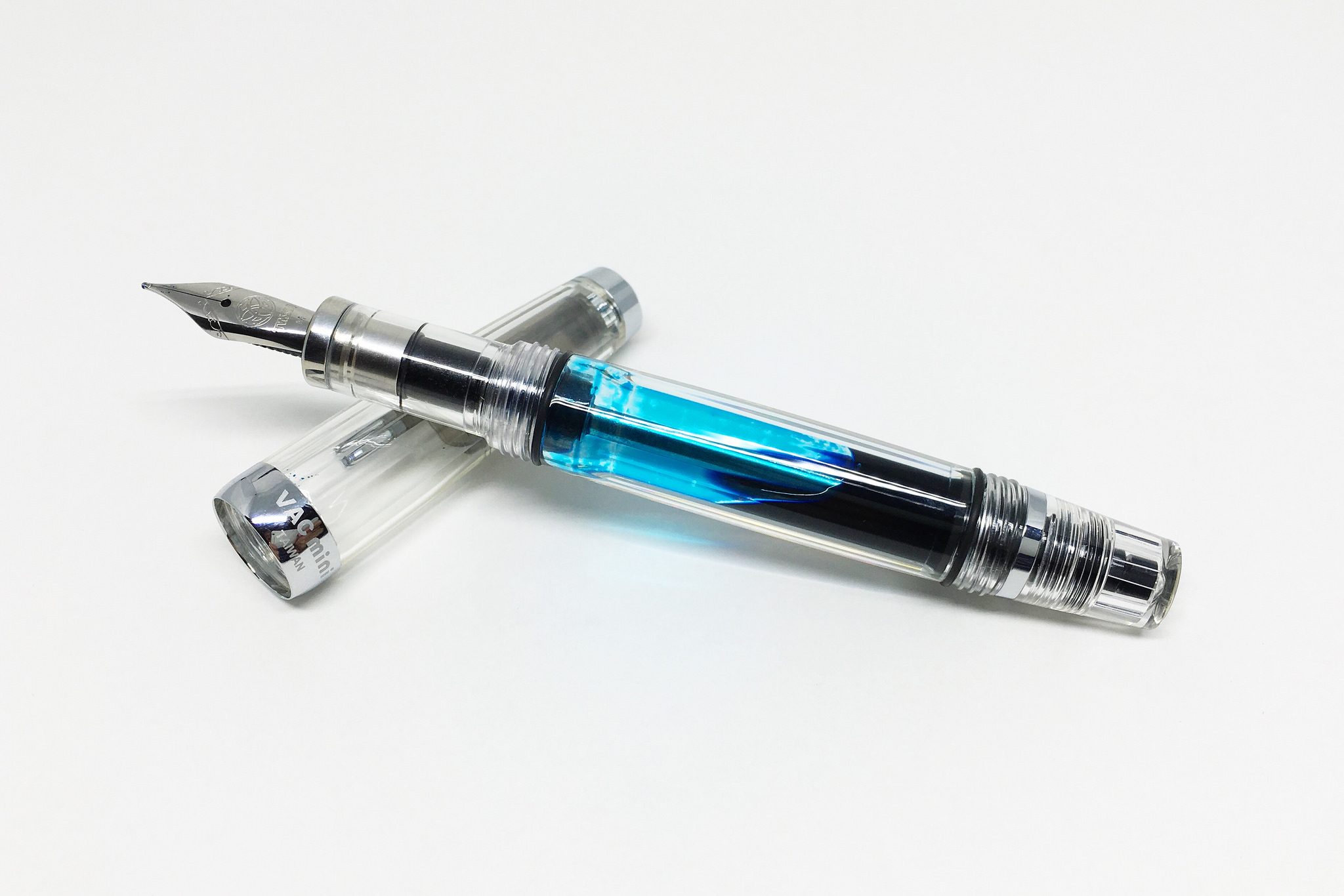
The TWSBI Vac Mini is a prime example of their innovation. What other company is able to manufacture a pen like this, or even want to? A vacuum filling mini fountain pen? “Not possible,” I imagine most companies saying. And for many reasons, not only technical. TWSBI is positioned well the sub-$100 pen market, with only Lamy and Kaweco as real threats. Most companies don’t compete here, which has allowed TWSBI to do things no one else would consider.

But enough of why I like TWSBI as a company, let’s get into this pen. If you have never used a vac filling system in a fountain pen, here are some things to know before purchasing:

  • It is simple to fill.
  • It is difficult to clean.
  • It can be sealed off for travel.
  • It needs to be open when writing.

It is far from hard to use, but beginners need to keep these things in mind. It is a different animal than a cartridge/converter pen. I wouldn’t recommend this pen as a first fountain pen for example. But for a fun, unique fountain pen I am all over it.

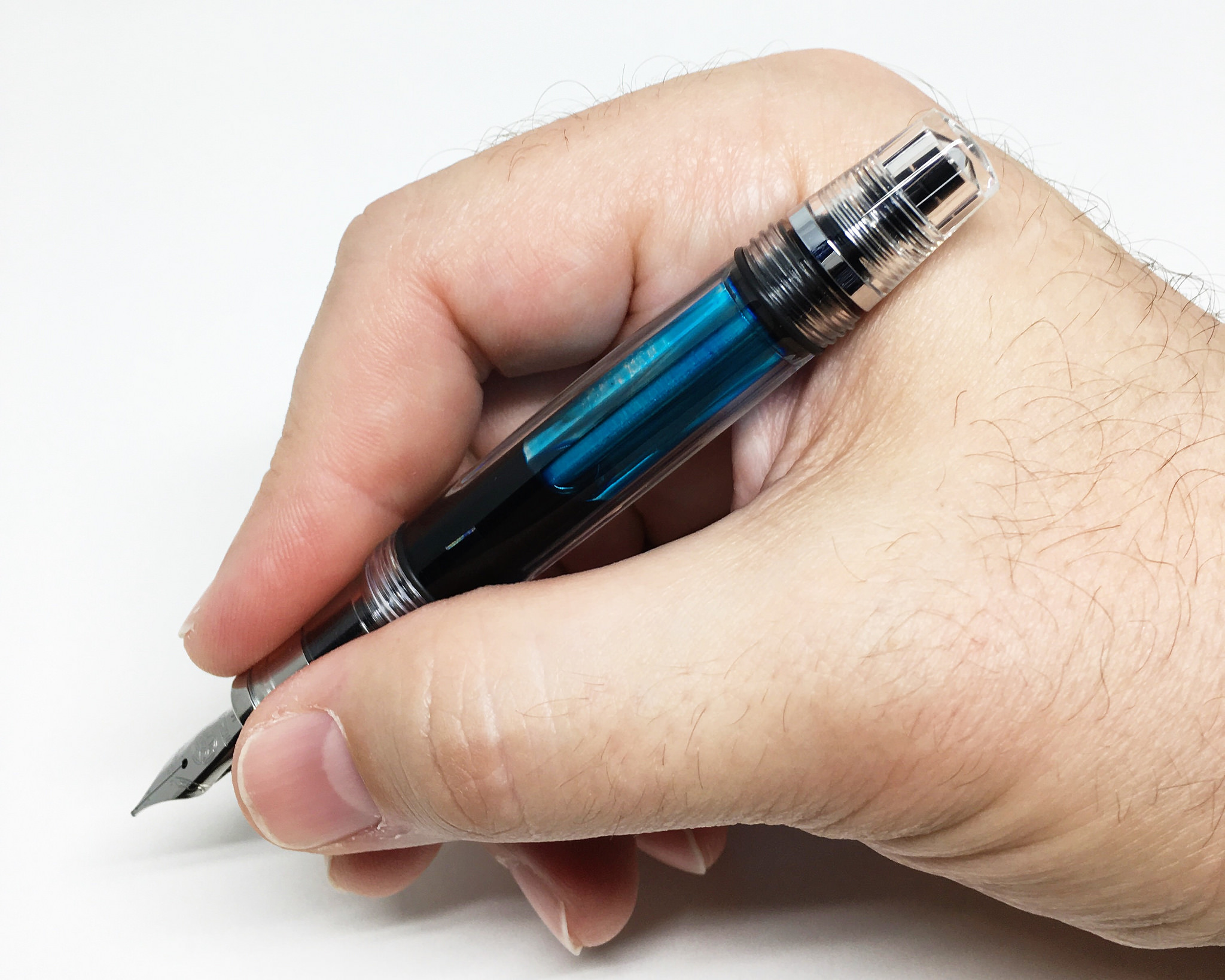
In comparison to the TWSBI Mini, which I am also a fan of, the Vac Mini is longer, including a longer grip section, and has a larger ink capacity. I’ve never had an issue writing with the regular Mini unposted and the added length of the Vac Mini makes it even better for me. For those who like to post their pens, the cap screws on the back to give you a more full length pen writing experience. The nibs are the same size, but the nib units are not, so it will take more effort than unscrewing to swap nibs.

On the negative side of the ledger, the only issue I have is with the clip. It wiggles too much and I would worry about it eventually breaking if I carried it clipped to my pants pocket. In a shirt pocket or a pen case it’s fine, but for a portable pen the clip needs to be stronger.

I don’t see the $60 price tag as a negative, but that does put the TWSBI Vac Mini in a strange place amongst the rest of TWSBI’s lineup. If you have never owned a TWSBI and are looking for the best pen of the brand, I would recommend the 580AL, which is their full length piston filler and is the exact same price. For beginners, the TWSBI ECO is the clear choice at half the cost. The standard Mini runs between $50-$55 depending on the nib, but I would pay up for the slightly larger and more ink capacity in the Vac Mini.

To me, the Vac Mini is your second TWSBI. You’ve bought a 580 or an ECO, enjoy the style and performance of the pen, and want to add something a little different to your collection. This is that pen.

(Goulet Pens provided this product at no charge to The Pen Addict for review purposes.)

Posted on February 24, 2016 and filed under TWSBI, Fountain Pens, Pencil Reviews.