Posts filed under Pilot

The Pilot Metropolitan Retro Pop: A Review

(Susan M. Pigott is a fountain pen collector, pen and paperholic, photographer, and professor. You can find more from Susan on her blog Scribalishess.)

When I first saw the Pilot Metropolitan Retro Pop pens advertised, I was excited about them. I loved the vivid colors, and I had heard good things about the Metropolitan pens before. So, as soon as I could, I ordered a turquoise Retro Pop from Goulet Pens for $15.00.

I've been using it non-stop since it arrived because, as a university professor, I have a mountain of grading this time of the semester. I figured the Retro Pop would make a great grading pen, and I was right.

The Retro Pop is a metal fountain pen, but it's not at all heavy (26 grams/0.92 oz). It comes nicely packaged in an oval clamshell box with a clear top, so you can see the colorful pen.
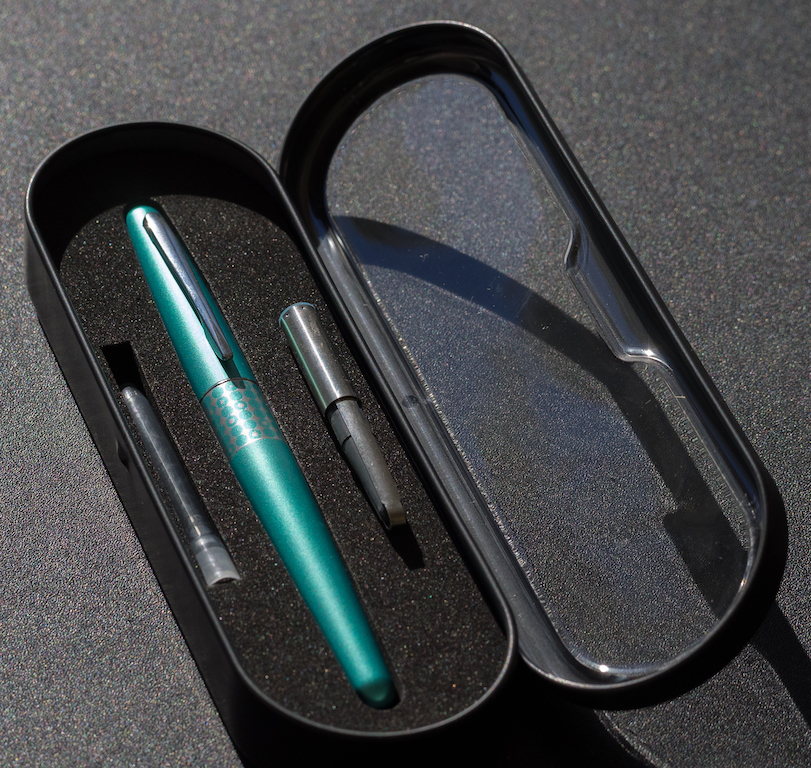
The metal is shiny and sparkles in the sunlight. Each pen has a different retro design on one portion of the barrel.

The only other embellishment is the clip which has a few decorative elements on the sides, but is otherwise plain. The cap is a snap on.

The grip is black plastic which is always easier for me to hold than metal since my hands get sweaty, especially while grading research papers.

The pen comes with a squeeze converter and one cartridge, but if you prefer twist converters, you can purchase one for $5.50 more, which I did. Squeeze converters are messy and I don't like the limitations of cartridges. The Con-50 holds a teeny amount of ink, though. I blew through several fills as I graded. But, it's not like the pen is difficult to refill.
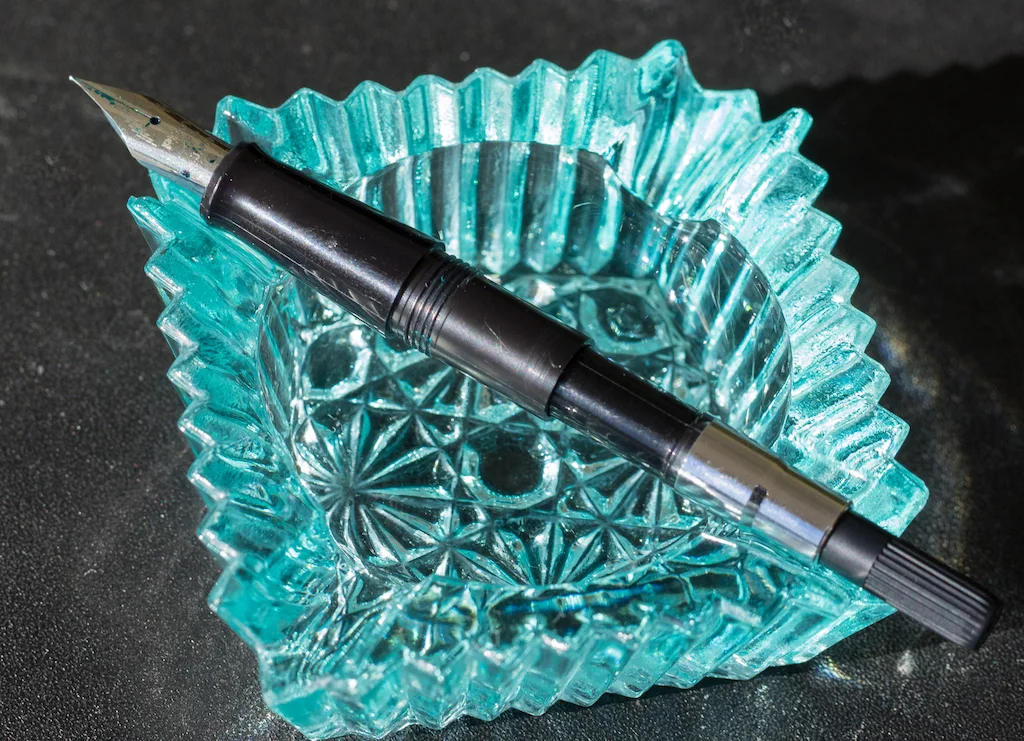
The fine steel nib on my Retro Pop is smooth but hard (no bounce or flex). As with most Japanese pens, the fine writes more like an extra fine. I like this size for grading because I tend to write lots of notes all over my students' papers (which I'm sure they love). The nib has been a champ–no hard starts; no skipping. I'm very impressed since this pen is so inexpensive.

The Retro Pop is a relatively small pen. It is 5.43 inches capped; 5 inches uncapped; and 6.02 inches posted. The grip (0.33 inches) is pretty narrow, and my hand gets fatigued after long grading sessions.
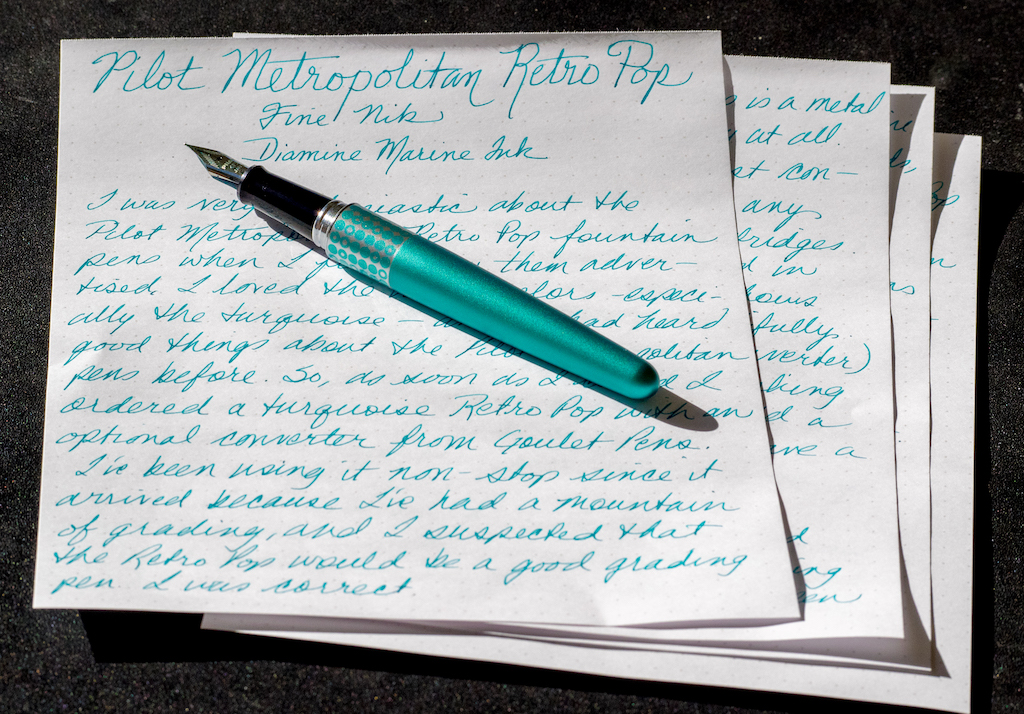
The Retro Pop comes in six colors: grey, orange, purple, turquoise, red, and green. At $15.00 (plus $5.50 if you want the twist converter) from Goulet Pens, this is the perfect stocking stuffer or holiday gift for anyone interested in fountain pens. Add one of the mini bottles of Diamine or Iroshizuku ink and a Rhodia pad and you've got a terrific starter kit for someone special. If you want all the colors, you can purchase a set for $84.90.

Pros

  • A smooth-writing, steel nib fountain pen at a terrific price.
  • Lots of bright colors from which to choose.
  • Several filling options (cartridge, squeeze converter, twist converter).
  • Comes in a nice clamshell box that is perfect for gift-giving.
  • Lightweight and suitable size for most people.

Cons

  • Neither the squeeze converter nor the twist converter hold much ink. Plan on re-inking often.
  • The pen is light and thin. People with larger hands may find this pen too small for comfort.
Posted on November 27, 2015 and filed under Fountain Pens, Metropolitan, Pen Reviews, Pilot.

Pilot Custom 823 Fountain Pen Review

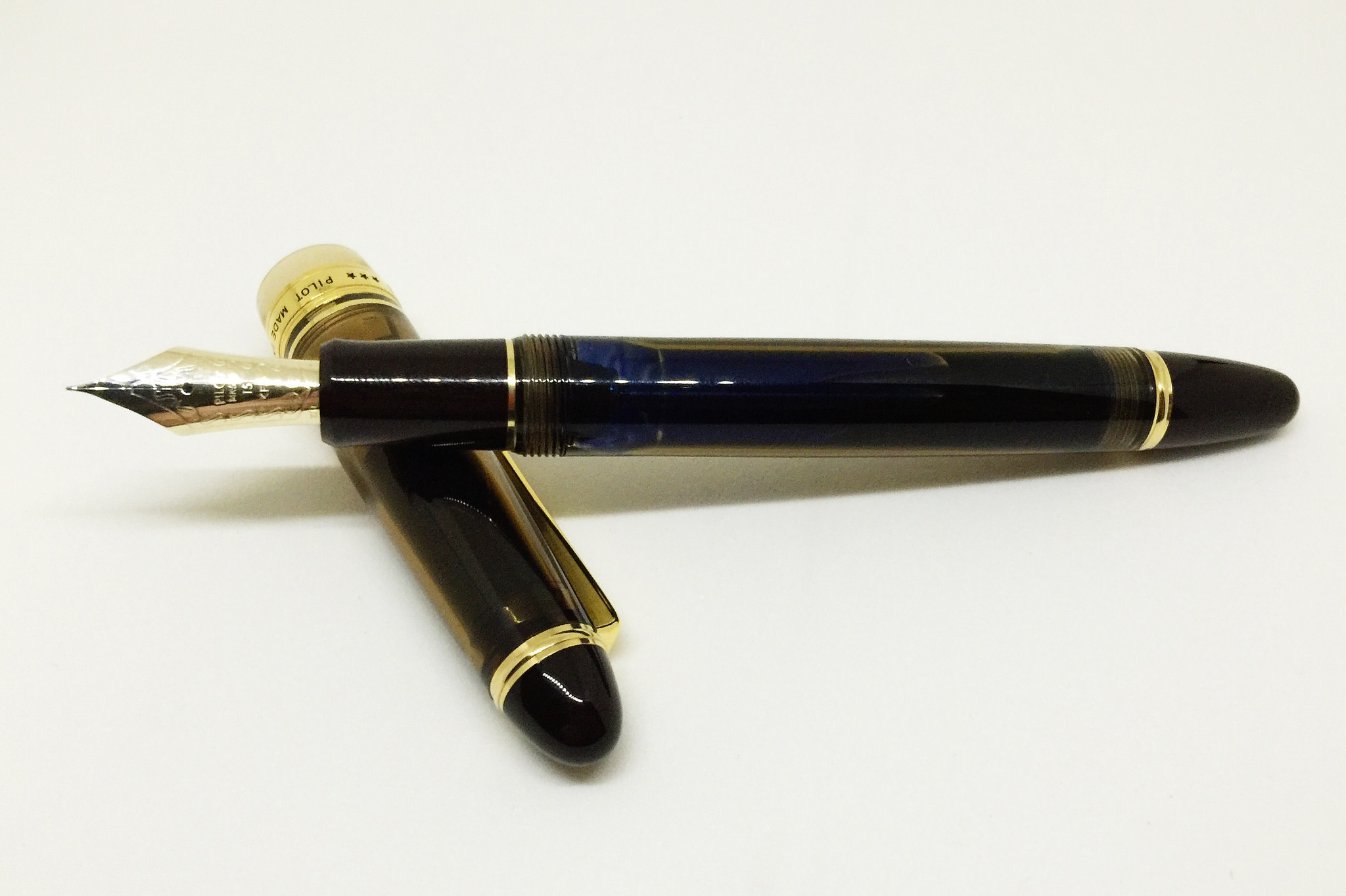
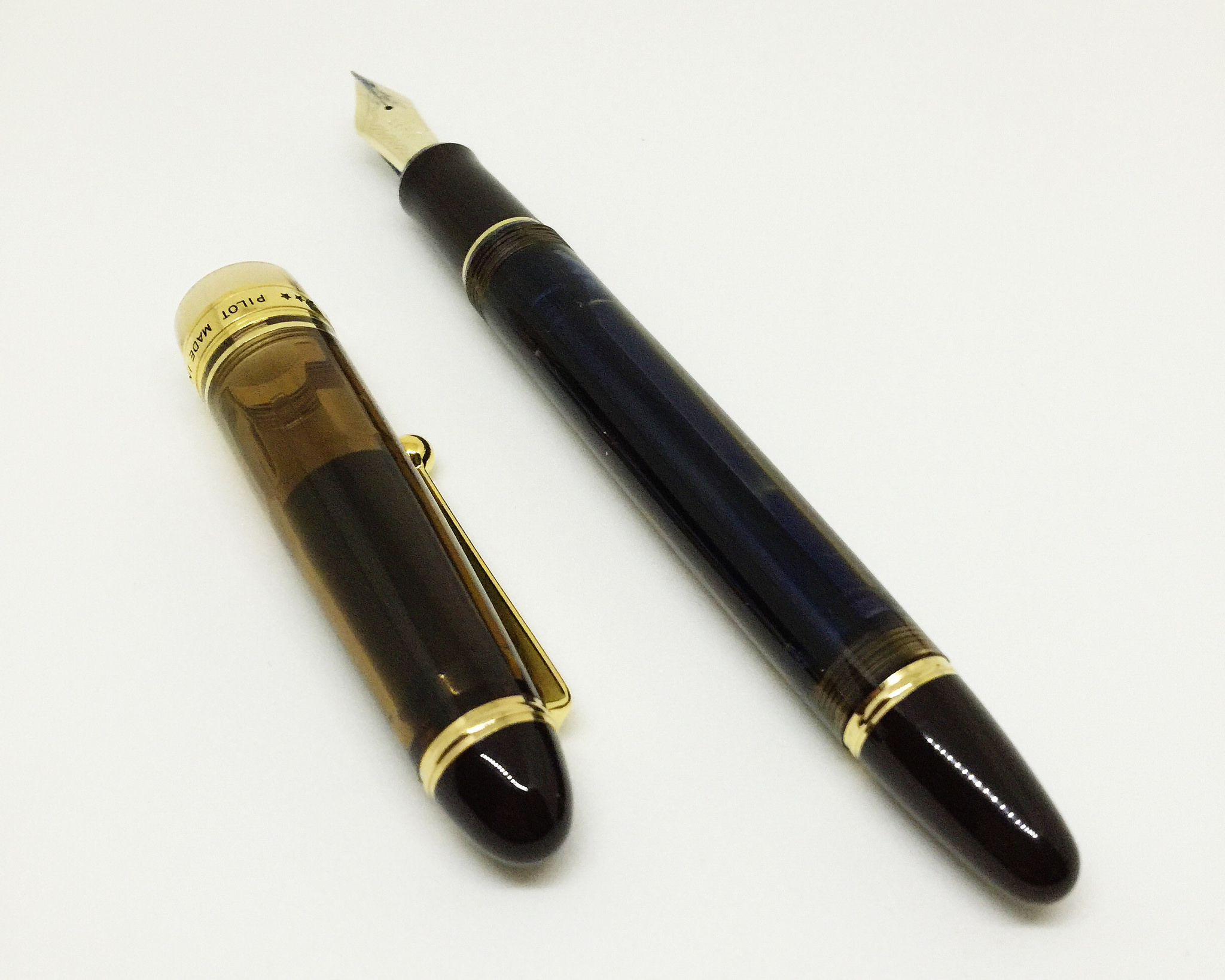
The Pilot Custom 823 is a pen that inspires, and for good reason. The amber colored barrel with brown end caps and gold furniture is striking, and noticeable from a distance. The vacuum filling system seemingly holds an entire bottle of ink, making it perfect for writers, even Neil Himself. The 14 karat gold nib is flawless and glides across the page, as you would expect from Pilot.

This is a grail pen for many. Deservedly so.

In the few weeks I spent with the 823 I can see why so many people love this pen. It has a feel unlike any other Pilot I own. The barrel is slightly longer and larger, and the added weight of the filling mechanism gives it that just right feel. Put it in your hand and start writing and it is magical.

Vacuum filling sytems are not that common so my experience is limited, but the way the 823 fills is incredible. Pull the plunger out, dip the nib up to the section in the ink bottle, and push the plunger back in until it snaps down. In one shot, the barrel was at least 3/4 full. It was so cool and impressive that I emptied the ink back into the bottle and plunged it again. Same result as the first time. So much ink!

Generally speaking, you cannot go wrong with a gold nib from any of the Japanese big three - Pilot, Platinum, or Sailor - but Pilot nibs are my personal favorite. I’ve never had an issue out of the box, and that was the case with the fine 14k gold nib in the 823. From the moment it touches the page it is good to go with clean, smooth lines. I used Pilot Blue Black ink exclusively with this pen and it was an excellent choice.

Looking at pictures of the pen online I somehow overlooked the fact that the end caps were brown, not black like I thought. They match the pen perfectly, and actually made a big impression on me and my perception of the pens looks.

And that is the kicker for me with the Pilot Custom 823. Aesthetically, there is no arguing its beauty. But it’s not for me. I was actually hoping to fall in love with it while it was on loan to me, and while it is an elite writer, I never bonded with it visually. For the price, around $288 which includes a gift box and a bottle of Pilot Blue ink, I need to bond with a pen.

Even though it isn’t for me, I think the 823 could be the one for a lot of fountain pen users. And by the one, I mean that this pen could conceivably be the only fountain pen you own. It does everything well, with no flaws, and no downside. It’s expensive, sure, but if you aren’t like me and NEED a ton of pens, then I’m not sure there is a better choice on the market.

(Goldspot Pens provided this product at no charge to The Pen Addict for review purposes.)

L to R: Pilot Custom 92, Custom 91, Custom 912, Custom 823

L to R: Pilot Custom 92, Custom 91, Custom 912, Custom 823

L to R: Pilot Custom 92, Custom 91, Custom 912, Custom 823

L to R: Pilot Custom 92, Custom 91, Custom 912, Custom 823

Posted on November 16, 2015 and filed under Fountain Pens, Pilot, Pen Reviews.

Pilot Acroball 4 Multi Pen Review

(Jeff Abbott is a regular contributor at The Pen Addict. You can find more from Jeff online at Draft Evolution and Twitter.)

It took me a while to give the Pilot Acroball a shot. I'm a fairly committed Uni-ballb Jetstream fan, and I just didn't have a need to try anything else. Fast forward a bit, and I'd heard enough good things about Pilot's hybrid ballpoint offering to give it a fair shake.

What I love about the Jetstream is how smooth and dark the ink is. It's a fantastic experience for a ballpoint, and it's also my go-to pen for ballpoint situations. They're work horses — dependable and well-made. So, that leaves Pilot with a lot of work to do from the start.

I decided to try one of the multi pens first so I could try several colors at once without having a lot of extra pen bodies lying around. Yeah, I could have ordered one pen with several different refills, but the multi pen is way more exciting. They always bring back the nostalgia of using a Bic 4 pen from childhood, except these write much better.

Look and feel

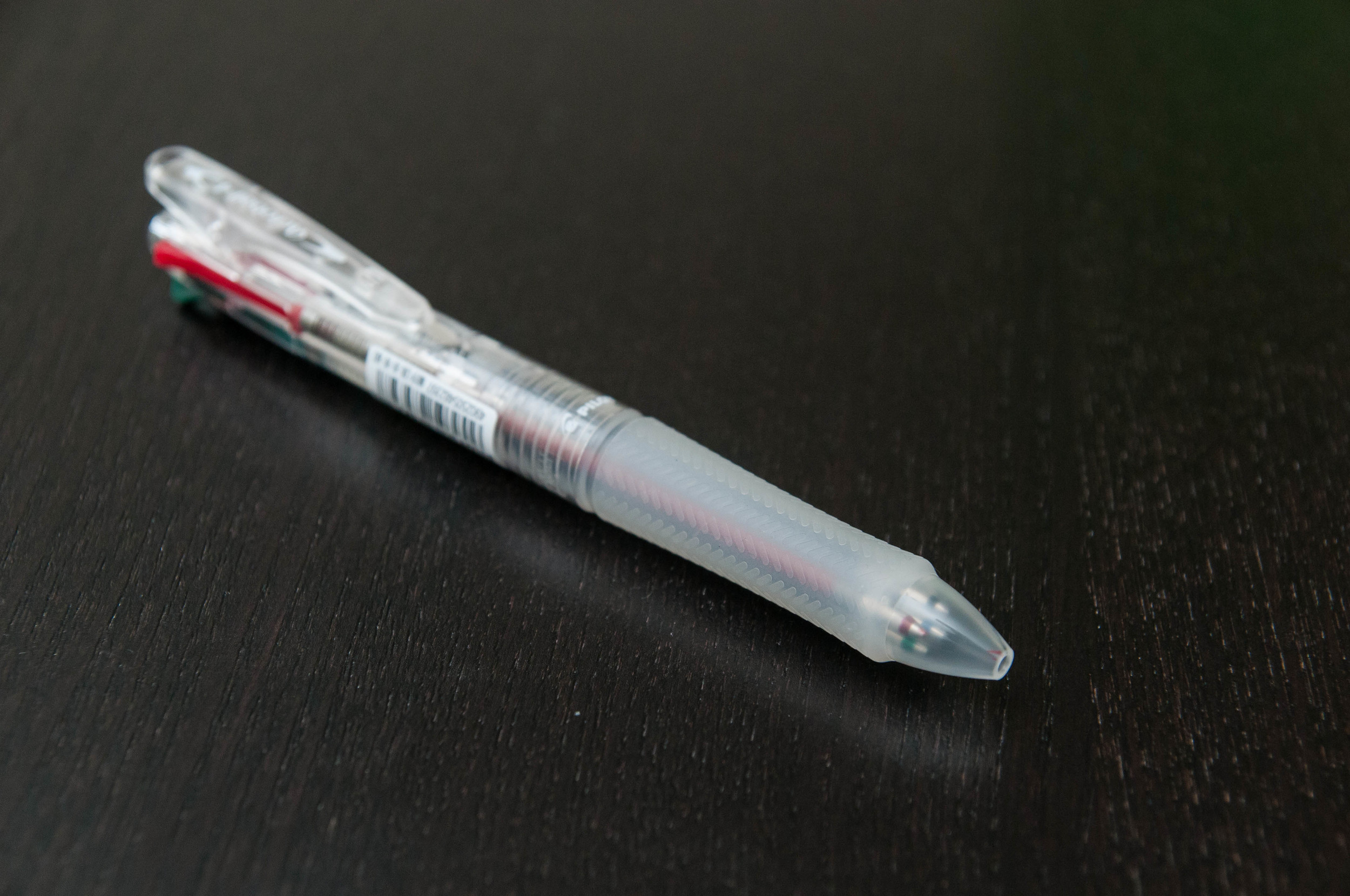
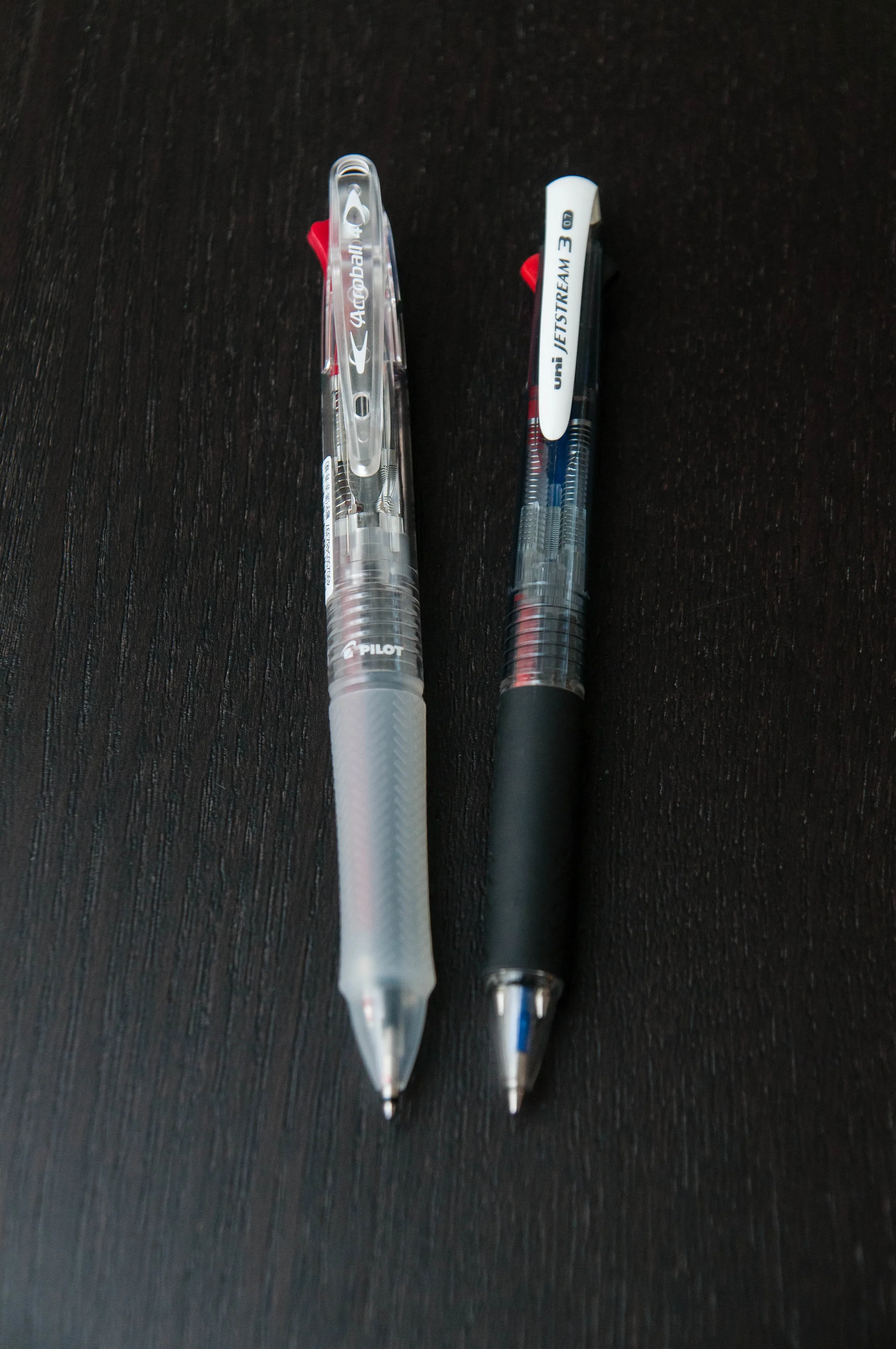
Let's take a look at the outside of the pen first. My first observation is the clip on the Acroball 4. It's a sturdy, spring-loaded clip that feels really nice. That's one thing about the Jetstreams that I don't care for: they have weak clips (especially in their multi pens). When I clip the pen to something, I don't want to worry about it falling off, and the Acroball makes me feel nice and safe.

Another thing that I love about this body is the grip. It's a fat, textured grip that feels good in my hand when writing. It also does a really good job of resisting lint and dust.

The "knocks" for each color are a bit weak, but that's normal for any multi pen. There just isn't much space to include high-quality, sturdy knocks for each cartridge. Yes, some more expensive multi pens have much more sophisticated designs that feel and work great, but they don't cost less than $10 like the Acroball 4.

I went with a clear body, which I'm really happy with. I have a soft spot for demonstrators, and this one fits the bill. There are a few other color options, but most of them feature a partially clear body. The colors only take over the grip and clip pieces on most options. The black one is just...black, and the blue one has a blue transparent body.

Writing

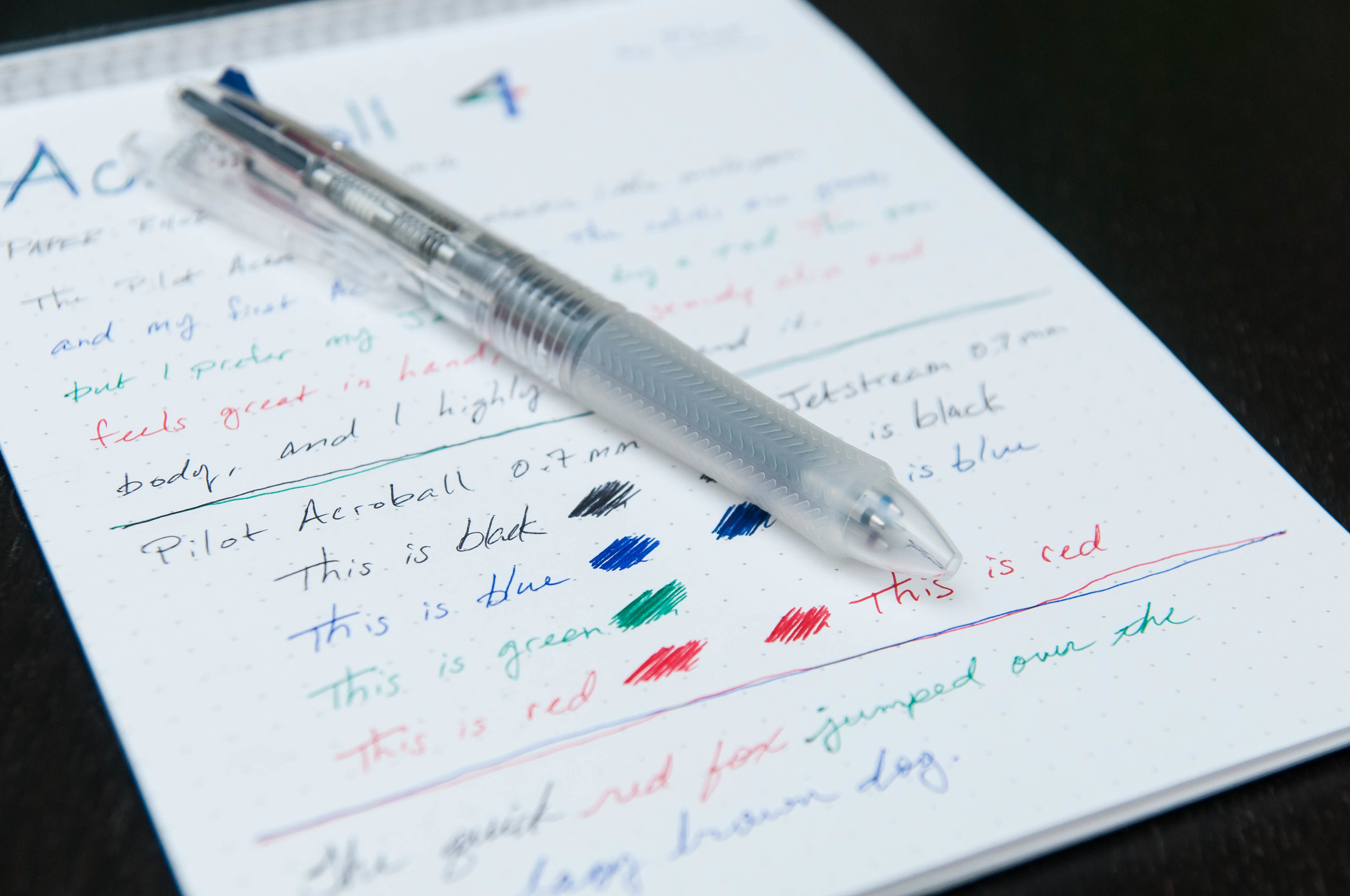
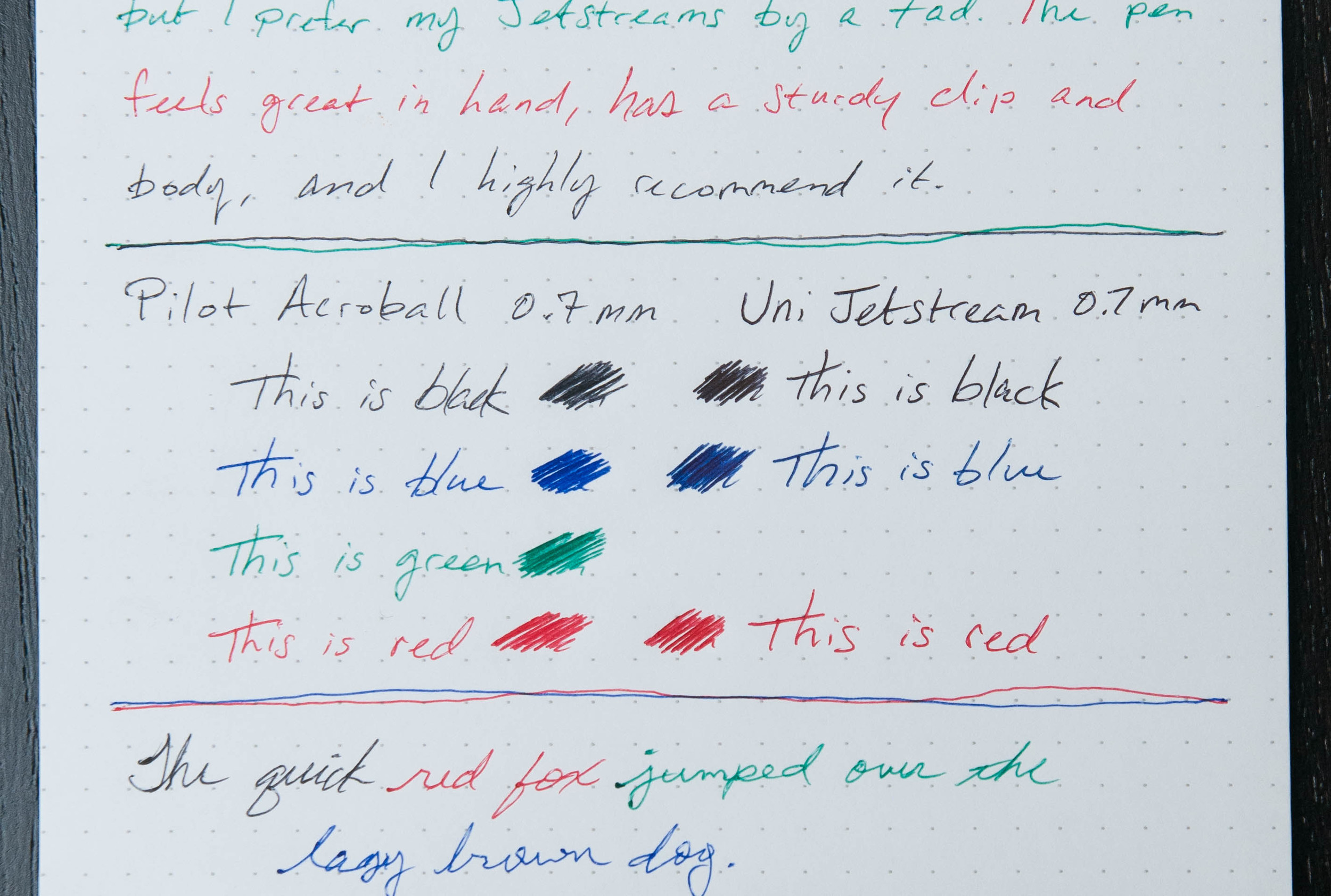
The Acroball is a great writer. Pilot has a really great cartridge here, and I'm happy to use it. But, it just isn't as nice as the Jetstream cartridges. In my experience, the Acroball skips a bit too much when compared to the Jetstream. The colors work well, but the black is a little lighter than I prefer.

To be honest, I can only notice this difference when writing with them on the same page. When I'm just using the Acroball, I don't notice any differences.

Another thing to note in my pen is that the green cartridge is exceptionally scratchy compared to the other 3. I'm not sure if I have a dud cart or if this is normal because of the color and properties of the ink. Who knows. All I know is that I don't use the green cartridge because of the scratchiness.

Overall

The Acroball is a fantastic pen that I highly recommend. Fortunately, this is a pen that most big-box retailers sell, so that means more people are being exposed to it. I'm happy it's out there, but I'm also more happy with my Jetstreams.

I chose the clear model of the Acroball 4, but there are also several other color options.

(JetPens provided this product at no charge to The Pen Addict for review purposes.)

Posted on September 16, 2015 and filed under Acroball, Pen Reviews, Pilot.