Posts filed under Pilot

Pilot Iroshizuku Ku-jaku Ink Review

(Jeff Abbott is a regular contributor at The Pen Addict. You can find more from Jeff online at Draft Evolution and Twitter.)

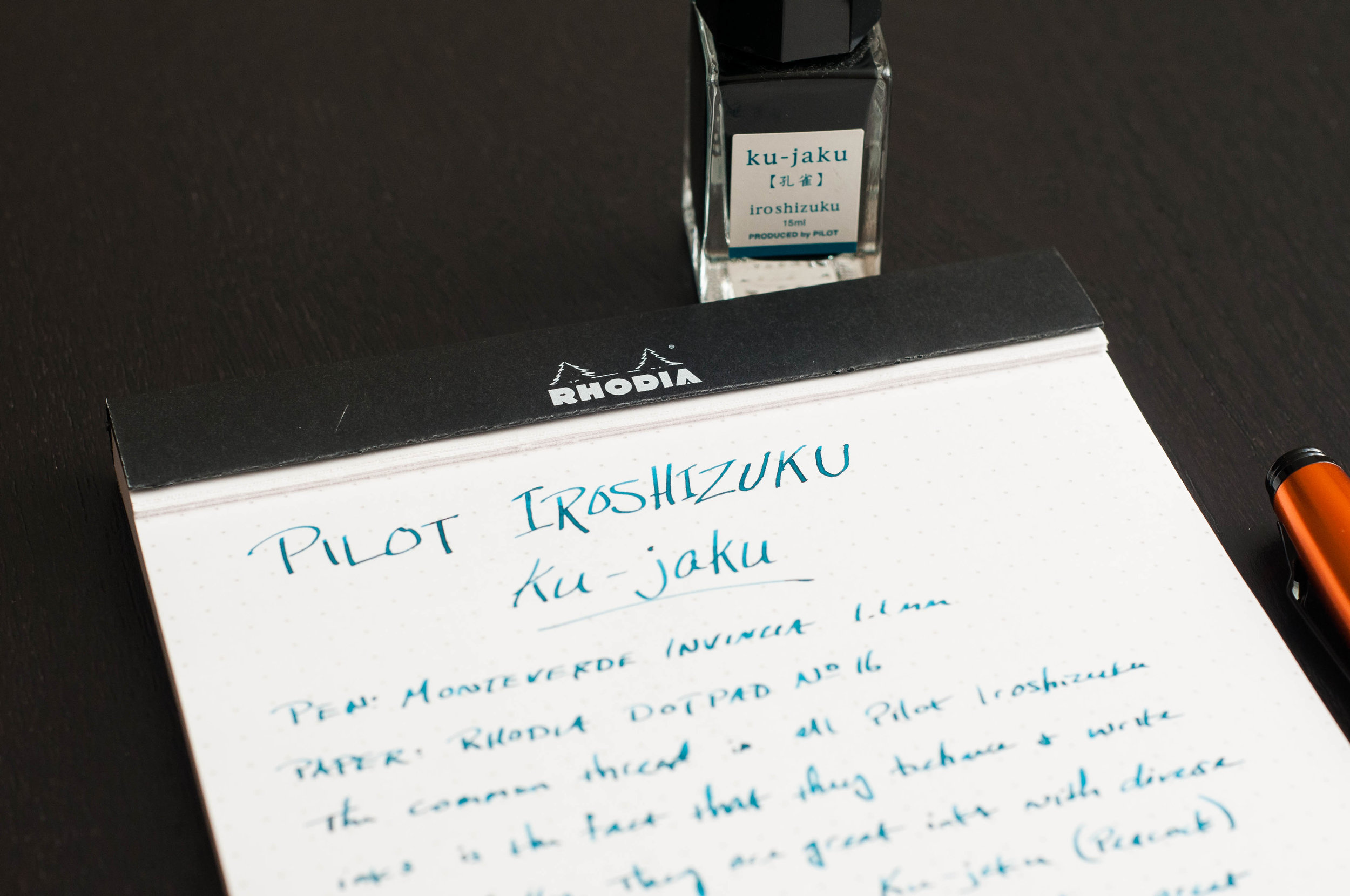
While this ink might be new to me, it's been around for quite some time as part of the Pilot Iroshizuku line. As you might know, some of my favorite inks come from this line, and this one is no exception. Iroshizuku Ku-jaku (Peacock) is a fantastic ink that I've immensely enjoyed using.

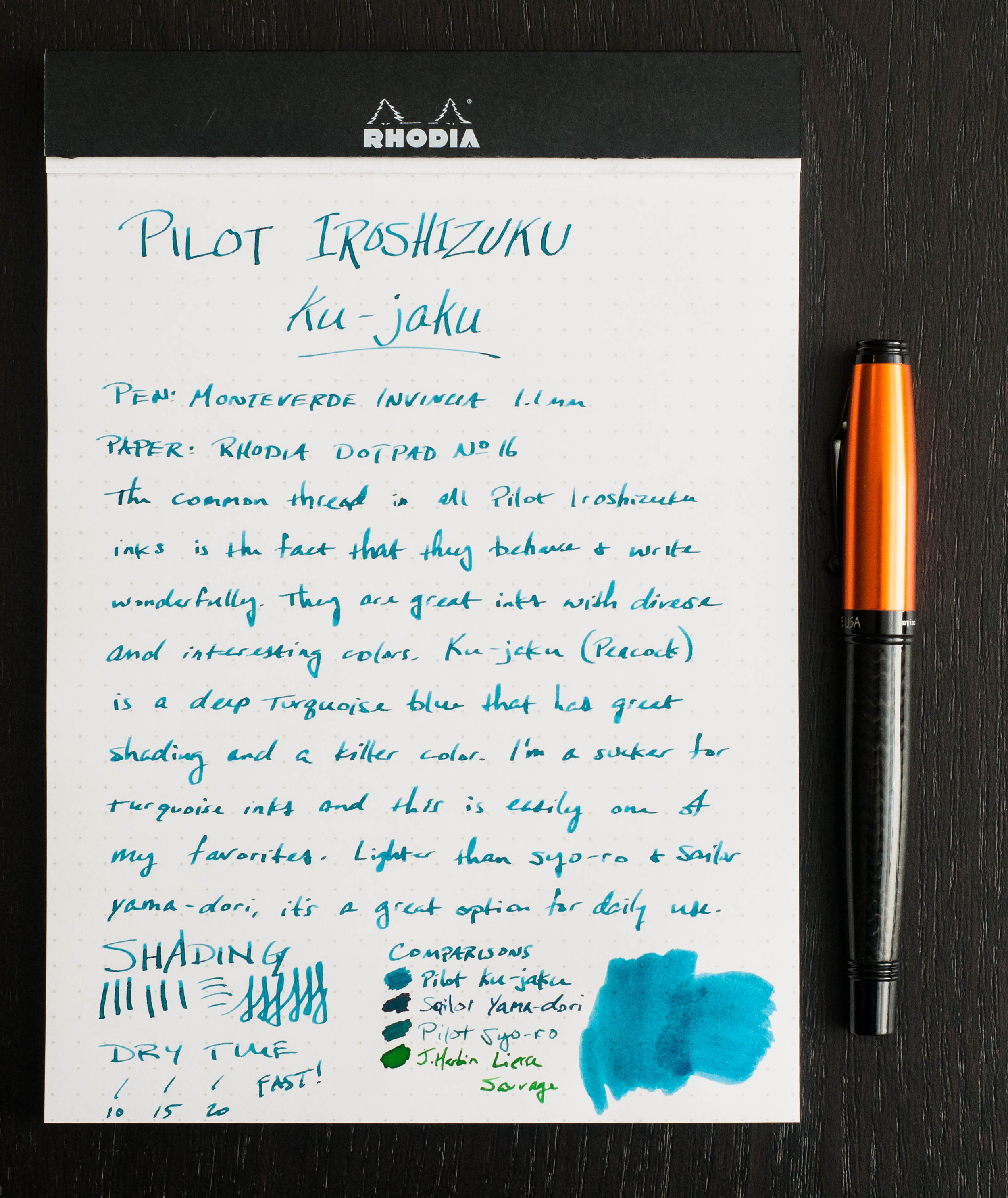
First off, Ku-jaku is a "deep turquoise blue" ink that acts exactly like every other Iroshizuku ink — beautifully. As far as my ink color preferences go, turquoise is probably my favorite variety. I've reviewed Iroshizuku Syo-ro, Sailor Jentle Yama-dori, and Franklin Christoph's Midnight Emerald, and they all share a common shade of dark turquoise with excellent shading. Ku-jaku is no different. The only problem for me is that it's impossible to pick a favorite out of this line-up.

First off, Ku-jaku is a tad lighter than the other inks I've mentioned. Because of this, you can see a lot more of the blue-green popping off the page when you write. This probably makes it less "business-friendly," but it's worth it. Being called "peacock," you have to understand that this ink has to show off its colors. And, if you use a broader or specialized nib, it has no problem showing it off.

Just like the other dark turquoise inks in my list, Ku-jaku also shades beautifully. Shading is a big factor for all of my favorite inks, and the subtle changes that I see in Ku-jaku are marvelous. The light end of the spectrum is a medium, electric green that deepens into a dark blue-green that reminds me of the sea. If you're a fan of shading, this ink will not let you down.

When it comes to dry times, Ku-jaku is pretty fast. In my tests, the ink was dry by 20 seconds, but pretty much smudge-proof by about 12-15 seconds. Only a very deliberate and heavy rub would smudge the ink after about 12 seconds. This is a great drying time and something to consider if fast drying inks are important to you.

Feathering is non-existent if you're using decent paper, and show-through is minimal. Really, every aspect of this ink is on-par with all of the Iroshizuku offerings.

Of course, you can pick this up in a 15ml bottle or a larger 50ml bottle. I opted for the smaller bottle on my first time around, but I'll definitely go for the larger one when it's time to replenish my stock. So far, this ink has been going fast due to the popularity.

It's an Iroshizuku, so you know it will behave well. All that's left to consider is the color. Turquoise fans will love it, but it might have limited value if you already own some of the comparable inks mentioned here. Still, it's unique enough to merit space on my shelf!

(JetPens provided this product at no charge to The Pen Addict for review purposes.)


Enjoy reading The Pen Addict? Then consider becoming a member to receive additional weekly content, giveaways, and discounts in The Pen Addict shop. Plus, you support me and the site directly, which I am very grateful for.

Membership starts at just $5/month, with a discounted annual option available. To find out more about membership click here and join us!
Posted on August 31, 2016 and filed under Pilot, Iroshizuku, Ink Reviews.

Pilot Capless Decimo Fountain Pen Review

(Jeff Abbott is a regular contributor at The Pen Addict. You can find more from Jeff online at Draft Evolution and Twitter.)

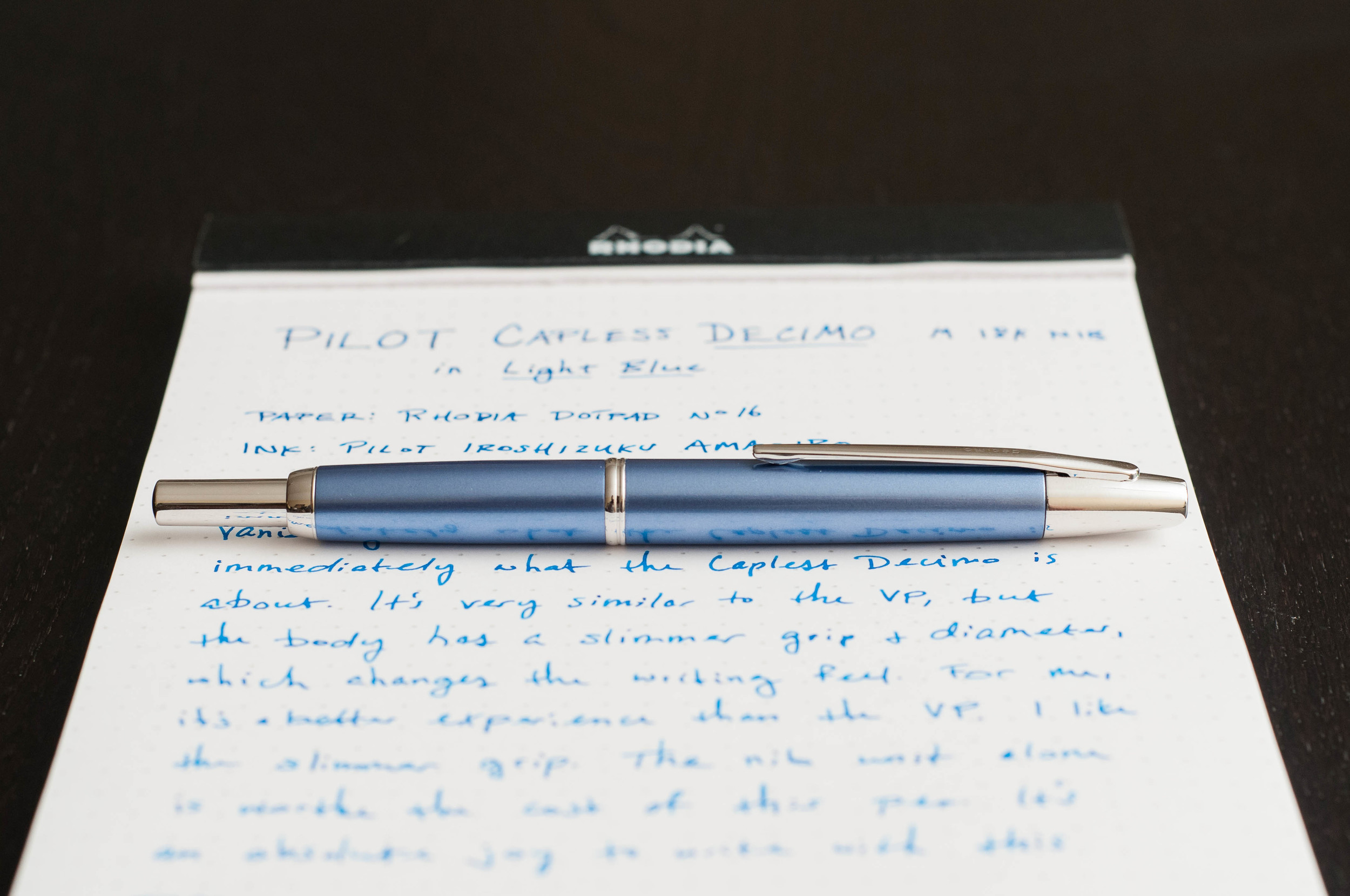
The Pilot Vanishing Point has long been a point of discussion on the podcast, and typically polarizes users because of the unique shape and clip positioning. If you're a fan of the Vanishing Point, then you might be interested in the Capless Decimo from Pilot, as it's essentially the same pen with a smaller barrel diameter.

If, however, you don't care for the style or grip of the Vanishing Point, the Capless Decimo won't do anything for you since it uses the exact same grip. The clip is a little smaller, but not enough to make any difference in how it feels, and the larger issue remains the placement of the clip more than the size.

For me, I'm a huge fan of the Vanishing Point, and I was excited to try out the cousin based on the different barrel diameter and color options. My verdict? I prefer the Decimo over the standard Vanishing Point exclusively because of how it feels in my hand. That smaller diameter barrel hits the sweet spot for me. Luckily, the Vanishing Point and Decimo pens use the exact same nib units!

Appearance and feel

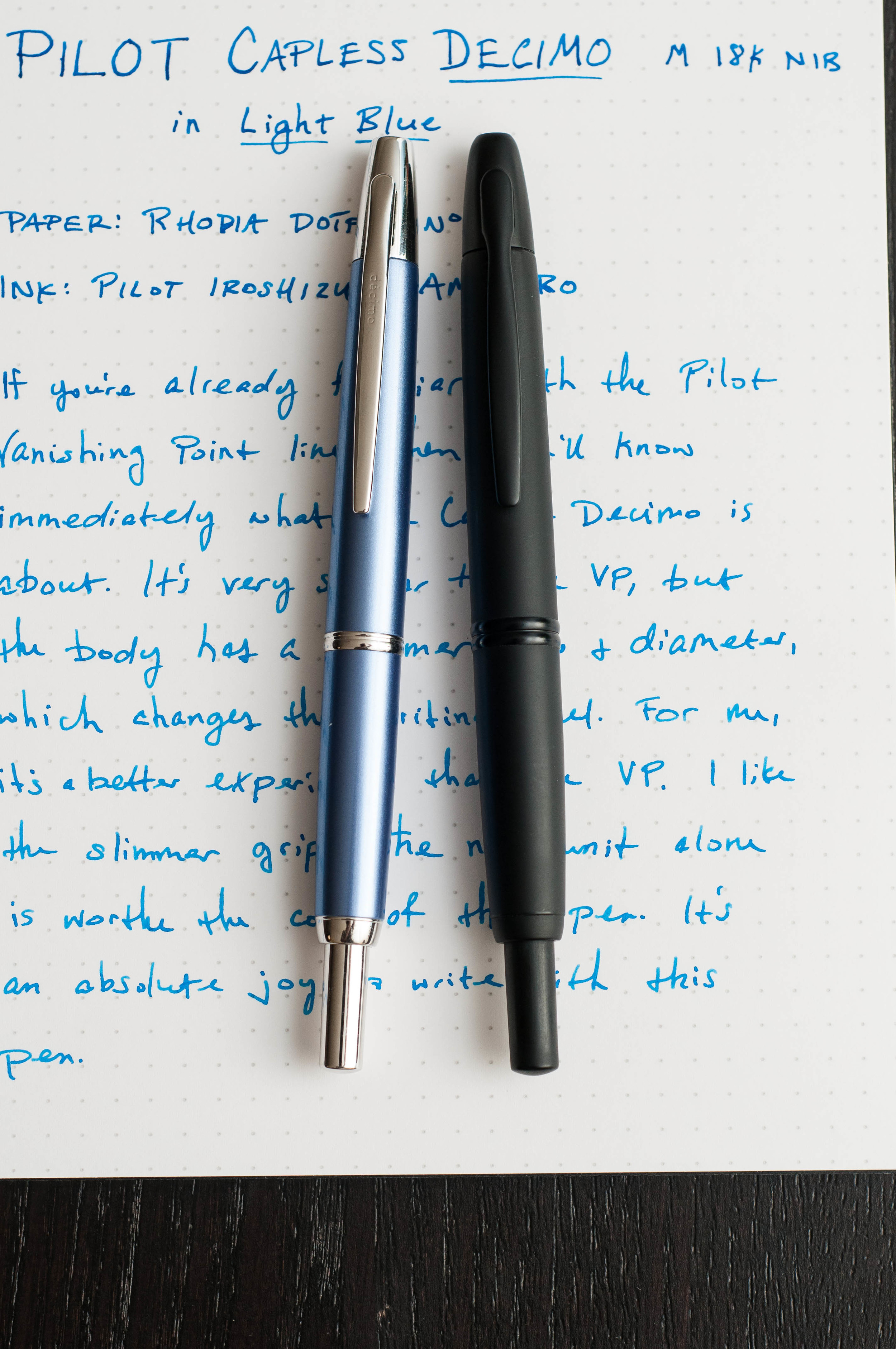
At first glance, the Decimo looks like a Vanishing Point, and vice-versa. It's difficult to tell them apart on their own, but there are a couple of factors that make it a bit obvious. For one, "decimo" is printed on the clip of the Decimo models, while the Vanishing Points only feature the "Pilot Japan" print on the barrel above the mid-section. The Decimo also includes this print in the same location. So, in a pinch — just look at the print on the clip to identify a Decimo.

Along with the printing on the clip, the clip has a slightly narrower shape than the Vanishing Point. It's more slim and matches the smaller diameter barrel perfectly. The tip of the pen looks a bit smaller than the Vanishing Point, but it's hard to tell from the naked eye. Apart from these differences, I can't find any others when looking at them side by side.

Weight-wise, the Decimo is a tad lighter. The Vanishing Point has long been a favorite pen of mine, and that doesn't change. But, I prefer to Decimo over the Vanishing Point because of how the Decimo feels in my hand when writing. It's a more enjoyable experience. That's not to say my Vanishing Point is annoying or negative — it's just not as enjoyable as the Decimo.

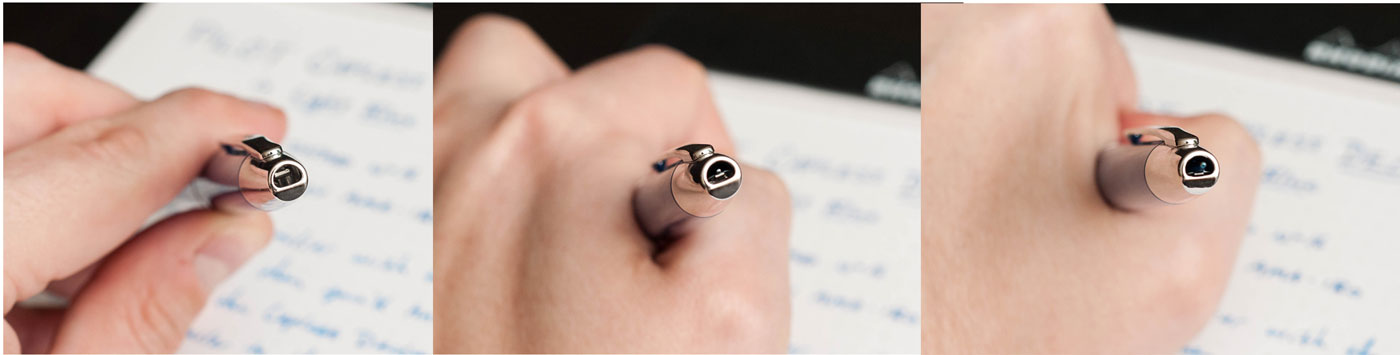
For me, the clip placement is perfect for how I grip pens, and it didn't take any adjustment since I was already accustomed to the Vanishing Point.

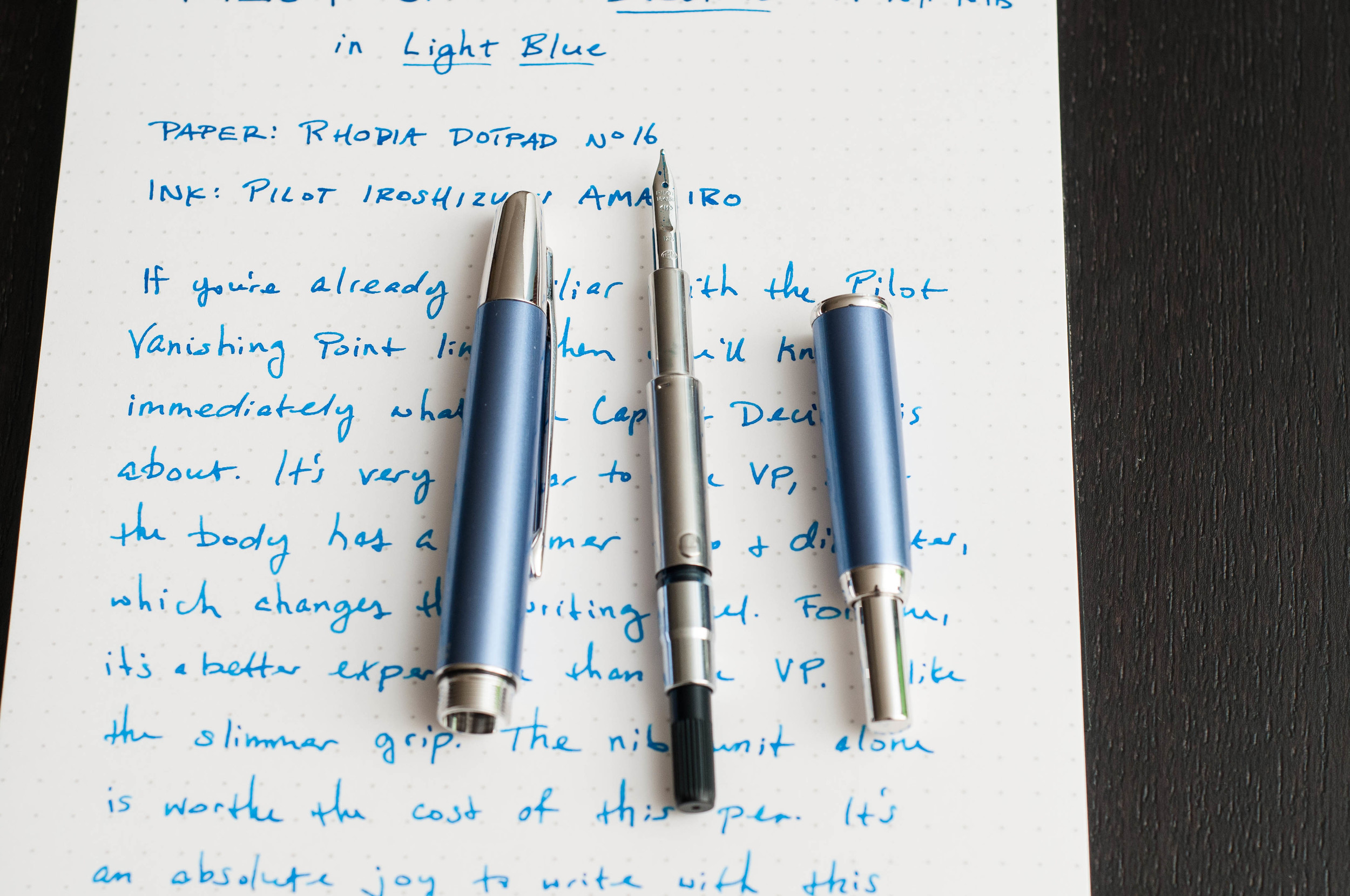
If you're unfamiliar with the Vanishing Point and Capless lines, the retractable mechanism is really well-designed. When the pen is retracted, there's a small door that closes on the inside of the tip to keep the nib from drying out. As you extend the nib, the door opens. In my experience, the pen never dried out after sitting for more than 5 days, and didn't have any hard start or skipping issues.

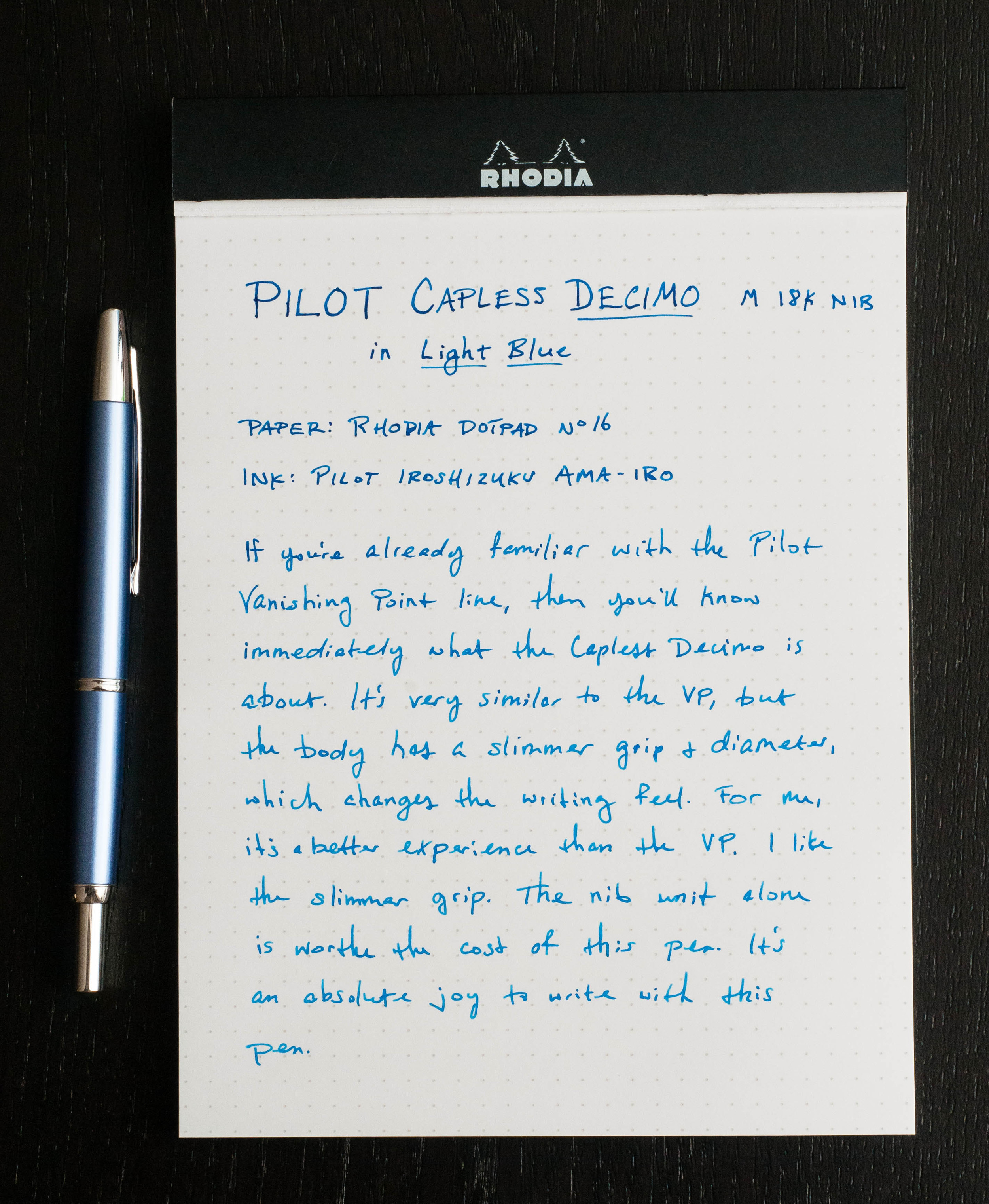
There are some unique colors in the Decimo line, but nothing out of the ordinary if you stay in the same price point. The Light Blue color that I received is nice, but it's not my favorite out of the full lineup. Although, the Iroshizuku ama-iro pairs very nicely with this body color — almost like they were made for each other.

Writing performance

I'm practically in love with the nib on this pen. It came outfitted with an 18k gold Medium nib unit that writes like a dream. I have one other 18k Medium gold nib from Pilot, and I've exclaimed my affection for that nib as well. Pilot continues to impress me with their out-of-the-box nib tuning and performance, and this Decimo is just another tick on the "winning" side for me.

The nib glides over all types of paper like satin over glass. The medium nib is wet enough to show off ink properties and provide a good amount of line variation, but still small enough for everyday use. There's a subtle amount of feedback in the nib when writing, but it's just enough to let you know that you're writing on paper instead of butter.

Of course, being a gold nib, it exhibits a small amount of flex if you apply pressure. It's not something I do often, but the added flourish is worth it in some occasions (even with my shabby handwriting).

I expected good things when I received the pen, but my expectations were exceeded immediately after I inked up the pen.

Conclusion

In summary, I love this pen, and I love the nib unit even more. I'm continually impressed by the Pilot brand, and this pen has been no exception. I really wish there was a readily-available version of this pen in a clipless model so that more people could enjoy the Vanishing Point and Capless lines. I'm lucky in that my grip happens to match up with the intended grip on the pen, but it's a shame that it makes it difficult or intolerable for other writers.

The Pilot Capless Decimocomes in Burgundy, Champagne, Light Blue, and Purple from Goldspot and retails for $140. And again, the nib units are compatible with both the Capless Decimo and the Vanishing Point.

(Goldspot provided this product at no charge to The Pen Addict for review purposes.)


Enjoy reading The Pen Addict? Then consider becoming a member to receive additional weekly content, giveaways, and discounts in The Pen Addict shop. Plus, you support me and the site directly, which I am very grateful for.

Membership starts at just $5/month, with a discounted annual option available. To find out more about membership click here and join us!
Posted on July 13, 2016 and filed under Pilot, Vanishing Point, Pen Reviews.

Pilot G-Tec-C Navy And Turquoise Review

The Pilot Hi-Tec-C is a pen that changed how many people think about pens. Artists and designers love the micro-tip sizes - all the way down to .25 mm - plus the needle tip which allows for good sight lines and ruler usage. It also changed the Kickstarter pen market, becoming the go-to refill when pens on Kickstarter first became a thing.

As famous as this pen is, it isn’t a good pen for many people. Over the years, the best word I have found to describe it is finicky. If you are willing to put up with some dry starts until the pen gets flowing, you will find one of the best pens on the market, especially for small writing or detailed artwork. If the output is not worth the initial frustration - and it does get very frustrating at times - you will swear this pen off for a lifetime, like many rightfully have.

The 0.3 mm black Pilot Hi-Tec-C is a personal favorite of mine, and the one I get the best and most consistent performance from. I love what my writing looks like with it, and it is a great sketching pen too. I always have one with me in either the basic grip barrel or in my Pen Type-B barrel.

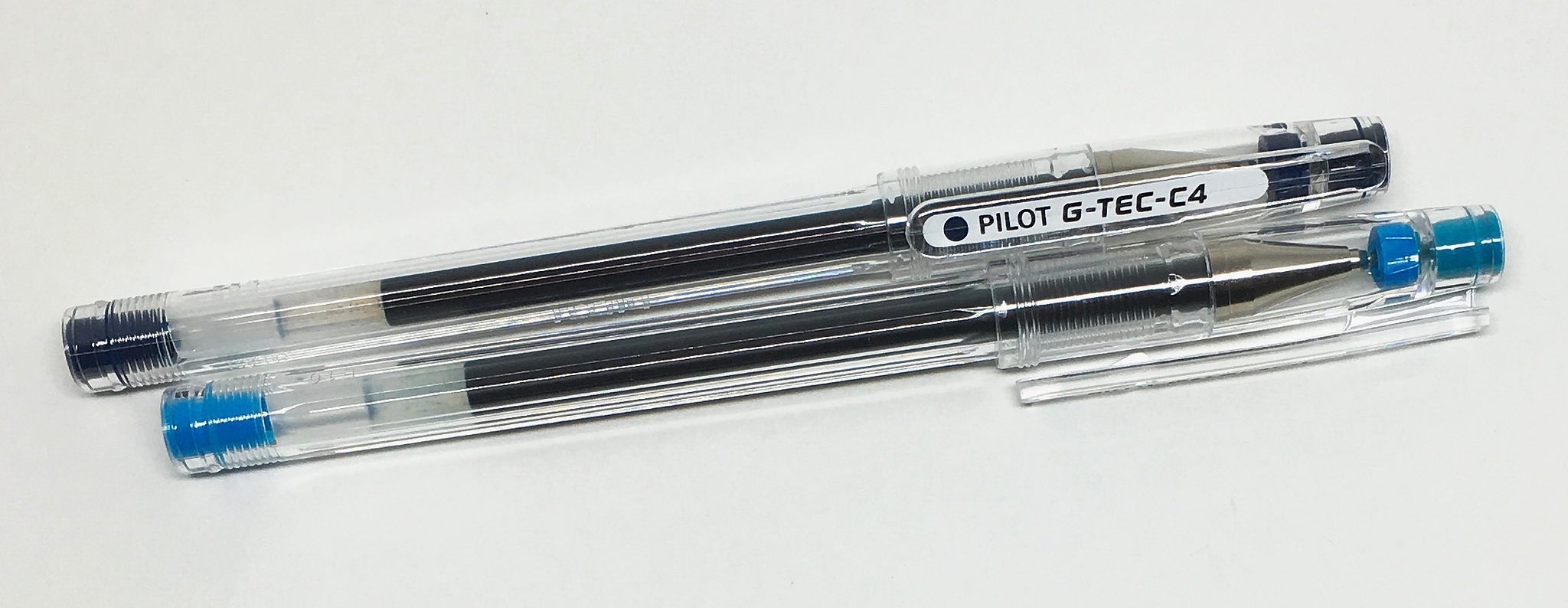
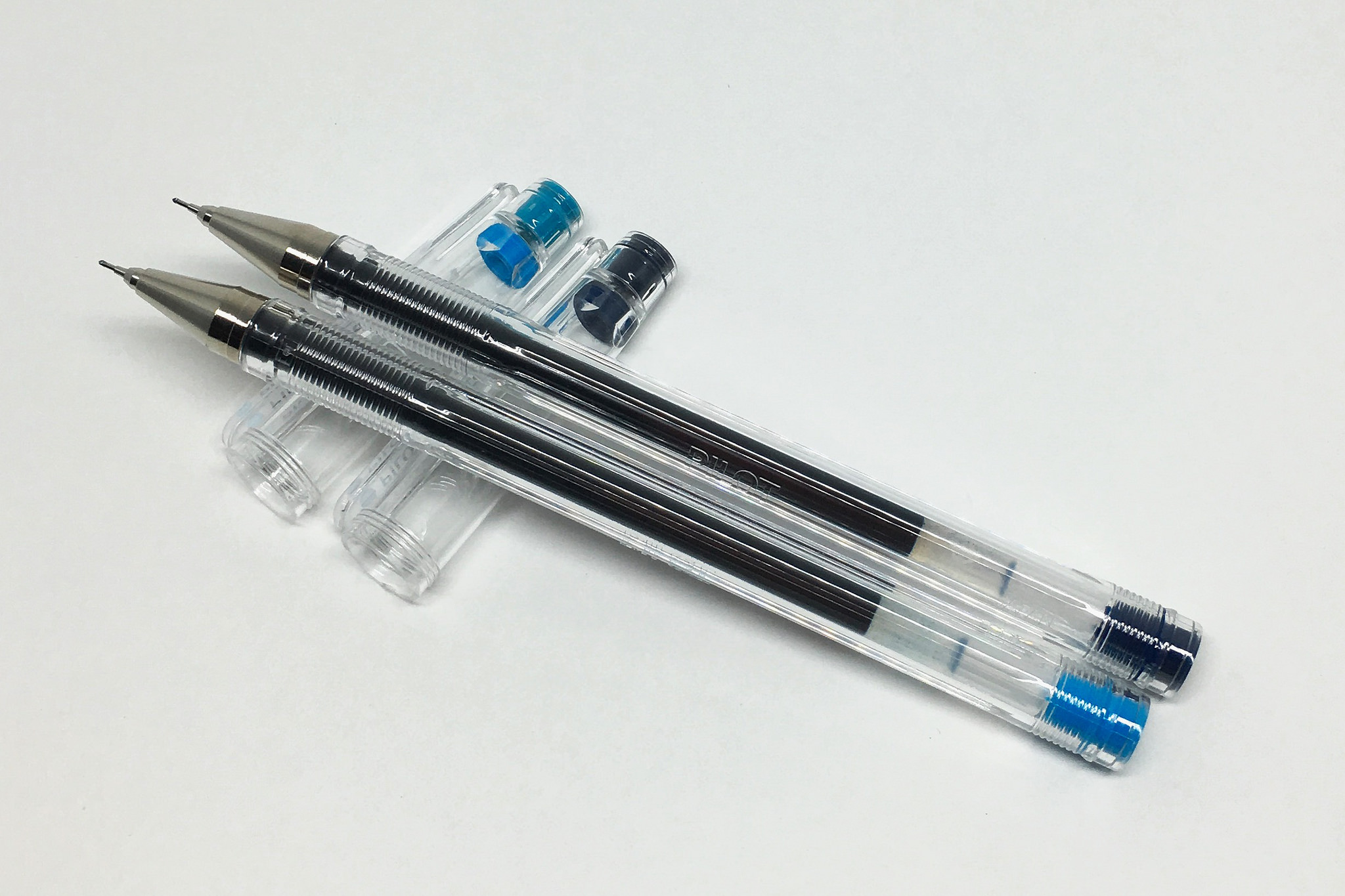
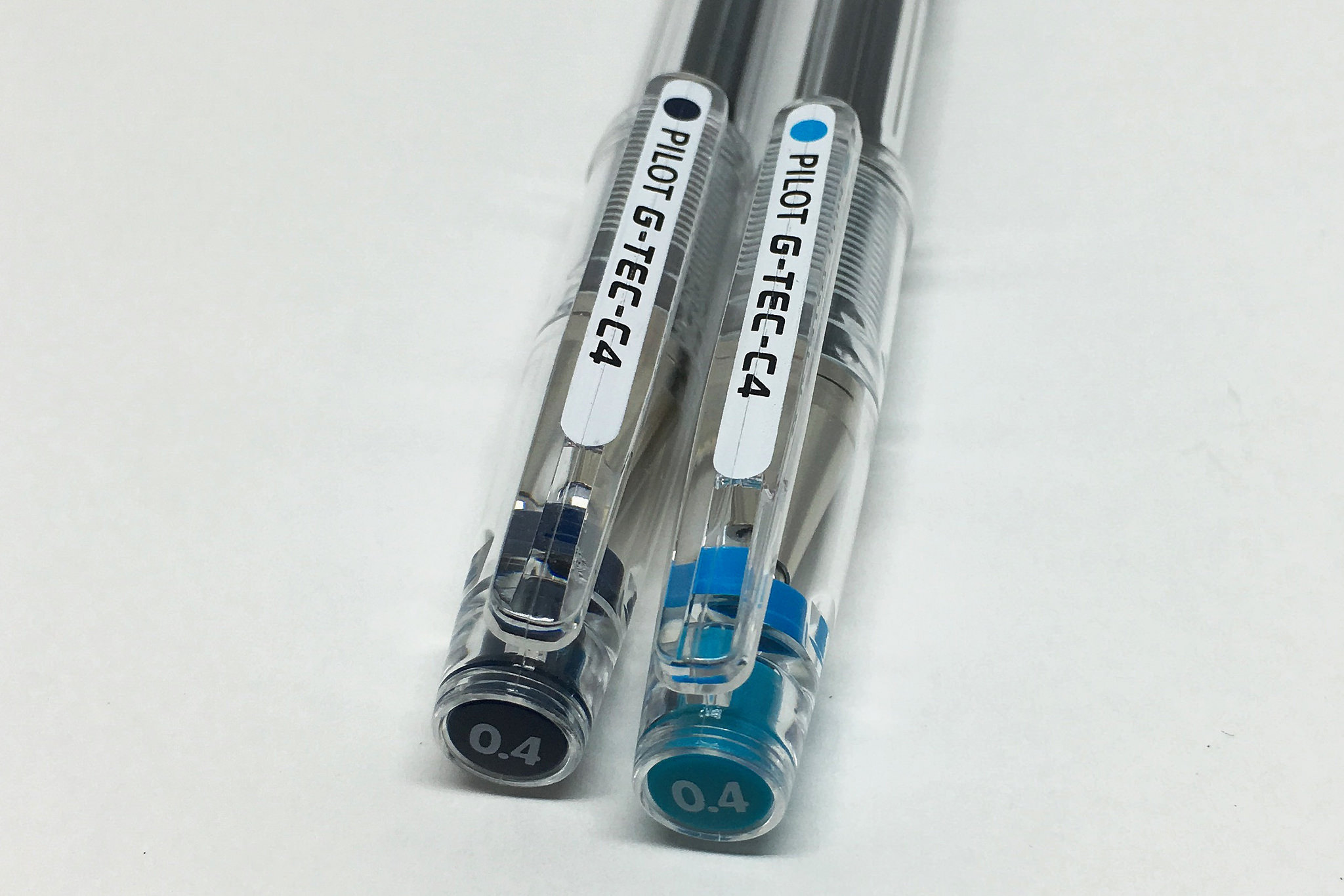
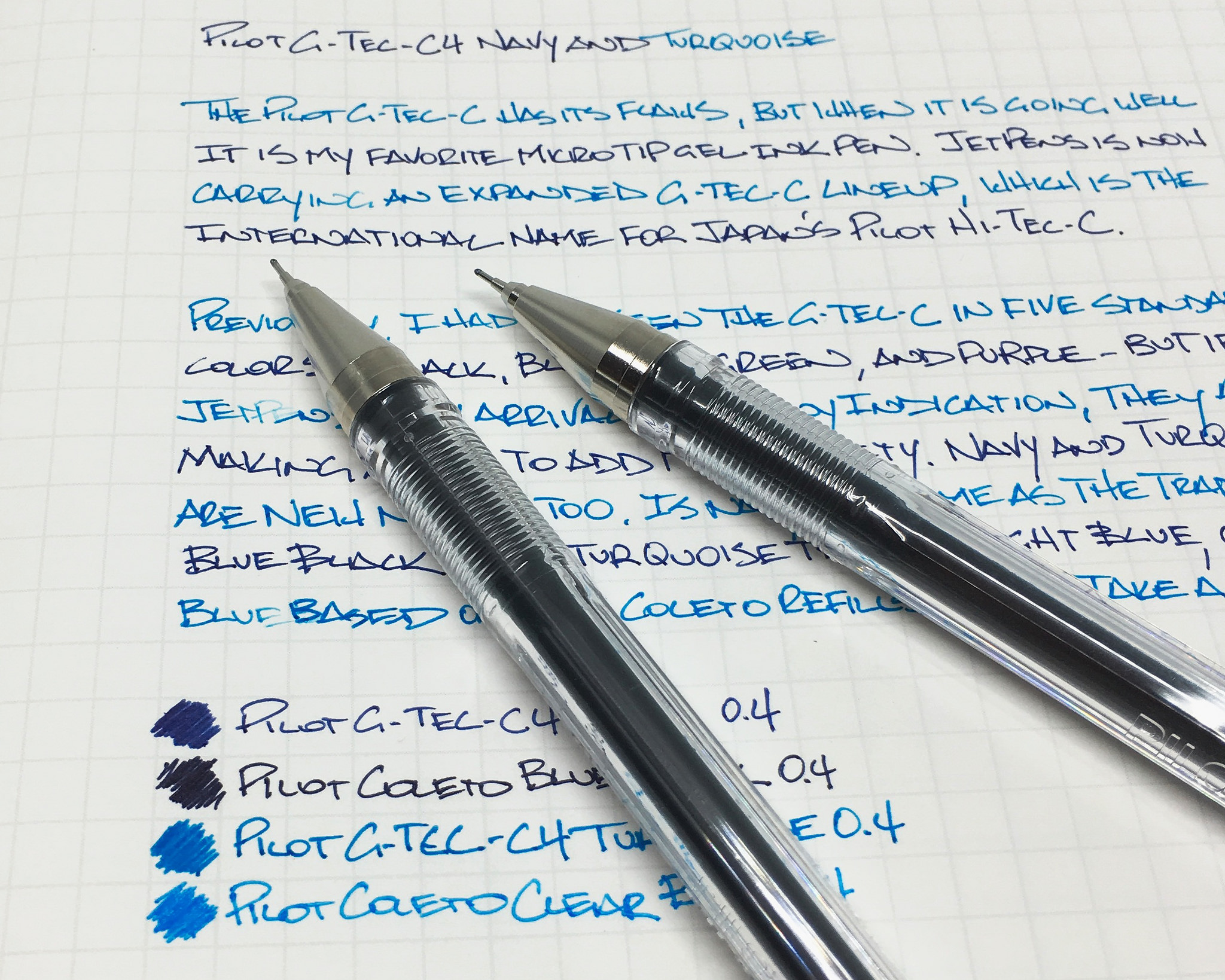
Recently, Pilot has expanded their G-Tec-C lineup, which is the name of this line of pens outside of Japan, to offer more than the black, blue, red, green, and purple that formerly made up the G-Tec-C group. Navy and Turquoise are the two I chose to review because these ink colors have not been offered by this name in the original Hi-Tec-C lineup as best as I can remember.

I am very familiar with Pilot Hi-Tec-C Blue Black and Clear Blue, which I was guessing these two new colors would match, but they are different shades. Navy is much lighter than the Blue Black refill I have, while Turquoise is close to Clear Blue but ever so slightly darker.

The Navy 0.4 mm model wrote wonderfully throughout the entire review, through all of the stops and starts. The Turquoise model not so much. You can see how light the ink is at the start of some of the Turquoise lines, which is typical bad G-Tec-C performance. This is why I almost never recommend this pen without a pile of caveats.

That doesn’t stop me though. I’m stubborn, and the output gives me a line that no other gel ink pen can match. Maybe you will like it too, and hopefully these new G-Tec-C colors are around to stay for a while.

(JetPens provided this product at no charge to The Pen Addict for review purposes.)


Enjoy reading The Pen Addict? Then consider becoming a member to receive additional weekly content, giveaways, and discounts in The Pen Addict shop. Plus, you support me and the site directly, which I am very grateful for.

Membership starts at just $5/month, with a discounted annual option available. To find out more about membership click here and join us!
Posted on July 11, 2016 and filed under Pilot, G-Tec-C, Pen Reviews.