Posts filed under Pilot

Pilot Iroshizuku To-ro Fountain Pen Ink Review

Pilot Iroshizuku To-ro Fountain Pen Ink Review

Pilot has been actively updating the full Iroshizuku Fountain Pen Ink lineup over the past few years by removing underperforming colors, and adding new shades to fill in the gaps. Their choices have been questionable these past few rounds, but they nailed the newest three additions that launched in Fall 2024.

The newest shades are the Wintery-Blue Rikka, the deep Purple-Red-Black Syun-gyo, and the one I’m discussing today, the Warm Lantern Yellow-Orange of To-ro. Universally, these have been well-received, although did they really need another Blue? Rikka is fine, but I believe the least interesting of the bunch. Syun-go seems to lead the sales and usage charts - anecdotally, at least. To-ro, well, that’s a Brad ink, so let’s get into it.

Pilot Iroshizuku To-ro

Several years ago, as part of Pilot’s 100th Anniversary celebration, they launched an ink called Daikokuten, which quickly became one of my favorites. I classify it as a Yellow ink, and it is shockingly legible. I had been waiting to see if Pilot would bring it, or something similar, to the main Iroshizuku lineup, and instantly wondered if To-ro was it.

Not exactly, but To-ro may be better for more people with shades of Orange mixed with Yellow. A comparison swatche shows the differences:

Daikokuten vs To-ro

To-ro is clearly more Orange on the page, but not as Orange as Pilot’s other options in the lineup, Yu-yake and Fuyu-gaki. I think Yu-yake is closer to a standard shade of Orange, and Fuyu-gaki is the Red-Orange option. To-ro leans more yellow, and has an interesting vibrancy about it, making it perfectly legible on the page, even with my small handwriting.

Like all other Iroshizuku inks I’ve tried, the performance is right down the middle. They have great flow, good color, average dry time, moderate shading, and almost no sheen. In short, they are a Goldilocks performer. Price-wise, at $28.50 for 50 ml, they creep over into the expensive side of the ledger, but I think that’s fair for the quality. The bottle design is top-notch, as well.

Pilot Iroshizuku To-ro Lines

Given all that, how does To-ro rate among the new three inks? I still think Syun-gyo is the best - and most popular - of the new colors, for good reason. It is the most different shade, and most usable on the page. To-ro is a good addition to the lineup, but with it, we are now teetering on the edge of maximum Oranges for a 24 ink collection. Will Pilot continue to discontinue underperforming inks and create new ones? I wouldn’t be surprised, but I’m not sure this is an every year thing unless they grow the SKU count of the Iroshizuku lineup.

Pilot Iroshizuku To-ro Writing

To-ro is an ink that is right up my alley, and a good switch up from the hotter Oranges I frequently use. It clears the light shade barrier by a good margin, and is easily readable on the page. I see this being a frequent refill option for many of my pens, and I can’t wait to see where it lands next.

(JetPens provided this product at no charge to The Pen Addict for review purposes.)


Pilot Iroshizuku To-ro Line Art
Posted on June 9, 2025 and filed under Pilot, Iroshizuku, Ink Reviews.

Pilot Silvern Fountain Pen Review

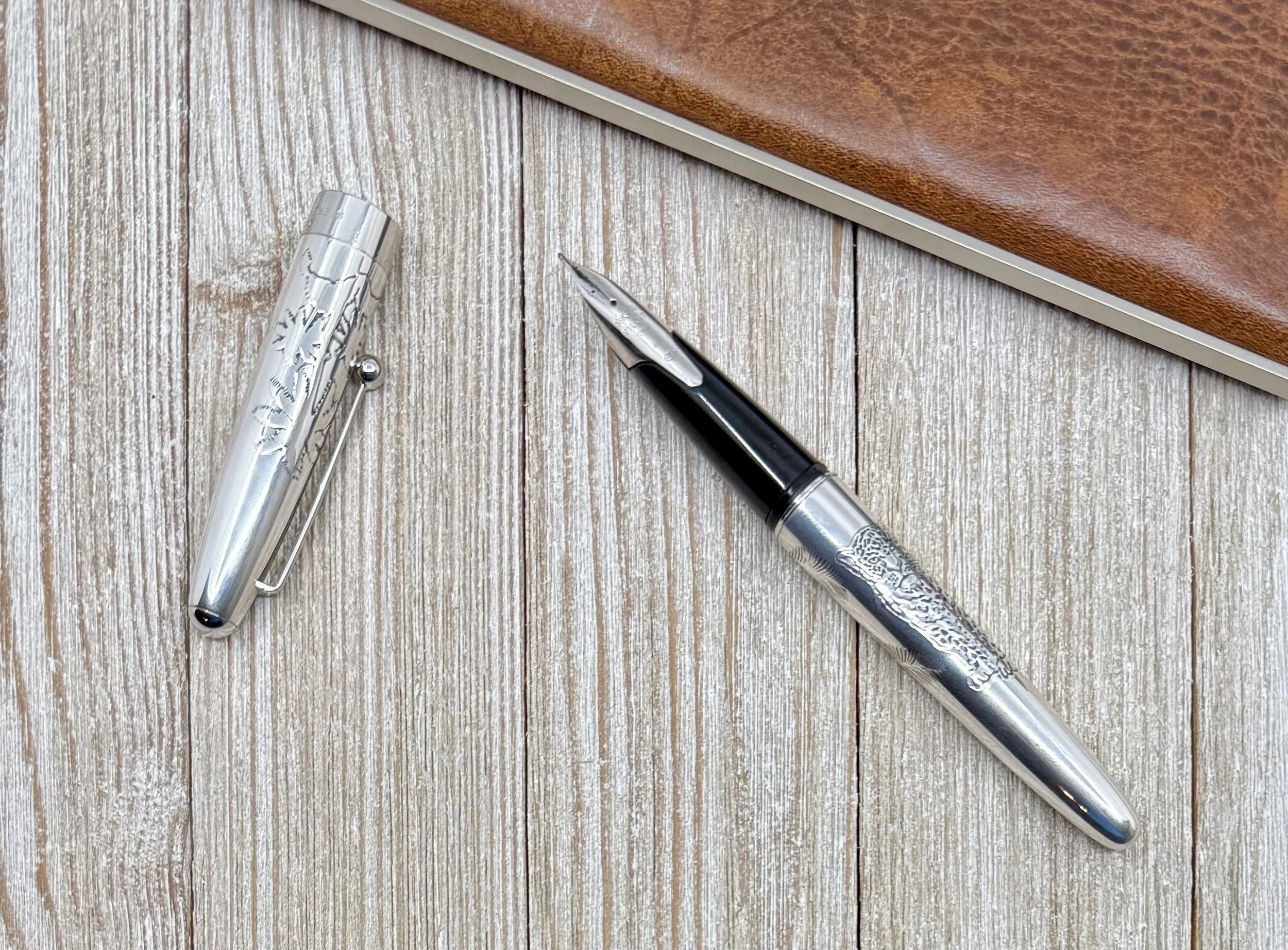
Pilot Silvern

When I think about having a pen that I can use all day, every day, I have a few boxes it needs to check:

— Goldilocks size: not too big, not too small

— Light, and balanced

— Comfortable grip section

— Great nib

— Cartridge/Converter filling system

The Pilot Silvern checks all of these boxes for me. It is also a stunner, which certainly helps its cause as the one pen that can do it all.

The Silvern came into existence around 1970, which, in my opinion, was Pilot’s heyday of design. Taking cues from the Pilot Elite, and later, the Pilot Custom, the Silvern blinged out those models with a Sterling Silver exterior barrel. It has been a staple of Pilot’s product lineup ever since, with the last several years seeing it used as a platform for unique design elements throughout the barrel.

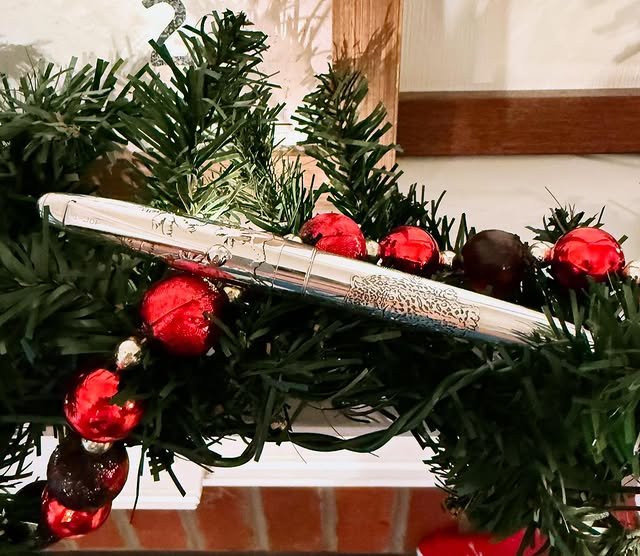
My review pen is the Jaguar model, which features this cuddly beast on the prowl through the jungle. The level of detail shows off all its spots, as it sneaks through the palm leaves, trees, and bushes. It’s a fantastic scene laid out on the Sterling barrel, and something Pilot does well throughout the Silvern lineup.

The shape of the Silvern is torpedo-like, with slight tapers towards rounded ends. The grip section is black plastic, with a matching taper into what is one of Pilot’s knockout design elements in their inlaid 18K Gold nib. As great as the exterior barrel is, the entire pen comes together because of the nib. If they used a more traditional grip section and nib I don’t think the Silvern would pop off as much as it does.

I inked this pen with a Pilot Black ink cartridge, which is an easy match. That said, what ink color wouldn’t be a perfect match for the Silvern? My inclination is to keep it classic with Black or Blue Black, but bright colors like Green and Purple would look great, or even Brown and Yellow would complement the Jungle theme.

At the moment, the Silvern is available with Dragon and Turtle themed barrels, along with Jaguar. Additionally, there are two non-creature themes available, Ishidatami and Tsumigi, both classic Japanese patterns.

Cost-wise, they are expensive at $544, but relatively speaking, they are priced well. For a full-Sterling Silver exterior barrel and an 18K Gold nib, the Silvern brings a lot to the table compared to other pens in its price range. Add in fantastic designs and their limited nature (these are each an edition of 550.) And, if you are paying attention, they drop special editions outside of their normal lineup, such as this Pokemon model a few years ago.

Back to my checklist above, the Silvern has me covered. It doesn’t hurt that it is made by one of my favorite brands in Pilot. I’ve had one on my watch list for years, and it might be time to move it to the purchase list in 2025.

(Chatterly Luxuries loaned me this pen for purposes of this review.)


Enjoy reading The Pen Addict? Then consider becoming a member to receive additional weekly content, giveaways, and discounts in The Pen Addict shop. Plus, you support me and the site directly, for which I am very grateful.

Membership starts at just $5/month, with a discounted annual option available. To find out more about membership click here and join us!

Posted on December 9, 2024 and filed under Pilot, Fountain Pens, Pen Reviews.

Pilot Iro-Utsushi Dip Pen Review

(Jeff Abbott is a regular contributor at The Pen Addict. You can find more from Jeff online at Draft Evolution and Twitter.)

I've tried several different types of dip pens over the years, but none of them have really stuck with me. They're either too fiddly or messy, or they feel so different from a fountain pen that I prefer to just ink up a fountain over rather than use the dip pen. I was intrigued when I saw that Pilot offers an entry-level dip pen that uses a familiar nib, so I had to try it out.

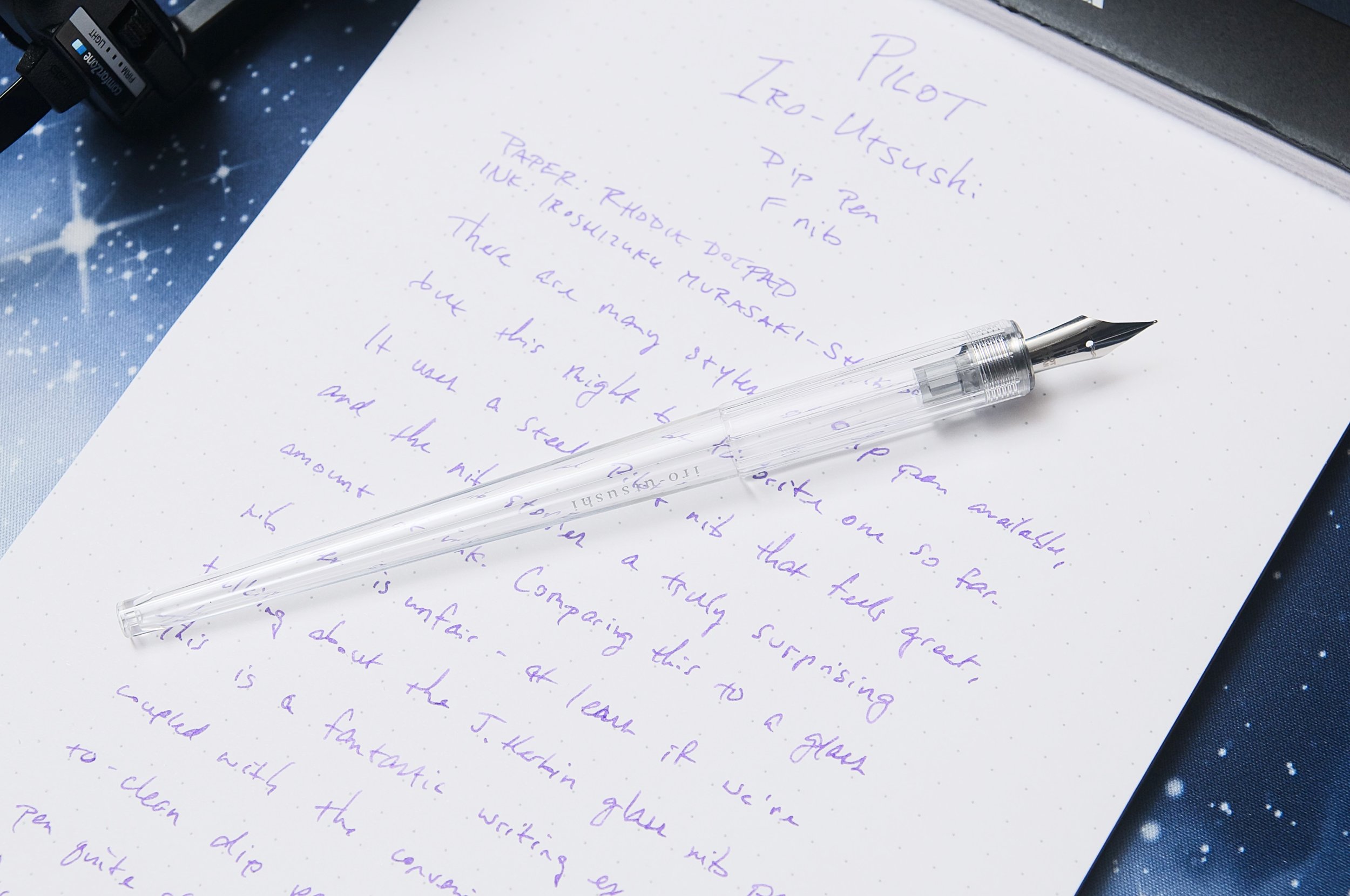
The Pilot Iro-Utsushi dip pen is a relatively low cost dip pen that features one of Pilot's stainless steel nibs — the same nib you'll find on a Pilot Metropolitan, for example. My hopes weren't very high, because I assumed that even if the nib felt just like a Metropolitan or other Pilot pen, it would be too much hassle to use given the limited ink supply. The other dip pens I've used in the past have some sort of primitive system to store little pockets of ink in the nib, but this Pilot looks like an ordinary nib that you'll find attached to a feed and ink reservoir system. Well, I'm delighted to say that my assumptions were wrong.

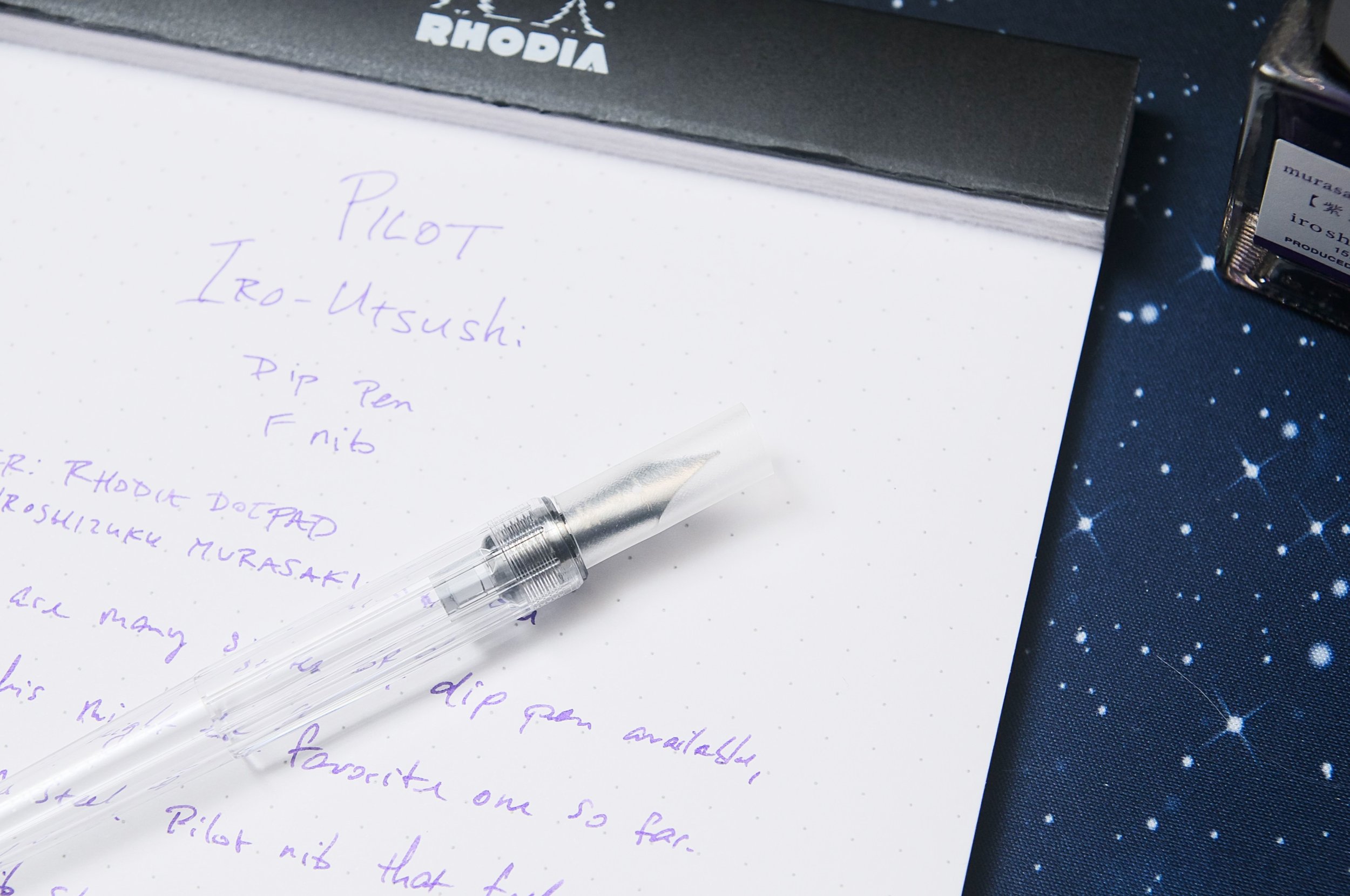
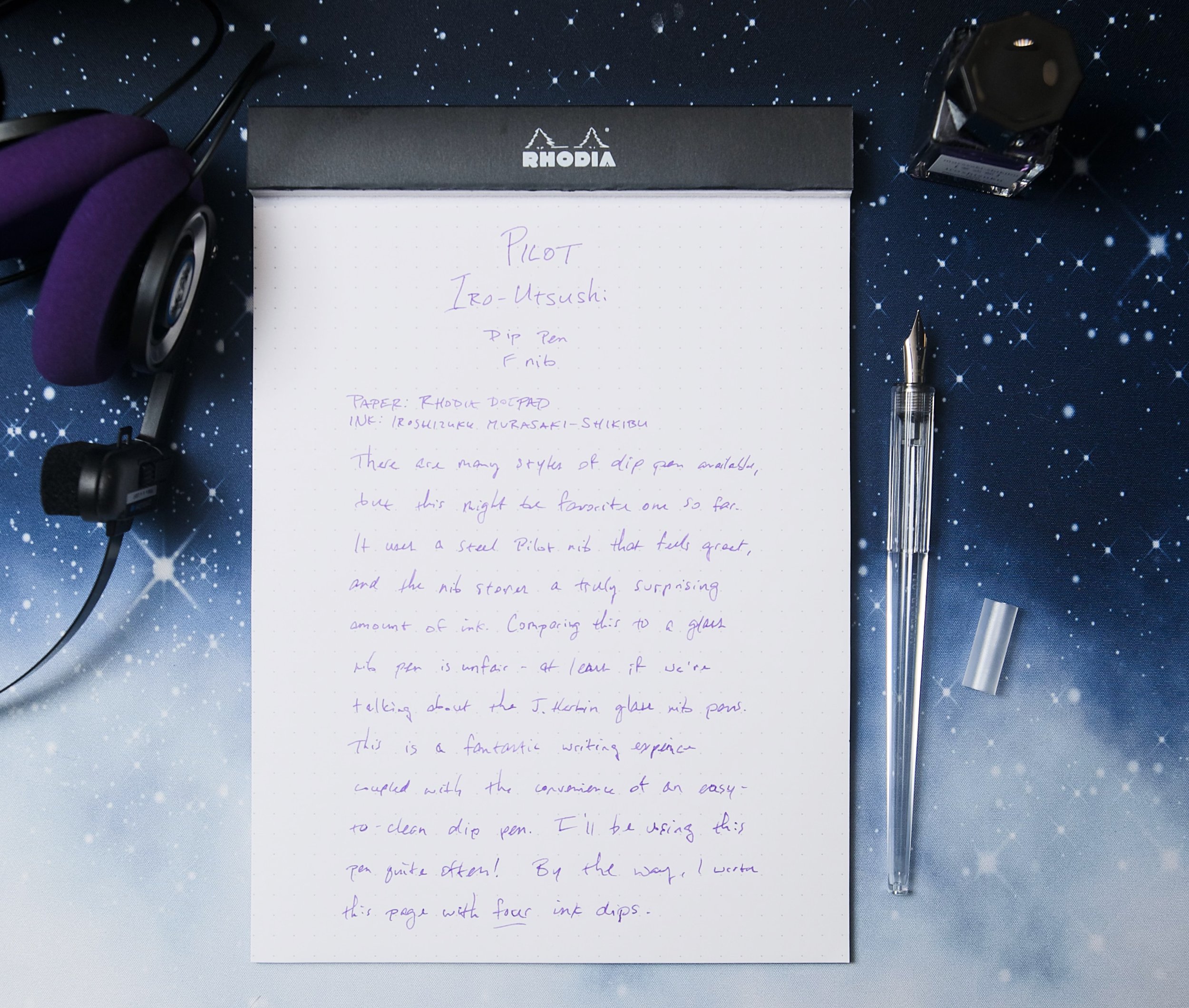
Even though the nib on the Iro-Utsushi is the same nib you'll find on many of Pilot's entry-level fountain pens, it does a surprisingly good job of holding a good amount of ink. I've used dip pens in the past, and I'm used to much less ink supply and needing to dip much more frequently. Dipping the nib past the breather hole provides enough ink to write a couple sentences. If you dip a little further and submerge most of the nib shoulders into the ink, you can get a couple more sentences out of it. I was genuinely surprised that I could write for as long as I was able with each dip.

Another problem I've always had with dip pens is that the ink flow varies drastically with a fresh dip versus when the ink is almost gone. After dipping the pen, the ink just gushes and almost makes a mess, and the flow continues to decrease until the ink is gone. This isn't a problem with the Iro-Utsushi. The ink flow is consistent even after dipping the nib, and it remains consistent right up until it runs out of ink. You can start to see the ink flowing a little lighter, and that means there's only enough ink left for a couple of characters. Again, this surprised me in such a good way.

Regardless of the type of dip pen you're using, there's one constant: they are ridiculously easy to clean. The Iro-Utsushi is no exception. Run the inky nib under some water and wipe it dry. That's it! Within a few seconds, you're ready to try out another ink. This is a fantastic method for trying out several inks without committing to filling up a pen and the eventual cleaning that entails.

The fine nib on this unit is smooth flowing and makes a crisp line that is comparable to my other Pilot steel fine nibs. The barrel is made of thin plastic, and the only non-plastic part of the pen is the nib, which is wedged into the front of the pen with friction. It's actually fairly difficult to remove the nib, so I have no concerns about the nib accidentally falling off into a bottle of ink. Being so lightweight, it's also incredibly easy to control the movement of the pen, though I did find myself wishing it was just a bit thicker to provide a more comfortable grip.

There isn't a cap provided with the pen, except for a small section of silicone tubing that is on the nib while it's in the box. I've kept the little piece to use on the pen when not in use. It's not much, but it does offer some protection for the nib when it's stored away with other objects. I'd like to design a simple cap that I can 3D print — something that both protects the nib and also provides a flat edge to keep the pen from rolling around when it's on a flat surface. For now, the little section of tubing is at least protecting the nib!

The Pilot Iro-Utsushi dip pen is just $8 at Vanness. Compared to other dip pens, this is very competitive, and I'd argue that it's also the best first-time experience you can have with dip pens. Glass pens feel too different and it's not really fair to compare them with traditional metal nibs. Other dip pens that use metal nibs aren't really the same as fountain nibs either. They're either catering to calligraphy use or for artists — which means they don't work particularly well for general writing, nor do they offer a good comparison to the fountain pen nibs you're likely already accustomed to. For me, this is the best dip pen experience I've tried so far.

I know there are plenty of others that I haven't had an opportunity to try, but it's hard to beat the Iro-Utsushi on price. I picked the clear body, but it's also available in a light blue or gray (both translucent) plastic, or a light or dark wood nib holder (the wood versions are $20). You also have your pick of fine or medium nib. Regardless of barrel and nib choice, I highly recommend checking these out if you're even remotely interested in dip pens! The ability to quickly try out inks without the mess of cleaning out a pen is incredibly convenient.

(Vanness Pens provided this product at a discount to The Pen Addict for review purposes.)

Enjoy reading The Pen Addict? Then consider becoming a member to receive additional weekly content, giveaways, and discounts in The Pen Addict shop. Plus, you support me and the site directly, for which I am very grateful.

Membership starts at just $5/month, with a discounted annual option available. To find out more about membership click here and join us!

Posted on December 4, 2024 and filed under Pilot, Dip Nib, Pen Reviews.