Posts filed under Rotring

Rotring Rapid Pro .7mm Drafting Pencil

(This is a guest post by Nick Folz. You can find more of Nick and his work on his blog, Smallberry Drive, Twitter, and Instagram.)

Rotring is a name with a lot of cache in the world of pens and pencils. Building a brand on quality products that last a lifetime will do that. The Rotring 600 is the gold standard for premium drafting pencils and most of their products have been lauded industry wide. The Rapid Pro keeps up the tradition of innovative excellence and makes some concessions for a friendlier price point.

The Rapid Pro drafting pencil comes in three iterations: .5mm, .7mm and 2mm. Both the .5mm and .7mm feature a sliding sleeve that can be retracted to make it pocket safe.    The primary selling point is the cushion point lead mechanism, which not only extends the sliding sleeve but also protects the lead when writing. How it works is simple- one click deploys the sleeve and lead, all other clicks advance the lead. Pushing the lead back in also pushes the sleeve, making it pocket-safe.

The pocket-safe feature alone would be worth the price of admission, but it does double duty: If you press down too hard on the lead when writing, instead of snapping the lead, the cushion mechanism slides the lead back into the pencil. When you lift from the page, the lead springs back. This blew my mind the first time it happened. It takes a good amount of force, so it isn’t just sliding around when in normal use. If you press REALLY hard, the whole sleeve will slide back into the pencil. 

It's not always going to stop the lead from breaking, if you are holding it at a less than 30 degree angle with an inch of lead out, there ain't a pencil in the world that can help you. I use soft lead, 2B, and it has about an 80% success rate of sliding before breaking. It has saved me a ton of frustration.

If you use up all of the lead down to the tip of the sleeve, the sleeve will budge back down into the pencil body little by little so that you aren't just scratching the paper with the metal sleeve, also you will still be writing with the lead. While continuing to write like that is not ideal, it is better that running out of lead mid thought.

The metal body is a rounded edged version of the a hex style, a signature red ring separates a knurled grip. The tip narrows in two plateaus. The clip is very sturdy, and even after months of being abused by my pockets, its grip has not diminished. The weight is wonderful and the balance is great. Total length of the pencil is 5.75" and the balance point is roughly 2.75" from the writing end, making it ever so slightly front heavy. The black finish is a beautiful matte. After 3 months of use, mine does have some wear on it but I think it adds character. If that is something that bothers you then check out the silver model. It can hold about five spare pieces of lead, plus the one in use (I imagine the .5mm can hold more, just because of size).

There are a few sticking points, this pencil ain’t perfect.

  • The end cap that protects the eraser falls off. I nearly lost it a week into having it, and finding a tiny black cylinder is no easy task. My solution was to squish it a bit, bending the perfect cylinder into more of an oval shape, which grips the eraser part much better. I haven’t had trouble since.
  • The eraser sucks. I know, everyone waves this away as most drafting pencils don’t have great erasers, but come on. TWSBI’s Precision mechanical pencil had a decent eraser, and it would be nice to see that widely adopted. I know that tiny erasers have their defenders, especially in the drafting community, but this pencil feels very much like a writing/drawing tool and less like a drafting tool.

There are things about this pencil that some people have complained about that I think are non-issues. Some of the inner-workings are plastic, including the red ring (which is part of the cushion mechanism). This does not bother me one bit. I have seen drafting purists take issue with it being called a “drafting pencil” since it lacks a lead grade indicator. So, what’s in a name? As I said above, this does feel more like a well built mechanical pencil built with the best drafting pencil trappings, I never used those indicators anyways.
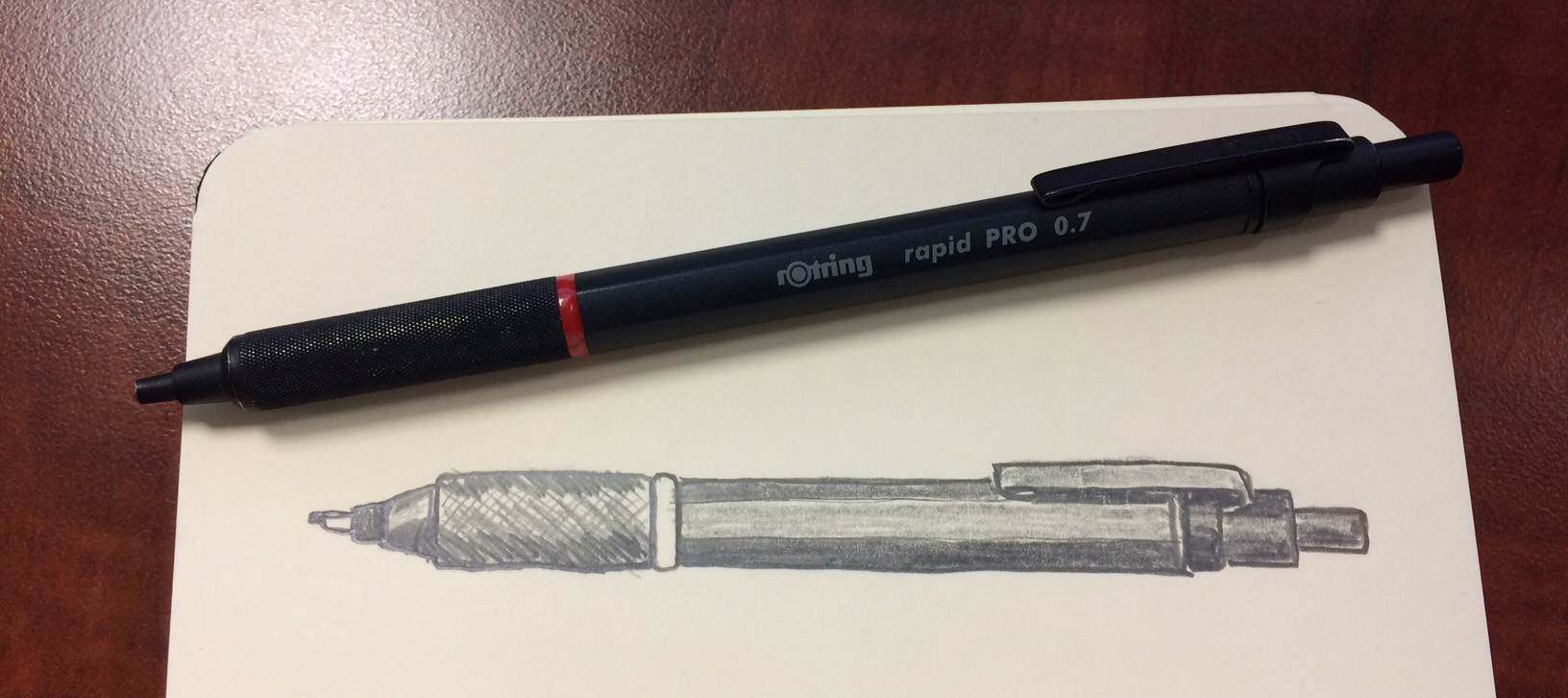
“Loose pencils, tight inking” is an adage I have. It was something we talked about in my comic art class. I like this idea, keep the planning loose, keep the execution tight. It is something I refer to in my head for all sorts of life stuff. Which is why I carry a pencil. The Rotring Rapid Pro makes "keeping it loose" a breeze thanks to their tight execution of a near perfect product. The total impression is that of a seriously fine tool. As an experiment, I have handed it over to several non-pen addict people when asking for a pencil and they always remark on it. It is impressive.

Just make sure you squish that end cap.

(JetPens provided this product at no charge to The Pen Addict for review purposes.)
Posted on December 31, 2015 and filed under Drafting Pencil, Pencil Reviews, Rotring.

Rotring 600 Drafting Pencil, A Lesson In Design

(Jeff Abbott is a regular contributor at The Pen Addict. You can find more from Jeff online at Draft Evolution and Twitter.)

The Pen Addict podcast has seen a lot of interest lately regarding pencils — both mechanical and wood case pencils. Because of this, I found myself browsing the mechanical pencils section one day in JetPens. I hadn't looked at mechanical pencils since I was in college at our local bookstore, which always had a nice selection of drafting pencils for the engineering classes. But, of all the cool pencils I acquired during college, I'd never seen something as beautiful and striking as the Rotring 600 Drafting Pencil. This seems like the exact pencil that draftsman would use daily in the course of his craft. It's always a bit sad to think that this craft has been largely replaced with computerized tools, but you can never completely do without paper.

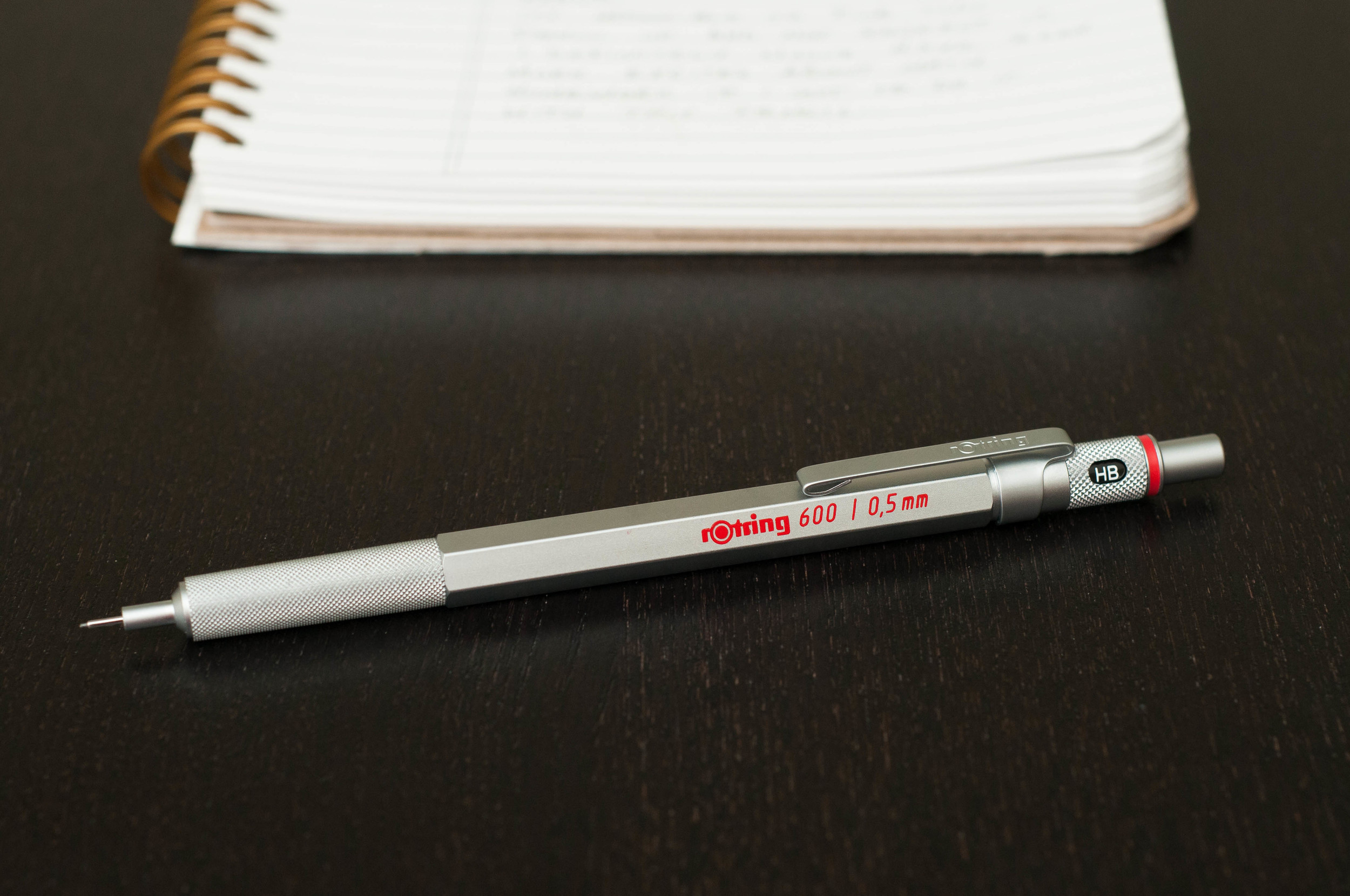
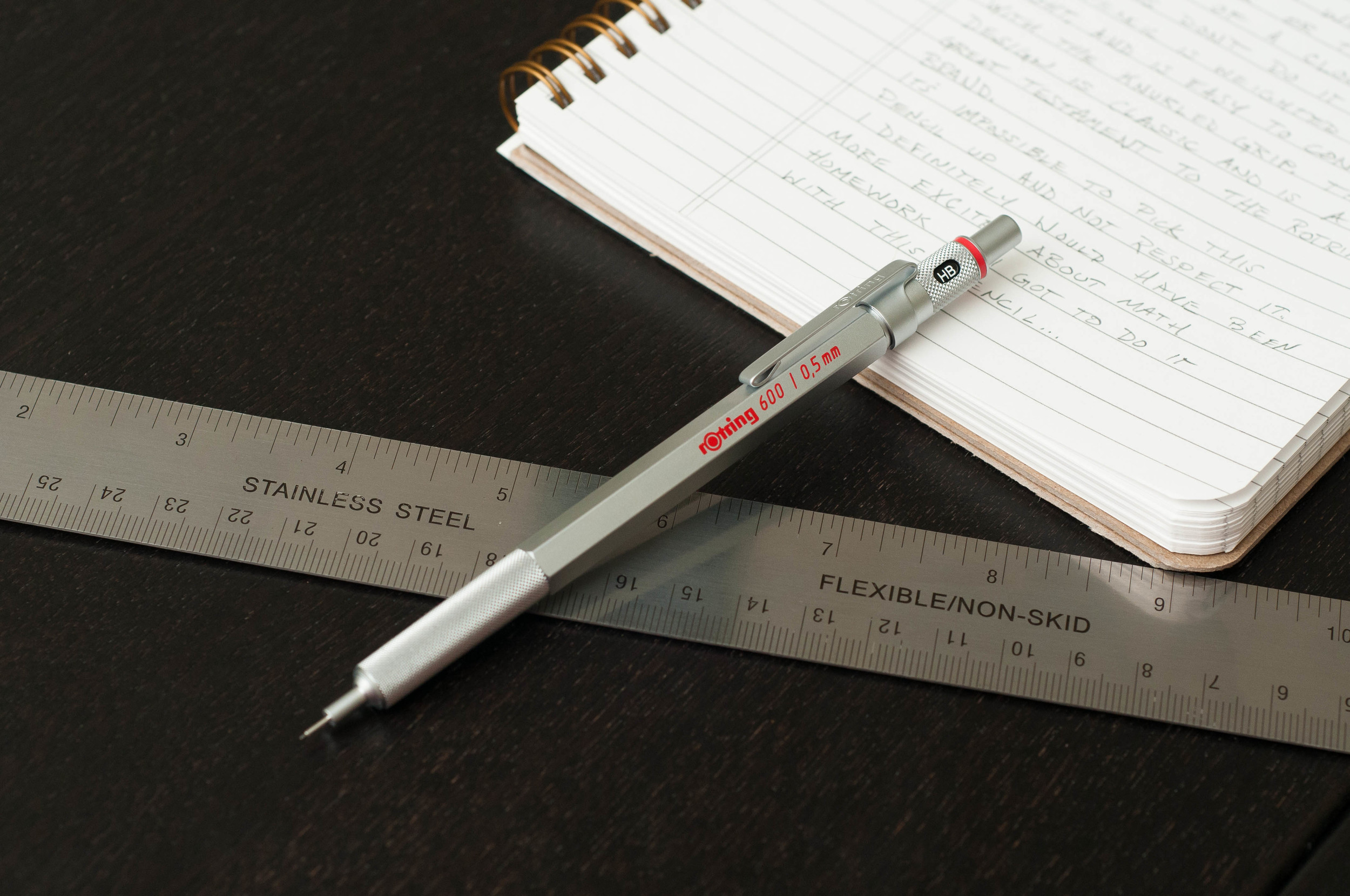
To call the 600's design timeless is a good place to start. It features the classic Rotring red ring and plenty of knurling and angled edges. This pen is not soft in appearance. It's a clean precision instrument, and it oozes industrial design aesthetic.

Appearance and feel

When you first pick up this pen, you'll notice the weight immediately. The insides are brass, which contribute to that weight. The second thing you'll notice is how much it feels like an instrument instead of a pencil. This isn't the pencil you used in high school trigonometry, or even Calculus III in college. This one is reserved for the professionals.

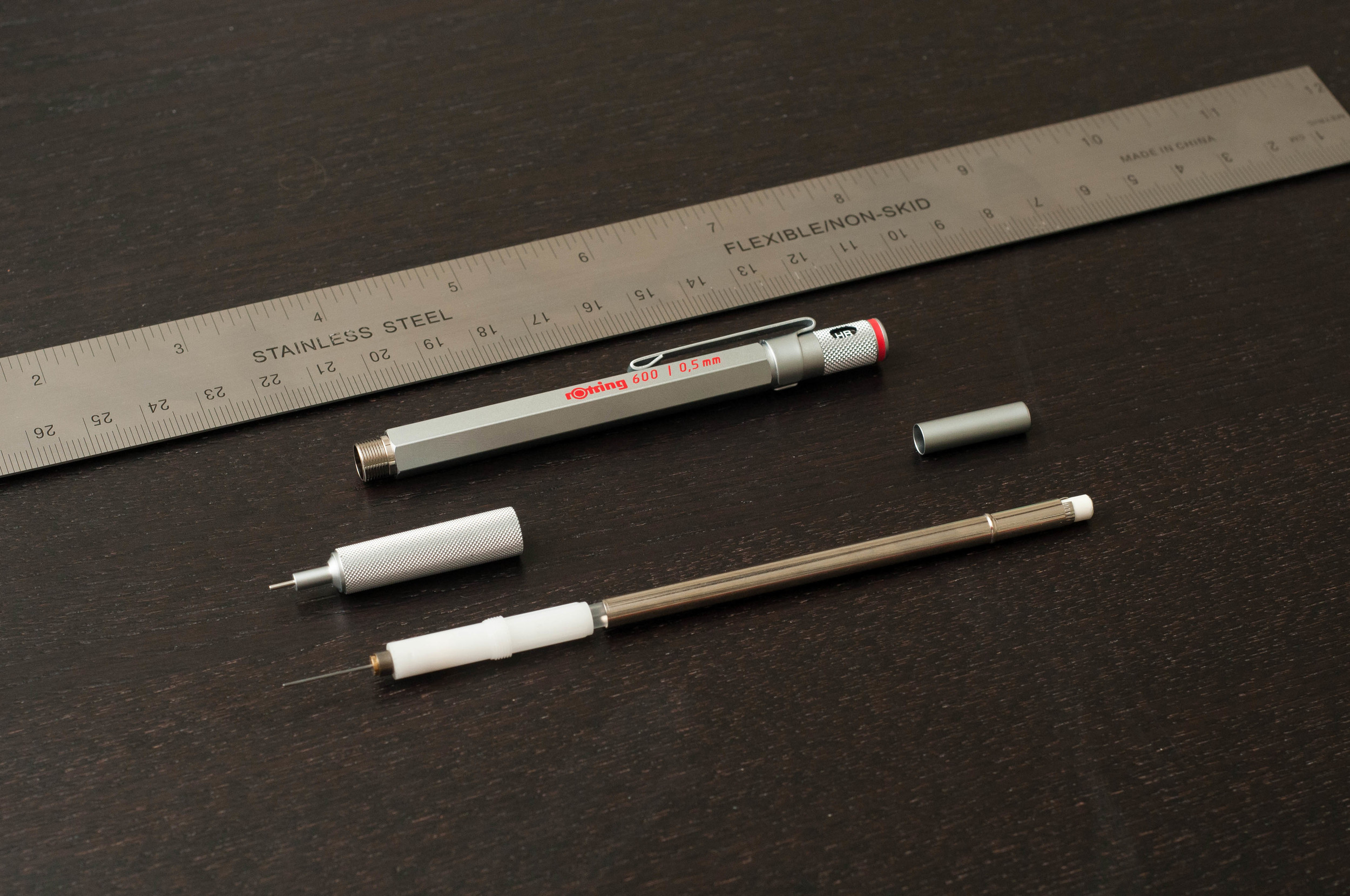
The barrel is hexagonal except for the knurled grip section, which is round. The cap comes off to reveal a small eraser, which can be removed to add more lead to the reservoir. The top of the pen features an indicator window (knurled, of course) that allows you to select what type of lead you currently have in the pen. I'm assuming that people who use these types of pencils in their work would probably have more than one, or might swap out different leads for different tasks. Thus, an indicator.

The tip of the pencil features a pipe to protect the lead and make it easier to use with a straight-edge. It reminds me of something you'd expect to see in a space ship.

Of course, there's a red ring between the lead indicator and the push cap, which is a signature Rotring feature. There's also some text one one side of the hexagonal body that reads, "rotring 600 / 0,5mm" (mine is a 0.5mm version) in red paint. Apart from that, the pencil is devoid of any branding. I believe the design of the pen is the branding, since you recognize it as a Rotring from any angle.

The clip is really strong, and I don't see there ever being an issue with the pencil coming unclipped. It's actually a bit difficult to clip onto something due to the strong resistance in the clip. Again, it feels industrial and serious.

Writing with the Rotring 600

Since this is a drafting pencil, it's more geared toward precise drawing, lettering, and use with other tools (like a straight-edge). As such, I don't really enjoy using it for normal writing. I'm sure other people wouldn't have any problem with this, but I certainly feel like I should be doing something like drawing, sketching, or lettering when I pick it up.

That said, the pencil is extremely easy to control since it has a knurled grip. The weight and balance is perfect and also makes it easy to control the pencil. Since it's a mechanical pencil, I find myself rotating the pencil a bit every other word to keep the sharp side of the lead on the page, which is something the Kuru-Toga aims to solve.

The included eraser in the cap is a joke, but that's the case in almost every mechanical pencil.

Conclusion

The Rotring 600 is a pencil that feels like an expensive tool for specific jobs. It's not a hammer, but a micrometer. It's an example of timeless design and looks good on any desk, whether or not it's used for drafting, lettering, or other artistic purposes. If you're a fan of mechanical pencils, you owe it to yourself to try one of these at some point. And, if you're not a fan, this one might convert you.

You can pick one up at JetPens in either black or silver and in 0.35mm, 0.5mm, and 0.7mm lead sizes.

Posted on November 18, 2015 and filed under Drafting Pencil, Pencil Reviews, Rotring.

Rotring Tikky Graphic Drawing Pen 0.1 mm Review

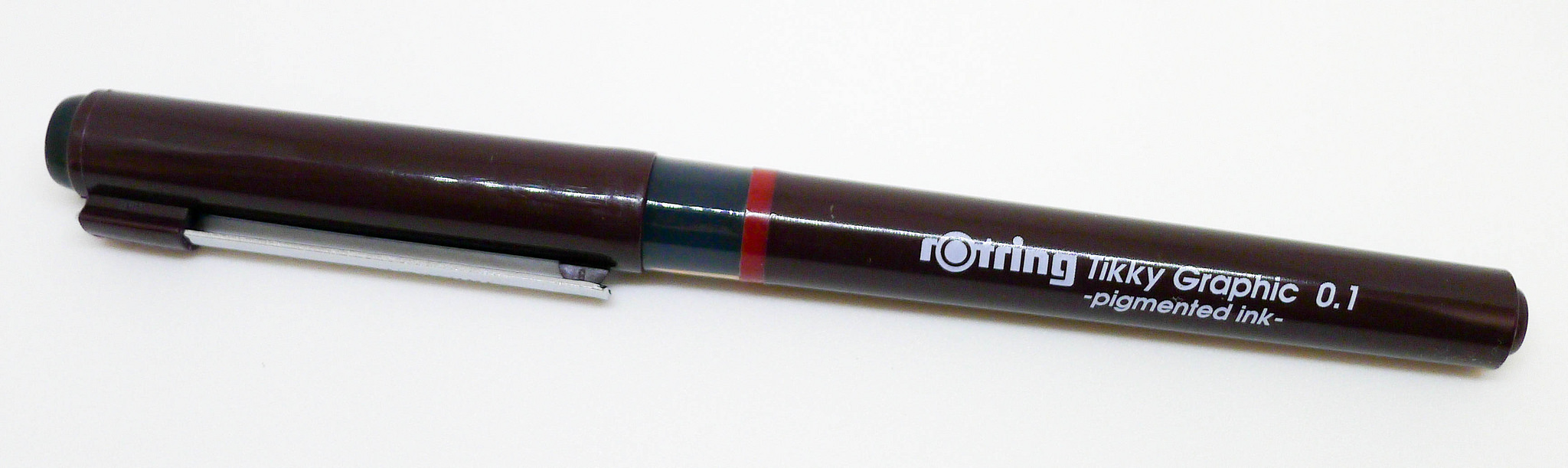
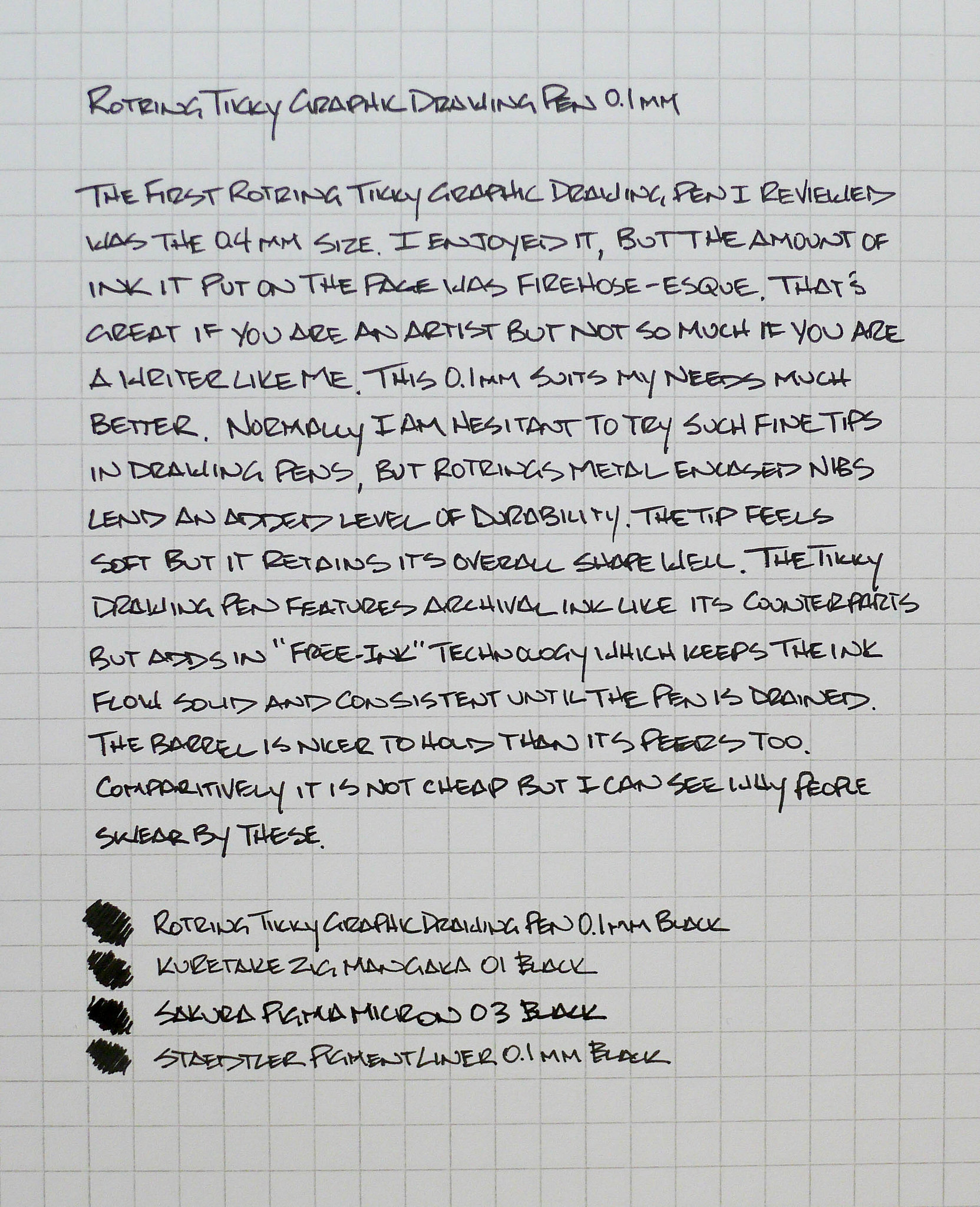
A few years ago I reviewed the Rotring Tikky Graphic Drawing Pen in the 0.4 mm tip size. I enjoyed the build quality of the pen but the 0.4 mm tip size spews ink. Not in a terrible mess kind of way, but it goes on heavy. Great for artists, not so good for my writing style.

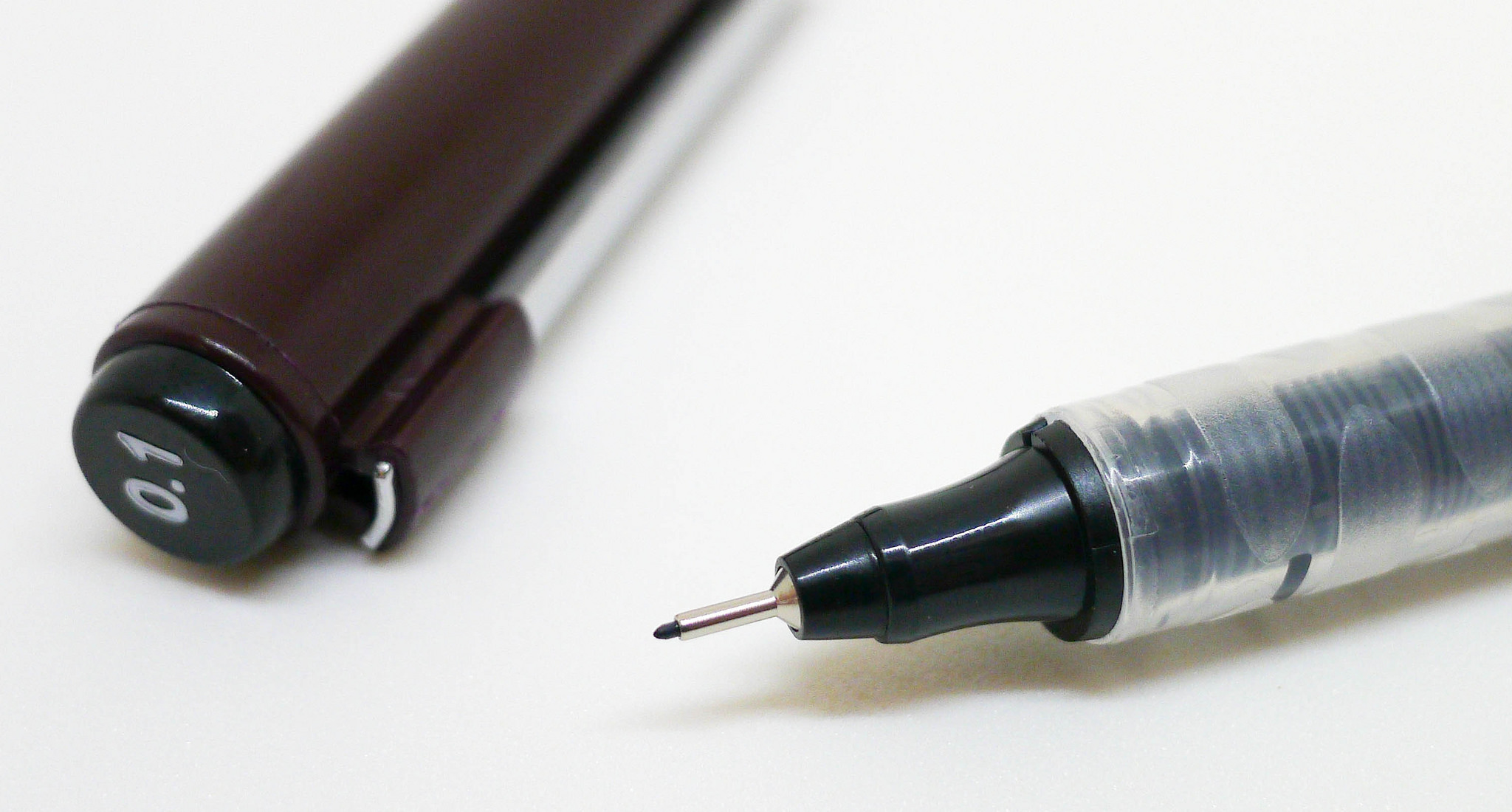
With all the praise this pen gets and my love for drawing-style pens I knew I had to pick up a smaller size. I went as small as they make (0.1 mm) and my writing is much better off for it.

The Tikky Graphic Drawing Pen has three main features. One, the ink is archival, which most other pens in this category have. Two, it has a metal encased nib to help with tip durability, which a few of its competitors have. And three, Rotring's Free-ink technology makes the ink flow consistently down to the last drop, which no one has that I am aware of.

While feature one is great, and three is nice to have, I'm a fan of anything that makes fiber and plastic tips more durable, especially when dealing with 0.1mm tips. It usually doesn't take long for drawing pen tips to show some sort of breakdown but this one has help up well so far. More use will be needed to see if any real issues pop up but it is tracking nicely at this point.

Ink darkness is important to me too, and the Rotring fares well there. On its own, I thought for sure the Tikky would be the darkest ink I would test, but to my surprise the Sakura Pigma Micron took that title. I've always felt the Micron was lighter than others so this comes as a surprise. I did use the 03 Micron so the line was wider but I don't think it affected the darkness. My favorite Kuretake Zig Mangaka falls in the middle of the range.

Overall, I can see why this is a popular drawing pen. It is more expensive than many ($3.60 at JetPens) but it offers added features that make up for some of that cost. If you are in the market for a durable, dark drawing pen then the Rotring Tikky is worth a look.

(JetPens is a sponsor of The Pen Addict and I received this product at no charge.)

Posted on October 17, 2014 and filed under Pen Reviews, Rotring, Drawing Pen.