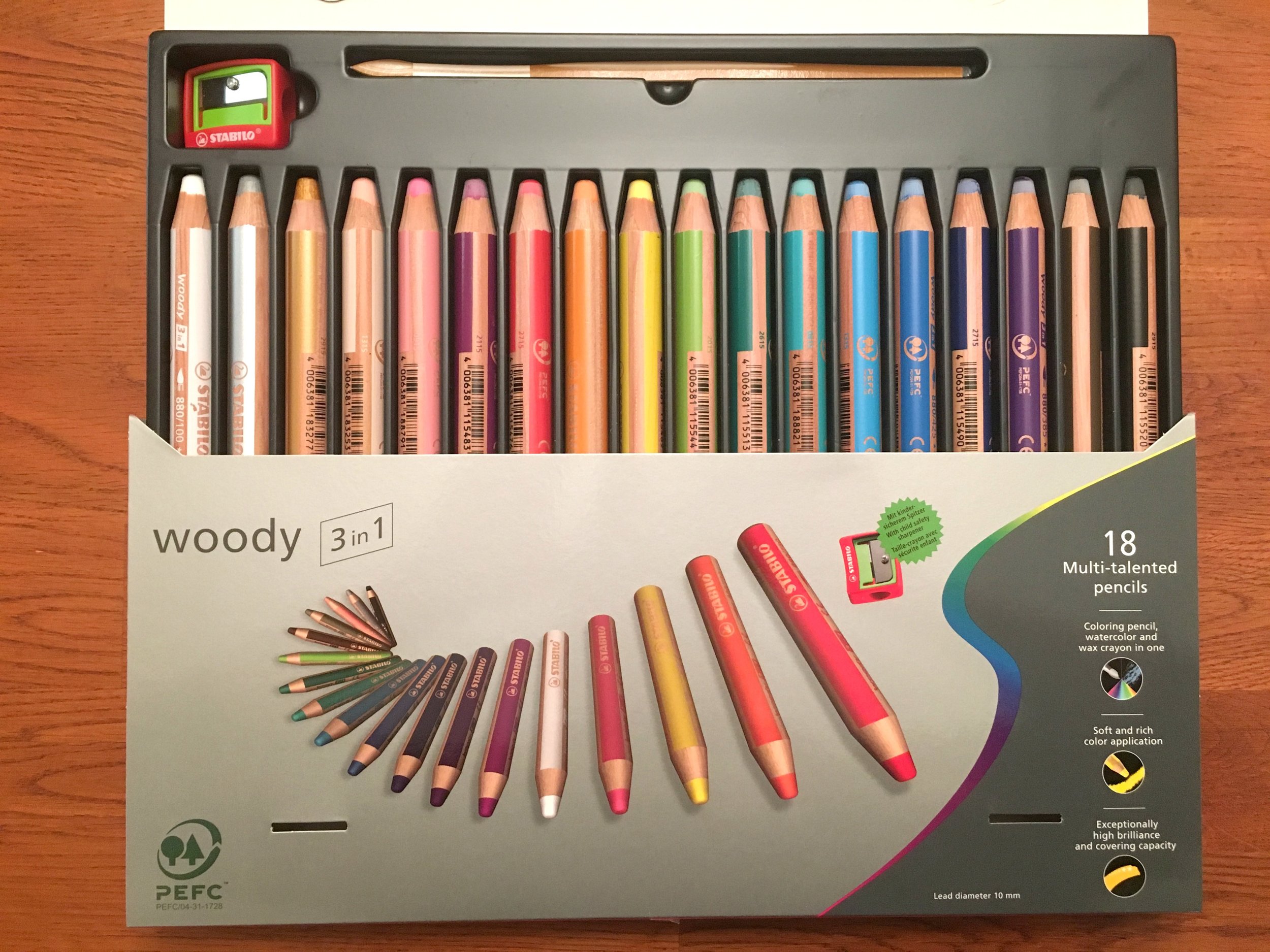
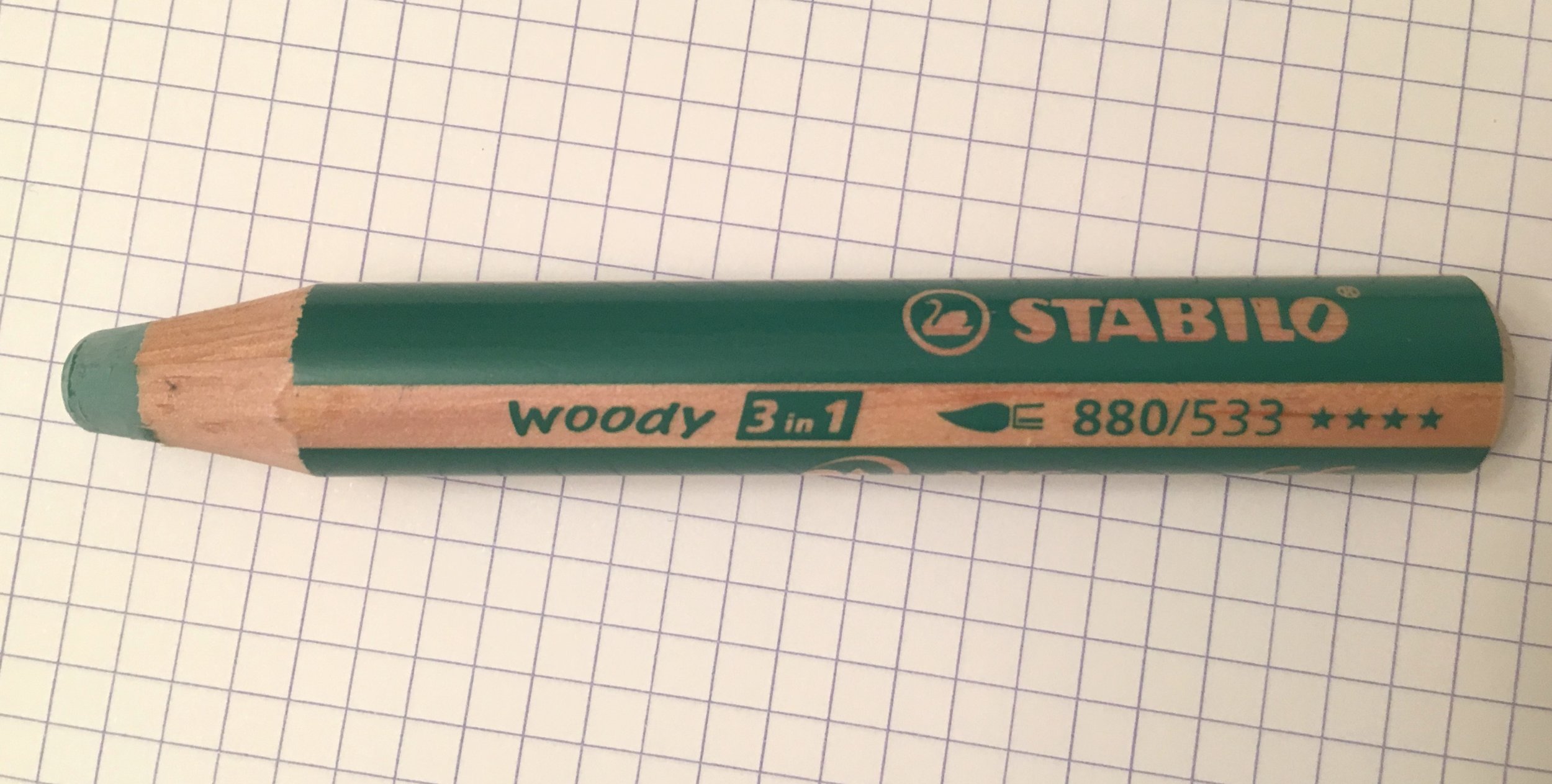
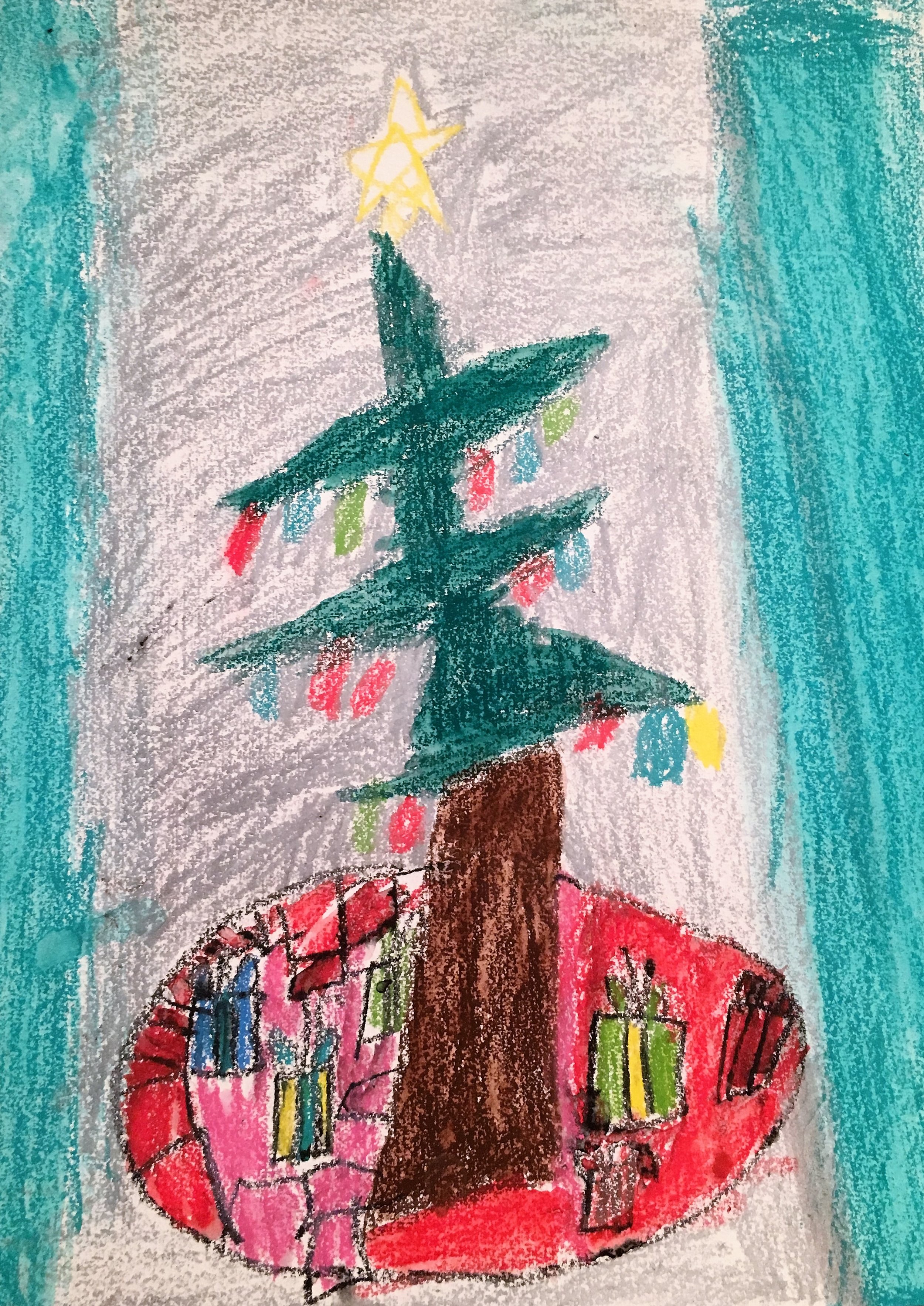
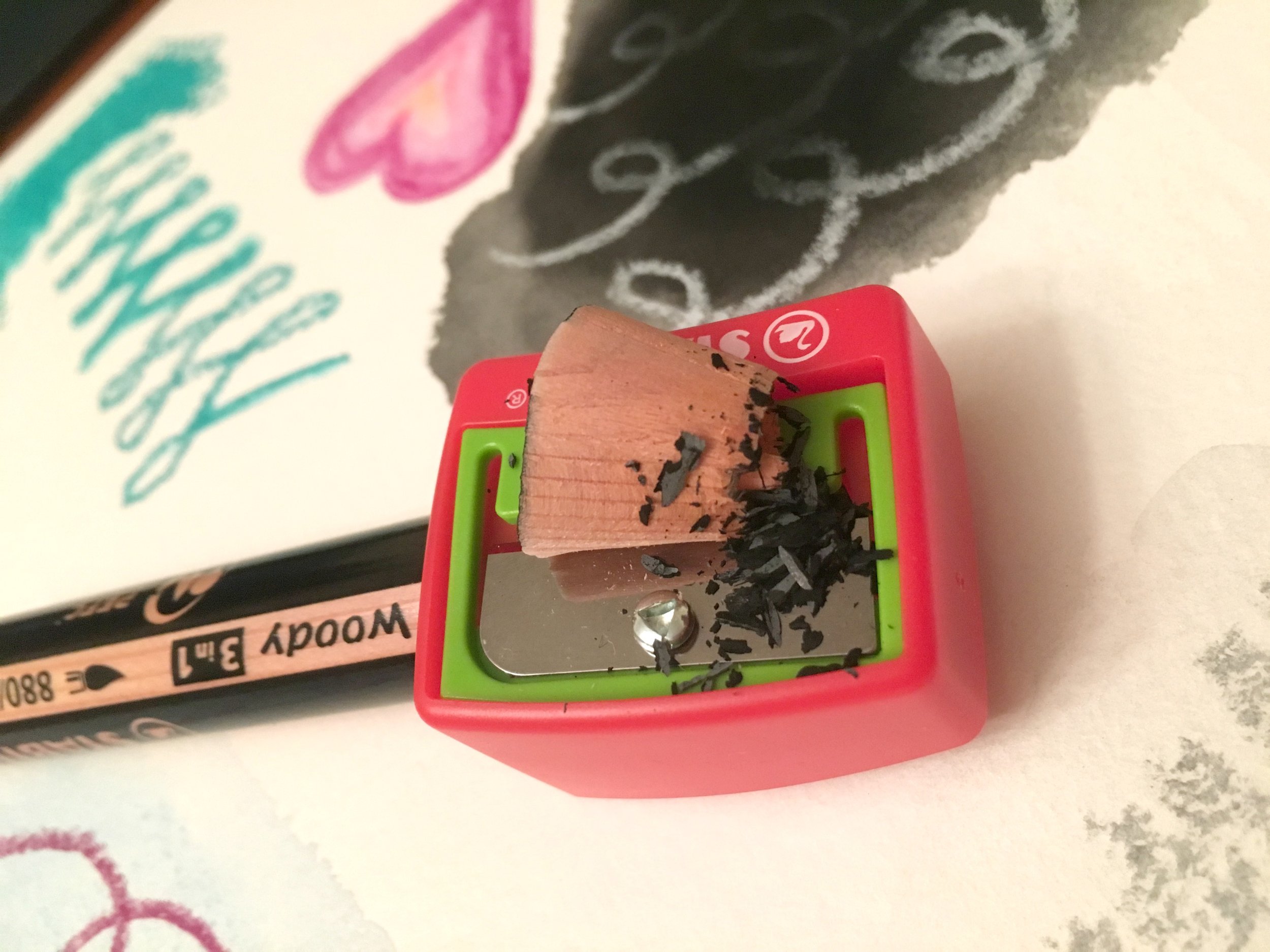
The wood case is made from sustainable wood, with a break-resistant core. They're short and bulky, like the jumbo crayons marketed for preschoolers. They're a bit uncomfortable to hold, I felt, and the thick core only allows for the boldest of bold lines.
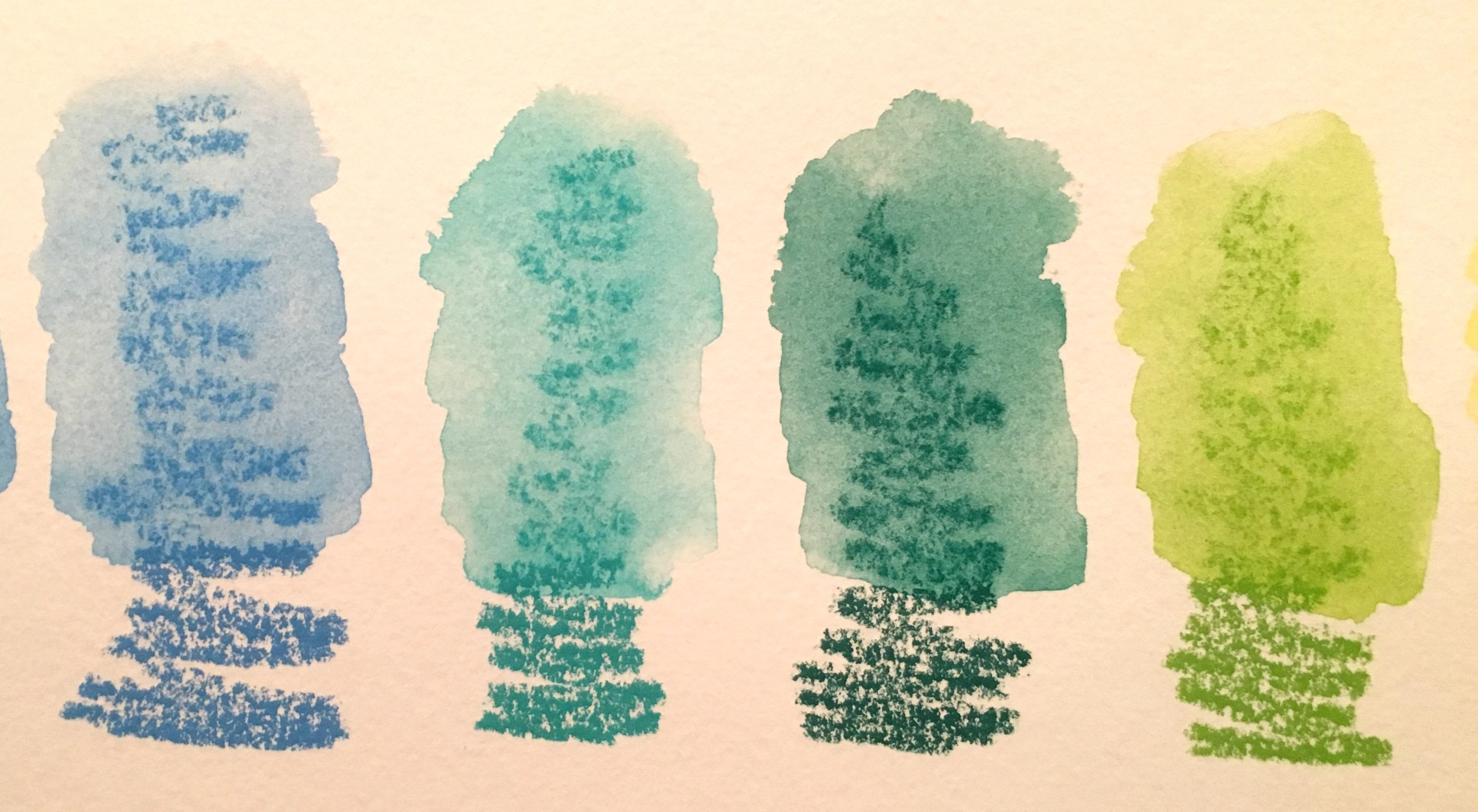
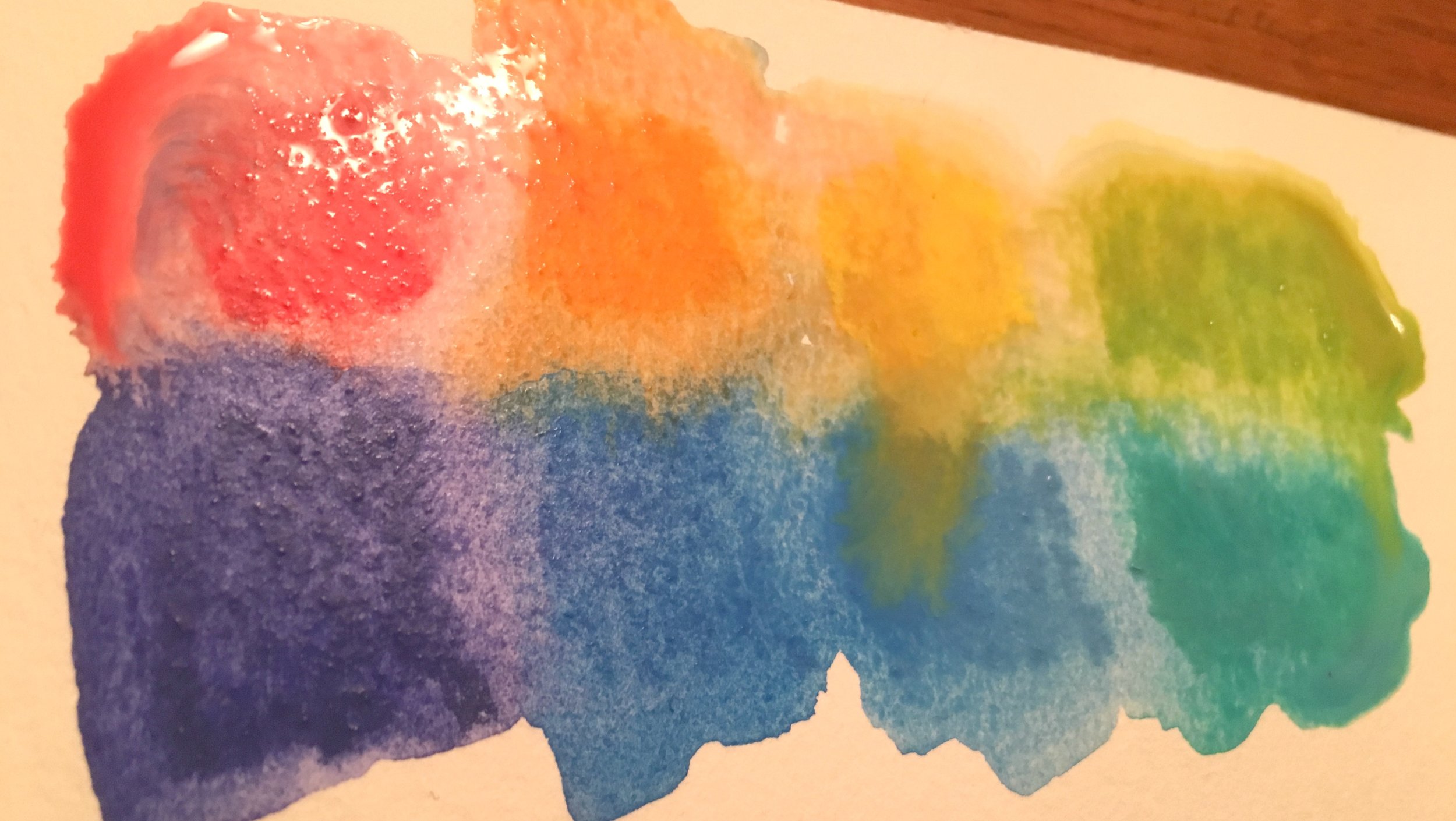
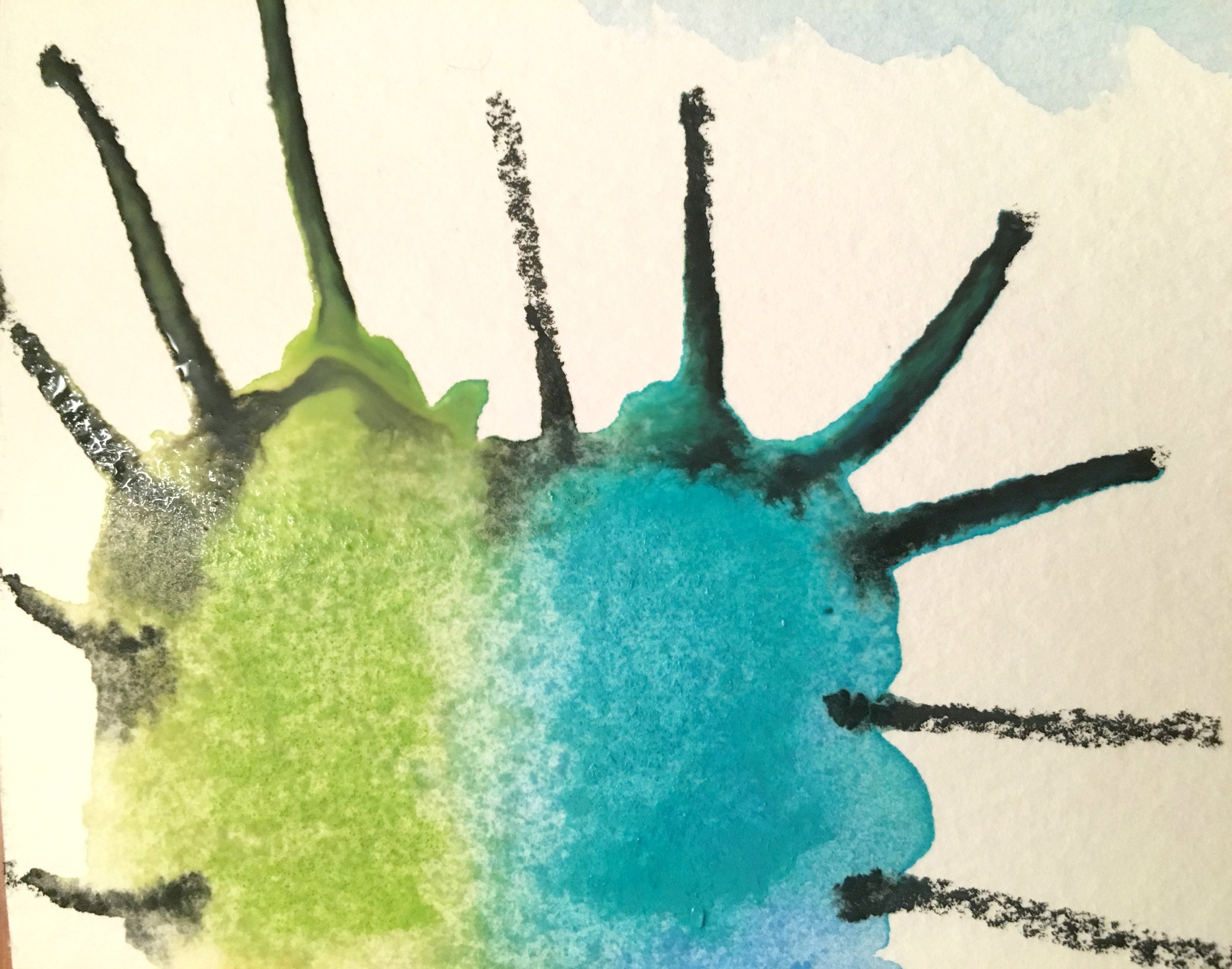
The core is very soft and lays down a smooth thick layer of color. It could easily achieve solid coverage on smooth paper. When you add water to the applied color, the results vary somewhat. Some colors are more soluble than others--black dissolves almost completely and spreads nicely, but silver doesn't appear to be soluble at all. Most colors are somewhere in-between, with at least a little of the original crayon line still visible after painting. I also tried dipping the crayon in water and drawing, but the core is too waxy to work well that way. It repels water rather than absorbing it, so I'd get maybe two strokes of painted line, and then it would return to a normal dry crayon line. Wetting the paper first and applying the color to the wet page created a neat feathering effect as some of the pigment ran, but the crayon line is still clearly visible. This could make for some really fun blending techniques.