After the big picture 2017 view, you have a two-page spread for each month of the year. This is great for planning out events for the month, and it also adopts the Monday-first mentality.
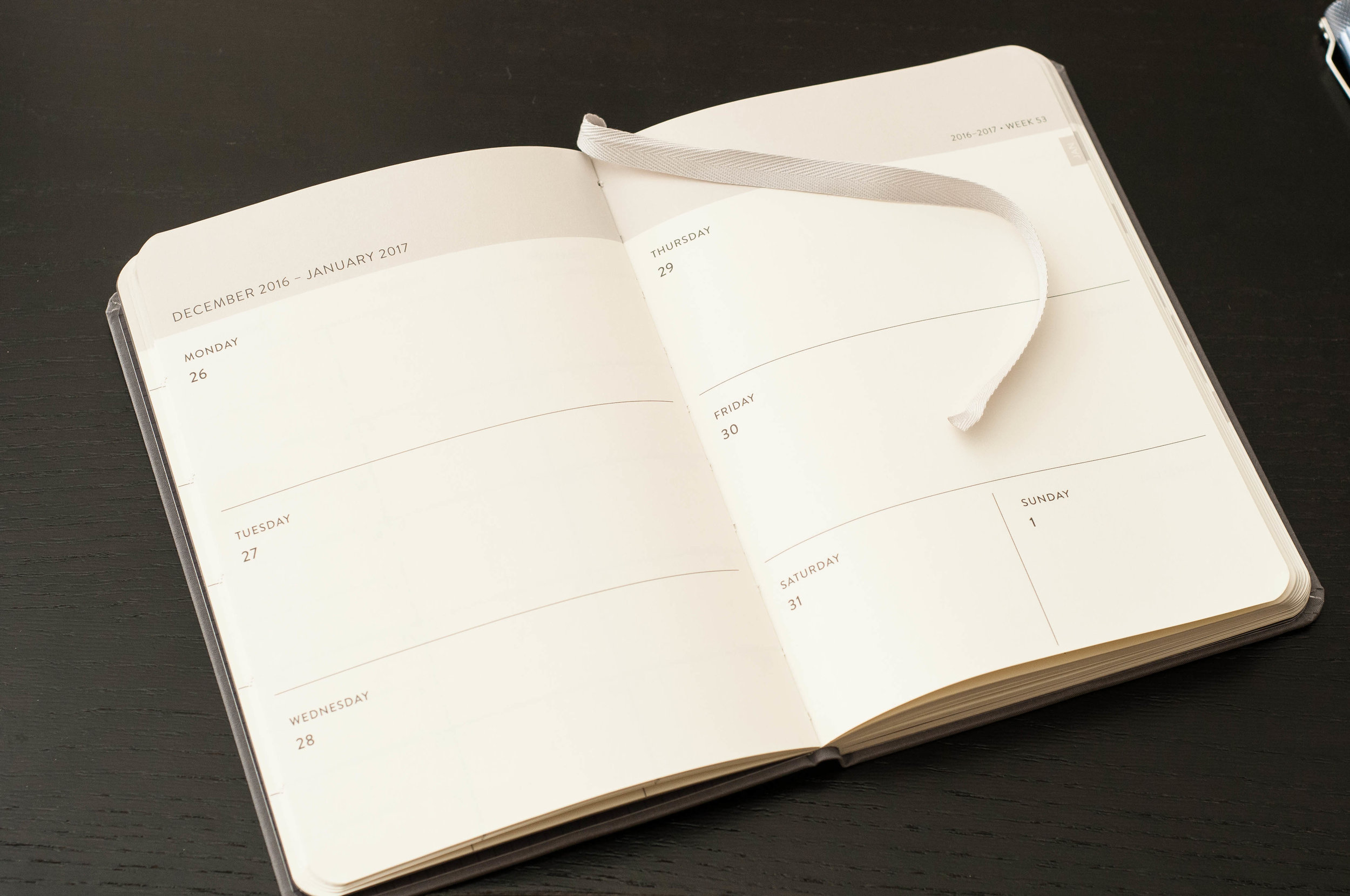
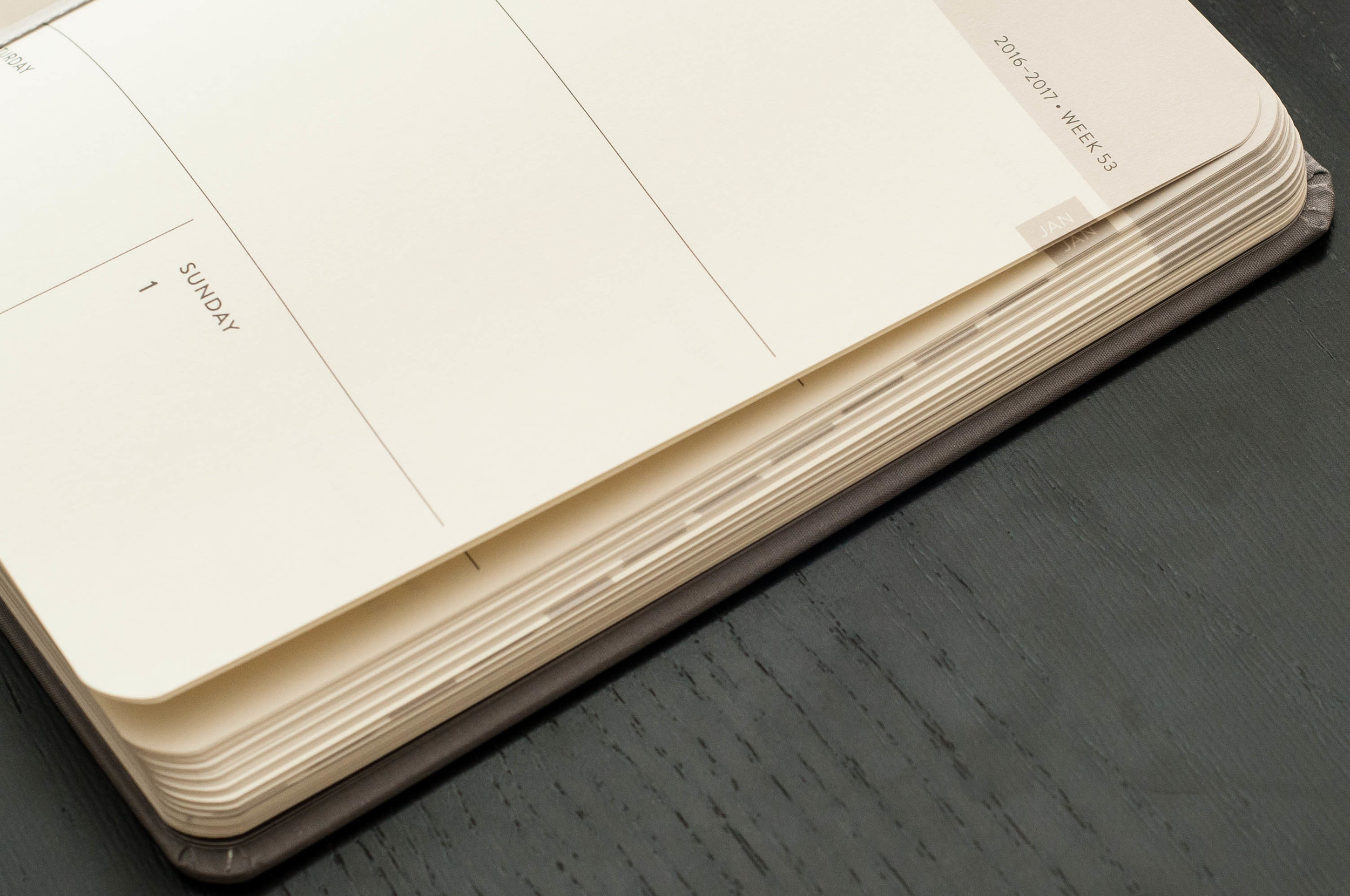
Immediately following the monthly view, you're dropped into the first weekly view for the planner. This is the real meat of the notebook and likely where you'll spend most of your time. The first week starts on December 26 and ends on January 1, so you get a few extra days in 2016 to ramp into the new year. This is a nice touch.
The days are roughly 3 inches by 5 inches (except for Saturday/Sunday, which are divided length-wise), and there is plenty of room for making a few notes. If you are looking for a planner that will allow you to map out 8 - 14 hours of your day, this is not the planner for you. There's not enough space (for my writing, anyway) to plan out each hour of the day. For that, you're better off looking at other planners such as the Hobonichi Techo. For me, I'll use this notebook for daily goal planning and accomplishment logging. At the end of 2017, I want to look back at this notebook and get a sense of what I was working through each week of the year. It's more of a logbook as opposed to a detailed planner.
Of course, if you don't operate to a strict schedule (say, you track to 3-5 major tasks each day), then this is a great area to write down and track your tasks and goals for the day. As with any planner system, it is exactly what you make of it. Baron Fig have simply provided a construct for you to operate within. You can choose to be as detailed or abstract as you like. That's the beauty of a system like this. In a way, I really like that they haven't included every hour of the day in the planner. It forces you to step back and look at your day as a whole instead of as a collection of menial, micro-managed tasks. (I'm not saying menial tasks aren't important, but maybe they don't belong in this planner).
Lastly, after you run out of weeks in the year, there are about 26 pages of blank dot-grid pages for notes. These pages at the back of the notebook are unnumbered, but you could easily number them to make note references in the planner section. These notes pages are all bound into the notebook without any perforation.