(Sarah Read is an author, editor, yarn artist, and pen/paper/ink addict. You can find more about her at her website and on Twitter.)
I must preface this review by saying that I came into it with the TWSBI jitters. I, like many others, have a TWSBI tragedy in my past, so when I am introduced to a new TWSBI, I always have one question on my lips: Are you going to break my heart? I've got baggage. But it doesn't stop my heart from fluttering at the sight of a snazzy new pen.
The TWSBI Classic isn't new, but it has been slightly redesigned. It now has two O-rings at the end, which are meant to allow the pen to post--which was one of the biggest issues reported by users of the previous design. It's a simple solution--but effective. The pen posts nicely and the cap feels secure. It does feel a little back-heavy to me when posted, but I have small hands. I can't speak, yet, to the longevity of those O-rings--but they should be fairly easy to replace, if needed.
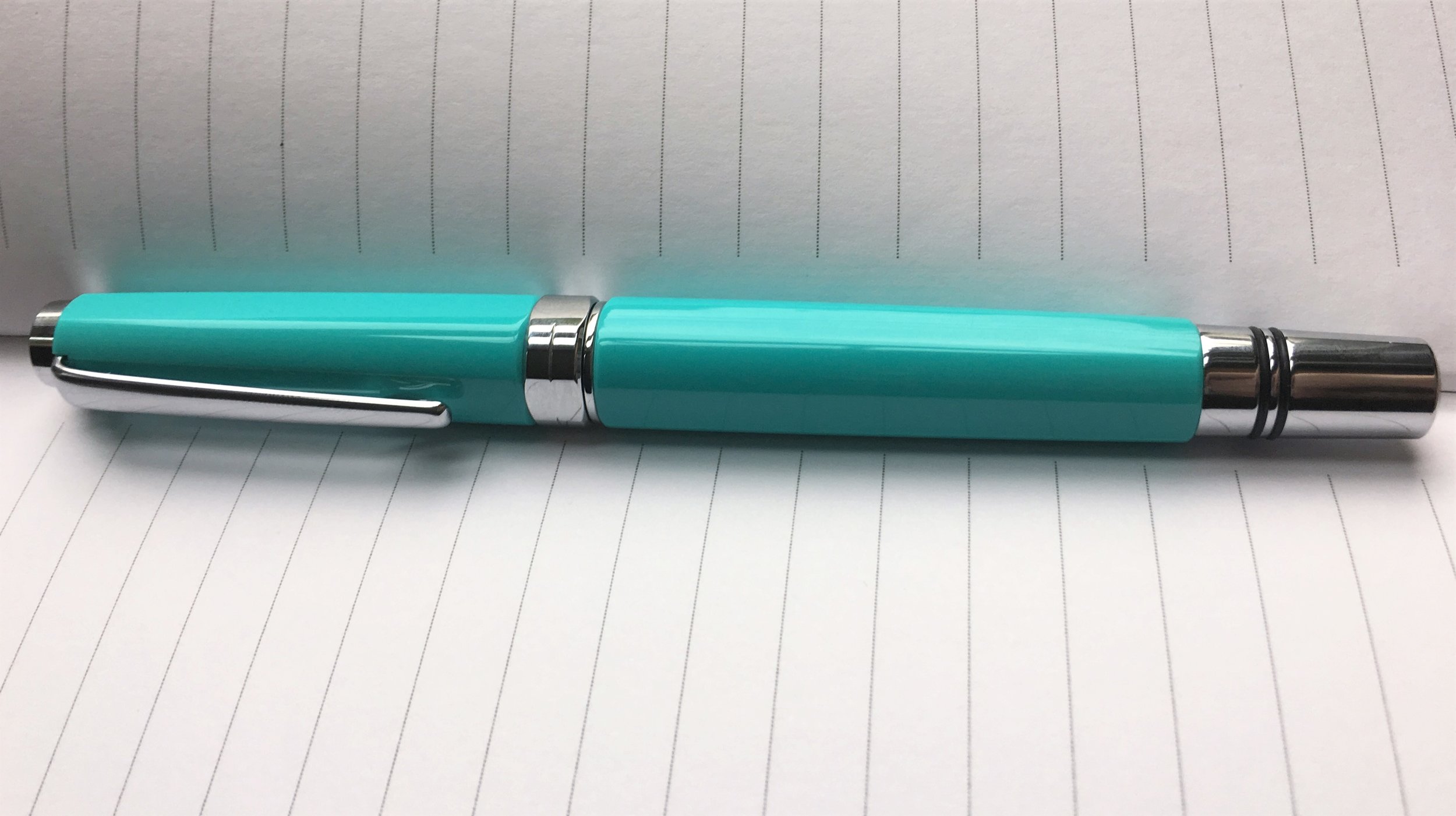
The Classic has also been given some fresh, new colors to choose from--including this fetching turquoise. I love the color. The chrome accents and smooth octagon shape give the whole pen a sweet mid-century vibe. The bottom chrome of the piston knob is etched with "TWSBI Classic" and the finial has the red TWSBI logo. The clip is plain, and a little stiffer than I like, but at least it's sturdy. The center band has no decoration.
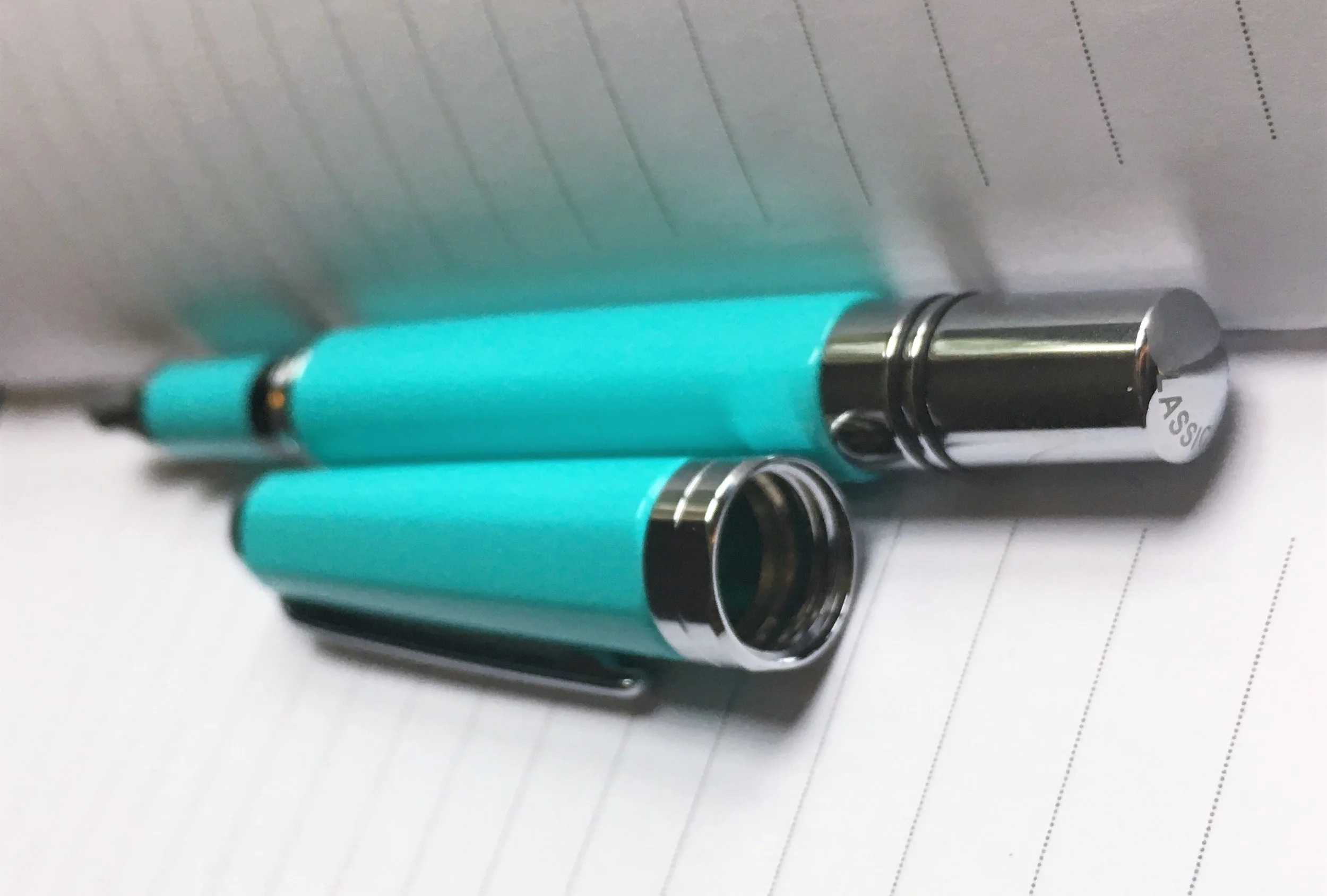
The cap unscrews to show metal threads cushioned with another O-ring. Above the threads is a clear, plastic ink window. The grip section and nib unit unscrews from this ink window. The section is turquoise plastic like the body, though that plastic sleeve slides off of the feed and nib unit. It's a narrow grip, but long, and comfortable to hold. The feed itself is the part that screws into the ink window, where the threads are carved into the inside of that clear plastic. This is the achilles heel of the pen. More on that later.
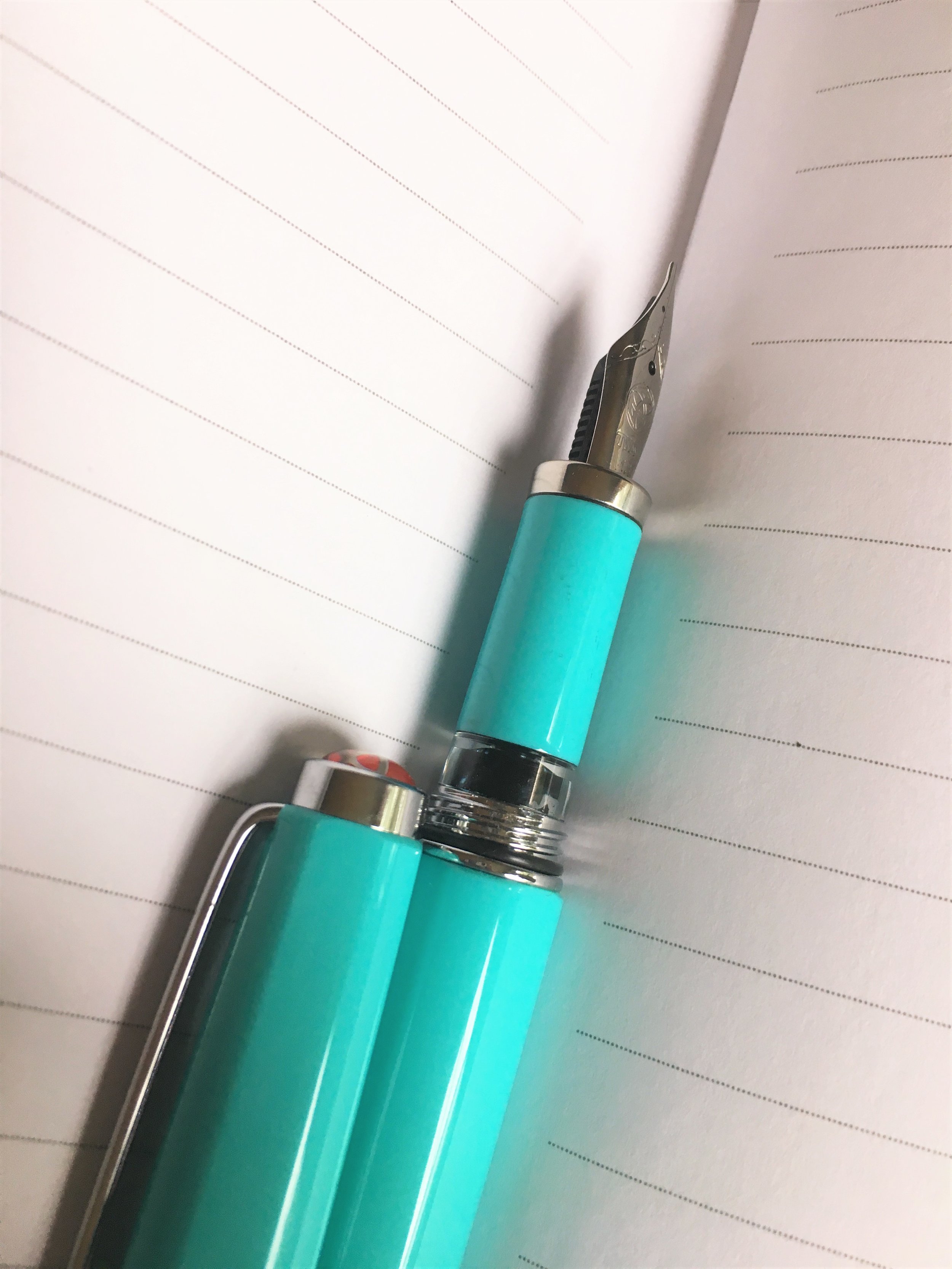
The disassembly of all these pieces makes the pen easy to clean--a very nice feature for a piston-fill pen. A few minutes of rinsing is all it takes, as opposed to the seemingly endless fill-and-purge routine that most piston pens require. The piston assembly itself is designed to be taken apart for maintenance, and the packaging includes the necessary wrench. The packaging also includes a small vial of silicone grease, which you are going to need immediately. More on that later.
The 1.1 stub nib on my pen was really nice right out of the box. It's a #4 Jowo nib (also available in EF, F, M, and B). It's smooth, but with a good bit of feedback. There's no dragging or scratching, and it starts up right away every time. It's just enough stubbiness to add character to my writing without being so bold that I can't use it for everyday tasks. It's not too wet, but doesn't feel dry. I'm very pleased with the nib--and that will keep me writing with this pen despite the issues I've had so far.
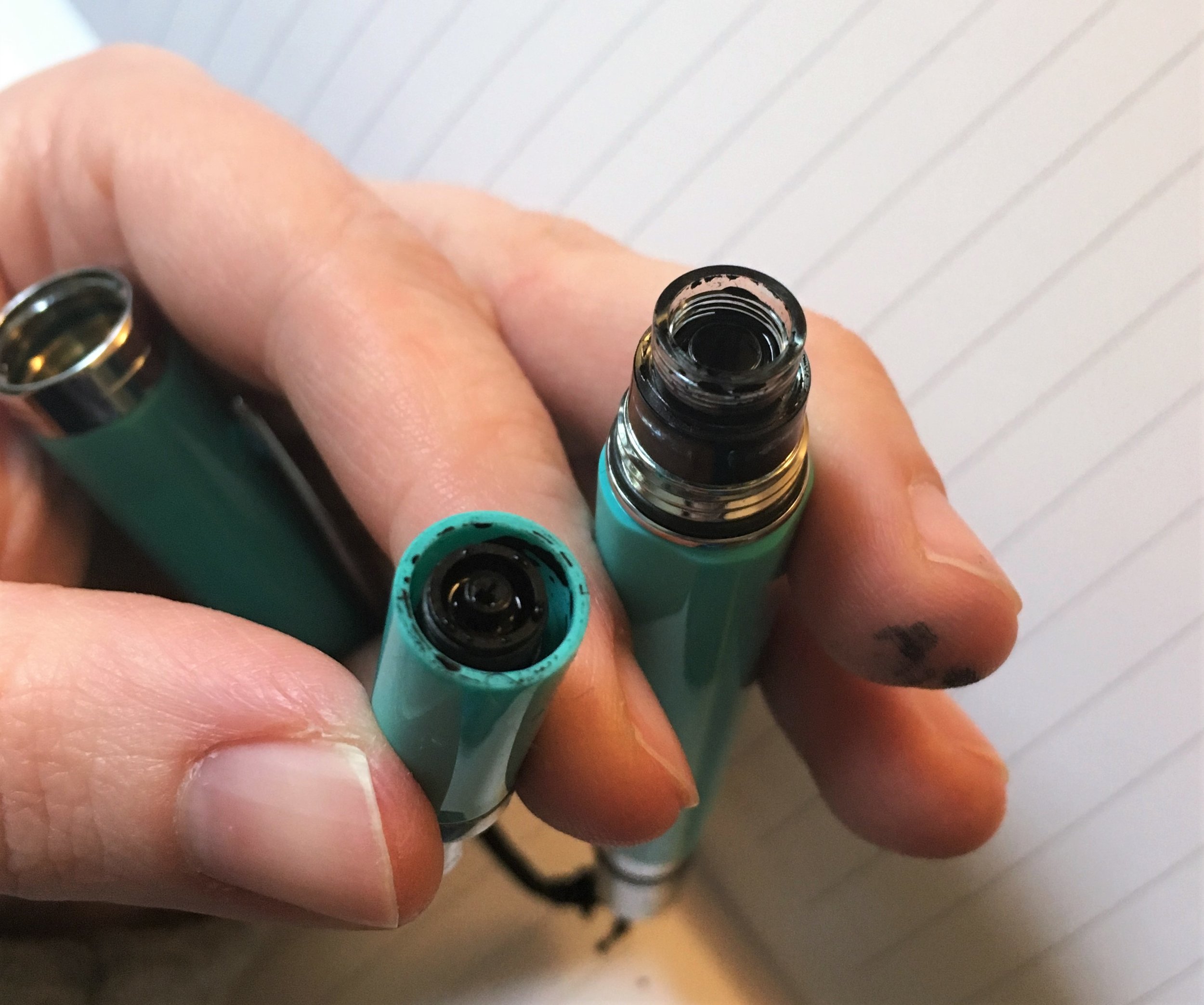
The main issue I encountered was that those plastic threads between the ink window and the feed leak. Like, a lot. Fill-the-cap-with-ink leaking. Open-it-over-your-notebook-and-ruin-the-page leaking. I've been able to slow it down by applying silicone grease to those threads--but when you apply it, be careful to only get the grease on the threads of the feed, and not on the part where ink needs to flow through. If grease gets inside the feed, it will likely be ruined. This isn't a huge undertaking as far as pen set-up goes, but there's nothing about the pen itself that indicates that this step should be necessary. And perhaps it won't be necessary on every pen--but I suspect it will on most. The threads are fairly shallow, and it's two different types of plastic coming together. Even with the grease, I'm finding the occasional bead of ink on the section. I don't mind inky fingers--I think they're stylish--but I would never put this pen in a pocket.

There is another foreboding element to the ink window that has me a little bit nervous. There is a visible seam in the plastic that goes right from the lip of the opening all the way through the threads. I can't tell if this is the actual seam from the molding of the plastic, or if it is the start of a hairline crack. It's this kind of plastic threads that have cracked on me before, so be careful to screw the feed in gently to avoid putting extra strain on the threads.

As it stands now, I can't complain--after a little tinkering, the pen works great. It's a good writer. At $52, it's a decent price for a piston-fill pen. It's not my favorite of the TWSBI designs, but it's cute and would be a nice piece for someone who doesn't care for demonstrators. I'm looking forward to continuing to use mine, and I'm keeping my fingers crossed that this'll be my TWSBI happily ever after.
(JetPens provided this product at no charge to The Pen Addict for review purposes.)