The Pen Addict Podcast: Episode 394 - Who Better Than Us?

Well, that was a surprise, wasn’t it? It’s rare that there is BREAKING NEWS in the stationery world, but the announcement of Retro 51’s closure certainly qualifies. Myke and I discuss what it all means, and I recap my trip to the Philadelphia Pen Show.

Show Notes & Download Links

This episode of The Pen Addict is sponsored by:

Harry's: Quality shaving and grooming products, at a fair price.

Posted on January 23, 2020 and filed under Podcast.

Sailor Nagasawa Pro Color Fountain Pen Review

(Sarah Read is an author, editor, yarn artist, and pen/paper/ink addict. You can find more about her at her website and on Twitter. And check out her latest book, Out of Water, now available where books are sold!)

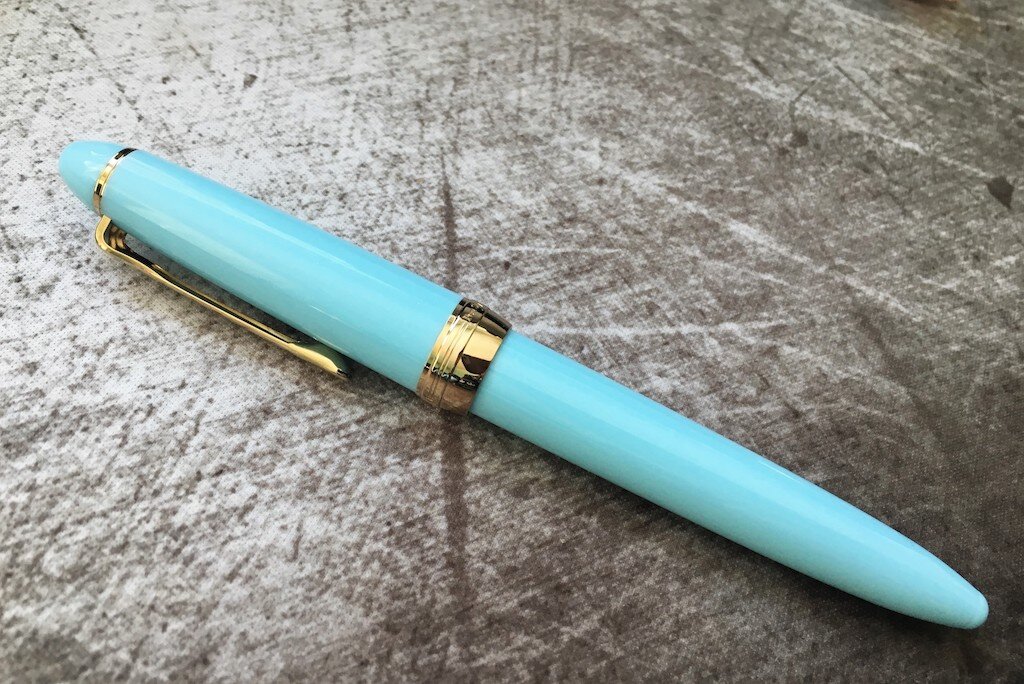
The Sailor Pro Color has a new special series from the Nagasawa Stationery Center in Kobe, Japan--this time in a lovely array of seven slightly shimmery pastel colors. I'm a big fan of the Pro Color model. To be fair, I'm a big fan of most Sailors that I've used. From their low-end, entry-level pens to their fancy-pants budget-breakers, there's an attention to detail and dedication to quality that makes all of them special.

The Pro Color isn't quite entry-level. With a price tag of $87, it's a stage past that, into the "generous gift" category, by my scale. It just crosses the impulse-buy threshold, though these pretty pens could easily blur that line with their charm.

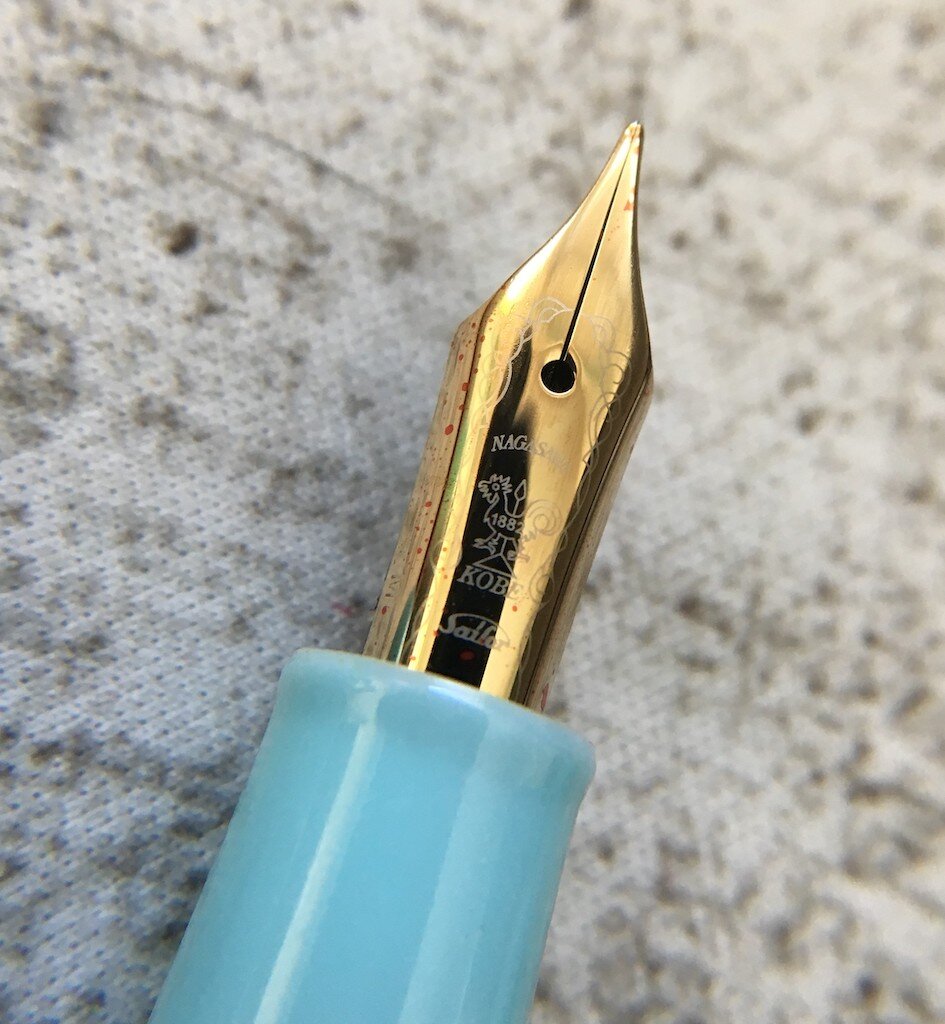
Like the Shikiori Tsukuyo-no-Minamo that I reviewed last year, the primary difference between this pan and its fancier cousin, the 1911 Standard, is the nib material. The 1911 has a gold nib, while these models have a gold-colored steel nib. The resin of the body also feels, to me, a little bit less substantial. The edges are just slightly less finished. All of these differences have to be studied to be noticed at all. The steel nib is so smooth and perfectly tuned that I had to double-check that it wasn't gold.

The nib on this Nagasawa edition has different stamping than the regular Pro Color series. Instead of the scroll work and anchor, there's a rooster weathervane with 1882 on it, with Nagasawa and Kobe written around it. Sailor is written below that. It's a really lovely nib, and it's fun to see something different and special on it. The looks would mean nothing, though, if it wasn't also a dreamy writer. It is perfectly smooth, even with this fine nib, and it has the perfect wetness to show off the characteristics of whatever ink you're using. I don't often see much ink shading with a Japanese fine nib, but I do with this pen.

This model is the Kobe Water Blue color. It's a lovely, soft, robin's egg blue. It's also available in Ijinkan Mint (I need this color also), Nunobiki Lavender, Rikyu Moon Yellow, Hatoba Coral Pink (this one, too), Samura Sand Beige, and Oji Cherry. They're all gorgeous. The spring colors bring a nice pop of cheer to the deep winter.

All of the pens have gold-colored furniture. The cap band says "Nagasawa" and "pen style den". The clip is plain, but functions well. The grip section is comfortable, and made from the same plastic as the body. It can use Sailor cartridges or a Sailor converter. It comes with both, so you can choose your preference. I loaded mine with Sailor Ink Studios 773, which I'll be reviewing next week.

In my experience, you can't go wrong with a Sailor pen. It might be possible to spend too much on one, though. This Pro Color model gives you a wonderful writing experience for a fraction of the price of their middle- and high-end pens. If you haven't tried a Sailor yet, and are in the market for a step up from entry-level, this is a fantastic choice. Having a wonderful, inexpensive Sailor will not, however, make you immune to the allure of high-end Sailor pens. While this pen is perfectly good enough, there are never enough Sailors.

(JetPens provided this product at no charge to The Pen Addict for review purposes.)


Enjoy reading The Pen Addict? Then consider becoming a member to receive additional weekly content, giveaways, and discounts in The Pen Addict shop. Plus, you support me and the site directly, for which I am very grateful.

Membership starts at just $5/month, with a discounted annual option available. To find out more about membership click here and join us!

Posted on January 23, 2020 and filed under Sailor, Nagasawa, Fountain Pens, Pen Reviews.

Tactile Turn Stainless Steel Pencil Review

(Jeff Abbott is a regular contributor at The Pen Addict. You can find more from Jeff online at Draft Evolution and Twitter.)

Tactile Turn is one of those names that the Pen Addict crowd have heard about at some point or another. Maybe you've seen the brand on Instagram, or seen one of the Kickstarter campaigns for their unique machined pens. Or, maybe you've seen one in person or even own one (or several) of these high-quality metal pens. Whatever the case may be, if you haven't heard of Tactile Turn before today, it's your lucky day.

Starting with a machined pen to hold either a Parker refill or a Pilot G2 refill, Tactile Turn made their debut many years ago with the Mover and Shaker pens. These are still available today, but not in their initial form. The team at Tactile Turn have iterated on these pens to make them the best possible version. They also make several other pen models, including a sliding bolt variety and even a fountain pen.

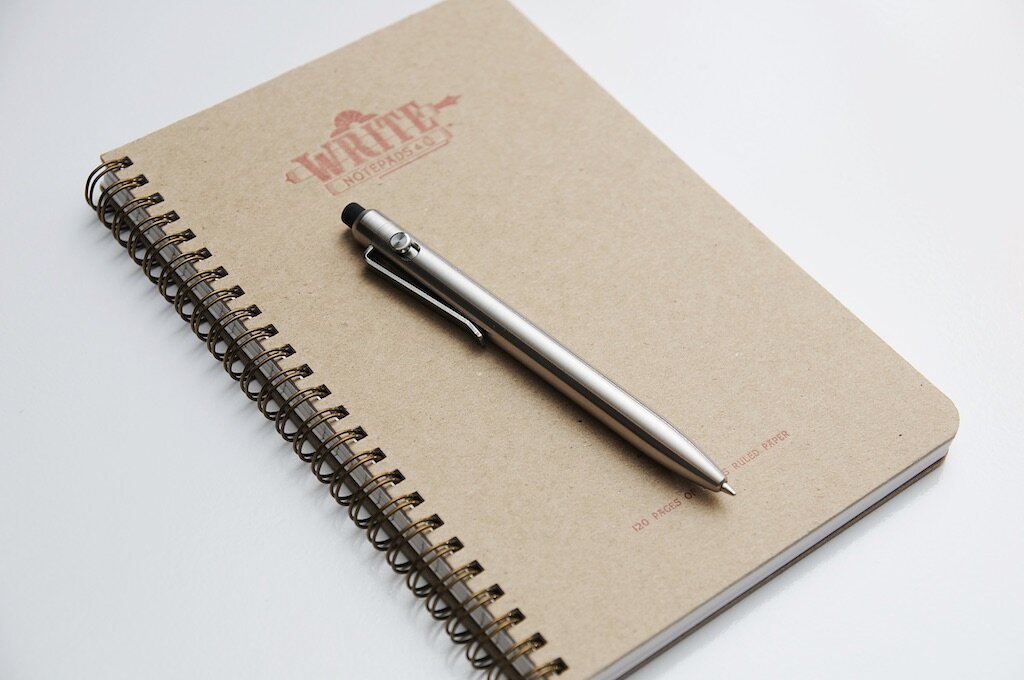
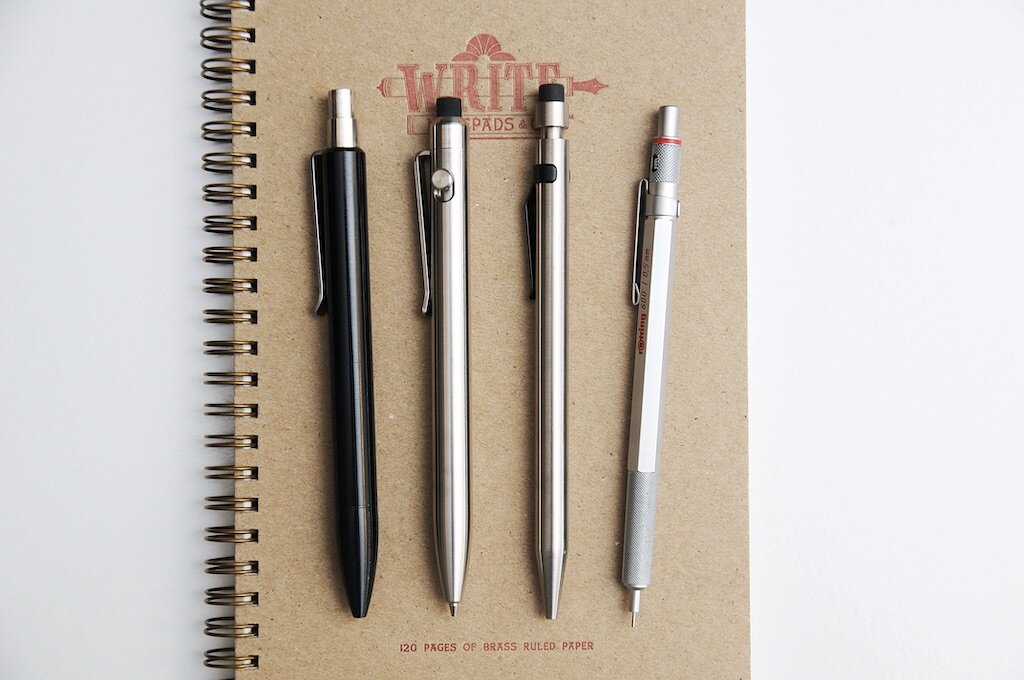
Most recently, the gang at Tactile Turn have produced an outstanding mechanical pencil that features the same design cues as the rest of their unique lineup. The mechanical pencil, dubbed the Pencil, borrows the shape and bolt design of the Bolt Action Pen but manages to squeeze in a mechanical pencil insert instead of a pen refill. And of course, what mechanical pencil would be whole without an eraser on top? The Pencil features a larger than normal black eraser for those mistakes that you just can't stand to leave on the page if you forgot your big eraser at home.

When purchasing the pencil, you can choose between a 0.5mm and 0.7mm lead size component, and you can also opt for a Damascus bolt over the standard titanium bolt. Not sure what Damascus is?

Titanium Damascus is different allows of titanium that are forged together and twisted to create a cool pattern. After they are machined, we heat them to bring out the pattern. Every bolt looks a little different. These are unique pieces and every one has variation from the next.

For an extra $20, I would go for the Damascus bolt every single time, and that applies to the Bolt Action Pen as well. The pop of blue-green-purple color on the all-business machined body is just too good to pass up.

The bolt is an interesting way to advance the pencil lead. Opposed to the Bolt Action Pen, which has a curved path for the bolt to slide down into action, the Pencil has a short 4mm path for the bolt to travel down. It doesn't feel entirely natural, but you can get used to it. Another aspect that doesn't feel entirely natural is the amount of force you have to use in order to advance the lead. It would be easier if the bolt was bigger or stuck out further, but that would ruin the aesthetic. Maybe a lighter spring on the internal pencil component would also help? Either way, I have found it slightly frustrating to operate the bolt on this pencil, but it's not a deal-breaker for me. After a little use, my thumb remembers how to operate it efficiently.

Another small design decision that gets under my skin is the fact that the lead pipe doesn't retract into the pencil body. This isn't something that you find on many mechanical pencils in general, but it's always nice to have. To be fair, I can't even imagine the engineering nightmare it would be to design a retracting lead component on this pen, and that's probably the end product lacks it. This omission doesn't detract from the pencil at all, as the point isn't very "pointy" and doesn't get stuck on things (like the insides of pockets) very easily as long as the lead is retracted.

Moving on to the rest of the pencil, you'll certainly notice the heft of the stainless steel model as soon as you pick it up. It's not a lightweight pencil! The entire body features the same uniform grooves that go around the body to create a tiny and textured grip surface that feels great to hold. On top of feeling great, it also gives the pen part of its unique aesthetic that all of Tactile Turn's products boast.

The clip is the same clip that you'll find on all the other Tactile Turn pens, and it does a fantastic job. It's strong enough to keep the pencil attached to whatever you clip it into, and the aesthetic matches the rest of the pencil perfectly.

The eraser looks right at home on this pencil, and also offers an instant visual cue that this is indeed a pencil (in case you have several Tactile Turn pens laying around on your desk). I wish there was an option to purchase an alternative cap for the pen if you want to leave the eraser behind and prefer a more streamlined look for the top of the pen. An option like this would definitely diminish the utility of the pencil, but I'd buy one pretty quickly to add to my Pencil since I don't really need the eraser built into the top.

Writing with the Pencil takes a little getting used to because of the significant weight. Most of the mechanical pencils I use are extremely light, so this one is quite an adjustment. Of course, this is one of the heavier options available. If you prefer a lighter pencil, I'd go with the titanium or aluminum models.

The Tactile Turn Mechanical Pencil is certainly an attractive looking pencil that looks great on my desk, feels good in my hand, and does a good job at making marks on the page. A few design quirks aside, it's an excellent writing instrument that I would happily recommend to anyone that is drawn to the Tactile Turn aesthetic. The Stainless Steel model shown here starts at $89, but you can pick up an anodized aluminum version for $69, a copper or brass version for $79, or a titanium model for $99. With each model, you can spend an extra $20 to upgrade to a Damascus bolt over the standard titanium, and I'd highly recommend it.

(JetPens provided this product at no charge to The Pen Addict for review purposes.)

Posted on January 22, 2020 and filed under Tactile Turn, Mechanical Pencil, Pencil Reviews.