Washi Arts Momigami Paper Making Kit: A Review

Washi Arts Momigami Paper Making Kit: A Review

(Susan M. Pigott is a fountain pen collector, pen and paperholic, photographer, and professor. You can find more from Susan on her blog Scribalishess.)

During the pandemic, I've become a paper-crazed woman. Not only have I been making my own paper (see my paper-making posts here and here), but I've also been experimenting with other paper-related crafts.

I am fascinated with Washi Paper (see my review of the Yamamoto Paper Tasting Washi here), and as part of a paper arts conference I attended online in March, I watched a video on using Konnyaku starch to make Momigami paper.

Konnyaku (pronounced "koh-nee-yah-koo"), also known as Devil's Tongue Root, Snake Palm, and Voodoo Lily, is derived from the Amorphophallus Konjac plant. Using Konnyaku powder and distilled water, you can make a jelly-like starch to coat paper. After application, you roll up the paper into balls to wrinkle it, resulting in Momigami or "kneaded paper." The Konnyaku starch not only strengthens the paper, but the more you work it, mashing it up and rubbing it against itself, the softer and more cloth-like it becomes. You can then use it for book cloth, collage, paper weaving, and even clothing.

I ordered a kit from Washi Arts that included .5 grams of Konnyaku powder, a recipe, and a variety of different papers to experiment with.
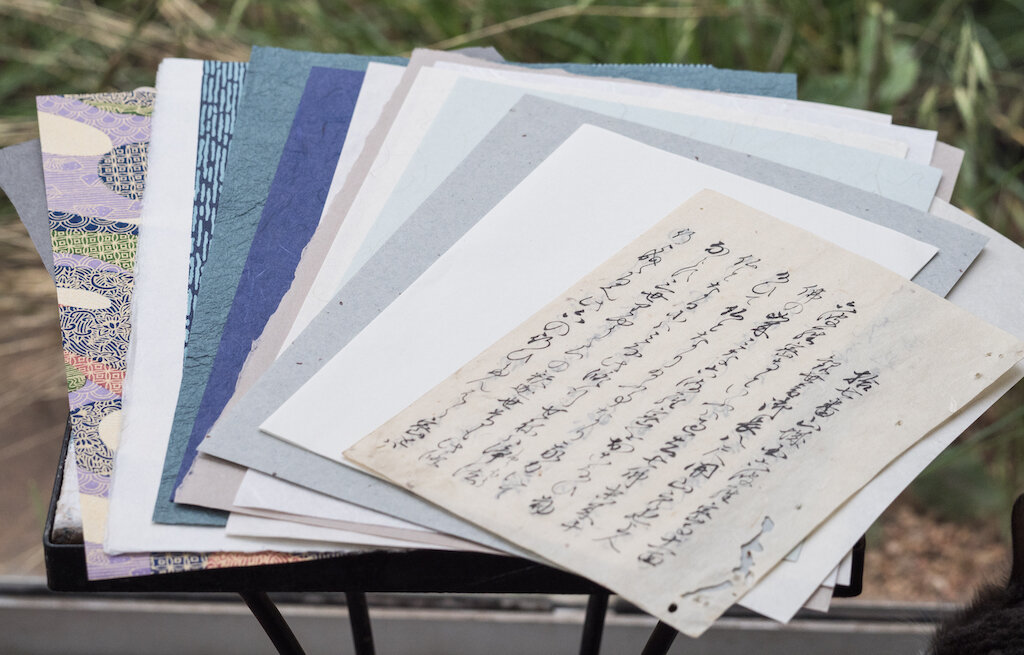
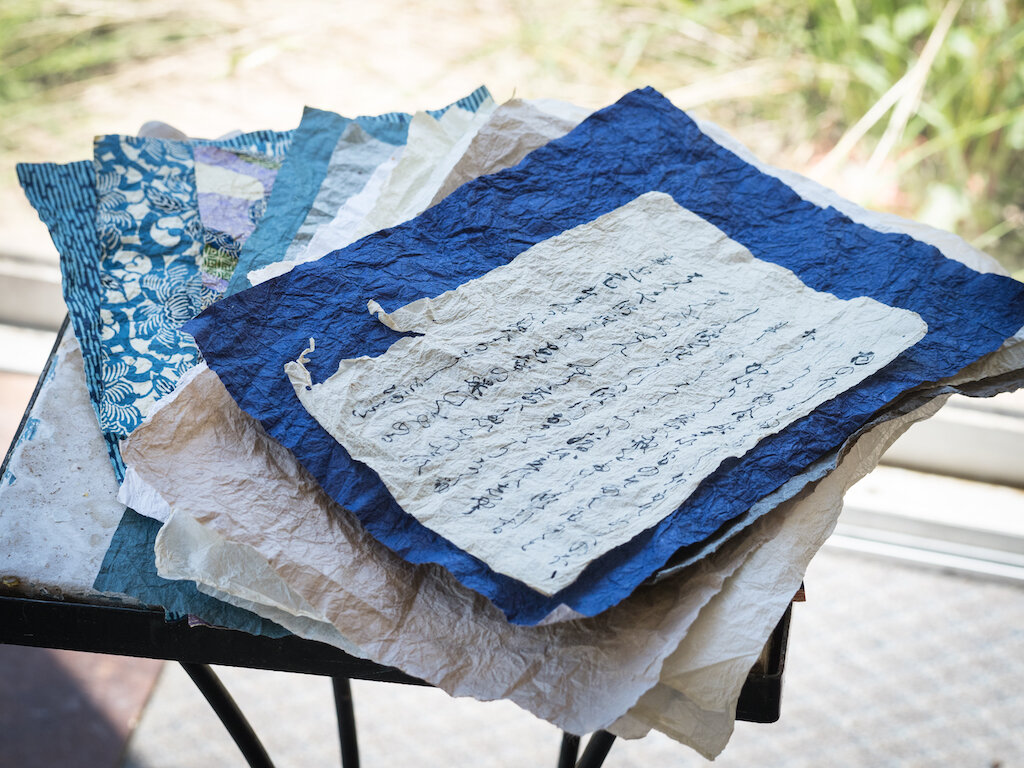
The Paper Before Treatment

The Paper Before Treatment

After mixing the Konnyaku powder with distilled water, I stirred it with a whisk every few minutes for twenty minutes. Then I let the mixture sit for several hours, stirring it occasionally. The result was a goopy, almost clear mixture with the consistency of thick syrup.

Washi Arts Konnyaku Powder
Washi Arts Bowl with Brush

I coated each piece of paper front and back with the Konnyaku mixture using a soft paintbrush.

Washi Arts Applying Konnyaku
Washi Arts Applying Konnyaku 2

After that, I pulled the corners of the paper into the center and formed a loose ball.

Washi Arts Corner Pulling
Washi Arts Loose Balls

Once all the papers were coated, I began kneading, rolling up each loose ball into a tighter one, then pulling it gently apart and repeating the process.
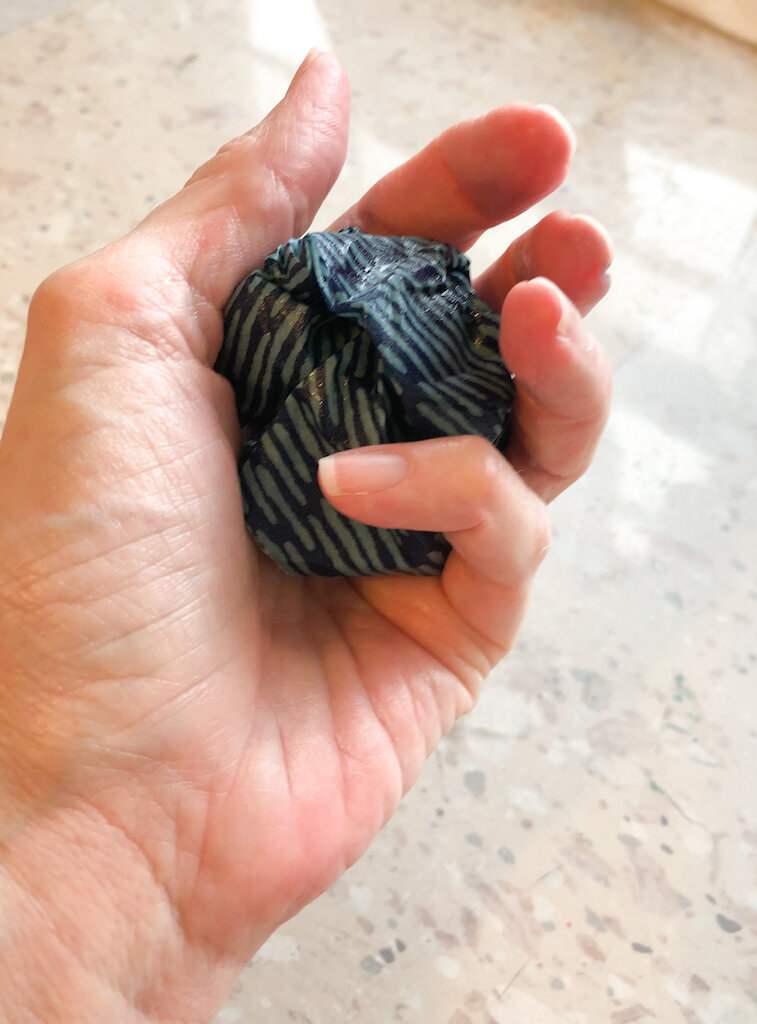
Washi Arts Kneading

Then I used clothespins to hang the papers to dry overnight.

Washi Arts Hanging

The next day, the papers were hardened from the starch.

Washi Arts Pile of Paper

I rolled the dry paper into balls to continue the kneading process.

Washi Arts Dry Ball

I applied a second coat of Konnyaku to all the papers, front and back, and hung them to dry for another night.

Washi Arts Second Coat

I sat on the living room couch the next day with my stack of papers. Taking each one, I rolled and re-rolled it and rubbed the paper against itself. I probably spent two hours working the papers until they were extra soft and pliable. The result was a finished stack of cloth-like, highly textured paper.

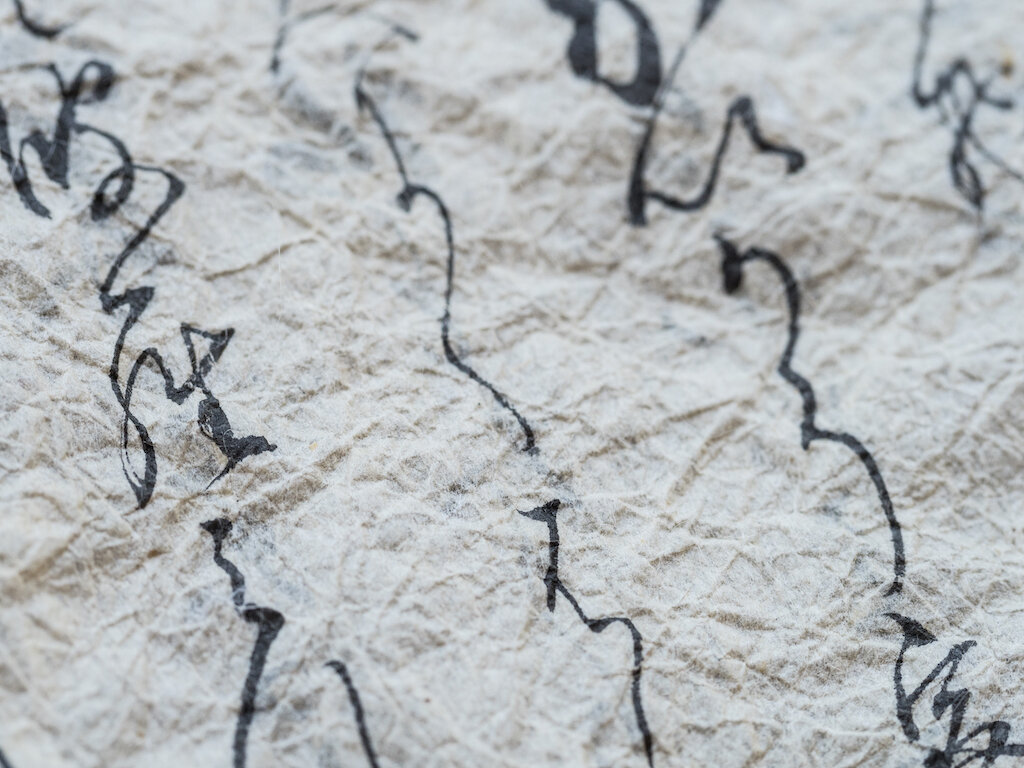
Washi Arts Finished Stack
Washi Arts Texture Close Up

Although I read that Konnyaku is supposed to make the paper waterproof, or at least water-resistant, my paper wasn't. Perhaps I needed to apply more coats of Konnyaku to make it waterproof.

Washi Arts Failed Water Test

Regardless, I was happy with how each of the papers felt and looked. I decided to use some of the paper for a paper weaving. My base paper was royal blue and I used grey, off white, and teal strips for the weaving. Because the paper was pliable, weaving was easy, and the paper melded together nicely. The weaving looks good flat, but it also makes a pretty cool paper lantern.

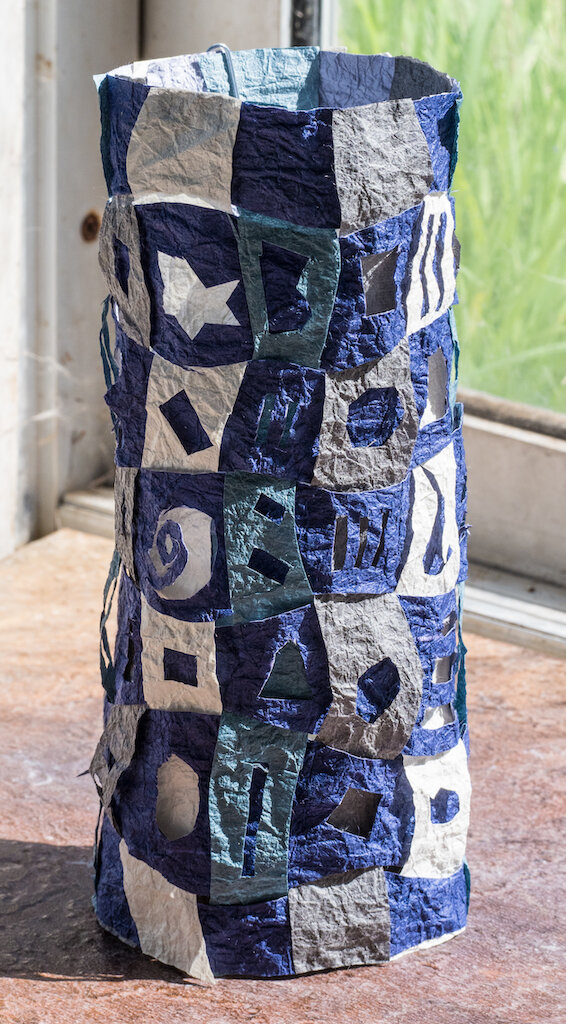
Washi Arts Weaving Flat
Washi Arts Paper Lantern

I used other Momigami paper as book cloth and endpapers for a small handmade book. The paper worked great as book cloth--the glue did not soak through--and the wrinkled texture makes the cover even more interesting. I love the textured look of the endpapers as well.
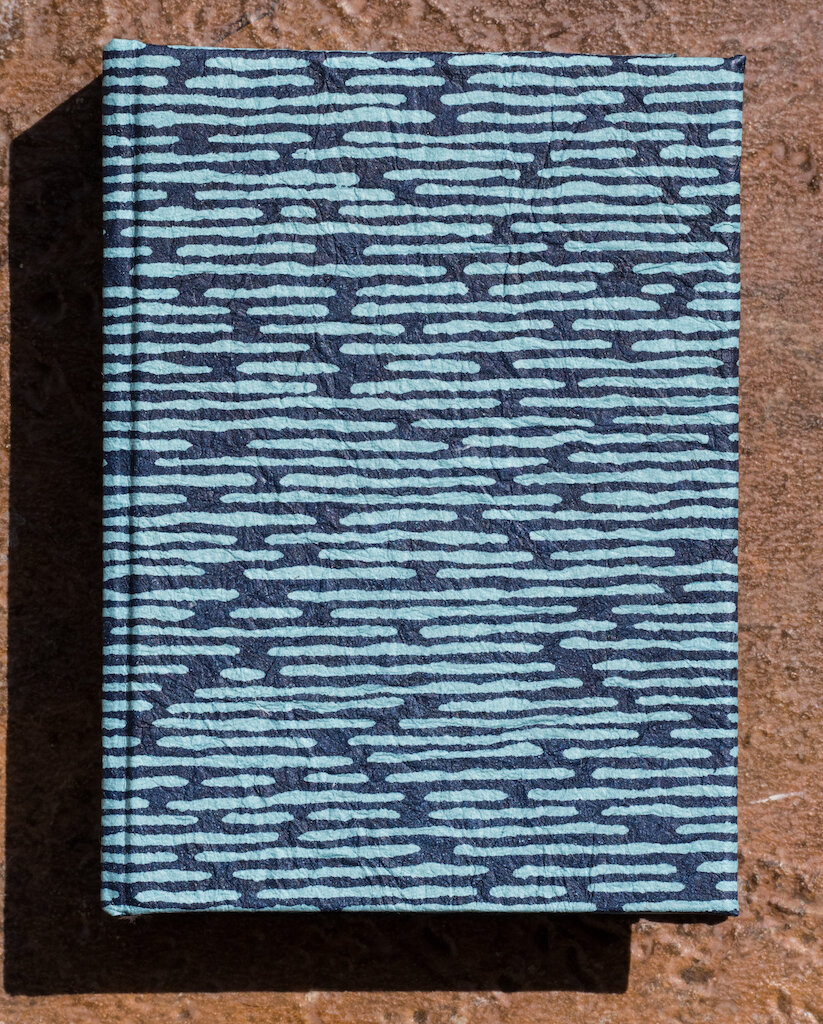
Washi Arts Book 1
Washi Arts Book 2
Washi Arts Book 3

I realize this process may seem like a lot of work, but it's really quite relaxing. I thoroughly enjoyed painting the Konnyaku on the papers and wadding them up into wet balls, squishing them between my hands, and feeling the texture forming. It was even more fun to sit on the couch and crunch and rub the papers until they became soft and cloth-like. Paper kneading is a great stress reliever!
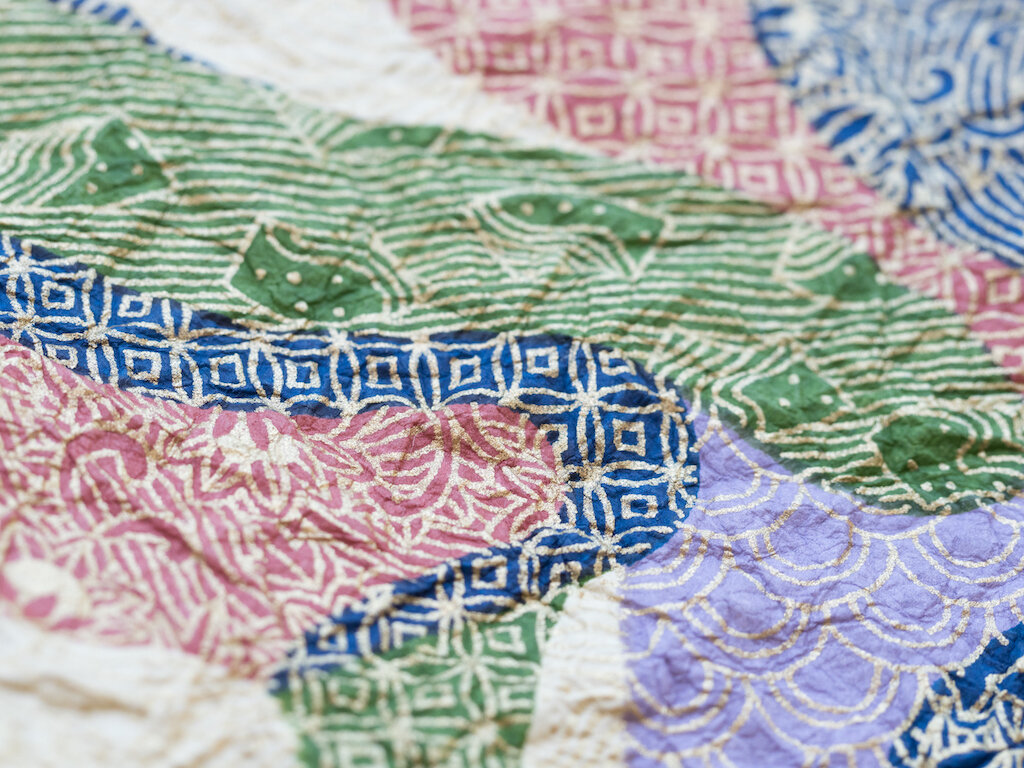
Washi Arts Texture 2

If you're interested in playing with paper, you can get the Washi Arts Momigami Paper Making Kit with either cool or warm colored papers for $35.00. There's also a mini kit for $15.00. Or, you can buy just the Konnyaku Powder (25 grams is $9.75 and 50 grams is $18.25) and use your own paper.

(I purchased the Washi Arts Momigami Paper Making Kit with my own funds.)


Enjoy reading The Pen Addict? Then consider becoming a member to receive additional weekly content, giveaways, and discounts in The Pen Addict shop. Plus, you support me and the site directly, for which I am very grateful.

Membership starts at just $5/month, with a discounted annual option available. To find out more about membership click here and join us!

Washi Arts
Posted on May 7, 2021 and filed under Washi Arts, Paper Making.

Kokuyo Systemic Cover Notebook Review

Kokuyo Systemic Cover Notebook Review

(Sarah Read is an author, editor, yarn artist, and pen/paper/ink addict. You can find more about her at her website and on Twitter. And check out her latest book, Out of Water, now available where books are sold!)

When I first opened the Kokuyo Systemic Cover Notebook up and started exploring its features, it reminded me of the times when my kids would bring me their transformer robots and ask me to make them back into cars. What goes where? Are there three arms? Sorry, kid, Bumblebee wants to stay a robot forever. But after working with it and seeing all the cool stuff it can do? Now I'm a fan.

Kokuyo Systemic Cover Notebook

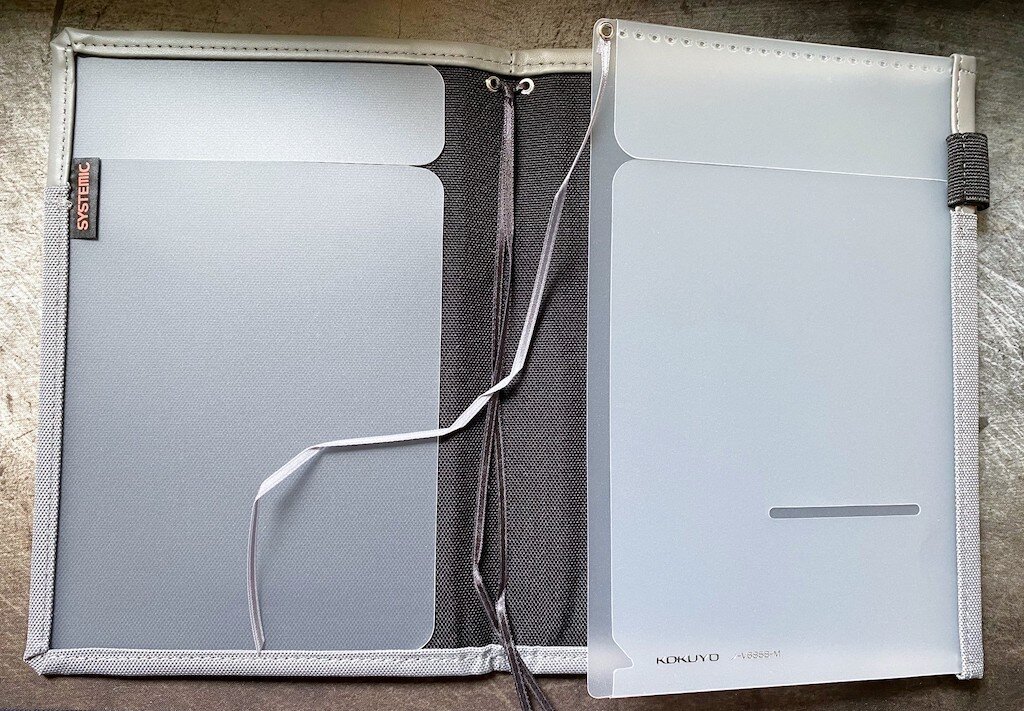
The cover is a tri-fold design, and each of its thirds is full of features, so I think it makes the most sense to describe it from left to right. The first third is the piece that forms the front cover. on the front it has a canvas pocket over the faux leather that's big enough to hold a small notebook or some pens or papers. Inside that flap is a flexible plastic sheet split into two parts. This can be used as a folder for papers, or as a sleeve to insert an A5 notebook cover behind, or, thanks to the split, a sleeve to fit a top-bound notepad.

Kokuyo Systemic Cover
Kokuyo Systemic Cover Inside

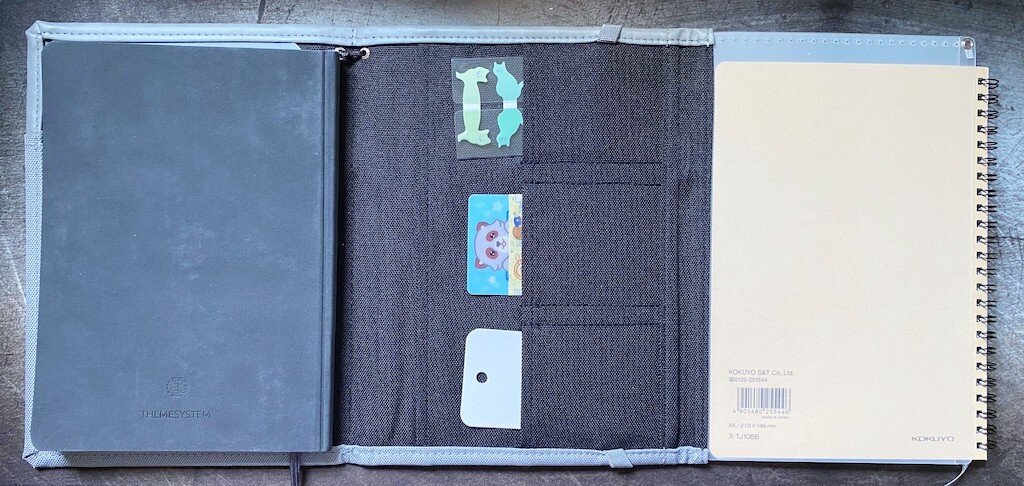
At the fold between the first and second parts, there is a double-ribbon bookmark. One can be used for the left notebook, and one can be used for another notebook that can be inserted into the sleeve that's in the middle section. The middle section forms the back of the cover itself. On the outside, it has another canvas pocket just like the front does. Inside, it has a canvas sleeve for notebooks or papers. And stitched on top of that pocket are three smaller card-slot pockets.

Kokuyo Systemic Cover Twin Ring

The final third of the cover is a plastic sleeve, where the Kokuyo A5 Twin Ring notebook fits. The cover comes with one notebook, but refills can also be purchased. I'll review the notebook another day because it's also full of unique features worth talking about at length. Other A5 notebooks would also fit in this space, and because this sleeve is also split, a top-bound notebook would work as well. This plastic sleeve also has a card slot and ribbon bookmark to use in that notebook. On the right side is an elastic pen loop. When all is folded up together, it can be secured with an elastic band that stretches around from the back of the cover.

Kokuyo Systemic Cover Notebooks

You can fit a lot of notebooks in this bad boy (slaps hand on Kokuyo Systemic Cover). And that is my love language. I have five notebooks in mine right now, and that's not counting the small sticky note pads that are tucked away in the pockets. Granted, all of them are slim books. I was, however, able to fit my Seven Seas Writer in the right-hand side, and still keep a slim Midori and Field Notes in the other two spots, and a Field Notes Dime Novel edition in the front pocket. It's stuffed, and I can't use the smaller interior pockets, but it fits. I also managed to fit three Leuchtturm softcover notebooks, which also works as long as you don't plan to use the small pockets. It's full of notebooks AND surprises.

Kokuyo Systemic Cover Outside

The last surprise is that it's only $25. I think it would be great for work and even better for students. It works perfectly for my writing, too, as my everyday writing uses a three-notebook system. It comes in several muted, professional colors. But the plastic sleeves are perfect for placing stickers, if professional isn't your vibe. Whatever your purpose, this transformer of notebook systems can almost certainly meet your needs.

(JetPens provided this product at no charge to The Pen Addict for review purposes.)


Enjoy reading The Pen Addict? Then consider becoming a member to receive additional weekly content, giveaways, and discounts in The Pen Addict shop. Plus, you support me and the site directly, for which I am very grateful.

Membership starts at just $5/month, with a discounted annual option available. To find out more about membership click here and join us!

Kokuyo Systemic Cover Back
Posted on May 6, 2021 and filed under Kokuyo, Notebook Reviews.

Shibui 8-Slot Ink Vial Case Giveaway

Shibui 8-Slot Ink Vial Case

Shibui is a new-to-me stationery maker, with a focus on leather storage goods. They sent me several products for review and giveaway, so I figured I would get this party started. Today’s giveaway is for the highly-specific 8-Vial carry case, something the most dedicated fountain pen users will enjoy. The Olive Green leather color I have for you is not currently available on their site, so enter away if you are interested!

Posted on May 4, 2021 and filed under Shibui, Giveaways.