Musubi Cosmo Air Light Folio Notebook (A5): A Review

Musubi Cosmo Air Light Folio Notebook Review

The Musubi Cosmo Air Light Folio Notebook is a beautiful minimalist notebook with 208 pages of Cosmo Air Light paper. Simple white cotton adorns the cardstock covers of the notebook. The cotton has a lovely texture to it, and the only branding is the barely-visible Musubi logo embossed on the bottom right corner.

Musubi Cosmo Air Light Folio Notebook Cover
Musubi Cosmo Air Light Folio Notebook Cotton
Musubi Cosmo Air Light Folio Notebook Logo

The end pages are made of a thicker, water-color-like paper. There's no printing, branding, or decoration whatsoever. The outside corners of the notebook are rounded.

Musubi Cosmo Air Light Folio Notebook Endpages
Musubi Cosmo Air Light Folio Notebook Rounded Corners

Inside, the pages are Smyth-sewn, so they lie completely flat when the book is open. Cosmo Air Light is 83gsm, so it is thicker than Tomoe River Paper, but lighter than Bank Paper. My notebook is the lined version. The lines are printed in a light sage ink and are spaced 7mm apart. In addition, there are small marks at the top and bottom of each page which divide the page up into halves, thirds, and fourths.

Musubi Cosmo Air Light Folio Notebook Paper
Musubi Cosmo Air Light Folio Notebook Marks

I first discovered Cosmo Air Light paper when I did a review of the Yamamoto Fountain Pen Friendly Paper Collection (part 1 and part 2). It was one of my favorites in the collection.

The paper is smooth and lacks any texture. Its smoothness derives from a coating that is put on the paper (originally for book printing). The coating enhances any ink's sheen or shading properties. The thickness of the paper means that there's very little ghosting and no bleed through, which makes Cosmo Air Light more user friendly, in my opinion, than the popular Tomoe River Paper.

I tested the paper with eleven fountain pens with varying nib sizes and different inks. The paper handled all the inks with ease--no feathering, no bleeding, and only slight ghosting (so little it doesn't show up in photos). Several inks shaded well, and sheen was evident in Iroshizuku Take-Sumi, Robert Oster Tranquility, and Iroshizuku Yama-Budo. The only negative was a lengthy dry time for the wetter inks.

Musubi Cosmo Air Light Fountain Pen Test
Musubi Cosmo Air Light FP Close Up.jpg

Swabs on this paper look fantastic. The ink colors are vibrant and true, and shading and sheen are pronounced. On the reverse side there's no bleed through and only mild ghosting.

Musubi Cosmo Air Light Swab Test
Musubi Cosmo Air Light Swab Close Up 1.jpg

I tested the paper with a dip calligraphy pen inked with Taccia Sabimidori (reviewed here). I discovered that Cosmo Air Light is not the best paper for calligraphy. Because of the coating, the ink does not settle into the paper well, resulting in thick lines and uneven lettering. Compared with Ayush Paper (reviewed here), Ayush wins hands down for calligraphy--the paper absorbs the ink more quickly, allowing for good results with flex. Although the ink doesn't sheen as much as Cosmo Air Light, I think the trade-off is worth it if you're doing calligraphy.

Musubi Cosmo Air Light Cosmo Calligraphy.jpg
Musubi Cosmo Air Light Cosmo Calligraphy Close Up.jpg
Musubi Cosmo Air Light Cosmo Ayush Comparison.jpg

I did longer writing samples with three pens: a Santini stub (reviewed here), inked with Robert Oster Tranquility; a Lamy 2000 fine, inked with Iroshizuku Take-sumi; and a Leonardo stub (reviewed here), inked with Monteverde Mulberry Noir. Cosmo Air Light really shines as a journaling paper because it handles different pens and inks so well. There's a pleasant sensation as you write on this smooth paper. Once again, I noted no feathering or bleed-through and only slight ghosting.

Musubi Cosmo Air Light Long Writing 1.jpg
Musubi Cosmo Air Light Long Writing 2.jpg

Cosmo Air Light remains one of my favorite papers. It outshines Tomoe River Paper in many ways: it is thicker and therefore does not suffer from ghosting; it has a smooth surface and is pleasant to write on, much like Tomoe; and it enhances sheen and shading even better than Tomoe (although that can mean longer dry times). I realize that one of the things people (me included) love about Tomoe River Paper is how thin and light it is. That's a great quality for planners, because it keeps them thinner overall. But for journaling, I think Cosmo Air Light is a better choice because you can write front and back without your writing showing through.

The Musubi Cosmo Air Light Folio Notebook retails for approximately $25.00 (35 Singapore dollars). You can get it with plain pages, lined pages, or cross grid with page numbers. It doesn't have many bells and whistles--no ribbon bookmark or pockets or elastic closure, but I love its minimalist design. I've never seen a notebook with so little branding. It's elegant, beautiful, and functional. And, sometime in 2021, Musubi is planning to release covers for their Folio Notebooks in the beautiful materials they use for their handmade notebooks. I can hardly wait!

(Musubi provided the Cosmo Air Light Folio Notebook to Pen Addict free of charge for review purposes.)


Enjoy reading The Pen Addict? Then consider becoming a member to receive additional weekly content, giveaways, and discounts in The Pen Addict shop. Plus, you support me and the site directly, for which I am very grateful.

Membership starts at just $5/month, with a discounted annual option available. To find out more about membership click here and join us!

Musubi Cosmo Air Light Review
Posted on June 11, 2021 and filed under Musubi, Cosmo Air Light, Notebook Reviews.

Kutsuwa Dr. Ion Multi Box Pencil Case Review

Kutsuwa Dr. Ion Multi Box Pencil Case Review

(Sarah Read is an author, editor, yarn artist, and pen/paper/ink addict. You can find more about her at her website and on Twitter. And check out her latest book, Out of Water, now available where books are sold!)

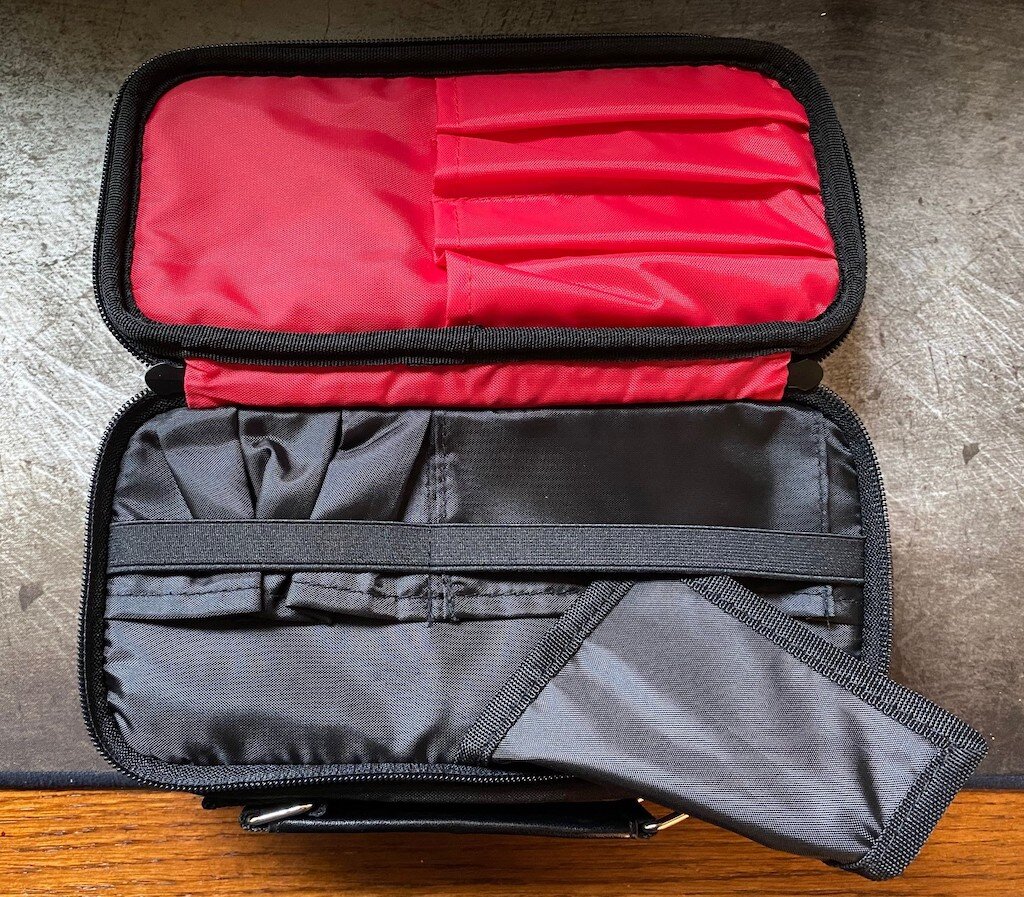
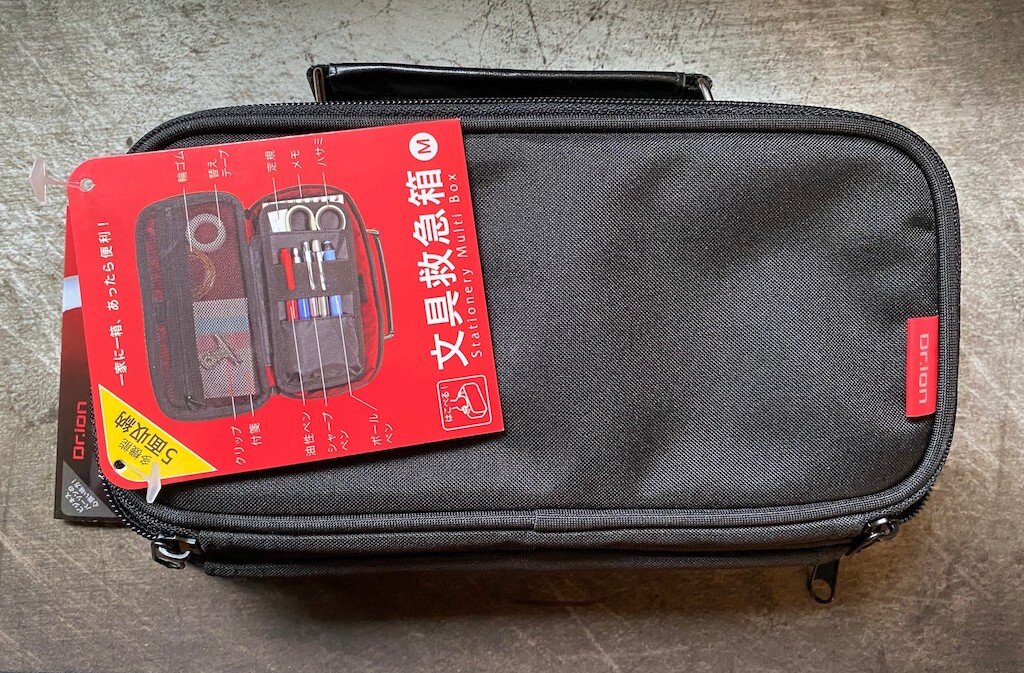
If you need to upgrade your pen case to a pen suitcase, you might want to take a look at this Dr. Ion Multi Box from Kutsuwa. There are so many features that I haven't even figured them all out yet. There are pockets and loops and straps and compartments and room for a little of everything.

Kutsuwa Dr. Ion Multi Box Pencil Case
Kutsuwa Dr. Ion Pencil Case
Kutsuwa Dr. Ion Case

The case is made from sturdy nylon canvas and is split into two double-zippered sections. Between the sections is the PVC handle that is on metal loop hinges for comfortable carrying. You could even handcuff it to your wrist, if you've got it loaded with your most precious pens.

Kutsuwa Dr. Ion Pencil Case Review

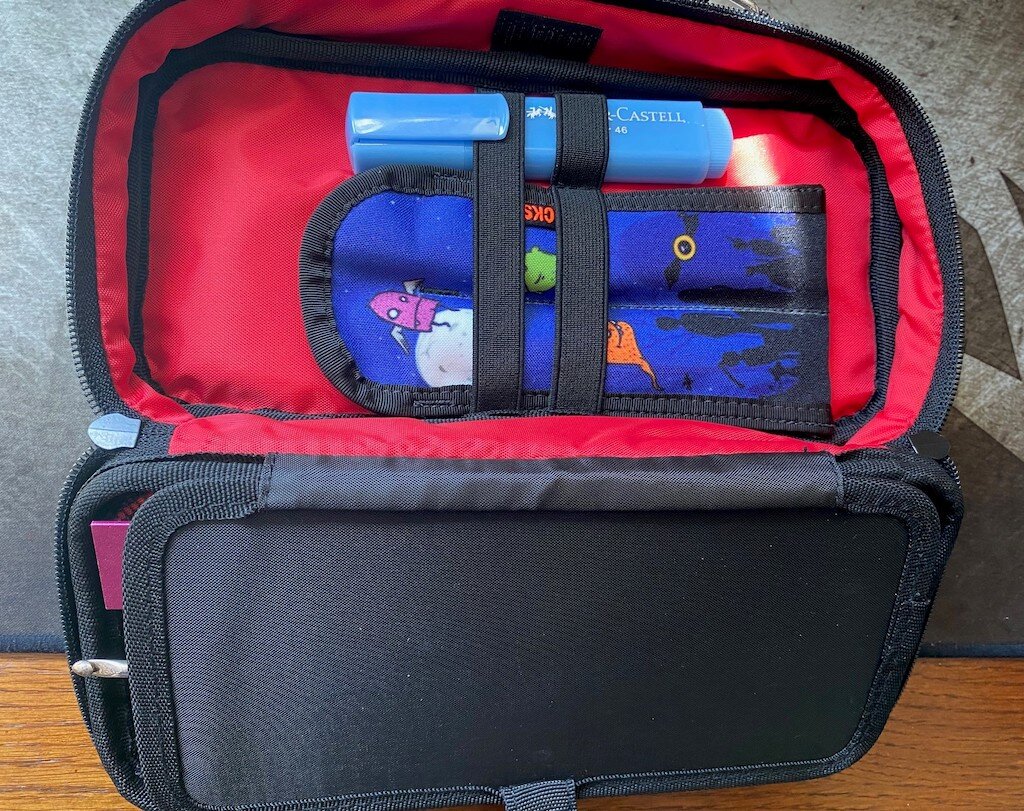
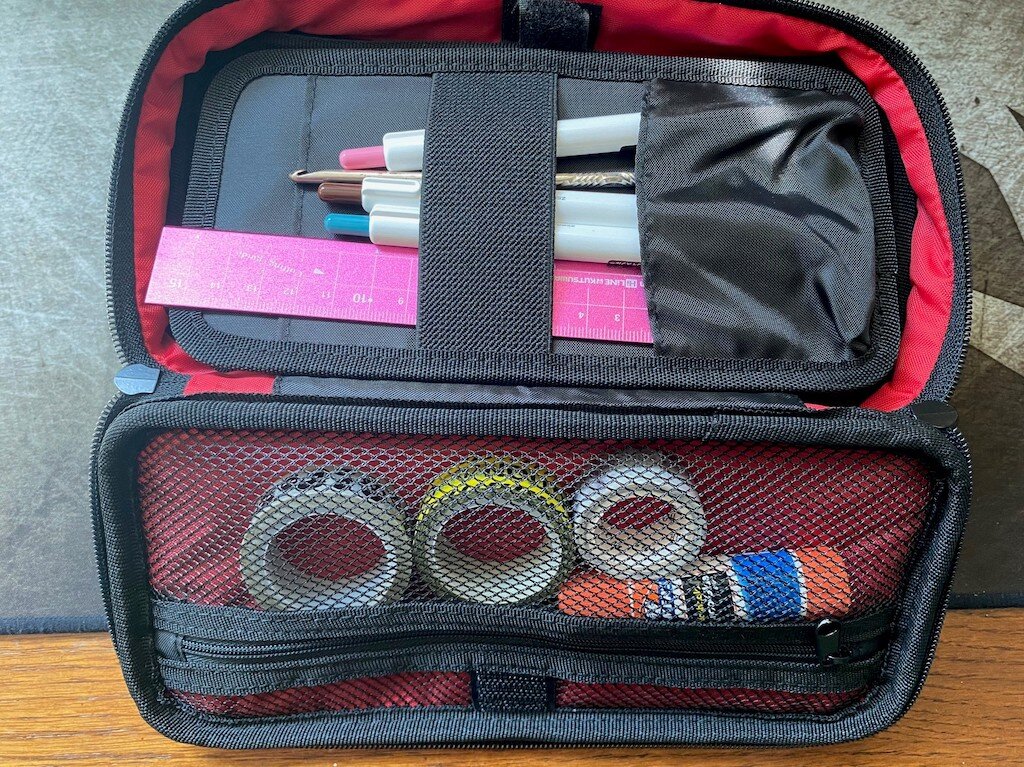
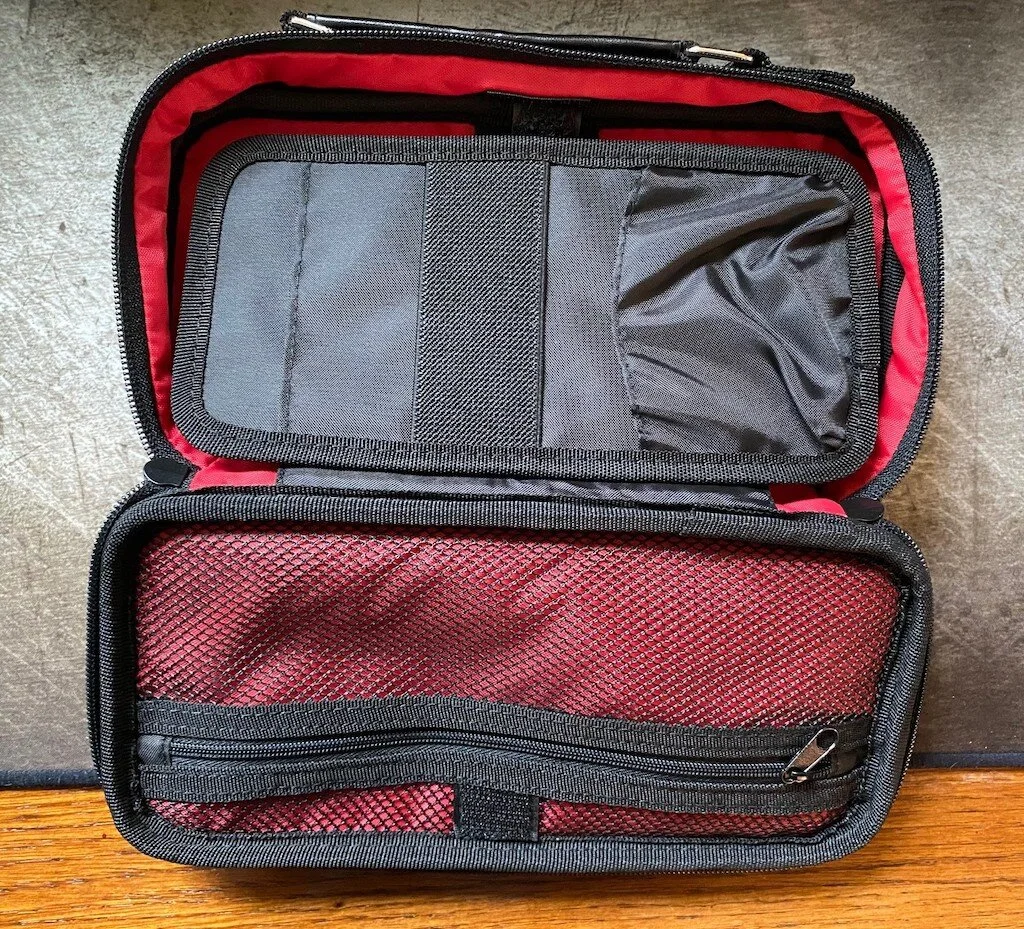
The sections open lengthwise, and the double zipper allows you to open and close from either end. One side of the case has a zippered mesh pouch on one side. A center flap divides the space. That flap has an elastic band with a bottom pocket on it that can hold multiple pens. The flip side of the flap acts as padding for the other side of the compartment where there are other elastic pen loops. This is the largest space in the case, and could be filled with tons of pens.

Kutsuwa Dr. Ion Pen Case

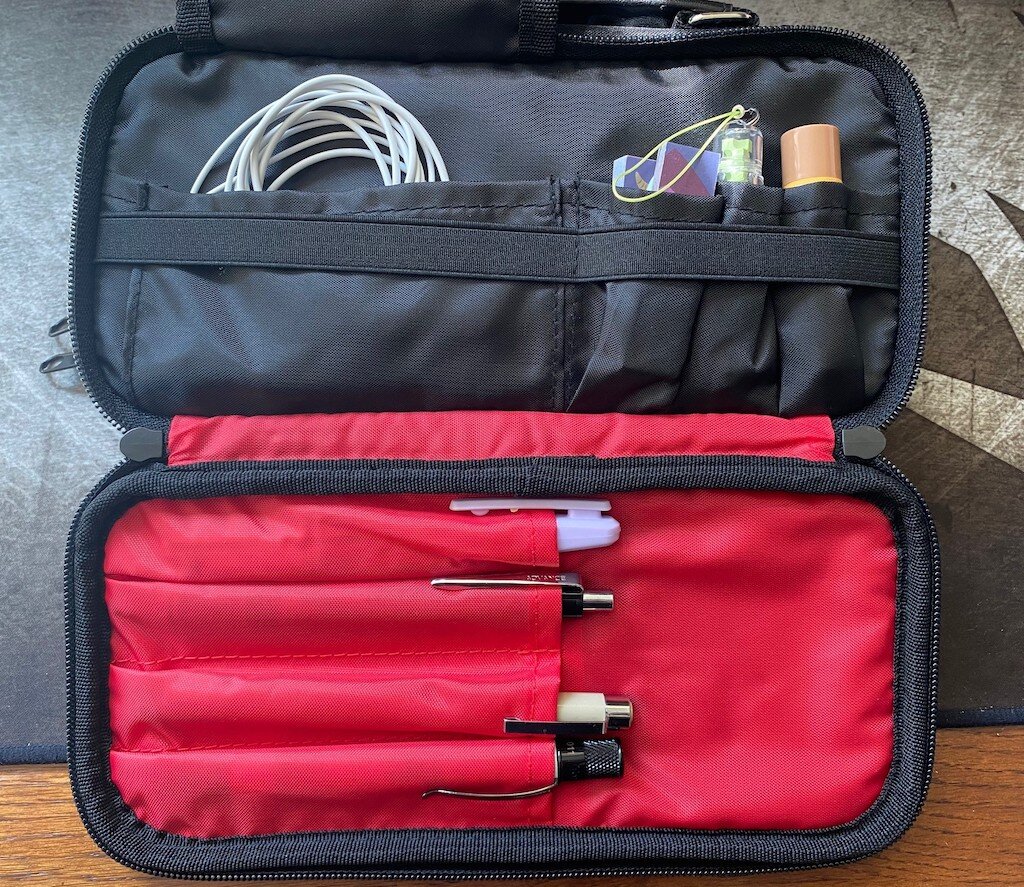
The other side of the case zips open to show four deep pen pockets on one side, and a few smaller elastic-bound pockets on the other side. These work great for sticky notes, erasers, or other small accessories.

This is the most high-capacity pen case I've ever used. I packed it with everything I thought I'd need on my recent writer's retreat, and I could have easily added a ton more. It worked great and I really liked the organization of it all. I think this case is the perfect thing for students who have to carry a variety of stationery, where they can organize their pens, pencils, markers, colored pencils, erasers, glue sticks, sticky notes, etc. My middle schooler had to upgrade to two pencil cases last year to carry all the stuff on his school list--but this case would hold it all. So he's probably going to get this case, come Fall. And then I'll need another one for myself.

Kutsuwa Dr. Ion Pen Case Review

The kicker here is that this is the MEDIUM size of this case. There is a large! The medium is a very reasonable $24.50, and the large, which has considerably more capacity, is $36.50 and is more purse-sized. You can even get a shoulder strap for it. Part of me thinks this might be too much stationery capacity ... and part of me really wants to put it to the test.

Kutsuwa Dr. Ion Pen Case Zippers

These cases aren't really designed for the transport of truly delicate pens. I wouldn't put my handmade acrylic fountain pens in it--there's not a lot of padding to speak of, and the compartments knock into each other a bit. But for school or art supplies, this is a really nice way to organize and carry your supplies.

(JetPens provided this product at no charge to The Pen Addict for review purposes.)


Enjoy reading The Pen Addict? Then consider becoming a member to receive additional weekly content, giveaways, and discounts in The Pen Addict shop. Plus, you support me and the site directly, for which I am very grateful.

Membership starts at just $5/month, with a discounted annual option available. To find out more about membership click here and join us!
Kutsuwa Dr. Ion Pen Case Tag
Posted on June 10, 2021 and filed under Kutsuwa, Pen Case.

The Pen Addict Podcast: Episode 465 - Skittles Skulls

Gravitas Skulls

Myke was off this week, but I stayed regional, hopping over to Ireland to chat with pen maker Ben Walsh of Gravitas Pens. I have fun chatting with Ben, and I hope you enjoy it as well!

Show Notes & Download Links

This episode of The Pen Addict is sponsored by:

Kenro Industries: Esterbrook introduces the Estie Gold Rush Series. Click to buy now.

Harry's: Quality shaving and grooming products, at a fair price.

Posted on June 9, 2021 and filed under Podcast.