(Kimberly (she/her) took the express train down the fountain pen/stationery rabbit hole and doesn't want to be rescued. She can be found on Instagram @allthehobbies because there really are many, many hobbies!.)
Let me start off by saying I am a TWSBI fan, ok, crazy superfan, so yes, I am one of those people who has to get the latest TWSBI even if it’s yet-another-color of an existing model. That doesn’t mean that I don’t want to see new models and innovations coming from them (or any brand for that matter). So when the TWSBI Swipe was announced, I was eager to see if they really did something different.
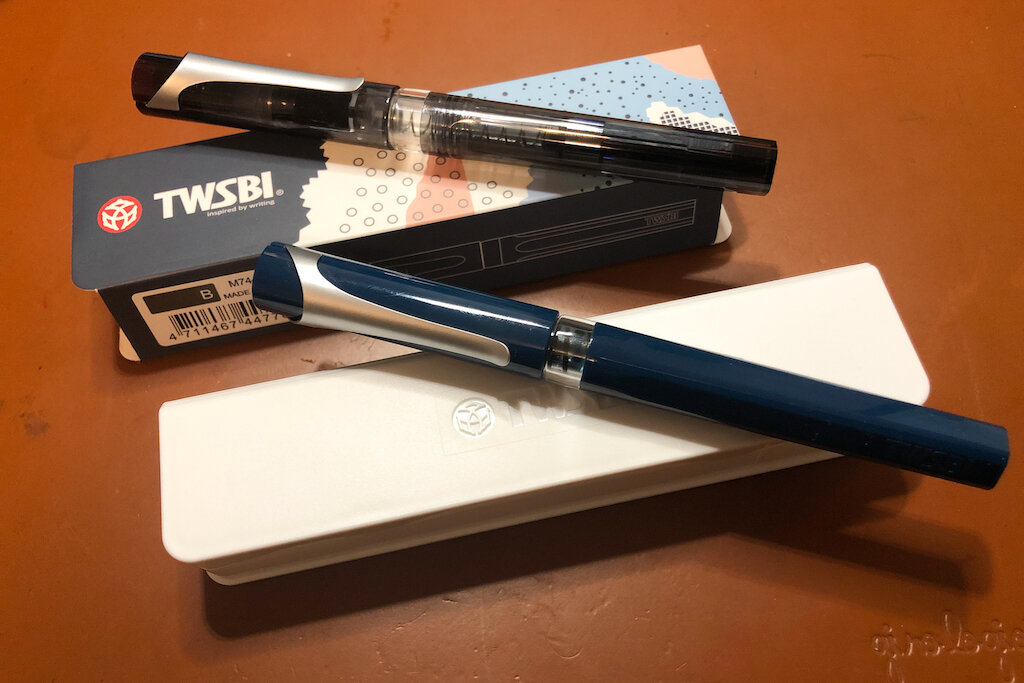
TWSBI is well-known for their affordable piston fillers, ranging from the Eco/Eco-T to the 580/AL/ALR/Mini, Precision and Classic. There is also a vacuum filler in the line up - the Vac 700R, and more recently, TWSBI introduced the Go at $19, which is a great value for a “spring-loaded piston-filler”. And now, we have the Swipe, which is a $27 USD cartridge/converter pen. A cartridge/converter pen isn’t exactly “innovative” per se, but it’s definitely not the usual standard international cartridge/converter pen either.
This isn’t a review of the Go, but it helps to understand how the Swipe is both similar to and different from the Go. The Go is a pretty no-frills pen, and in my opinion, not the most attractive pen. It is a pretty durable, snap-cap pen whose spring-loaded mechanism is both fun to use and makes for easy pen cleaning, but it looks cheap and maybe a bit juvenile, like it was meant for kids. Like the Go, the new Swipe is also a snap-cap pen but it is a more polished, dare I say “grown-up” version with a subtly faceted barrel, metal clip, and either solid color (for the Prussian Blue) or transparent color (for the Smoke) for most of the pen with just a small clear ink window..

TWSBI GO, top, vs. TWSBI SWIPE

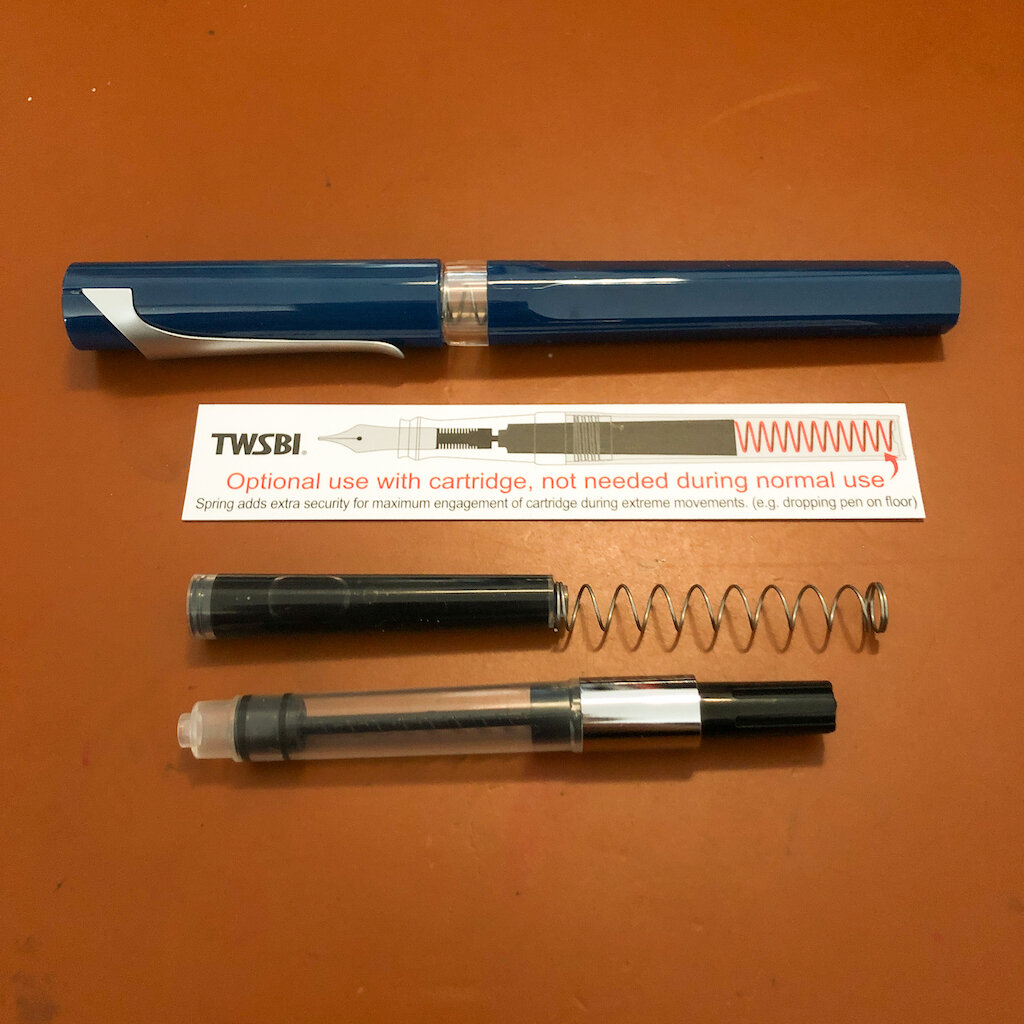
The Swipe integrates the Go’s spring mechanism into the converter itself, making it very easy (and fun) to ink up and clean out. You can also disassemble the converter by unscrewing the metal ring in the back, which makes for super easy and thorough cleaning; just be aware that the little plastic agitator ball can fall out during disassembly, though I don’t think it’s a big deal if it gets lost.


TWSBI includes a non-spring-loaded converter with the North American models, but it is not included with rest of the world models (priced at $22.99). According to TWSBI, their cartridge and converter are standard international sizing, but neither of them fit into any of my pens that take standard international converters because it is much too wide. I was able to fit standard international cartridges and converters in the Swipe but they didn’t fit as securely as I would have liked, especially the cartridge, which was very wiggly. I suspect this is because neither are wide enough to be held in place.

Piston and regular Swipe converters vs a standard international converter.
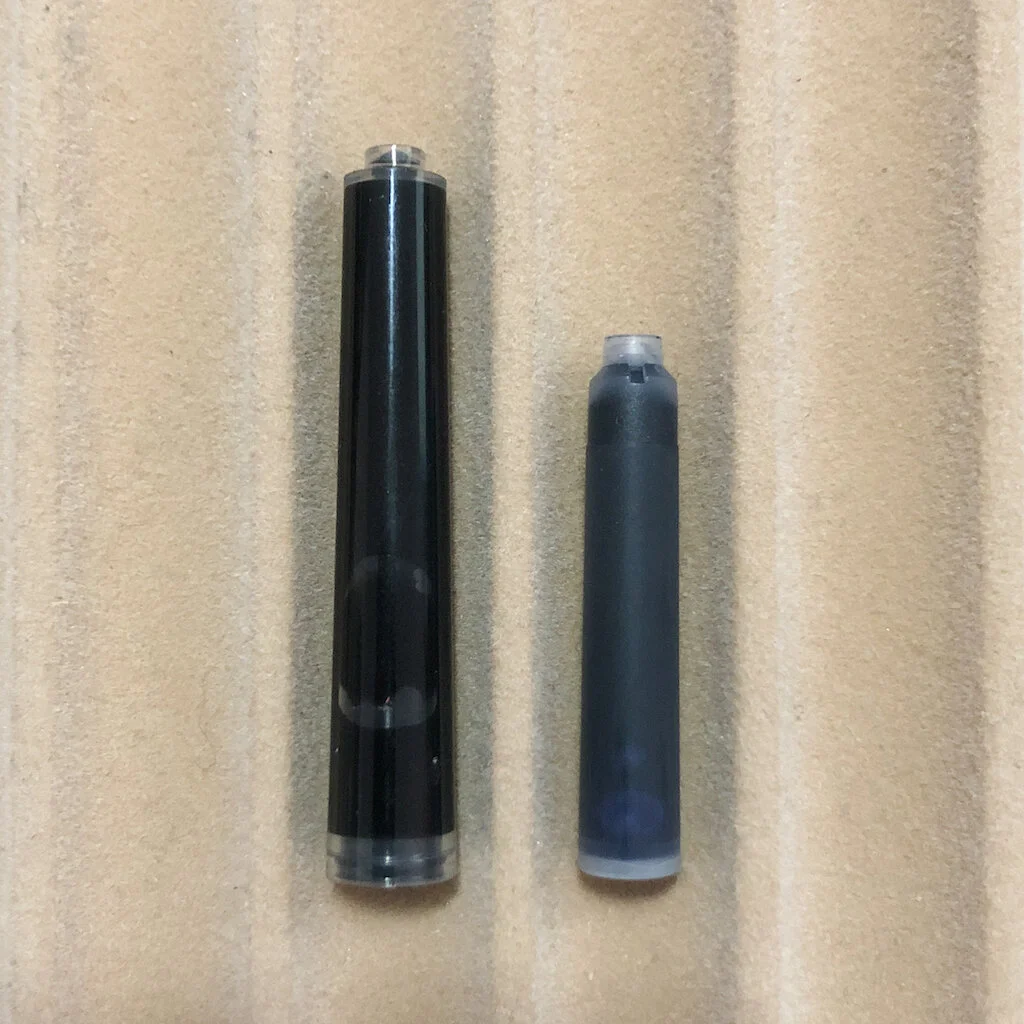
Swipe cartridge vs standard international cartridge.
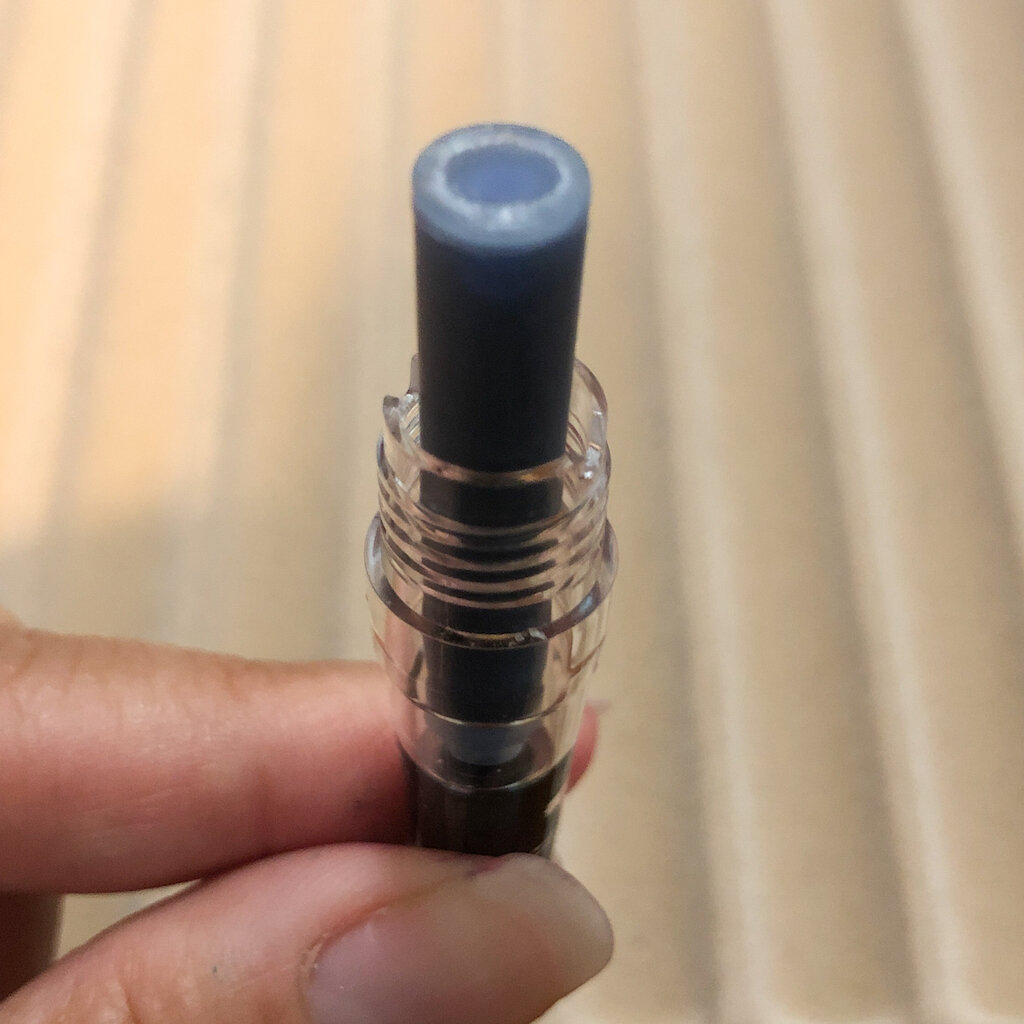
Swipe cartridge vs standard international cartridge. Hard to tell from pictures but it’s really wiggly in there.
Ink capacity in the Swipe’s converter and cartridges is almost double that of its standard international counterparts. The Swipe converter/cartridge holds 1.65 ml and 1.40 ml of ink respectively, while the standard international converter/cartridge holds about 0.85 ml and 0.75ml respectively. The Swipe’s converter capacity is comparable to the Go, which holds about 1.60 ml. It was easy to ink up the pen one-handed with the spring-loaded converter, but you can also buy their Red, Black or Sapphire (blue) cartridges in a 10-pack (you can also use the optional included spring, which helps keep the cartridge in place but I didn’t find that necessary). I suspect that the Swipe is eyedropper-able with some silicon grease on the barrel threads - I did a quick test with some water and the pen did not leak.

Pressing down the piston...

And release! Voila - ink!
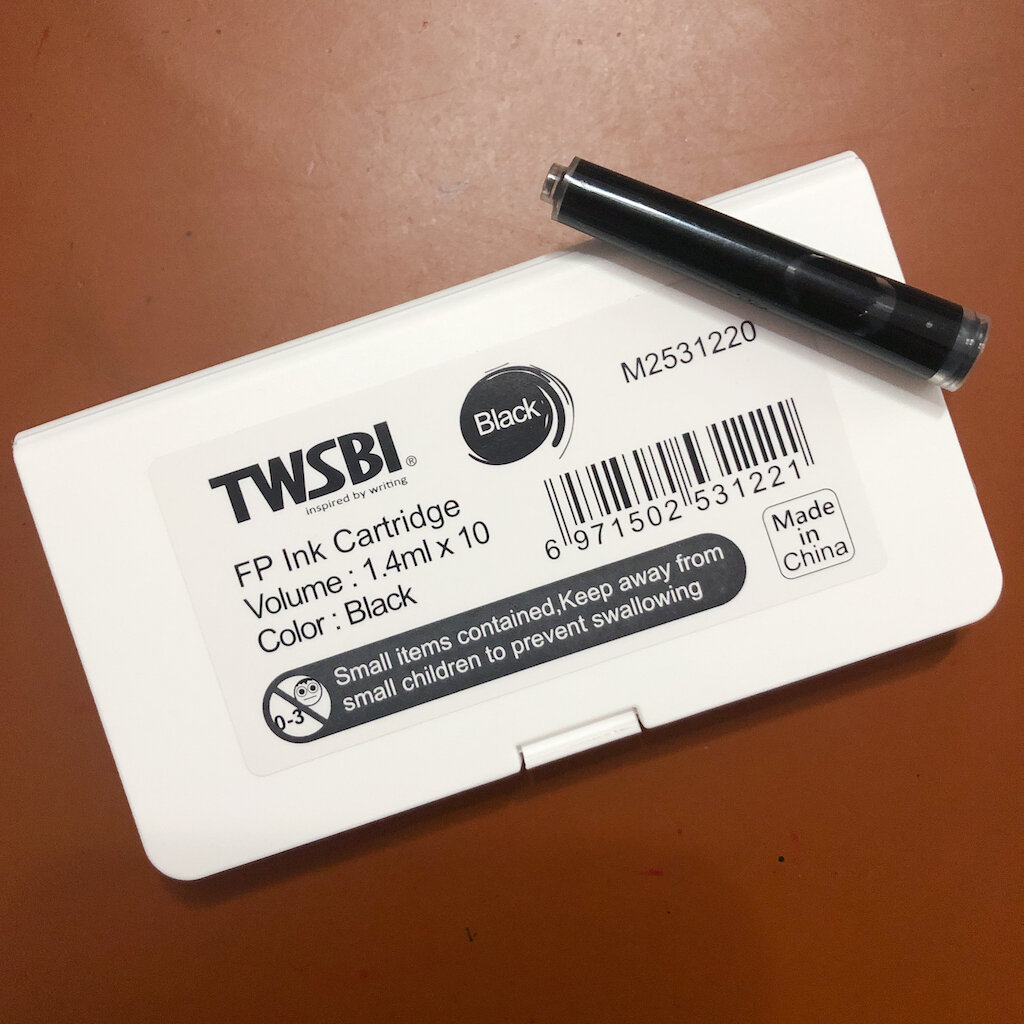
10-pack of cartridges (which I need to exchange cuz I ordered the wrong color, oops!)

Eyedroppered Swipe with water and ink that was still in the feed.
One thing to note, that is easily overlooked, is that the Swipe’s grip is completely round and doesn’t have any ”nubs” or bumps to force your grip a certain way. There is still a small ridge a few millimeters from the edge which keeps your fingers from sliding forward, but that ridge no longer has three subtle bumps, which also means you don’t have to worry about aligning the nib/feed to the barrel.

Eco vs. Swipe’s grip. In the upper left, you can see the “bump” in the upper picture, but it’s not there on the upper right side when the pen is rolled. The Swipe has the uniform ridge around all sides.
The Swipe’s writing experience is what you would expect from a TWSBI Eco, given that they share the same size feed and nib. I didn’t have any issues with dryness as the converter’s large ink capacity made it behave like a regular piston pen. I inked up the Prussian Blue Swipe 1.1 stub (and then swapped with the Broad nib Swipe) with Robert Oster’s Lake of Fire and it wrote immediately, smoothly and consistently.
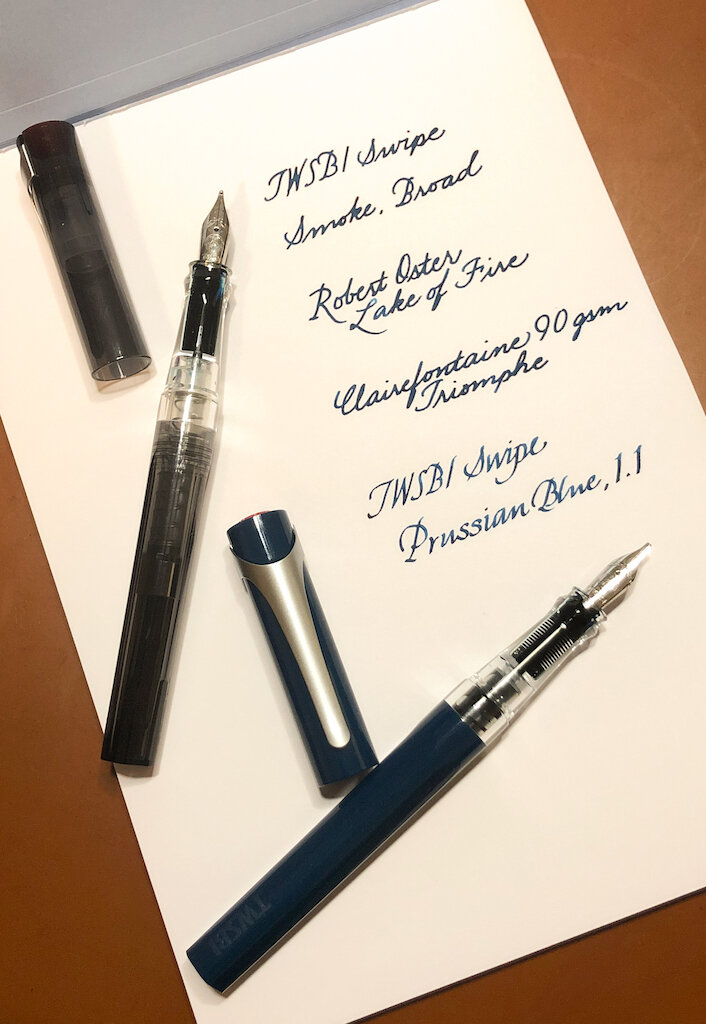
Writing sample with the Broad and 1.1 nibs and Robert Oster Lake of Fire on Clairefontaine Triomphe, 90 gsm.
Pros:
- A nicer, more professional-looking pen compared to the TWSBI Go or Eco
- Much higher ink capacity than regular c/c pens
- Smooth grip section
- Great, out-of-the-box writing experience
- Easy to use/clean/disassemble converters
- Cap snaps/unsnaps securely and easily
Cons/Meh:
- The TWSBI converters and cartridges don’t fit in any other pens.
- Standard international cartridges/converters don’t fit snugly into the Swipe
- Metal clip is pretty tight and takes a little bit of effort to clip to clothing or paper
So, is the TWSBI Swipe over-engineered? Not if you like c/c pens but don’t want to sacrifice ink capacity. And certainly not if you hate cleaning converters like I do - the new converter is so easy to use and clean. It would have been great to be able to use this high capacity converter/cartridge in other pens though. I think it would have been easy for TWSBI to make another piston filler, so I applaud them for coming up with a different take on an existing filling mechanism. Maybe a future iteration could see a regularly-sized standard international converter that has the same spring-loaded mechanism (hey, one can hope!). The TWSBI Swipe is a more attractive and professional-looking pen than the Go or the Eco and the snap-cap makes it easy to take quick notes. All that plus the nibs you expect from TWSBI and at $26.99, it’s a good value for a really good pen.
(All pens in this review were purchased with my own funds from Lemur Ink and I received no compensation from either TWSBI or Lemur Ink for this review.)
Enjoy reading The Pen Addict? Then consider becoming a member to receive additional weekly content, giveaways, and discounts in The Pen Addict shop. Plus, you support me and the site directly, for which I am very grateful.
Membership starts at just $5/month, with a discounted annual option available. To find out more about membership click here and join us!