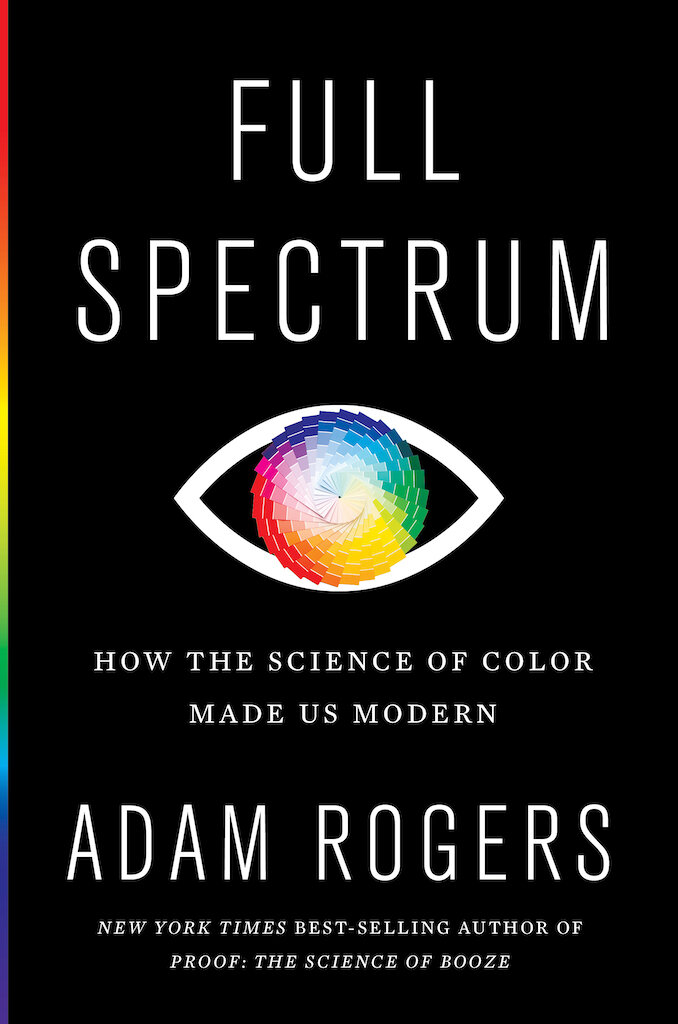
BD: Let’s talk Vantablack. First off, is the future of color in the lab? Is Vantablack a color, or a technology?
AR: I'm more sanguine about this than you, I think. The future of color has always been in labs; it's always been people doing science, whether they (or we) would consider them scientists or not, who advanced the technology of synthesizing colored substances we could apply to the world we make—to fabrics, surfaces, whatever. I think sometimes when we look at the history of science and technology we can be a little closed-minded about that, especially because so often in human history the world of "craft" has been the purview primarily of women (even when they were inventing pigments and the algorithmic glory of weaving) where "science" or "technology" have been what happens when men take that craft over for profit. But it was all science and innovation, right?
But I dodged your question there a little bit. Yes, I think it'll be up to the materials scientists and nanotechnologists to come up with the next great innovations in making pigments, probably using structural techniques that mimic bird feathers and insect carapaces. Nanotech like Vantablack will be there, too.
I'd definitely characterize Vantablack as a technology in that sense, rather than a "color." It's certainly black, a color no one had to invent—and as the researcher Bevil Conway told me, if you want to see an even blacker black than Vantablack all you have to do is build a light-tight box (even cardboard and duct tape will work) and cut a one-inch hole in the top. What you see in the hole will be the blackest, blackest black. It's just hard to then apply that black to a surface, for sure.
BD: Secondly, I’ve been in the Stuart Semple camp for years. Maybe it is Pollyana-ish for me to think color should belong to the people, from an art perspective at least. Surrey Nanotech certainly has enough corporate customers to sustain their business and continue their research, so what is the benefit of keeping Vantablack in one persons hands for artistic uses?
AR: My guess is that the sheer difficulty of making and applying robust Vantablack coatings to anything will limit its availability way more than any exclusivity contract. And I imagine it's just as likely that other color innovations, like YInMn blue or anthocyanin-based blues, will have their own licensing agreements, albeit maybe more widespread. 'Twas ever thus, I think—like, there's no more real quinacridone gold in the world because no one makes the pigment...even though one might argue that the replacements make the same color to the eyes of someone looking at an ink or a watercolor made to replace it. The technology gets limited distribution, but the color might not.
BD: You have decades of research into color, and Full Spectrum contains a massive index full of resources for those interested in learning more. Are there any online resources you would point readers towards to follow current and future news in this realm?
AR: Ah, this is a great question. Sarah Lowengard's History of Color in Eighteenth-Century Europe is an amazing and rewarding history, of both the people and the science that transformed how people see and make colors. As for the future, this is a little bit of a bankshot, but I like the technology- and engineering-minded newsletter The Prepared. It's not specific to color, but it's a wide-ranging look at the built environment, and when there's a color innovation, they're likely to cover it. Also I pay pretty close attention to your work for this kind of thing, so thank you!
BD: Thanks so much Adam! I genuinely enjoyed this book, and plan on continuing to share it and the stories within.
(My thanks to Adam Rogers and publisher, Clarion Mariner, for sending me this book at no charge. This post contains affiliate links.)