
(Kimberly (she/her) took the express train down the fountain pen/stationery rabbit hole and doesn't want to be rescued. She can be found on Instagram @allthehobbies because there really are many, many hobbies!. This post contains affiliate links.)
If I had a dollar for every time someone asked me which sample vials to get, or how to prevent them leaking, I’d have lots of dollars…..at least $30, which would get me another bottle or two of ink! And with the holidays coming up and people sending ink samples for Inkvent (this started before you, Diamine!), I thought I’d share what I’ve learned about sample vials with you so you’re good to go!
What’s a sample vial? It’s typically a 5ml plastic vial with a screw top cap that is commonly used in the fountain pen world to store ink samples. There are other containers used for samples, but the ones I’m focusing on are the ones traditionally used and sold by pen shops for ink samples (pictured below).
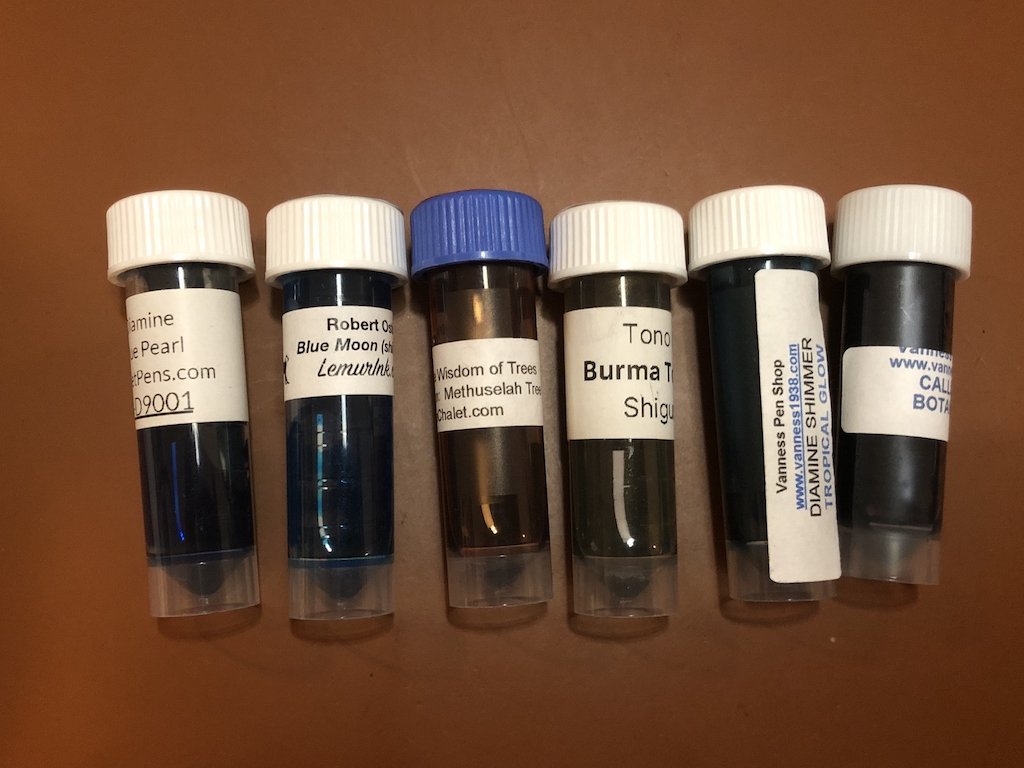
Samples from Goulet, LemurInk, Pen Chalet, Shigure Ink, Vanness (older and newer vials, respectively.)
What are sample vials used for, besides ink samples?
- Nibs (I store them nib pointing up so they don’t get banged around the bottom) and use a small piece of wadded up paper towel or non-biodegradable foam for padding if you need to transport or ship it. Don’t use biodegradable foam because it can start degrading/falling apart if your nib/feed is remotely damp and may start molding.
- Non-ink fluids like White Lightning, Rapid-o-eze, pen flush, even water - great for a quick dip when you don’t wanna lick your finger or, gasp, lick your nib to get it going. Tip: I also use this for skin care when I don’t have travel sizes of stuff like toner, essence, serum, nail polish remover, etc.
- Feeds, housings, screws, even tiny Kaweco converters, wax beads - pretty much anything!
How can I tell if I have a good vial or not? In the past, I’ve used vials from Stockwell Scientific and they’ve been excellent and rarely leak. I suspect that many of the vials made for scientific uses are made by the same companies so there may be similar ones under other brand names. I often hear “don’t get the blue capped ones because they leak”, but that’s actually not quite right. Don’t be fooled into thinking that only certain colored caps leak/don’t leak. Here are the two ways I can tell a “good” vial from a lesser one by inspecting the top of the cap:
- Look for a dimple in the very top (the purpose of which is unknown to me)
- Check for a slightly rounded edge from top to side. The lesser quality vials tend to have a pretty sharp edge.
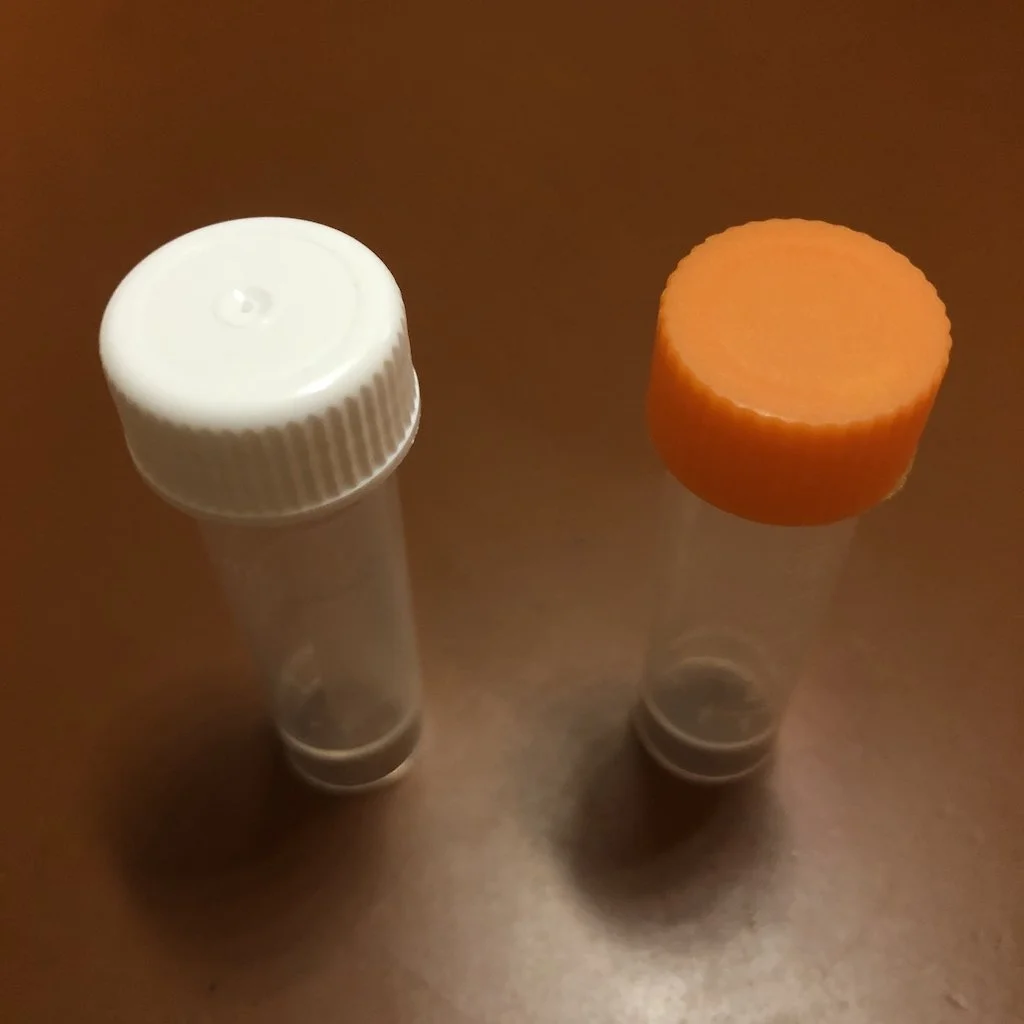
Left: Stockwell Scientific vial, Right: inexpensive vials from eBay. Notice the dimple on the top of the white cap as well as the curved edge at the top vs the 90 degree edge from top to side on the orange cap.
With the pandemic, the high quality vials have been taken up by scientific research companies, making them harder to find and at higher cost. The vials that some of the pen shops are using now are different, but I haven’t had any leaks with these vials either, so I would feel good recommending them in lieu of the Stockwell Scientific ones. You also don’t have to buy them in 250 or 1000 quantities either, lol.
But I already have some vials that may not be as good, do I need to buy new ones?
- Vials aren’t 100% leakproof, not even the good ones I’ve used. While the good ones rarely leak, I’ve seen ~20-25% failure rate on the other ones. Consider using those vials for non-ink storage purposes, for storing inks upright, or for giving to local friends, e.g. not via mail. I actually buy these cheaper vials for storing my nib units.
- If you want to use your vials for mailing, make sure you inspect the cap closely. You’re looking for signs of a missing or broken cap seal, or where it has dislodged partially (or fully) from the cap. These will make it very likely that you’ll get a leaky vial which no amount of parafilm can save (more later).
- Note that I haven’t found any gaskets or rubber seals in the good vials. It’s like they were designed not to need them. You do need to make sure you’ve screwed the cap all the way. There is an initial resistance that makes you think you’re done but you need to screw past that until it’s definitely on tight.
- If the cap seal isn’t fully seated, gently push it back down and make sure it’s in all the way. If the seal is broken or missing, consider not using that cap.

Notice that the orange cap has no seal/gasket, whereas this clear cap does. I would totally use the clear cap/vial for ink before the orange one.
What’s this parafilm stuff and do I need it? According to wikipedia, “Parafilm is a semi-transparent, flexible film….is ductile, malleable, non-toxic, tasteless and odorless, and self-sealing thermoplastic.” In short, among other things, you can use it to help seal a vial. As I mentioned above, if you have a bad seal on your cap, parafilm won’t keep the ink in, though it may minimize how much leaks out (and sometimes, it won’t do that either). And no, you don’t have to use it. I don’t think any of the pen shops that sell samples use parafilm and they have a really good track record of not having leaky samples. I’m a little on the paranoid side, having received and sent leaky samples, so I take it one step further by wrapping the sealed vial in parafilm. You can buy parafilm here, though that’s a bajillion times more than anyone needs in a lifetime. I would recommend asking your pen group (local or otherwise) if they can send you some for a couple bucks.
How do I use parafilm?
- Parafilm comes in monstrous rolls, usually in 2” or 4” widths, so you’ll need to cut it down to size. You can get 3 strips of parafilm out of every 2” square, so cut them into 1/3s.
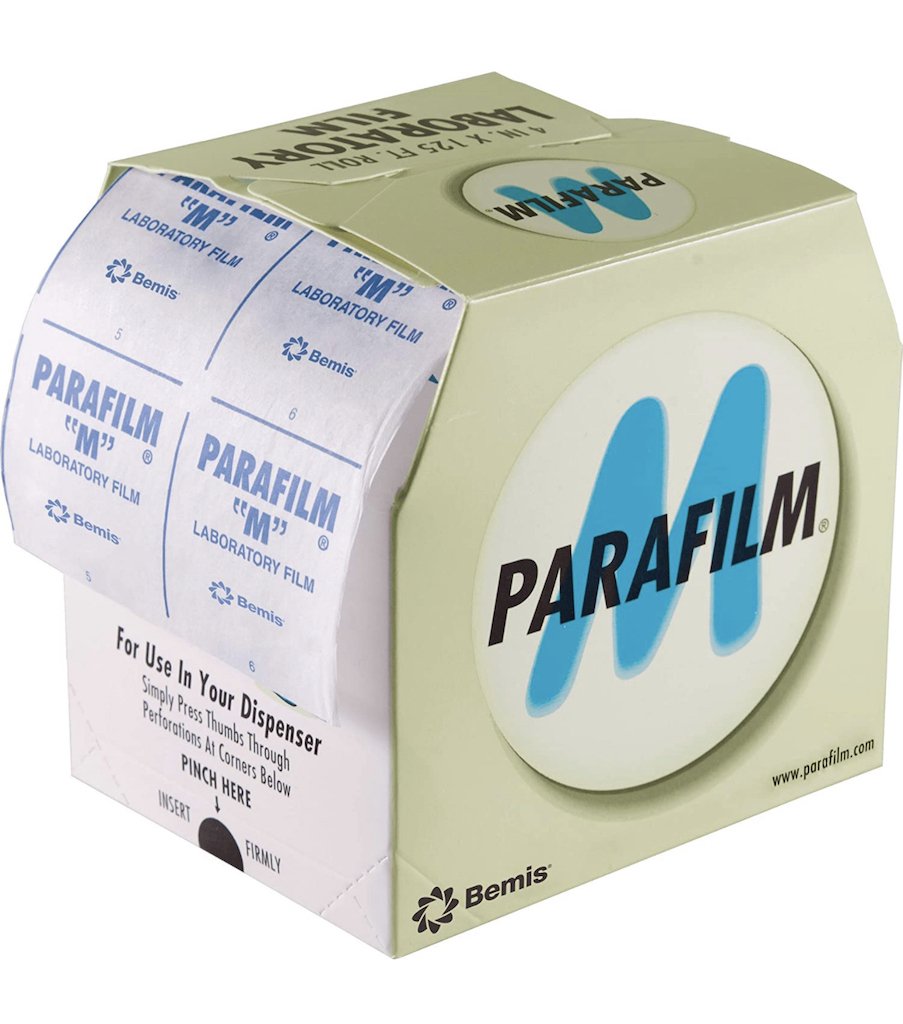
This is what mine would look like if it wasn’t in storage (photo from Amazon.)

I have a roll of 4” wide parafilm. Cut to 2” squares. Then cut further to get 3 strips per square. As you can see, it doesn’t have to be straight or exact.
- Remove backing from the strip. Parafilm isn’t sticky like an adhesive but it does stick to itself, so the backing is there to prevent that. Sometimes it’s easy to get the backing separated from the parafilm and sometimes not. When it isn’t cooperating, I will gently tear the backing which will allow me to remove it from the parafilm.


Other times, you have to resort to a gentle tear.
- Hold one end of the parafilm with your thumb against the vial and gently stretch the other end with your other hand, while simultaneously wrapping it around the base of the cap and onto the vial. Keep going until you’re done.

Gotta hold it down to get it started (wrapping)Stretch and roll the vial around (tada) Nice and tight and no leaks!

Stretch and roll the vial around.
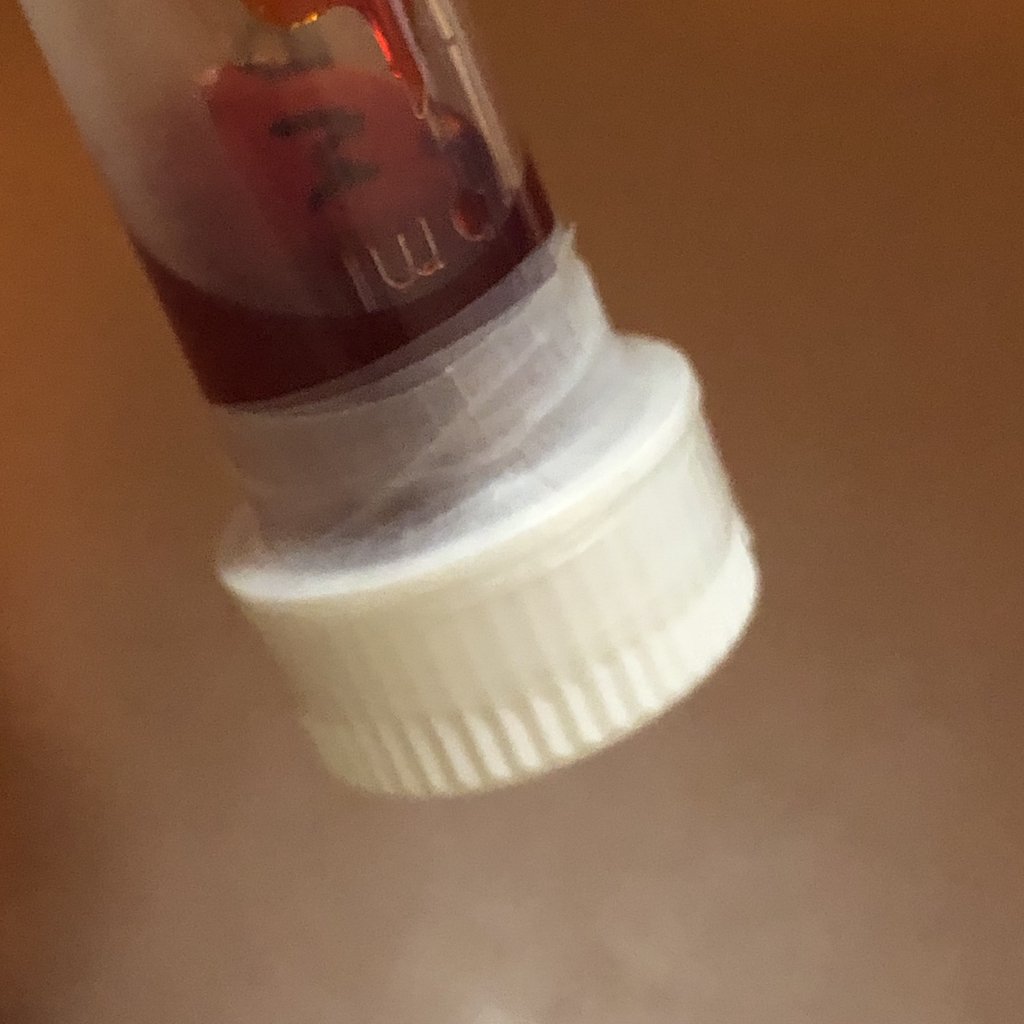
Nice and tight and no leaks!
NOTE: Do not parafilm the vial before capping. I have found that this will cause leaks more often than it will prevent leaks.
How should I ship ink samples (or bottles)? While it’s tempting to ship ink samples or bottles in a padded envelope to save a few bucks on shipping, you’re risking damage and leakage. Do the following at a minimum:
- Make sure your caps are sealed tightly
- Put your samples in a ziplock baggie.
- Pad the samples well -- I usually wrap all the samples together in a paper towel before putting them in a bag. Then use bubble wrap or other padding when packing them in a box. (I save and reuse bubble wrap from other purchases)
- Avoid sending ink when the weather is near or below freezing - ink expands when frozen and can break glass bottles and cause leaks from vials as well. Make sure your recipient will be able to get the inks before it sits in an outdoor mailbox for too long.
If you wanna go all out:
- Add labels to the cap and vials and ink the cap label.
- Parafilm each sample. You can also parafilm bottles but usually they are less likely to leak if they are packed well.
- Put each sample in its own baggie (I use 2”x3” baggies which you can easily find on Amazon or your local craft/hobby shop)
- If you wanna be even more extra, add a label to each baggie (this is helpful if there is a leak which sometimes happens despite your precautions)

If I don’t have tons of samples to make, I will go to this extreme, lol.
- Put all samples in yet another bag
- Continue packing as per above
Other tips:
- Bring extra vials, parafilm, labels and baggies when going to pen meetups or pen shows. You may have the opportunity to snag a sample from a friend’s new bottle of ink!
- Don’t forget to bring a blunt tip syringe or pipette for getting ink into your vial! (Pro tip: Robert Oster ink bottles pour easily and cleanly into vials, no syringe needed!)
- Bring a small box with some padding in case you are flying and need to bring inks home.
That’s it! I hope this is helpful as you ink-able your friends with ink samples!
(All products have been purchased by me. I have received no compensation for including the products shown in this article. None of the links are affiliate links.)