Inking up the pen.
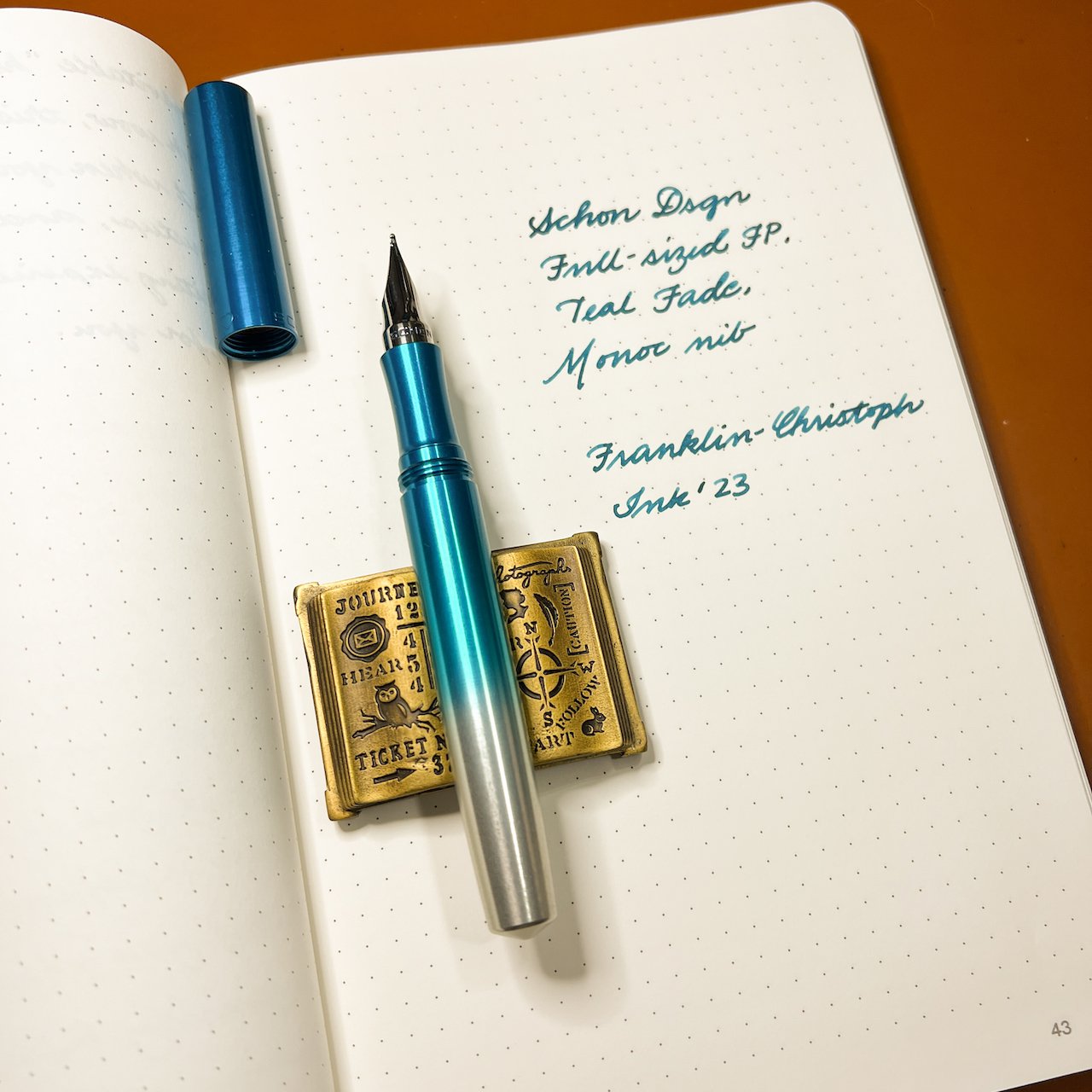
If you use a standard international converter, you just dip the nib into a vial or bottle of ink and use the converter to draw up ink as usual (which I just had to do because I was writing the pen dry at the bottom of the previous page) and you’re ready to write as the feed is already primed with ink. If you’re using a cartridge, however, you will need to get the ink to flow to the feed and saturate it so it can start writing. To do so, orient the pen nib down after inserting the cartridge until you see ink flowing to the tip of the feed and nib, then invert it nib up for about 5 seconds. Repeat a few times, blot and you should be good to go. More detailed instructions are included with the nib.
How does it write?
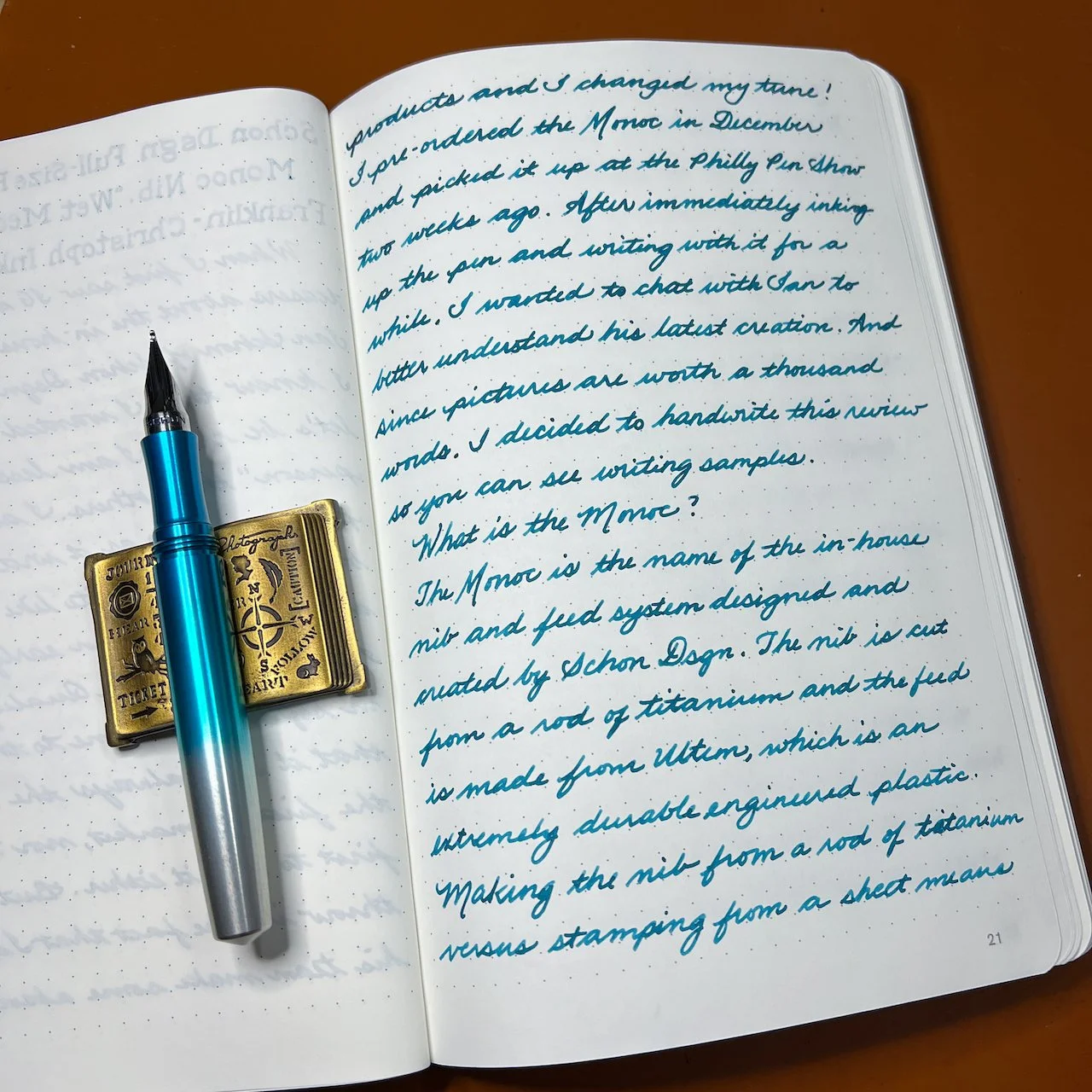
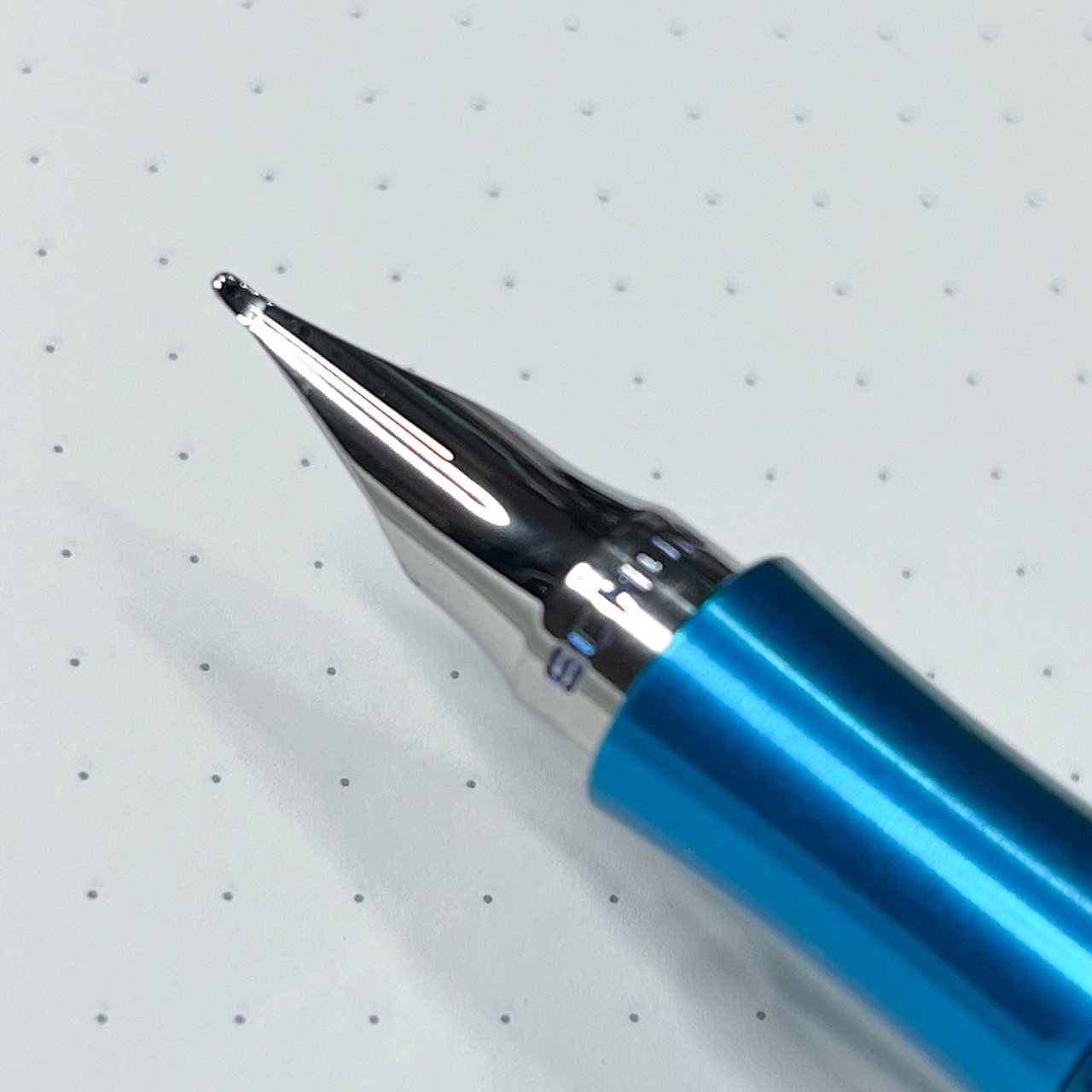
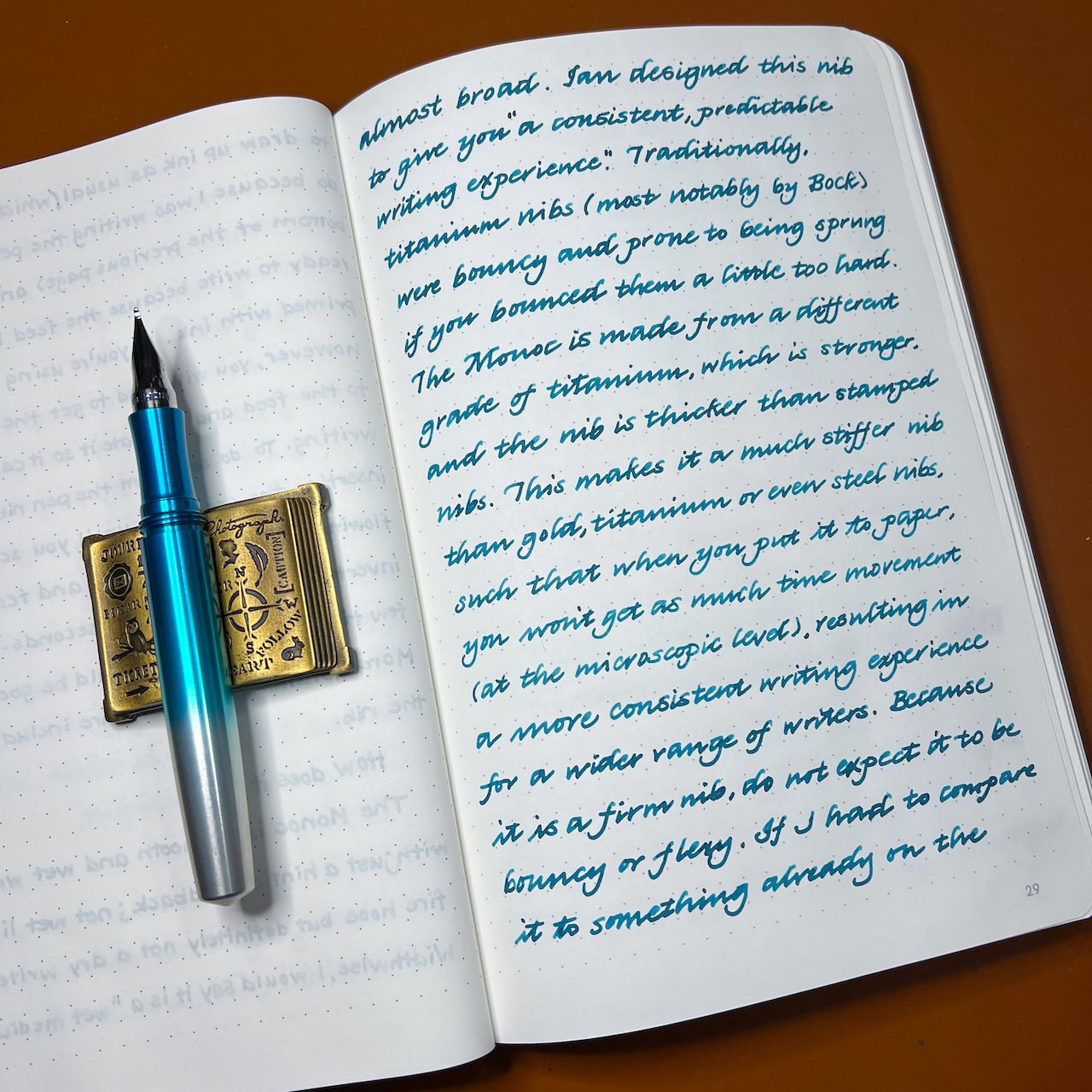
The Monoc is a wet and smooth writer, with just a hint of feedback; not wet like a fire hose but definitely not a dry writer. Widthwise, I would describe it as a “wet medium”, almost broad. Ian designed this nib to give you “a consistent, predictable writing experience.” Traditionally, titanium nibs (most notably by Bock) were bouncy and prone to being sprung if you bounced them a little too hard. The Monoc is made from a different grade of titanium, which is stronger, and the nib is also thicker than stamped nibs. This makes it a much stiffer nib than gold, titanium or even steel nibs, such that when you put it to paper, you won’t get as much tine movement (at the microscopic level), resulting in a more consistent writing experience for a wider range of writers. Because it is a firm nib, do not expect it to be bouncy or flexy. If I had to compare it to something already on the market, I would say it has the stiffness of a Jowo steel nib, with the wetness of a Pelikan gold nib and the slight feedback of a Platinum gold nib.