(Kimberly (she/her) took the express train down the fountain pen/stationery rabbit hole and doesn't want to be rescued. She can be found on Instagram @allthehobbies because there really are many, many hobbies!.)
I know that it’s already a few days into February but did you know that February is a month that celebrates letter writing?! International Correspondence Writing Month, or InCoWriMo for short, is basically a month-long opportunity for folks to hand-write and mail something every day.
The idea of InCoWriMo was born 10 years ago on January 25, 2013, with the first InCoWriMo in February 2013, so this is going to be the 11th InCoWriMo with people from all over the world writing notes to each other! There are more details on the InCoWriMo website, but people basically try to write and mail one letter/note/postcard every day of the month. And if you can’t do it every day, that’s ok too! It’s just a great way to connect with folks via mail as well as catching up on reply piles (yes, that’s directed at me, lol).
Who am I gonna write to?
There is an InCoWriMo address exchange if you want to share your address. Note that since you are commenting with your address on the page, it is available for people to see. I am not a member of the website and I’m able to see addresses, so if privacy is a concern, read on for other options.
If you are in any pen or stationery (or other) enthusiast groups, whether on Facebook, Slack, Discord, etc., you may want to search for snail mail channels, groups, etc. If you are on the Pen Addict Slack, there is a #snailmail channel. There is also a fountain pen penpal group on Facebook called Fountain Pen Friends where I’m one of the moderators. I actually started my penpal journey in that group 5+ years ago and have since added more from the PA Slack. There are also groups like PostCrossing that connect folks who want to swap postcards too.
If you are not in any groups, or you’re uncomfortable with sharing your address with strangers, you can always start with friends and family. Maybe folks on your holiday card list, or folks that send cards to you that you might want to check in on, or people you haven’t talked to since your graduation, last job, wedding, Vegas trip, etc. Don’t forget vendors and businesses that you interact with (and presumably like, lol)! In short, pretty sure everyone likes to get happy mail that isn’t spam, ads and bills!
What do I need to write?
A writing instrument (pen of any kind, but you know me, I’m gonna use fountain pens for my letters), paper, an envelope and stamps. You can also use postcards if the thought of writing a letter or card is too daunting. Check your local postal service for prices on stamps, but in the US, a “forever” stamp costs $0.60 and is good for sending up to a one ounce letter anywhere in the US. For most people that’s plenty; even for a long-winded person like myself, I rarely need two stamps. The cost to mail to international destinations is $1.65 per ounce. You can also send a postcard for $0.44. Pro tip: “Forever” stamps are worth the current value regardless of how much it was worth when you bought them. So stamps from 2018 cost $0.50 but are worth $0.60 now. If you plan on doing more letter writing, it’s worth buying extras, especially if a price hike is coming up (the most recent one took effect a couple weeks ago). Forever stamps exist for regular mail, postcard and international mail.
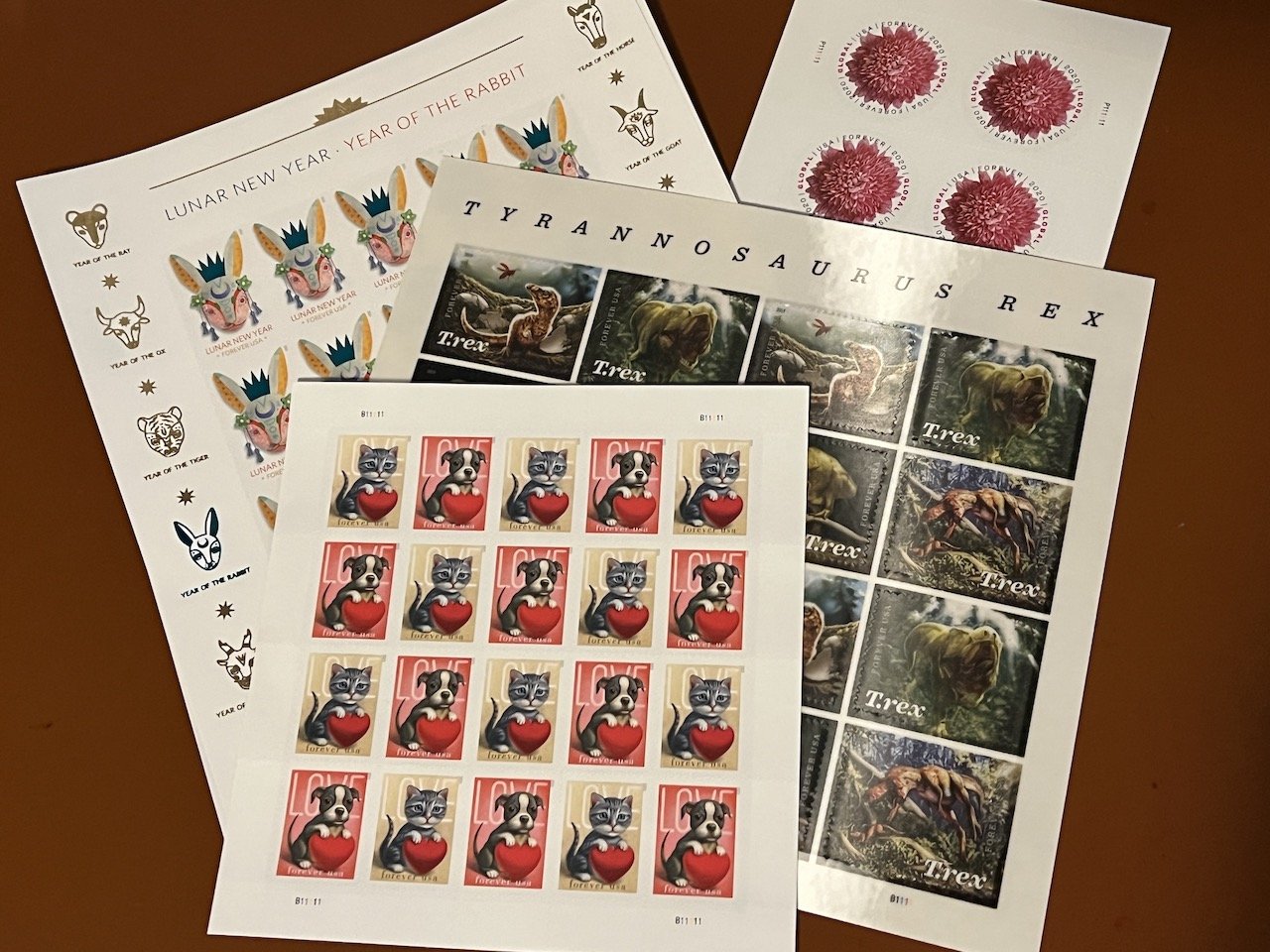
You don’t have to be a philatelist (aka, stamp collector) to get started with letter writing.
What am I supposed to say?
You can write about anything but if you are stuck, you can go with something simple like this:
- Greeting - “Hi there!”, “Dear B-rad”, “Hello Grandma!!” - however you want to greet the recipient!
- Introduction - You might want to mention why you’re writing - “I’m doing a crazy thing this month by handwriting letters throughout the month of February. How are you?” If you’re writing to a stranger, or someone you don’t know well, you could also include a short intro about yourself - “I’m Kimberly and I’m writing to you from sunny California, where the temperature is currently 54 degrees”.
- Any other info - You can let friends know what you’ve been up to recently or tell new friends a little more about you, like your hobbies or family. “I’m married with a 12 year old son who is currently in middle school and likes video games. In addition to pens, I enjoy running, knitting and reading.”
- Closing - “Yours truly”, “All the best”, “Take Care”, etc. are simple ways to end a note.
- Signature - make it legible so they know who it’s from :-)
Recipients will be thrilled to get snail mail, so try not to sweat it too much. And if that feels like too much, a postcard is great because you can just say hi and talk about the postcard and wish them a nice day.

If writing a letter seems too daunting, a postcard is a great option! I always end up buying more postcards than I send out - time to fix that!

”Dear Bossman…”
Miscellaneous tips
- If you just want to send a note without getting a letter in return, you should mention that so you don’t end up with a whole slew of new penpals or have your recipient feel pressured to reply.
- If it is super rainy (like the recent atmospheric river storms in my neck of the woods), consider using permanent ink on your envelopes (there are waterproof fountain pen inks as well as other options like Sharpie, rollerball, etc.)
- I store envelopes, stamps and stickers in an A5 pouch which I keep in my purse along with my letters and paper so I can work on a letter whenever I want.
- You don’t have to keep letters that you receive, nor do you have to take notes about what you wrote (or what they wrote). You don’t have to scan your letters before you send them (though it’s not a bad idea if you’re sending a 40 page novella like I once did, lol). I treat letters like conversations - I don’t take notes when I talk to my friends and yes, that may mean I retell stories or get details mixed up, but that’s ok!
- Make sure your name and address is on the envelope (preferably in the upper left corner on the same side as the recipient address), in case the recipient has moved or if they want to write back. Pro tip: If you donate to charities, eventually you will get plenty of address labels! I haven’t bought address labels since I moved nearly 15 years ago!
Since we are Pen Addicts here, I wanted to share some fountain-pen friendly options as well as other things you can do if you want to be a little “extra”. You can get started with any pen, any paper and any envelope, so don’t let lack of these items hold you back!
Paper
- There are looseleaf, pad and perforated versions of Tomoe River, Cosmo Air Light, Midori Paper, Rhodia, Clairefontaine, Ayush, Black n Red (or Optik Paper in Europe) and other fountain pen-friendly papers.
- You can also find fp-friendly envelopes from Clairefontaine, Midori and others.
- You can also get letter sets or card sets with matching envelopes. Midori makes many cute options. Peter Pauper Press (which you can find at Barnes and Noble stores as well as on Amazon and other line retailers) have a good selection of sets, and while the paper is generally fp-friendly, their envelopes are hit and miss (especially the coated ones which are definitely NOT useable with FPs).

Clockwise from left: Italian stationery kit, Clairefontaine Triomphe, Midori Cat letter set, G Lalo paper/envelopes, Unicorn card set from Peter Pauper Press.
Make your own envelope
- You can use an envelope maker like this envelope maker (affiliate link) and some heavier paper/cardstock to make your own envelopes. You can reuse paper from old wall calendars or thicker scrapbook paper. Just be sure that the creases won’t break easily (which is what happened when I tried using wrapping paper) and that the seams are glued/taped well. You can put a white label on it for the recipient’s address.

Envelope decoration
- Washi tape - This is a really simple way to decorate your envelope! It is perfect for not-very-creative people like me!

Plain and simple gets the job done, right, Mr. Downdly? 🙂

A little bit of washi adds a nice touch
Stickers - Another super easy option for envelope decoration, stickers are an inexpensive way to spruce up your envelope. You can even reuse free stickers from vendor packages or Trader Joes, or get inexpensive stickers from the dollar store.
Rubber Stamps - Another rabbit hole is that of rubber stamps! You can even get snail mail-themed stamps!

It’s fun picking random stamps to fill in the gaps.

You can put stickers and stamps on the front too!
- Wax seals - This is a neat way to literally seal an envelope! Some post offices will tell you that it needs extra postage, while others don’t have that restriction, so it’s best to add another stamp just in case. Also, depending on the wax and the location of the seal (e.g. if it is closer to the sorting machine rollers, etc.), the seal might not make it fully intact, but it’s usually mostly good! You can get wax and wax seals from shops like Vanness, Papier Plume as well as Amazon and Etsy.

Melting some wax beads (be sure to do this in an area without flammables nearby.)

Probably could’ve used a wee bit more wax but it turned out alright!

This seal is from one of my penpals and it survived the journey to my mailbox!
Having the opportunity to slow down and have written conversations with friends from all over is such a treasure in this hustle and bustle world. Whether you decided to jump into InCoWriMo and write 28 letters in 28 days or you just want to write a few postcards, I hope you give it a try. Good luck and happy writing!