(Caroline Foty's first fountain pen was a 1970s Sheaffer No Nonsense that still writes perfectly. Since she discovered pens by independent makers, she wants "one of each, please" and wants to meet all the makers. Maybe you do, too. She lives in Baltimore with pens, cats, and all kinds of fiber arts supplies.)
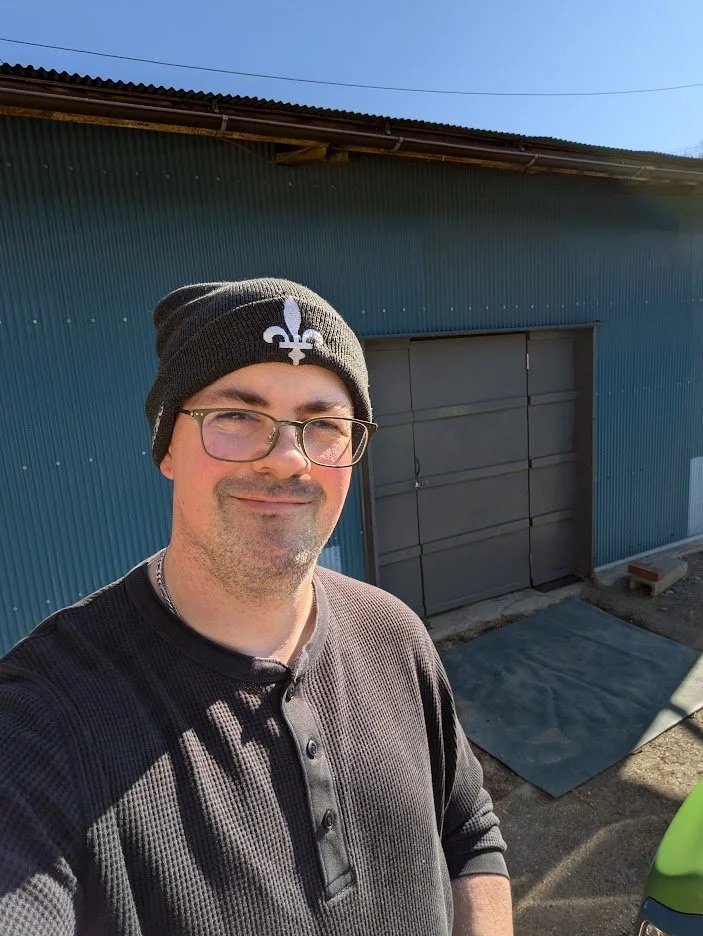
When Josh Miller-Watt was working as a security guard in his home, Alberta, Canada, his boss sat him down one day to talk about his possible career paths. It didn’t go the way the boss intended; Miller-Watt started thinking about his future more broadly. “I was really interested in anime as a kid and always wanted to go to Japan, and I thought since I really wanted to travel I should look for a job there.” He got hired as an assistant language teacher, teaching English. When his contract ended, he returned to Canada, but “I really wasn’t done with Japan.” He reapplied and got hired again and went back. Getting married and having two kids just cemented his decision that it was the place for him, and he now teaches English in three elementary schools.
In such a stationery-loving culture, it’s no surprise that he discovered a love for pens and stationery once he was there. “I had journaled off and on, with ballpoint pens, but they are hard on the hands with how you need to press on them. I found a Platinum Plaisir at a home goods store, and found that you can write for hours with a fountain pen.” This was a good thing, as his first child was born during COVID and his wife was hospitalized for some weeks before the birth as a precaution. “I’m at home a nervous wreck, she’s in the hospital, and there’s no visiting.”
When he met CY Chow, who was in the process of founding Kyuseido Tokyo, Miller-Watt went to work for him as an operations specialist for about a year, and got a good look at pen making from the inside. It made him want to make things. “I thought I might make resin guitar picks, I’ve always been a musician. I put hand-ground sumi ink into them. Then I thought, I wonder if I could make a pen out of this.”
He knew some computer-aided design, which helped with pen shapes, but his attempts at making resin without a pressure pot didn’t work at all. So he began to acquire all the tools and supplies that would let him do it right, and a used wood lathe, and started teaching himself from content he found online. “There was a lot of trial and error before I finally produced something I was happy with. You gotta break a lot of pens. The first 80 percent of a pen is okay, the last 20 percent is harder.” Through Instagram he got connected with Rob Sanchez of Rob’s Penworks, who made some suggestions and helped source some parts and attachments that are difficult to order from Japan. He also met Motoshi Kazuno of Stylo-Art and got helpful advice, especially about working with wood.
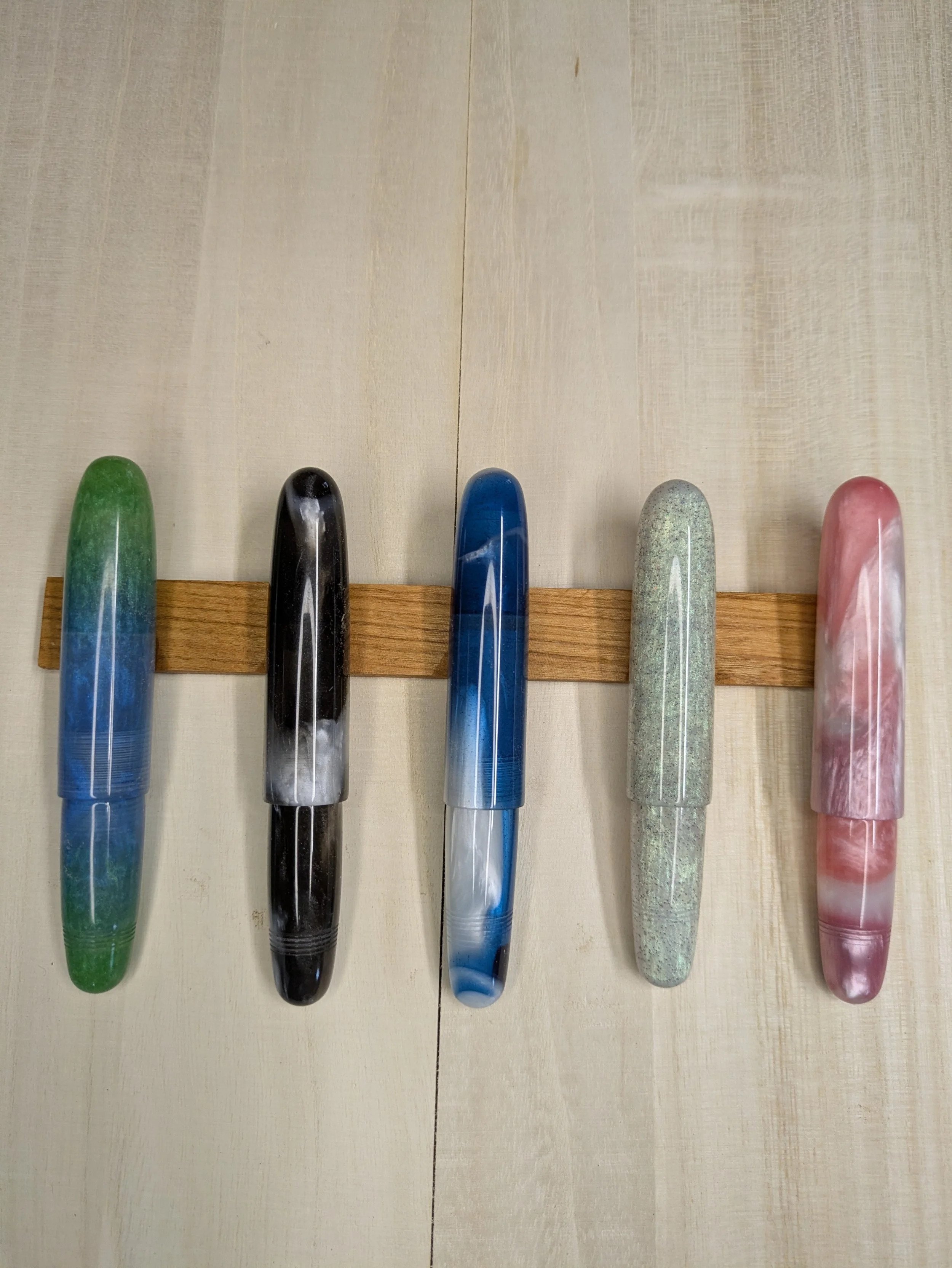
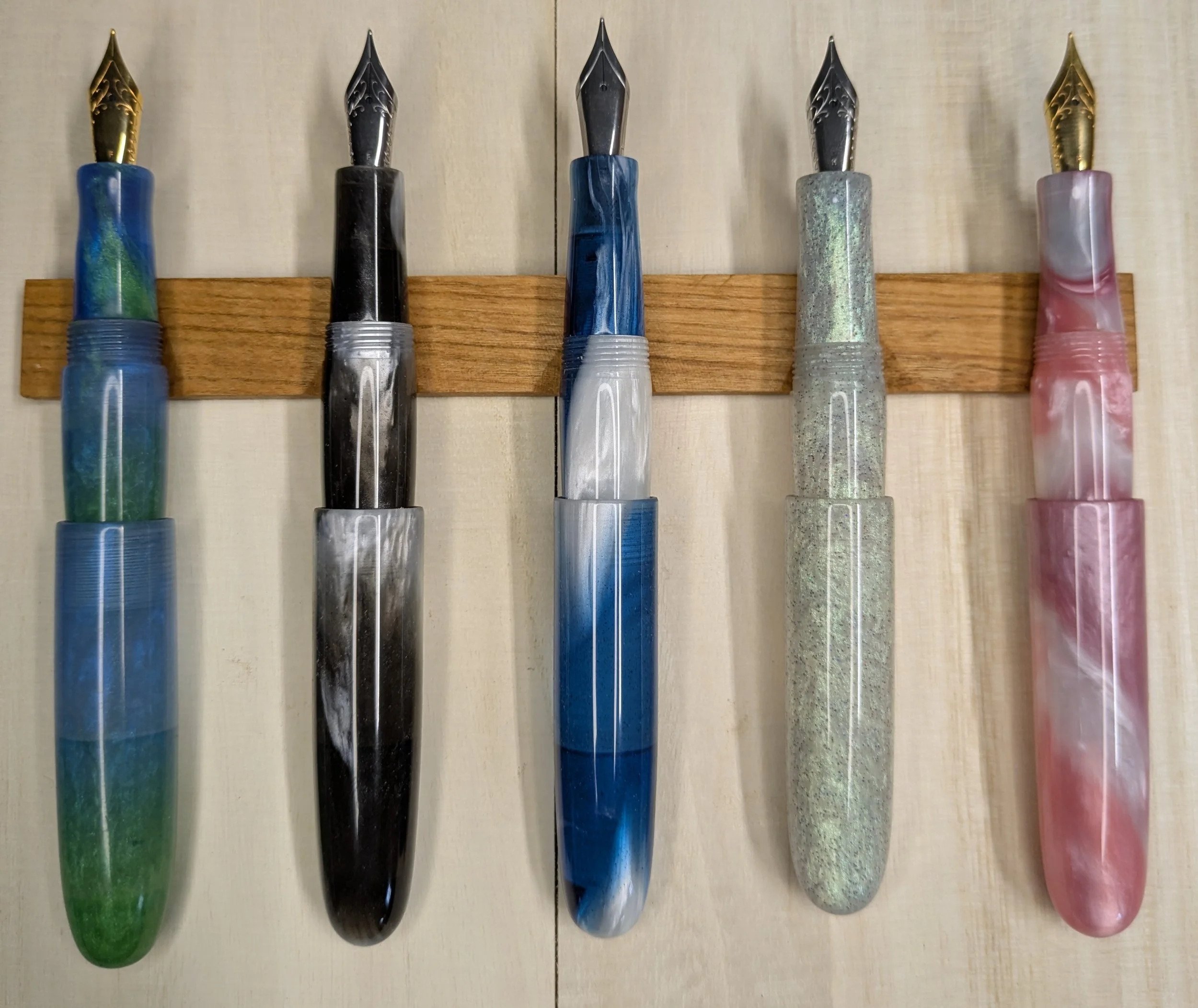
Miller-Watt draws upon his surroundings for most of his artistic inspiration. “I want to showcase Japanese culture and traditions, like sumi ink and indigo grinding which are not well known in the west, or like the colors in our Dango pens. I want to share trivia like the meanings of those colors – that’s a story worth telling.” (Fiber arts people will be interested to learn that it’s not just in dyeing that indigo seems like magic – pen resins using real indigo also start out greenish brown and then oxidize to the distinctive shade of blue when exposed to air.) Because Japanese summers are so hot, there are vending machines everywhere with iced drinks, and he’s made pens themed on those drinks as well, like mugi-cha and matcha and strawberry au lait. Japanese terms for weather and the seasons have also led to pen materials – “I want to capture a feeling and put it into a pen.”
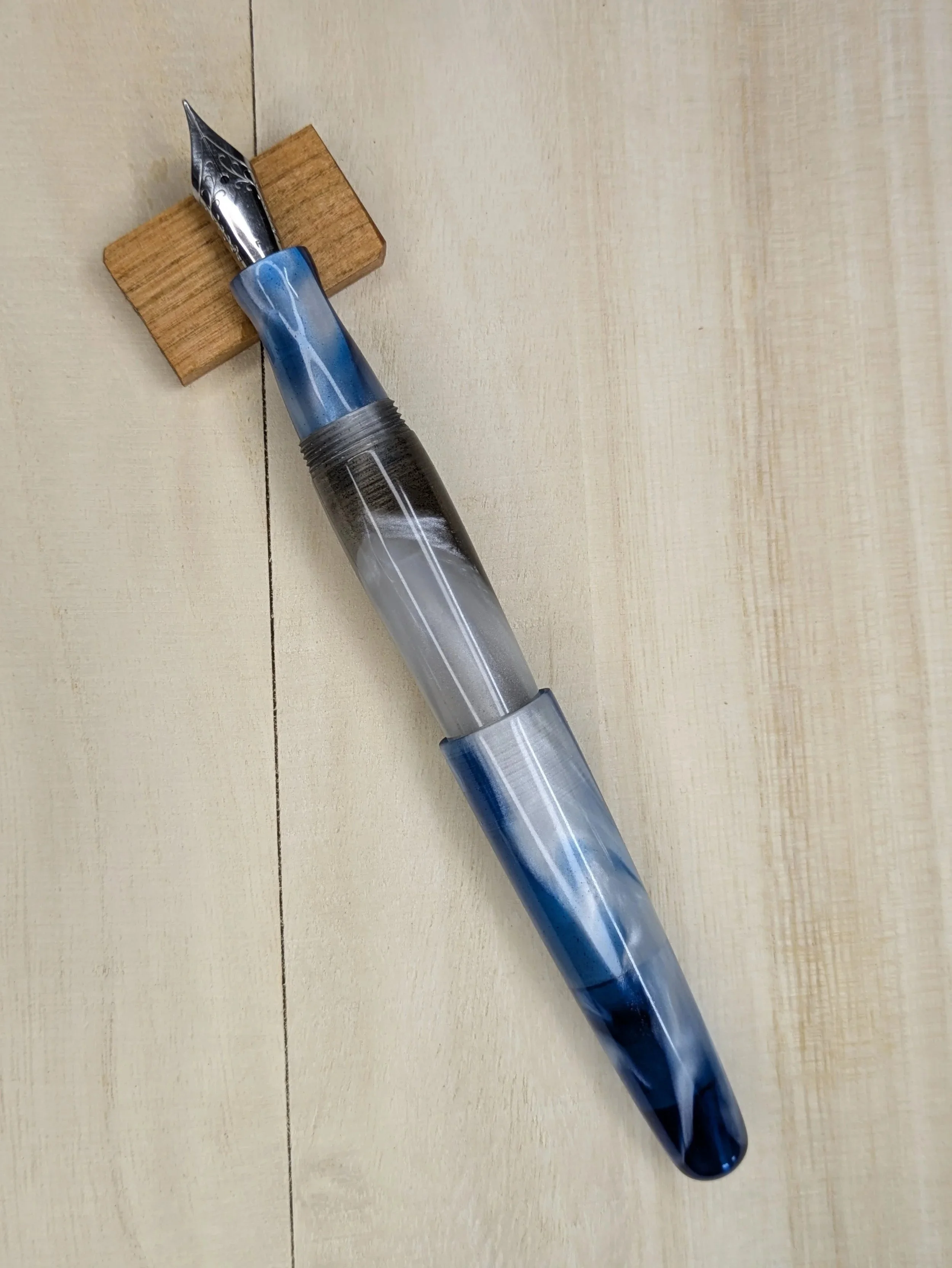
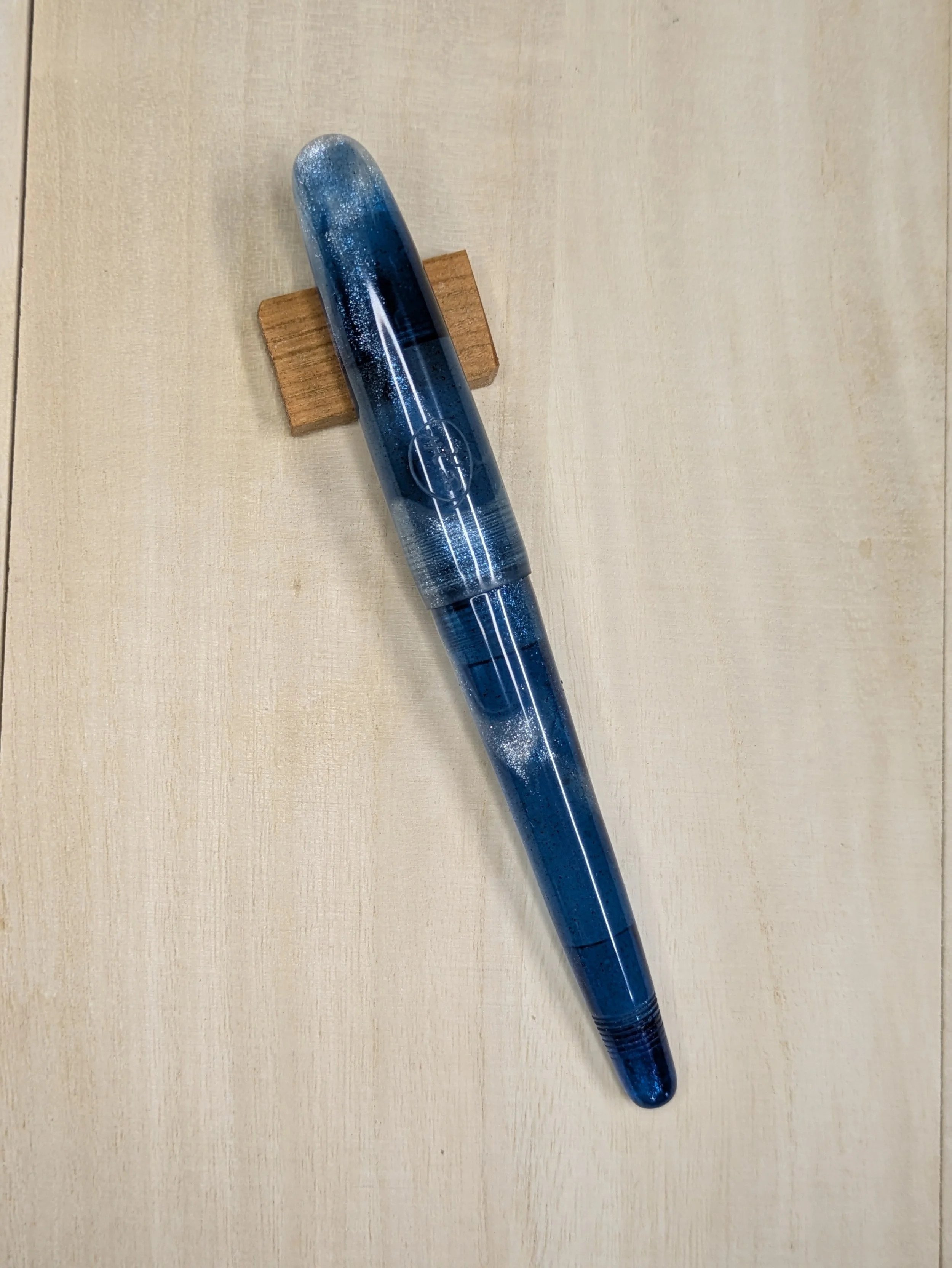
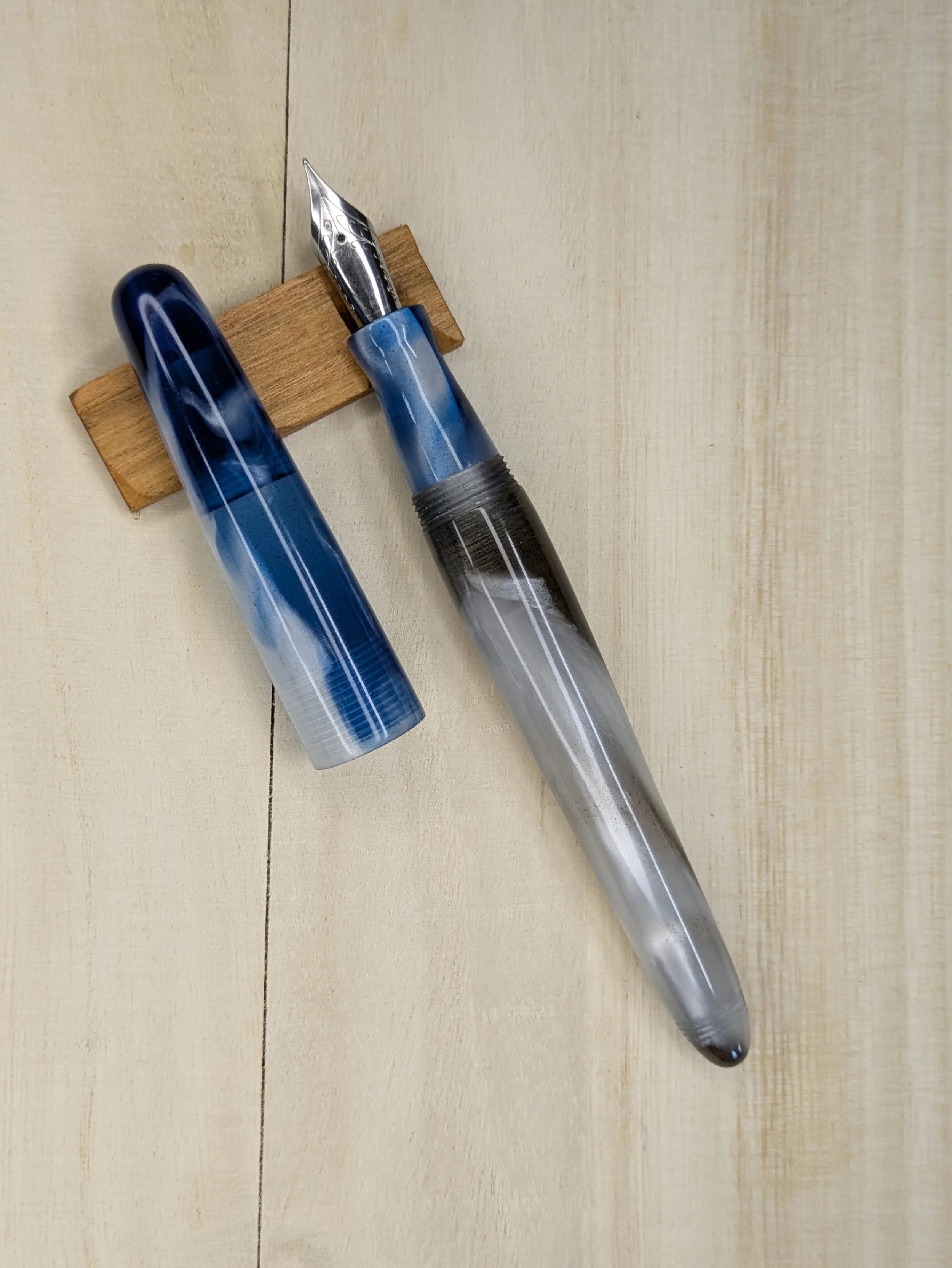
His emphasis on Japanese culture has let him make work that stands out in the marketplace. “When you start to make pens, you have to do something different from others. You can compete on design, or innovation, or price. Competing on price is a losing proposition, it’s bad for everyone.” With parents who were professional musicians, it was clear to him early that if someone tried to do the work cheaper, it hurt everyone in the field. “I wanted to do something different in design. I love a pocket pen, but most of them are push-to-post, which over time can leave marks, and it’s also not as secure. Doing it with threads can have limitations too, and I wanted a graceful shape.” He found that the threads didn’t have to be full size to hold the cap posted, and they can be sanded down and polished enough that they don’t interrupt the shape.
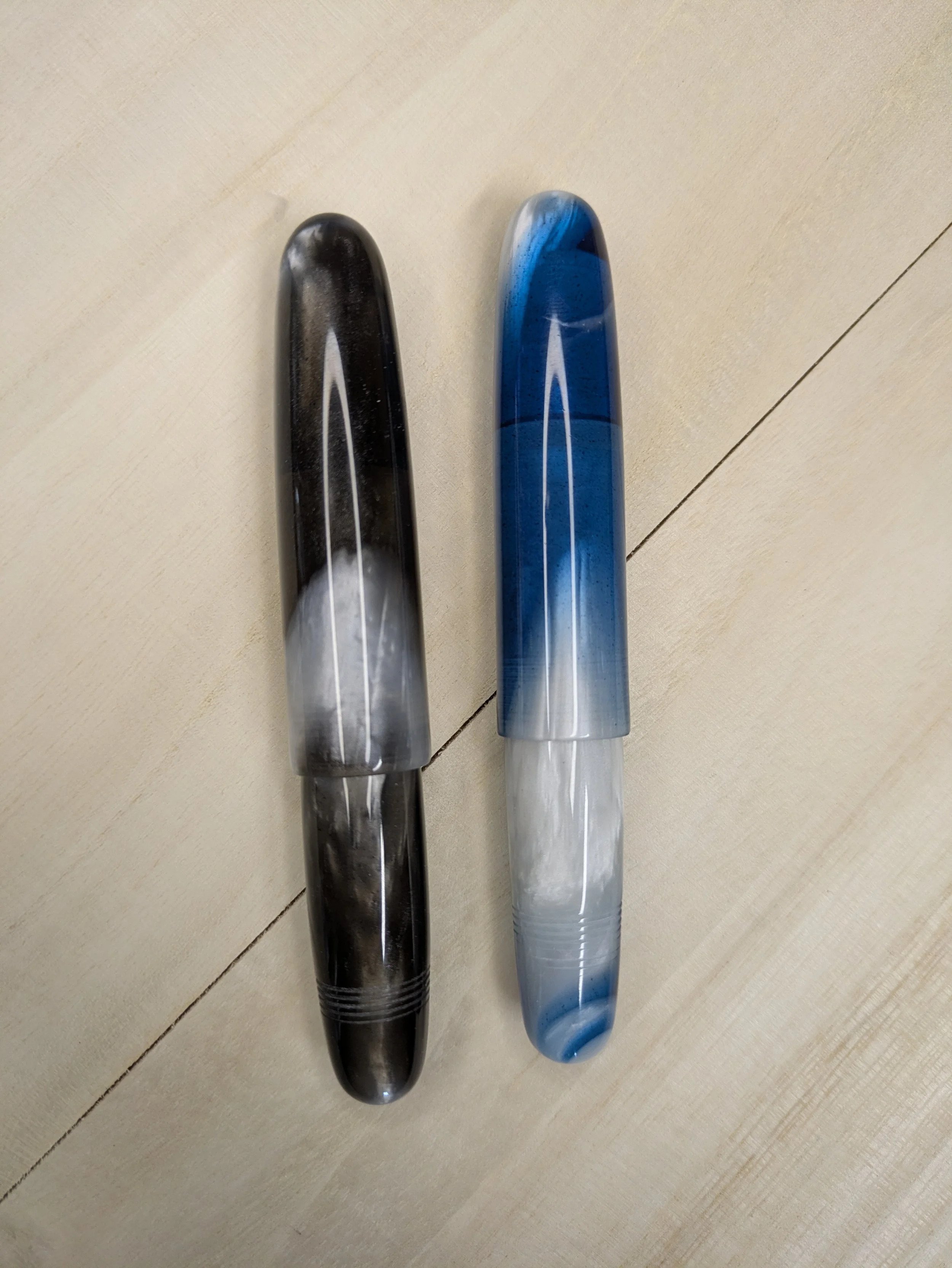
“I did my pocket pen first, and people said I should do a full size pen too. I was thinking about how to do that, and one day I got the idea in the shower and had to jump out and run to sketch it.” On the full size Tomaru pen, the threads are at the tip of the barrel and deep in the cap, to make a post that’s both secure and subtle.
Miller-Watt has a lot of ideas for future pens, but “one guy in a shop with a wood lathe is slow.” However, he does not aspire to replacing the wood lathe with a metal lathe. “This is industrial design, but it’s also artistic, it’s meditative and I can’t rush it.” Repeatability is not something to which he aspires. “I go out of my way to avoid repeatability – I don’t measure the dye, I may use a different amount every time. I’m not really interested in using the little time I have to make the same thing over and over.” His favorite thing about the pen making process is not the thing that most makers name: “There is a really nice moment, after the pen is made, and you do the polishing. You get to see what you did in its final form.”
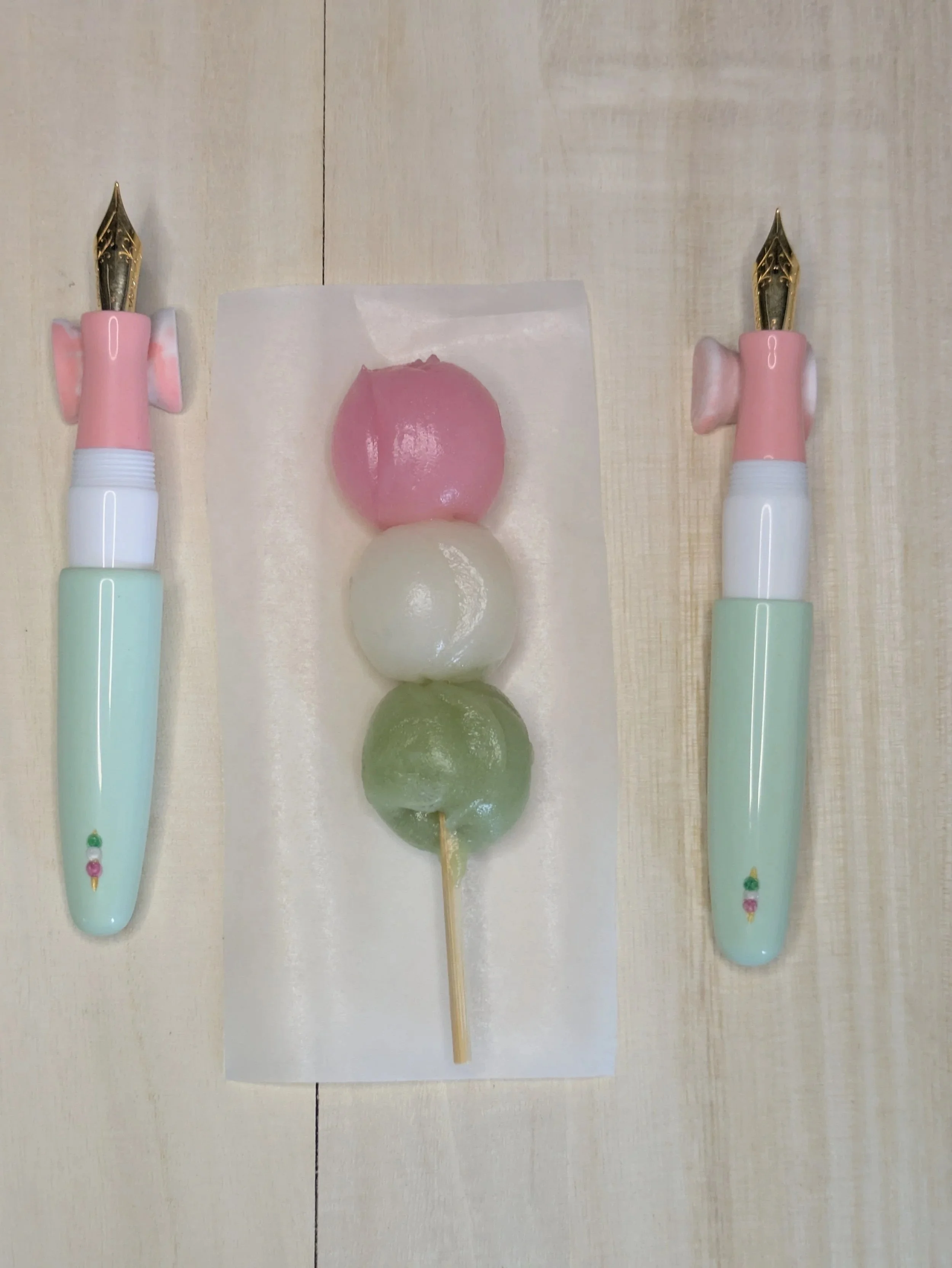
When he named his company, Miller-Watt chose a Japanese word with several meanings, but the one that resonated for him is “collection.” His website contains a delightful page explaining why that word seemed to encapsulate what he wanted his work to be about. “Most people keep most pens because they tell them a story.” He still cherishes the Kyuseido Kakari he got while working for the company; “It has a special custom ground Kakari nib that’s similar to a Sailor music nib. It represents a really cool time in my life, it’s more than just a pen.” He finds himself tempted to keep one of every colorway he makes, but resists. He did keep a pocket Ikimasho with indigo resin.
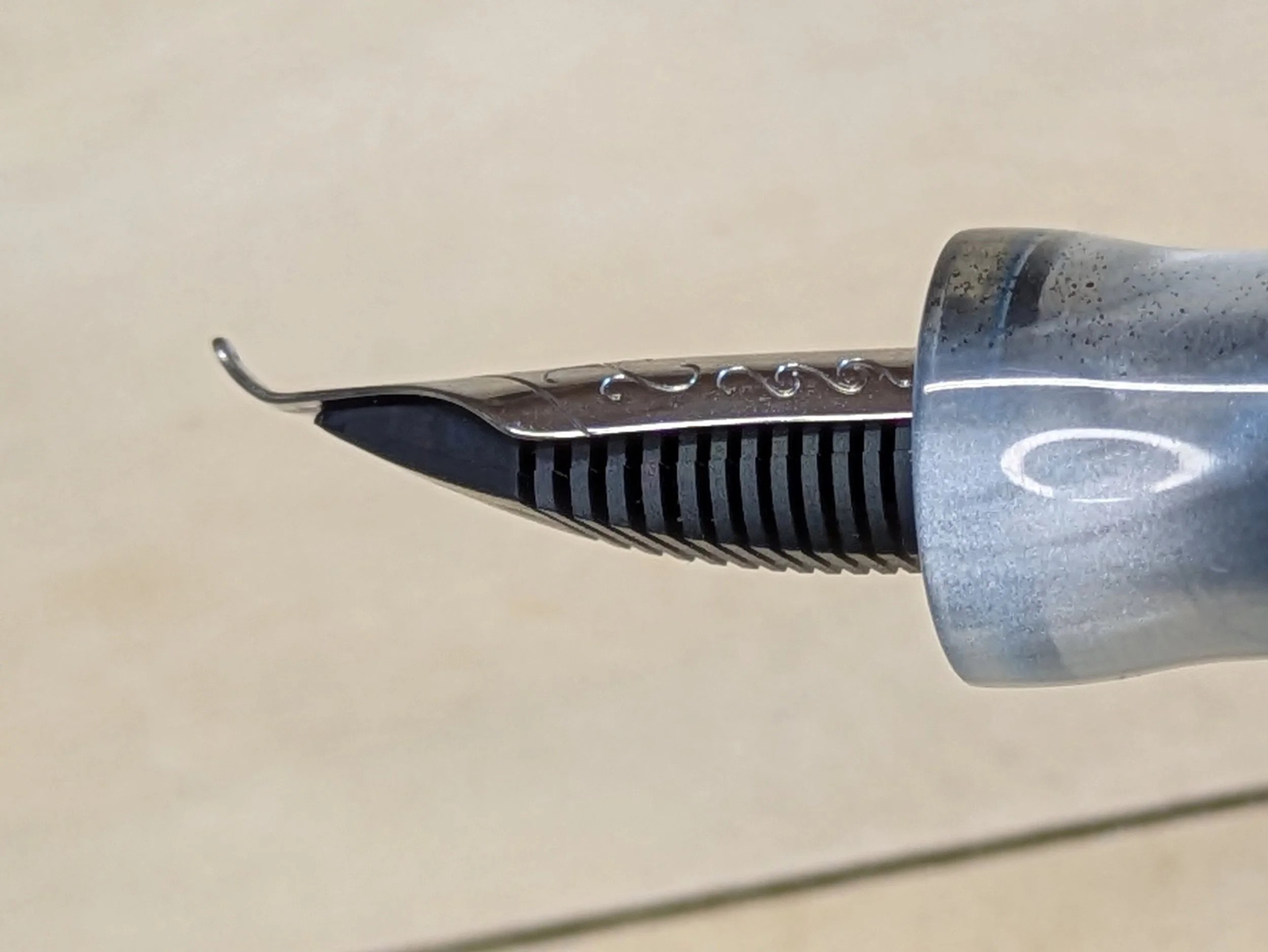
The intentional avoidance of “repeatability” leads to the production of pens that mean something to both the maker and the ultimate owner. “A pen captures the moment in time when I made it, no two are exactly the same – it’s made by hand and it’s its own unique thing. I want your pen to be unique and yours.”
Josh Miller-Watt’s work (pens, and also his in-house Akiya-fude nibs) can be seen at his website Matome Collection and on Instagram. You might meet him at the Tokyo International Pen Show as an attendee; he also does events at his local stationery shop in Takasaki City.
Enjoy reading The Pen Addict? Then consider becoming a member to receive additional weekly content, giveaways, and discounts in The Pen Addict shop. Plus, you support me and the site directly, for which I am very grateful.
Membership starts at just $5/month, with a discounted annual option available. To find out more about membership click here and join us!