
Posts filed under Uni

Uni Kuru Toga Metal Mechanical Pencil Review

Uni Kuru Toga Metal Mechanical Pencil Review

When I review a new color or style of a product that I’ve already reviewed many times, I am looking to answer two things: 1. Has anything about the core feature changed, and 2. Why would I choose this model over any other within the same series of products?

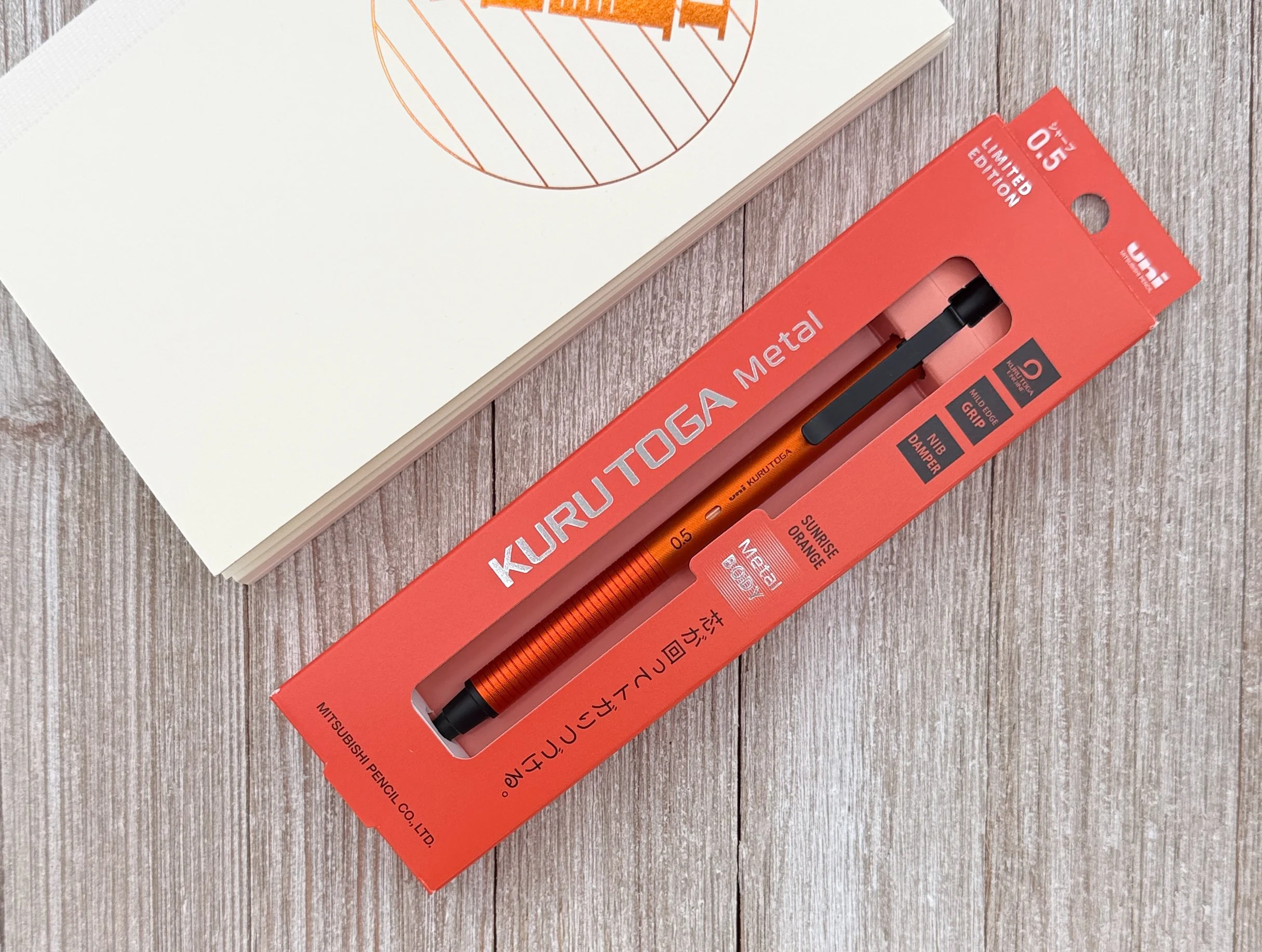
In the case of the Uni Kuru Toga Metal Mechanical Pencil, the mechanism is the core feature, with its auto-rotation lead system, and this model is the premium barrel Metal version, in this case a brilliant Orange.
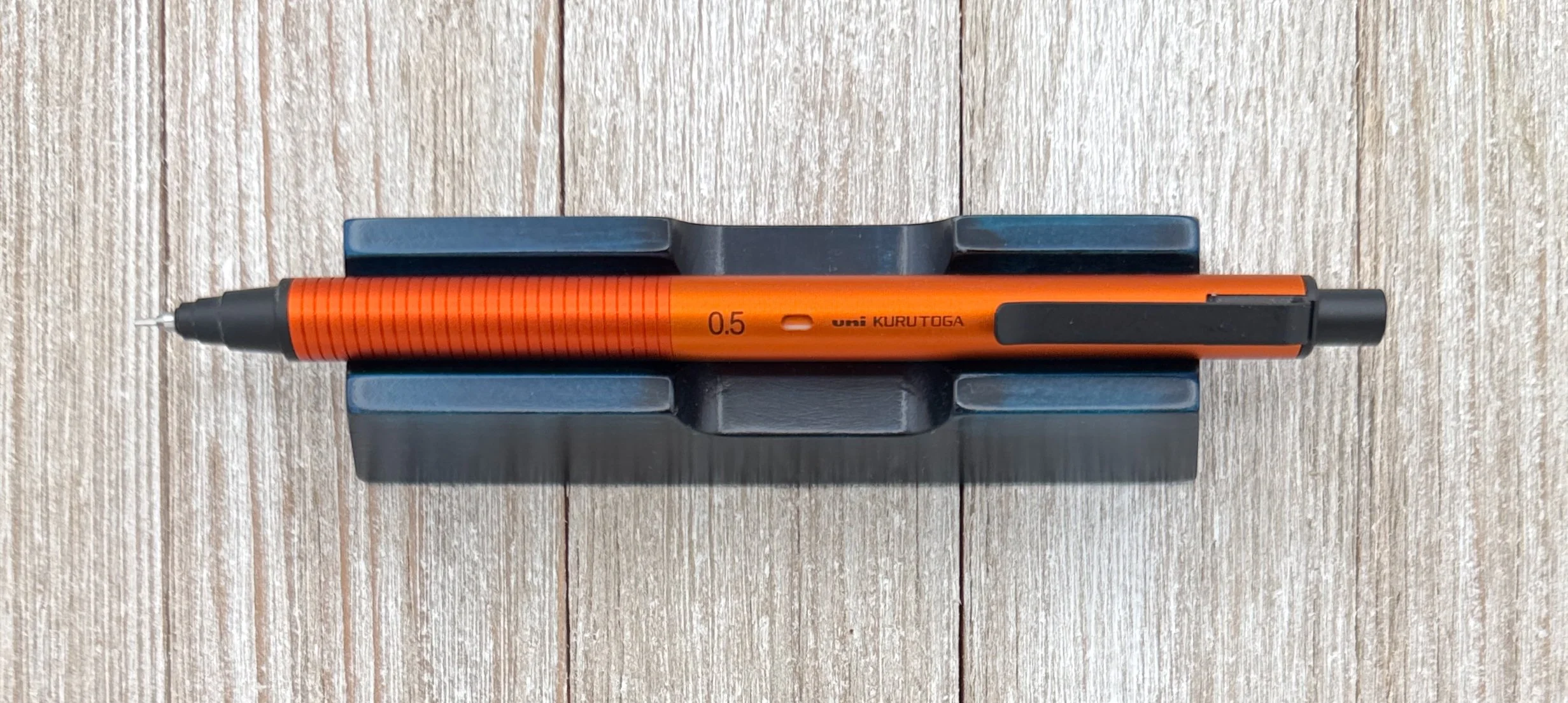
Uni Kuru Toga Metal Mechanical Pencil

The best thing I can say about the Kuru Toga mechanism is that it works. When first introduced 18 years ago, I had my doubts. But what Uni built and executed was nothing short of game-changing for the mechanical pencil industry. All these years on it has proven to be a rock-solid technology, establishing itself as one of the best mechanical pencils on the market.

With a known winner on their hands, Uni has since branched out with all shapes and sizes of mechanical pencils with the Kuru Toga mechanism inside. From its basic plastic barrel beginnings, to the behemoth that is the Kuru Toga Dive, Uni leaned in to this product in a big way. And I love them for that.
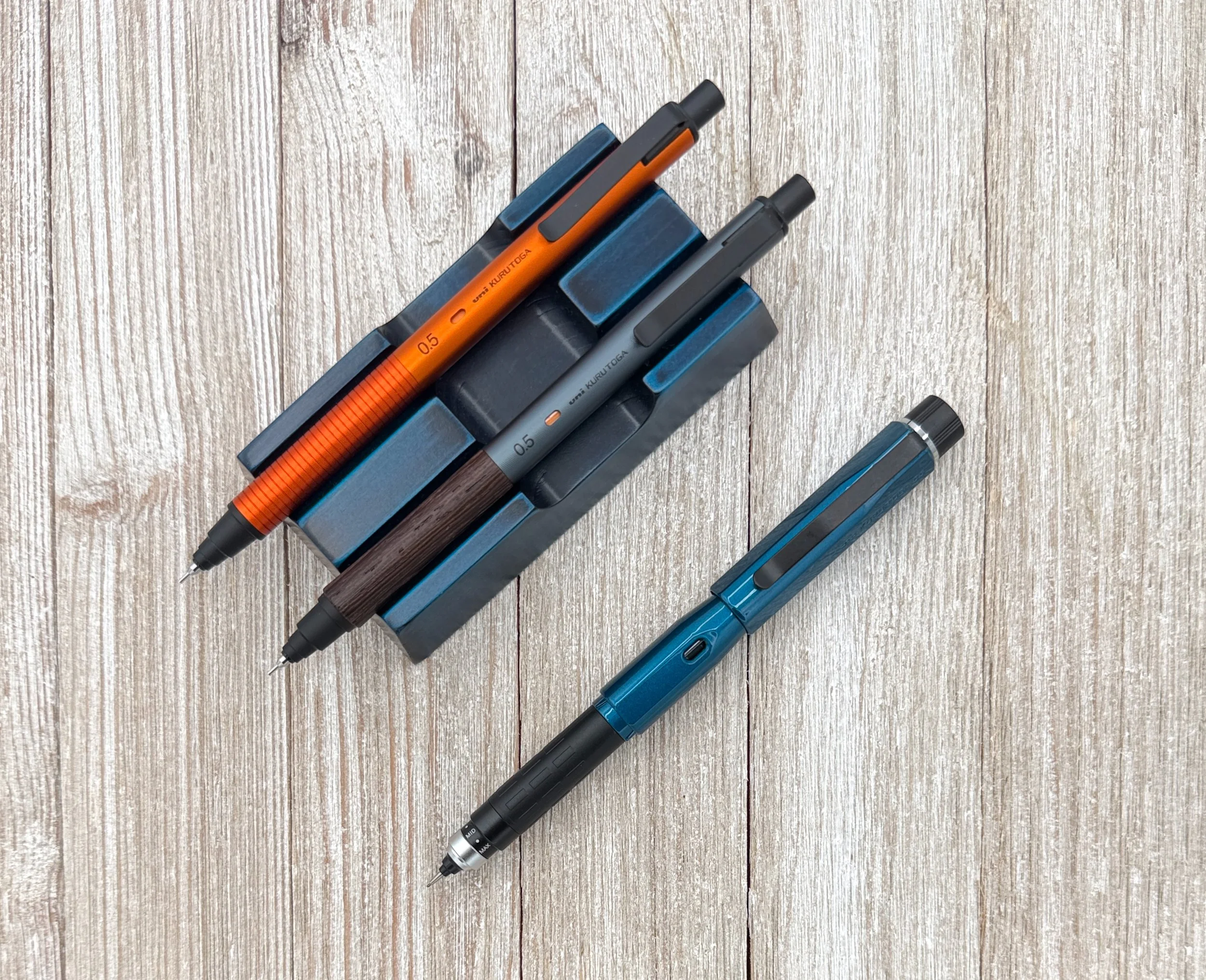
The Kuru Toga Dive is … something.

While the “best” Kuru Toga is up for debate, I’ve always recommended the Standard or the Roulette for anyone looking to give one a try. The former being the basic plastic barrel entry-level Kuru Toga, and the latter a step up from there with a metal knurled grip and a more classic engineering-style barrel design.

Given those basics, and amongst the wide range of available choices, where does the Metal fit? For starters, its difference lies in the name. The full metal barrel aluminum barrel comes in four anodized colors, with faint grooves throughout the barrel, and more pronounced grooves in the grip section.
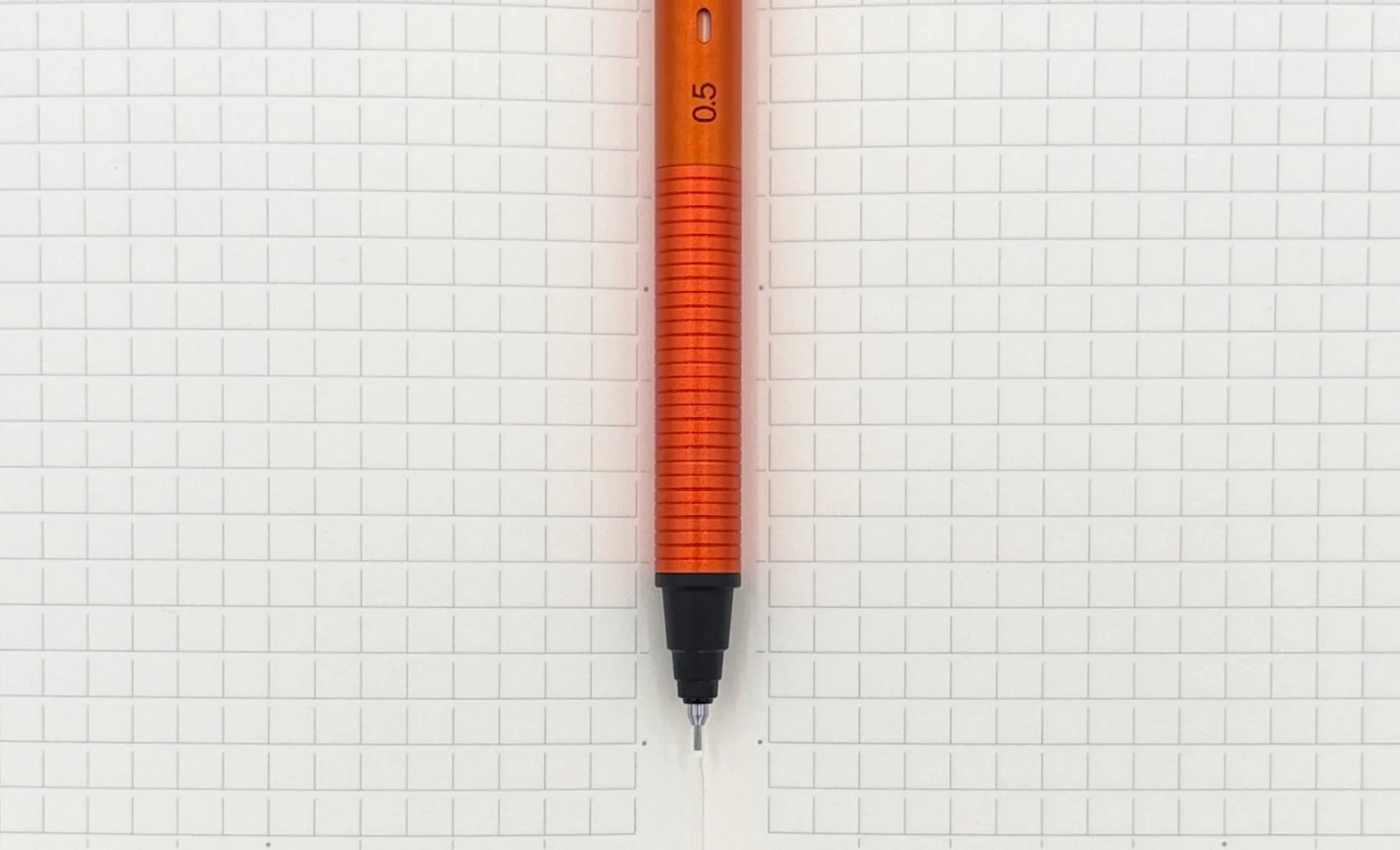
Uni Kuru Toga Metal Grip

The design is stunning, but I find grip section slippery. The micro grooves work against each other in this area because they are too close together, essentially giving the feeling of a smooth metal grip. That can work, but not well with dry fingers. Your mileage may vary, but I want my grip to lock in more than that.

Locking in with the Kuru Toga is important, because to get the full benefit of the mechanism, you don’t want to rotate the pencil in your hands. The pencil does all the work as you write, and you can verify that it is working by the porthole in the barrel that changes from orange to white as you write.
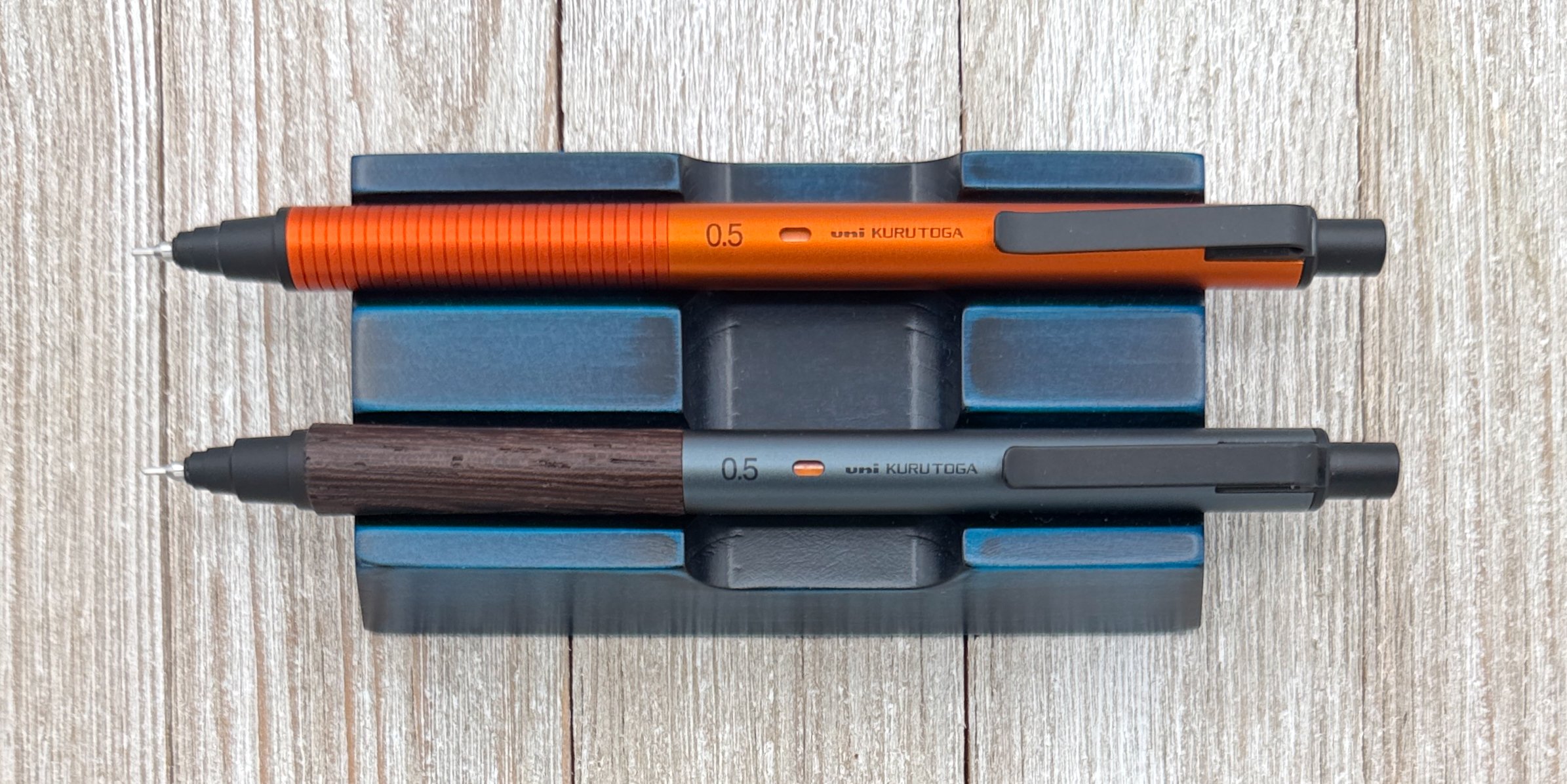
Uni Kuru Toga Metal vs Wood

My personal favorite, the Wood model, compared to the Metal.

Lastly, Uni is doing Uni things with the Metal by slapping a Limited Edition tag on this series. They have been reasonably available so far, but do come with a premium $36 price tag. That’s still $10 cheaper than my favorite, the Kuru Toga Wood, but if you want to try the Kuru Toga experience for the first time I would still recommend the $5 Standard or $13 Roulette, both of which give you the full experience at a fraction of the price.
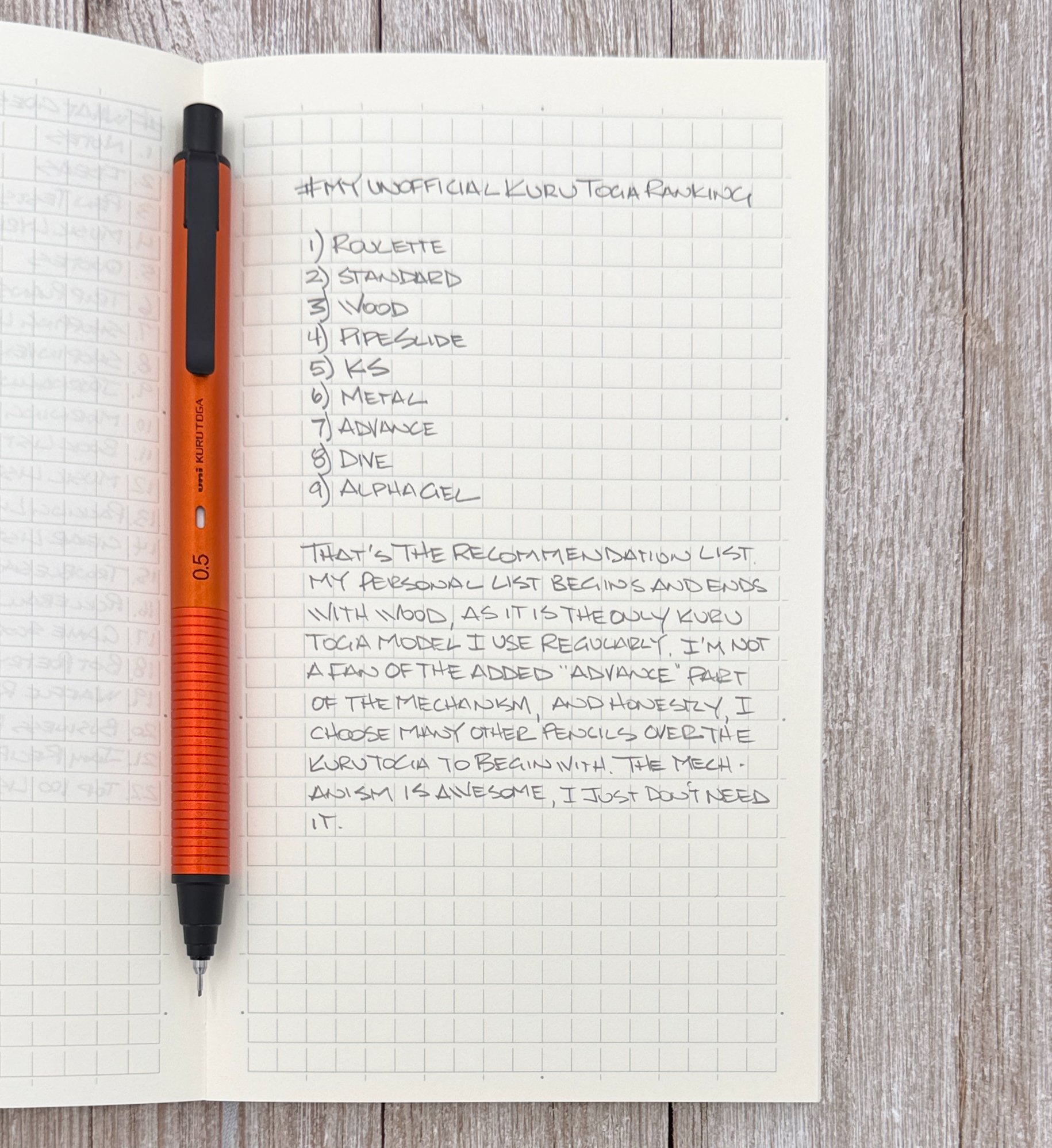
Uni Kuru Toga Rankings

Despite the premium, I do like seeing Uni continue to experiment with this series. Some newer models have an auto-advancing lead system alongside the rotation, and others, like the Metal, have a nib damper that mitigates tip wobble. And the Dive? Well who knows what the Dive is, but I’m glad it exists. Now if they would just make more of them!

(JetPens provided this product at no charge to The Pen Addict for review purposes.)


Enjoy reading The Pen Addict? Then consider becoming a member to receive additional weekly content, giveaways, and discounts in The Pen Addict shop. Plus, you support me and the site directly, for which I am very grateful.

Membership starts at just $5/month, with a discounted annual option available. To find out more about membership click here and join us!

Posted on June 22, 2026 and filed under Uni, Kuru Toga, Mechanical Pencil, Pencil Reviews.

Pencil Sharpener Battle: Classroom Friendly vs. Uni KH-20

Classroom Friendly (Left,) vs. Uni KH-20

I’ve been focusing on pencils in the month of October, and recently realized I’ve never reviewed either of my favorite two desktop pencil sharpeners: the Classroom Friendly Sharpener and Uni KH-20 Hand Crank Sharpener. Let’s break down each of these popular sharpeners, and see which one I prefer.

I’m looking for one thing with any pencil sharpener: a long point. That goes for hand-held and desktop sharpeners both. Not sure what the difference is? One image says it all:

The Dixon Ticonderoga (top,) is on the extreme end of the “short” scale.

The short point, top, is how many types of pre-sharpened pencils arrive. I knew there were sharpeners out there that offered a deeper sharpening, but what I didn’t know is that a long point sharpener was a thing. Once I found out, and shopped accordingly, I’ll never go back to a short or medium point wooden pencil. Long point only for me.

Both the Classroom Friendly and Uni KH-20 provide the point I’m looking for, with only slight differences between the two. Yes, I’ll go ahead and tell you up front that I rate these two sharpeners closely, but one does see more action than the other at the end of the day.

Classroom Friendly, top.

The Classroom Friendly sharpener blade provides a slight concave shape on the tip. If you look closely, you can see a slight swoop starting from where the barrel paint ends through the end of the graphite point. In comparison, the Uni KH-20 blade finishes its sharpen cycle with a straight line from paint to tip.

I’d say the very tip of the core is also sharper from the Classroom Friendly. That’s not always a positive. With softer graphite you’ll find that part of the tip crumble as soon as it hits the page. That’s not a huge issue since you are wearing down the tip the moment the pencil hits the page, but I don’t see that one first use from the Uni sharpener.

Every Other Facet, the new Alt-J song.

There are almost no negatives with they way either of these sharpeners do their job, with on visible exception: the teeth of the Classroom Friendly sharpener bite into the barrel. This is an annoyance, but it is fixable. I use washi tape to buffer the area where it clamps onto the pencil barrel to prevent the bite markers. Other have recommended products like Blu Tack adhesive to smooth out the teeth in a more permanent way.

Metal teeth!

Washi tape as protection. Is there anything it can’t do?

Other differences involve construction - the Classroom Friendly uses a mostly metal exterior, which the KH-20 is mostly plastic. Both have a large capacity slide-out shavings bin. The KH-20 does have a blunt tip setting that the Classroom Friendly doesn’t have, which is great if you use color pencils that don’t require the ultimate in stabbiness.

Blunt tip from the KH-20 for color pencils.

In the extras department, the KH-20 comes in three colors, while the Classroom Friendly has seven. The Classroom Friendly also ships with a clamp to mount the sharpener to a table or other surface.

At $25 for a single sharpener (plus discounts starting with three or more,) the Classroom Friendly checks in at $7 less than the $32 Uni KH-20 sharpner. The Classroom Friendly also offers a replacement blade ($15) if you ever need it, which Uni doesn’t offer for the KH-20 as best as I can tell.

In this battle between sharpeners, there needs to be a winner. There is no wrong choice for quality, but I reach for one of these sharpeners over the other about 80% of the time, and that’s the Uni KH-20. Why? It’s rock solid, quiet, and consistent. And I do use the blunt tip setting on occasion for color pencils, although I admit that’s not a deal-breaker. The bite marks on the barrel are my biggest hangup with the Classroom Friendly, and while fixable, the point it provides isn’t worth the extra fidgety-ness most of the time.

I will say I am glad to have them both at arms reach, and after many years of ownership, neither seems to be slowing down.


Enjoy reading The Pen Addict? Then consider becoming a member to receive additional weekly content, giveaways, and discounts in The Pen Addict shop. Plus, you support me and the site directly, for which I am very grateful.

Membership starts at just $5/month, with a discounted annual option available. To find out more about membership click here and join us!

Classroom Friendly vs. Uni KH-20 Shavings
Posted on October 14, 2024 and filed under Classroom Friendly, Uni, Pencil Sharpener.

Uni Kuru Toga Metal Mechanical Pencil Review

Is the Uni Kuru Toga Mechanical Pencil the best technical advancement in stationery over the past 20 years? It might be, and if it isn’t, it’s near the top of the list. As a counterpoint, does anyone need the lead rotation mechanism that sets this pencil apart from the rest of the mechanical pencil market? We will get to that point in a minute.

This is far from the first Kuru Toga we have reviewed on The Pen Addict. We will mix one in every year or two when they come out with a new and interesting model. The pricey Kuru Toga Dive ($50-$100, depending on a litany of variables,) was, and still is, an outlier in the interesting department, and still brings all the pencil heads to the yard. The standard Kuru Togas, like the colorful $7 KS model, keeps the product lineup fresh, interesting, and popular.

Where does one of their latest releases - the Kuru Toga Metal - fit in with the rest of the product lineup, and the overall mechanical pencil space?

The barrel opening helps show the rotation in action, moving from white to orange as it engages.

On merit, this is a great pencil. The aluminum barrel gives it a nice feel in hand - sturdy and solid, but not heavy. The grip and barrel feature varying widths of ridges for a stable grip feel. The clip is strong, the knock is nice, the nose cone is designed … wait, what’s that in the nose cone?

Aside from the metal barrel, Uni is marketing a resin nib damper that reduces tip wobble. Has mechanical pencil tip wobble been a problem that I have overlooked for years, because never once have I run across it. I guess maybe if the pencil features a retractable pipe there could be, but the Kuru Toga Metal doesn’t have that feature. Traditionally, mechanical pencil tips feature one large nose cone that is rigid and static, with no opportunity to wiggle. And given the detailed work that is often required from pencils like this, I think I would have heard more about it.

From L to R: no nib damper, nib damper, no nib damper.

But then again, there has to be a reason to charge $36 for a mechanical pencil. I’m just not sure “nib damper” is on my checklist of required features.

Rewinding back to my earlier question: do you need a lead rotation mechanism in your mechanical pencil? I’ll be the first to tell you that I like this feature, and it absolutely works as described. To test it, I fixed my fingers on the grip and wrote the same phrase over and over to see what the tip of the graphite looked like when finished. It came to almost a perfect point, which is impressive.

The graphite shape after my fixed grip writing. It works!

What if I rotate the pencil in my hands while using it? Does the mechanism still work? Absolutely, but then you just have a normal mechanical pencil in your hands where your manual grip rotation works alongside the mechanical rotation and makes different width lines on the pages, depending on the position of the graphite.

Is this too much to think about? I think so. I’m a pen and pencil rotator, so outside of fountain pens, I’m constantly spinning the barrel in my hand. With pencils it is more prevalent, of course, and while it would be a choice to never spin the pencil and let the Kuru Toga do its thing, I don’t think that is possible.

Top to bottom: Kuru Toga Dive, Rotring 600, Kuru Toga Metal, Pentel Sharp, Spoke Model 4.

I buy Uni Kuru Toga mechanical pencils because they are well-made mechanical pencils and they look cool. I don’t buy them for the lead rotation technology, despite the fact I think the technology is awesome. I’m guessing this is an obvious take, and many people fall into this category. I like the rotation when I need it … have I ever needed it?

The last bit to cover is where the Uni Kuru Toga Metal Mechanical Pencil fits within my recommendations of the rest of the Kuru Toga product lineup. The $36 price tag makes it easy to move down the rankings, especially given that I believe the Roulette model is the best model, and is only $13.50. That is a steal at that price. The Advance model ranks ahead of the Roulette in style options, and costs even less at $8.50.

Instead of listing out even more I’d pick ahead of it, I think the only one I wouldn’t is the Advance Upgrade model. I didn’t get along with that barrel design at all.

I completely get along with the Metal model, I’m just not sure the price gets along with the competition.

(This pencil was sent to me by a friend living in Japan. Thank you Jacob!)


Enjoy reading The Pen Addict? Then consider becoming a member to receive additional weekly content, giveaways, and discounts in The Pen Addict shop. Plus, you support me and the site directly, for which I am very grateful.

Membership starts at just $5/month, with a discounted annual option available. To find out more about membership click here and join us!

Posted on September 30, 2024 and filed under Uni, Kuru Toga, Mechanical Pencil.