Posts filed under Meet Your Maker

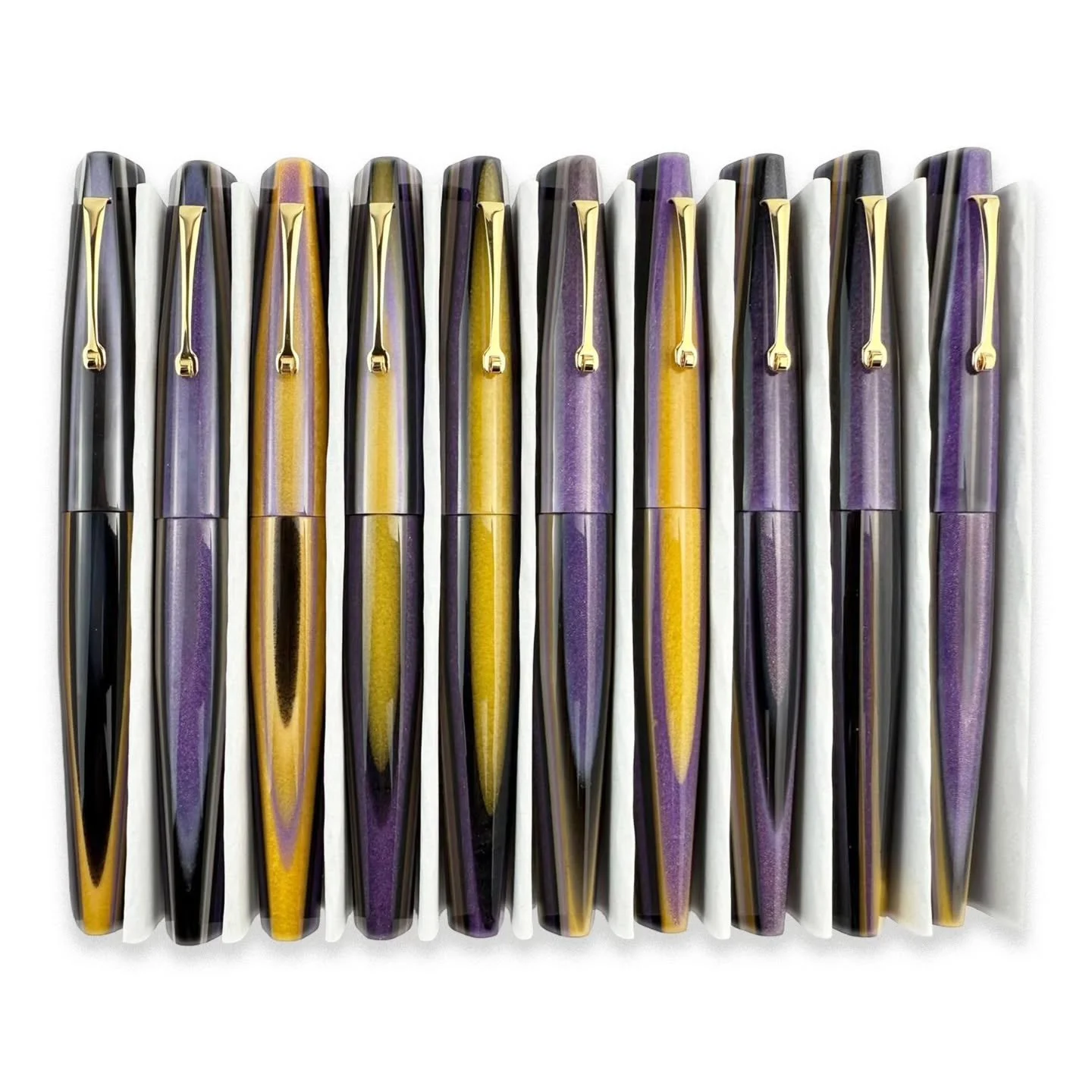
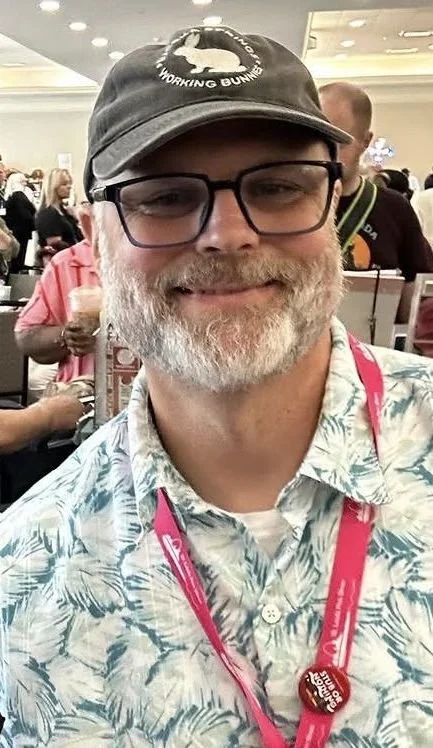
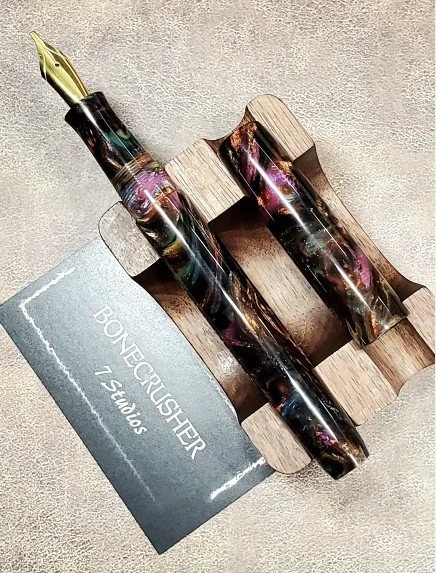
Meet Your Maker: James White, Bonecrusher 7 Studios

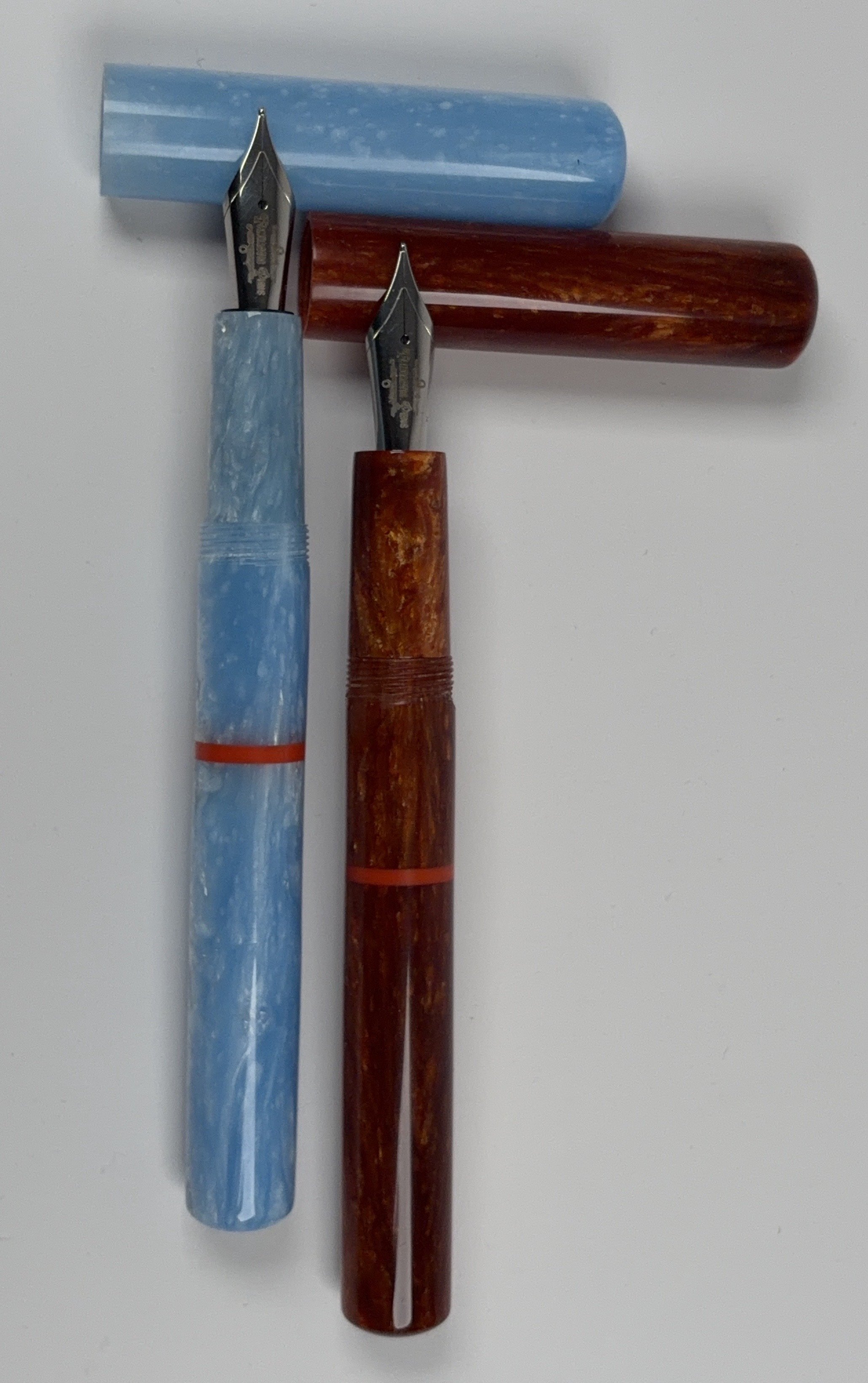
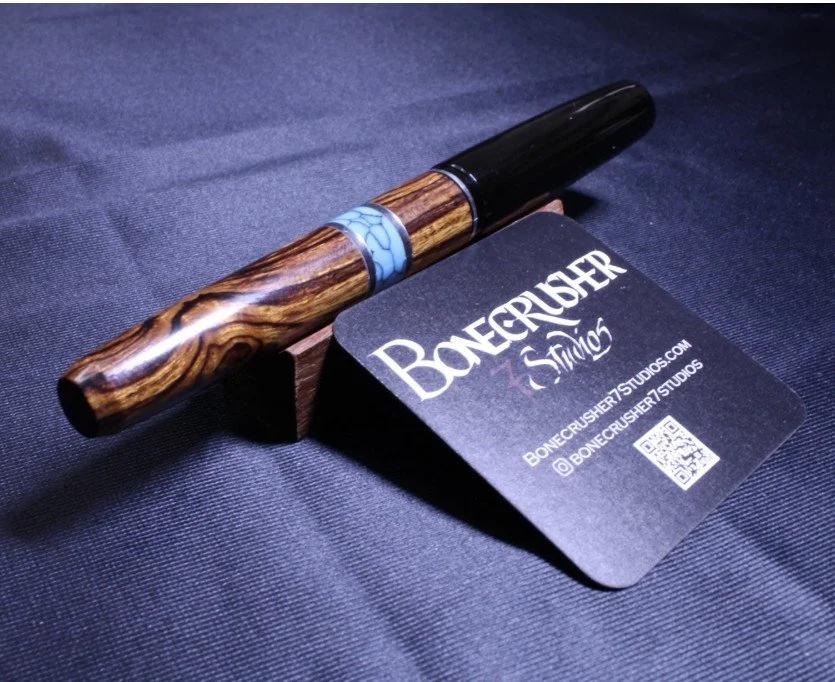
Bonecrusher 7 Studios

(Caroline Foty's first fountain pen was a 1970s Sheaffer No Nonsense that still writes perfectly. Since she discovered pens by independent makers, she wants "one of each, please" and wants to meet all the makers. Maybe you do, too. She lives in Baltimore with pens, cats, and all kinds of fiber arts supplies.)

Imagine yourself wandering a pen show. You walk up to a table displaying the sign “Bonecrusher 7.” Serious stuff… When you look a little more closely, you see that the pens have women’s names… come to think of it, they are named after cartoon characters! Now you’re really interested.

Bonecrusher 7

This imaginative exercise is not fiction. James White’s last assignment before retiring from the Army was in the demilitarized zone in South Korea. “The medic call sign was Bonecrusher, and the number indicated status. I was the highest ranking non-commissioned officer, the supervisor of medics, so I was Bonecrusher 7.” When a new officer changed all the call signs, White decided to keep Bonecrusher 7 for his own.

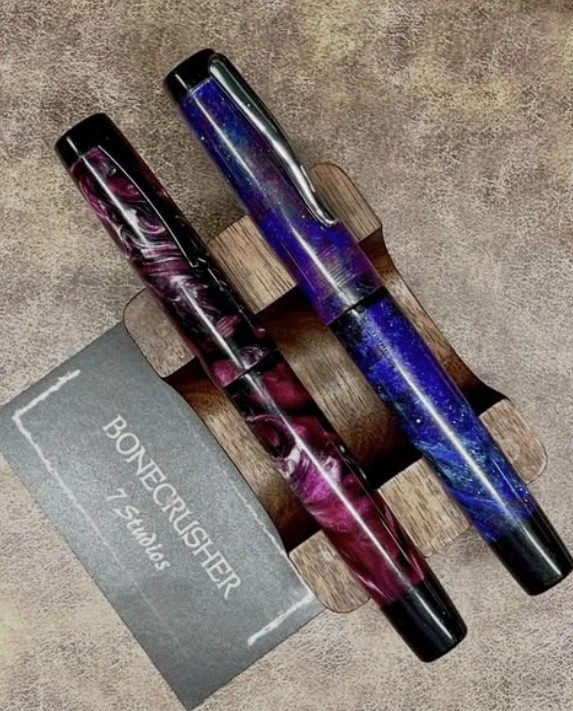
Bonecrusher 7 Studios Fountain Pens

White has made things as long as he can remember. “My dad taught me to work with steel, to grind metal for homemade knives.” When he was stationed in Iraq in 2007-8 he taught knife making classes in the base’s aid station. Later, at Fort Campbell, there was a wood shop, and in a what-the-heck moment he signed up for a pen making class and made a mechanical pencil. His interest was piqued.

He spent about ten years making kit/component pens. “For the first couple of years you give away a lot of stuff you make that you aren’t happy with.” In 2017 he attended his first pen show, in Denver, and met and talked to many pen makers. “I got to see another side of pen making.” He started making prototypes of fountain pens in between turning out kit pens, and got a table at the Colorado show the following year. “I had a spread of kit pens on the table, and on the side a little box of fountain pens I was working on. Show organizer Ed Capizzi said, ‘THESE are the ones people want.’”

From that point, the bespoke style fountain pen was the focus. “I went through a couple of model iterations. It took a couple of years to get the Velma where we wanted it.” Yes, THAT Velma…

Bonecrusher 7 Studios Velma

“A lot of pen makers name their pens after something they are interested in. I enjoy the simplicity of some cartoons. I started with Velma from Scooby Doo, it was one of my brother’s favorite cartoons growing up.” (April Mathews, White’s partner and admin/QC assistant, holds up a little plastic statue of Velma that they were given by a customer.) “We try to think of a female cartoon character that fits each new model. For our thinnest pen, it’s Olive Oyl. For our smallest pen forthcoming it’s going to be Agnes from Despicable Me. Wilma is our biggest model – a strong sturdy but appealing cave woman. Betty was shorter than Wilma and had a bow in her hair, so Betty has a clip.” His personal favorite character was Alice in Wonderland. Really, the possibilities are almost endless.

For their first show outside Colorado, Bonecrusher decided to go big and go to DC in 2025. “We were going to go as attendees, then got picked off the table waitlist six weeks ahead and had to hurry up and make some inventory.” Their slate of eight shows in 2026 has felt like too much, though, so next year they are going to reorganize their show calendar a little. (Mathews’s son, Talon, will occasionally staff their table, as he did at BWIPS in 2026, to lighten their travel load.) Colorado will always be on the list, though, Mathews says. “It’s our home show. The Colorado pen posse supported James and watched him come into his own style.”

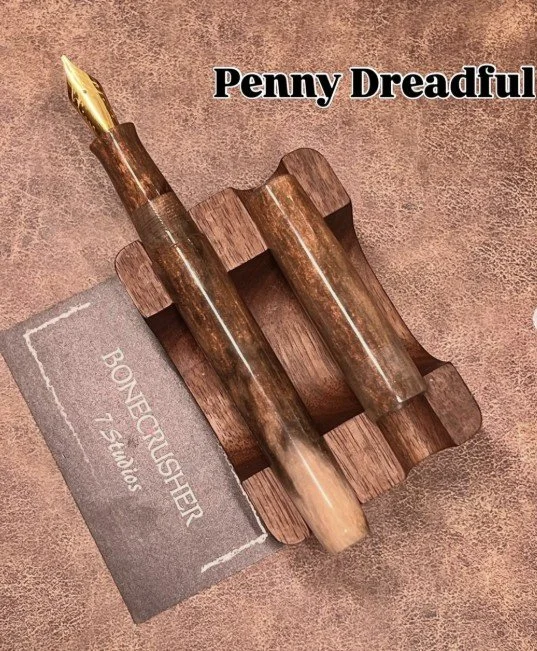
Bonecrusher 7 Studios Penny Dreadful

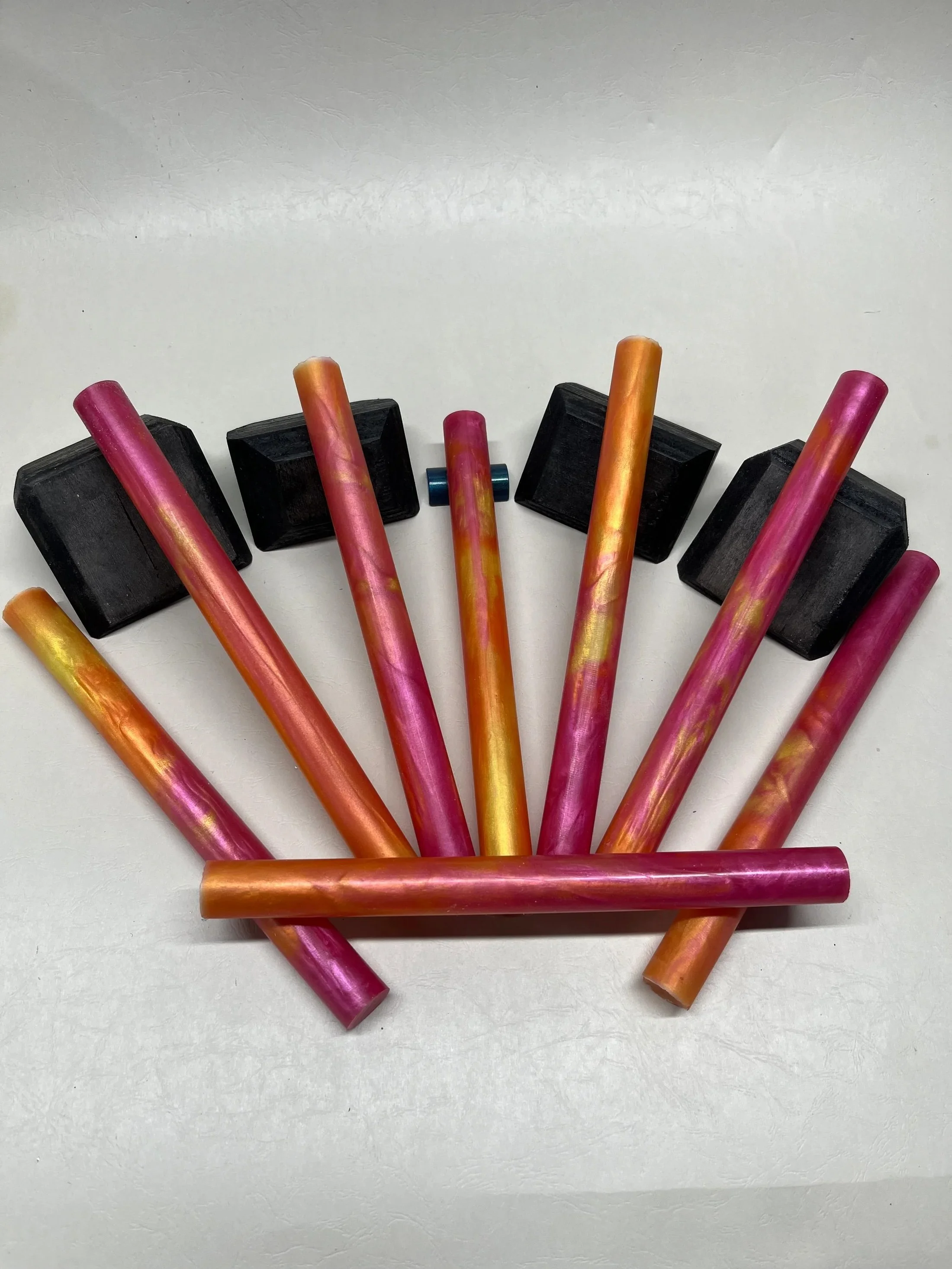
White and Mathews have begun learning to make blanks, although they are clear that they don’t see themselves ever selling them. “As someone who likes to create stuff, you see a picture and you think, ‘That would make a beautiful pen,’ but it’s hard to get another maker to see it the way you see it.” That doesn’t mean they don’t try; White says that Tim Crowe (Turnt Pen Co), Mark Koster (Hobble Creek), and Tim Mckenzie (Diamondcast) have been particularly patient in trying to achieve what they’ve imagined in blanks. “Different makers also have different things they are particularly good at. Bob Dupras has a way of feathering in the mica; Cocoon has transparency; Tim Crowe does great color mixing; Mark does this spiraling.” Sometimes they will make a blank whose recipe they don’t think to write down, and then they begin the quest to try to make it again. One of their most popular resins, Penny Dreadful, came out of the process of trying to recreate a blank whose specifications were not recorded.

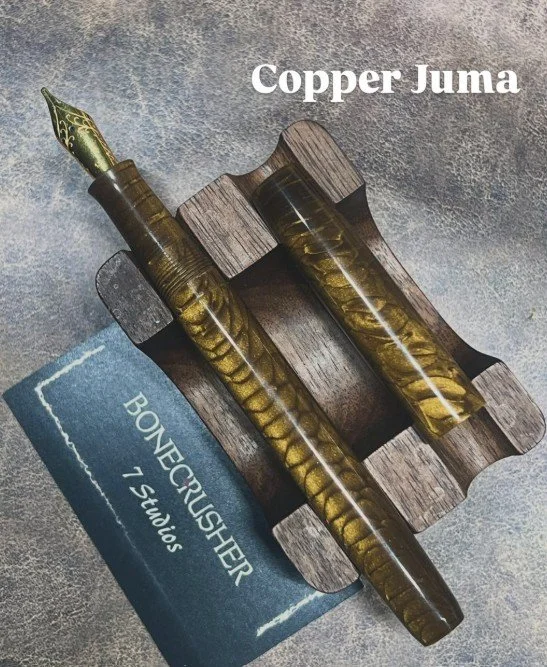
Bonecrusher 7 Studios Copper Juma

One thing White particularly enjoys doing is segmenting stone into wood pens, and he’s acquired a metal lathe from Jim Hinze to allow him to work safely with harder materials. It’s no surprise, then, that one of his favorite pens is a Ryan Krusac L-16 in black ash wood; a pen from Brian Weaver’s Ironfeather Creative, with a handmade Damascus steel clip, also comes to mind. But, he says, “I don’t use a lot of fountain pens! I use a tester that I made, but usually I’m using a mechanical pencil to draw an idea, and I can erase it.” Mathews, it turns out, is the pen collector. One of her favorites is a Jason Neil Penworks pen from an As The Pen Turns podcast Secret Santa exchange. “James enters, and I get the pen. At shows we try to support our fellow makers, and I buy a pen or a bunch of blanks. We’ll also send people to other makers if they want something that we know is someone’s specialty.”

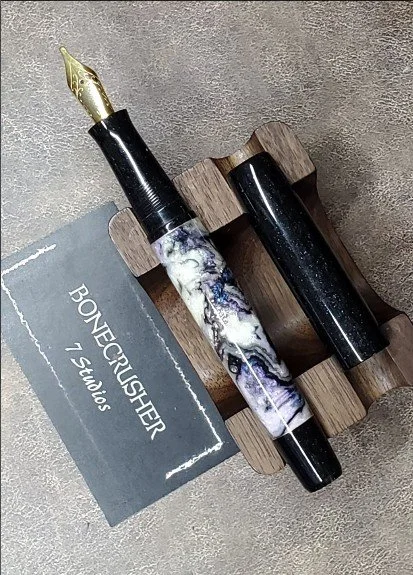
Bonecrusher 7 Studios Stone

Bonecrusher is in the process of relocating from Colorado to Alabama, and they are building out a larger shop there. “We need more space,” White says. “We want to add a laser engraver for logos, we want to make clips and do metal work. Blank casting needs more space.”

Honing his craft is a constant priority for White. “We asked Ed Capizzi and his wife, ‘What do you NOT like about pens?’ Ed said that he didn’t like how if you dropped a pen, it would often break at the section threads, so I added an extra millimeter there to make them stronger. His wife said she didn’t like the feel of sharp threads when you hold a pen, so we started tapering the threads to the section so it’s softer to hold. We want our pens to be pretty, but also the most comfortable for long writing sessions. We take reports from customers – they’re what make us, us – our BC7 family.”

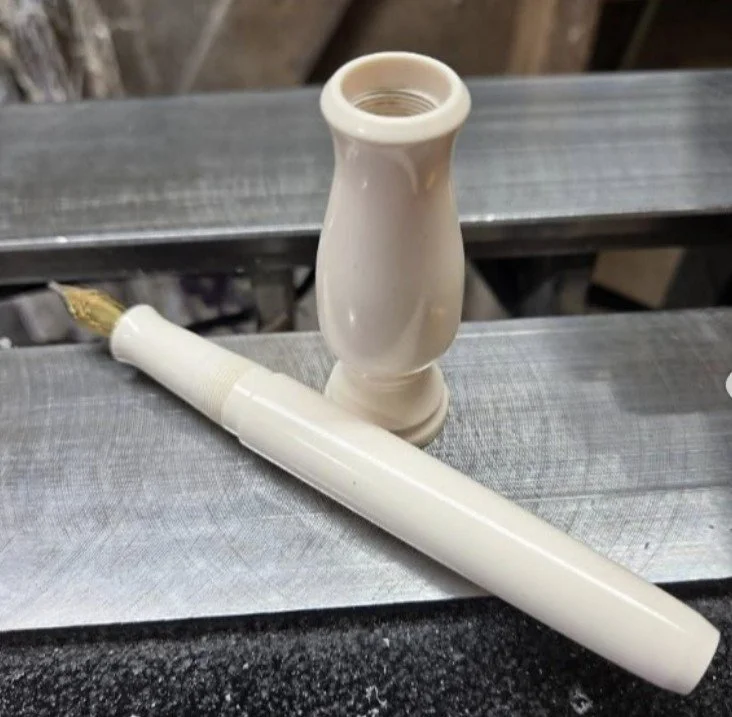
Bonecrusher 7 Studios Ivory

This continuing improvement is White’s favorite thing about what he does. “As we keep making pens we find things we can do better. It’s craftsmanship – taking a raw material and turning it into something that is beautiful and useful at the same time.”

James White’s work can be seen at his website Bonecrusher 7 Studios, his Instagram @bonecrusher7studios, and at pen shows in Colorado, Baltimore, DC, Arkansas, Pacific Northwest, Orlando, and possibly next year Atlanta and Raleigh.


Enjoy reading The Pen Addict? Then consider becoming a member to receive additional weekly content, giveaways, and discounts in The Pen Addict shop. Plus, you support me and the site directly, for which I am very grateful.

Membership starts at just $5/month, with a discounted annual option available. To find out more about membership click here and join us!
Posted on June 15, 2026 and filed under Meet Your Maker.

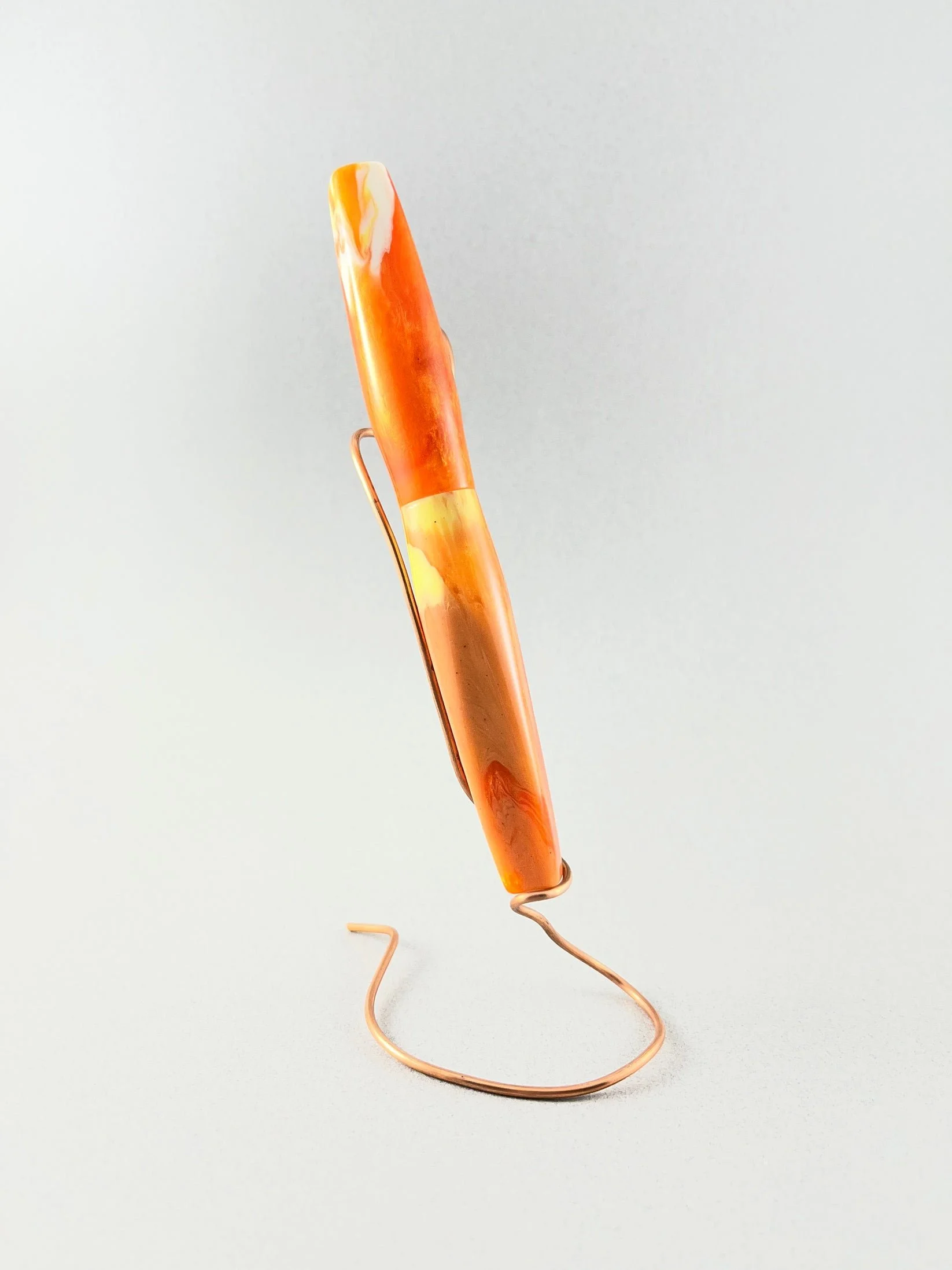
Meet Your Maker: Mark Storch, Fantastic Pens

Mark Storch, Fantastic Pens

(Caroline Foty's first fountain pen was a 1970s Sheaffer No Nonsense that still writes perfectly. Since she discovered pens by independent makers, she wants "one of each, please" and wants to meet all the makers. Maybe you do, too. She lives in Baltimore with pens, cats, and all kinds of fiber arts supplies.)

Mark Storch’s first fountain pen came to a surprisingly dramatic end.

“I started using a fountain pen in high school. I had such a death grip on regular pens that it was almost leading to a deformity in my hand. My mother got me a fountain pen, just something maroon and plastic, nothing special, but it was so comfortable. Unfortunately, that pen met an untimely end against a cinderblock wall, when a friend who’d just been dumped by her boyfriend borrowed my pen and then took her frustration out on an innocent writing instrument. An early lesson in not lending your pens to non-pen people!”

Fantastic Pens

That pen was replaced by a Rotring 600. “I used that fountain pen through high school, and on and off in college, but got lazy, and used other things for quick notes.” The bug didn’t go away, however. “Once I got actual jobs, I got a Pilot Myu. I had the wrong ink, I had bad paper. I didn’t enjoy it until I got real ink and good paper.” The Myu reminds him of an old TV commercial for a sporty Nissan, where a cop writing tickets said, “It looks fast standing still.”

As a child he built models, and in school he had done technical theater, but the “actual jobs” were in fields like technical writing, business analysis, material science, and strategic planning. He was even the CEO of a specialty chemical startup. “In none of those jobs did I produce any actual thing you can hold in your hand.”

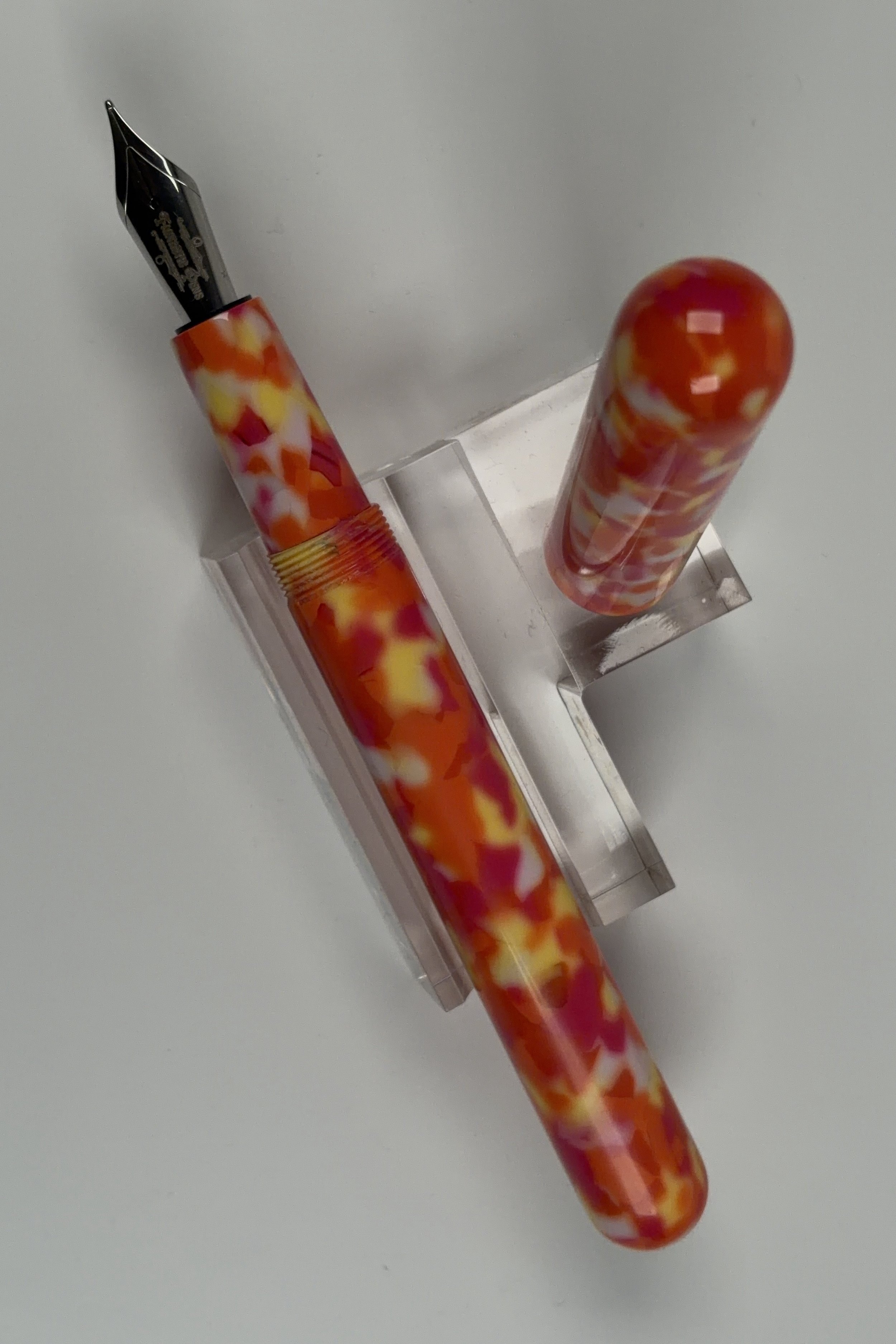
Fantastic Pens Fountain Pen

Somehow, Storch came across the idea that “you can get a pen made out of any material you want,” so he started accumulating various rods of material with the idea of commissioning pens for himself. He attended a pen show before he thought about ever making pens. “My first real show was Baltimore. I didn’t know anything. I came into the hotel and met Brad Dowdy at the bar – I made friends with the people first.”

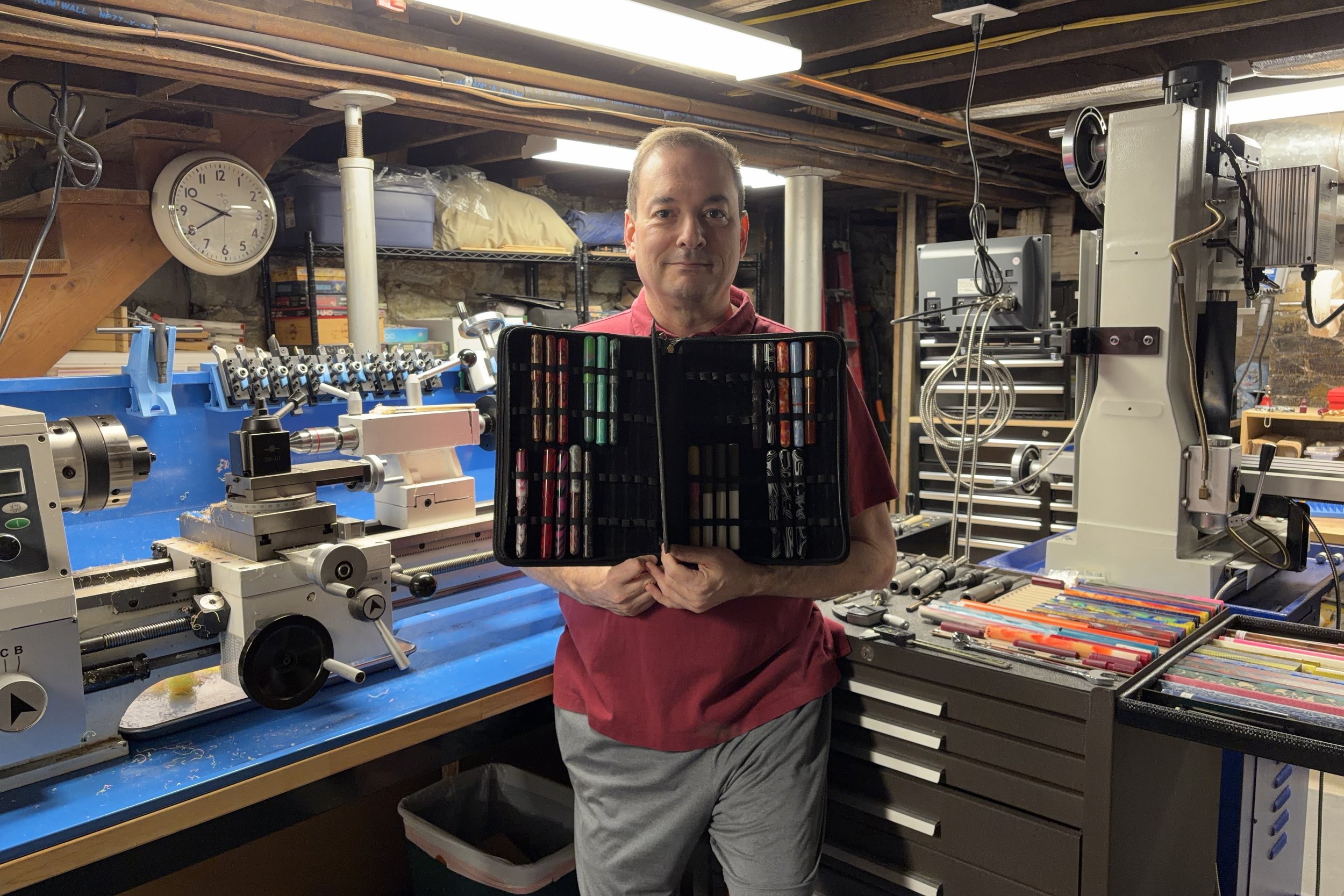
Like many pen makers, for Storch the lockdown period of COVID led to some new ideas about what was possible. “My mother passed away right before the lockdowns. I was the executor for her estate, then when that was done I kind of thought, ‘Now what?’” At the same time, the real job was losing its charm. “I got disenchanted with startups. I made a deal with my wife, if I would clean out the basement I could turn it into a shop.”

At this point, his connections from pen shows came to his aid. “People at shows understand what goes into making a pen.” Rich Paul, of River City Pen Company, was nearby in Pittsburgh, and invited him to the shop to walk him through making a pen. Jonathon Brooks did a video call shop walkthrough to show him what tools and equipment were required. “I got a lathe. I watched a lot of videos online. I broke a couple of inserts and a few pieces of material. But I hit a stride, and now I feel pretty confident that I can turn what’s in my head into a pen.”

Fantastic Pens Neon

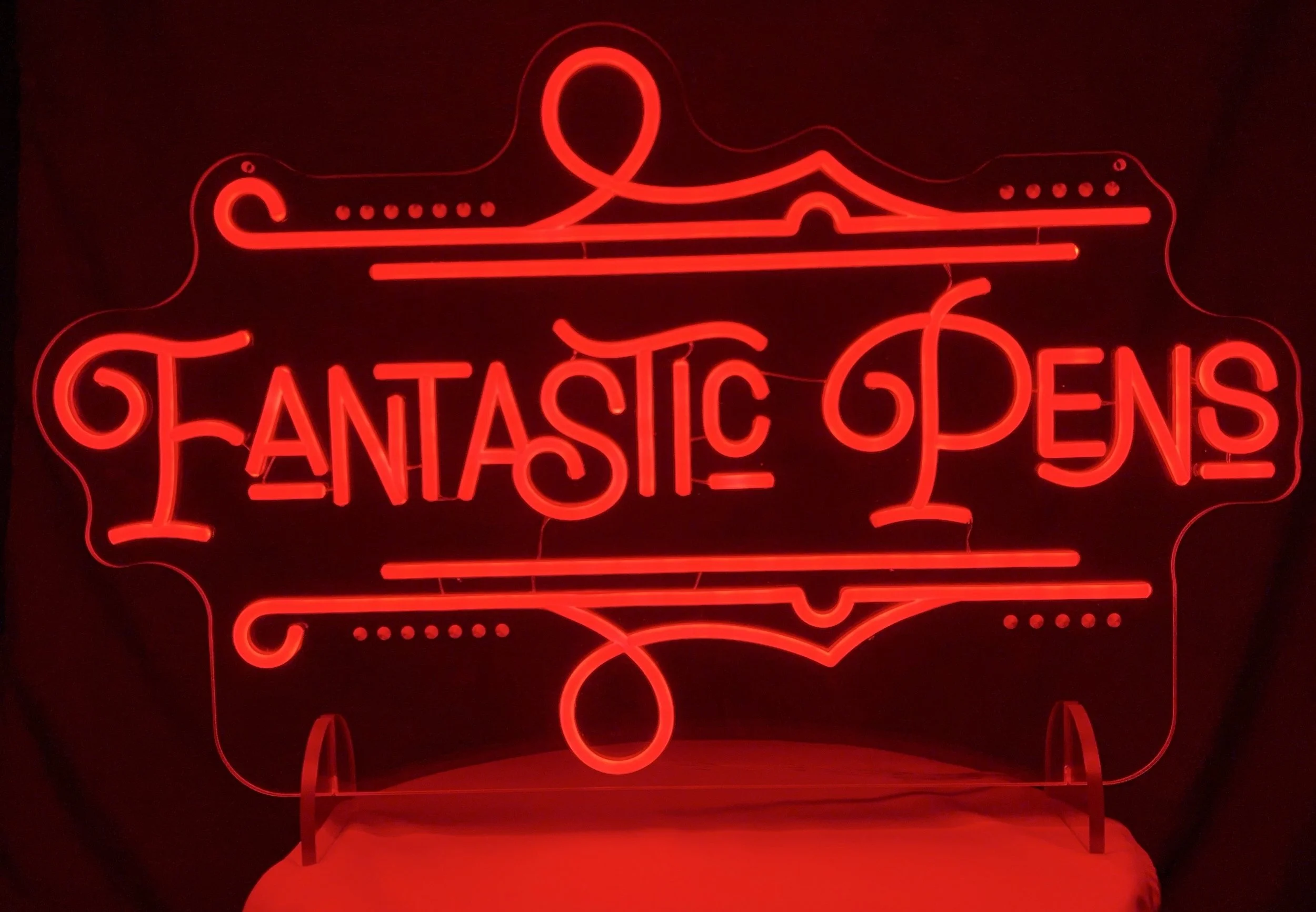
In 2024, Storch jumped into the show deep-end, signing up for a table at the DC Pen Show. “I got a message from the organizers while I was cooking dinner. I turned off the burner and ran right upstairs to respond.” At first, he was assigned to the “third room,” around the corner from the other two spaces, and having been there, he knew that he would need to do a little extra to draw attention to himself. “I worked with a vendor on Etsy to get a neon sign with my logo. I was going to make sure you knew I was there! But I really wanted to be in the ‘maker room’ with the other makers I knew who had helped me get set up, and thankfully they were able to move me there.” The neon sign stayed, though.

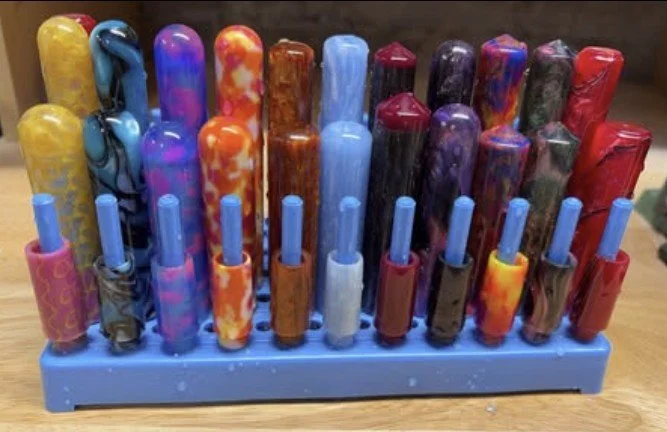
Fantastic Pens Barrels

Tooling has been something of a journey for Storch. “I followed my mom’s advice to get the best you can afford, right at the beginning.” He is always conscious of safety and aware that your tools really are trying to kill you. “It’s kind of zen, actually. You have to have complete focus, most people may not appreciate how quickly things can go wrong.” He now uses a metal lathe – “I’m not comfortable using a chisel with a wood lathe, I have rheumatoid arthritis in my fingers” – but realizes that the machine has limitations he has to work around. “Round ends are harder to do on a lathe meant to do right angles. I built a ball turning tool at first, then developed a better method using specialized tooling.” He’s adding a milling machine to do things like faceted shapes, and also a CNC lathe – “there’s quite a learning curve, I need to put in the hours to learn the tool.”

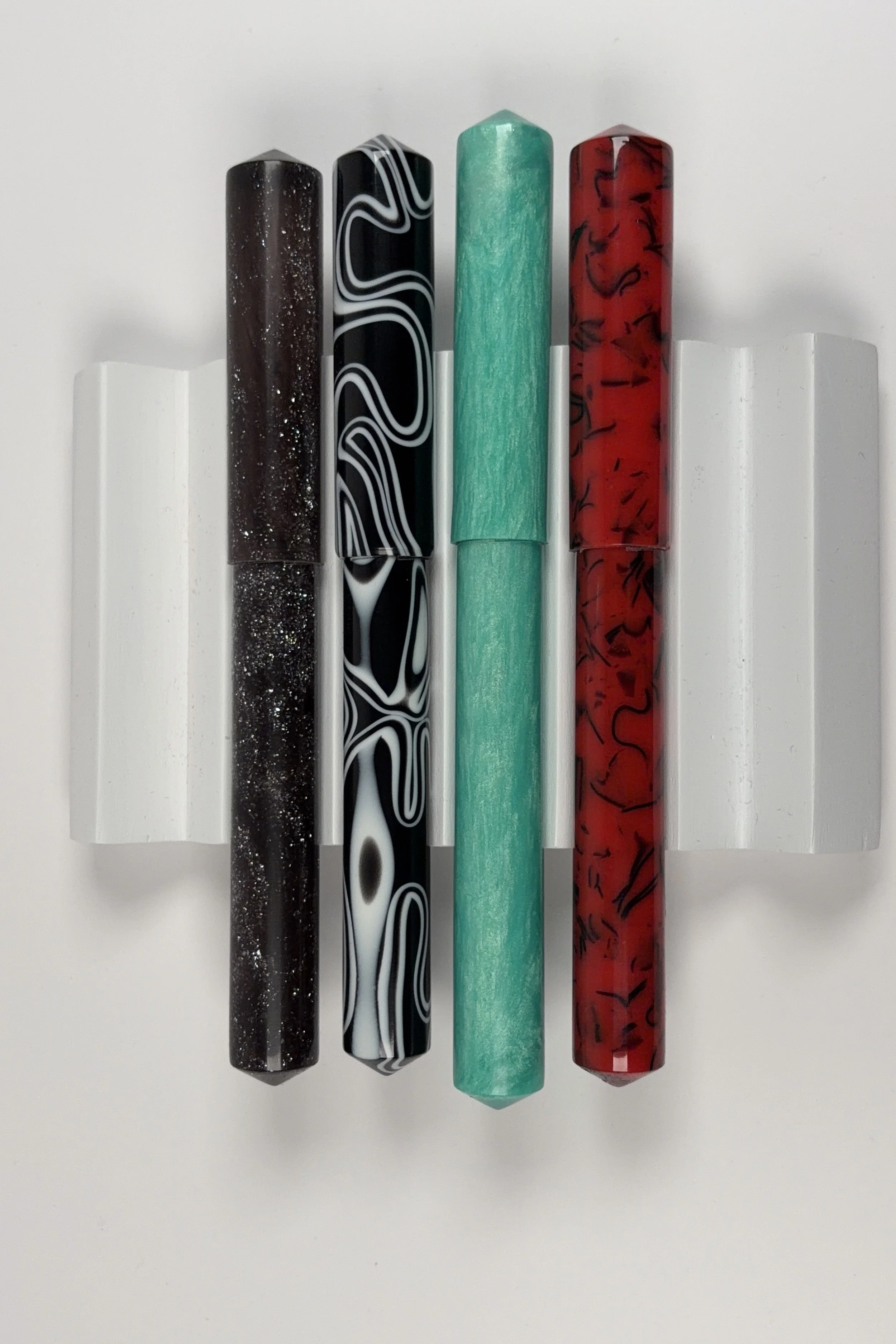
His favorite material is cellulose acetate, for how it cuts and polishes, and he’s purposely selecting bright colors. “My personal collection skews darker, but I’m the new kid, I need to catch your attention and I need my pens to catch your eye from five or six feet away so you’ll stop and look at my table.” He’s been a little tempted to try his hand at making blanks, but as it turned out, his wife needed a creative outlet to balance her professional life, and he encouraged her to take up blank pouring; she showcases her blanks as @betwixtbetweenstudios. “We are a little unique. By working together we can do a completely custom pen, from material design all the way to the shape of the pen.”

Fantastic Pens Pens

Like all makers, Storch is thinking about that “fingerprint” or signature all the time. “What can I do when there are fifty other people at a show doing the same thing I’m doing? How do you do something different?” He wants to experiment with material combinations, like accent rings that are visible when the user is writing with the pen. And he particularly has a focus on sections. “The piece interacts with all the other parts. They take the most work to make, so it feels like some companies get complacent and keep making the same section.” The CNC will allow him to experiment with new and different section shapes. “As a maker, you get to make the pens you like. Every maker has a signature in their designs. I want someone to be able to look at a pen, and say, ‘That’s his.’” His signature is the attention to the details he feels lead to the best writing experience. “The step from barrel threads to the section is less than a millimeter, it’s purposely made that way so you can hold your pen however is most comfortable for you. I don’t want to force you to write a certain way.”

Fantastic Pens Red

The name of his pen company came from a chance remark at a show from John Foye, the proprietor of St. John’s Pens. “I showed him a prototype pen I had been working on, and his first reaction was, ‘That’s fantastic!’ I want everyone to react like that. And the name keeps you honest – it’s an implicit promise. You have to make a quality pen, or the bad review almost writes itself.”

What favorite pens does he have, that he personally enjoys using? “I have a big collection – when I stopped carrying everything around in pen cases I bought two of those Toyooka boxes!” He has a number of the world’s most classic pens – a striking Tibaldi Impero, a rare Montblanc 149, a Pelikan M1000, and a couple of prototype pens from Omas, one of his favorite brands. But two others stand out in his mind for personal reasons. “My dad had a sterling silver Waterman Gentleman that he got when he was working at the Commodities Exchange. He loved that pen, it quickly replaced the Parker 75 his parents gave him when he graduated law school. Unfortunately, even though it came into my collection when he passed away, it is still one of my most treasured pens.” The other is something quite different. “At the first Baltimore show we attended, my wife was working with Jonathon Brooks on getting one of his Cenote pens. This left me standing there eyeing up an unusual pen he had on his table. It turns out it was actually a celluloid material, Tiger Tail I believe. After I stood there with nothing else to do but look at it for so long, it ended up coming home with me. It was and still is quite special, being one of the first maker pens I owned as well as coming from someone who has gone on to become a good friend and mentor in the community.”

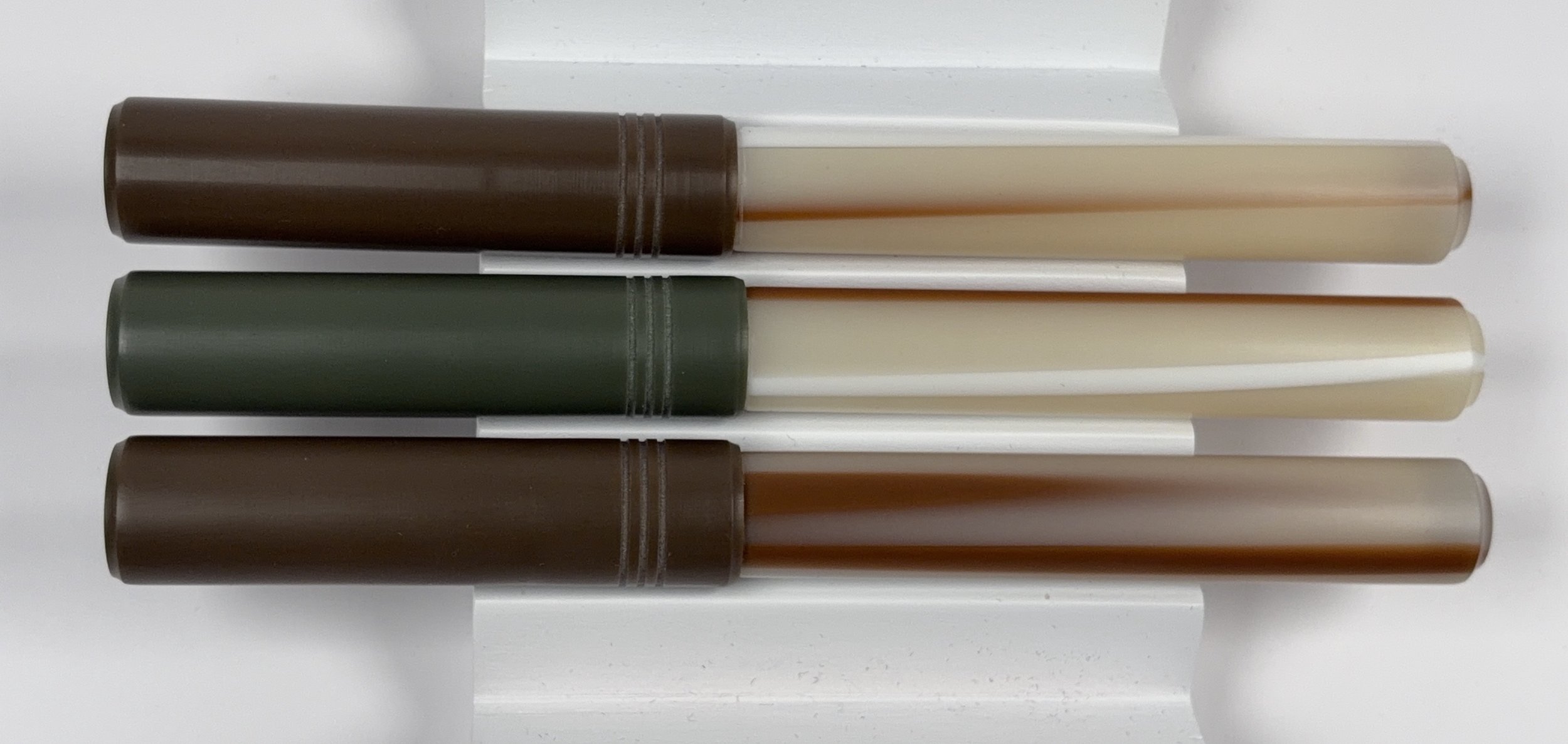
Fantastic Pens Section

Storch says he is “in the expanding phase – I have a laundry list of things I’d like to try. I keep a notepad by my bed to write down new ideas, thoughts I have at the end of the day. There is so much to explore. I’m not getting bored with being a fulltime penmaker anytime soon.” He is working on collaborating with an ink maker to create an exclusive ink to go with his pens, and he wants to do more shows. He attended Chicago this year and would like to have a table there next year. He is building an expanded line of pens for the DC show.

Shows are in some ways his favorite thing about being a pen maker, because he gets to interact directly with customers. “Someone will pick up a pen and you can see their eyes light up when they find one they absolutely fall in love with. The pen isn’t all that you’re buying, you’re buying a piece of the maker’s vision, and it’s a great feeling when that resonates with someone.”

Mark Storch’s work can be seen at pen shows in Baltimore and DC, and on his Instagram @fantasticpens (“I’m planning to be better at posting there, I swear!”). His website FantasticPens.com is a work in progress.


Enjoy reading The Pen Addict? Then consider becoming a member to receive additional weekly content, giveaways, and discounts in The Pen Addict shop. Plus, you support me and the site directly, for which I am very grateful.

Membership starts at just $5/month, with a discounted annual option available. To find out more about membership click here and join us!
Posted on May 18, 2026 and filed under Meet Your Maker.

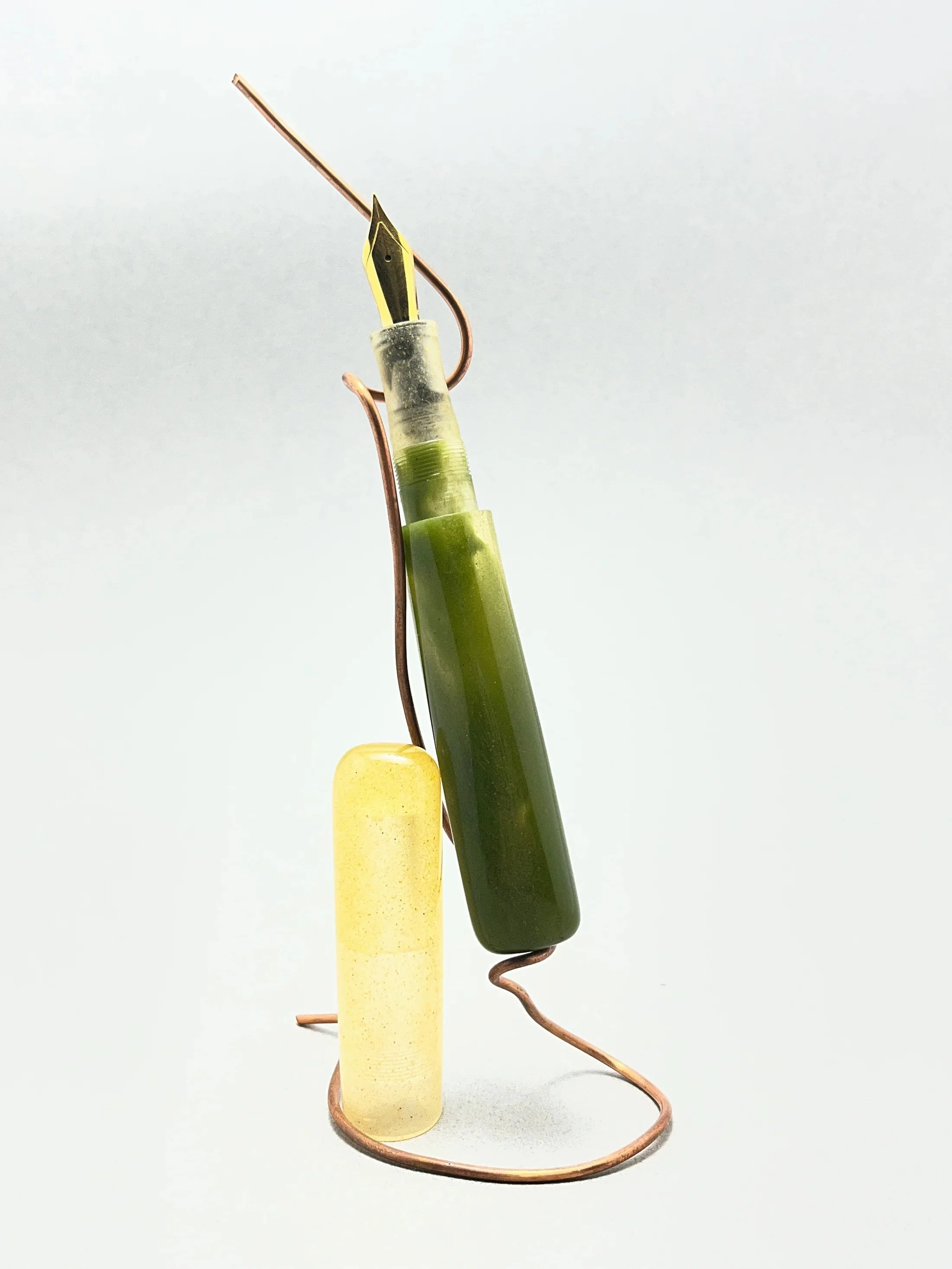
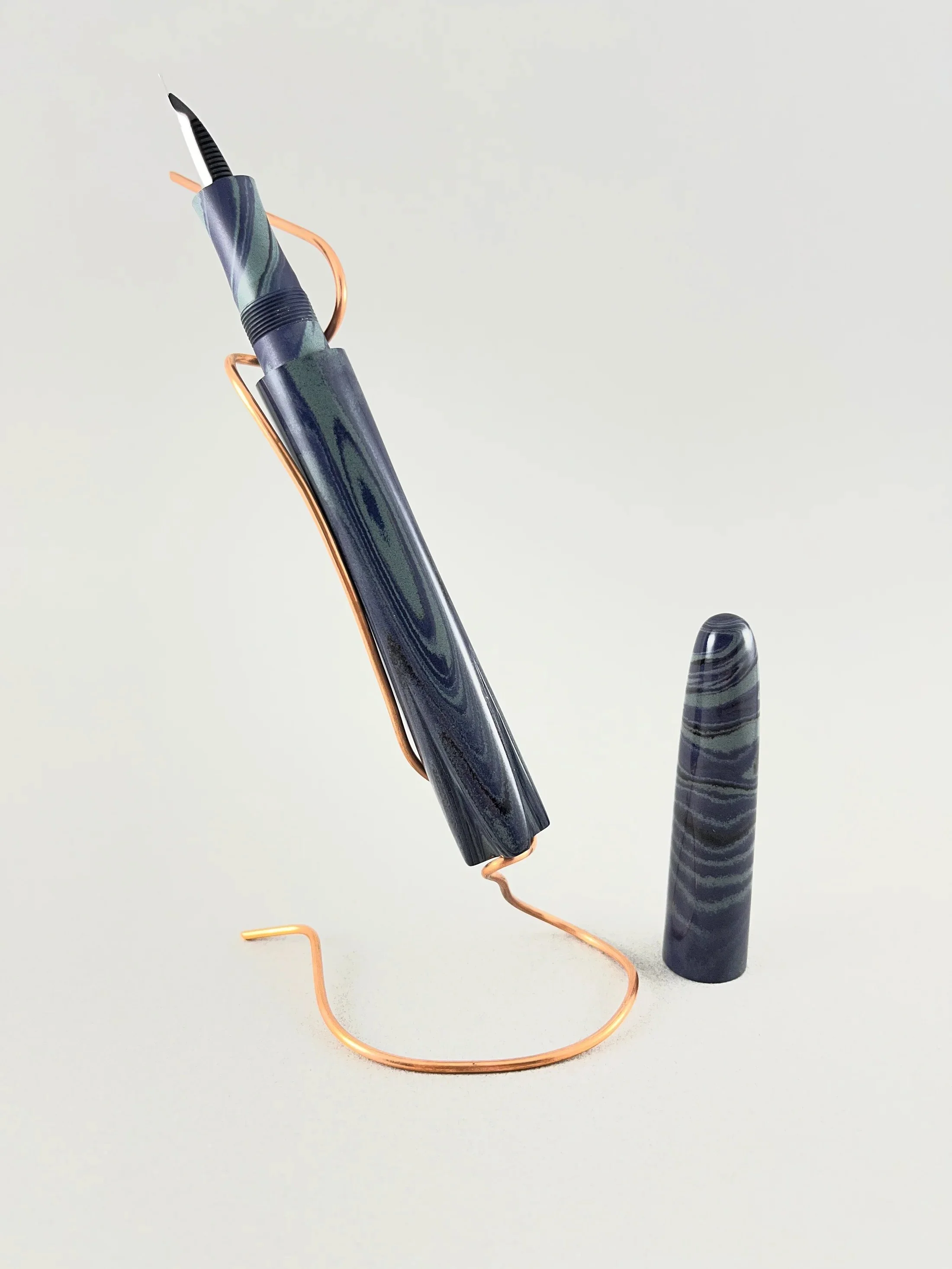
Meet Your Maker: Kristen Brooks, Fountain Telling

Meet Your Maker: Kristen Brooks, Fountain Telling

(Caroline Foty's first fountain pen was a 1970s Sheaffer No Nonsense that still writes perfectly. Since she discovered pens by independent makers, she wants "one of each, please" and wants to meet all the makers. Maybe you do, too. She lives in Baltimore with pens, cats, and all kinds of fiber arts supplies.)

Pens came to Kristen Brooks as part of a much larger and more significant series of life changes. “When I turned eighteen, I contacted my birth mom, and I met her and Jonathon.” (Jonathon being Jonathon Brooks of Carolina Pen Company.) “Ultimately we started an official adult adoption. I poured my first material on my first visit to the farm and he made me a rollerball out of it. That set the hook.”

Fountain Telling Fountain Pen

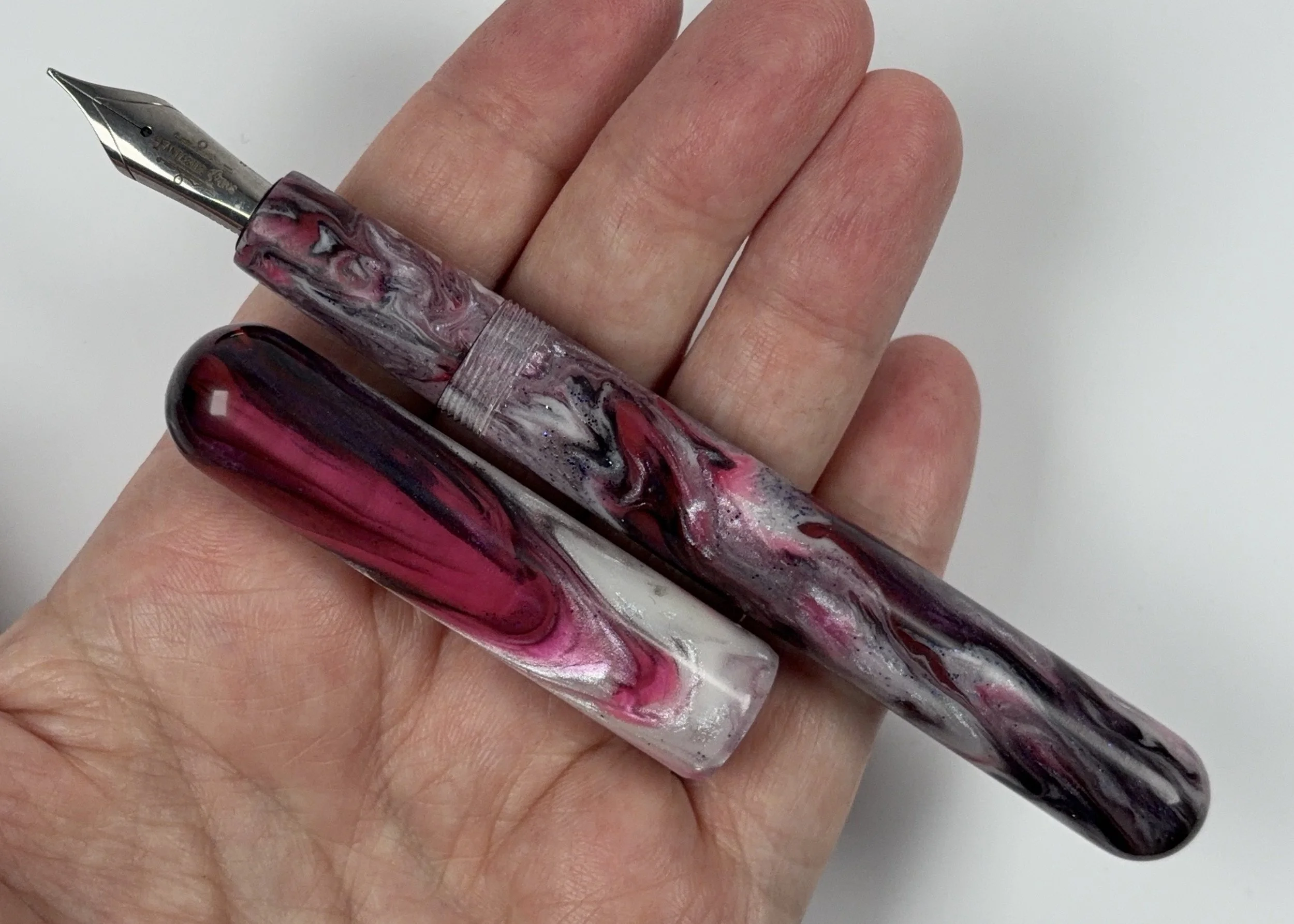
Brooks was not raised around pens and inks; their background and education are in music. “By the time I got my degree, it was in a dying field. To pursue opera I would have had to move to Europe.” Despite claiming not to be artistic (“I was always artsy but I’m terrible at drawing”), they find the making of blanks to be their primary means of expression. “It’s fun to take everything that goes into a painting, or a piece of art, and turn it into something I can actually do. I can’t paint, so I can turn a painting into other art forms.”

Film has provided a large source of inspiration for the colors that go into Fountain Telling blanks. “I used to costume for the college theater, so I’m drawn to movie themes. The first blank I poured was based on the movie Brave. But there’s also pop culture, and art works, like the Birth of Venus.” A pretty color of dye on the workshop shelf resulted in the recent blank Three Olive Martini – “I liked that olive color and I wanted to play with it. At first it reminded me of the color of my horse’s saddle pad, and then I thought of an artsy bar, with tan walls and copper accents, and someone drinking a martini.”

Fountain Telling Sinclair

At pen shows, the Fountain Telling table stands out, with skulls and crystals and a look all its own. “I’m a little bit of a crow, I’m a lover of shiny things.” Fountain Telling came from the idea of fortune telling, and Brooks worked with Jon Tello (graphic designer as well as pen maker) to design the logo of a crystal ball with nibs for feet. “Taking your thoughts to paper is a little magical. And the look brings in a slightly younger audience.”

Fountain Telling Skulls

Brooks hopes to begin to play more with pen shapes. “There need to be more different and unique pens on the market, to get people out of their comfort zone.” While they intend to begin by tinkering with the shapes of the pens already made by Carolina, this spring has seen the debut of a new pen with shape unlike any of those.

Fountain Telling Willow

The “Willow” pen is designed to represent Brooks’ dog, Willow, an Australian shepherd. “She’s my entire world wrapped into a dog. She’s my service dog, she’s a competition dog – she does dock diving, barn hunting, and agility – she’s with me wherever I go. I like to say she picked my husband for me.” The pen represents the silhouette of Willow’s body: “She has a narrow nose, a wider face, a narrow neck but broad shoulders, a fluffy butt, and a little nub tail. The nub on the cap is her tail. I looked at her and thought, This is an interesting shape, how would it be as a pen?” It turned out to be not only a striking pen, but also a comfortable one. “It’s beginner friendly. My husband is new to pens and we find that it helps to seat the grip.” Reactions to the pen have been a source of amusement. “It’s designed after a dog, I can’t help where your mind goes!”

Brooks’ current favorite pen was a bit of a score, a Leonardo model in the Jonathon Brooks blank Galaxy Prime – “I got one, and he didn’t!” It has a custom flex nib in it. “I love flex nibs – my handwriting is not the best, and it makes it fun and creative. I saw a nib in a video on Instagram, I sent it to Dad and said Look at this nib. And he said, Do you want mine? It’s in the drawer.”

Fountain Telling Resin

While they admire the blanks of other makers, and did some swapping at the Atlanta show so they could go home with one of Em Merrill’s Little Hollow in-house pours, their own blank making will always take the lead. “I find beauty in odd things.” (Rotting watermelon comes to mind.) “Someday I’m going to put all the colors I hate in a blank. People will love it.”

Fountain Telling Rotting Watermelon

Observing what people love is perhaps their favorite aspect of being a pen maker. “I love going to shows and seeing the people. I make the pens to see people buy them. It’s fascinating to watch people find what they like, to see their eyes light up when something catches their eye. It’s very rewarding to see someone take home something you made, to treasure it.”

Kristen Brooks’ work can be seen on Instagram @fountaintelling and at shows in Baltimore, Atlanta, Chicago, DC, San Francisco, and New York City. A website and a Facebook page are in the works.


Enjoy reading The Pen Addict? Then consider becoming a member to receive additional weekly content, giveaways, and discounts in The Pen Addict shop. Plus, you support me and the site directly, for which I am very grateful.

Membership starts at just $5/month, with a discounted annual option available. To find out more about membership click here and join us!
Posted on April 13, 2026 and filed under Meet Your Maker.