Platinum 3776 Century Chartres Blue Fountain Pen Review

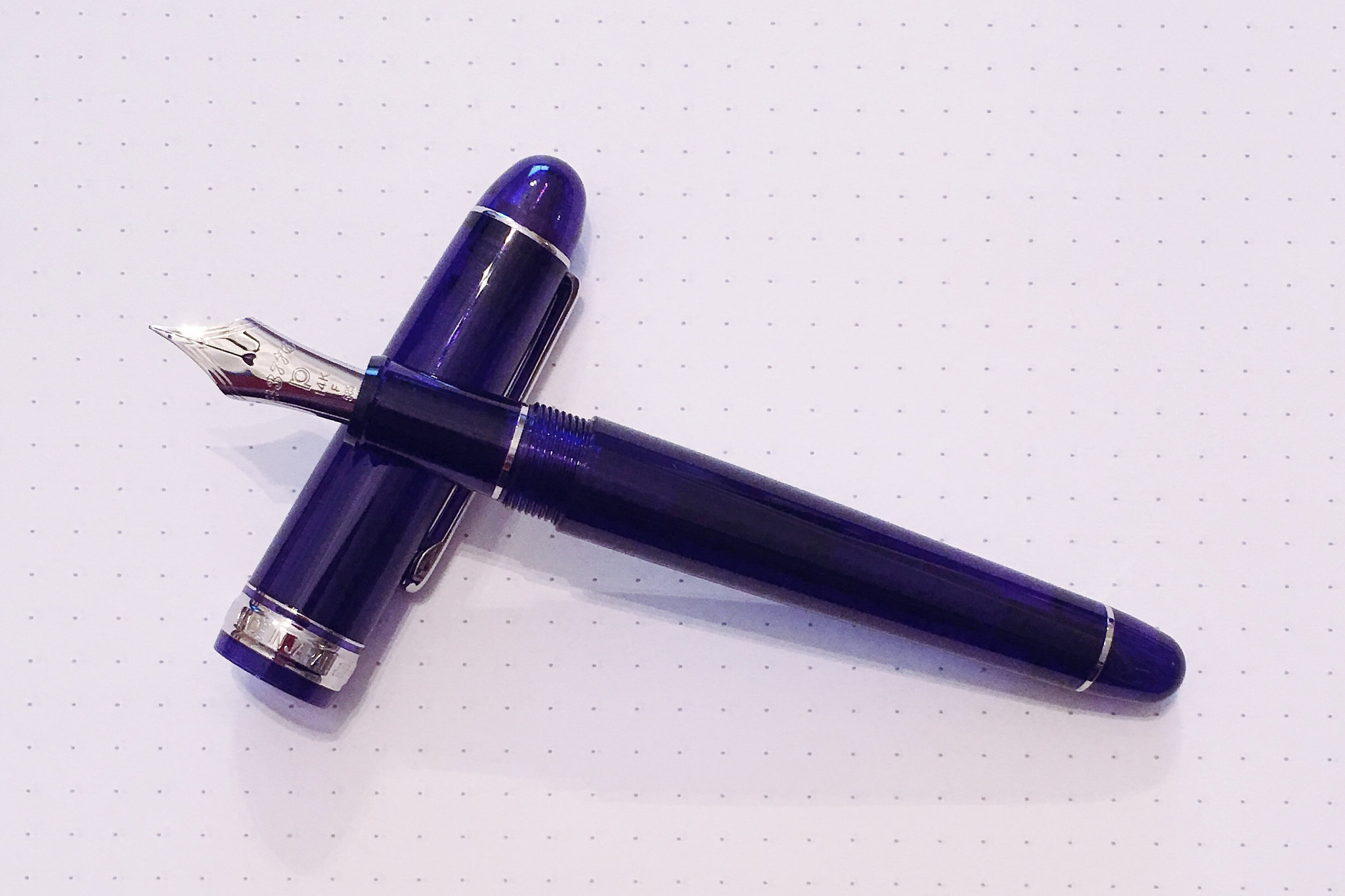
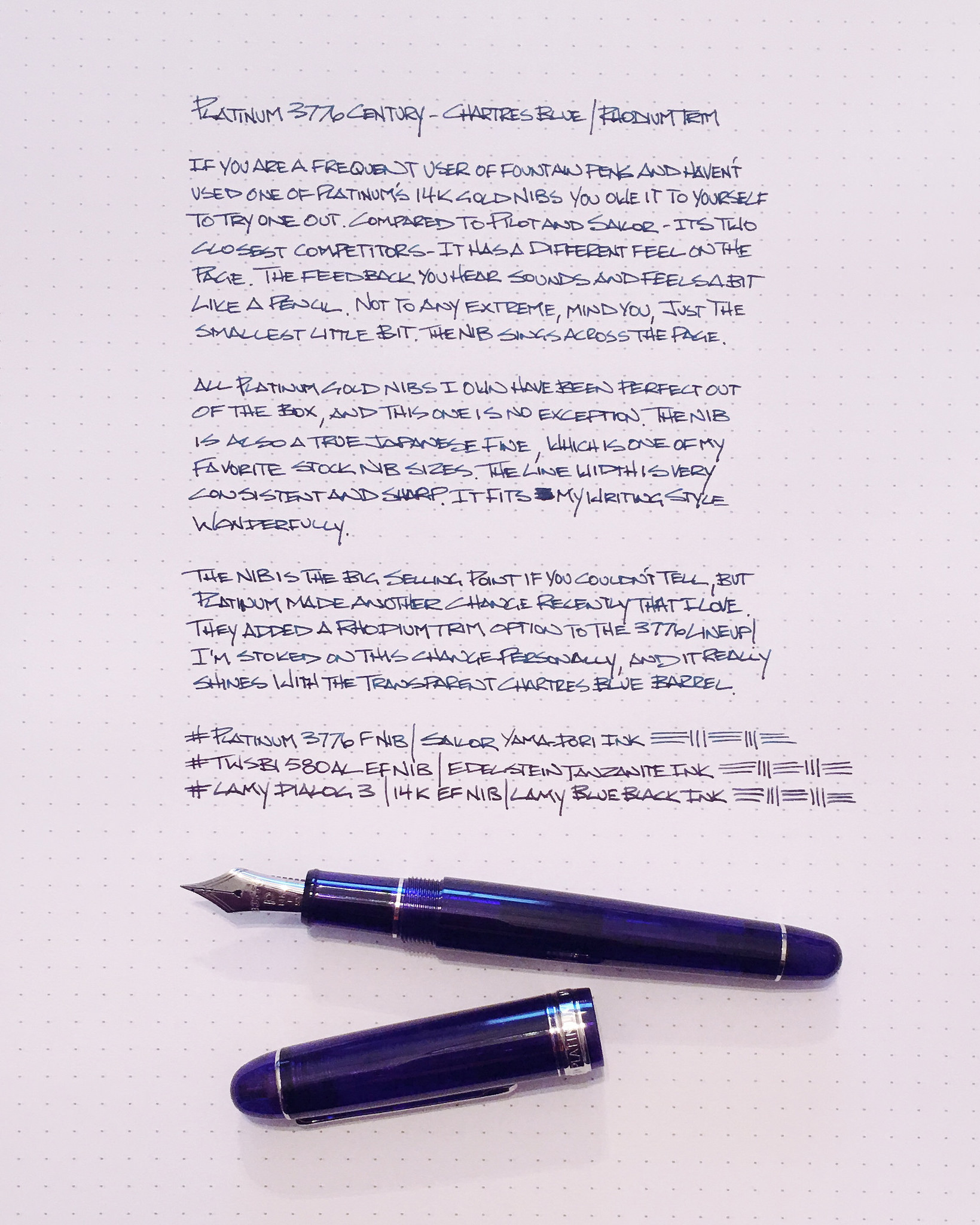
The Platinum 3776 Century Chartres Blue is not the first 3776 I have owned or reviewed, but it is the first 3776 that I have felt like was designed for me.

I’m particular, we all are. Especially when it comes to spending non-trivial amounts of money on fountain pens. I could have bought a standard 3776 years ago if I wanted to settle for one with gold trim. I didn’t want to settle, so I waited. And waited. Rhodium trim limited edition models came and went, and I jumped on the Sai when it became available, but I was holding fast for Platinum to decide that their stock, gold nib, entry level fountain pen was deserving of the rhodium trim treatment.

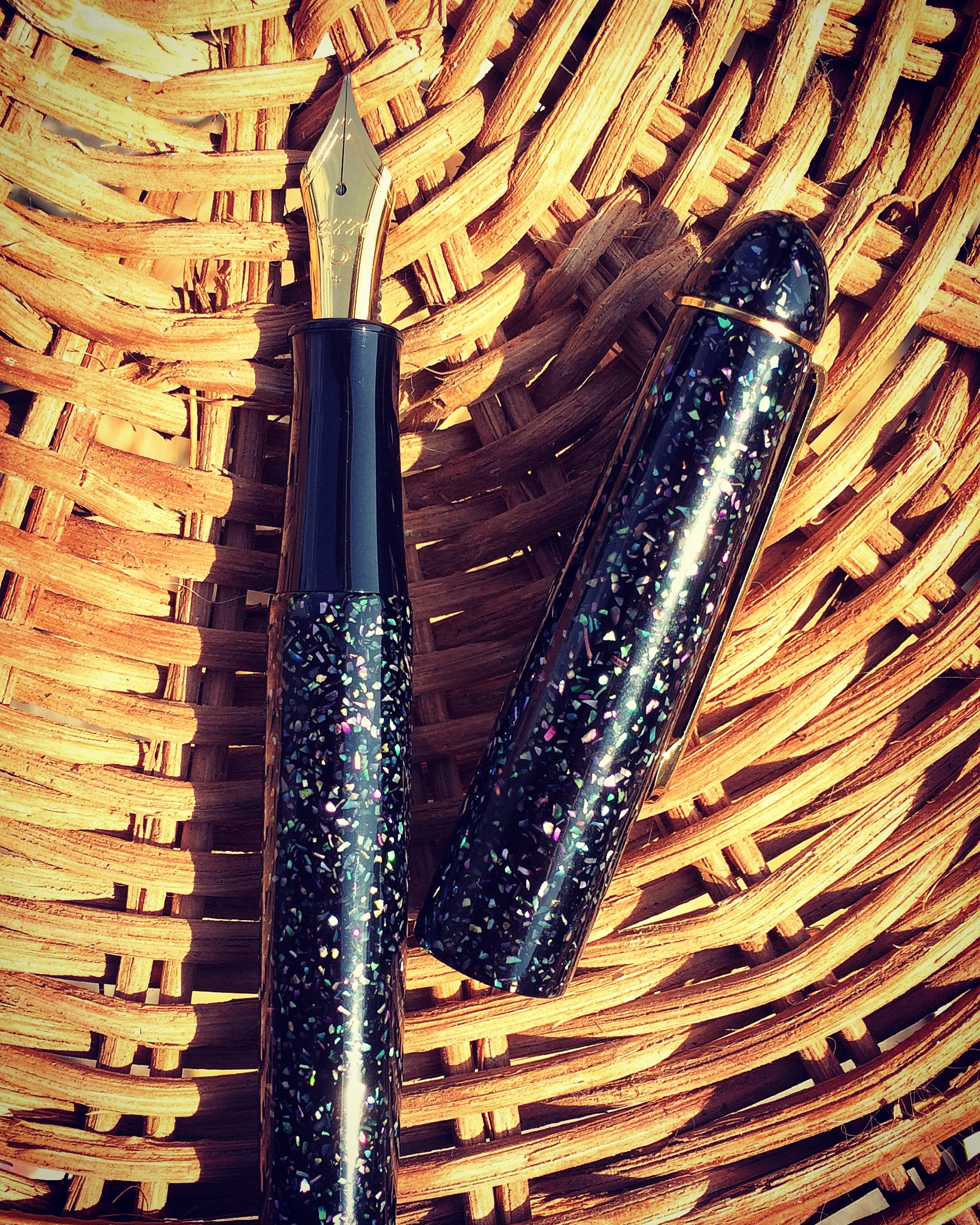
It finally happened in early 2015. Platinum added rhodium trim throughout the 3776 lineup. And it was beautiful. It didn’t happen with every model, but Chartres Blue was the pen that benefitted the most, and they even added the Black Diamond barrel, which, like Chartres Blue and Bourgogne, has a very sublte demonstrator look.

While the barrels look and feel great, the 14 karat gold nibs are what make Platinum pens the favorite of many. They are different in a way that only Platinum has been able to pull off. Unfortunately, the feel of the nib is very difficult to explain in words.

The best way I have found to describe it is that there is a pencil-like feedback when writing. Imagine if you held a pencil in your hand and dragged it across a piece of paper without gripping the pencil. As lightly as possible, no pressure in your fingertips. You hear the sound of the graphite on the page. You hear Platinum nibs when you write with them.

This sounds like a negative, right? It’s hard to explain how it isn’t, but you need to try it. It’s a wonderful feel. If you did a blind test of basic 14k Pilot, Sailor, and Platinum nibs you might mix up the Pilot and Sailor offerings, but I promise you will know which one is the Platinum.

The line these wonderful nibs leave is right up my alley. Crisp, clean, and even across every letter. Consistency is their hallmark, making them perfect every day writers.
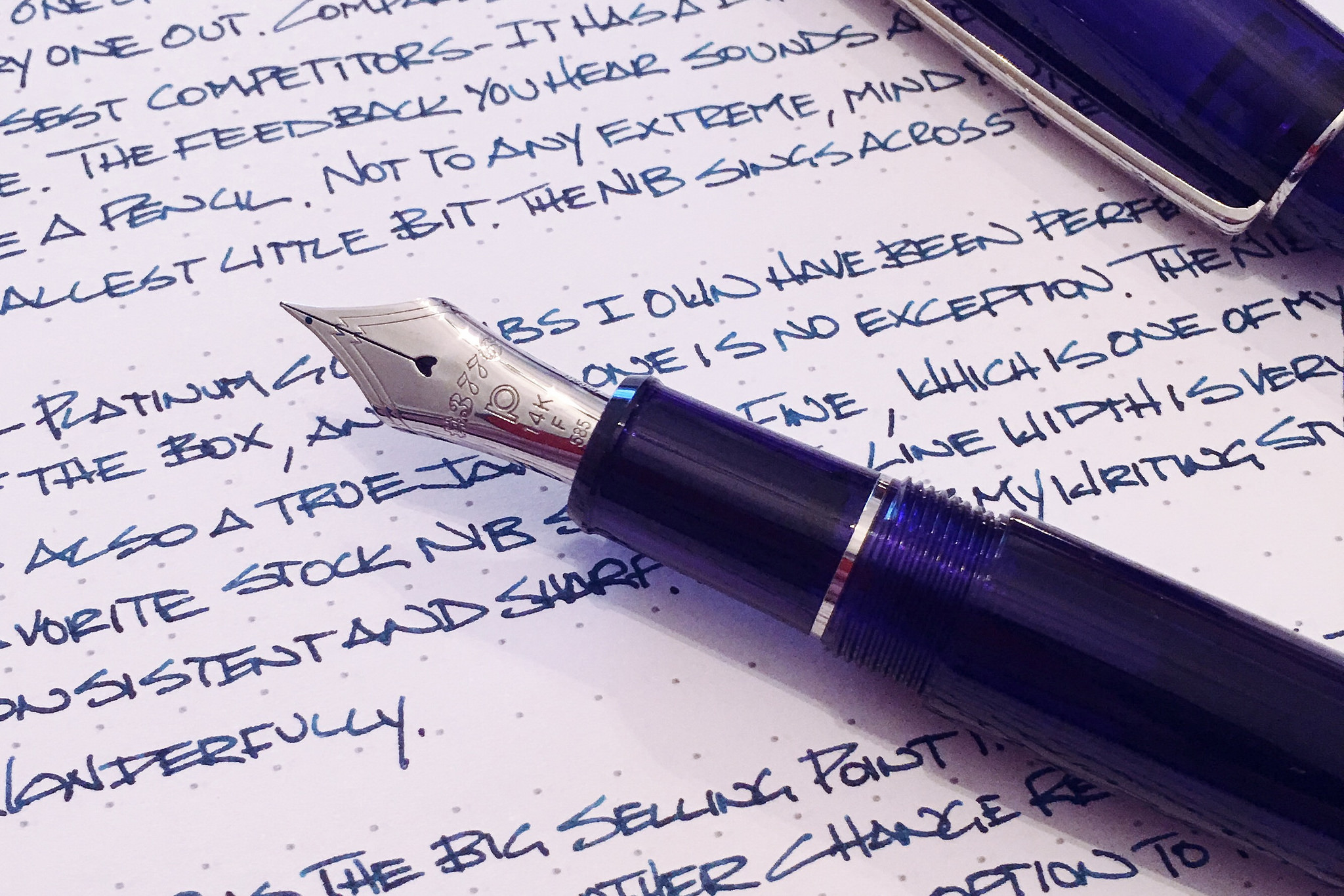
Now that rhodium has happened, I need Platinum to start expanding the 3776 lineup even further. Bourgogne in rhodium trim would be a great start, but making the UEF nib more widely available is something I personally want, although admittedly it would not be a top seller. What about stub nibs? Does Platinum even make one in any pen outside of the Nakaya brand?

You are on your way Platinum. Make it happen!

(Goulet Pens provided this pen at no charge to The Pen Addict for review purposes.)
Posted on December 14, 2015 and filed under Fountain Pens, Pen Reviews, Platinum.

Making Light

The use of something real and tangible like a candle from Making Light engages your senses in a way that digital tools do not. Imagine sitting down to work, opening your task list, turning on some background music, and lighting a candle. It's time to focus and do your best work.

Making Light offers several options to get you started, ranging from a one month gift to a 12 month subscription. Each month you will receive two 100% botanical soy wax candles, a sample of the following month's scent, and a box of matches to fire up your daily ritual. Readers of The Pen Addict can also get $5 off their next order by using the code "POSTCARDS" at checkout.

My thanks to Making Light for sponsoring The Pen Addict this week.

Posted on December 11, 2015 .

Pilot Vanishing Point Raden Water Surface Fountain Pen: A Review

(Susan M. Pigott is a fountain pen collector, pen and paperholic, photographer, and professor. You can find more from Susan on her blog Scribalishess.)

Most fountain pen people are familiar with the Pilot Vanishing Point Fountain Pen, even if they don't own one. It's a fountain pen with a retractable nib. And, it's a pen that some people love and others hate–largely due to the location of the clip.

My first Pilot Vanishing Point did not impress me. I bought a blue carbonesque with an EF nib from Amazon, which, in retrospect, may have been my primary mistake (buying it from Amazon, that is). The pen itself was gorgeous. I loved the carbonesque design and found the click mechanism fascinating. But it was a horrible writer. The nib was ink-stingy and scratchy. Plus, I found the clip annoying and the pen too heavy. I eventually sold it and thought I was done with Vanishing Points forever.

But then Pilot came out with the Vanishing Point Metallics. Oh! That Mountain Blue called to me. I thought the black clip and nib looked terrific against the metallic colors. This time, I bought my VP from Classic Fountain Pens. I got a broad nib and had it ground to an italic/stub. What a difference! I loved this pen. It wrote beautifully, and, though it took some time, I grew accustomed to the clip.

Now, to the Vanishing Point Raden Water Surface. I wasn't really considering this pen at all because it retails for $640.00. But I wanted a Raden pen, and I found the Platinum Galaxy Maki-e at Classic Fountain Pens with tons of Raden for just a little more than the VP, so I bought it. When it arrived it was . . . well . . . too blingy. I called it my "unicorn pen." My daughter told me it looked like the floor at Mr. Gatti's. And, sadly, she was right. I returned it.

About that time someone on Fountain Pen Network posted a Pilot Vanishing Point Raden Water Surface in the classifieds. It was half retail price, so I jumped on it. A few weeks later, I was the proud owner of a like-new Raden Vanishing Point.

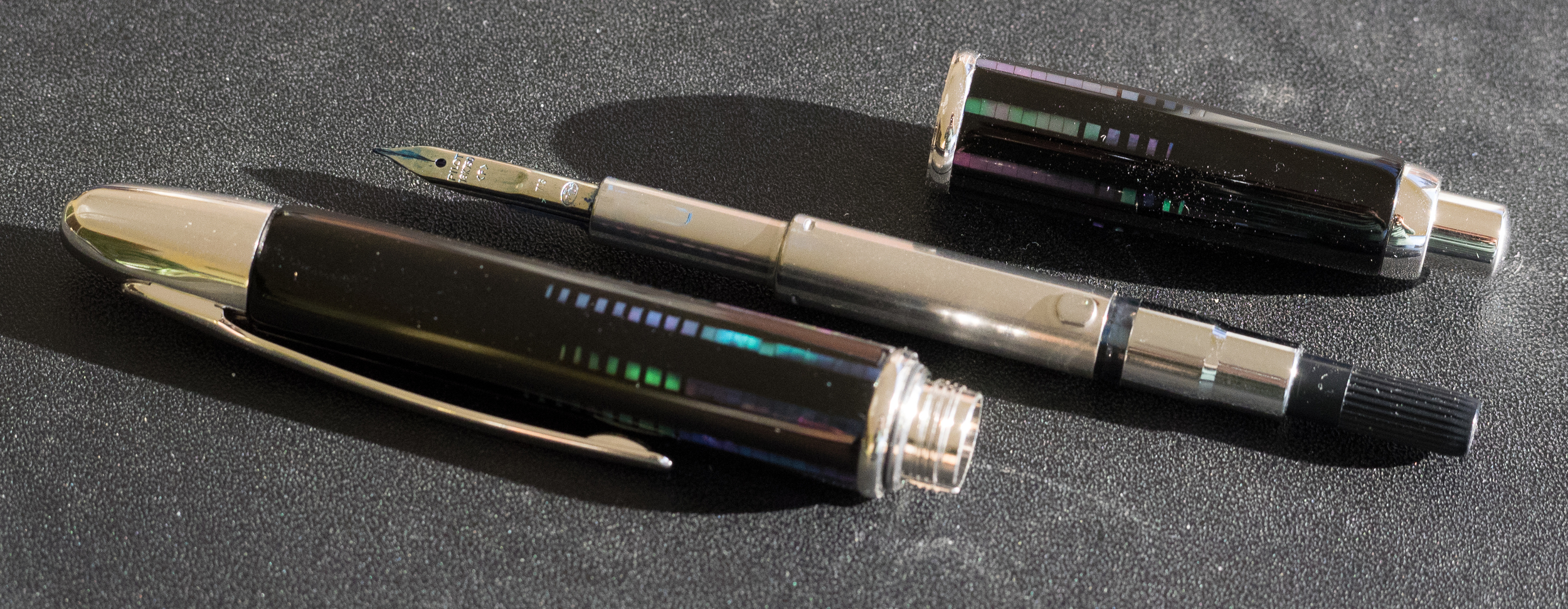
My Raden VP came in a wooden box lined in yellow satin (though I believe my pen was packaged in Japan; American packaging may differ). Included with the pen is a converter, a cartridge, and a cartridge protector.

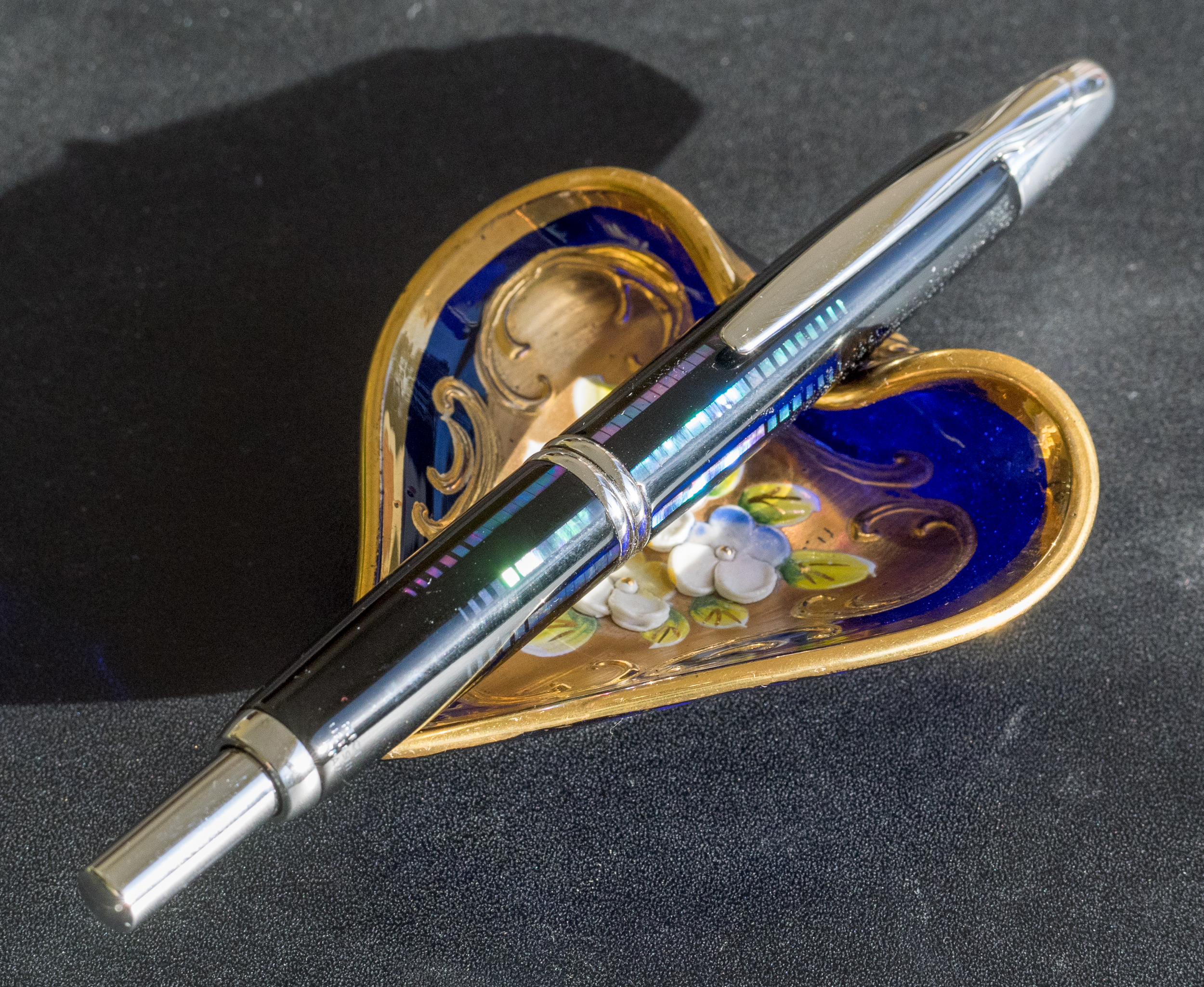
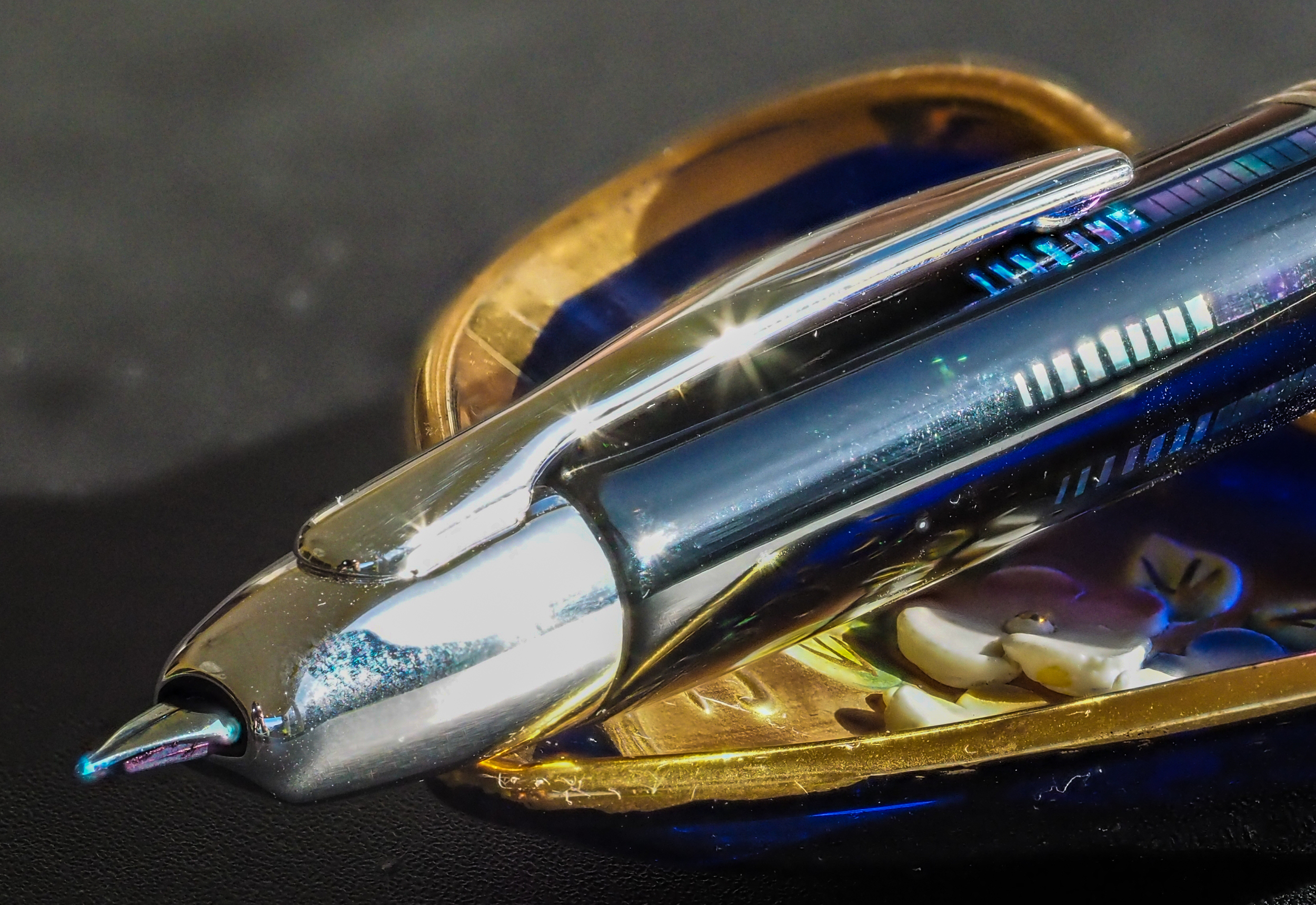
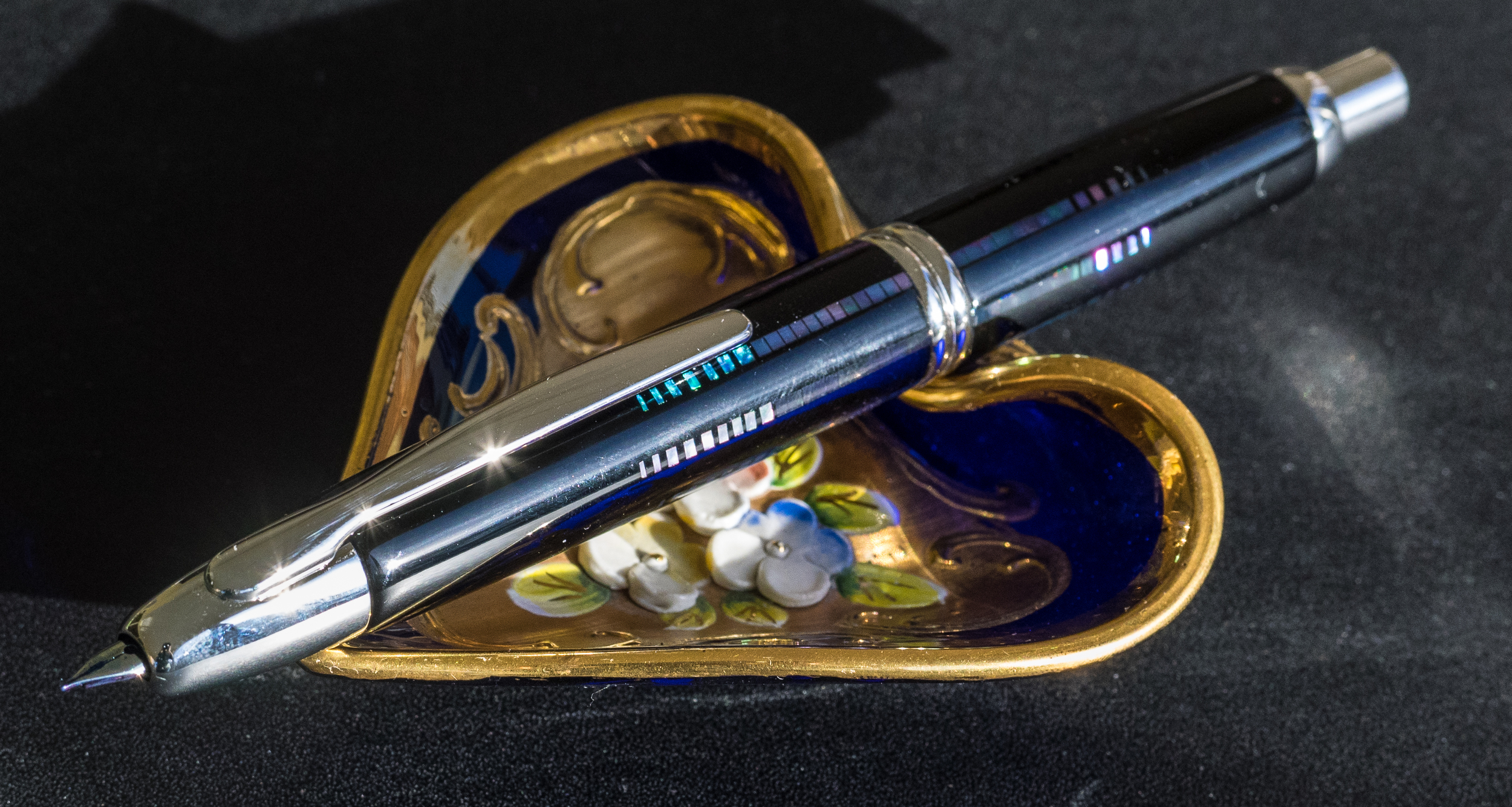
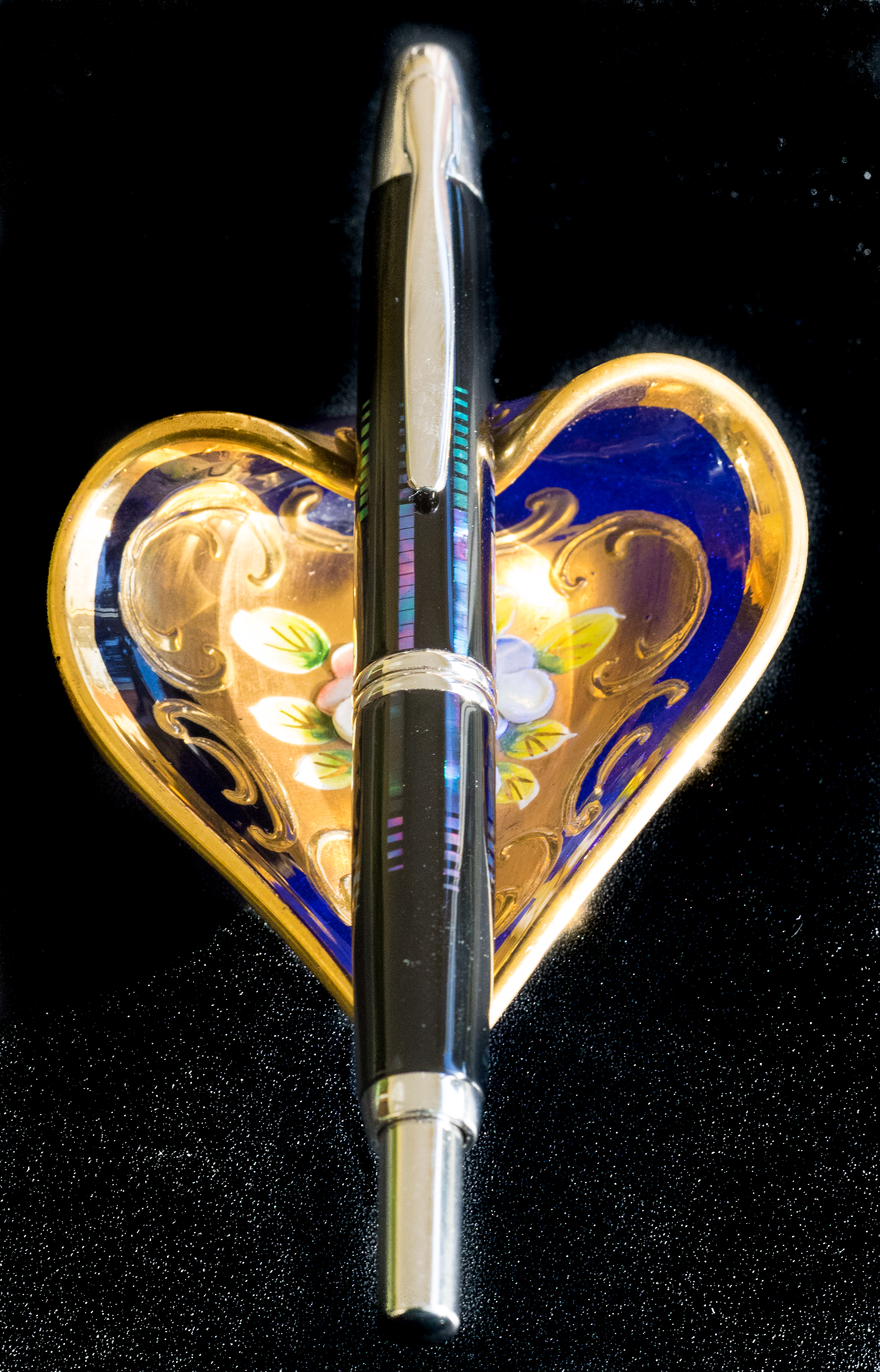
The pen is absolutely gorgeous, with just enough Raden to make the surface sparkle, but not so much that it looks like glitter glue. The Raden comes from abalone shells. On this pen, the shells are arranged in straight lines to evoke light reflecting off the surface of water. The pen is coated in urushi lacquer, and the effect is mesmerizing.

The Raden Water Surface is just like any other Pilot Vanishing Point form-wise. This one sports rhodium-plated accents and an 18K rhodium-plated nib. The click mechanism works just like all the other VPs.

The pen uses a proprietary cartridge/converter system. The converter holds a minuscule amount of ink (0.82ml), requiring lots of refilling. That's really my only criticism of this pen. I wish the converter held more ink. Cartridges hold 1.05ml of ink.

The pen is heavy (30 grams), but I've grown to like more substantial pens over the years. It is a large pen, 9.07mm at the grip and 140mm in length. The pen is well-balanced in the hand, and even though many people complain that the clip gets in the way, it helps me hold the pen steady. I no longer even notice it.

The nib on my Raden Water Surface is a fine. It writes like a Western EF, and though it's smooth and writes beautifully, I will eventually get another broad nib ground into an italic/stub for this pen. I love how my other VP writes, and the fine is a little too fine for my tastes, though it works great as a grading pen. But really, who wants to use a pen this beautiful for grading? I should be writing Haiku!

You can purchase this pen from Goulet, Classic Fountain Pens, and Goldspot Pens for $640 (many other retailers also carry it). That's an awful lot for a Vanishing Point. If you love this pen, I hope you'll luck out like I did and find it on sale.

Pros

  • Absolutely gorgeous pen. The abalone shells reflect the light and contrast beautifully with the black urushi finish.
  • If you like Pilot Vanishing Points, you'll love the Raden Water Surface. It has all the perks of a retractable nib fountain pen and is one of the most elegant models.
  • The nib writes smoothly with no scratchiness, hard starts, or skipping.
  • The retractable system works flawlessly and with one hand (unlike other retractables that require two hands to twist the nib in and out).
  • This is a great choice when you need to start and stop writing often (such as in meetings). The click system is fast and keeps the nib from drying out.

Cons

  • This is one of the most expensive Pilot Vanishing Point models at $640.00 retail. You really have to want this pen.
  • The converter holds so little ink it's almost laughable. I don't mind refilling, but I wish Pilot would figure out a better converter system.
  • The pen is heavy. If you prefer weightless fountain pens, this one isn't for you.
  • People tend to have a love or hate relationship with the Pilot VP. Some can't stand the clip or they think the design is ugly. If you've never tried a Pilot VP, I suggest finding a retailer and trying it out first. Keep in mind, that first impressions can change. I hated my first VP. Now I love them.
Posted on December 11, 2015 and filed under Fountain Pens, Pen Reviews, Pilot, Vanishing Point.